Results of 2025: From Humanitarian Aid to Sustainable Change in Communities
December 29, 2025
Share:
The project “Disability-Inclusive Multisectoral Humanitarian Assistance for IDPs, Returnees, Veterans, and Host Communities in Ukraine,” implemented by the National Assembly of Persons with Disabilities of Ukraine (NAPD) in partnership with the European Disability Forum (EDF), with the support of the German Federal Foreign Office (GFFO) and CBM (Christian Blind Mission), demonstrated in 2025 not only the scale of assistance provided but also the depth of systemic change within communities. The conclusions of the regional coordinators clearly show that an inclusive approach to humanitarian response can reduce isolation, activate communities, and restore trust in social institutions even in times of war.
Volyn Region: Trust, Partnership, and Reduced Isolation
Analyzing the experience of project implementation in the Volyn region, coordinator Nina Pakhomiuk notes significant changes compared to the previous year.
“At the initial stage, there was a lack of information both among community residents and representatives of the authorities. People did not always believe that the project was truly accessible to persons with disabilities. In 2025, this situation changed fundamentally,” Nina shares.
The project became a unifying platform for various sectors—local self-government bodies, social services, healthcare institutions, libraries, colleges, and other organizations. Today, persons with disabilities are systematically referred to project coordinators to receive the assistance they need. This support goes beyond material aid—such as cash assistance or assistive technologies—and includes psychological support, which is critically important in wartime. Thanks to the project, single persons with disabilities have felt less isolated, experienced a sense of belonging, and become more engaged in social life.
In most cases, the cash assistance provided under the project was used to purchase medications. Due to the sharp increase in medicine prices, a significant share of pension payments is spent on treatment, making financial support critically important for many beneficiaries. At the same time, the work of service centers for persons with disabilities intensified—coordinators worked closely with social workers, strengthening local support systems.
Training activities became an important component. Trainings not only provided new knowledge but also helped disseminate it within communities. Of particular importance were seminars for school psychologists and workshops, including those held in Rozhyshche. In parallel, advocacy work developed: following advocacy campaigns, local councils on barrier-free accessibility were established, and access to social institutions improved in Torchyn and Rozhyshche.
Thanks to the active involvement of persons with disabilities themselves, a volunteer environment emerged—volunteers help with submitting applications for participation in the project. Information about the initiative spread widely across the region: publications appeared on local websites, the project was presented at regional events, and cooperation was established with the Department of Social Policy of the Volyn Regional Military Administration.
The coordinator also highlights increased attention from the healthcare system and the active use of the NAPD legal support hotline, especially during the reform of the Medical and Social Expert Commissions (MSEC). People received explanations, consultations, and referrals. In wartime, the number of persons with disabilities in the region is growing, and the project plays an important role in supporting both individuals and their families, including children, by providing hearing aids, tablets, and assistive technologies.
According to Nina Pakhomiuk, the project significantly reduced the level of isolation and became an example of effective cooperation between civil society, authorities, and donors. At a time when a large share of local budgets is directed toward Ukraine’s defense, humanitarian support remains critically necessary, and the continuation of the project is both expected and vital for communities.
Poltava Region: Visibility, Advocacy, and Systemic Solutions
In the Poltava region, according to coordinator Iryna Tverdokhlib, the project primarily became a catalyst for building systematic cooperation with local self-government bodies and village head offices, while donors succeeded in gaining the trust of communities.
“At the beginning of the project, communities often asked whether this assistance was real or a form of fraud. Over time, the situation changed radically—a clear understanding emerged that if the project undertakes obligations, they will definitely be fulfilled. This became the foundation for trust and partnership,” Iryna notes.
An important outcome was communities’ realization of the importance of advocacy work. People were trained in advocacy, and numerous educational events were held, strengthening the voices of persons with disabilities at the local level. One practical result was the introduction of transportation services for people who regularly travel for chemotherapy, radiation therapy, or rehabilitation. Discussions are currently ongoing at the community level, involving leaders, on how to sustain this service and find long-term solutions.
The coordinator also emphasizes the importance of donor support, noting that donors continue to stand by communities and provide assistance during a difficult period for the country. For her personally, the project became a significant professional achievement and an example of NAPD’s strong presence in the region. In the Poltava region today, the organization speaks with confidence and enjoys trust and respect.
Thanks to the project, many people received assistive technologies, and the path to obtaining them was significantly shortened. This includes manual wheelchairs, hearing aids, and other essential devices that directly affect quality of life and the level of independence of persons with disabilities.
Chernivtsi Region: Advocacy with Tangible Results
For Chernivtsi regional coordinator Valentyna Dobrydina, the key outcome of 2025 was the results of advocacy campaigns. Bringing together different groups within communities—persons with disabilities, veterans with disabilities, and local activists—made it possible to move forward on architectural accessibility issues that had remained unresolved for years. In communities where installing ramps had been impossible for more than 15 years, the situation changed thanks to joint actions, trainings, and close cooperation with authorities. Private businesses also began to respond, reacting to public demand and the active stance of persons with disabilities themselves.
The project also provided a significant number of technical rehabilitation devices and individual assistive technologies that were practically unaffordable for many people. Examples include a specialized bed for a man weighing over 300 kilograms, enabling him to sleep in comfortable conditions, and a wheelchair for a young man who uses an oxygen device, purchased through co-financing with the state.
One of the most important results was the identification of persons with disabilities who had previously been unknown to social services, primarily residents of remote villages. Through cooperation with community elders, coordinators were able to establish communication, inform these individuals about available support, and integrate them into the assistance system. Overall, about 4,000 people received cash assistance and assistive technologies through the project, and more than half of them had not previously been on the radar of relevant services.
In the Storozhynets community, the project’s results became the foundation for further change: a UNDP project was launched here, coordinated with the participation of NAPD. Training events were held for social inspectors and administrative service center staff, a “mobile case” and an electronic queue system were introduced, enabling people to process documents remotely. The project team visited villages to explain the new services, and work is now underway to continue advocacy campaigns at both community and regional levels.
Overall Results of 2025
Across all communities, the results of 2025 demonstrate that the project “Disability-Inclusive Multisectoral Humanitarian Assistance for IDPs, Returnees, Veterans, and Host Communities in Ukraine” has gone beyond classic humanitarian response. Its impact is reflected not only in the volume of support provided but also in the creation of long-term change at the community level.
Education and social integration became an important component. The project systematically invested in training social workers, educators, and medical professionals, improving service quality and strengthening cross-sectoral interaction. The knowledge gained did not remain within trainings but was disseminated directly within communities, fostering a more sensitive and inclusive approach to working with persons with disabilities.
Inclusive infrastructure focused on comfort and accessibility was another significant area. Throughout the year, advocacy campaigns led to concrete changes: the installation of safe pedestrian crossings, the creation of inclusive playgrounds, the launch of social taxi services for communities with limited transportation options, and the provision of basic medical kits. These solutions directly affected the daily mobility and safety of persons with disabilities.
A key element of the project remained support through assistive technologies and rehabilitation equipment. Providing people with wheelchairs, specialized beds, glucometers, blood pressure monitors, and other life-essential devices became not just assistance but a prerequisite for a dignified life and health preservation. In many cases, the project significantly shortened the path to obtaining such devices, which under standard conditions is complex and lengthy.
Targeted cash assistance also played a crucial role, allowing people to independently determine priority needs—primarily in healthcare—and reducing the financial burden on families amid rising prices and limited incomes.
In conclusion, the project proved its uniqueness not only through its scale but also through its approach. Working in the most remote villages and communities, it did not simply provide assistance but transformed attitudes toward persons with disabilities—from passive recipients of aid to active participants in community life. This transformation—from isolation to inclusion, from mistrust to partnership—became one of the most important outcomes of the project and a foundation for the further development of inclusive humanitarian approaches.
Oleksandra Perkova, Communications Manager of the Project
Гуманітарна допомога може бути передбачена програмою, профінансована і навіть доступна у громаді. Але головне питання інше: чи може людина, яка її потребує, реально нею скористатися? Саме про це говорили учасники дворівневого навчання «Гуманітарна діяльність: врахування потреб осіб з інвалідністю», яке у жовтні провела Національна Асамблея людей з інвалідністю України. До навчання долучилися представники гуманітарних і […]
Шукаємо координатора(-ку) з комунікацій у команду НАІУ (на проєкт) Національна Асамблея людей з інвалідністю України (НАІУ) реалізує проєкт «Інклюзія передусім — захист і підтримка дітей з аутизмом та іншими видами інвалідності, ветеранів і ветеранок в Україні», спільно з СВМ та СВМ Італія, спрямований на підтримку ветеранів та ветеранок, розвиток доступних можливостей для їхньої реабілітації, протезування, […]
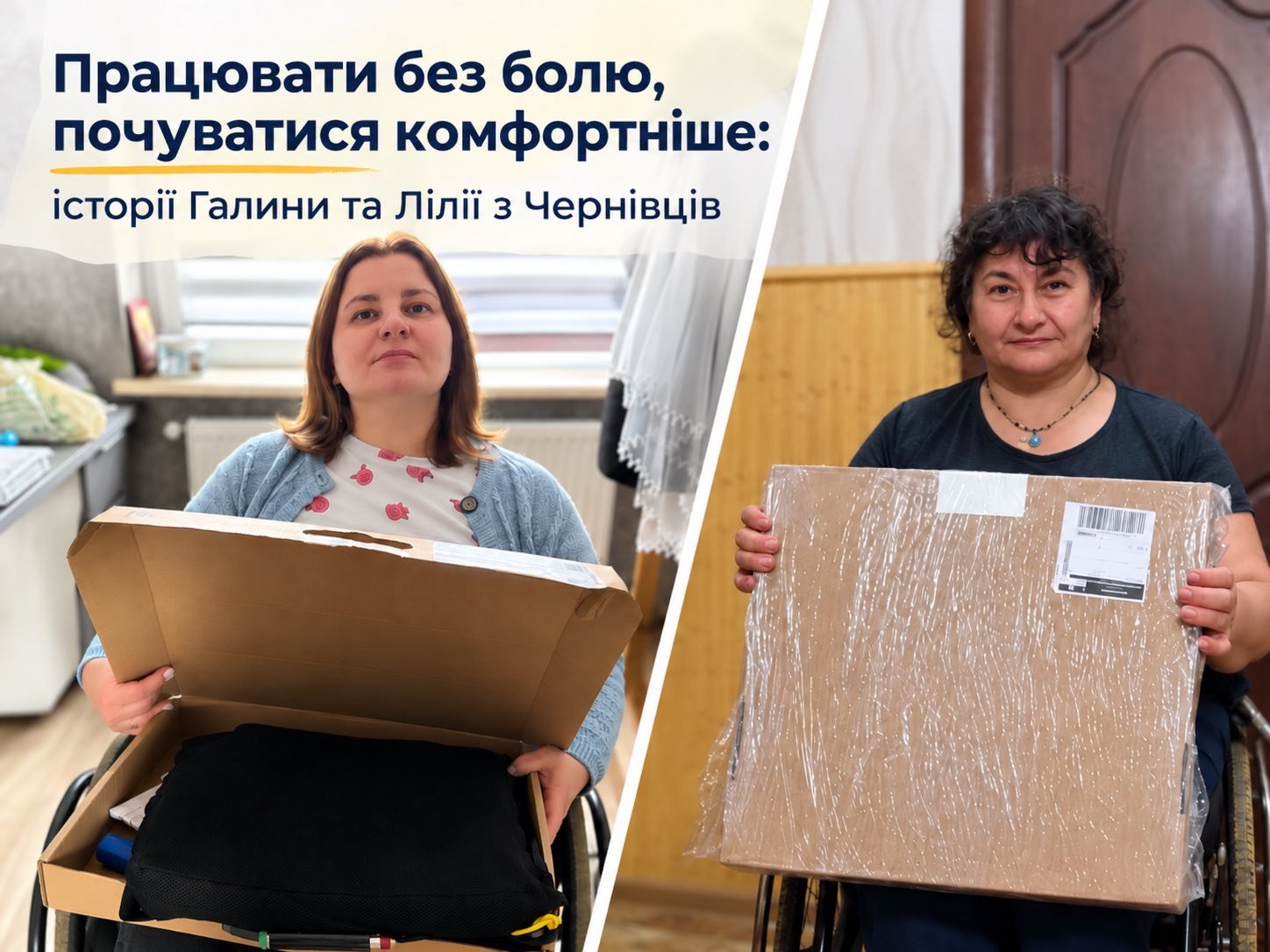
Галина з Чернівців створює весільні аксесуари для наречених. Її робота потребує творчості, терпіння та уваги до найменших деталей. За виготовленням прикрас жінка проводить багато годин, адже кожен виріб вимагає кропіткої ручної праці. Для Галини важливо мати можливість займатися улюбленою справою, однак тривала робота нерідко супроводжується фізичним дискомфортом. Жінка користується кріслом колісним, і через велике навантаження […]
Повернення з військової служби до цивільного життя — це новий етап, який нерідко супроводжується непростими викликами. Особливо для ветеранів і ветеранок, які зазнали поранень або набули інвалідності. Реабілітація, пошук роботи, доступ до послуг, відновлення соціальних зв’язків — усе це потребує не лише особистих зусиль, а й підтримки суспільства. Національна Асамблея людей з інвалідністю України (НАІУ) […]
Упродовж програмного року — з 1 жовтня 2025-го до 30 вересня 2026-го — на гарячій лінії Національної Асамблеї людей з інвалідністю України (НАІУ) було надано 821 консультацію для 680 осіб. Найчастіше люди зверталися за роз’ясненням щодо своїх прав і пільг, зокрема отримання та поновлення виплат, оформлення догляду, встановлення й переоформлення інвалідності. Близько 70% звернень стосувалися […]
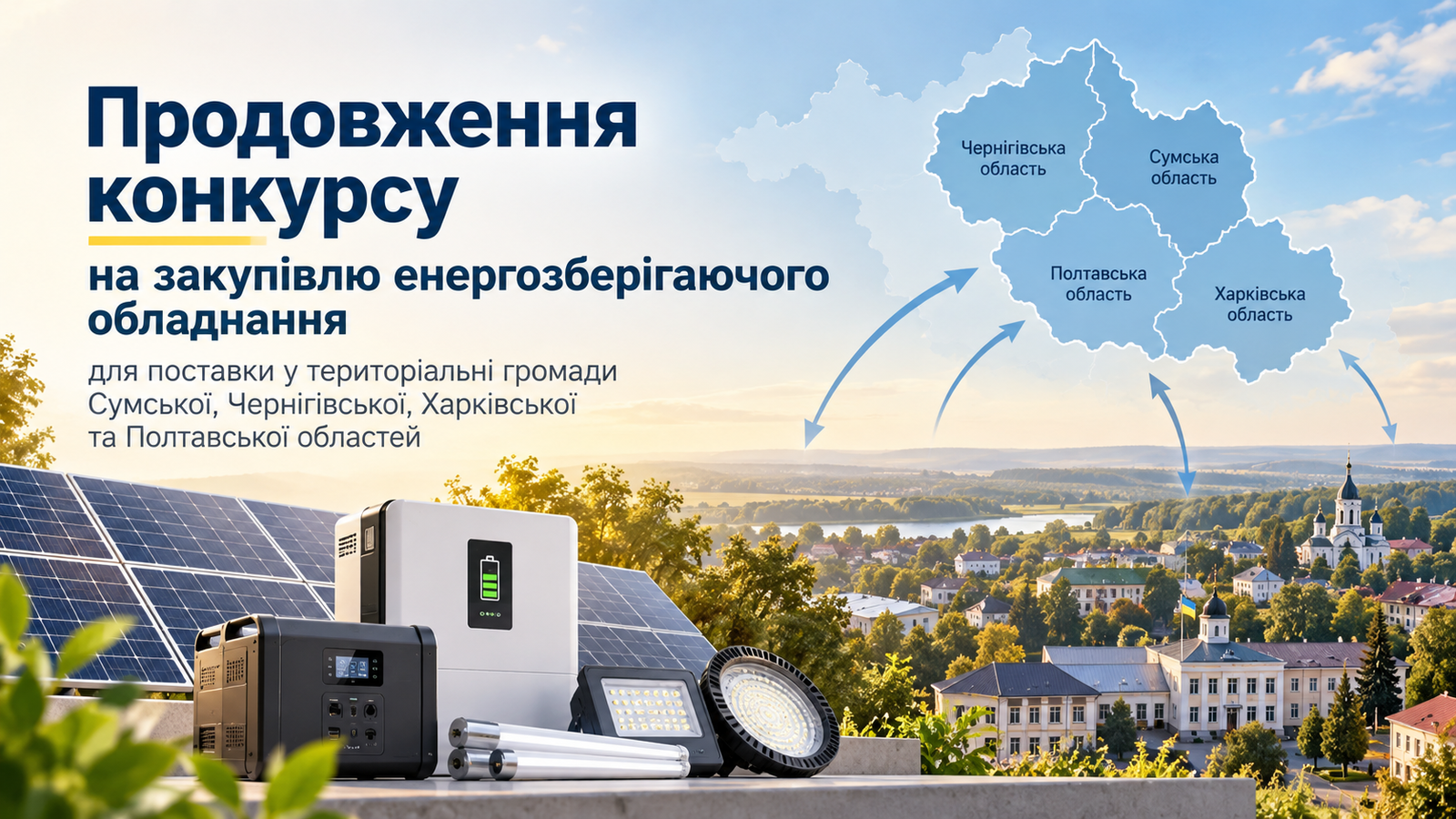
Громадська спілка “Всеукраїнське громадське об’єднання “Національна Асамблея людей з інвалідністю України” (далі – «Організатор») оголошує продовження конкурсу на закупівлю енергозберігаючого обладнання для поставки у територіальні громади Сумської, Чернігівської, Харківської та Полтавської областей. Джерело фінансування закупівлі: Дана закупівля здійснюється в рамках проєкту «Зміцнення інклюзивних послуг з охорони здоров’я, реабілітації та захисту населення, постраждалого від повномасштабного вторгнення в […]