A movement that changes space: the story of Oleh Sokolov and his struggle to improve accessibility in the Odesa community
March 4, 2026
Share:
For over forty years, he has been using a wheelchair. But for a long time now, he has not perceived it as a symbol of limitation, but rather as an element of forward movement. The path to the goal, on which he has to overcome barriers and solve very difficult everyday tasks.
...The trauma happened when he was a teenager. At a time when most people are making their first plans for adulthood, Oleh had to relearn the simplest things - how to move, live, and accept himself in a new reality. It was a period of painful questions and honest answers. Is it possible to live an active life? Is it possible to be needed? Is it possible not to disappear from life, but on the contrary, to enter it even more effectively?
His answer was movement.
For a long time, Oleg was engaged in rehabilitation, not just restoring himself, but also teaching others. He worked as an instructor in rehabilitation camps, passing on not dry theory to people with disabilities, but his own experience: how to strengthen the body, how not to lose faith, how to regain a taste for life. Because the most difficult thing is not a physical injury, but the moment when a person stops seeing a future for himself or herself.
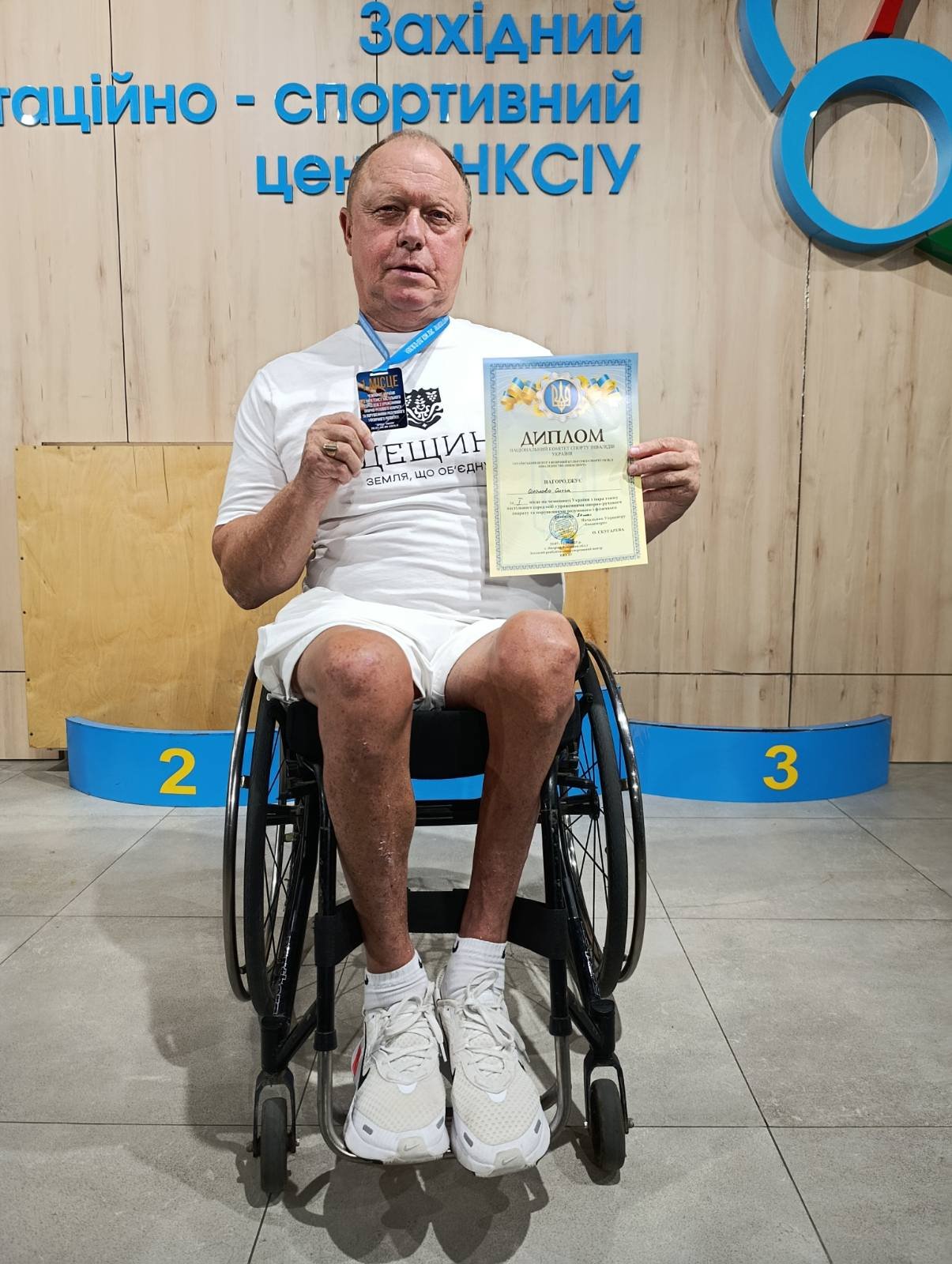
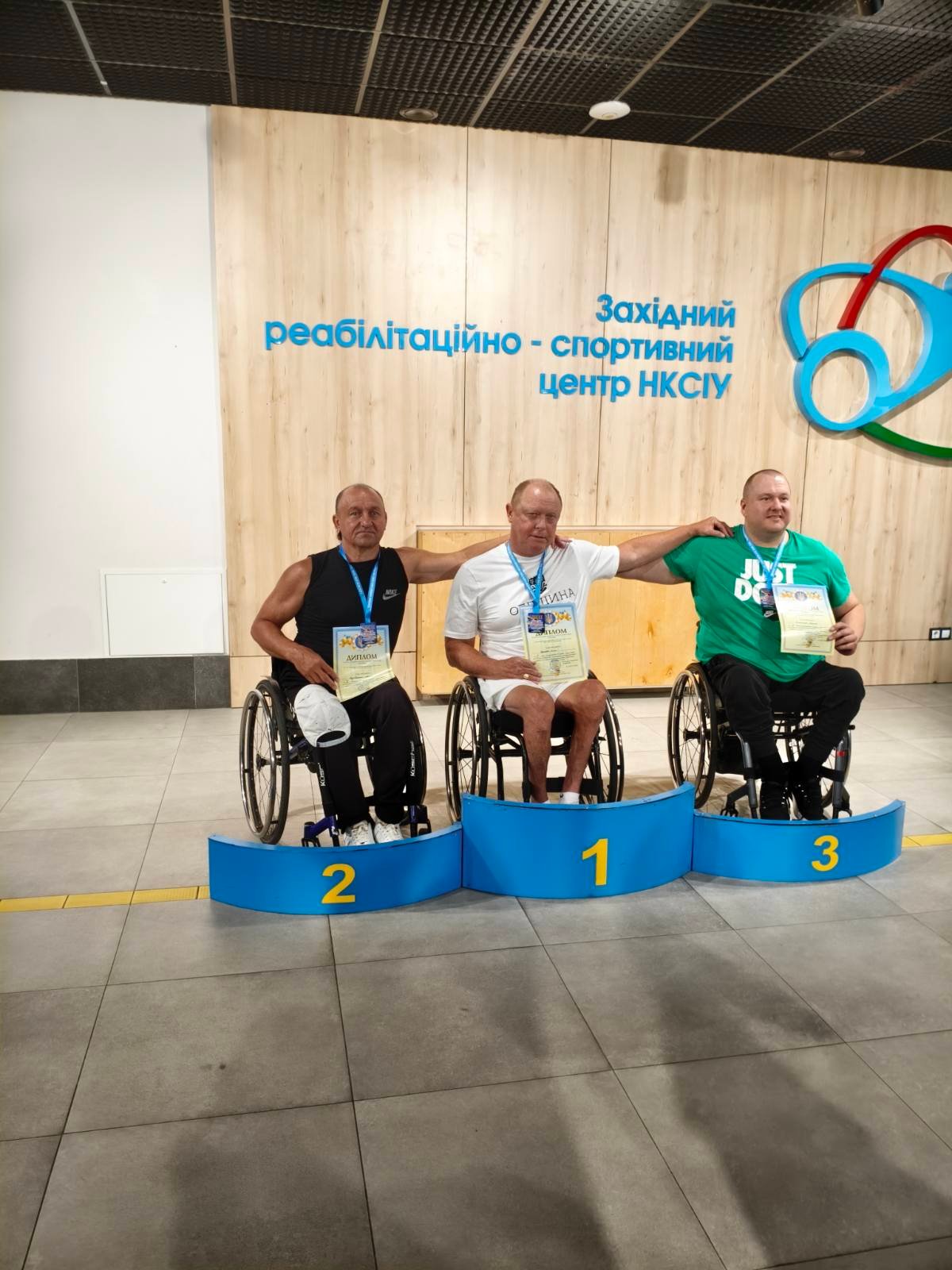
Sport has become not only a therapy for him, but also a developmental environment. Today, Oleg Sokolov is an athlete, a candidate for the Ukrainian National Para Table Tennis Team. Each training session is followed by years of discipline, ups and downs. At the age of 59, he continues to study at Uman Pedagogical University, majoring in physical education. He says it's never too late to study if you want to be useful.
In 2000, he founded the Phoenix rehabilitation sports and fitness center in Balta, Odesa Oblast. The name is not accidental. Because «Phoenix» is about rebirth. Every year, the Balta Summer event brought together people in wheelchairs from all over Ukraine. Friendships, partnerships, and even families were born there. People who had previously been forced to isolate themselves for the first time began to feel part of a large community. It was a territory where you didn't have to explain why you were having a hard time - you were understood without words.
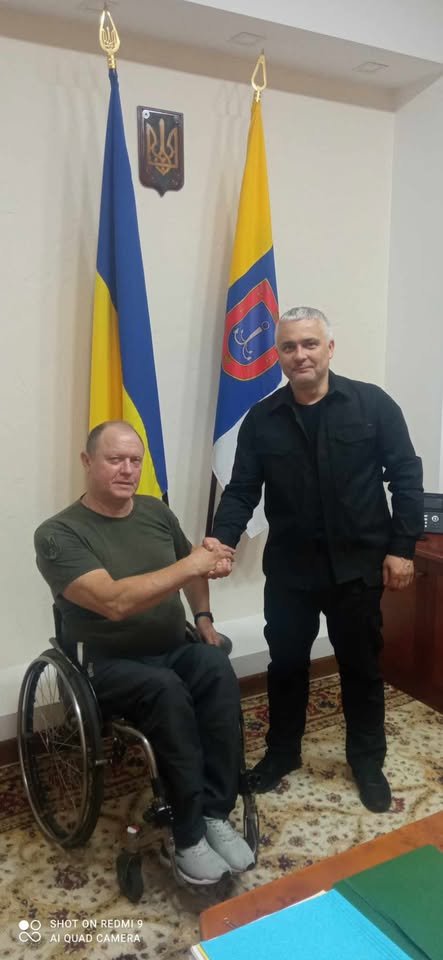
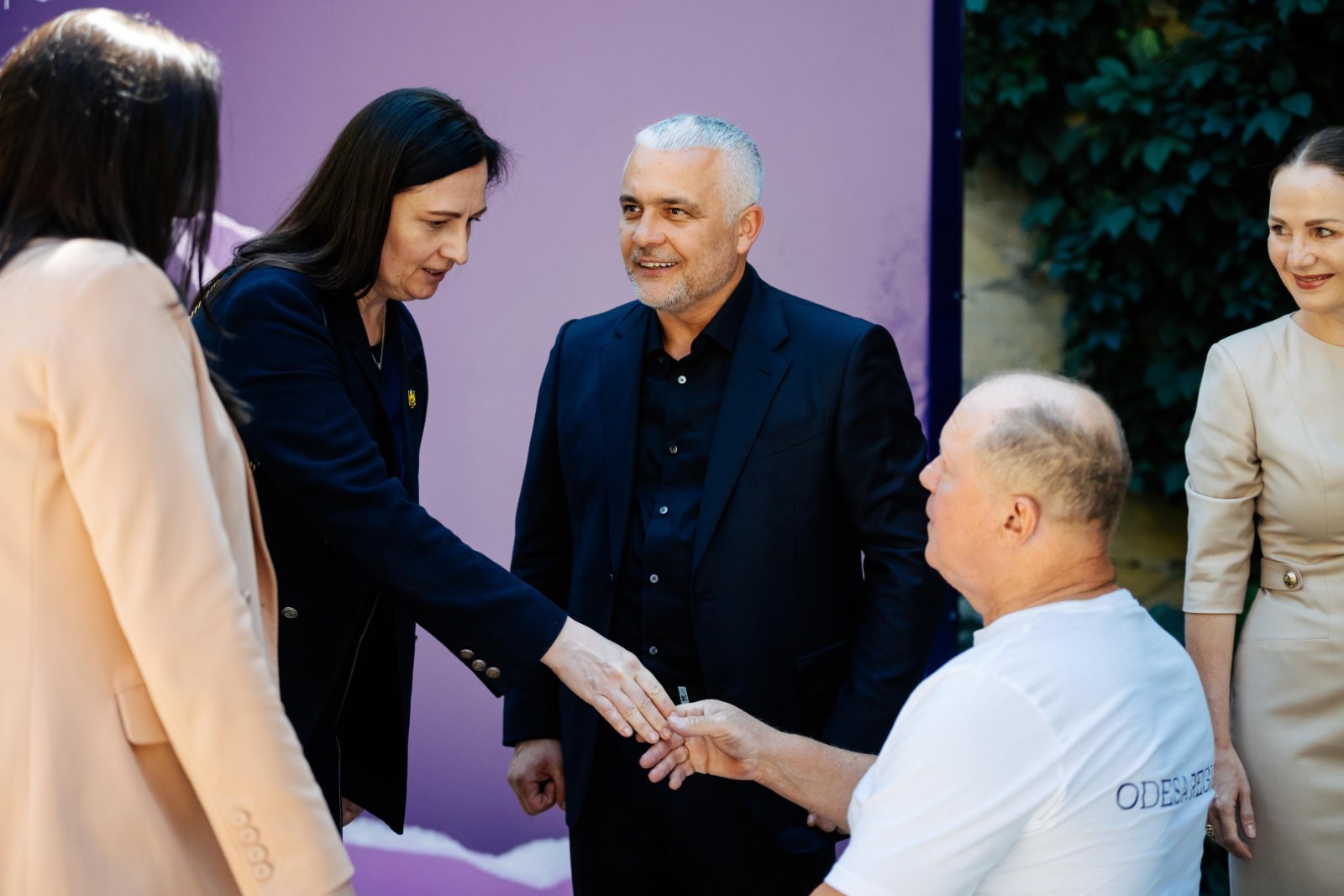
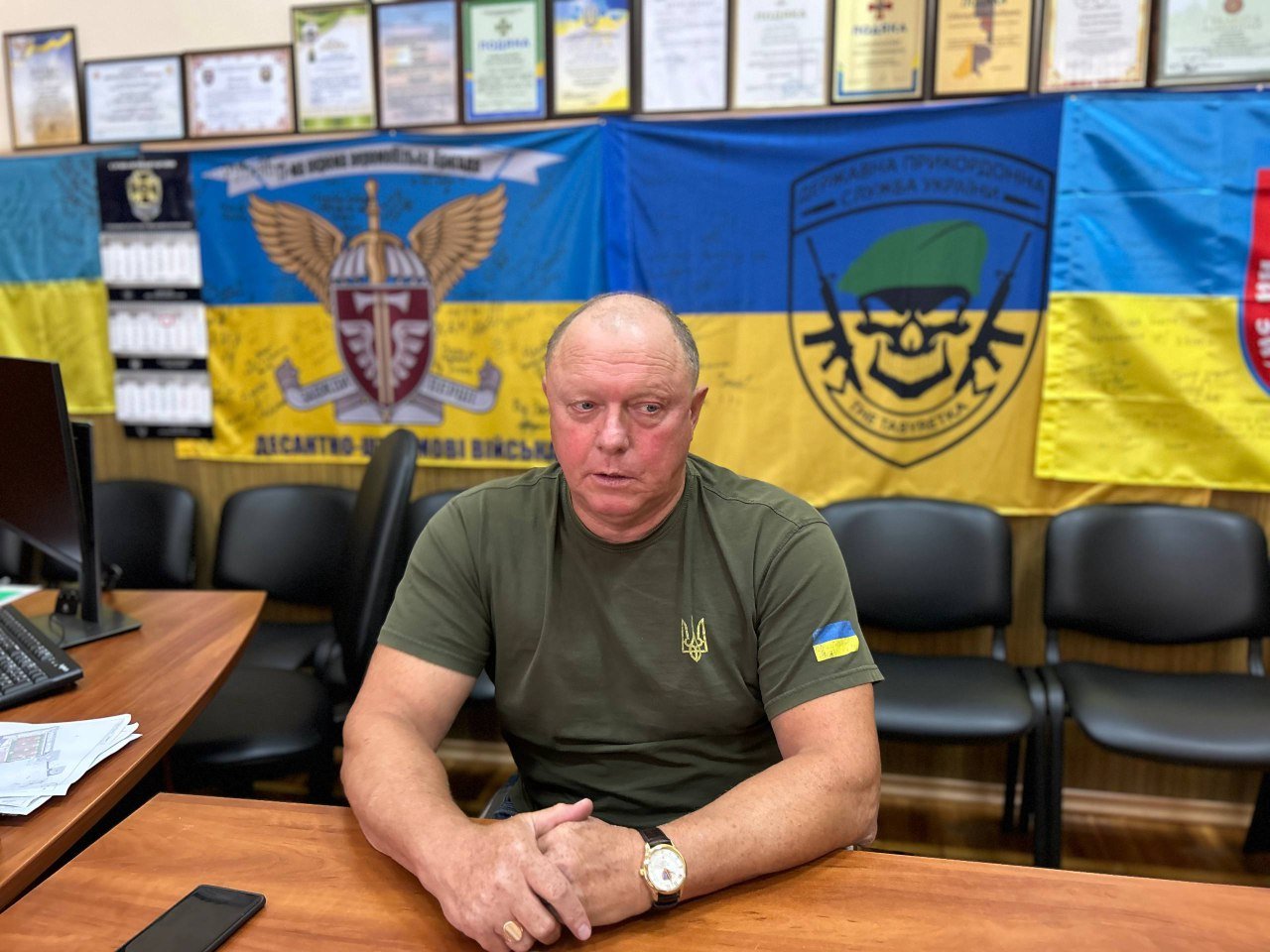
Since April 2022, Oleh Sokolov has been working as a representative of the Government Commissioner for the Rights of Persons with Disabilities at the Odesa Regional Military Administration. His work involves constant visits, monitoring, meetings, and briefings. Hospitals, schools, train stations, shelters, social institutions - he sees the region not from his office, but from the wheel level.
And what he sees is often painful.
Oleh Sokolov believes that Odesa region still has a low level of accessibility. It is better than it was, but not enough. In the pearl above the sea, a person in a wheelchair had to travel around a huge area to get from the street to the train station, for example. The ramps were installed at the wrong angle, so you couldn't use them without help. But recently, since Oleg Sokolov took over as the Government Commissioner, six lifts have been installed on the square, in different directions, for the convenience of passengers.
During the war, new problems were added. First of all, with shelters. Journalists and the public believe that there are not enough of them. There are even more questions about the accessibility of these shelters for people with limited mobility in Odesa. For a person in a wheelchair, even a small threshold set according to the standards of protection against water ingress can be an insurmountable obstacle. And when a ballistic missile is flying towards the city, you have two to five minutes to hide - time works against those who move more slowly. For people with visual impairments, the situation is even more complicated: they often do not have time to physically reach the shelter on their own.
- "There are different ways out of the situation," reflects Oleh Sokolov. "For example, the Israeli option, when a shelter room is built in an apartment. But this is a very expensive method.
Veterans are a particular pain for the Commissioner for the Rights of Persons with Disabilities. While they are at the front, society helps them. After the hospital, they are often left alone with inaccessible cities, streets, and buildings. Rehabilitation is disrupted not because of the lack of programs, but because of the inability to get to a medical center. Some people cannot leave the building because there is no one to take them out in their wheelchair. Someone's elevator doesn't work. Some need special transportation.
At meetings and public events, Oleg Sokolov constantly repeats that barrier-free accessibility is not just about concrete ramps and call buttons. It is primarily an attitude. As long as a person with a disability is perceived as a «stranger» or an «exception,» barriers will remain even in new buildings.
He talks to the government about systemic solutions, to business about respect for customers, and to communities about shared responsibility. Every coffee shop, pharmacy, hotel, or coworking space should be open to everyone. Because accessibility is not a privilege, but the norm of a civilized city.
His goal is ambitious - to make Odesa truly barrier-free. A city where a person in a wheelchair does not plan a route as a special operation. Where a veteran after amputation can freely return to work. Where a child with a disability gets rehabilitated without logistical quests. Where shelters save everyone - without exception.
Oleg Sokolov doesn't like pathetics - he talks about systematic work. About responsibility. About the long distance that needs to be covered together.
Today, he and like-minded people have come a long way. They took part in the advocacy campaign «Humanitarian Assistance: Everyone Has the Right to Protection», which is part of the project «Strengthening the Protection of the Rights of Persons with Disabilities in Humanitarian Response and Recovery in line with the UN Convention on the Rights of Persons with Disabilities».
Civic activists worked with the authorities to investigate the issue of accessibility of shelters for people with disabilities. In their work, they used the requirements of the UN Convention on the Rights of Persons with Disabilities, in particular Article 11 of this document, a number of government decrees and an order of the Ministry of Internal Affairs that define the requirements for the arrangement and operation of the civil defense facilities: ensuring free access, recommendations for duplicating information tactilely and in Braille.
Campaigners also surveyed people with disabilities about the accessibility of the route to the shelter, the entrance, and the conditions inside. The level of accessibility and reliability of warning channels, in particular for people with hearing impairments, as well as the availability of navigation and clear signs were investigated.
Oleg Sokolov's team found that the number of accessible shelters in the community is insufficient: according to their data, only 78 shelters out of 1208 were more or less suitable for people with disabilities. In addition, they are unevenly distributed throughout the city: in some areas there are more shelters, in others there are none at all.
However, the study showed that the typical barriers to storage are not that difficult to remove. Of course, with a sincere desire to do so. After all, the biggest obstacles for people with disabilities are stairs to shelters when they are the only way to a safe place, lack of simple solutions to overcome height differences, thresholds or narrow passages, insufficient lighting and lack of navigation. A siren as the only warning channel does not meet the needs of people with hearing impairments, and digital channels, such as messengers and smartphone apps, are not universal either. Instead, visual and textual channels are needed as a mandatory element of multichannel alerts.
The participants of the roundtable, which summarized the results of the advocacy campaign in Odesa, recommended to the executive bodies of the city council, specialized structural units, balance holders of shelters and other responsible entities a draft of «quick solutions»: a list of simple steps that will allow to remedy the situation quickly and without exorbitant budgetary costs.
The first step is to introduce a minimum standard of access at the entrance to shelters, where more radical solutions require more time and financial resources. The «temporary standard» includes metal or wooden ladders, portable ramps, and other temporary solutions to overcome stairs and thresholds.
- However, please note that we consider such works to be a transitional stage to the stationary reconstruction," emphasizes Oleg Sokolov.
The second step is to identify priority shelters that will be among the first to be reconstructed. To do this, Odesa activists will analyze the actual need for such facilities, using the results of surveys or appeals from people with disabilities, the proximity of these facilities to the residence or stay of a large number of people, as well as the accessibility of the route and the possibility of quick project implementation.
Step three is the introduction of a basic unified navigation package. This means external signs to the shelter: contrasting, clear, at an accessible height, internal navigation, i.e. route markings, warnings about thresholds or stairs, designation of safe zones. And also a simple indication of the accessibility status: accessible, partially accessible, temporarily inaccessible - with a brief explanation of what exactly the facility is not working.
The fourth step is multi-channel alerting, with mandatory visual and textual duplication. This includes visual and textual alert channels, the development of official digital channels (bot/channel + push with vibration), and backup text channels (SMS), which should complement sirens and loudspeakers.
- The priority should be given to public places with a large number of people: public utilities, social infrastructure, places of temporary residence," adds Oleh Sokolov.
The initiative group proposes to provide for pilot solutions, with their subsequent scaling up based on the results of an effectiveness assessment and survey data. According to Odesa activists, budget funding for their projects is also important. They recommended that the city authorities, when planning or refining measures for 2026, separately allocate funding for “quick fixes”: accessibility of entrances, navigation, and elements of multi-channel alerts.
The activists handed over the roundtable resolution to the departments of the City Council, the Department of Municipal Security, the Regional Military Administration, and the Main Department of the State Emergency Service in the region, and promised their support in its implementation.
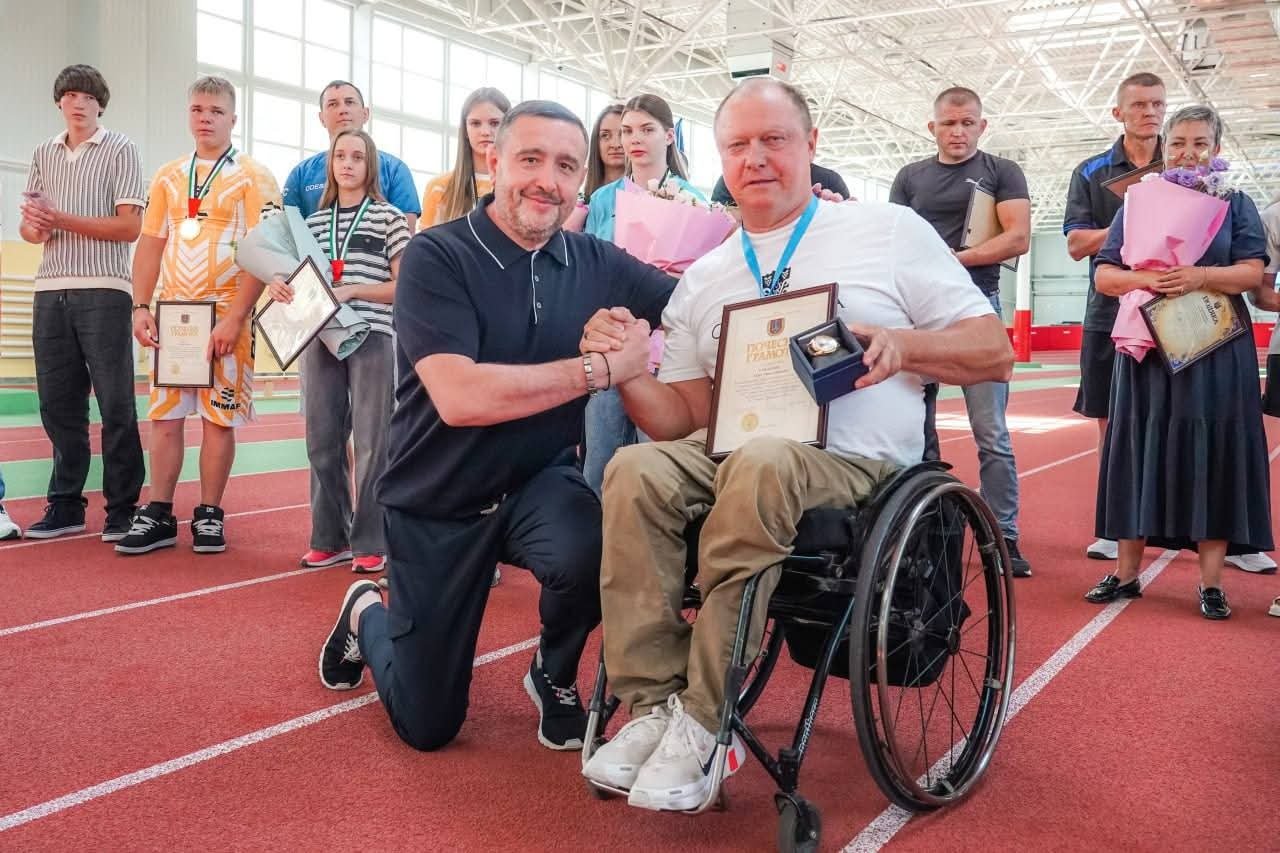
The leadership of the Odesa Regional Military Administration has been effectively assisting civic activists. «Oleh Kiper, the head of the Regional Military Administration, has done a lot to implement our ideas for achieving barrier-free access in the region,» says Sokolov. "Many of the projects implemented are his personal merit. We are sincerely grateful to him and hope that together we will achieve our common goal.".
They are confident that in cooperation with the authorities and concerned citizens they will succeed!
...And perhaps that is why the story of Oleh Sokolov is not just the story of a man in a wheelchair. It is the story of a man in a city that is learning to move faster than its barriers are disappearing.
Yuriy Patykivsky, project communication manager
The project “Strengthening the protection of the rights of persons with disabilities during humanitarian response and recovery in accordance with the UN Convention on the Rights of Persons with Disabilities” is being implemented by the NAPD within the framework of a grant from the International Disability Alliance (IDA). International Disability Alliance (IDA)
Повернення з військової служби до цивільного життя — це новий етап, який нерідко супроводжується непростими викликами. Особливо для ветеранів і ветеранок, які зазнали поранень або набули інвалідності. Реабілітація, пошук роботи, доступ до послуг, відновлення соціальних зв’язків — усе це потребує не лише особистих зусиль, а й підтримки суспільства. Національна Асамблея людей з інвалідністю України (НАІУ) […]
Упродовж програмного року — з 1 жовтня 2025-го до 30 вересня 2026-го — на гарячій лінії Національної Асамблеї людей з інвалідністю України (НАІУ) було надано 821 консультацію для 680 осіб. Найчастіше люди зверталися за роз’ясненням щодо своїх прав і пільг, зокрема отримання та поновлення виплат, оформлення догляду, встановлення й переоформлення інвалідності. Близько 70% звернень стосувалися […]
2 вересня 2026 року Генеральна Асамблея ООН ухвалила резолюцію 80/305 «Доступ до асистивних технологій». Це важливий крок до того, щоб технології, які допомагають людям навчатися, працювати, спілкуватися та жити самостійно, стали доступнішими в усьому світі. Сьогодні понад 2,5 мільярда людей потребують асистивних технологій. Це, зокрема, крісла колісні, слухові апарати, засоби комунікації та інші пристрої, які […]
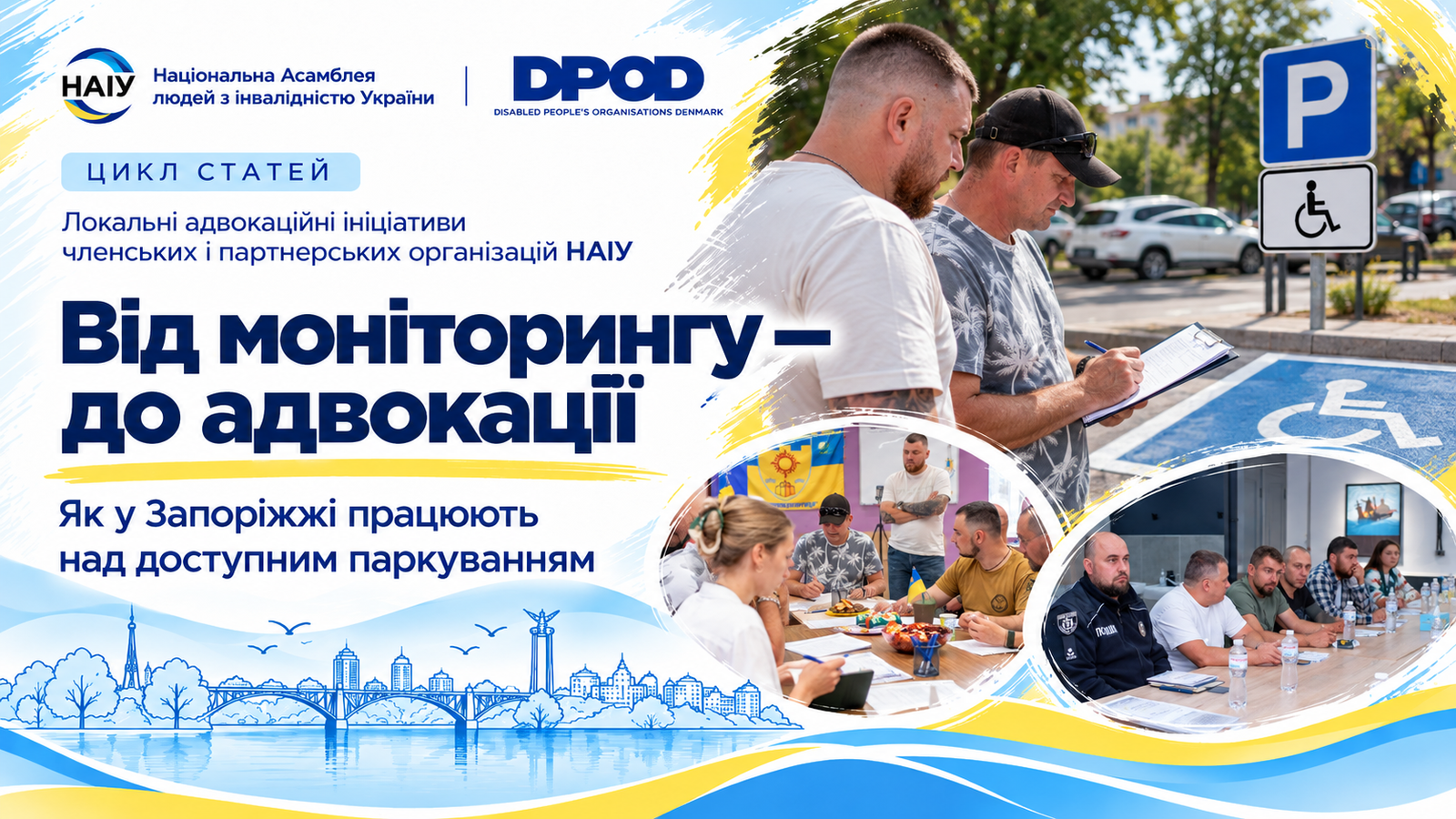
НАІУ продовжує цикл матеріалів про локальні адвокаційні ініціативи членських і партнерських організацій за підтримки та фінансування Disabled People’s Organisations Denmark (DPOD). П’ята історія — про досвід запорізької ГО «СИЛА РОЗВИТКУ», яка порушила питання доступності паркувального простору та відповідального паркування. Паркомісце для людини з інвалідністю — це не просто питання зручності. Якщо воно зайняте, неправильно облаштоване […]
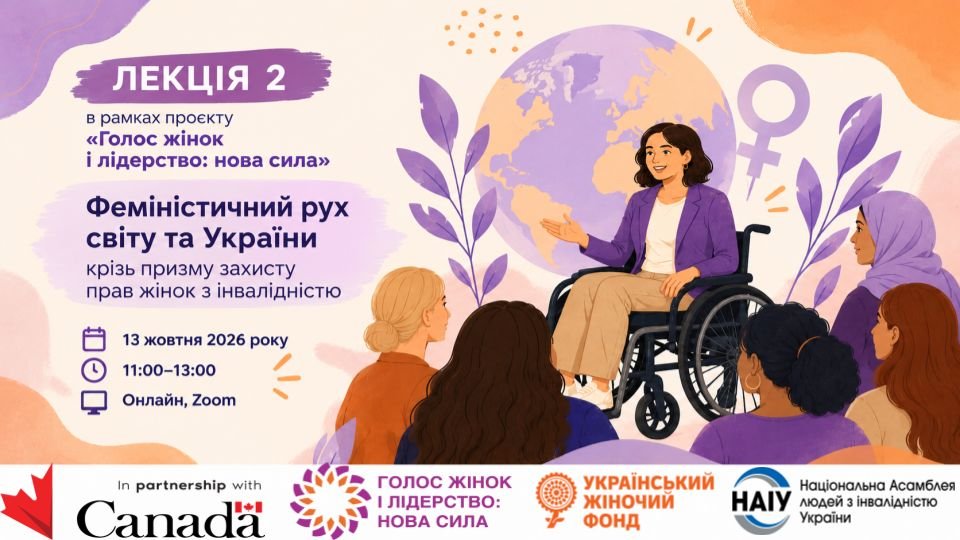
13 жовтня 2026 року з 11:00 до 13:00 відбудеться друга лекція в межах проєкту «Голос жінок і лідерство: нова сила», присвячена розвитку світового та українського феміністичного руху в контексті захисту прав жінок з інвалідністю. Тема зустрічі – «Феміністичний рух світу та України крізь призму захисту прав жінок з інвалідністю». Феміністичний рух у світі та Україні пройшов тривалий […]
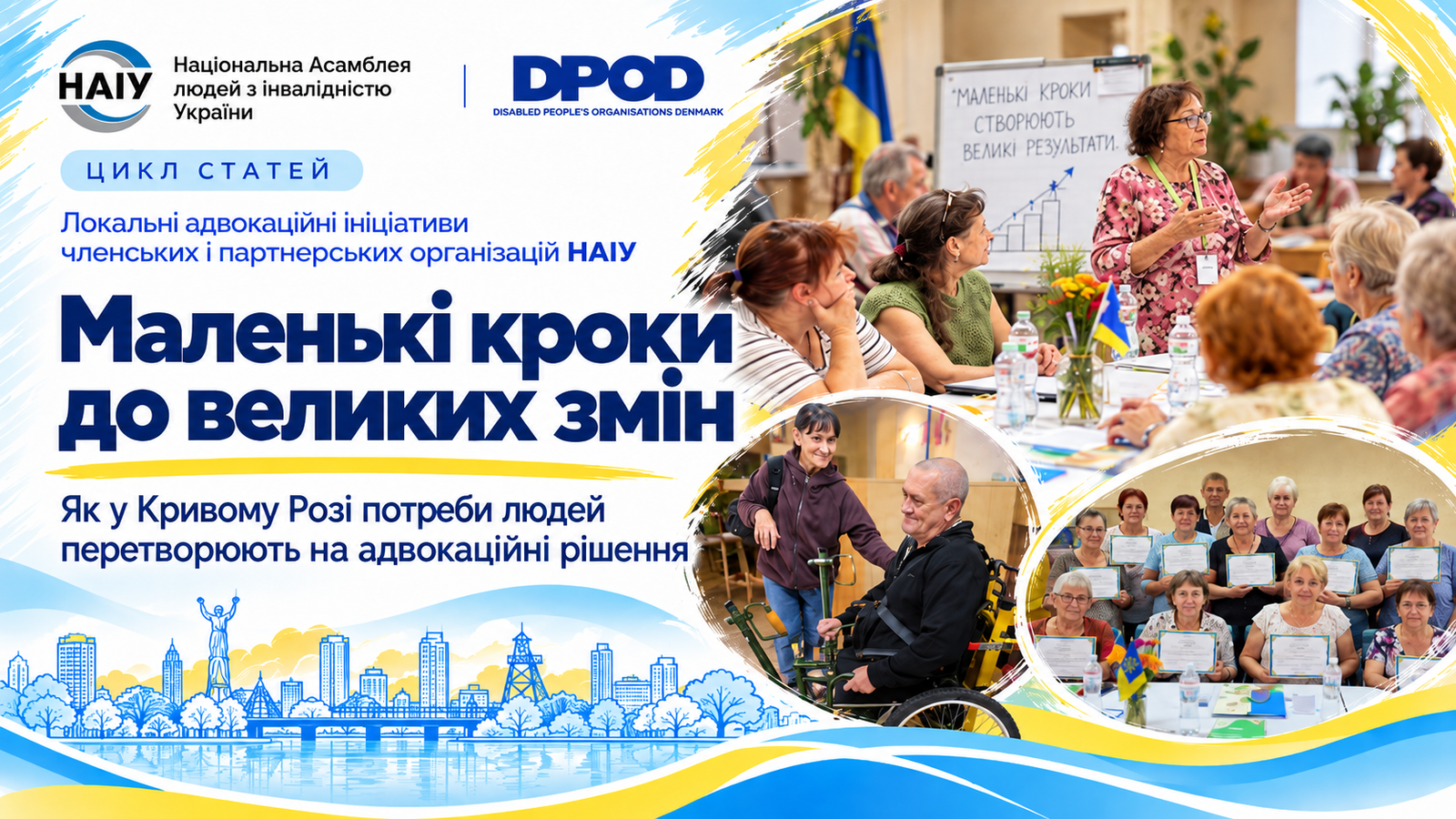
Іноді потрібна послуга є — але людина не знає про неї. Інформація опублікована — але її складно зрозуміти. Лікарня працює — але до неї важко дістатися. Цифровий сервіс доступний — але скористатися ним самостійно може не кожен. Саме з таких повсякденних ситуацій розпочалася адвокаційна робота Інгулецької районної організації ветеранів м. Кривого Рогу в межах проєкту […]