Safe shelter for everyone: a campaign for accessibility in medical facilities launched in Opishne
March 4, 2026
Share:
Safety should be accessible to everyone. During a full-scale war in Ukraine, with constant air raids, a shelter is not just a technical room, but a space that saves lives. And if some community members are physically unable to get there or navigate inside, it means unequal access to safety.
On February 26, the advocacy campaign «Communities for All: Creating Change Together with People with Disabilities» advocacy campaign was launched within the framework of the project «Disability-inclusive multisectoral humanitarian assistance for internally displaced persons, returnees, veterans and host communities in Ukraine» implemented by the National Assembly of People with Disabilities of Ukraine in partnership with the European Disability Forum (EDF) with the support of the German Federal Foreign Office (GFFO) and CBM (Christian Blind Mission).
Under martial law, shelter in medical facilities is critical. However, most of them have not historically been designed to be barrier-free and are currently inaccessible to people with disabilities, the elderly, hospital patients with musculoskeletal disorders, pregnant women, people with temporary mobility impairments, and parents with small children.
The lack of ramps, lifts, accessible bathrooms, narrow passages, and difficult routes to shelters all create physical barriers. Along with these, there is another type of barrier that people with disabilities face on a daily basis: information.
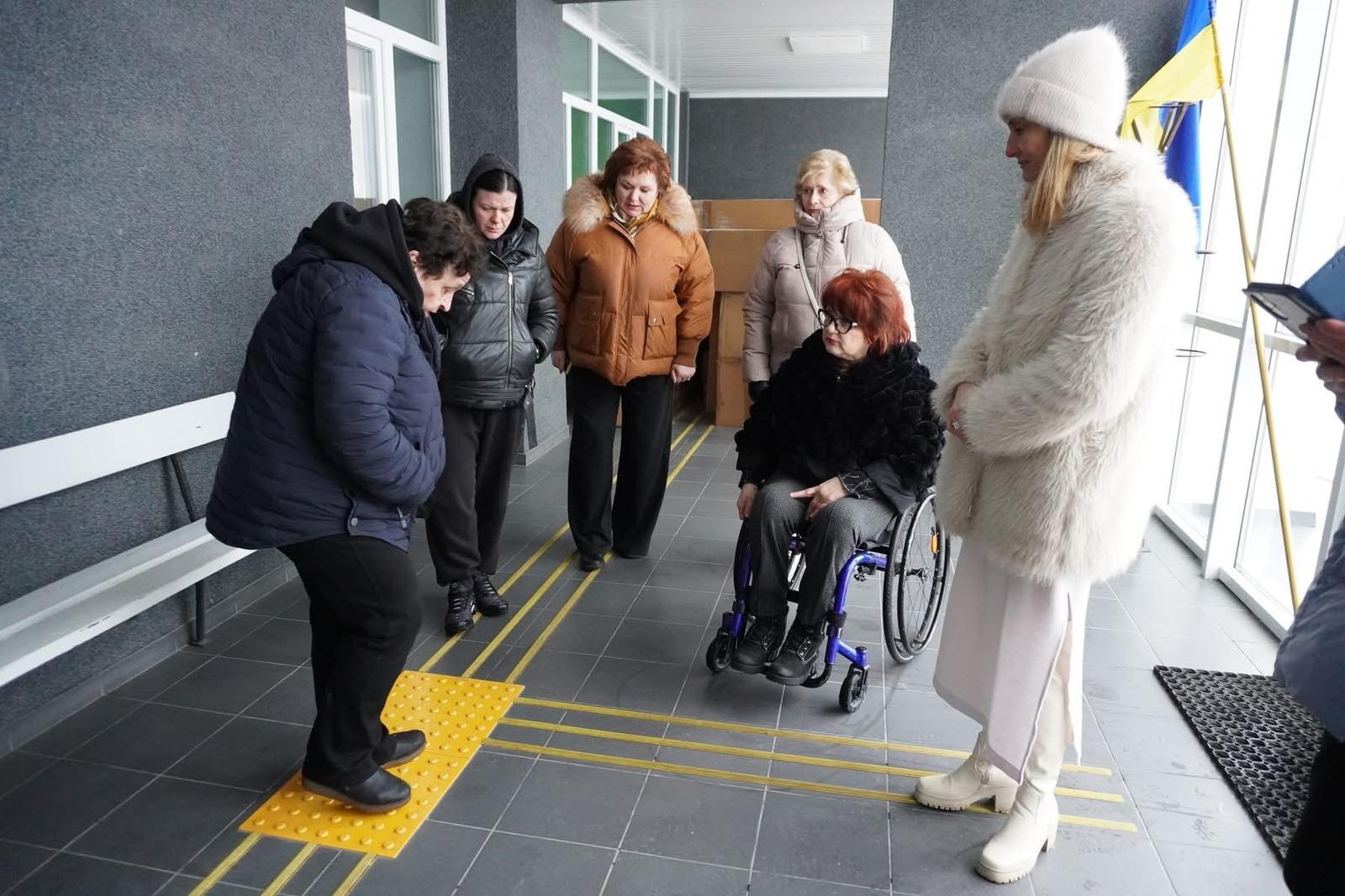
People with visual impairments need tactile navigation and contrasting labeling. People with hearing impairments need visual alarms and clear written instructions. Without this, the risk of panic, injury, and disorientation increases significantly.
That is why the campaign in Opishnia has a clear goal: to ensure physical and navigational accessibility of the shelter of the Primary Health Care Center of the Opishnia Village Council in accordance with state building codes.
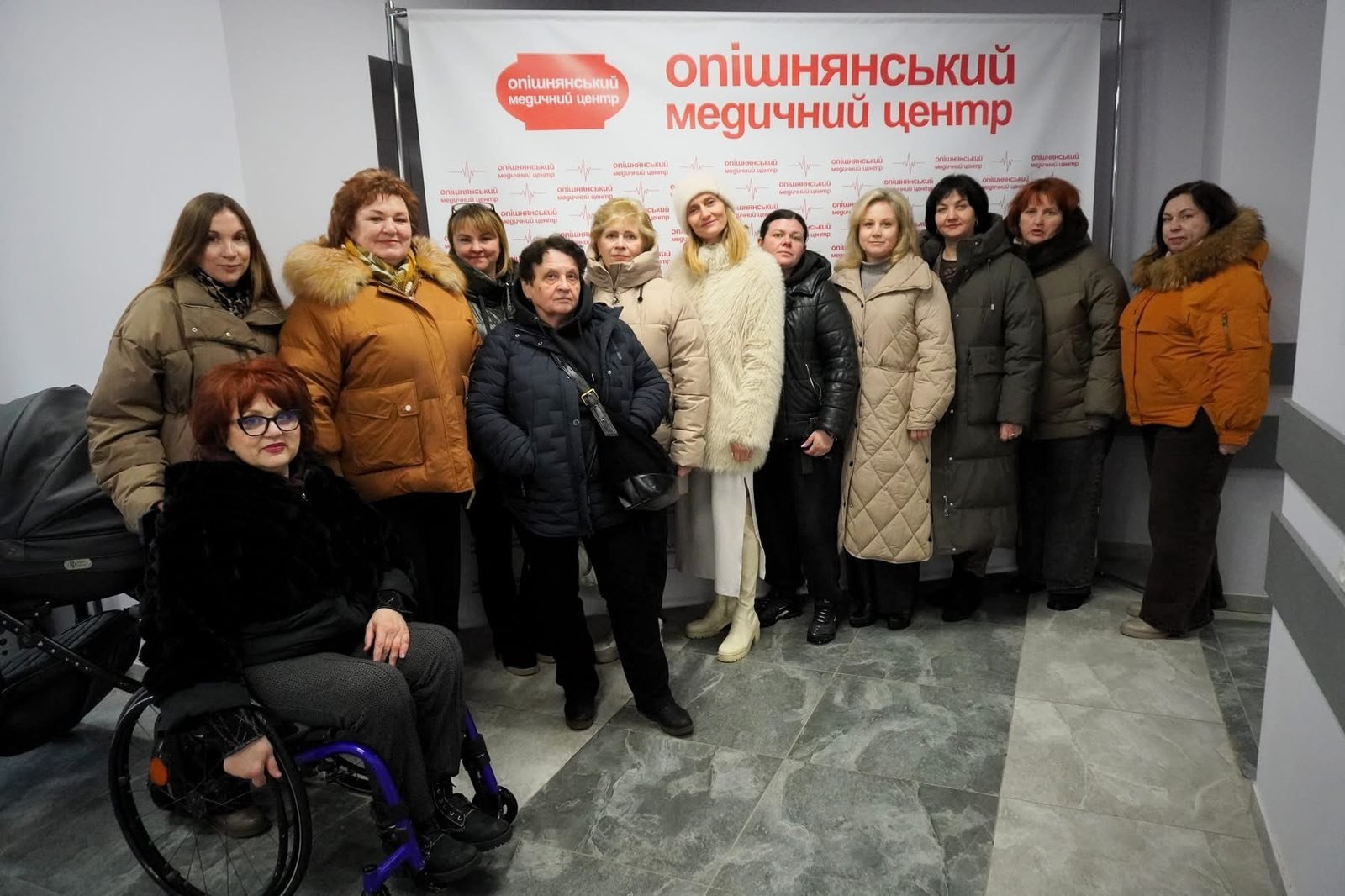
The first event of the advocacy campaign brought together more than 40 participants - veterans, local government representatives, people with disabilities, active community members, and guests from other communities in Poltava Oblast.
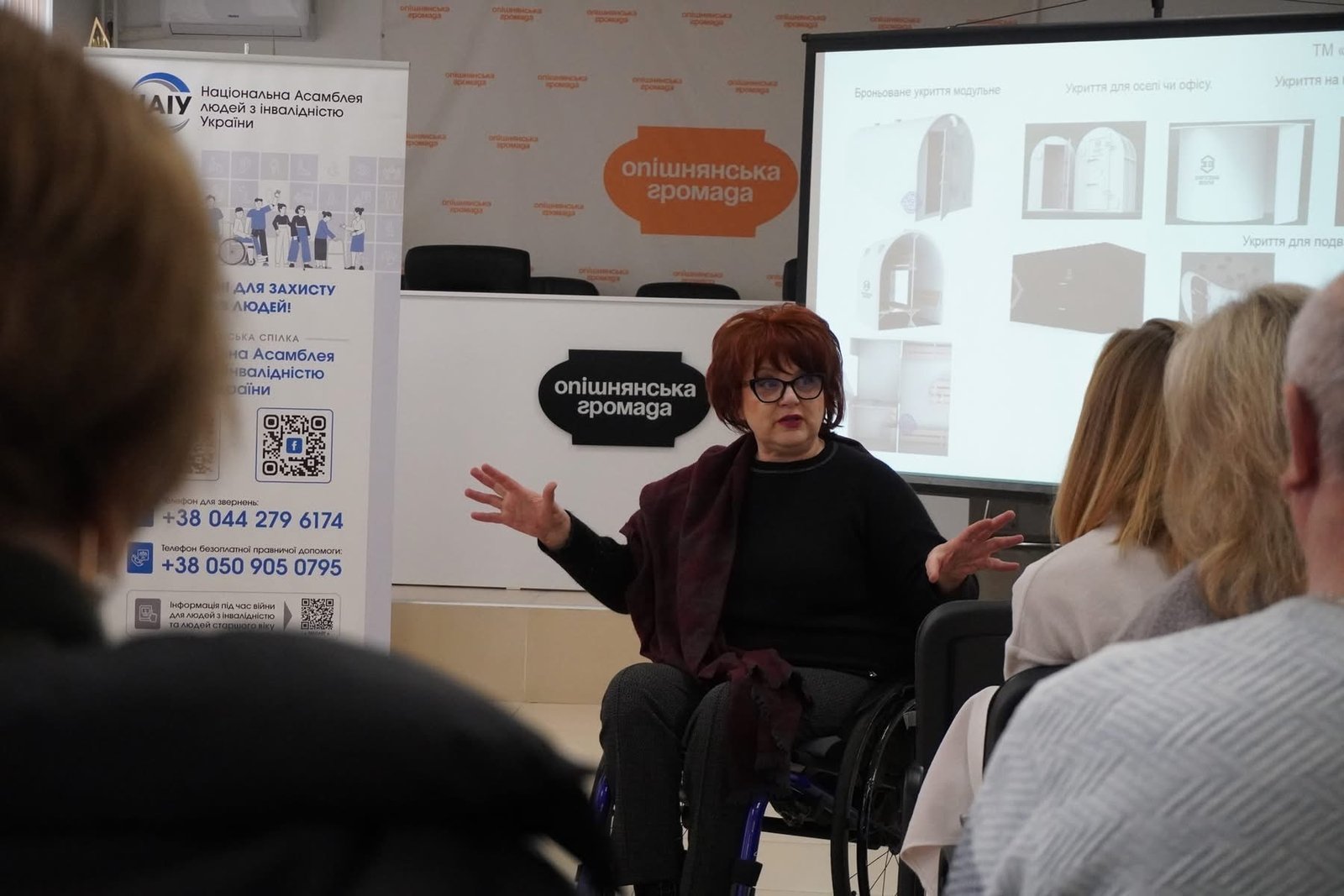
The meeting began with a consultation session with the participation of Tetyana Zhydkova, advisor to the National Assembly of People with Disabilities of Ukraine. She presented the current requirements of the state building codes regarding the inclusiveness of protective structures.
The participants discussed the shelter not only as a formally compliant room, but also as a space where people can comfortably stay for hours - in a difficult emotional state, with children, with chronic diseases, after surgery, or with injuries.
The theoretical part was followed by a practical audit of the medical facility's shelter. The hospital building has an area of over 3,000 square meters and was previously used as a military hospital. The renovation is being carried out in stages, which makes it possible to integrate barrier-free principles already at the stage of repair work.
Mykola Riznyk, head of the community, emphasized: «It is important for us that everyone, including people with limited mobility, can get to the shelter without hindrance. The practical recommendations of the experts will help us take this into account when renovating the premises.».
The campaign is being implemented by the National Assembly of People with Disabilities of Ukraine and the Poltava City Public Association of Persons with Disabilities «Vira«. The campaign is coordinated by Iryna Tverdokhlib at the regional level and Natalia Pruhlo at the community level.
A meeting with the community leadership is planned with a written request to determine specific deadlines for implementing the recommendations and including them in the repair plan.
The campaign in Opishne is an example of how systemic change is born out of dialogue and the willingness of the authorities to hear the needs of their residents. After all, inclusive security is not an option or a formality. It is a basic right of every person.
Oleksandra Perkova, Communications Manager of the Project
Гуманітарна допомога може бути передбачена програмою, профінансована і навіть доступна у громаді. Але головне питання інше: чи може людина, яка її потребує, реально нею скористатися? Саме про це говорили учасники дворівневого навчання «Гуманітарна діяльність: врахування потреб осіб з інвалідністю», яке у жовтні провела Національна Асамблея людей з інвалідністю України. До навчання долучилися представники гуманітарних і […]
Шукаємо координатора(-ку) з комунікацій у команду НАІУ (на проєкт) Національна Асамблея людей з інвалідністю України (НАІУ) реалізує проєкт «Інклюзія передусім — захист і підтримка дітей з аутизмом та іншими видами інвалідності, ветеранів і ветеранок в Україні», спільно з СВМ та СВМ Італія, спрямований на підтримку ветеранів та ветеранок, розвиток доступних можливостей для їхньої реабілітації, протезування, […]
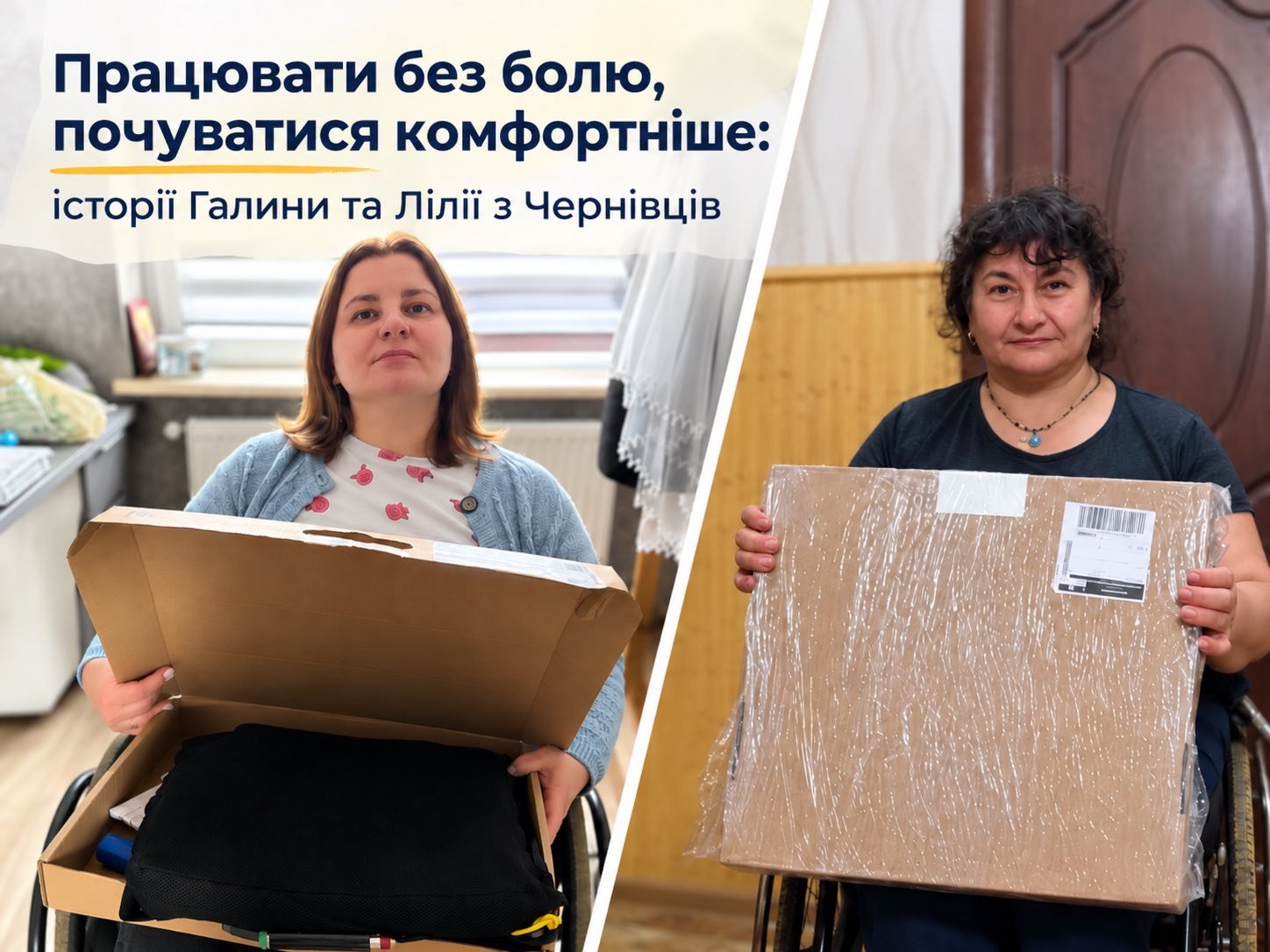
Галина з Чернівців створює весільні аксесуари для наречених. Її робота потребує творчості, терпіння та уваги до найменших деталей. За виготовленням прикрас жінка проводить багато годин, адже кожен виріб вимагає кропіткої ручної праці. Для Галини важливо мати можливість займатися улюбленою справою, однак тривала робота нерідко супроводжується фізичним дискомфортом. Жінка користується кріслом колісним, і через велике навантаження […]
Повернення з військової служби до цивільного життя — це новий етап, який нерідко супроводжується непростими викликами. Особливо для ветеранів і ветеранок, які зазнали поранень або набули інвалідності. Реабілітація, пошук роботи, доступ до послуг, відновлення соціальних зв’язків — усе це потребує не лише особистих зусиль, а й підтримки суспільства. Національна Асамблея людей з інвалідністю України (НАІУ) […]
Упродовж програмного року — з 1 жовтня 2025-го до 30 вересня 2026-го — на гарячій лінії Національної Асамблеї людей з інвалідністю України (НАІУ) було надано 821 консультацію для 680 осіб. Найчастіше люди зверталися за роз’ясненням щодо своїх прав і пільг, зокрема отримання та поновлення виплат, оформлення догляду, встановлення й переоформлення інвалідності. Близько 70% звернень стосувалися […]
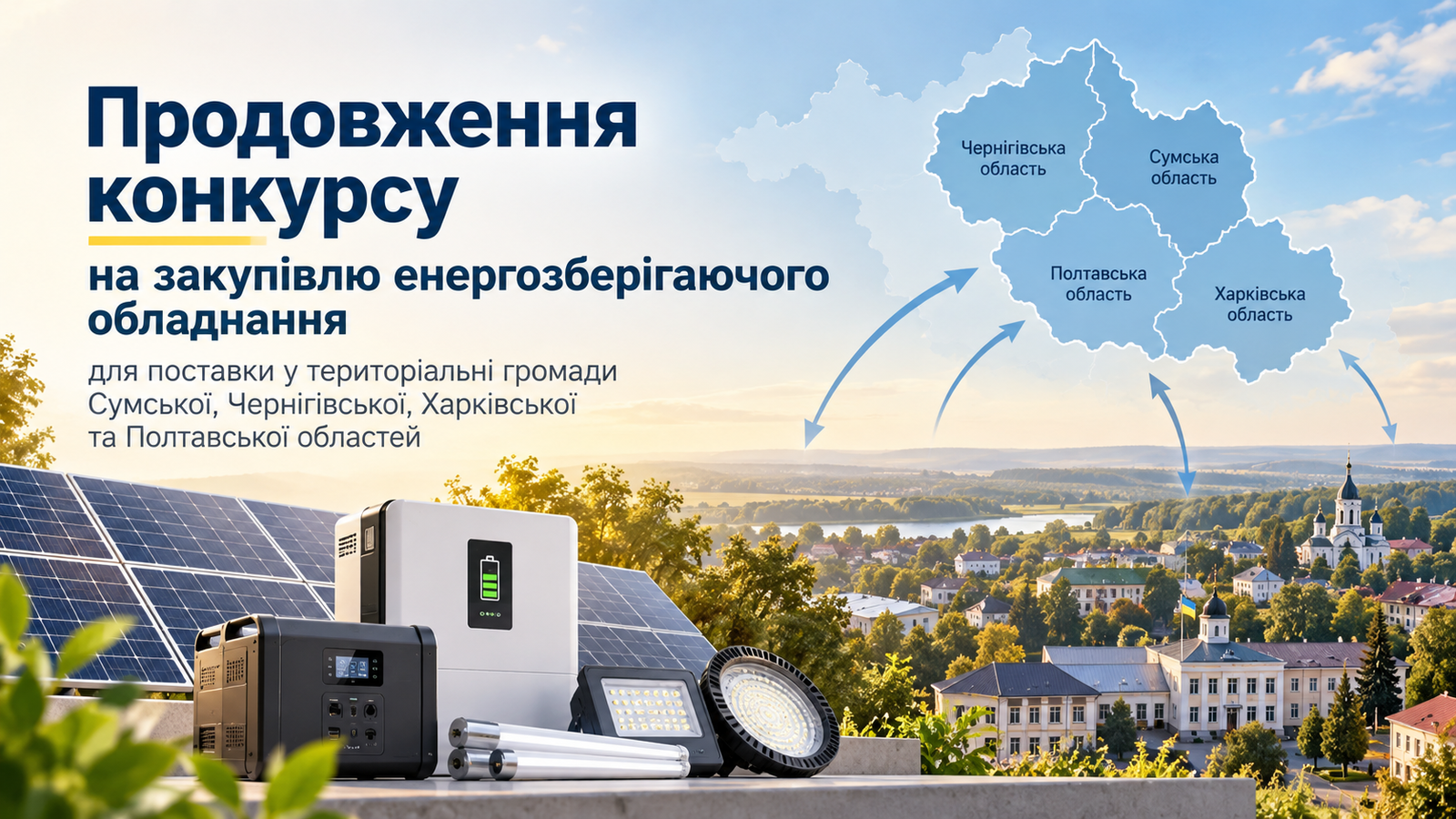
Громадська спілка “Всеукраїнське громадське об’єднання “Національна Асамблея людей з інвалідністю України” (далі – «Організатор») оголошує продовження конкурсу на закупівлю енергозберігаючого обладнання для поставки у територіальні громади Сумської, Чернігівської, Харківської та Полтавської областей. Джерело фінансування закупівлі: Дана закупівля здійснюється в рамках проєкту «Зміцнення інклюзивних послуг з охорони здоров’я, реабілітації та захисту населення, постраждалого від повномасштабного вторгнення в […]