Leadership, Resilience, and Recovery: Results of a Project Supporting Women with Disabilities in Times of War
February 13, 2026
Share:
The Russian Federation’s full-scale war against Ukraine has significantly intensified the social, economic, and psychological challenges that women with disabilities and women from other vulnerable groups face on a daily basis.
Limited access to resources, services, information, and decision-making processes, combined with constant stress and danger, has led to increased marginalization of this group.
It was in response to these challenges that the project “Humanitarian Response and Recovery: Strengthening the Leadership of Organizations of Women with Disabilities” was implemented by the National Assembly of People with Disabilities of Ukraine (NAPD) with financial support from the UN Women’s Peace and Humanitarian Fund (WPHF) and technical support from UN Women in Ukraine.
The aim of the project was to strengthen the capacity of civil society organizations led by women with disabilities, or those working to protect their rights, to engage effectively in humanitarian response, community recovery, and the promotion of meaningful participation of women with disabilities in public life. The project was implemented in seven regions of Ukraine that have been significantly affected by the war: Dnipropetrovsk, Zaporizhzhia, Kirovohrad, Mykolaiv, Poltava, Sumy, and Kharkiv regions.
Within the initiative, humanitarian assistance was combined with psychological and psychosocial support, legal and educational components, leadership development, and institutional strengthening of civil society organizations. Overall, the project reached more than 1,700 unique women beneficiaries, demonstrating its scale and high relevance.
Civil society organization “I Know — You Can” , Dnipro
In the city of Dnipro, the civil society organization “I Know — You Can” focused on comprehensive support for women with disabilities, mothers of children with disabilities, internally displaced women (IDPs), and older women. A total of 207 unique beneficiaries received support. Offline leadership trainings contributed to increased self-confidence, improved communication skills, and greater readiness among women to actively participate in community life. Psychological support provided through group sessions and individual consultations helped participants stabilize their emotional well-being and build networks of mutual support. Legal awareness activities played an important role in increasing women’s understanding of mechanisms for protecting their rights. The distribution of food packages to 100 women helped reduce food insecurity and supported households during a period of crisis.
The Organization of Veterans of Ukraine of the Industrial District of Kharkiv
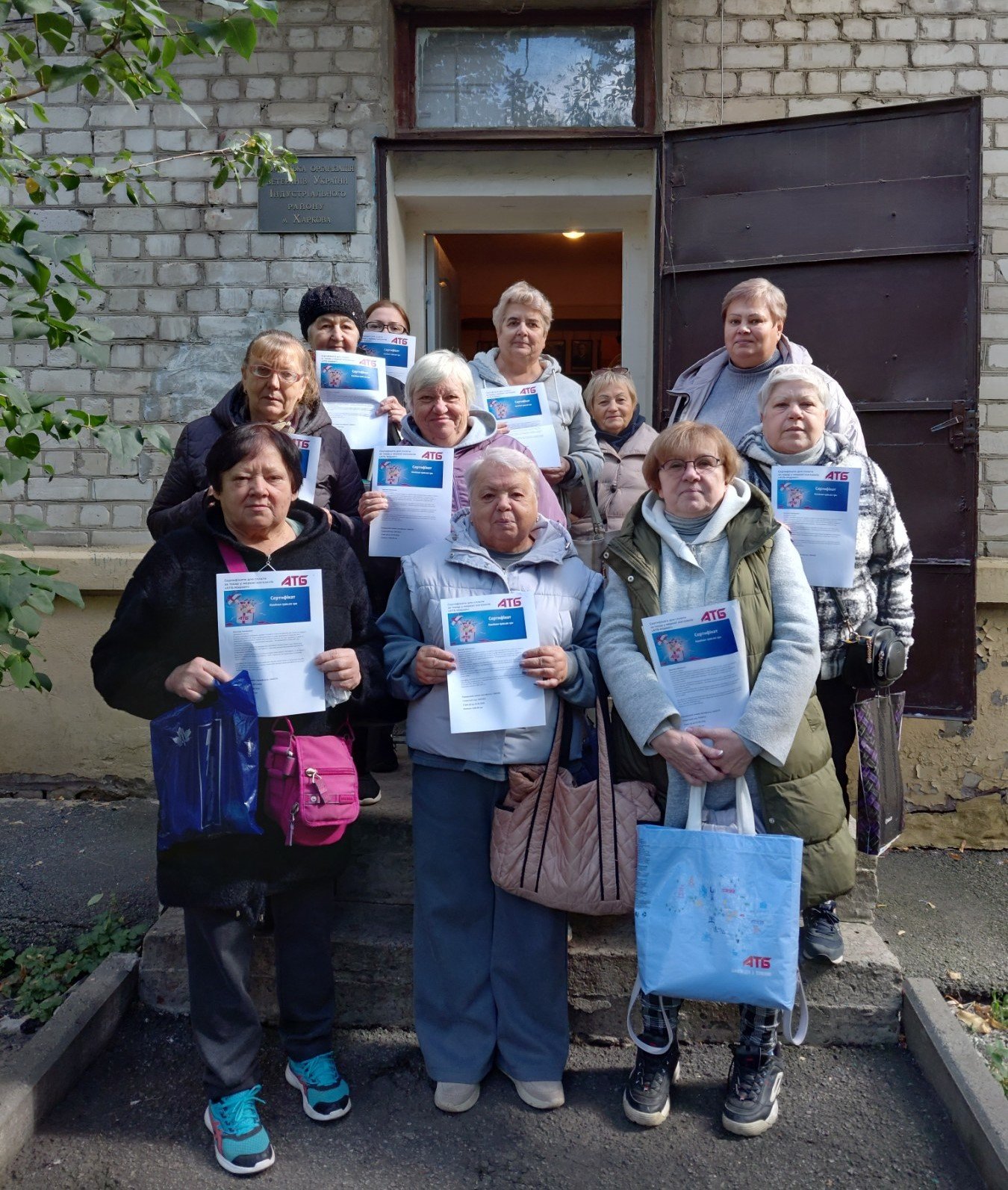
In Kharkiv city and the Kharkiv region, the Organization of Veterans of Ukraine of the Industrial District of Kharkiv provided support to 248 women with disabilities and women from other vulnerable groups, including IDPs. A key feature of the organization’s work was extensive information and counseling support, including legal and psychological consultations, which contributed to reducing psycho-emotional stress and overcoming social isolation. The establishment of an online self-help group on Telegram became a sustainable communication tool for information exchange and for increasing legal awareness among women and their family members, with long-term positive impact.
Civil society organization “Zaporizhzhia Regional Organization ‘Autism. Conscious Parenting’”
In Zaporizhzhia, the civil society organization “Zaporizhzhia Regional Organization ‘Autism. Conscious Parenting’” implemented a project aimed at supporting women raising children and youth with disabilities under conditions of constant shelling and stress. A total of 200 unique women beneficiaries were reached. Regular psychosocial support groups and socialization studios for girls with disabilities helped reduce stress levels, develop social skills, and foster a community of mutual support. Humanitarian assistance provided to 180 women helped temporarily address critical household needs, while individual psychological consultations supported families in identifying effective ways to cope with difficult life circumstances. At the same time, the institutional capacity of the organization was strengthened, contributing to the sustainability of results.
Civil society organization “Association of Families of Persons with Disabilities ‘Mother’s Heart’”, Kropyvnytskyi
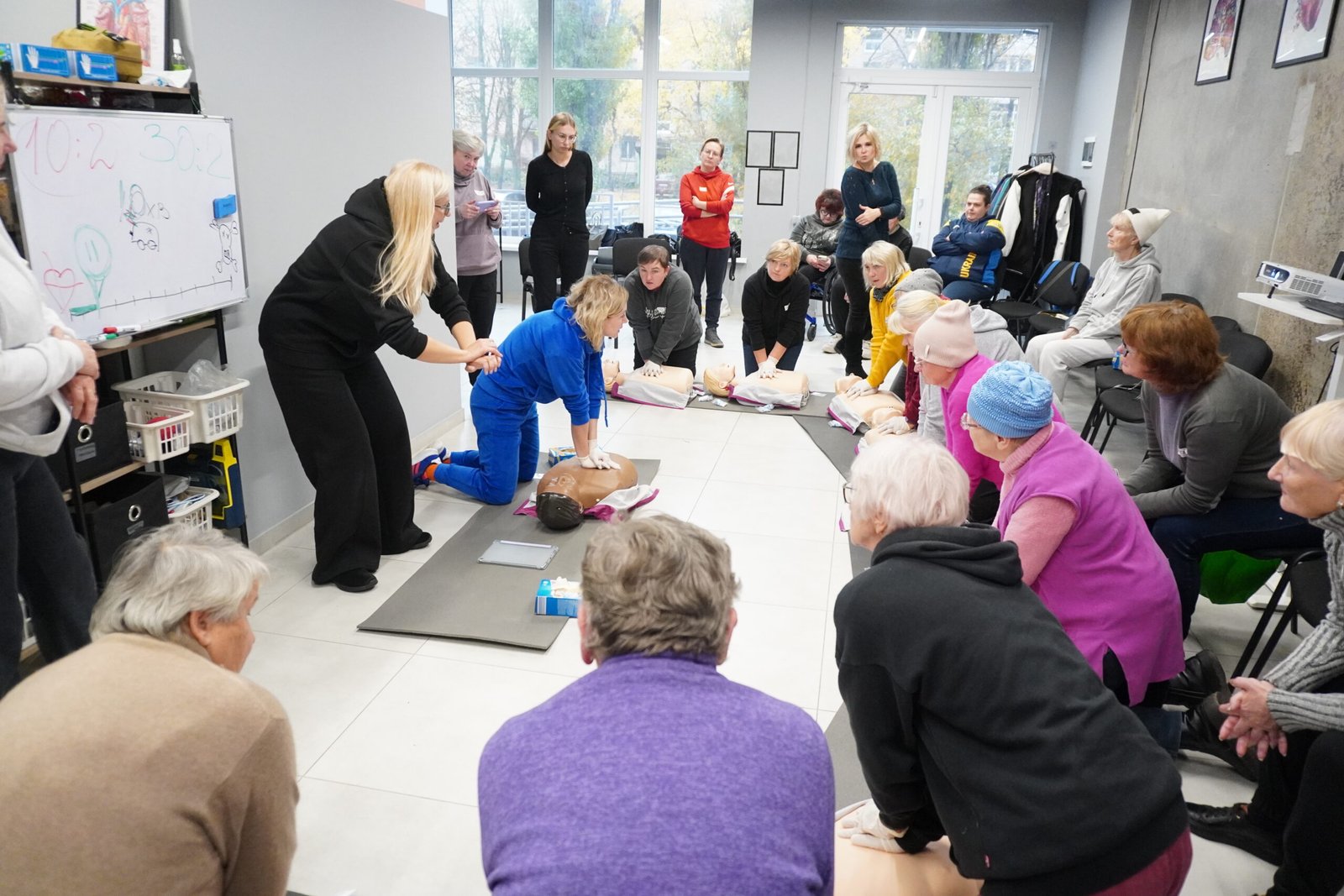
In Kropyvnytskyi, the civil society organization “Association of Families of Persons with Disabilities ‘Mother’s Heart’” focused on overcoming the marginalization of women with disabilities and ensuring their inclusion in humanitarian processes at the local level. Within the project, 200 women received support, including 130 women who received food and hygiene assistance. Psychological support, art therapy, and individual consultations helped women cope with the consequences of traumatic experiences. Particular attention was given to training in digital literacy, first aid, and access to legal assistance, which increased women’s safety, autonomy, and confidence in their own abilities.
Mykolaiv City Physical Culture and Wellness Club of Persons with Disabilities “Victoria”
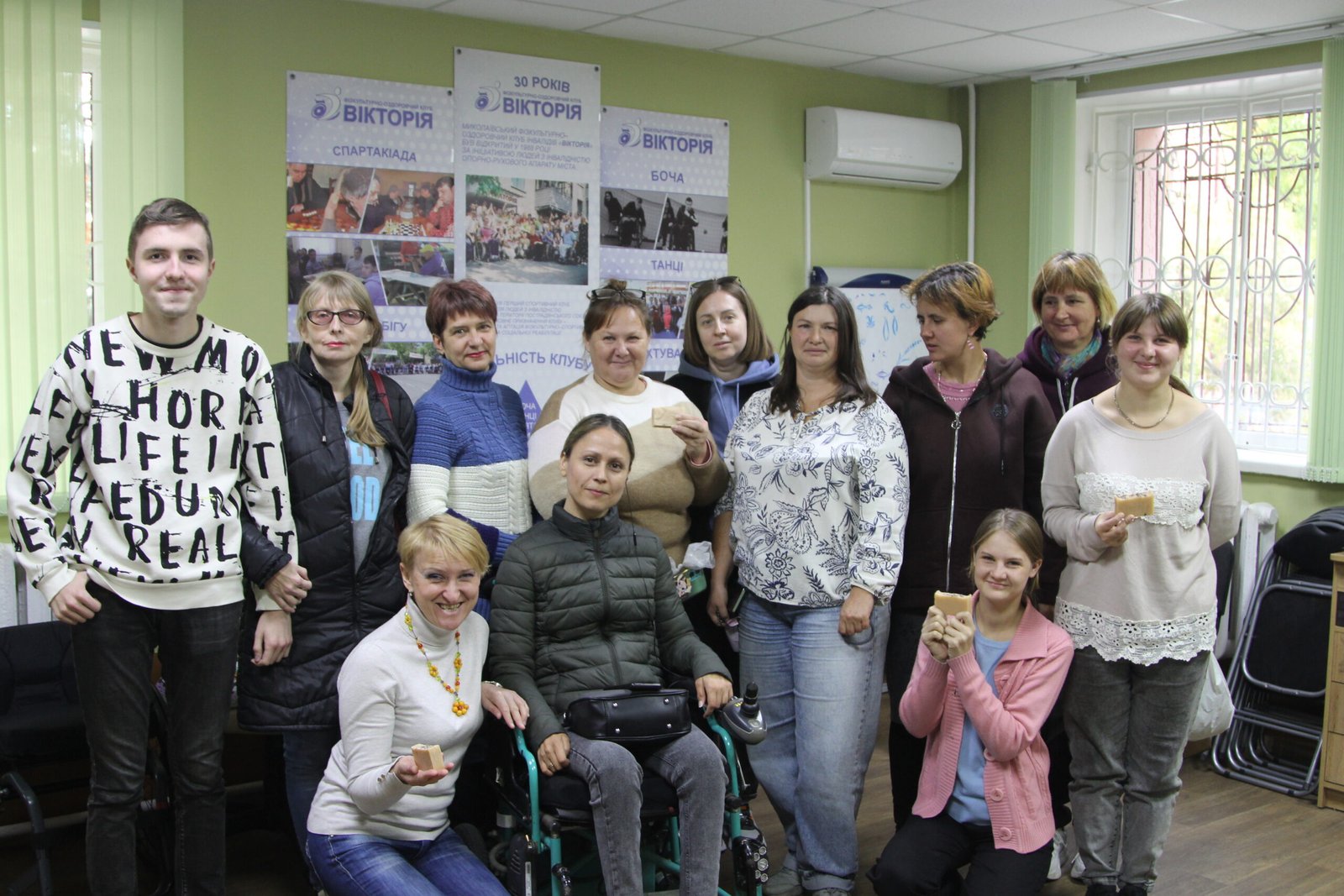
In the Mykolaiv region, the Mykolaiv City Physical Culture and Wellness Club of Persons with Disabilities “Victoria” implemented a comprehensive approach to supporting 219 women beneficiaries. The combination of humanitarian, psychological, informational, and rehabilitation assistance contributed to reducing women’s vulnerability and improving their quality of life. Psychological and art-therapy activities helped lower stress and emotional burnout, while educational activities on legal awareness and digital literacy strengthened women’s ability to defend their rights and make informed decisions.
Poltava City Public Organization of Persons with Disabilities “VIRA”
In Poltava, the Poltava City Public Organization of Persons with Disabilities “VIRA” focused on combining humanitarian assistance with the active involvement of women in local recovery processes. A total of 275 women beneficiaries participated in the project, exceeding the planned targets. The provision of vouchers, assistive technologies, and consultations significantly improved women’s quality of life, while parallel efforts to strengthen the organization’s institutional capacity and publish analytical materials increased the visibility of issues faced by women with disabilities.
Civil society organization “Slobozhanshchyna Initiatives”, Sumy
In the Sumy region, the civil society organization “Slobozhanshchyna Initiatives” provided support to 524 women with disabilities from various territorial communities. Targeted humanitarian assistance, provision of hygiene supplies and assistive technologies, as well as psychological and informational support, made it possible to comprehensively address the urgent needs of women in a region under constant threat of shelling. All planned activities were implemented in full, demonstrating effective project management and a high level of trust from local communities.
The implementation of the project “Humanitarian Response and Recovery: Strengthening the Leadership of Organizations of Women with Disabilities” demonstrated that an integrated, gender-responsive, and inclusive approach is the most effective response to the challenges of wartime. Combining humanitarian assistance with psychological support, education, legal protection, and leadership development not only addressed urgent needs but also created conditions for long-term change.
“The full-scale war has exposed the systemic barriers that women with disabilities face on a daily basis. At the same time, it has revealed their strength, leadership potential, and readiness to be not only recipients of assistance, but also active participants in humanitarian response and community recovery. This project was specifically aimed at strengthening that role”, says Larysa Baida, Program Director of the National Assembly of Persons with Disabilities of Ukraine.
The project strengthened the role of organizations of women with disabilities as active actors in humanitarian response and community recovery, contributed to increased resilience, social inclusion, and self-confidence among women. The results confirm that the meaningful involvement of women with disabilities in decision-making processes is a necessary condition for just and sustainable recovery in Ukraine.
The project “Humanitarian Response and Recovery: Strengthening the Leadership of Organizations of Women with Disabilities” is implemented by the National Assembly of Persons with Disabilities of Ukraine, funded by The United Nations Women’s Peace and Humanitarian Fund (WPHF) with technical support of UN Women Ukraine. The United Nations Women’s Peace and Humanitarian Fund (WPHF) mobilizes critical support for local and grassroots civil society organizations working on women, peace and security and humanitarian action. WPHF is a flexible and rapid financing mechanism supporting quality interventions designed to enhance the capacity of women to prevent conflict, respond to crises and emergencies, and seize key peacebuilding opportunities.
This publication has been prepared with the financial support of the United Nations Women's Peace and Humanitarian Fund (WPHF), which does not imply that the views and contents expressed herein are officially endorsed or recognized by the United Nations."
The Women’s Peace and Humanitarian Fund (WPHF) is the only global financing mechanism exclusively dedicated to supporting women’s participation in peace and security processes and humanitarian action. Governed by a diverse group of civil society, government, and UN representatives, WPHF is a multi-partner trust fund that mobilizes urgently needed funding for local, women-led organizations and works alongside women on the front lines to build lasting peace. Since 2016, WPHF has provided funding and strengthened the capacities of over 1,000 local women’s civil society organizations advancing the Women, Peace and Security agenda and delivering humanitarian action in 41 crisis-affected countries.
Oleksandra Perkova, Communications Manager of the Project
Гуманітарна допомога може бути передбачена програмою, профінансована і навіть доступна у громаді. Але головне питання інше: чи може людина, яка її потребує, реально нею скористатися? Саме про це говорили учасники дворівневого навчання «Гуманітарна діяльність: врахування потреб осіб з інвалідністю», яке у жовтні провела Національна Асамблея людей з інвалідністю України. До навчання долучилися представники гуманітарних і […]
Шукаємо координатора(-ку) з комунікацій у команду НАІУ (на проєкт) Національна Асамблея людей з інвалідністю України (НАІУ) реалізує проєкт «Інклюзія передусім — захист і підтримка дітей з аутизмом та іншими видами інвалідності, ветеранів і ветеранок в Україні», спільно з СВМ та СВМ Італія, спрямований на підтримку ветеранів та ветеранок, розвиток доступних можливостей для їхньої реабілітації, протезування, […]
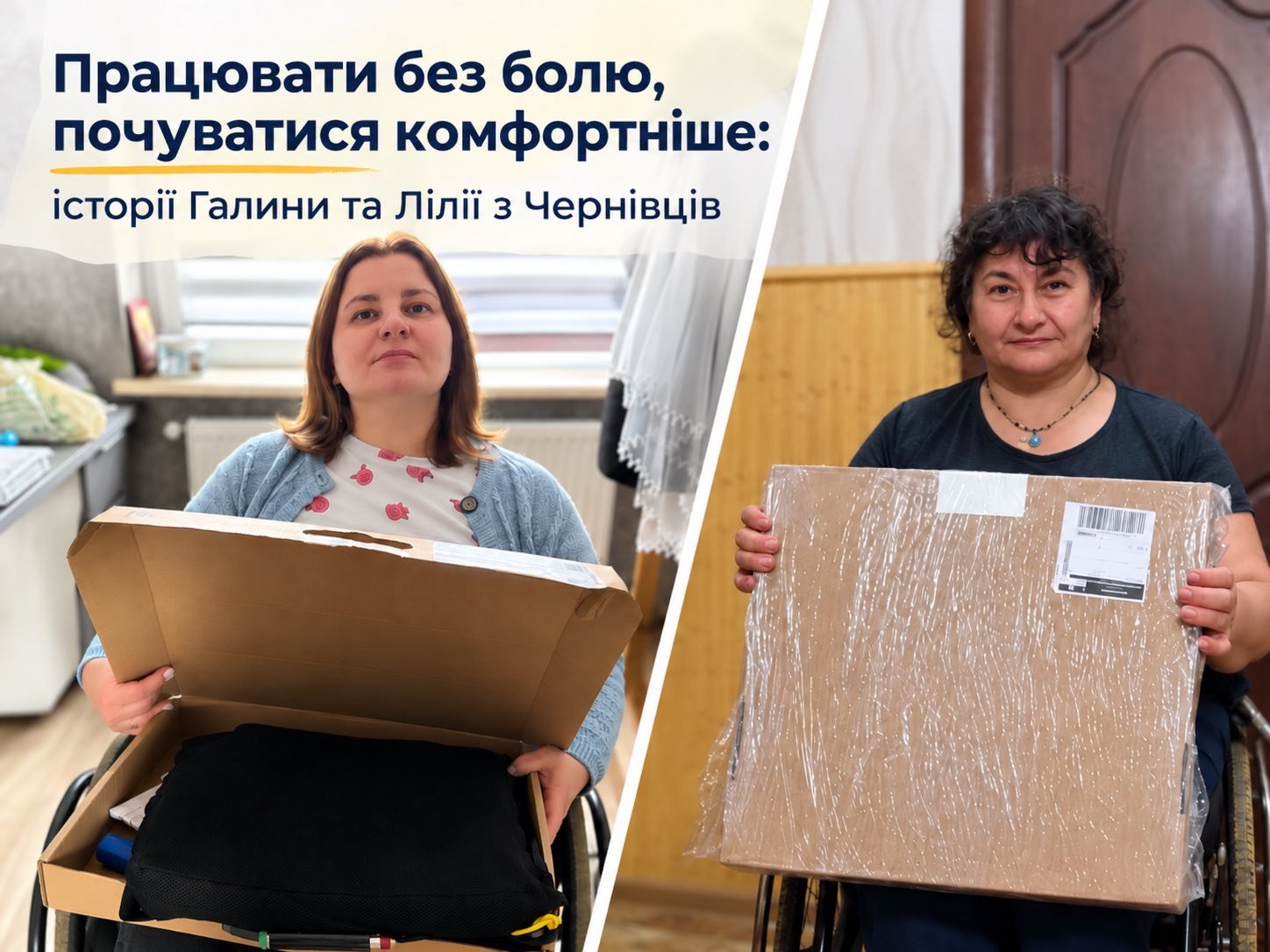
Галина з Чернівців створює весільні аксесуари для наречених. Її робота потребує творчості, терпіння та уваги до найменших деталей. За виготовленням прикрас жінка проводить багато годин, адже кожен виріб вимагає кропіткої ручної праці. Для Галини важливо мати можливість займатися улюбленою справою, однак тривала робота нерідко супроводжується фізичним дискомфортом. Жінка користується кріслом колісним, і через велике навантаження […]
Повернення з військової служби до цивільного життя — це новий етап, який нерідко супроводжується непростими викликами. Особливо для ветеранів і ветеранок, які зазнали поранень або набули інвалідності. Реабілітація, пошук роботи, доступ до послуг, відновлення соціальних зв’язків — усе це потребує не лише особистих зусиль, а й підтримки суспільства. Національна Асамблея людей з інвалідністю України (НАІУ) […]
Упродовж програмного року — з 1 жовтня 2025-го до 30 вересня 2026-го — на гарячій лінії Національної Асамблеї людей з інвалідністю України (НАІУ) було надано 821 консультацію для 680 осіб. Найчастіше люди зверталися за роз’ясненням щодо своїх прав і пільг, зокрема отримання та поновлення виплат, оформлення догляду, встановлення й переоформлення інвалідності. Близько 70% звернень стосувалися […]
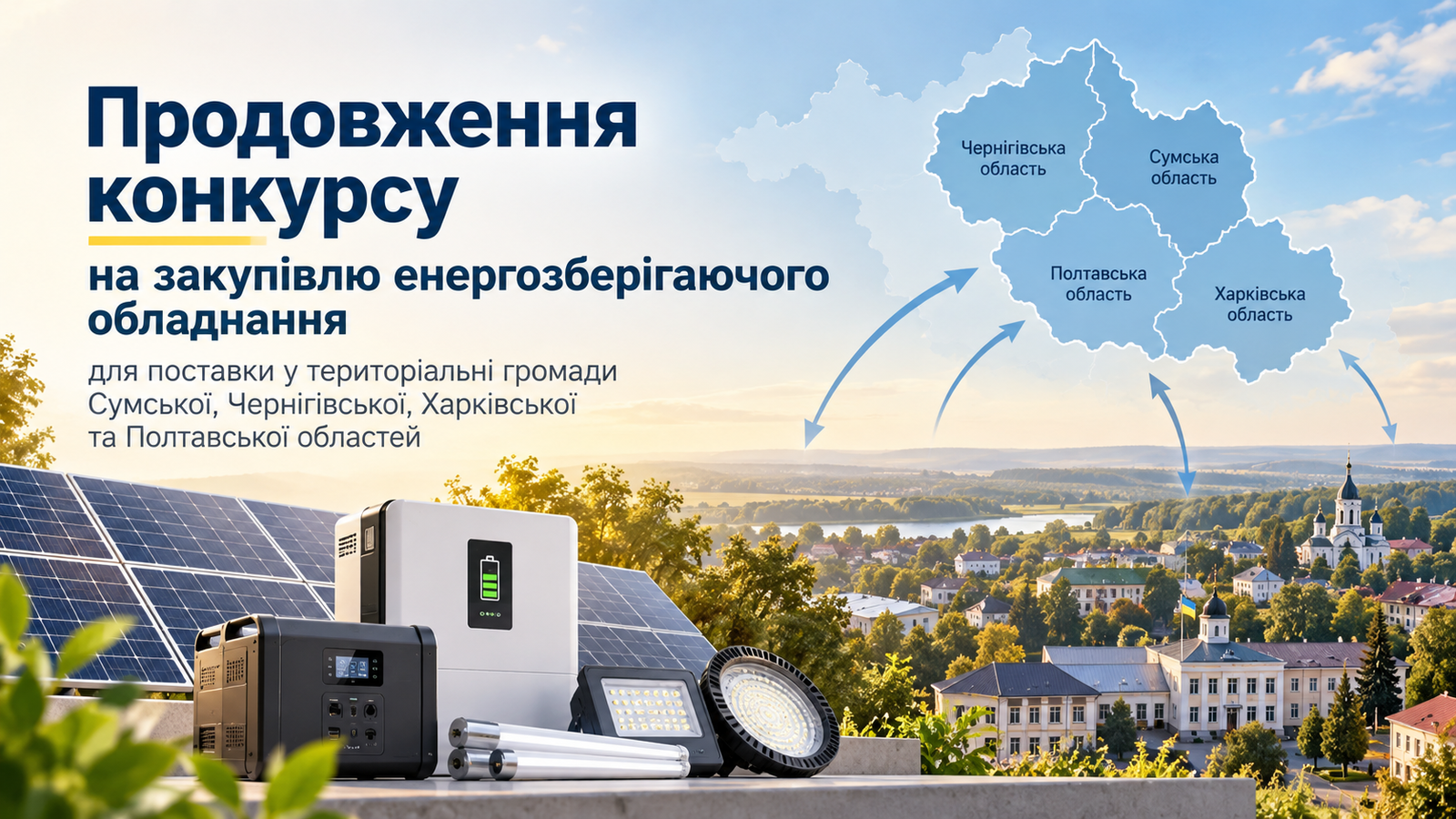
Громадська спілка “Всеукраїнське громадське об’єднання “Національна Асамблея людей з інвалідністю України” (далі – «Організатор») оголошує продовження конкурсу на закупівлю енергозберігаючого обладнання для поставки у територіальні громади Сумської, Чернігівської, Харківської та Полтавської областей. Джерело фінансування закупівлі: Дана закупівля здійснюється в рамках проєкту «Зміцнення інклюзивних послуг з охорони здоров’я, реабілітації та захисту населення, постраждалого від повномасштабного вторгнення в […]