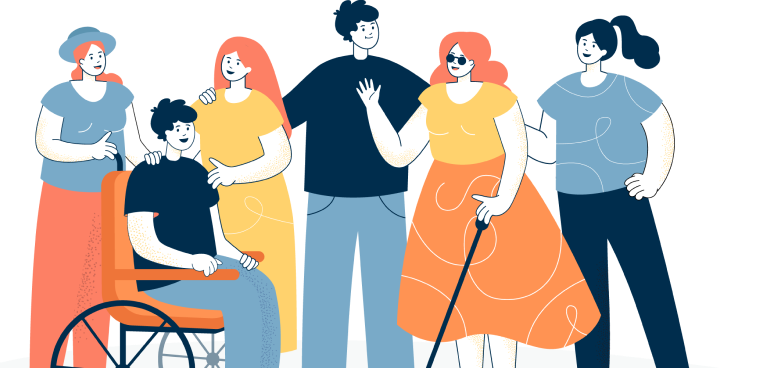
People with disabilities in Ukraine often face an entire system of barriers. These include insufficient accessibility of services, difficulty with mobility, limited access to employment, and weak support from local budgets, which today are not always able to provide an adequate level of services. During wartime, these challenges become even more acute: community resources shrink while people’s needs grow. That is why targeted support programs become the mechanism that helps meet critical needs and uphold people’s dignity.
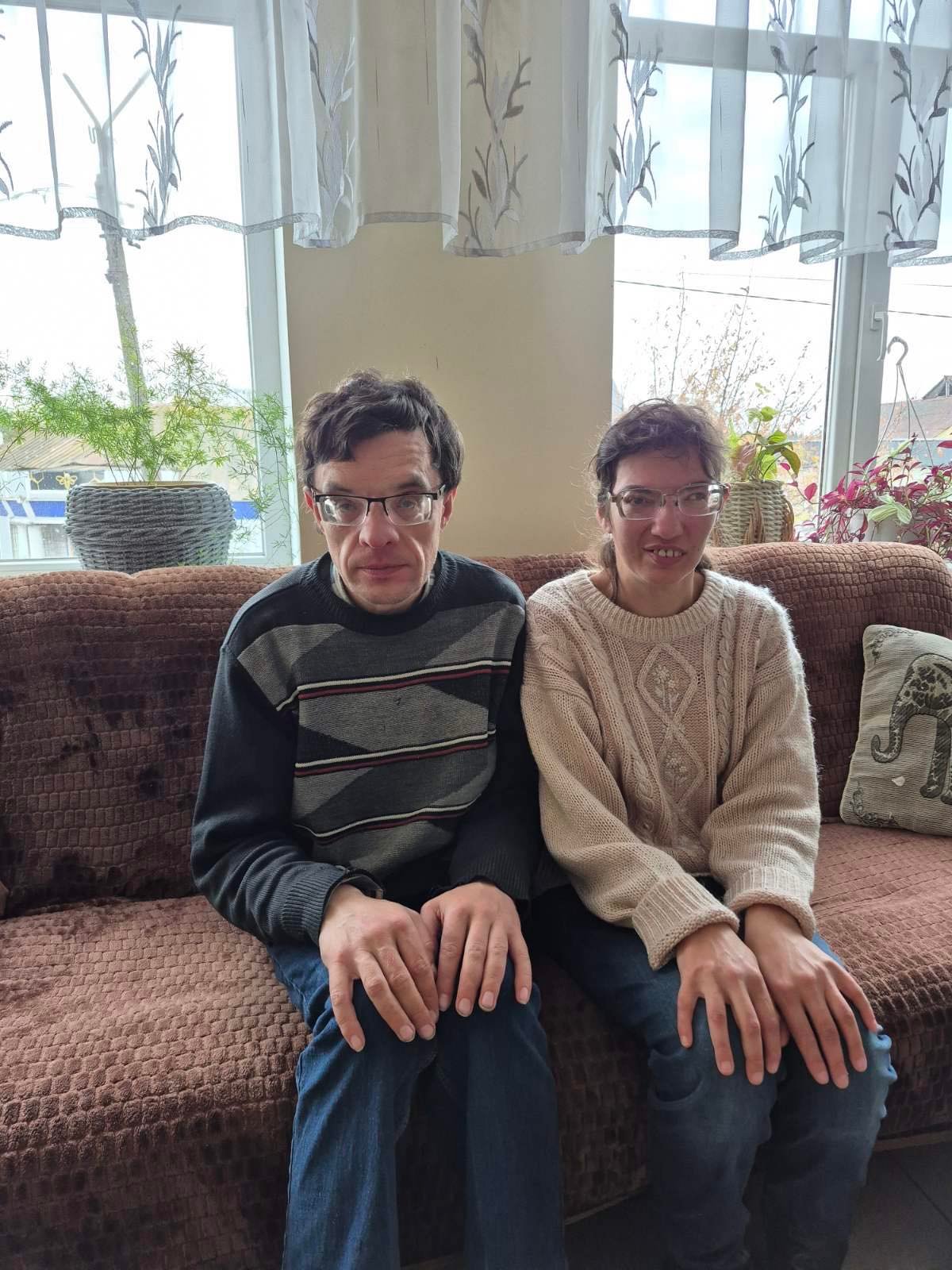
Olena and Serhii, a married couple from the Horokhiv community in Volyn, have severe visual impairments. Despite this, they remain active members of community life—participating in the activities of the local organization Sun of Love and taking part in educational, creative, and social events. They strive to be helpful to others and contribute to strengthening their community. The family currently lives solely on pension benefits, without any additional sources of income.
Recently, within the project “Multisectoral Humanitarian Assistance Inclusive of Disability for IDPs, Returnees, Veterans, and Host Communities in Ukraine”, implemented by the National Assembly of People with Disabilities of Ukraine in partnership with the European Disability Forum (EDF) and supported by the German Federal Foreign Office (GFFO) and CBM (Christian Blind Mission), the couple received financial assistance. This sum became a significant contribution to stabilizing the family’s financial situation. For Olena, this support is especially important: she needs surgery due to a severe form of glaucoma and continues to raise funds for the operation. The financial assistance has become not only a relief from the immediate difficulties but also a source of hope. It allowed the family to take a step toward stability, focus on health and safety, and maintain their active involvement in community life.
Stories like this answer the question of why inclusive humanitarian approaches are so important. They do more than meet basic needs for individuals—they transform attitudes, strengthen communities, and help create a more attentive and humane environment where every person can participate in social life and feel like part of the community.
The support provided to Olena and Serhii’s family is an example of how well-organized humanitarian aid can strengthen people’s resilience and help them overcome adverse circumstances.
Oleksandra Perkova, Communications Manager of the Project