European Regional Disability Summit 2024: goals, priorities and outcomes (Eng)
December 9, 2024
Share:
The Summit was part of the preparations for the Global Disability Summit 2025 (GDS2025) and played a key role in strengthening cooperation between states and organizations to achieve the goals set out in the UN Convention on the Rights of Persons with Disabilities (CRPD).
European Regional Summit on Disability was aimed at addressing important issues in the field of international cooperation, humanitarian activities and disaster risk reduction in Europe. To discuss key challenges and opportunities for inclusive development in the region. To present the results of consultations with European CBOs. To identify how global organizations and European countries can contribute to the implementation of international commitments in areas such as health, education, employment, humanitarian action and the empowerment of women and girls. And engage partners in joint submission of declarations and commitments.
The following key priorities were identified during the preparations for the summit and discussions: combating ageism, inclusive development and humanitarian action, sustainable development and strengthening climate adaptation, meaningful participation of organizations of persons with disabilities, deinstitutionalization and independent living, fighting poverty, and promoting accessibility.
Summit participants formulated 10 key recommendations for ensuring the inclusiveness of European international cooperation:
Integrate the inclusion of persons with disabilities into all international development programs.
Ensure meaningful participation of CBOs in decision-making processes.
Support deinstitutionalization by funding public services.
Promote inclusive education and employment.
Improve the collection of data disaggregated by disability, age, and gender to make informed decisions.
Ensure accessibility in all sectors, including transportation, technology, and infrastructure.
Use gender-responsive and intersectional approaches to support women, girls and other marginalized groups.
Increase funding for projects focused on the rights of people with disabilities.
Strengthen the protection of persons with disabilities in crises and conflicts.
Ensure consistency in the realization of the rights of persons with disabilities both in Europe and beyond.
The 2024 European Regional Summit emphasized the importance of cooperation between governments, CBOs, civil society organizations and the private sector to achieve true inclusiveness. Despite significant challenges, such as the war in Ukraine, climate crises and the pandemic, countries in the region are showing determination to move towards an inclusive and sustainable future.
The success of this summit shows that the international community is ready to work together to ensure equal rights and opportunities for everyone.
Oleksandra Perkova,
Communication Manager of the Project
Communications Manager of the project "Disability-inclusive multisectoral humanitarian assistance for internally displaced persons, returnees, veterans and host communities in Ukraine"
European Regional Disability Summit 2024: Goals, Priorities, and Outcomes
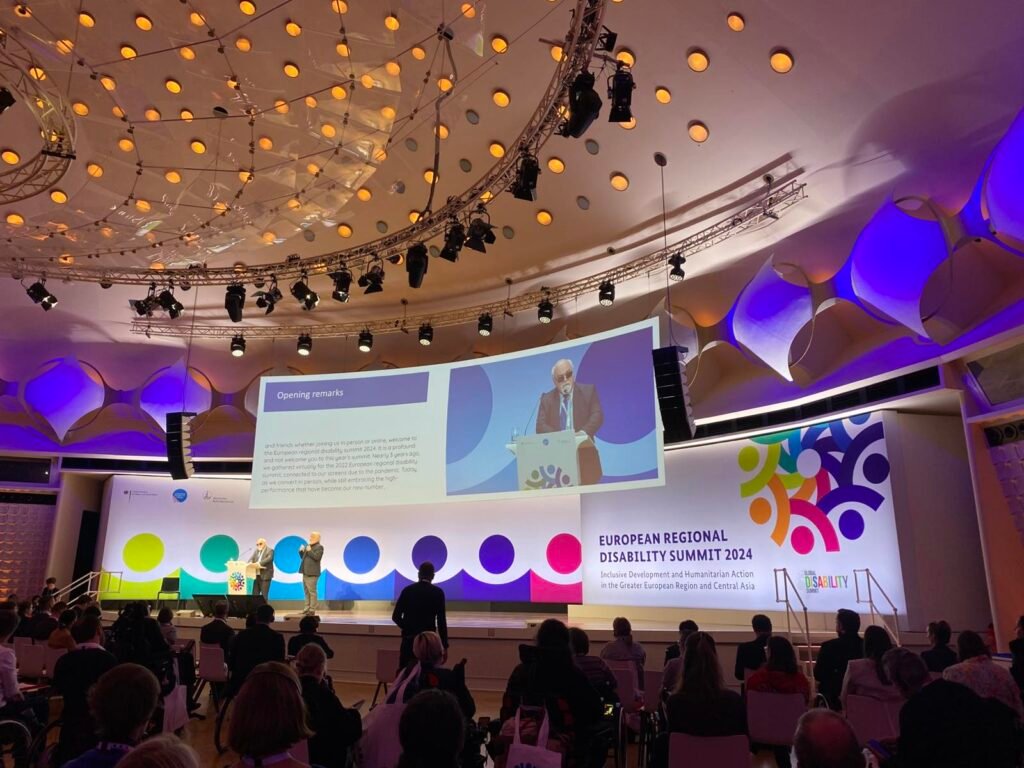
On December 6, 2024, the European Regional Disability Summit took place in Berlin and online. This event brought together high-ranking officials, representatives of organizations of persons with disabilities (OPDs), international organizations, civil society, academia, and the private sector to discuss challenges, opportunities, and pathways to achieving inclusive development in Europe and neighboring regions.
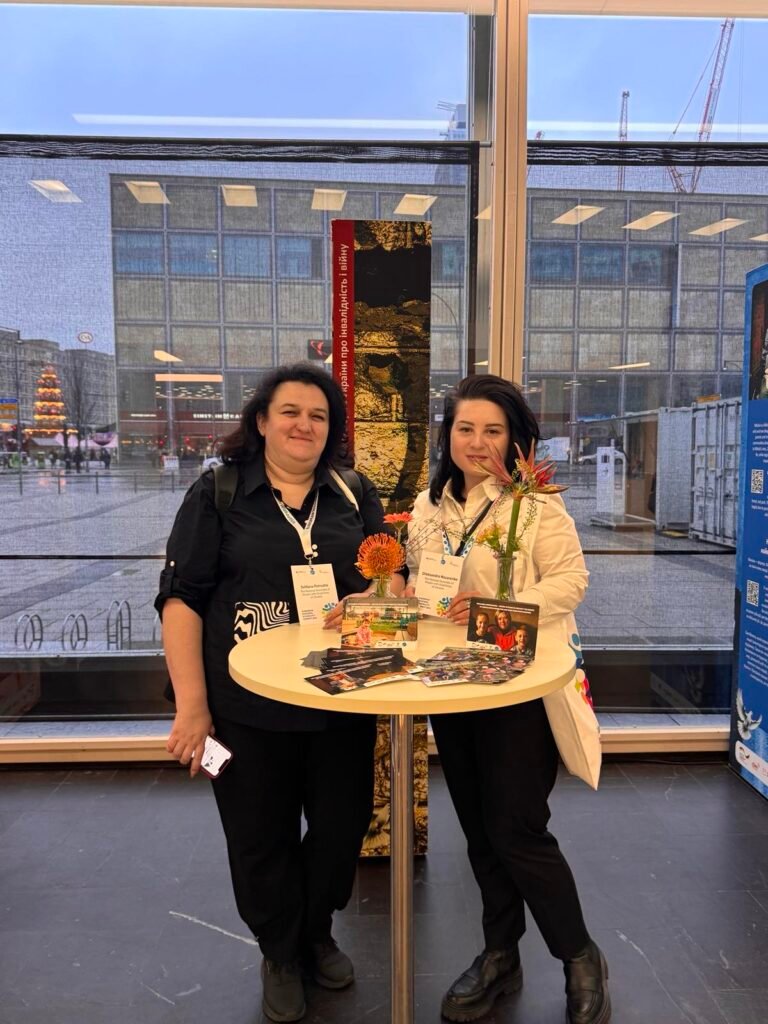
The National Assembly of People with Disabilities of Ukraine was represented at the summit by Svitlana Petrusha and Oleksandra Nazarenko.
The summit was part of the preparatory process for the Global Disability Summit 2025 (GDS2025) and played a key role in strengthening cooperation between states and organizations to achieve the goals outlined in the United Nations Convention on the Rights of Persons with Disabilities (CRPD).
The European Regional Disability Summit aimed to address key issues in international cooperation, humanitarian action, and disaster risk reduction in Europe; discuss the primary challenges and opportunities for inclusive development in the region; present the results of consultations with European OPDs; and identify how global organizations and European countries can contribute to the implementation of international commitments in areas such as healthcare, education, employment, humanitarian action, and the promotion of the rights of women and girls. The summit also sought to engage partners in the joint submission of declarations and commitments.
During the preparations and discussions, the following key priorities were identified: combating ableism, inclusive development and humanitarian action, sustainable development and climate resilience, meaningful participation of organizations of persons with disabilities, deinstitutionalization and independent living, poverty alleviation, and the advancement of accessibility.
The summit participants formulated 10 key recommendations to ensure inclusivity in European international cooperation:
Integrate the inclusion of persons with disabilities into all international development programs.
Ensure meaningful participation of OPDs in decision-making processes.
Support deinstitutionalization through the funding of community-based services.
Promote inclusive education and employment.
Improve data collection disaggregated by disability, age, and gender for informed decision-making.
Ensure accessibility across all sectors, including transportation, technology, and infrastructure.
Apply gender-sensitive and intersectional approaches to support women, girls, and other marginalized groups.
Increase funding for projects focused on the rights of persons with disabilities.
Strengthen the protection of persons with disabilities during crises and conflicts.
Ensure consistency in the implementation of disability rights both within Europe and beyond.
The European Regional Disability Summit 2024 emphasized the importance of collaboration among governments, OPDs, civil society organizations, and the private sector to achieve genuine inclusivity. Despite significant challenges, including the war in Ukraine, climate crises, and the pandemic, countries in the region demonstrate determination to move toward an inclusive and sustainable future.
The success of this summit highlights the international community's readiness to work together to ensure equality of rights and opportunities for every individual.
Oleksandra Perkova, Communication Manager of the project "Multisectoral Humanitarian Assistance Considering Disability for Internally Displaced Persons, Returnees, Veterans, and Host Communities in Ukraine"
Чи може отримати базову соціальну допомогу одинока людина пенсійного віку, яка не має доходу? Як визначається склад сім’ї, якщо люди живуть разом, але зареєстровані за різними адресами? Що робити, якщо не всі члени родини можуть скористатися Дією? Ці та інші практичні запитання стали центральною частиною онлайн-заходу «Базова соціальна допомога», який 28 вересня Національна Асамблея людей […]
ДІТИ ВЧАТЬСЯ У ВАС Цей інформаційний продукт став можливим завдяки щедрій підтримці, наданій Урядом Сполучених Штатів Америки. Зміст є відповідальністю Моментум Вілз фор Хьюменіті та не обов’язково відображає погляди Уряду Сполучених Штатів Америки. This media product is made possible by the generous support of the United States Government. The contents are the responsibility of Momentum […]
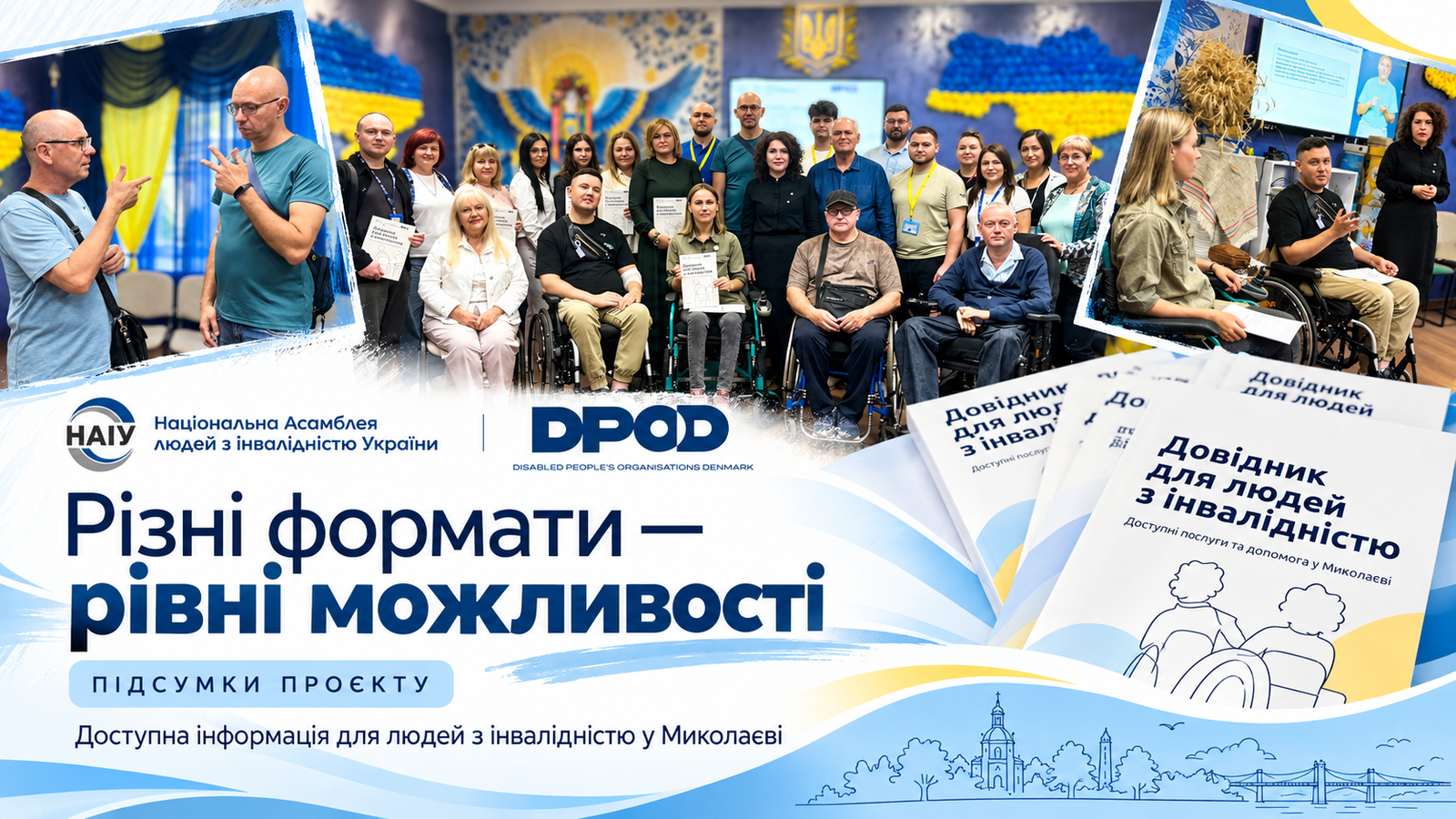
У межах мінігрантової ініціативи Національної Асамблеї людей з інвалідністю України за фінансування Disabled People’s Organisations Denmark (DPOD) п’ять громадських організацій реалізували локальні проєкти, спрямовані на вирішення конкретних проблем людей з інвалідністю у своїх громадах. Одна з таких ініціатив — проєкт «Різні формати — рівні можливості», який упродовж червня–вересня 2026 року реалізувала у Миколаєві ГО «Центр […]
НЕ ЗНАЄШ, ЯК СПІЛКУВАТИСЬ? ПРОСТО ЗАПИТАЙ Боїшся сказати щось недоречне? Не розумієш, як можеш допомогти? Не знаєш, як краще звернутися? Універсальних правил взаємодії з людьми з інвалідністю не існує. Тому не потрібно здогадуватися – краще безпосередньо запитати людину. Прості звернення на кшталт “Як вам буде зручніше?”, “Що саме я можу зробити?”, “Підкажіть, будь ласка, як […]
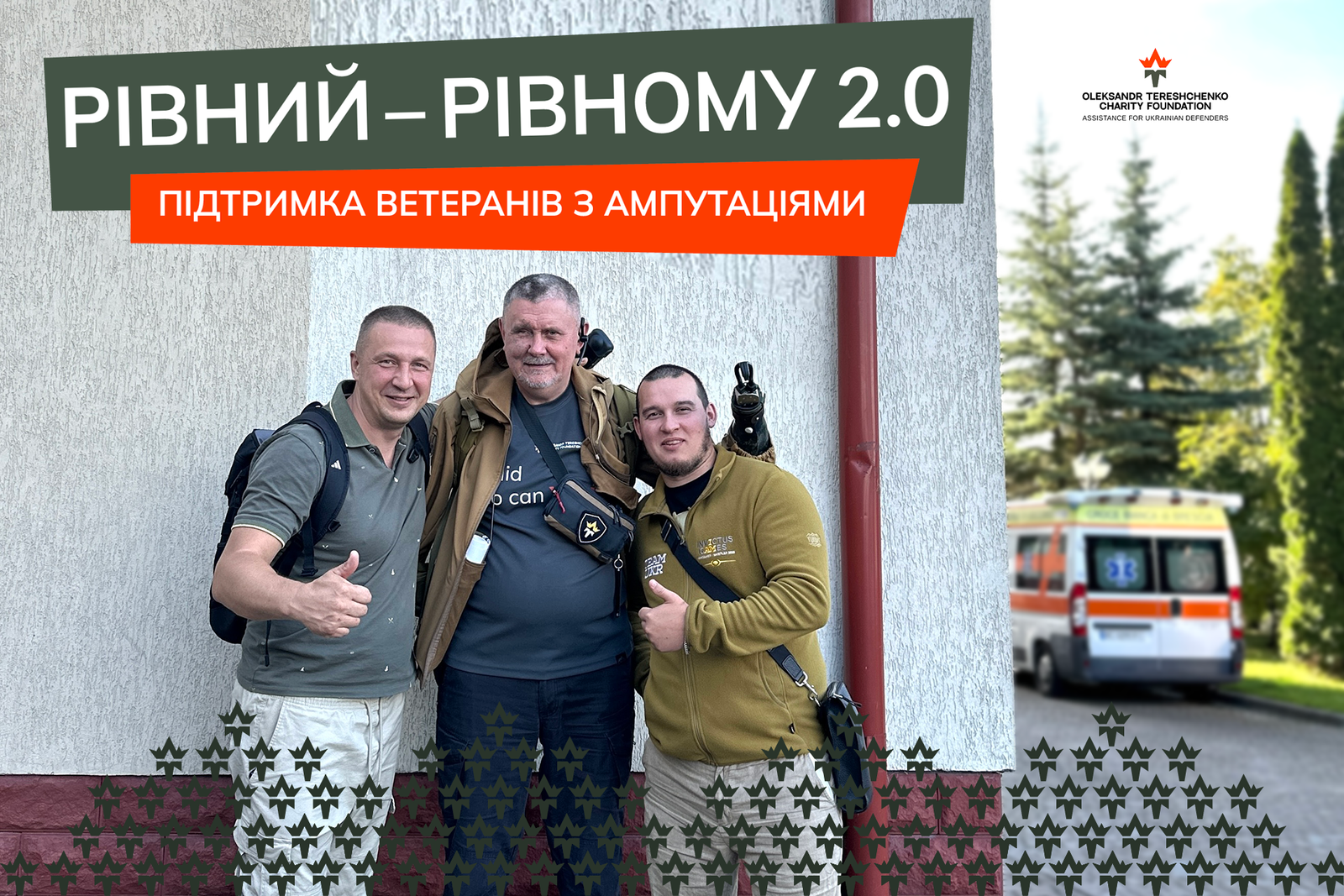
Фонд Олександра Терещенка оголошує про старт проєкту «Рівний–рівному: підтримка ветеранів з ампутаціями 2.0». Ініціатива продовжує системну роботу Фонду у сфері соціальної та побутової адаптації захисників і захисниць. Мета проєкту — масштабувати вже апробовану модель менторської підтримки, за якої ветерани, які мають власний досвід реабілітації, допомагають іншим після важких поранень і ампутацій опановувати навички незалежного життя, […]
Національна Асамблея людей з інвалідністю України підготувала Інформаційну довідку щодо включення питань людей з інвалідністю в плани гуманітарного реагування та відновлення на 2027 рік. Документ адресований Агенціям ООН, гуманітарним організаціям, кластерам, організаціям, які працюють в інтересах людей з інвалідністю, а також представникам державних інституцій. В основу довідки покладено результати консультацій та опитування за участі 1 […]