The right to mobility: when the village is not for everyone
August 12, 2025
Share:
Матеріал підготовлено в межах адвокаційної кампанії «Громади для всіх: разом із людьми з інвалідністю створюємо зміни» в Сторожинецькій громаді. Кампанія реалізується ГС «ВГО «НАІУ» у партнерстві з Європейським Форумом інвалідності (EDF) за підтримки Федерального міністерства закордонних справ Німеччини (GFFO) та Християнською місією незрячих (CBM).
The interview was conducted by Oksana Drachkovska, a communications officer for the advocacy campaign in Chernivtsi region.
Accessibility is not just about a ramp in the city. It is about the opportunity to live where you live. To study, work, buy bread at the nearest store, get to the hospital, walk down the street. And today, when barrier-free access is actively discussed in Ukraine, these conversations often only take into account large cities. Although it is in the villages that a significant part of people with disabilities live. And each of them has the right to be full participants in society.
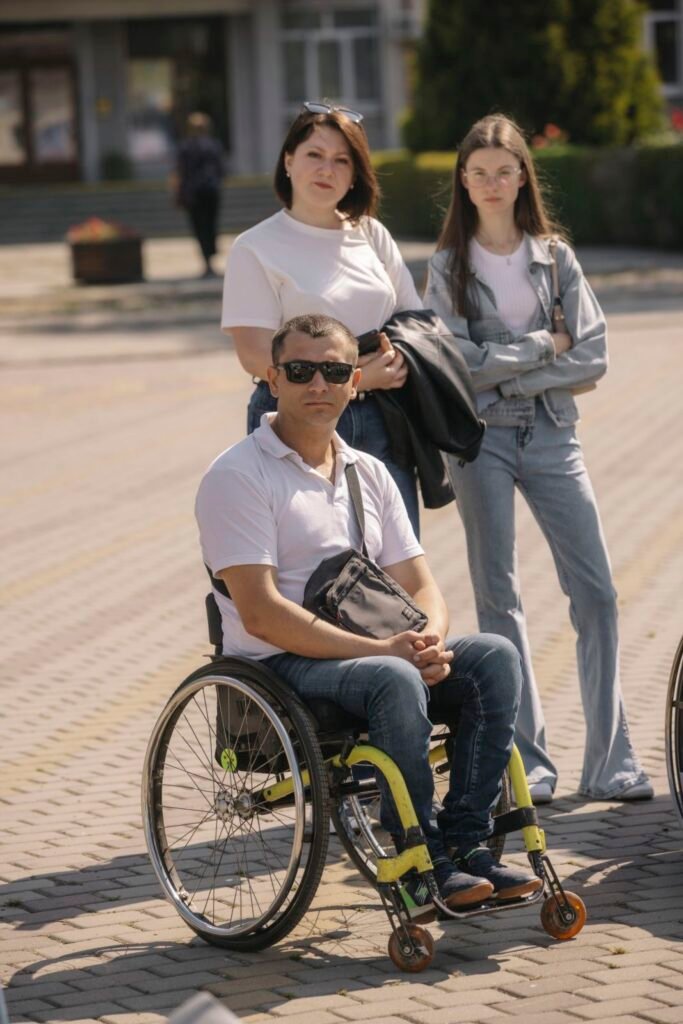
Ilya is 34 years old. He lives in the village of Panka, Chernivtsi region. Ten years ago, the man was injured in a car accident, after which he began to move in a wheelchair. During this time, he managed to build a house with his brother, live for several years on his own in a house without gas and running water, learn to fully serve himself, live without expectations and claims.
— At first it was hard. I didn't know a single person in a wheelchair. It seemed like they just didn't leave their homes, they existed, not lived, — recalls Ilya. — But when I met Valentina Dobrydina and her husband Vladislav, everything changed. I saw: life doesn't end, it continues.
Ilya has resumed doing the things he did before the injury: his favorite fishing, housework, independent trips to the store. And although he now lives with his brother's family, he maintains his independence in everyday life.
But every time he goes outside his own yard, the space seems to tell him: "They didn't expect you here."
There are eight shops in the village of Panka. Ilya cannot get to six of them: there are no ramps, the doors are narrow, the porches are not lowered. Only two retail outlets are equipped in such a way that he can enter without outside help.
— The worst thing is that in some places it would be possible to make accessibility quite simple. But they don’t do this. Although I am sure: sometimes just a desire is enough, — says Ilya.
This is a typical challenge for rural communities. Many shops are in old buildings, where installing ramps requires minor changes. But without the interest of the owners and support from the community, these changes do not happen. Communities often do not participate in ensuring the accessibility of private businesses — although this is a matter of equal rights, and not someone’s “personal matter”.
Today, in Panka, apart from two shops, barrier-free access is ensured only in the pharmacy and the hairdresser. But the biggest problem is not in the retail outlets.
In rural areas, mobility is not about comfort. It is about the chance for socialization, work, education, medical care. People without their own transport may not have this chance. And people who use a wheelchair almost certainly do not.
“A low-floor bus to the village? It’s like winning the lottery. Unless you see it on the Internet,” Ilya says with irony.
Suburban transportation in the region is carried out by private companies. There is virtually no control over compliance with inclusivity. The railway routes that were canceled during the pandemic have not returned. And those that were, were also not accessible.
Without transport, Ilya cannot work in his specialty. He is a generalist mechanic. In theory, he could operate agricultural or construction equipment. In practice, he is unable to get to his place of work.
— I saw on the Internet how a man in a wheelchair independently gets into an excavator and drives it. But so far, it is only a video from YouTube.
Ilya does not want to close himself at home. His days are about life, not about expectations. Coffee, news, a trip to the store, fishing. But even these usual things require much more effort than they should. Because the space does not take into account the needs of people with disabilities.
Taking into account the needs of people with disabilities in villages is not an “additional option”, but a basic condition of equal rights. Without accessible shops, pharmacies, public spaces and transport, people are forced to live not as they want, but as dictated by the limitations of the environment. Every ramp, wider door or low-floor bus is not just a convenience, but a step towards ensuring that every resident of the community can study, work, be socially active and independent. Because the right to mobility is the right to a decent life, regardless of where they live.
Oleksandra Perkova, Communications Manager of the Project
Закон передбачає можливість пройти фізичну ідентифікацію не лише в сервісних центрах Пенсійного фонду України (куди людина звертається особисто), а й онлайн: Як зазначає на своєму сайті Пенсійний фонд України, якщо людина з порушенням слуху або мовлення не може пройти фізичну ідентифікацію за допомогою “Дія.Підпису” (про алгоритм дій детальніше можна ознайомитись за посиланням), то вона може […]
У межах програми єВідновлення, зокрема її складової «Житло для внутрішньо переміщених осіб з тимчасово окупованих територій», ВПО, які виїхали з ТОТ, і мають статус учасника бойових дій або особи з інвалідністю внаслідок війни, можуть отримати житловий ваучер на суму 2 млн грн на придбання власного житла. Міністерство розвитку громад та територій України пояснює на своєму […]
6–7 квітня у Києві відбувся другий тренінг з управління інклюзивними комунікаційними кампаніями для закладів професійної освіти в межах Мультидонорської ініціативи Skills4Recovery. До навчання долучилися ще 9 закладів. Так завершився другий етап навчального блоку, який загалом охопив 18 ЗПО. Цей етап був присвячений тому, як будувати комунікацію про вступ так, щоб вона була зрозумілою, доступною і […]
Міністерство охорони здоров’я України підготувало посібник для громадян, які перебувають за кордоном і планують пройти оцінювання повсякденного функціонування особи. У ньому описано важливі нюанси процедури, зокрема підготовку направлення на оцінювання. Автори посібника розглядають випадки, коли людина звертається за такою послугою вперше, а також після тривалої перерви. Надано детальні інструкції щодо підготовки документів для проходження огляду, […]
Запрошуємо переглянути відеозапис вебінару «Адвокація архітектурної доступності». Захід провела Національна Асамблея людей з інвалідністю України в межах проєкту «Реабілітація в Україні» (Rehab4U). Ви почуєте про правові інструменти, які можуть використовувати люди з інвалідністю для захисту своїх прав, дізнаєтеся, що означає архітектурна доступність для споживача й власника будівлі. Також отримаєте рекомендації, як підготувати ефективні звернення до […]
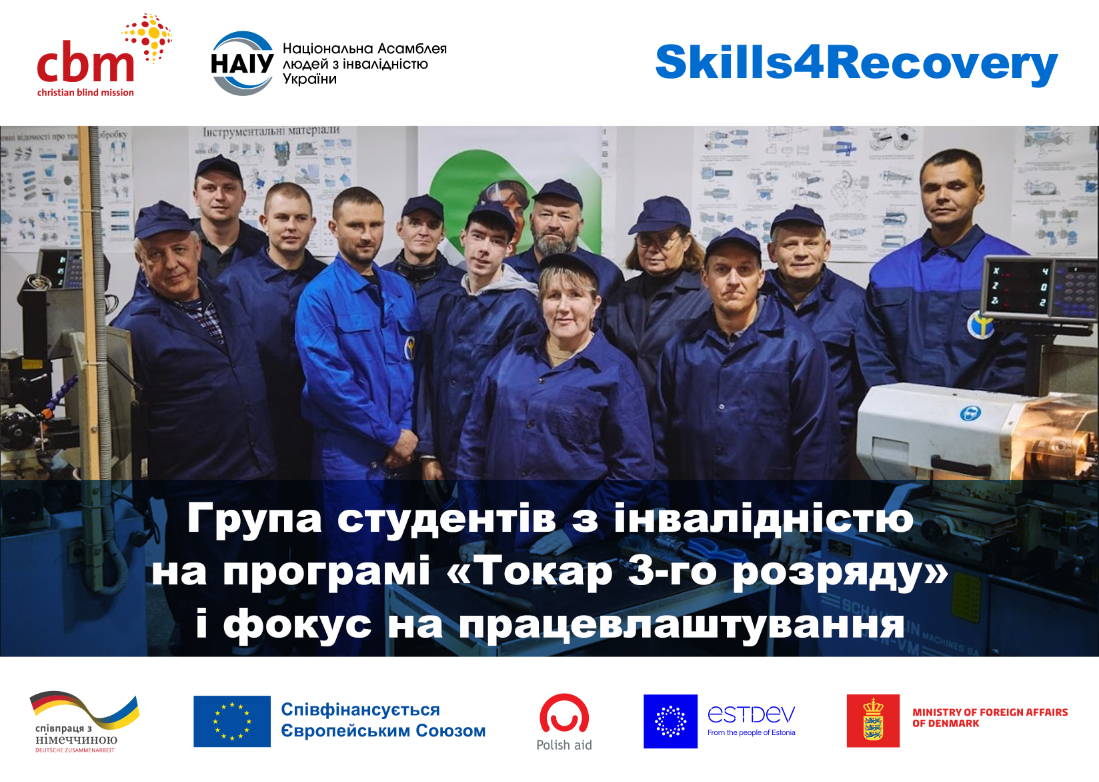
Це другий матеріал із циклу історій про те, як інклюзивні рішення в закладах професійної освіти допомагають ветеранам і людям з інвалідністю отримувати нові навички та виходити на роботу або самозайнятість. У профосвіті важливо не лише навчити, а й довести до результату — щоб людина мала практичні навички та реальний шанс на працевлаштування. Цей кейс із […]