Targeted Assistance for People with Disabilities and Elderly People in the Opishnia Community
November 12, 2025
Share:
People with disabilities and older persons are among the most vulnerable groups in society — both in peacetime and especially during war. Medicines, mobility aids, access to social services, or even basic food can become unavailable to them. With rising prices, damaged infrastructure, and limited social guarantees, many elderly people are forced to choose between essentials.
Svitlana and her brother have had disabilities since childhood. They live together and receive minimal pensions, which barely cover their basic needs. Every month, Svitlana has to make a difficult choice — whether to spend her limited funds on food or medicine. Both are essential, but her pension is not enough for both.
In response to these challenges, the National Assembly of People with Disabilities of Ukraine (NAPD), together with the European Disability Forum (EDF) and with the support of the Federal Foreign Office of Germany (GFFO) and CBM (Christian Blind Mission), is implementing the project “Disability-Inclusive Multi-Sectoral Humanitarian Aid for Internally Displaced Persons, Returnees, Veterans, and Host Communities in Ukraine.” Within this project, targeted cash assistance is provided to those who need it the most.
When Svitlana received financial assistance, for the first time in a long while she was able to buy food for the winter and purchase the necessary medicines. This brought great relief to her family.
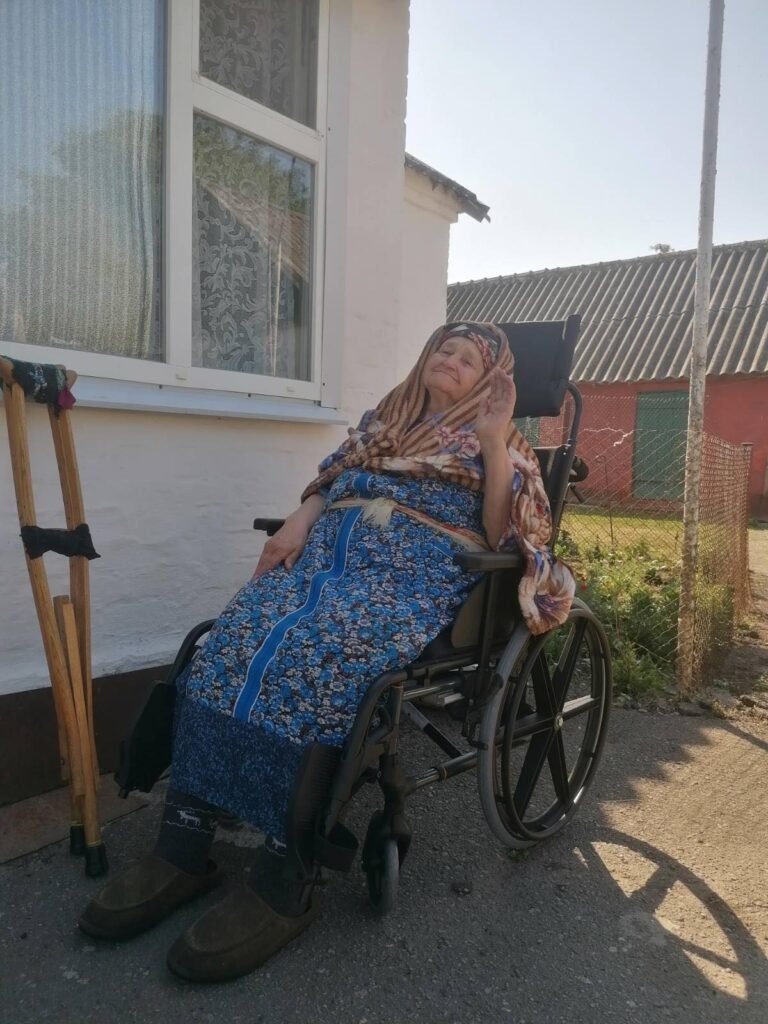
Iryna lives in a remote village in the Opishnia community. Due to illness, she became a person with limited mobility. She had long dreamed of being able to go outside again and take care of her household. Recently, Iryna received a wheelchair, which made mobility much easier for her. This summer, she helped her daughter prepare preserves for the winter, now goes outside every day, and enjoys being able to talk to her neighbors again.
Targeted assistance gives people a choice. It respects their right to decide what they truly need. This is not just resource distribution — it is recognition of human dignity.
Projects that provide standardized packages of goods or services often fail to consider individual needs. For example, one person may need medicine, another — food or heating fuel for the winter, while someone else may require a wheelchair or a hearing aid. One-size-fits-all support rarely works effectively.
By contrast, targeted and cash assistance are flexible — people themselves decide how to allocate the funds, as they know their own needs better than anyone. This makes the support meaningful rather than symbolic. A person receives respect, not imposed solutions. Moreover, cash assistance benefits not only individuals but also local communities, as the money is spent locally, supporting small businesses and strengthening the local economy.
Targeted cash assistance is not just about money or assistive technologies — it is about the ability to live with dignity, maintain autonomy, and feel part of society. During wartime, this matters more than ever. Because in a truly inclusive society, no one feels isolated or forgotten.
Oleksandra Perkova, Communications Manager of the Project
Національна Асамблея людей з інвалідністю України (НАІУ) та громадська спілка «Сучасний погляд» підписали Меморандум про співпрацю з Інститутом очних хвороб і тканинної терапії ім. В. П. Філатова НАМН України про створення інтегрованого простору Filatov Vision Hub — першого в Україні центру ранньої реабілітації для людей із тяжкими ураженнями очей. Про це на своєму сайті повідомляє […]
Безоплатне забезпечення допоміжними засобами реабілітації – це не пільга, а гарантоване законом право. Проте опинившись перед такою необхідністю, люди часто губляться в процедурах: не знають, з чого почати, куди звертатися і які саме вироби можна отримати. Фахівці Ресурсного центру Національної Асамблеї людей з інвалідністю України детально пояснюють усі тонкощі: від правових підстав до підписання акта […]
Some citizens who own real estate had their property rights registered with the Bureau of Technical Inventory only on paper before January 1, 2013. As a result, such information is not available in the State Register of Real Property Rights and in the Register of Ownership Rights to Real Estate, the archival part of this register. As explained on its website [...]
The electronic employment record book, introduced in 2021, contains digital data on hiring, transfers, dismissals, and other changes related to employment. According to the Pension Fund of Ukraine on its website, information from a paper employment record book, which was the main document on a person's employment, may be digitized before January 1, 2004. After that, the information [...]
The Cabinet of Ministers of Ukraine has approved a procedure under which the state will pay for health and recreation services for children in need of special social attention and support. According to the website of the Ministry of Social Policy, Family and Unity of Ukraine, children from Ukrainian families in need of support will be able to undergo rehabilitation in institutions included in the State Register of Property Objects of Rehabilitation and [...]
Ukrainians fleeing the war abroad can continue to acquire insurance record for their future pension. This is especially important for those who have little time left before retirement or who are in countries with which Ukraine does not have a social security agreement. As the Pension Fund of Ukraine states on its website, voluntary contributions to the Fund [...]