Protection in times of crisis: how Ukraine should guarantee the rights of persons with disabilities in humanitarian response
January 19, 2026
Share:
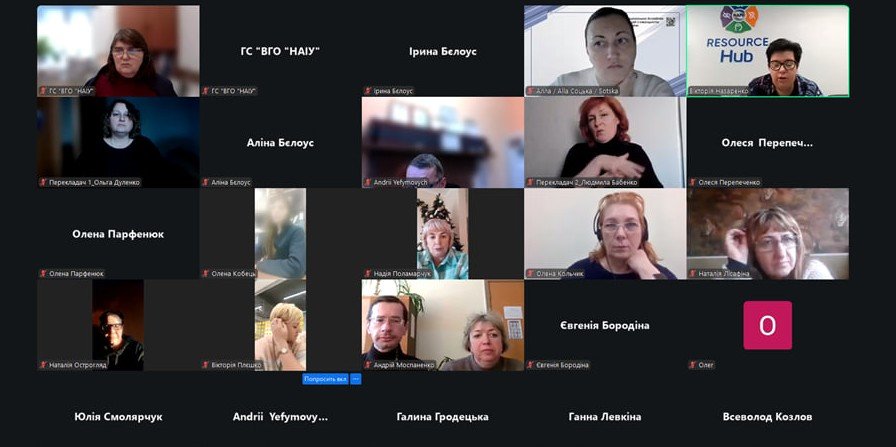
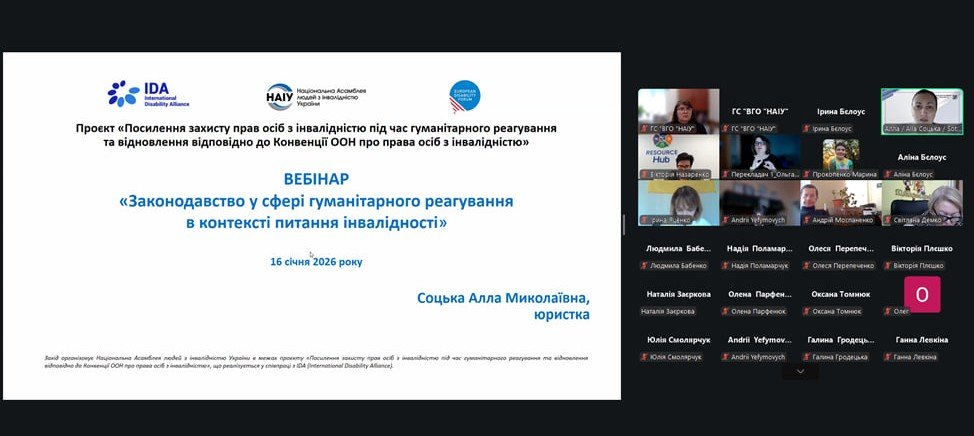
The National Assembly of Persons with Disabilities of Ukraine held a webinar entitled “Legislation in the field of humanitarian response in the context of disability,” dedicated to the analysis of international standards and national legislation that define the specifics of protecting persons with disabilities in emergency situations, including war. The event was organized as part of the project “Strengthening the protection of the rights of persons with disabilities during humanitarian response and recovery in accordance with the UN Convention on the Rights of Persons with Disabilities” with the support of the International Disability Alliance (IDA).
The main objective of the webinar was to familiarize participants with international and domestic regulations that contain requirements and guarantees for compliance with the main principle of humanitarian response-accessibility of assistance for all, without discrimination, taking into account the needs of persons with disabilities and other low-mobility groups of the population.
As noted by the webinar speaker, NAPD lawyer Alla Sotska, Article 11 of the UN Convention on the Rights of Persons with Disabilities, which has been ratified by our state, imposes certain obligations on Ukraine. These include ensuring the protection and safety of persons with disabilities in situations of armed conflict and humanitarian emergencies. The participants reviewed the provisions of the Geneva Conventions and Additional Protocol I, which enshrine special protection for the wounded, sick, and persons with disabilities, guarantees of evacuation, and access to medical care and support from humanitarian organizations.
The audience was also presented with a systematic overview of Ukrainian legislation in the areas of civil protection, social services, healthcare, education, and the protection of IDP rights. In particular, they examined the Civil Protection Code of Ukraine, which guarantees, among other things, notification of emergencies, free evacuation using specialized transport, etc. It also provides for the establishment of accessible temporary accommodation and the provision of humanitarian, medical, psychological, and material assistance to all those in need.
An important point of emphasis at the meeting was the information that regulatory acts on alerting directly require the use of audio, visual, text, and sign language formats of communication that are convenient for people with disabilities, and that evacuation and accommodation plans have separate sections dedicated to their needs.
At the same time, regulations stipulate that ramps in shelters are not a recommendation but a requirement, and navigation to protective structures must be duplicated in Braille and tactile format. People with disabilities have priority rights to evacuation, accommodation, and continued residence in temporary shelters.
The audience discussed mechanisms for the emergency (crisis) provision of social services, compensation for caregivers, and the development of resilience centers and assistance centers for survivors.
As emphasized during the webinar, legislation explicitly defines public organizations of persons with disabilities and social service providers as recipients of humanitarian aid, and also provides for the possibility of providing persons with disabilities with vehicles recognized as humanitarian aid.
Participants representing organizations of persons with disabilities from different regions of Ukraine shared their problems that they have to solve locally. According to them, the legislation contains a significant number of tools to ensure the rights of persons with disabilities, but not all of them can be implemented in practice, mainly due to insufficient control over their implementation in the regions.
According to the participants, the webinar became a platform for professional discussion of humanitarian response issues in Ukraine: how to make it truly inclusive and compliant with international human rights standards, even in the most difficult conditions.
The project “Strengthening the protection of the rights of persons with disabilities during humanitarian response and recovery in accordance with the UN Convention on the Rights of Persons with Disabilities” is being implemented by the NAPD within the framework of a grant from the International Disability Alliance (IDA). International Disability Alliance (IDA)
Ресурсний центр Національної Асамблеї людей з інвалідністю України підготував черговий огляд законодавчих змін, важливих для людей з інвалідністю та членів їхніх родин. Серед основних тем — соціальні гарантії, допомога на опалювальний сезон, підтримка внутрішньо переміщених осіб, освітні гранти, а також проєкти рішень щодо працевлаштування й доступності медіа. Президент України підписав закон, ухвалений за законопроєктом № […]
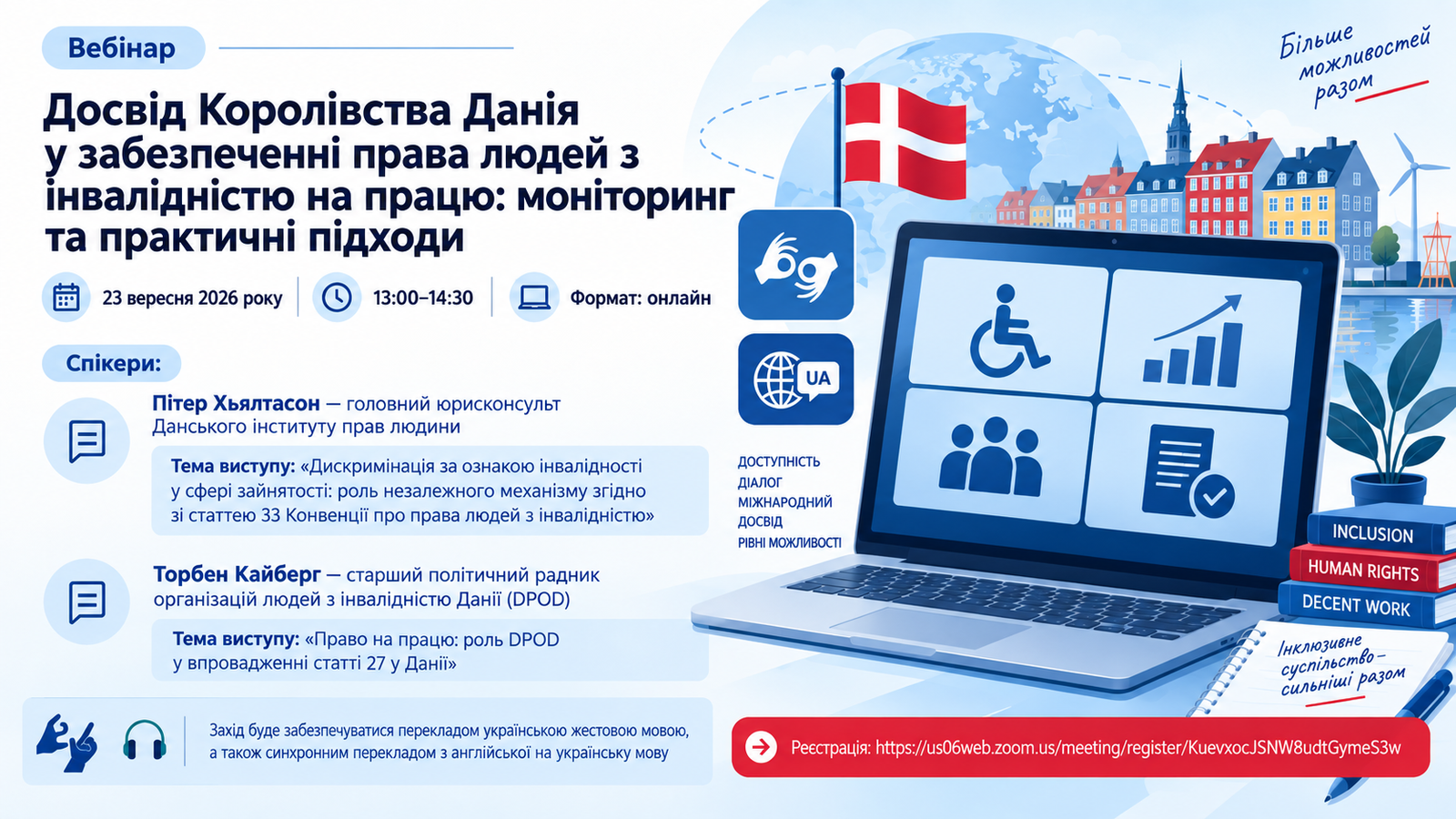
23 вересня 2026 року о 13:00–14:30 запрошуємо представників громадських організацій, експертного середовища та всіх зацікавлених долучитися до онлайн-вебінару «Досвід Королівства Данія у забезпеченні права людей з інвалідністю на працю: моніторинг та практичні підходи». Під час зустрічі учасники ознайомляться з досвідом Данії у сфері захисту права людей з інвалідністю на працю, механізмами протидії дискримінації у сфері […]
В межах проєкту «Здоров’я жінки» команда спілкується з жінками з інвалідністю у громадах, проводить опитування та досліджує їхній досвід отримання медичної допомоги. Жінки говорять не лише про архітектурну недоступність медичних закладів, відсутність адаптованого обладнання чи складнощі з транспортом. Серед бар’єрів також — попередній негативний досвід, нетактовне ставлення, брак зрозумілої інформації та суспільні стереотипи щодо сексуального […]
Анастасія живе у Казанківській громаді Миколаївської області разом із чоловіком Сергієм та шістьма дітьми. Подружжя разом вже 15 років. У житті родини багато звичних щоденних справ: навчання дітей, домашні клопоти, покупки, плани на новий навчальний рік, і серед них також щоденне лікування Анастасії. Анастасія має інвалідність і проходить лікування онкологічного захворювання. Через прогресування хвороби їй […]
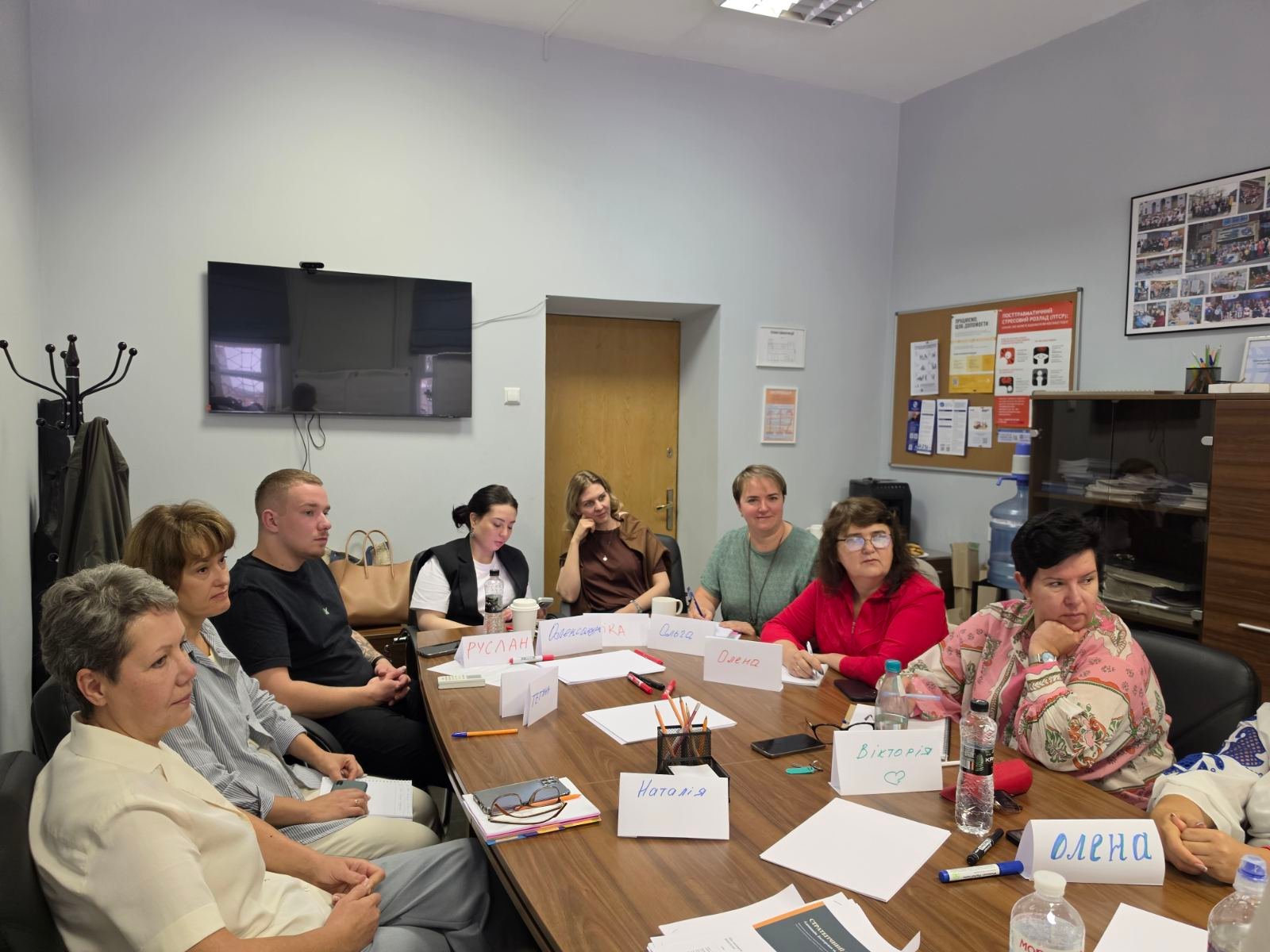
10 вересня відбулася стратегічна сесія за участі команди Секретаріату Національної Асамблеї людей з інвалідністю України. Захід був присвячений визначенню пріоритетів і цілей розвитку організації на 2027–2031 роки. Метою сесії було узгодити стратегічні напрями, цілі, завдання та ключові індикатори майбутньої Стратегії НАІУ. Основою для спільної роботи стали результати опитування членських організацій, фокус-групових дискусій та експертних інтерв’ю. […]
У Львівській області завершився офлайн-тренінг «Організаційна спроможність ОГС: від оцінки потенціалу до дієвої стратегії». До навчання долучилися представниці і представники громадських організацій людей з інвалідністю з Вінницької, Дніпропетровської, Закарпатської, Запорізької, Полтавської, Сумської, Тернопільської, Харківської та Черкаської областей, а також міста Києва. Захід організувала Національна Асамблея людей з інвалідністю України в межах проєкту «Реабілітація в Україні» […]