“I Was Afraid They Would Say Something Humiliating Again”: Olena Akopian on Motherhood and the Right of Women with Disabilities to Be Treated with Respect
27 May 2026
Share:
Olena Akopyan is the coordinator of the “Women’s Health” project in the Brovary community of Kyiv region. She is a well-known Ukrainian athlete, a champion and multiple medalist of the Summer Paralympic Games in swimming, as well as a two-time medalist of the Winter Paralymic Games in cross-country skiing and biathlon. She is an Honored Master of Sports of Ukraine and has been awarded the Orders of Merit, I, II, and III Class, along with the Order of Princess Olga, II and III Class.
Olena shared her personal experience of interacting with the healthcare system, the fears that can emerge after a gynecological appointment and stay with a woman for years, and why respect for a patient can sometimes matter more than any modern medical equipment.
“The first thing is being treated like an ordinary person”
- What does a comfortable and safe gynecological appointment mean to you?
- First of all, I want them not to be afraid of us. Sometimes you enter a room and can immediately see on someone’s face: “What am I supposed to do with you?” Not all doctors are like that, but this attitude is not uncommon. And it is very painful.
I also want people to speak to us normally. Not as if you are invisible, or incapable of understanding anything. And it is important not to be told how to live our lives. Whether to have children or not, whether to stay with a husband or not, these are our decisions. A doctor can advise, explain risks, and provide information, but should not make decisions for a woman.
“People do not need to be afraid of us”
- What do you think is most lacking in communication between doctors and women with disabilities?
- First of all, I want them not to be afraid of us. Sometimes you enter a room and can immediately see on someone’s face: “What am I supposed to do with you?” Not all doctors are like that, but this attitude is not uncommon. And it is very painful.
I also want people to speak to us normally. Not as if you are invisible, or incapable of understanding anything. And it is important not to be told how to live our lives. Whether to have children or not, whether to stay with a husband or not, these are our decisions. A doctor can advise, explain risks, and provide information, but should not make decisions for a woman.
Have you personally experienced this kind of treatment?
Yes. Sometimes it is not even doctors, but junior medical staff.
I remember when my son was in the hospital, and I came to stay with him and take care of him. One hospital employee asked: “Who is going to take care of your child?” I replied: “I am.” And she said: “That’s awful.” I was shocked.
For her, the very idea that a mother using a wheelchair could stay with and care for her child seemed somehow wrong. But at that moment, the only thing that mattered to me was that my child was with me and not with a stranger.
“The equipment exists now. But not everyone knows how to use it”
- How accessible are gynecological offices and reproductive healthcare services today, in your opinion?
- Physically, many things are now accessible. I would say accessibility is about 90% there. But a lot depends on the management of healthcare facilities.
There are places that have truly done everything possible to ensure physical comfort for people with disabilities. But there is another problem: equipment has been purchased, yet staff do not know how to use it properly.
For example, there are lifts and specialized transfer chairs, but medical personnel often do not know how to operate them correctly. That is why it is so important to work with healthcare professionals and provide training. Accessibility is not only about ramps or wide doorways.
Another issue is that accessible restrooms in hospitals are often turned into storage rooms. You find mops, buckets, and staff belongings there because “there is nowhere else to put them.” And then you are expected to somehow maneuver through all of that.
- Have you ever had to explain your needs to doctors?
Yes, but fortunately, in most cases, people listened to me.
Once I came for an examination, and they immediately offered assistance. I said: “No, thank you. These are my boundaries.” And they respected that. Later, when I actually needed help, they asked how exactly they could assist me.
I explained where I had sensitivity, how my body reacts, and what needed to be considered. We had a normal conversation, they listened to me, we even joked a little, and everything went well.
That is what normal communication looks like: when people listen to you instead of deciding everything for you.
Today I was at the hospital and had a rather unpleasant interaction. But once I mentioned that I was a well-known athlete, people immediately started speaking to me differently.
And when an “ordinary” woman comes in, just a mother, and a doctor does not want to deal with patients like her, or is simply in a bad mood, the attitude can become completely different.
As part of the “Women’s Health” project, we conducted a survey, and many women spoke about disrespect, rudeness, and being dismissed. And that is deeply painful.
“I am afraid to go to a new doctor”
- Have there been times when you postponed medical examinations?
Yes.
My doctor moved away, and I have not had a full gynecological examination in years. I do get ultrasounds from a specialist I trust, but I cannot bring myself to see a new gynecologist.
I understand that the doctor might actually be kind and professional, but I am still afraid. Afraid that it will hurt. Afraid that I will not be understood.
Once, I ended up in the hospital because of bleeding, and the doctor on duty started insulting me. She used extremely degrading language toward me.
That happened back in the 1990s, but I still remember it vividly. After that experience, I was left with a lasting fear that someone might once again allow themselves to speak about me in that way.
When you are vulnerable, those experiences stay with you for a very long time.
“I always wanted children”
- Can you tell us about your experience of motherhood?
I always wanted children.
I even had a plan: to finish my sports career, get married, and become a mother.
And I was very lucky with my doctors. No one tried to discourage me from pregnancy. On the contrary, they supported me.
But when I looked for a doctor closer to home, in Brovary, someone told me: “Don’t even try. They won’t take you.”
Simply because I use a wheelchair and was pregnant with twins.
So we went to Kyiv and found other specialists. And we never regretted that decision.
- What myths about motherhood and women with disabilities do you hear most often?
The most common question is: “How are you going to take care of your child?”
When my twins were born, my husband was often away because of work, so I was mostly caring for them on my own. I learned how to go for walks with two children, organize daily life, and manage everything independently.
And I did manage.
Yes, it was difficult. But when a woman has motivation, she will find a way.
And now there is also so much technology, equipment, and adaptive solutions that help mothers become more independent.
“I want women not to be afraid of giving birth”
- Why is it important for you to work on the “Women’s Health” project?
I truly want women with disabilities to feel like part of society, not like a separate category of people.
I want comfort and respect to be the same for everyone.
And I also want women not to be afraid of having children. But at the same time, I want them to take care of their health, attend medical examinations, and consider genetic risks if there are any.
Today there are opportunities to check these things and plan pregnancies more safely. And that is extremely important.
Oleksandra Perkova, Communications Manager of the Project
Повернення з військової служби до цивільного життя — це новий етап, який нерідко супроводжується непростими викликами. Особливо для ветеранів і ветеранок, які зазнали поранень або набули інвалідності. Реабілітація, пошук роботи, доступ до послуг, відновлення соціальних зв’язків — усе це потребує не лише особистих зусиль, а й підтримки суспільства. Національна Асамблея людей з інвалідністю України (НАІУ) […]
Упродовж програмного року — з 1 жовтня 2025-го до 30 вересня 2026-го — на гарячій лінії Національної Асамблеї людей з інвалідністю України (НАІУ) було надано 821 консультацію для 680 осіб. Найчастіше люди зверталися за роз’ясненням щодо своїх прав і пільг, зокрема отримання та поновлення виплат, оформлення догляду, встановлення й переоформлення інвалідності. Близько 70% звернень стосувалися […]
2 вересня 2026 року Генеральна Асамблея ООН ухвалила резолюцію 80/305 «Доступ до асистивних технологій». Це важливий крок до того, щоб технології, які допомагають людям навчатися, працювати, спілкуватися та жити самостійно, стали доступнішими в усьому світі. Сьогодні понад 2,5 мільярда людей потребують асистивних технологій. Це, зокрема, крісла колісні, слухові апарати, засоби комунікації та інші пристрої, які […]
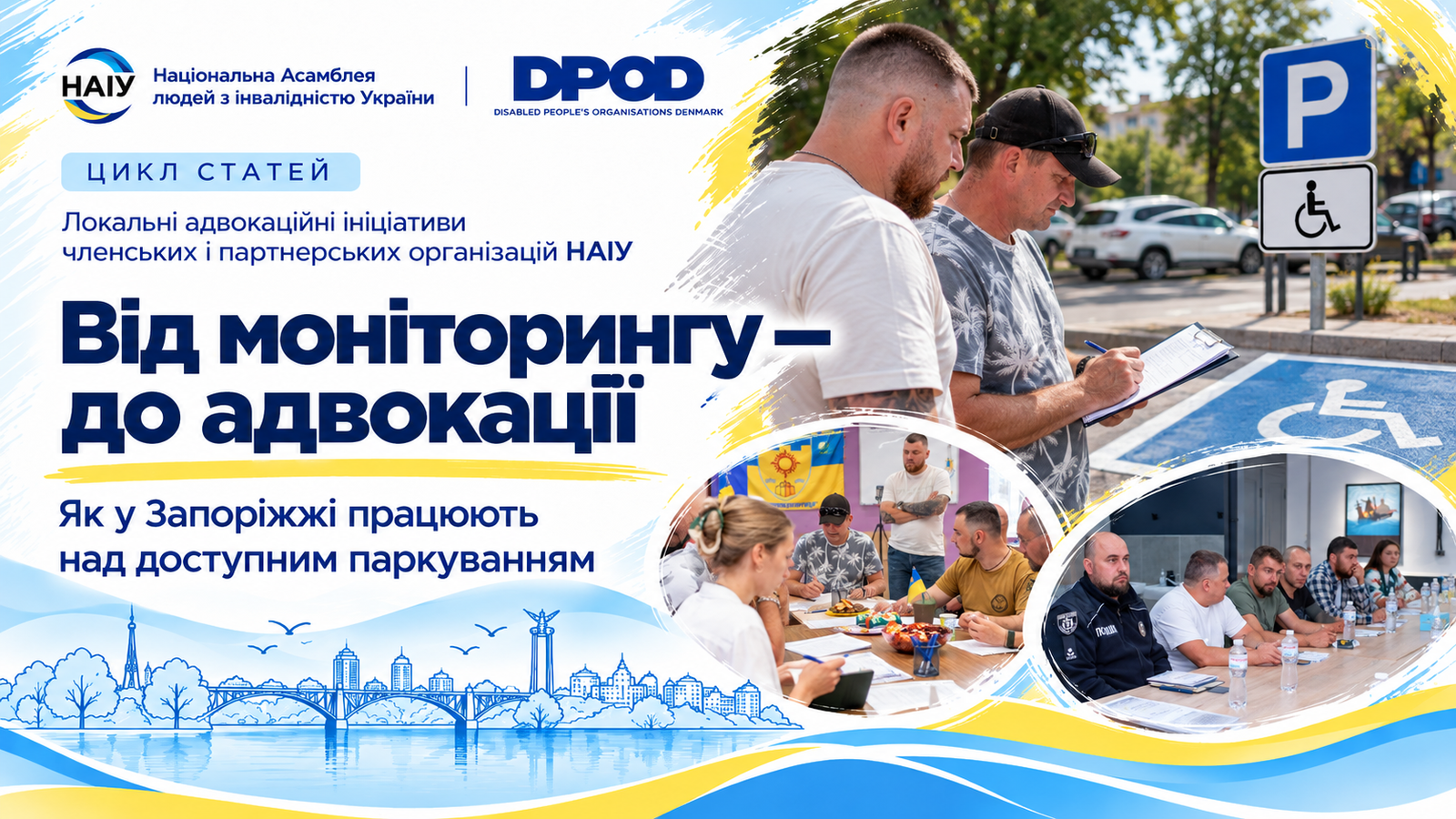
НАІУ продовжує цикл матеріалів про локальні адвокаційні ініціативи членських і партнерських організацій за підтримки та фінансування Disabled People’s Organisations Denmark (DPOD). П’ята історія — про досвід запорізької ГО «СИЛА РОЗВИТКУ», яка порушила питання доступності паркувального простору та відповідального паркування. Паркомісце для людини з інвалідністю — це не просто питання зручності. Якщо воно зайняте, неправильно облаштоване […]
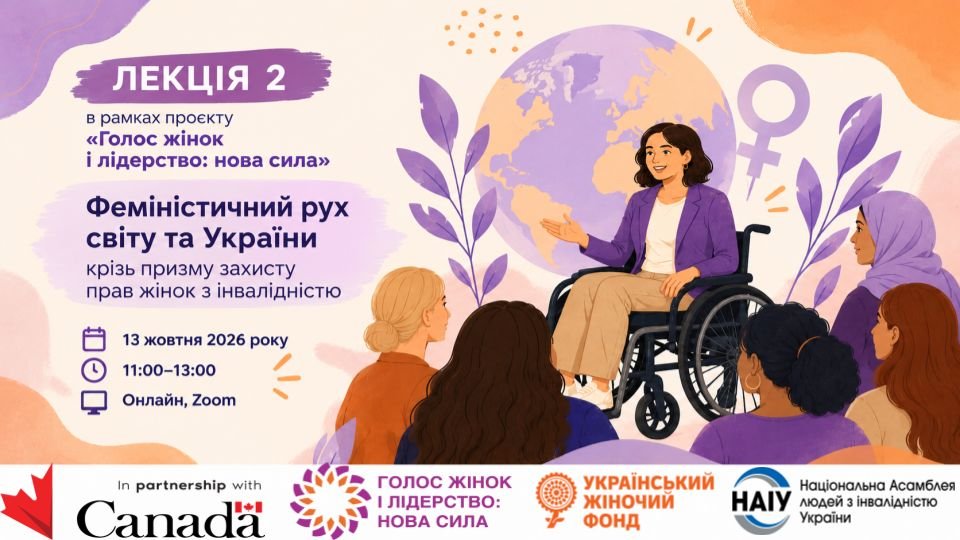
13 жовтня 2026 року з 11:00 до 13:00 відбудеться друга лекція в межах проєкту «Голос жінок і лідерство: нова сила», присвячена розвитку світового та українського феміністичного руху в контексті захисту прав жінок з інвалідністю. Тема зустрічі – «Феміністичний рух світу та України крізь призму захисту прав жінок з інвалідністю». Феміністичний рух у світі та Україні пройшов тривалий […]
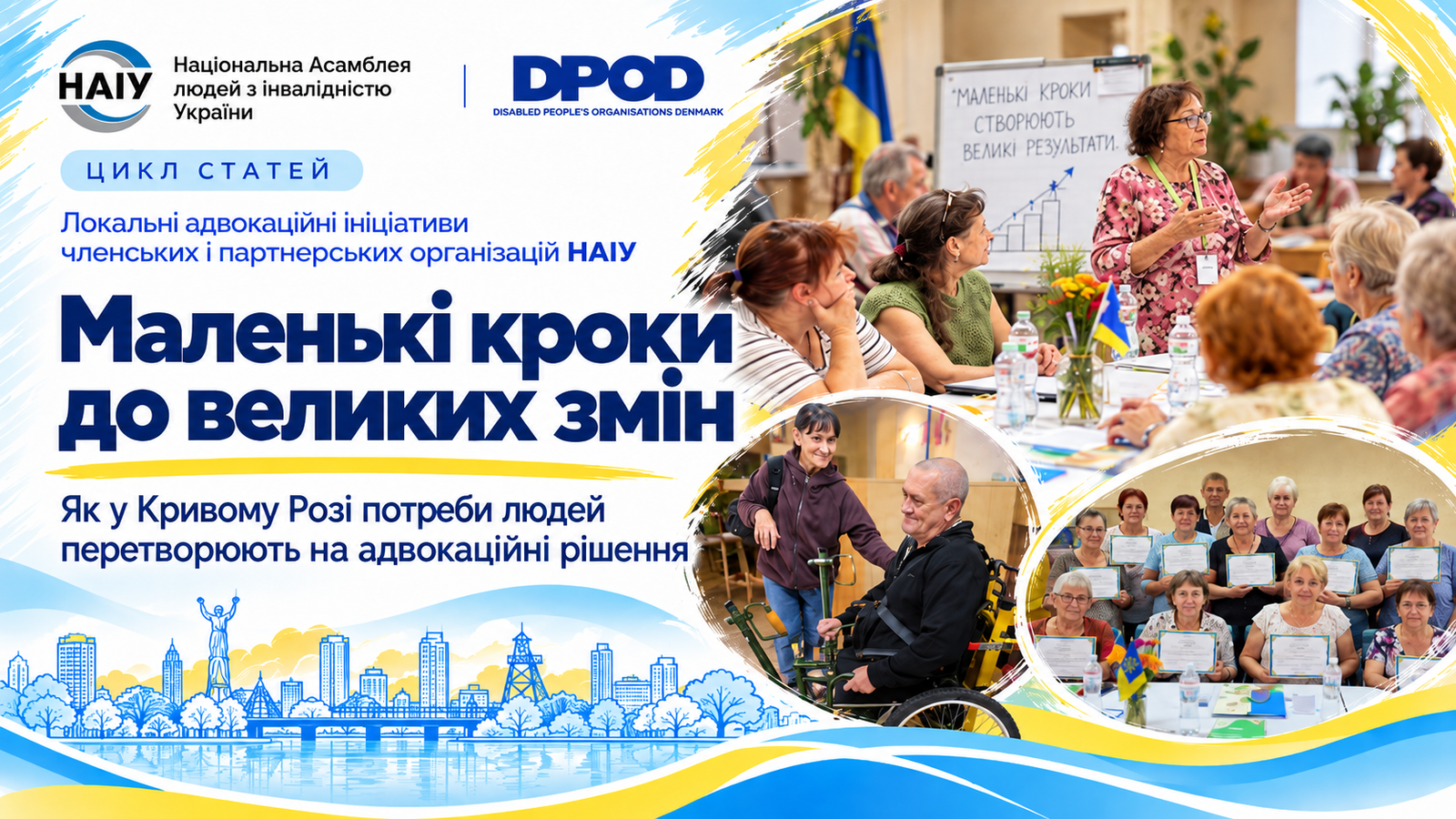
Іноді потрібна послуга є — але людина не знає про неї. Інформація опублікована — але її складно зрозуміти. Лікарня працює — але до неї важко дістатися. Цифровий сервіс доступний — але скористатися ним самостійно може не кожен. Саме з таких повсякденних ситуацій розпочалася адвокаційна робота Інгулецької районної організації ветеранів м. Кривого Рогу в межах проєкту […]