Daily Challenges Faced by Mothers with Disabilities
May 28, 2025
Share:
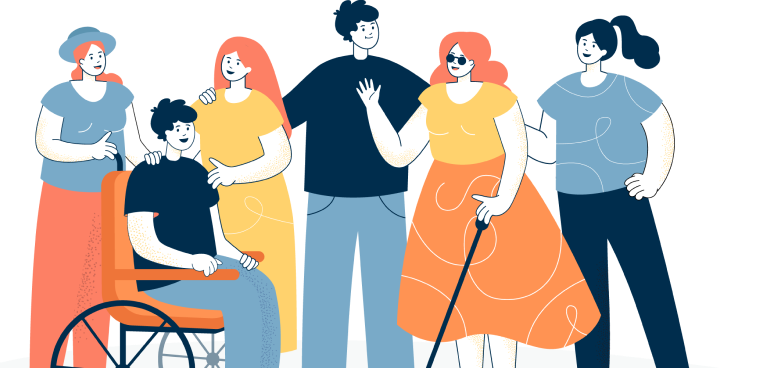
Women with disabilities who are mothers often find themselves at the intersection of multiple systemic barriers. They face inaccessible environments, limited access to quality social services, gender stereotypes, and a high level of emotional strain — all at once. During times of war, these challenges only intensify. This is precisely why targeted support for women with disabilities is not an exception, but a necessity in ensuring a life of dignity for every person.
Natalia is one of those who received assistance through the project “Multi-sectoral Humanitarian Assistance with a Disability-Inclusive Approach for IDPs, Returnees, Veterans, and Host Communities in Ukraine,” implemented by the National Assembly of People with Disabilities of Ukraine (NAPD) in partnership with the European Disability Forum (EDF) and with support from the German Federal Foreign Office (GFFO) and CBM (Christian Blind Mission).
Natalia lives in the Karlivka community, raising her young son and caring for her elderly mother. The family has no outside help or additional resources — everything relies on mutual support and the daily resilience of each family member. Thanks to the project, Natalia received cash assistance and a new walker, which significantly eased her daily life.
“For some, it may just be financial aid or a mobility device. But for me, it’s confidence. It’s the ability to move independently, to care for my son, to cook, to leave the house — to be a full mother, as much as my condition allows. It’s like a breath of relief in a daily struggle,” she shared.
Despite her difficult circumstances, Natalia seeks ongoing personal growth. Her hobby is cross-stitching, which helps her maintain emotional balance. She is also exploring opportunities to work online — motivated not only by the need to support her family, but also by a desire to stay socially active. Her outlook is a powerful example of why women with disabilities need equal opportunities for self-realization.
Yet, there are still many barriers around us that prevent women with disabilities from fulfilling their potential. These include:
Physical inaccessibility of public spaces and transportation, which complicates even basic tasks or access to medical and educational services.
Stereotypes about the “inability” of mothers with disabilities, which harm their self-confidence and are often used to justify discriminatory decisions.
Emotional and physical burnout, caused by the lack of systemic support or assistance from caregivers.
Lack of inclusive support programs, which often overlook the dual needs of women who must balance parenting responsibilities with accessibility needs.
Real change will only be possible through the development of comprehensive support programs that recognize not just the fact of disability, but also the woman’s role as a mother, caregiver, and active citizen. This includes ensuring access to medical, psychological, educational, and social services. A crucial part of such change is the creation of personalized support services that help reduce the burden on women with disabilities who also care for others. Economic support — both financial and material — is vital for maintaining minimum stability under extremely challenging conditions.
Women with disabilities are not objects of care, but full members of society. True solidarity with them means more than just words — it means concrete actions that, step by step, lead to lasting social change.
Oleksandra Perkova
Communications Manager of the Project
Національна Асамблея людей з інвалідністю України (НАІУ) та громадська спілка «Сучасний погляд» підписали Меморандум про співпрацю з Інститутом очних хвороб і тканинної терапії ім. В. П. Філатова НАМН України про створення інтегрованого простору Filatov Vision Hub — першого в Україні центру ранньої реабілітації для людей із тяжкими ураженнями очей. Про це на своєму сайті повідомляє […]
Безоплатне забезпечення допоміжними засобами реабілітації – це не пільга, а гарантоване законом право. Проте опинившись перед такою необхідністю, люди часто губляться в процедурах: не знають, з чого почати, куди звертатися і які саме вироби можна отримати. Фахівці Ресурсного центру Національної Асамблеї людей з інвалідністю України детально пояснюють усі тонкощі: від правових підстав до підписання акта […]
Some citizens who own real estate had their property rights registered with the Bureau of Technical Inventory only on paper before January 1, 2013. As a result, such information is not available in the State Register of Real Property Rights and in the Register of Ownership Rights to Real Estate, the archival part of this register. As explained on its website [...]
The electronic employment record book, introduced in 2021, contains digital data on hiring, transfers, dismissals, and other changes related to employment. According to the Pension Fund of Ukraine on its website, information from a paper employment record book, which was the main document on a person's employment, may be digitized before January 1, 2004. After that, the information [...]
The Cabinet of Ministers of Ukraine has approved a procedure under which the state will pay for health and recreation services for children in need of special social attention and support. According to the website of the Ministry of Social Policy, Family and Unity of Ukraine, children from Ukrainian families in need of support will be able to undergo rehabilitation in institutions included in the State Register of Property Objects of Rehabilitation and [...]
Ukrainians fleeing the war abroad can continue to acquire insurance record for their future pension. This is especially important for those who have little time left before retirement or who are in countries with which Ukraine does not have a social security agreement. As the Pension Fund of Ukraine states on its website, voluntary contributions to the Fund [...]