A year of war! It seems like it's over, but it's not. Today, on the eve of February 24, these events and memories fill every cell of my body with fear.
 At five o'clock in the morning, a ski coach came into my room: "Olesya Mykolaivna, the war has started! Kyiv is being bombed".
At that time, I was with a large team of 32 people at a rehabilitation and sports training camp in the Lviv region. We had just arrived for rehabilitation and started to take our first steps on skis, and the war cut everything short. My state at that moment is impossible to express in words - it was shock, hatred, fear, responsibility for people, panic, worry for my family. And all this was chaotically tearing me apart from the inside like a snowball. And then there was the bus to the Lviv railway station, the division of people into mini-groups with the possibility of sending them to safe places.
Explosions in Lviv! The train station is a stormy sea of confused, chaotic people. And I am the head of a group of 32 people, 27 of whom are blind. While traveling in the bus, I had already formed a plan, and when we arrived at the place, we clearly began to implement it. Forming people into groups on the street, we took them one by one to the ticket office and bought tickets to safe places. Thus, people from Kharkiv, Donetsk, and Zaporizhzhia regions went to the guy from Ivano-Frankivsk region. Khmelnytsky took Kyiv, Poltava, and Sumy, and Lviv took in everyone else. They say that friends help each other in times of need, and this is definitely not an empty phrase. Because a large family of two adults and three children has taken in 6 more adults in a small two-room apartment.
A call home: "Mom, what's going on? I'm taking a ticket and going!"
"Lesya, where are you going! Stay there! There is a war here, they are bombing! They blew up a bridge, warehouses, a gas station, everything is on fire!" the connection was cut off.
My life changed, it was torn into two halves and fear kept me in chains. And then the calls started. Just from everywhere! Can you help me leave? Where to go? Where should we go, blind people?
We had no strength left to sit and do nothing, so we took action. Together with friends and colleagues, we organized the evacuation of blind people abroad. A phone call: "We are leaving, what should we do?" A meeting at the train station, accommodation, formation of groups, a bus, the way to the border, where a bus from Poland was waiting to take us to a temporary or even longer location.
And the work began. In the first 3 weeks, we sent groups of blind people for evacuation almost every day. Poland, Italy, Germany, Spain and beyond. Public figures from various organizations united into a single organism that effectively and efficiently helped blind people to escape from the terrible war.
Calls were received around the clock, day or night, no one paid attention. Life became mechanical: read the news, take the call, arrange for a meeting and accommodation, create departure lists, find buses, arrange with the host, send the group, call back and make sure they got there safely and were accommodated.
The worst thing was to evacuate my family. At that time, my family was three steps away from the occupied city of Irpin. For 10 days, we were under fire from airplanes, constantly moving tanks, without electricity, water, or heat. And I, who helps everyone every day, was powerless to save my family. Only on March 8, we managed to take them out of the hell of war.
Time changes everything, and three months into the war, members of the organization began to join in providing humanitarian aid. They sent medicines, hygiene products, and food.
We received inquiries from soldiers who had lost their eyesight as a result of injuries: "What should I do and how should I live my life?" We quickly responded to these requests by sending them canes, visiting hospitals and just talking to them, providing legal advice and psychological assistance, and much more. We set up 2 information and counseling hubs to help people who lost their eyesight, or suffered back injuries or lost limbs as a result of the war.
Now we continue to work in this area of assistance and are planning new initiatives.
Unfortunately, the state is a complex mechanism that is simply unable to respond quickly to the challenges of life, and so in the first weeks of the war, people were rescued by public and volunteer organizations.
This year was a year of challenges and victories. And looking back, I realize that I would have done the same thing, because being a public figure is not a profession, but a state of life.
**********************************
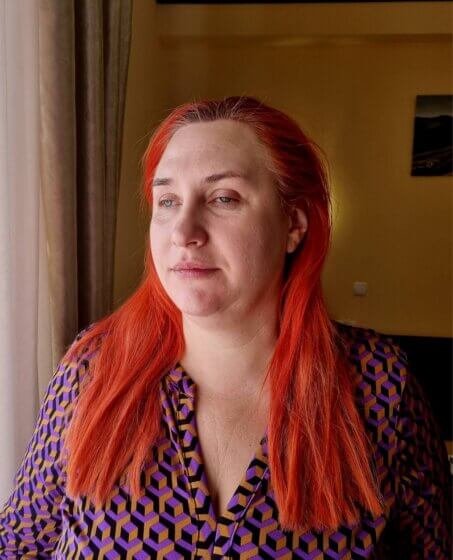
Lesia Perepechenko, an organization of blind people, Kyiv region. A Year of War!
One might think it's in the past, but it is not. Today, on the eve of February 24, those events and memories are still filling every cell of my body with fear.
At five o'clock in the morning, a skiing sports coach came into my room and said, "Olesia Mykolaivna, war has begun! They are bombing Kyiv."
At that time, together with a big team of 32 people, I was in a rehabilitation and sports camp in the Lviv region. It had been only 3 days since we came for rehabilitation and started to make the first skiing steps, but the war abruptly disrupted everything. My state at that moment was impossible to put into words - it was a shock, hatred, fear, responsibility for people, panic, and worries about my family. And all that, like a snowball, was chaotically tearing me apart from the inside. And then there was a bus to Lviv railway station and arranging the people into mini-groups to have them go to safer places.
Explosions in Lviv! The railway station is a stormy sea of disoriented and chaotically moving people. And myself, the eldest in the group of 32 people, 27 of whom are blind. While going on the bus, I had already made up a plan, and after reaching the place, we started to implement it consistently. After arranging the people into groups on the street, we accompanied them one by one to the ticket office to buy tickets to safer destinations. So, people from Kharkiv, Donetsk, and Zaporizhzhia regions went to a friend from Ivano-Frankivsk region. Those who lived in Khmelnytskyi region picked up people from Kyiv region, Poltava region and Sumy, and Lviv city sheltered all the others. They say that friends in need are friends indeed, and these are not just empty words. When a large family of two adults and three children hosted 6 more adults in their small two-room apartment.
A phone call home: "Mother, how are you there? I am buying a ticket and coming!"
"Lesia, where are you going! Stay just there! There is war and bombing! They've blown up the bridge, warehouses, a gas station - everything is on fire!" the connection was disrupted.
Life has changed, torn into two halves, and there's fear that keeps you chained all the time. And then the phone calls started. Just from everywhere! Help us to leave! Just anywhere! Where can we, the blind, go? It was unbearable just to sit and do nothing - so we began to act.
Having united together with our friends and colleagues, we organized evacuation of blind people abroad. A phone call from some people, and we are already on our way. Meeting at a railway station, accommodating, arranging into groups, a bus, the way to the border where a bus from Poland is already waiting to take the people to a place of temporary or longer stay. So, the work has started.
In the first 3 weeks, we sent groups of blind people into evacuation almost every day: to Poland, Italy, Germany, Spain, and so on. Public actors from various organizations united into a single organization that was effectively and consistently helping the blind to escape from the terrible war. Phone calls were received day and night-no one cared what time it was. Life became mechanical: to read news, receive a phone call, arrange a meeting and accommodation, prepare departure lists, find buses, make agreements with the hosts, send a group, and call to make sure the group arrived and settled well.
The scariest thing was to evacuate my relatives. At that time, my family was just three steps away from the occupied Irpin town. 10 days under shelling from air jets, shelling by tanks, without electricity, water, and heating. And me, who is helping everyone every day, yet cannot save my own family. Only on the 8th of March were we able to drag them out of the hell of war.
Time changes everything, and after three months of war, the members of our organization began to provide humanitarian assistance. They would hand over medicines, hygiene products, and food.
Appeals began to come from the wounded soldiers who had lost their eyesight: "What can be done and how can we live on?" Quickly responding to their requests, we sent them walking sticks, visited hospitals, and simply talked to them; we provide legal counseling and psychological support and many other things. We have created 2 information and consultation hubs to help people who lost their eyesight or got spinal cord injuries or lost their arms or legs in the war.
Today we continue to work in this area of support and we are planning new initiatives.
Unfortunately, our state is a complicated mechanism that simply cannot respond promptly to life challenges, which is why it was public and volunteer organizations that were saving people in the first weeks of the war.
This year has become a year of challenges and victories. And having looked back, I realize that I would have done the same because a public activist is not a profession, but a state of life.