Mentoring and Adaptations: Helping Learners Achieve Results
2 July 2026
Share:
This is the third article in the series “Positive Practices of Inclusion in Vocational Education” — a collection of stories showing how practical solutions in vocational schools remove barriers to learning and help individuals move towards independence.
Inclusive vocational education often relies on one simple foundation: mentoring. When an educator is there to lean on – someone who doesn’t dismiss difficulties but actively helps find solution – learning becomes truly meaningful and leads to real results.
These are exactly the kinds of examples we collect and share through the project “Inclusive Vocational Education and Training: Improving Training for Veterans and People with Disabilities”, which is part of the Skills4Recovery Multi-Donor Initiative, so that working solutions become systemic rather than isolated cases.
Poltava: How a Teacher Helps Learners Take a Step Forward
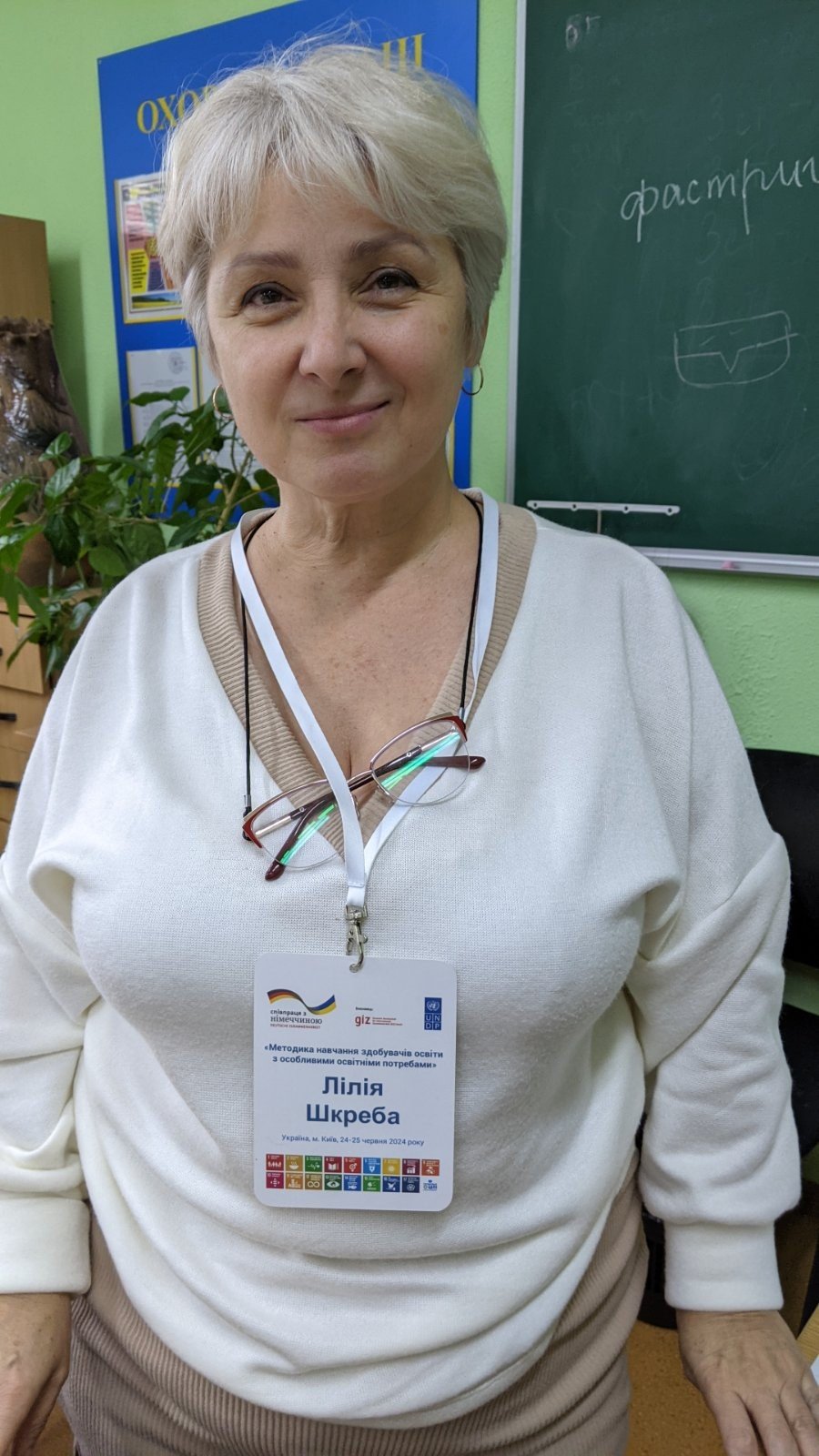
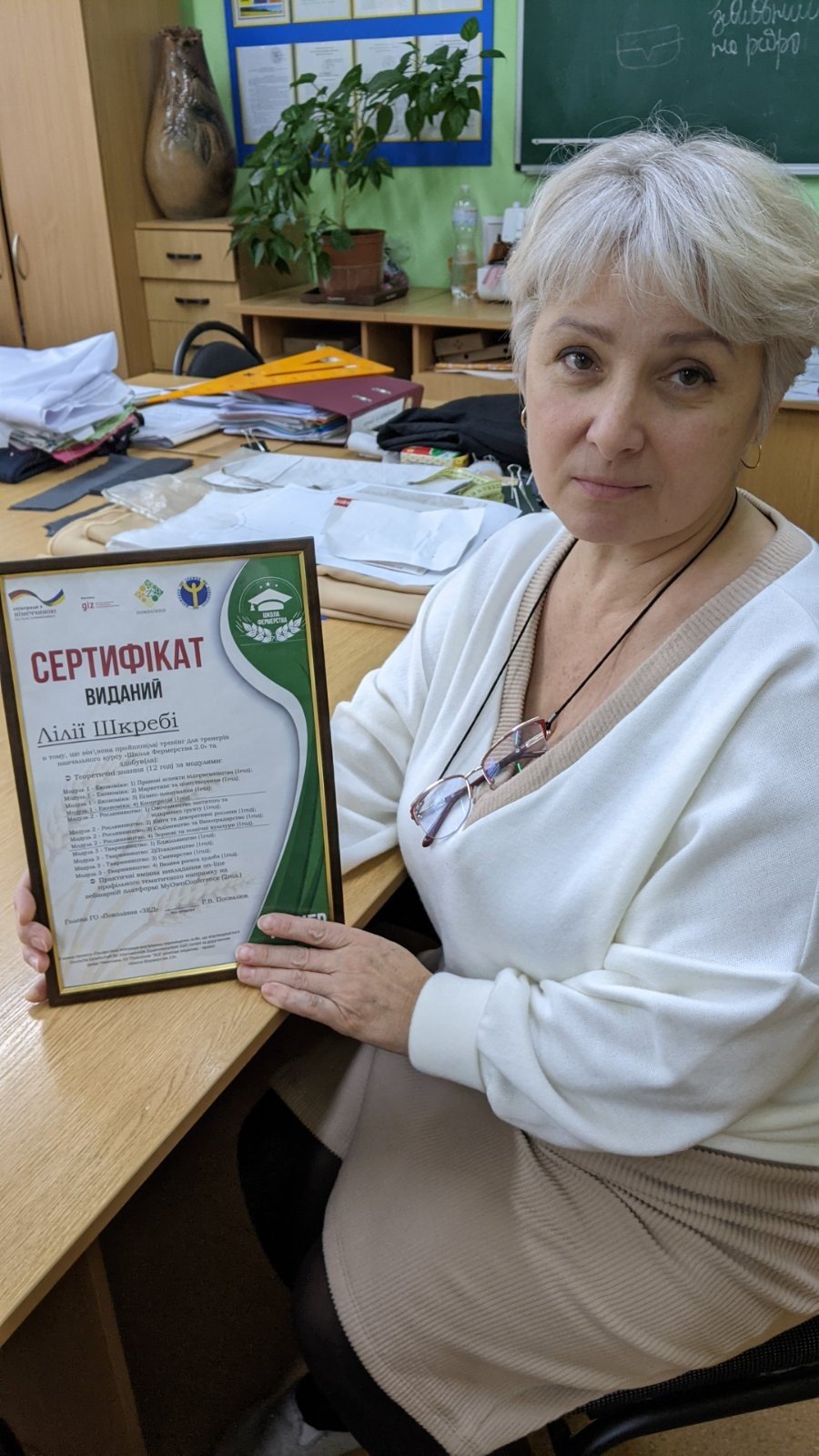
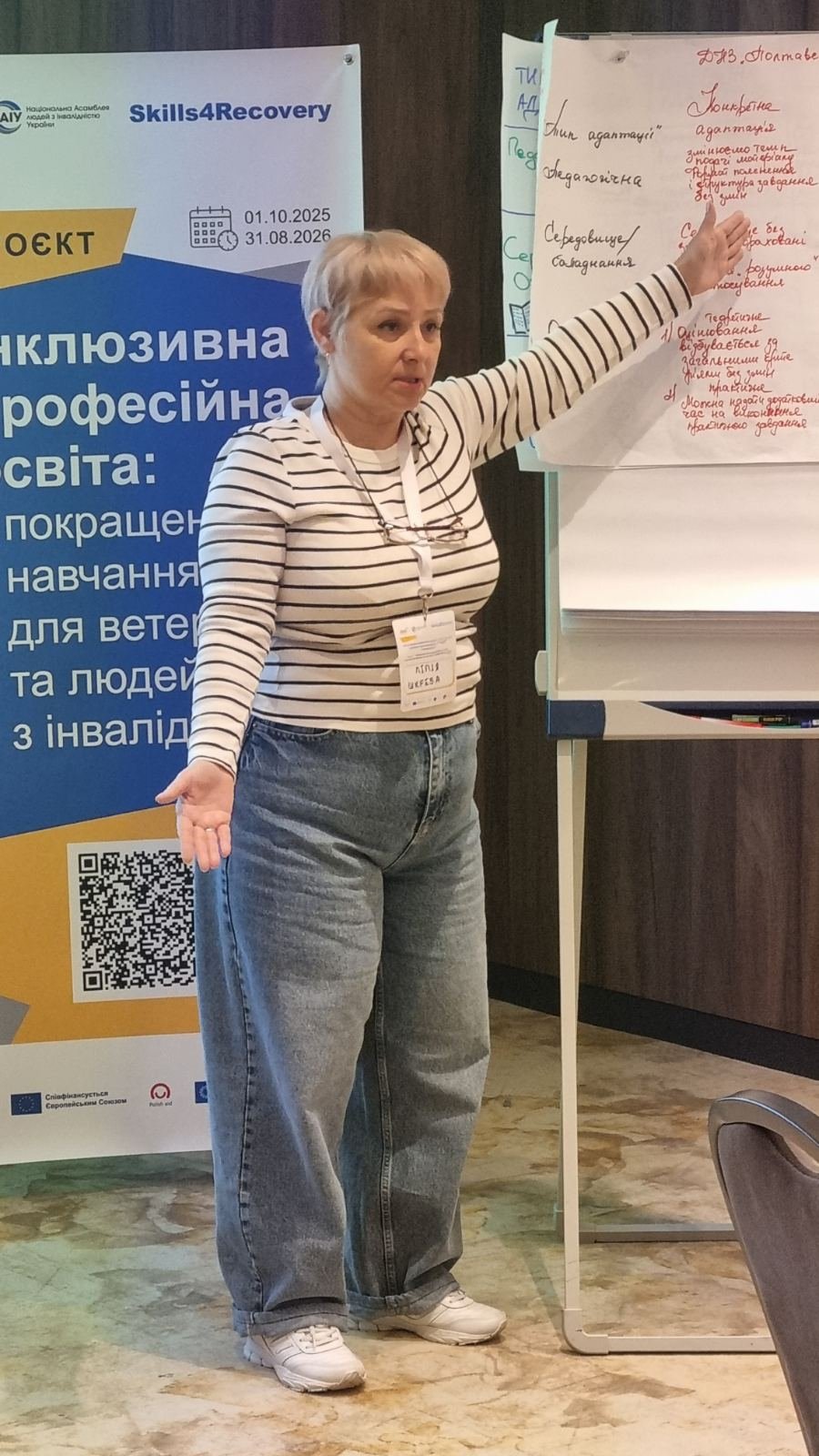
Liliia Shkreba has worked as a teacher and practical training instructor at the Poltava Vocational Education Center of the State Employment Service since 2017. Experienced in working with learners of diverse needs, she recently completed specialized training in inclusion and psychosocial support through the project “Inclusive Vocational Education and Training: Improving Training for Veterans and People with Disabilities.”
Liliia explains her approach simply: it is vital not to “demand the same from everyone,” but rather to find a path that works for each specific individual – both in theory and in practice. Her personal experiences have deeply shaped this mindset. “My neighbours are deaf,” she shares. “Living near them made me realize how important it is to use alternative ways of communicating... I truly regret that I don’t know sign language.”
Two core principles guide Liliia's work: empathy (“putting yourself in the other person’s shoes”) and hands-on practice (“showing exactly how to perform a task, step by step”). “For me, learning is all about opportunity. I immediately think about how I can apply new knowledge in practice,” she adds.
These very principles proved crucial when Olena arrived at the Center with a dream of learning how to sew.
Olena’s Story: Sewing Step by Step with Mentor Support
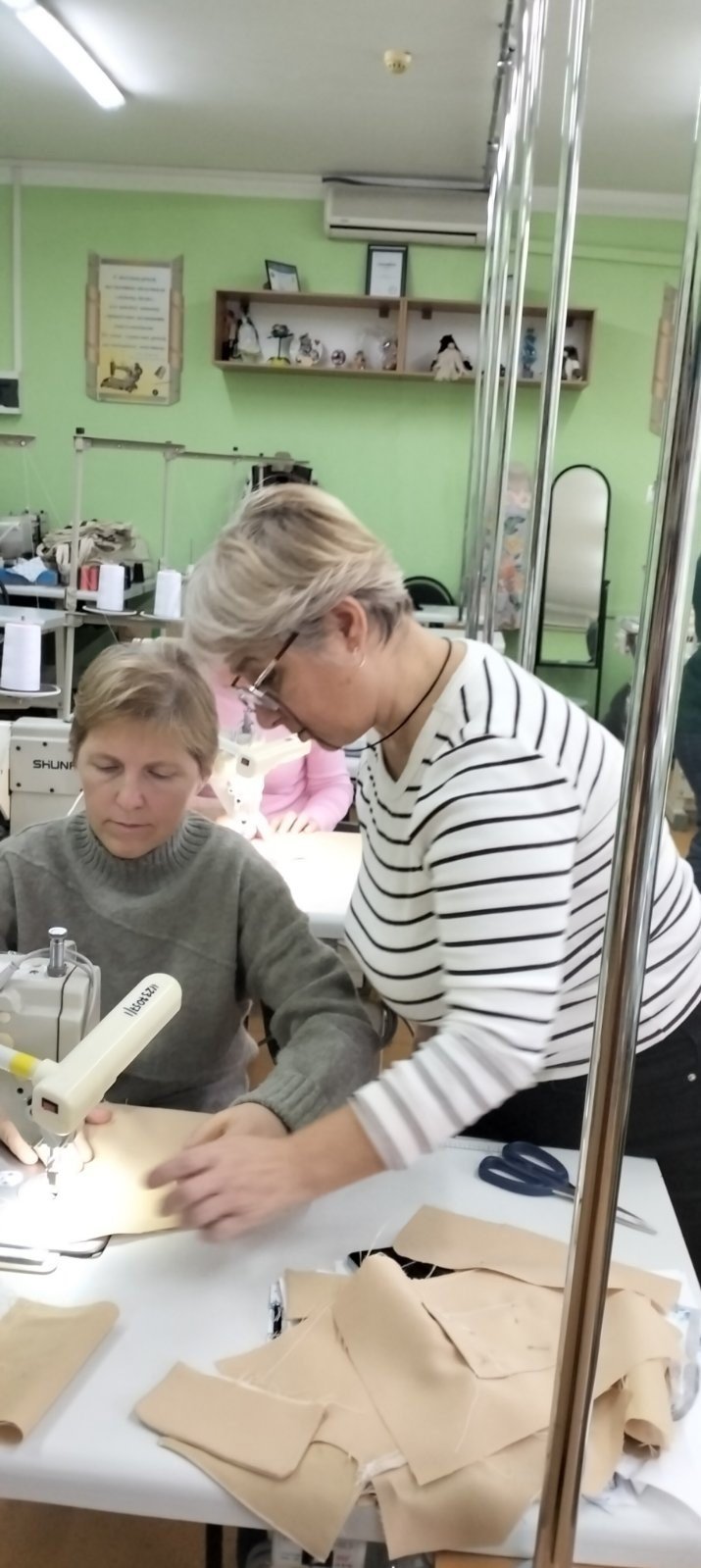
Recently, Olena came to the Center with the dream of learning to sew. She has a prosthetic arm that does not move. At first, it seemed very difficult, but the teacher, together with Olena, began to select solutions for specific operations.
“Your eyes are afraid, and your mind creates a barrier: no, this is impossible. But it is important to try,” Liliia explains.
To enable Olena to complete tasks independently, practical adaptations were introduced in the training:
• for the gathering operation (ruffle), which usually requires two hands, a special gathering presser foot was used — and Olena was able to perform the operation independently;
• instead of an iron that was difficult to use, a handheld steam iron with a clothes rack was purchased — now Olena can iron with one hand.
During the training, there were moments of fatigue and discouragement. “Sometimes Olena says: ‘No, I can’t.’ But I support her: ‘Look, it is working.’ This kind of support is very important,” the teacher says.
“When she has difficulties, I try to put myself in Olena’s place and find practical ways to perform a specific technological operation,” Liliia adds.
“For us, the key thing is that a learner should not be left alone with difficulties. Mentoring and the right tools help bring learning to a successful result,” the VET institution’s administration comments.
The result: thanks to mentoring and precise adaptations, Olena is already performing some key operations independently — and this restores her confidence to move further in her training and profession.
What Exactly Made This Case Work
• Mentoring: support at “points of discouragement” and progress in small steps.
• Precise tools for specific operations: “here and now” solutions remove a learning barrier.
• Focus on independence: the adaptations were selected so that Olena could perform the operations independently.
This case has been prepared as an evidence-based example of effective solutions by the team of the project “Inclusive Vocational Education and Training: Improving Training for Veterans and People with Disabilities,” implemented by the National Assembly of People with Disabilities of Ukraine (NAPD) in cooperation with Christoffel-Blindenmission Christian Blind Mission e.V. (CBM), with financial support from the European Union, Germany, Poland, Estonia, and Denmark, as part of the Skills4Recovery Multi-Donor Initiative, implemented by the Deutsche Gesellschaft für Internationale Zusammenarbeit (GIZ) GmbH and the Solidarity Fund PL (SFPL).
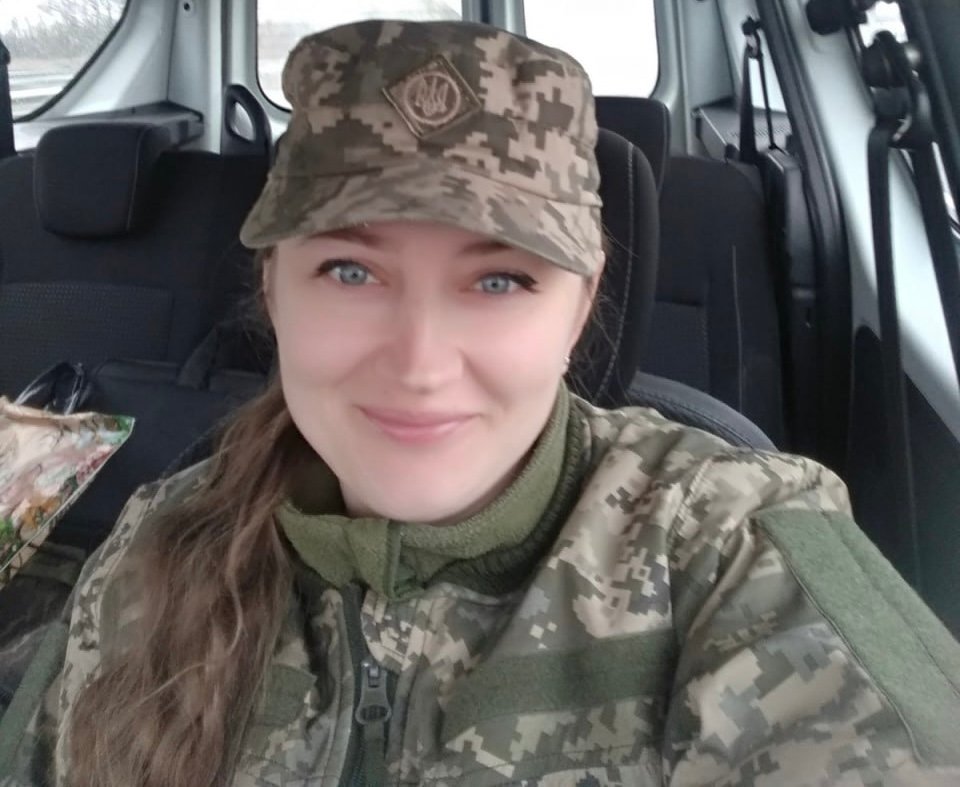
Ірина – молода мама з Полтавщини, яка виховує двох дітей: старшій дитині два з половиною роки, молодшій нещодавно виповнилося три місяці. Зараз жінка перебуває у відпустці по догляду за дитиною, відновлюється після пологів і водночас відвідує реабілітаційний центр. Ірина та її чоловік – військові. Обоє розпочали службу у 2017 році, а після початку повномасштабного вторгнення […]
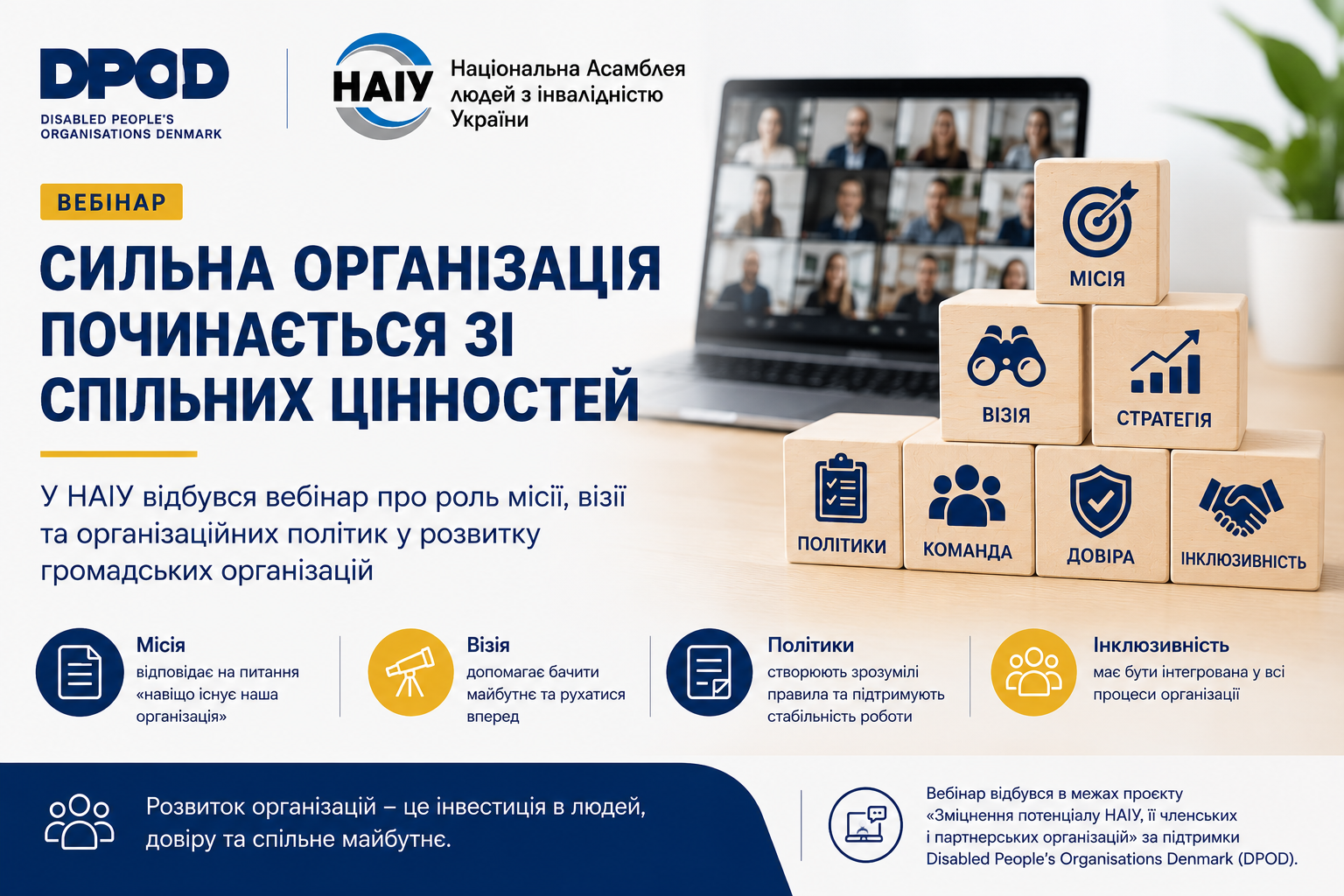
Що робить громадську організацію стійкою? Нові проєкти, сильна команда чи достатнє фінансування? Насправді все починається значно раніше — з розуміння власної місії, спільних цінностей і правил, за якими працює організація. Саме про це йшлося під час вебінару «Розбудова ефективної організації: роль місії, візії та організаційних політик», який Національна Асамблея людей з інвалідністю України провела для […]
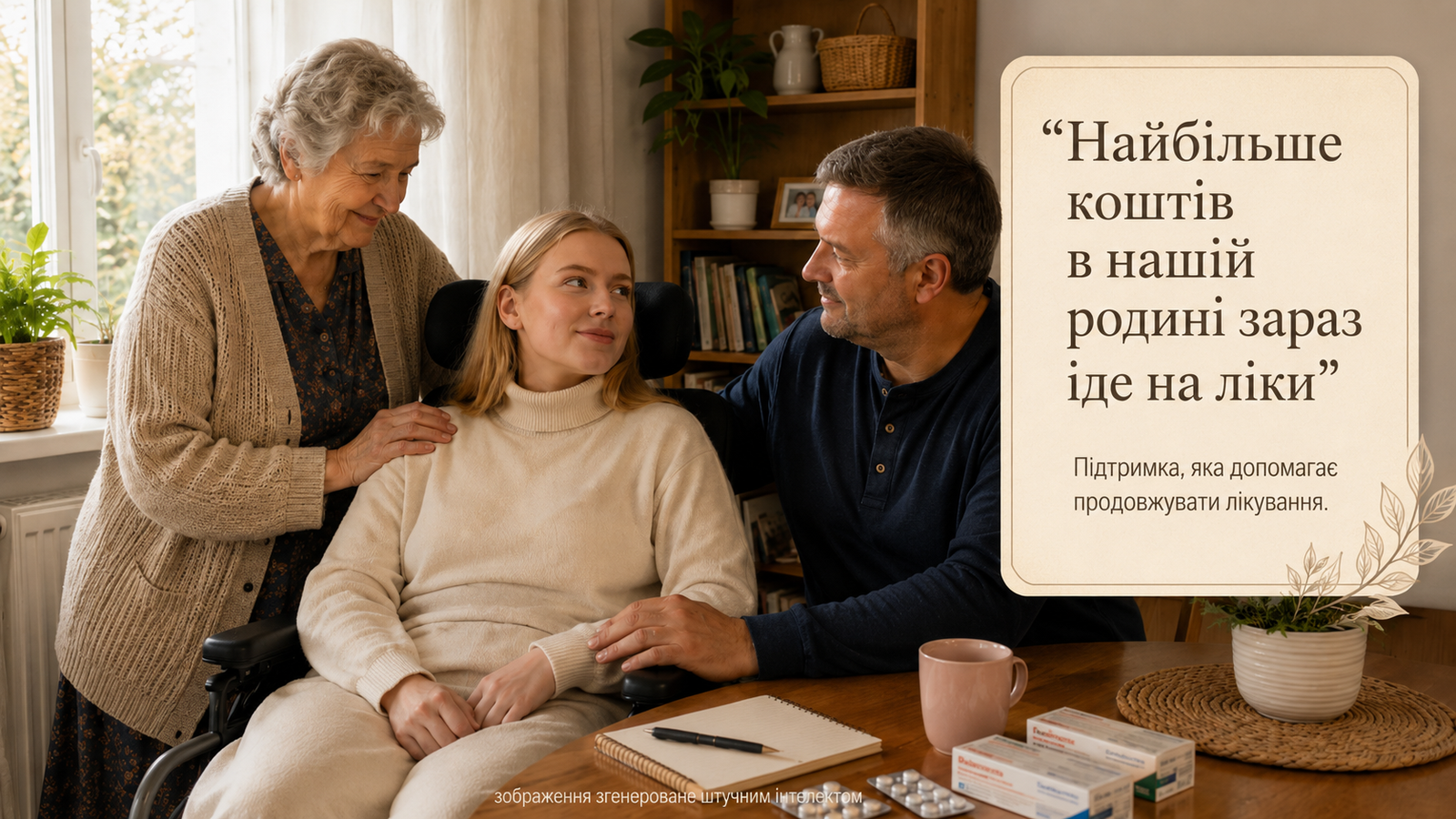
29-річна Лідія проживає разом із батьком Юрієм Миколайовичем та 86-річною бабусею у Чернівецькій громаді. Родина щодня підтримує жінку та допомагає їй отримувати необхідне лікування. Лідія має дитячий церебральний параліч (ДЦП) і потребує постійної підтримки. Останніми роками стан її здоров’я погіршився. Через значне збільшення маси тіла у Лідії розвинувся переддіабетний стан, який потребує постійного медичного спостереження, […]
Публікуємо презентацію Ірини Куриленко — медичної директорки з оцінювання функціонування стану особи Університетської клініки Вінницького національного медичного університету ім. М. І. Пирогова. Матеріал підготовлено для вебінару, проведеного Національною Асамблеєю людей з інвалідністю України в межах проєкту «Реабілітація в Україні» (Rehab4U). У презентації покрокові роз’яснення, як формується індивідуальна програма реабілітації (ІПР), — документ, від якого безпосередньо […]
Понад півтора року діє нова система оцінювання повсякденного функціонування людини. Однак у людей з інвалідністю та фахівців, які їх супроводжують, і досі залишається чимало запитань щодо її застосування. Як формується індивідуальна програма реабілітації? Хто ухвалює рішення? Які права має людина під час оцінювання та як діяти запотреби оскаржити рекомендації? Саме цим питанням був присвячений вебінар […]
У межах проєкту «Здоров’я жінки» команда проєкту в громадах постійно спілкується з жінками з інвалідністю та їхніми родинами. Кожна така розмова допомагає краще зрозуміти, з якими бар’єрами вони стикаються щодня і чому своєчасна цільова грошова підтримка може стати для них справді важливою. У Чернівецькій громаді проживають пані Наталія та її донька Леся. Жінки звикли самостійно […]