A Group of Students with Disabilities in the “Turner, Grade 3” Programme and a Focus on Employment
8 April 2026
Share:
This is the second story in a series of stories highlighting how inclusive solutions implemented by vocational education and training (VET) providers enable veterans and persons with disabilities to acquire new skills and transition into employment or self-employment.
In vocational education and training, it is important not only to teach, but also to lead to a specific result — so that a person acquires practical skills and has a real opportunity to find employment. This case from Kharkiv demonstrates how inclusion works in practice through the organisation of the learning process, workplace adaptations, and support at the “transition-to-work” stage. "на виході».
Kharkiv: “Turner, Grade 3” and Focus on Employment
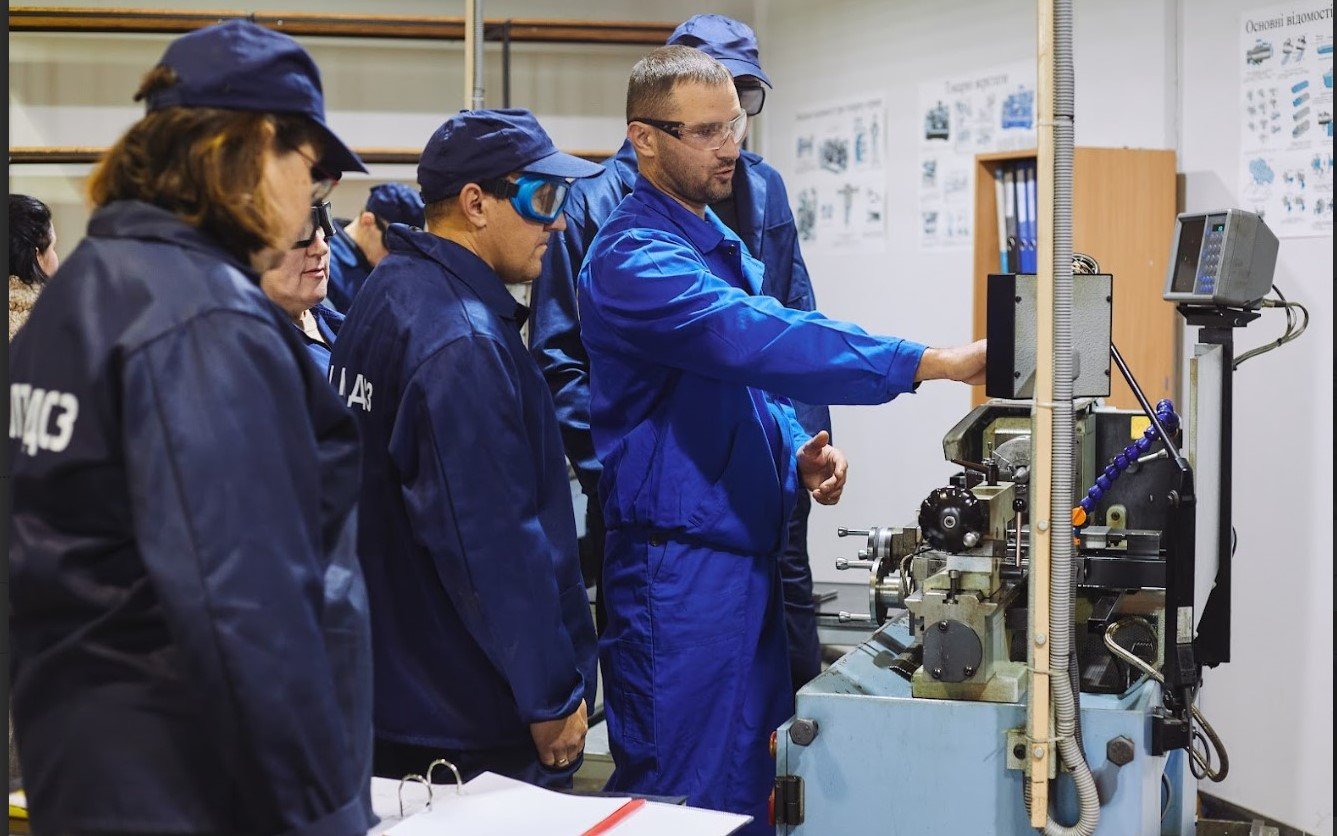
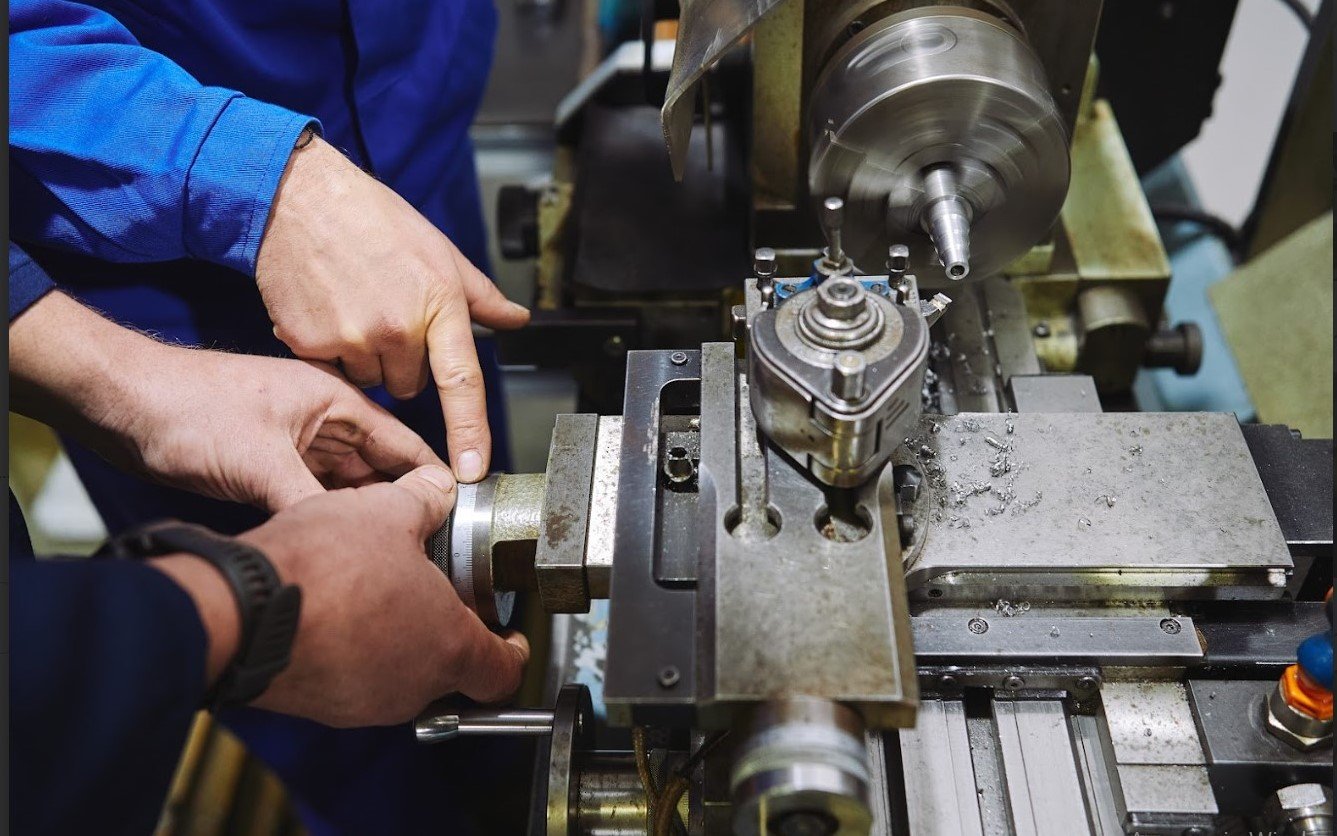
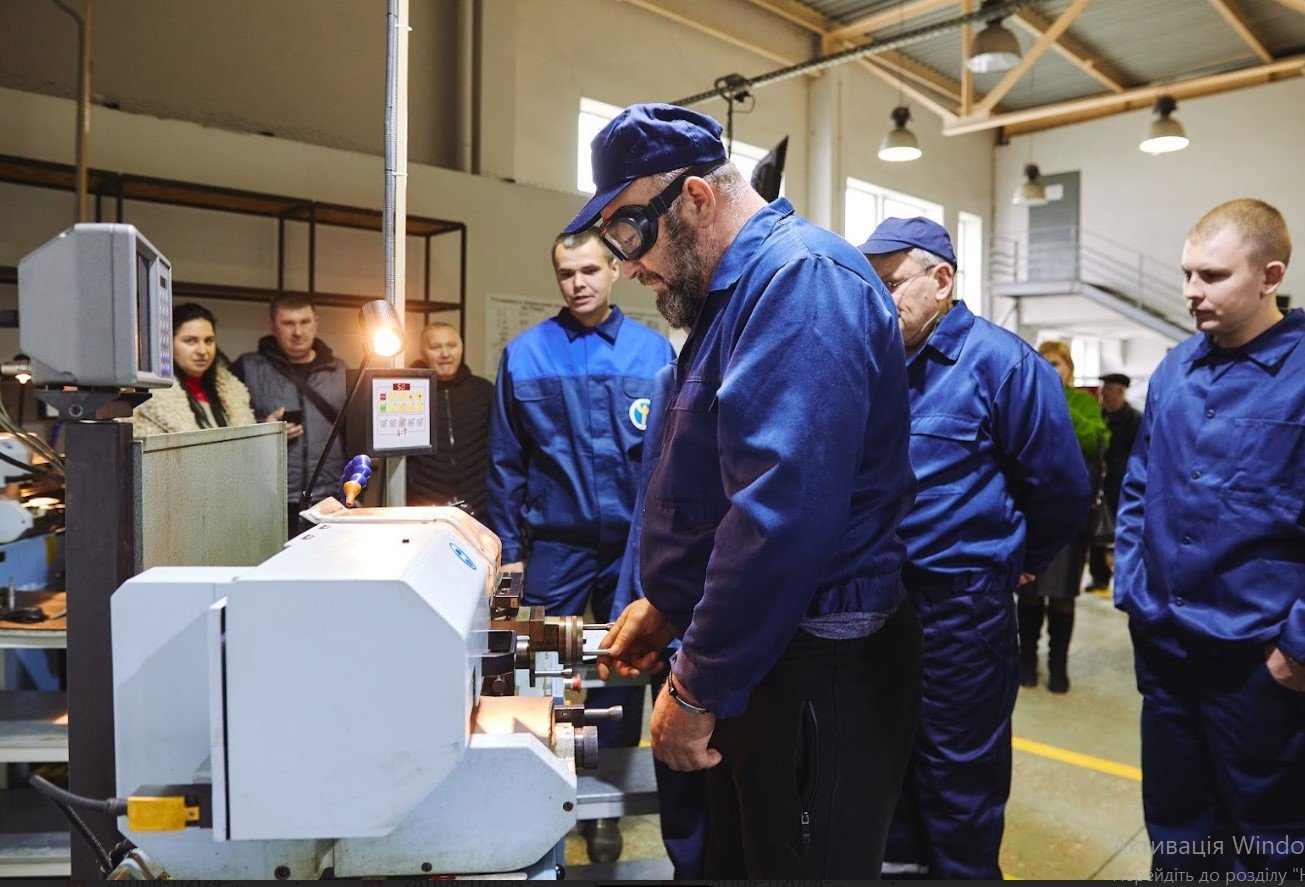
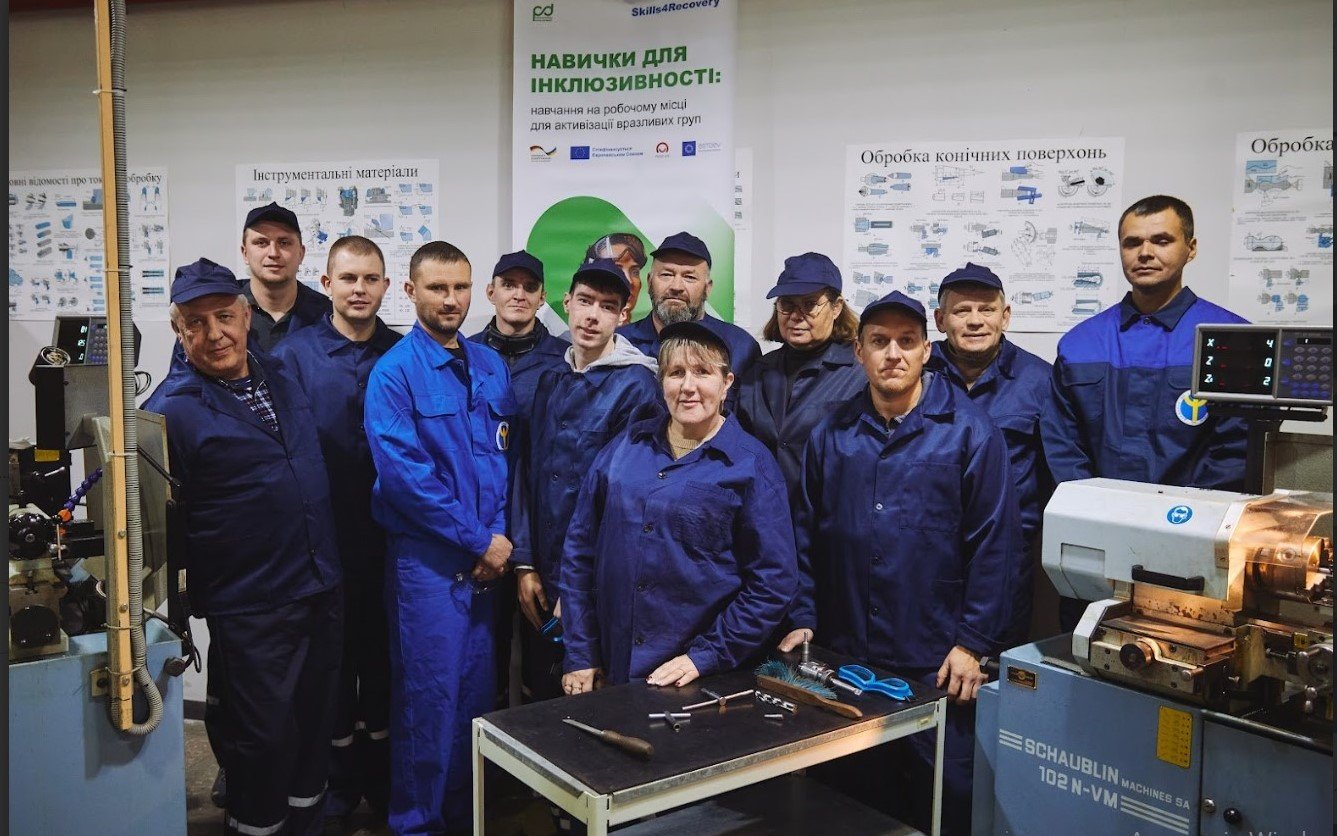
In 2025, a group of eight learners studied under the “Turner, Grade 3” programme at the Kharkiv Vocational Education and Training Centre of the State Employment Service. It was an entire group consisting of veterans and persons with disabilities with different types of impairments, including visual, hearing, and musculoskeletal disorders. An important detail is that, in a profession that is often perceived as “traditionally male,” three of the learners were women.
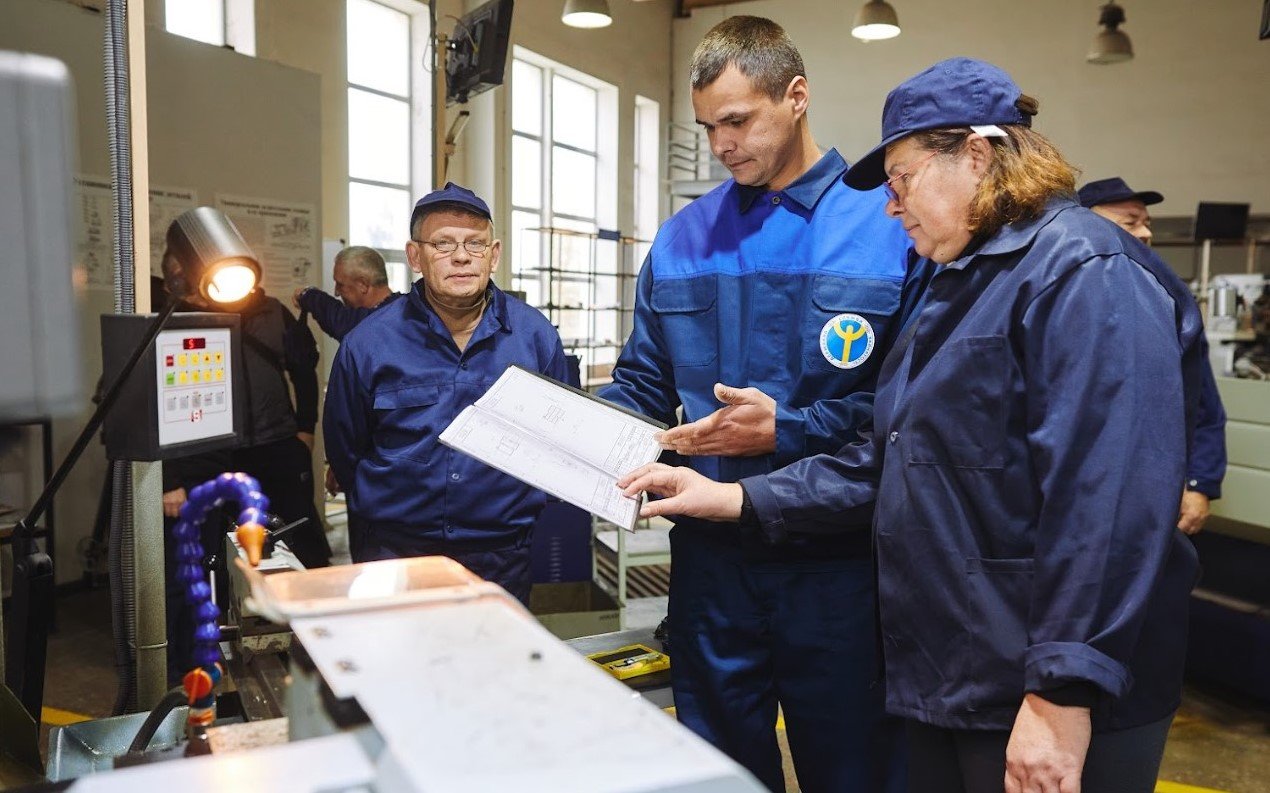
The Centre’s team designed the programme taking into account the level of preparation and individual needs of each student and strengthened the workstations with practical accommodations, including:
• additional lighting;
• a screen/television for displaying details in an enlarged format;
• additional shelves and handrails for persons with musculoskeletal impairments.
A separate focus was placed on the transition to employment: psychological support, assistance with CV preparation, interview coaching, and employment support.
“For us, the key priority is that training leads to a practical result — that a person completes the programme and clearly understands their next step towards employment,” representatives of the VET provider’s administration emphasise.
Oleksandr’s Story: Motivation Means Stable Employment
Oleksandr is a veteran and a combatant. While defending Ukraine, he was wounded. He acquired a disability, and underwent surgery to implant an artificial hip joint. Now Oleksandr is preparing for another surgery and, in the meantime, using a cane to move around. Yet none of these challenges prevented him from mastering a new profession.
“Life does not end at 45. And life continues after returning from the war,” says Oleksandr. “My main motivation is to find stable employment… I am currently through interviews about a job with the Kharkiv Metro system,” he adds.
What Exactly Made This Case Work
Personalized training programme: The training was tailored to the level and needs of the group.
Accommodations “in practice”: More lighting, enlarged details, supportive fixtures — measures that genuinely help remove barriers.
Employment support: CV preparation, interview guidance, and ongoing support to ensure that training leads to employment.
This case has been prepared as an evidence-based example of effective solutions by the team of the project “Inclusive Vocational Education and Training: Improving Training for Veterans and People with Disabilities,” implemented by the National Assembly of People with Disabilities of Ukraine (NAPD) in cooperation with Christoffel-Blindenmission Christian Blind Mission e.V. (CBM), with financial support from the European Union, Germany, Poland, Estonia, and Denmark, as part of the Skills4Recovery Multi-Donor Initiative, implemented by the Deutsche Gesellschaft für Internationale Zusammenarbeit (GIZ) GmbH and the Solidarity Fund PL (SFPL).
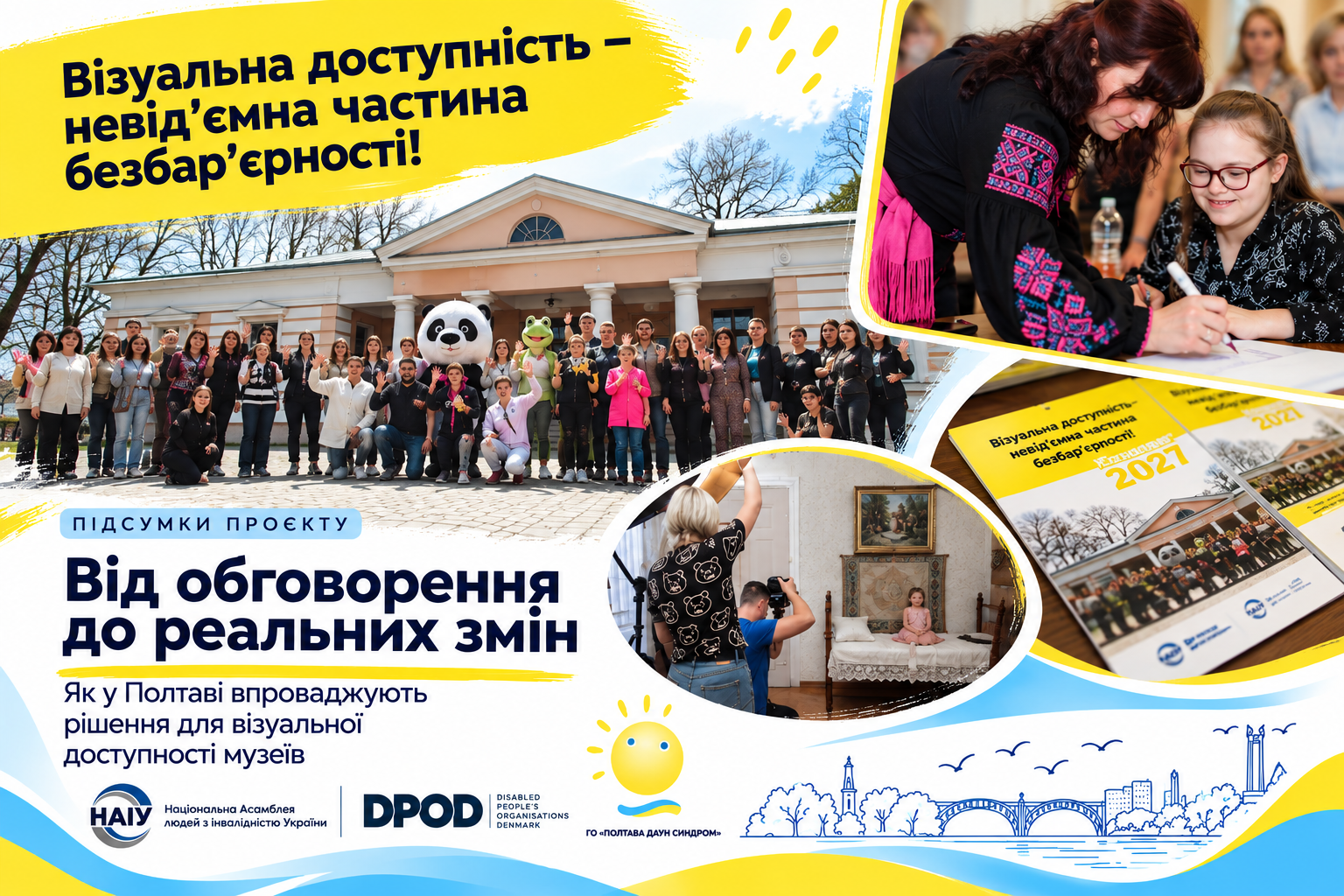
Візуальна доступність — це не лише про дизайн. Це про можливість людини самостійно зрозуміти, де вона перебуває, куди потрібно рухатися, де знайти необхідну інформацію і як скористатися простором без сторонньої допомоги. Саме цю тему ГО «Полтава ДАУН СИНДРОМ» зробила основою адвокаційного проєкту «Візуальна доступність — невід’ємна частина безбар’єрності», реалізованого в межах мінігрантової підтримки членських і […]
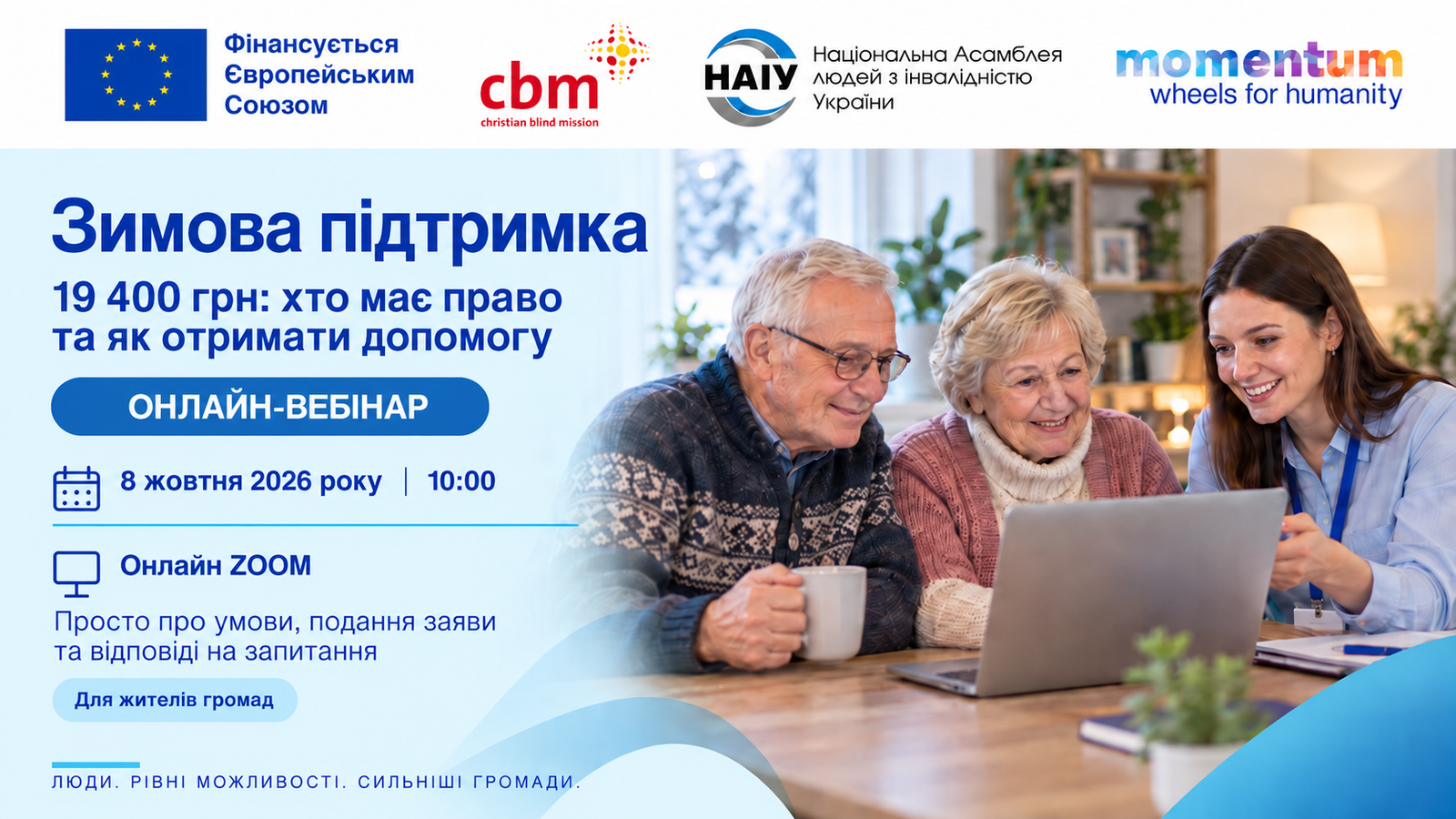
Кабінет Міністрів України затвердив порядок надання одноразової грошової допомоги «Зимова підтримка» на опалювальний сезон 2026/27 року. Допомога передбачена для вразливих категорій населення, які проживають у визначених територіальних громадах, де ведуться або велися бойові дії. Розмір допомоги становить 19 400 грн на одне домогосподарство. Виплата є одноразовою на весь опалювальний сезон 2026/27 року та не залежить […]
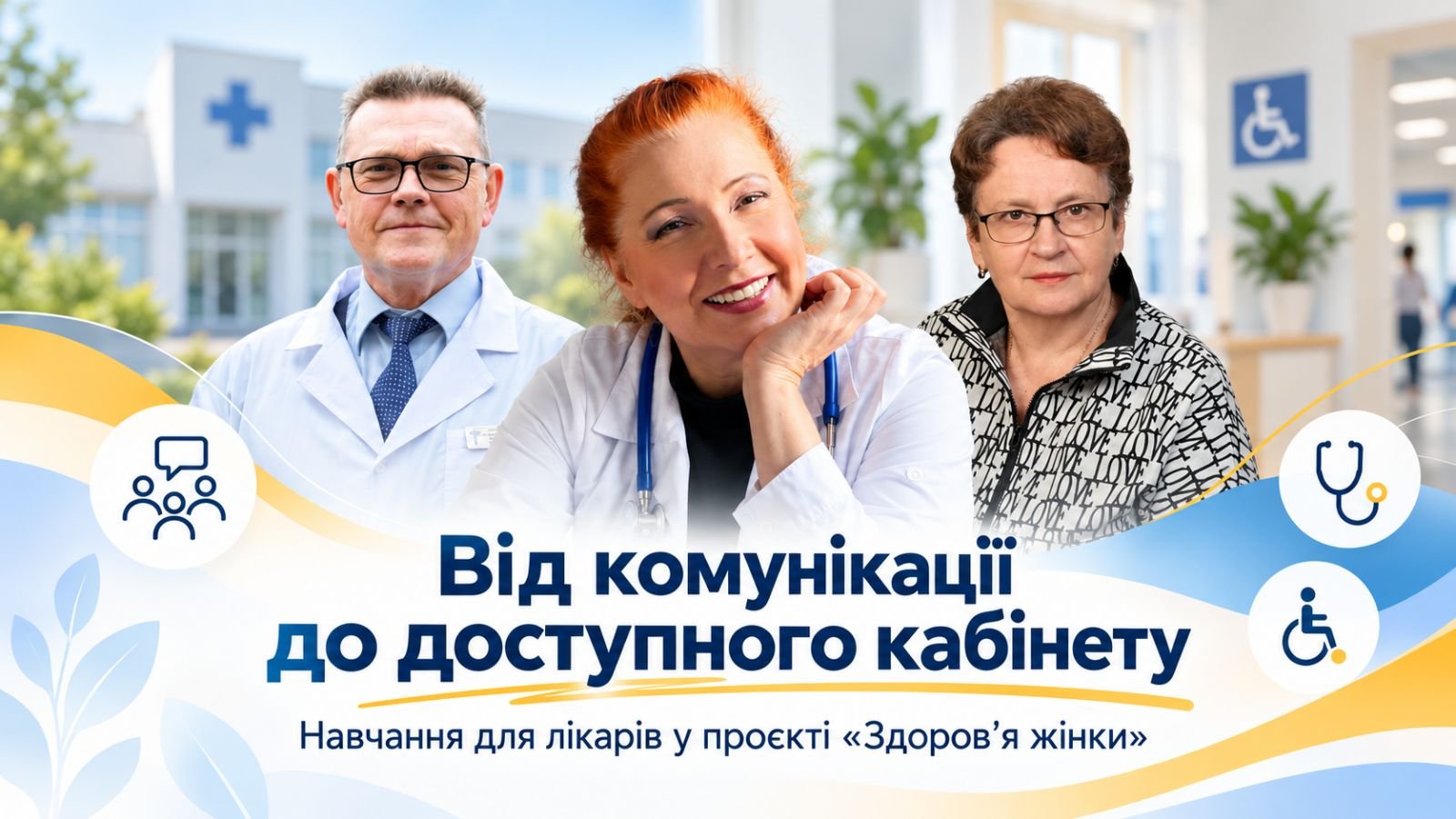
В межах проєкту «Здоров’я жінки» відбувся онлайн-семінар «Репродуктивне здоров’я жінок з інвалідністю: забезпечення рівного доступу до медичних послуг». До навчання долучилися гінекологи, акушери-гінекологи та сімейні лікарі й лікарки. Протягом трьох днів лікарі із семи пілотних громад проєкту мали можливість поглибити свої знання щодо комунікації з жінками з різними порушеннями, доступності гінекологічних кабінетів, пологових і гінекологічних […]
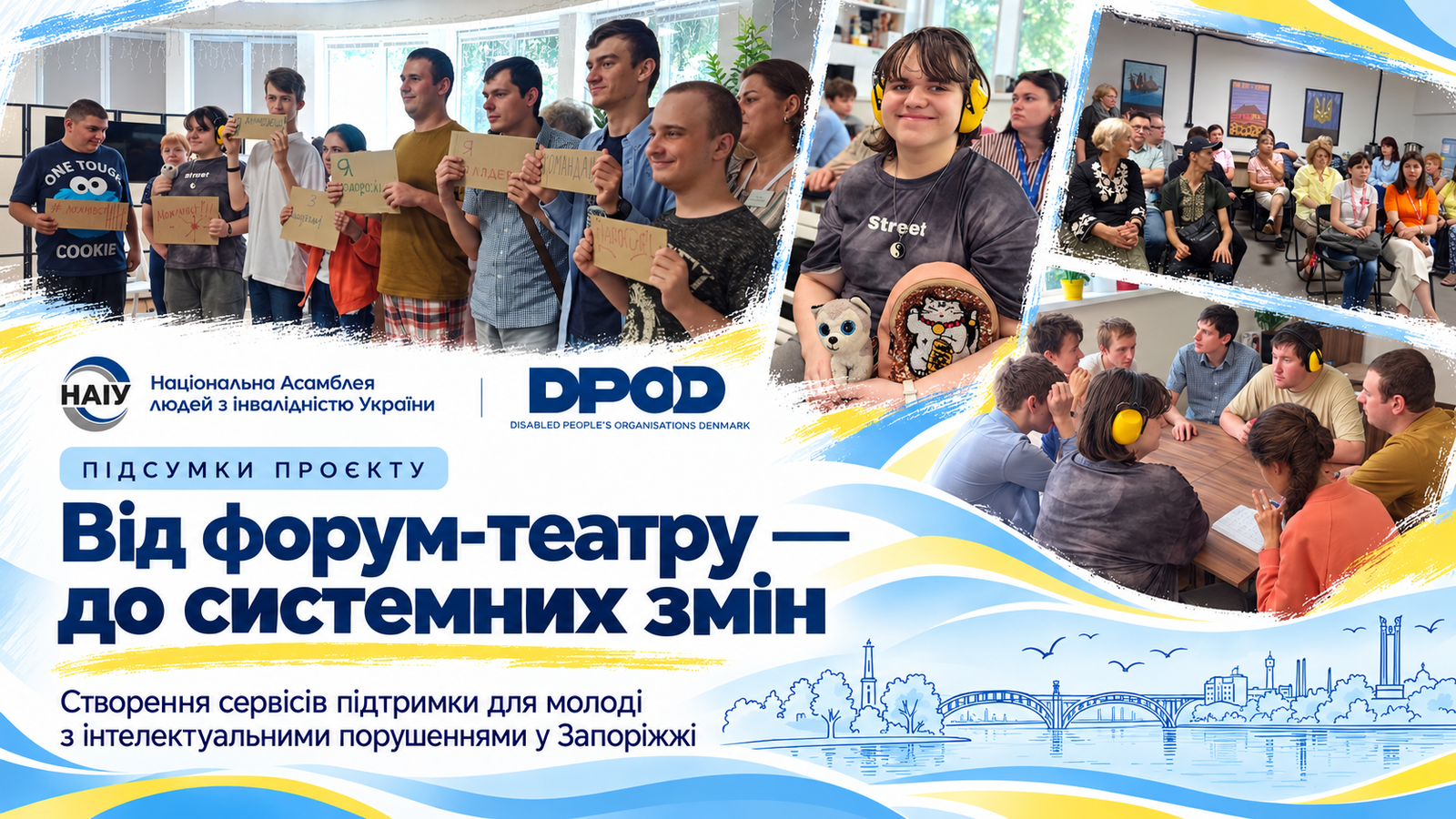
Що відбувається з підтримкою молодої людини з інтелектуальними порушеннями після 18 років? Де вона може спілкуватися, розвивати самостійність, навчатися, працювати та отримувати необхідні послуги? Для багатьох родин у Запоріжжі ці питання залишаються відкритими. Саме на пошук практичних рішень був спрямований проєкт «Форум-театр як інструмент адвокації: “Ми залишаємось у Запоріжжі!” — створення сервісів підтримки для молоді […]
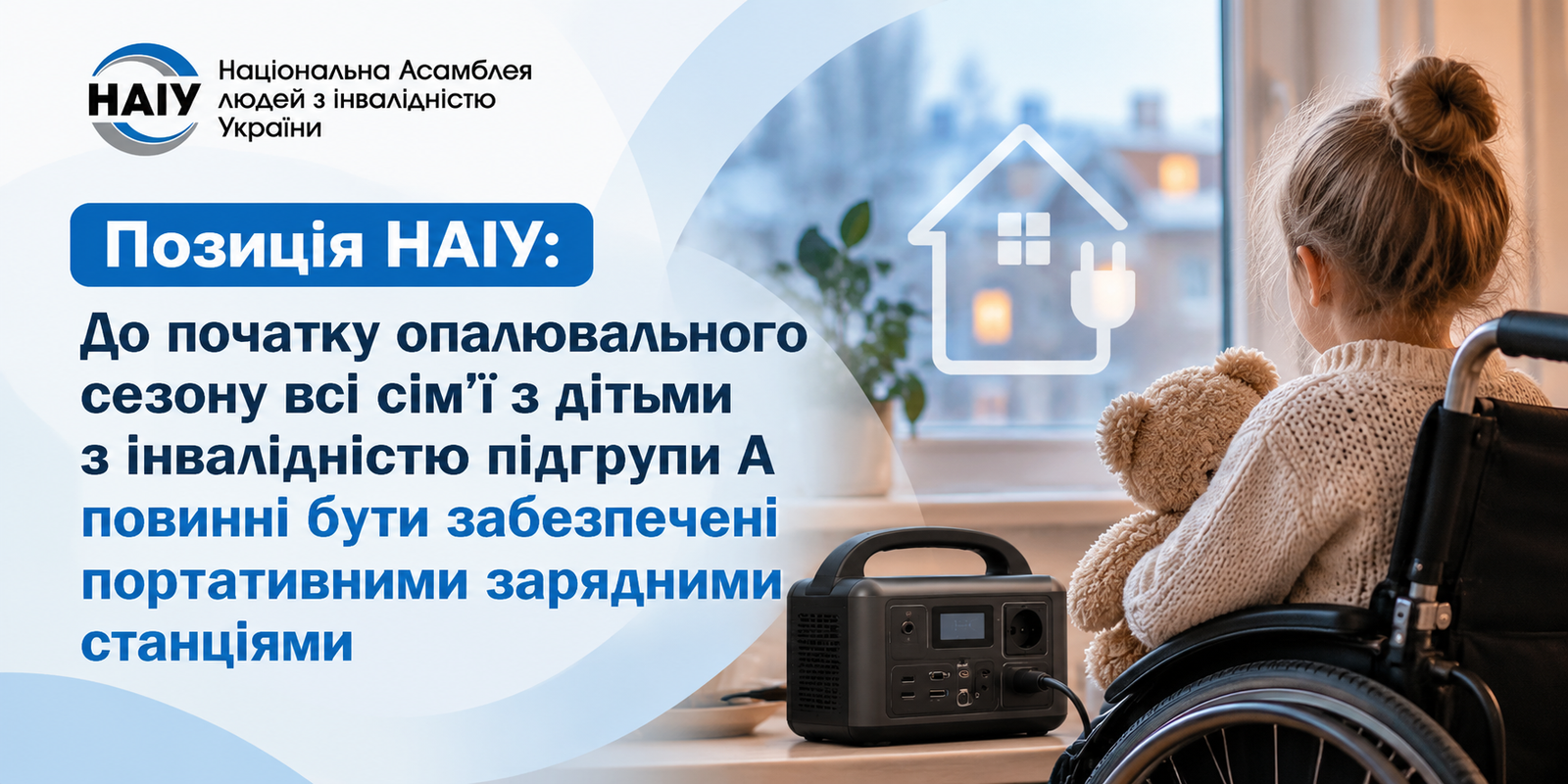
Упродовж 2026 року НАІУ неодноразово порушувала питання про необхідність прискорення виконання державної програми із забезпечення дітей з інвалідністю підгрупи А портативними зарядними станціями. Ще у березні Асамблея звернулася до Прем’єр-міністерки України та передала інформацію про 41 конкретну ситуацію, з якими зіткнулися родини: відмови у прийнятті заяв, помилки в базах даних, незрозуміла черговість, тривале очікування та […]
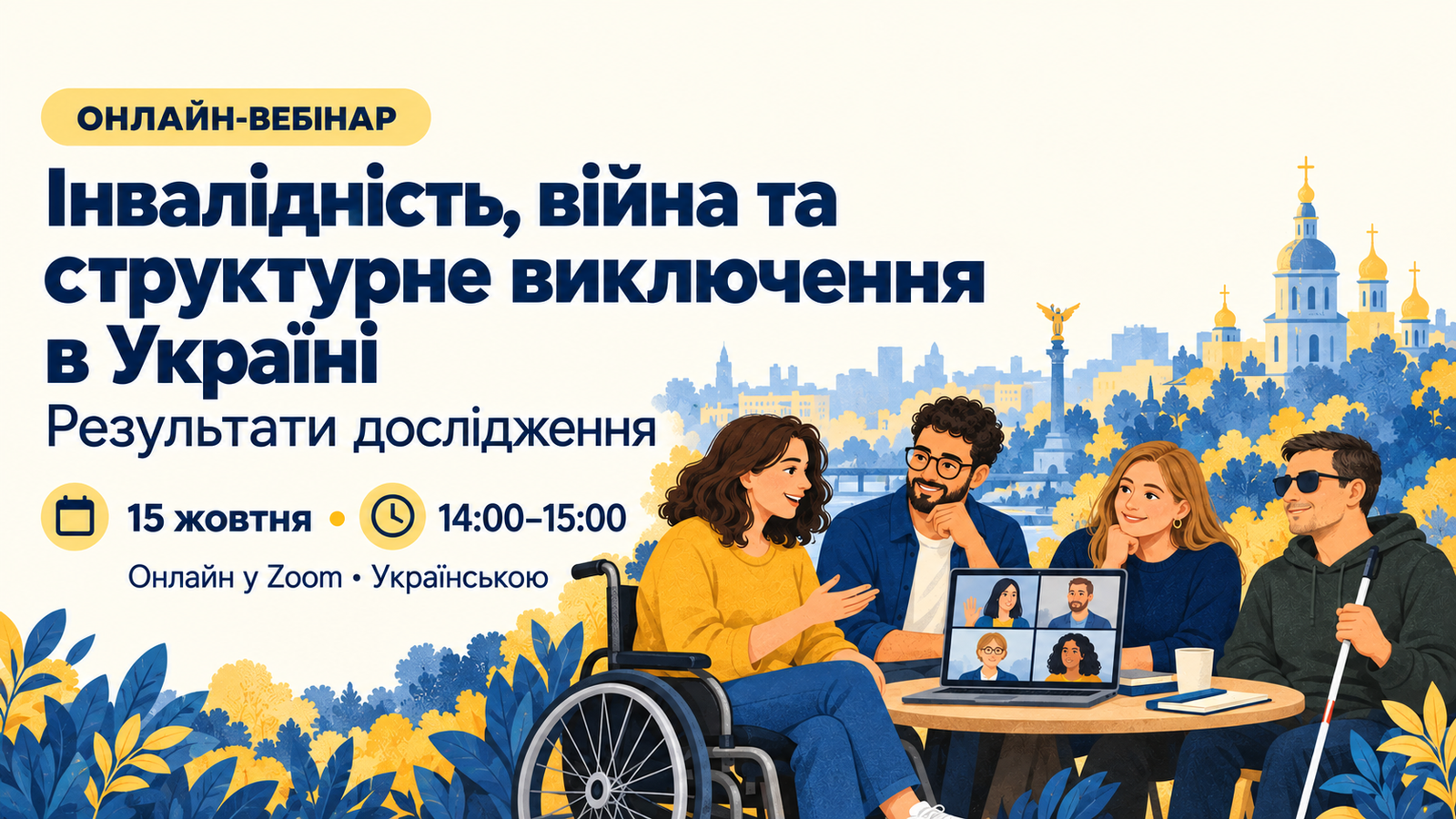
Як люди з інвалідністю переживають повномасштабну війну? Як війна посилила проблеми, що існували ще до 2022 року? Яку роль у підтримці відіграють організації людей з інвалідністю та неформальні мережі взаємодопомоги? Запрошуємо на вебінар, присвячений результатам дослідження, заснованого на 15 інтерв’ю з людьми з інвалідністю, проведених у 2024 році. Дослідження розглядає питання доступності, державної підтримки та […]