From Training to Self-Employment in Just 1.5 Months: A Machine Embroidery Case from Kharkiv
February 5, 2026
Share:
This is the first story in a series highlighting how inclusive solutions implemented by vocational education and training (VET) providers enable veterans and persons with disabilities to acquire new skills and transition into employment or self-employment.
Inclusive vocational education often starts with something simple: making it easy for a person to take the first step. This is followed by learning at one’s own pace, with timely support when needed. The final outcome is employment or starting one’s own business. This is how learning becomes a pathway to independence.
This story illustrates how a well-designed process delivers concrete results: training, support, and a real opportunity for employment or self-employment. This is precisely the purpose of the project “Inclusive Vocational Education and Training: Improving Training for Veterans and People with Disabilities” — to ensure that inclusive solutions are systemic rather than incidental.
Kharkiv: Machine Embroidery as a New Professional Step
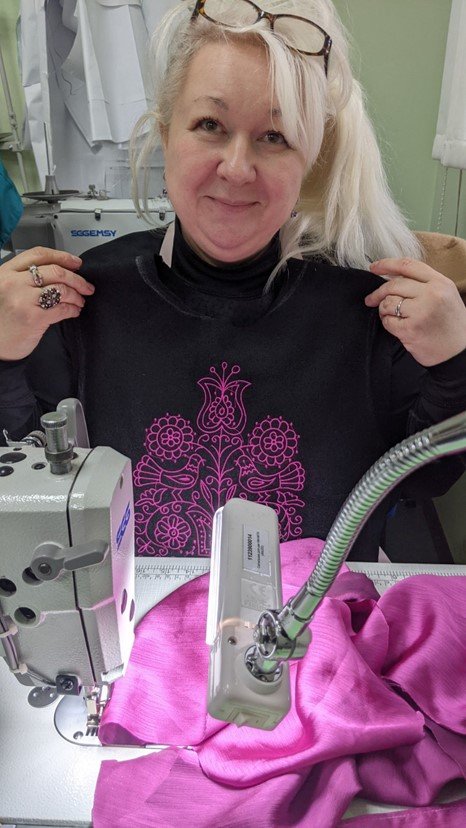
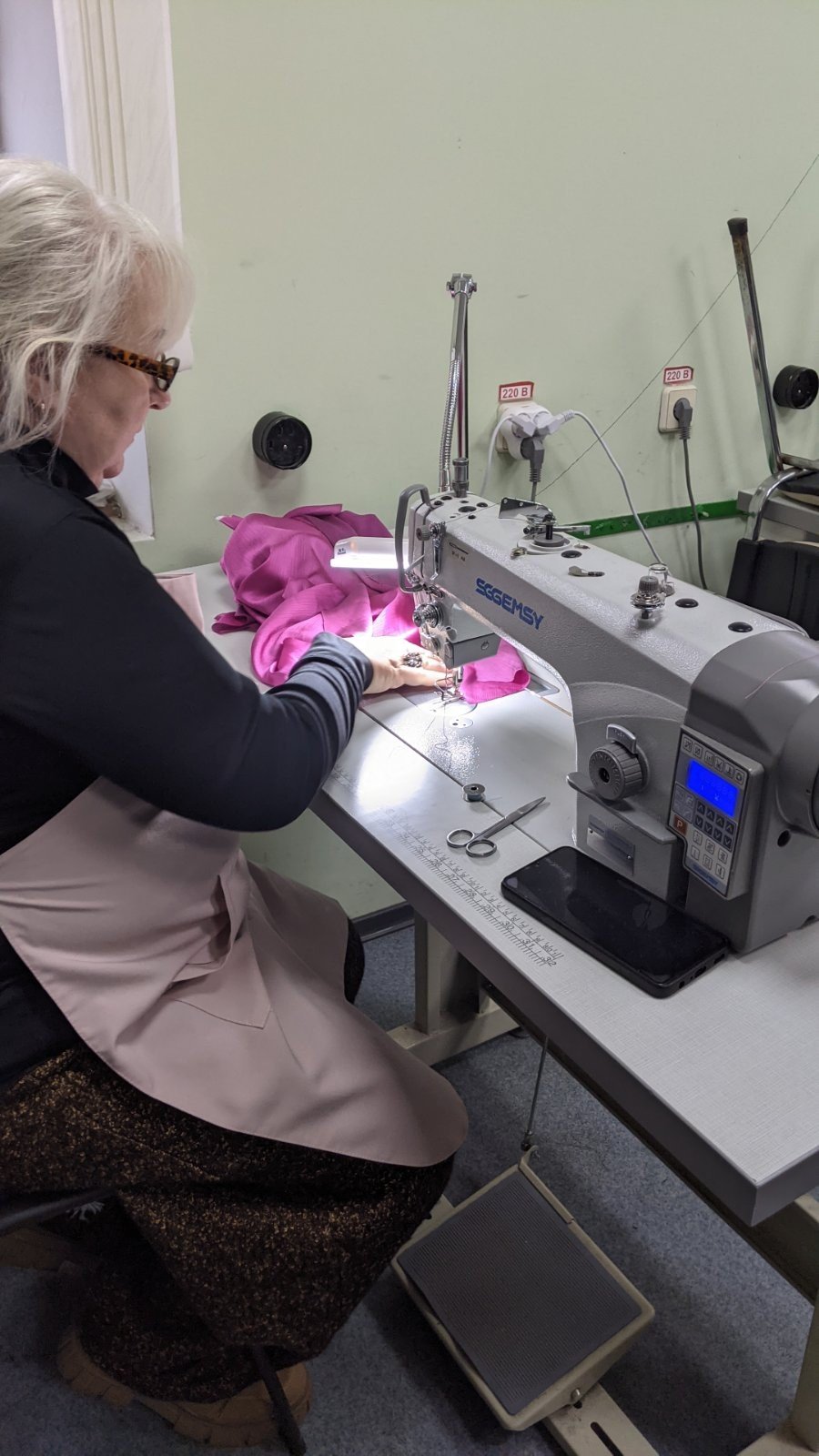
Ms. Larysa (aged 50 years old+) from Kharkiv has had a musculoskeletal disorder. By education, she is an accountant and she worked as a chief accountant for many years. At the same time, she had a long-standing dream — to create and decorate clothing.
After many years in accounting, Larysa felt that the time had come to change her professional trajectory: to combine work with rehabilitation, to have a more flexible pace, and finally to realize what had long been postponed due to a tight schedule and the lack of accessible and “person-centred” training opportunities.
She learned about Kharkiv Vocational Education and Training Centre at the State Employment Service through social media, where she saw an announcement and examples of students’ works. She contacted the centre for a consultation and received clear information about the training conditions and available learning opportunities. The training programme was funded by the NGO “Girls,” making her participation free of charge.
Training provided Larysa with practical skills and a clear plan for transitioning to self-employment
At the outset, she faced two typical “stop factors”: concerns about workload and doubts related to her age — “Isn’t it too late to study?” The VET institution responded professionally through concrete, inclusive solutions, offering:
• a flexible schedule allowing learning to be combined with rehabilitation;
• the option to take breaks and rest during classes;
• psychological support to reduce uncertainty and assist with planning next steps.
“When a person can learn at his or her own pace and feels supported, they achieve results faster and see that moving forward is possible,” representatives of the VET Centre’s administration note.
“It was important for me to study at my own pace — without pressure or fear of ‘not coping.’ When support is there, a dream turns into a plan,” says Larysa.
In the near future, Larysa plans to start her own business, focusing on tailoring and restoring clothing with elements of ethnic embroidery. This is precisely what the practical dimension of inclusive vocational education and training means: a short-term programme → applied skills → a clear pathway to self-employment.
Skills4Recovery aims to ensure that inclusive vocational education and training becomes systemic by promoting practices that remove learning barriers and strengthen transitions to employment or self-employment. Within the project, the National Assembly of People with Disabilities of Ukraine (NAPD), in cooperation with Christoffel-Blindenmission Christian Blind Mission e.V. (CBM), documents and communicates such cases as evidence-based examples of effective solutions.
What Exactly Made This Case Work
An accessible entry point to learning. Clear information and prompt consultations enabled the learner to take the first step.
Flexibility as a standard. Thoughtful workload planning, an individual learning pace, and the option to pause when needed made the training both realistic and sustainable.
Ongoing support throughout the learning process. Psychological support helped remove “invisible barriers” and supported the learner in achieving concrete results.
The project “Inclusive Vocational Education and Training (VET): Improving Training for Veterans and People with Disabilities” is being implemented by the National Assembly of People with Disabilities of Ukraine (NAPD), jointly with Christoffel-Blindenmission Christian Blind Mission e.V. (CBM), with financial support from the European Union, Germany, Poland, Estonia, and Denmark as part of the Skills4Recovery Multi-Donor Initiative, which is implemented by Deutsche Gesellschaft für Internationale Zusammenarbeit (GIZ) GmbH and Solidarity Fund PL (SFPL).
Візуальна доступність — це не лише про дизайн. Це про можливість людини самостійно зрозуміти, де вона перебуває, куди потрібно рухатися, де знайти необхідну інформацію і як скористатися простором без сторонньої допомоги. Саме цю тему ГО «Полтава ДАУН СИНДРОМ» зробила основою адвокаційного проєкту «Візуальна доступність — невід’ємна частина безбар’єрності», реалізованого в межах мінігрантової підтримки членських і […]
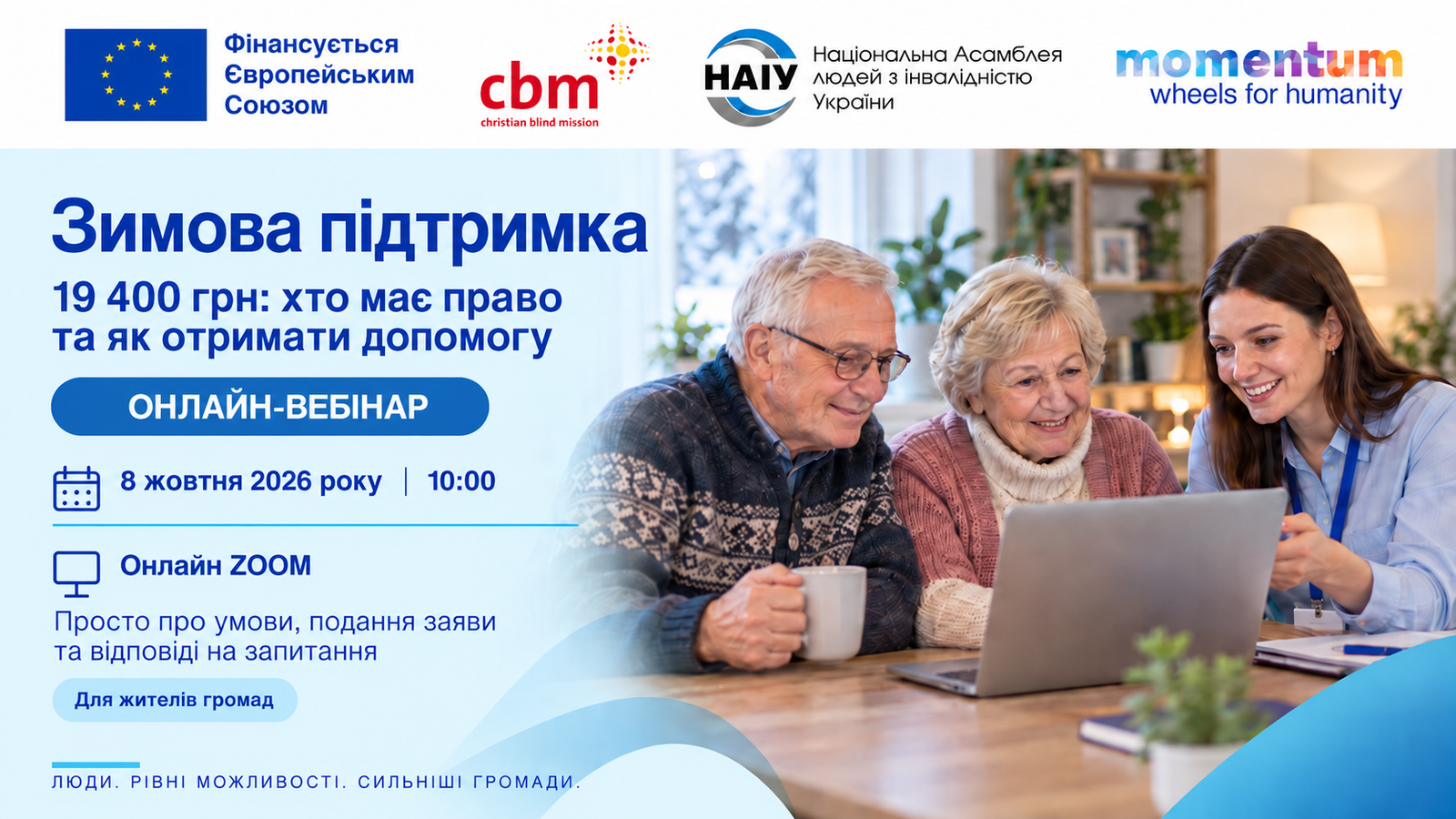
Кабінет Міністрів України затвердив порядок надання одноразової грошової допомоги «Зимова підтримка» на опалювальний сезон 2026/27 року. Допомога передбачена для вразливих категорій населення, які проживають у визначених територіальних громадах, де ведуться або велися бойові дії. Розмір допомоги становить 19 400 грн на одне домогосподарство. Виплата є одноразовою на весь опалювальний сезон 2026/27 року та не залежить […]
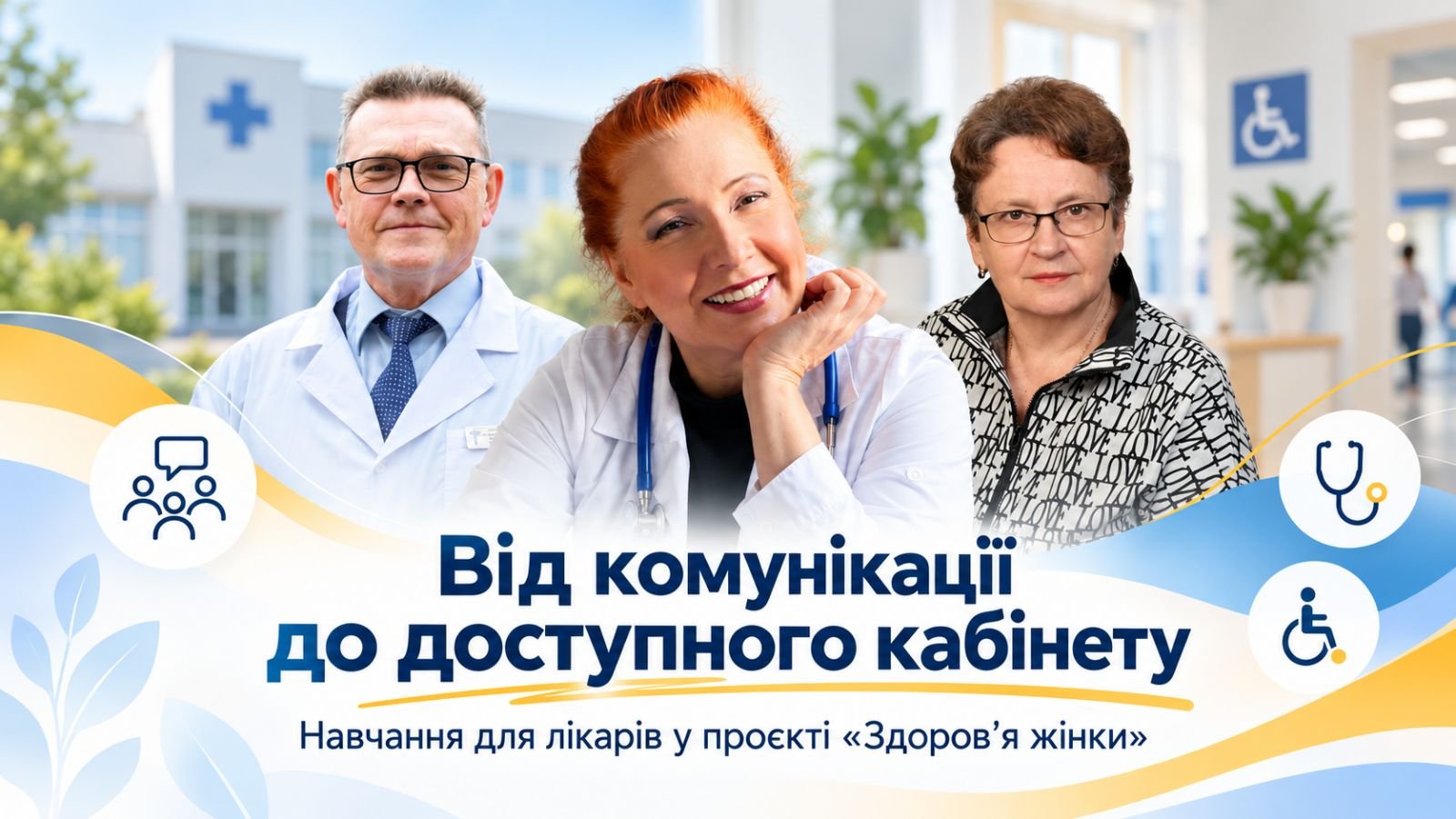
В межах проєкту «Здоров’я жінки» відбувся онлайн-семінар «Репродуктивне здоров’я жінок з інвалідністю: забезпечення рівного доступу до медичних послуг». До навчання долучилися гінекологи, акушери-гінекологи та сімейні лікарі й лікарки. Протягом трьох днів лікарі із семи пілотних громад проєкту мали можливість поглибити свої знання щодо комунікації з жінками з різними порушеннями, доступності гінекологічних кабінетів, пологових і гінекологічних […]
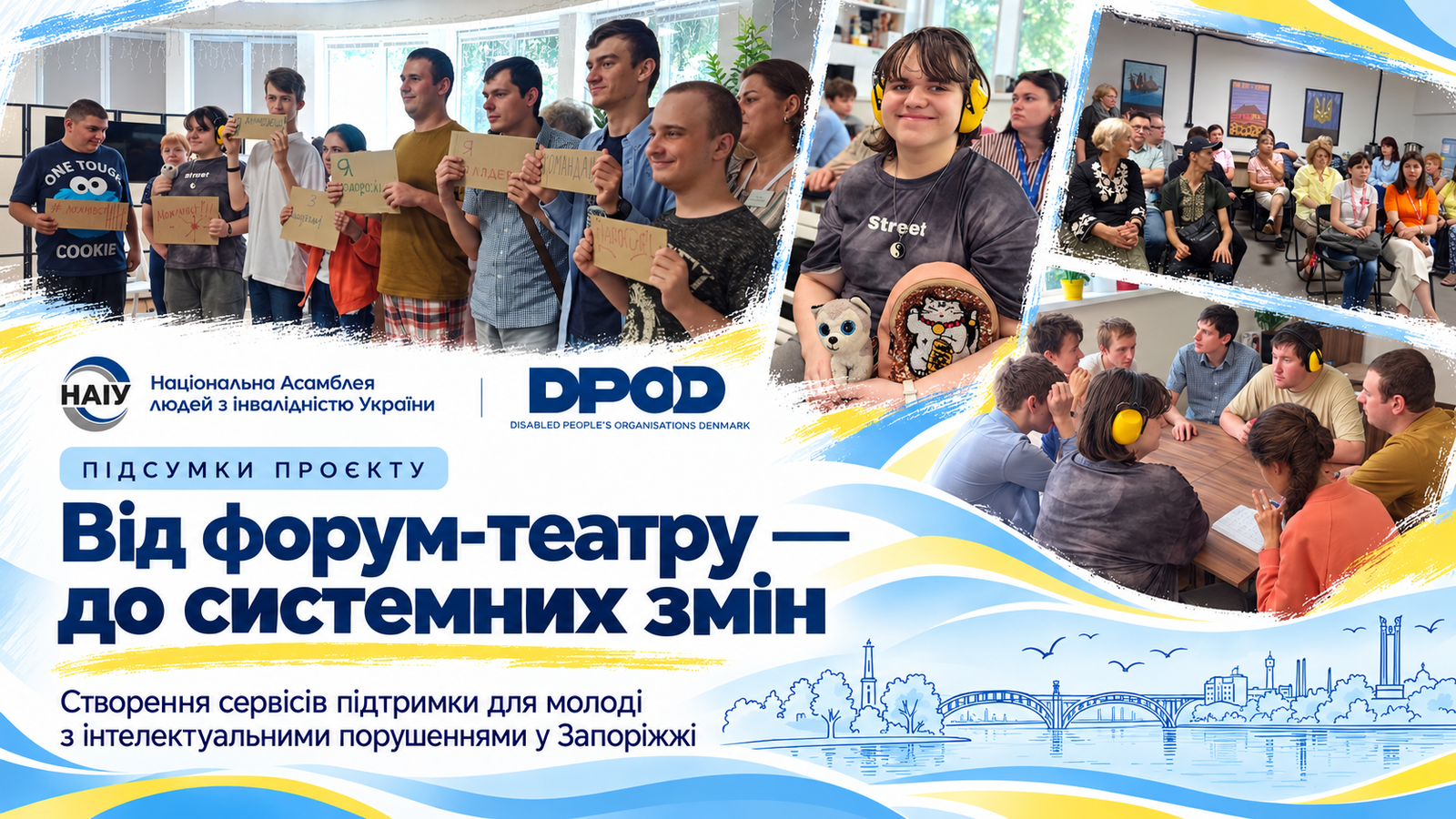
Що відбувається з підтримкою молодої людини з інтелектуальними порушеннями після 18 років? Де вона може спілкуватися, розвивати самостійність, навчатися, працювати та отримувати необхідні послуги? Для багатьох родин у Запоріжжі ці питання залишаються відкритими. Саме на пошук практичних рішень був спрямований проєкт «Форум-театр як інструмент адвокації: “Ми залишаємось у Запоріжжі!” — створення сервісів підтримки для молоді […]
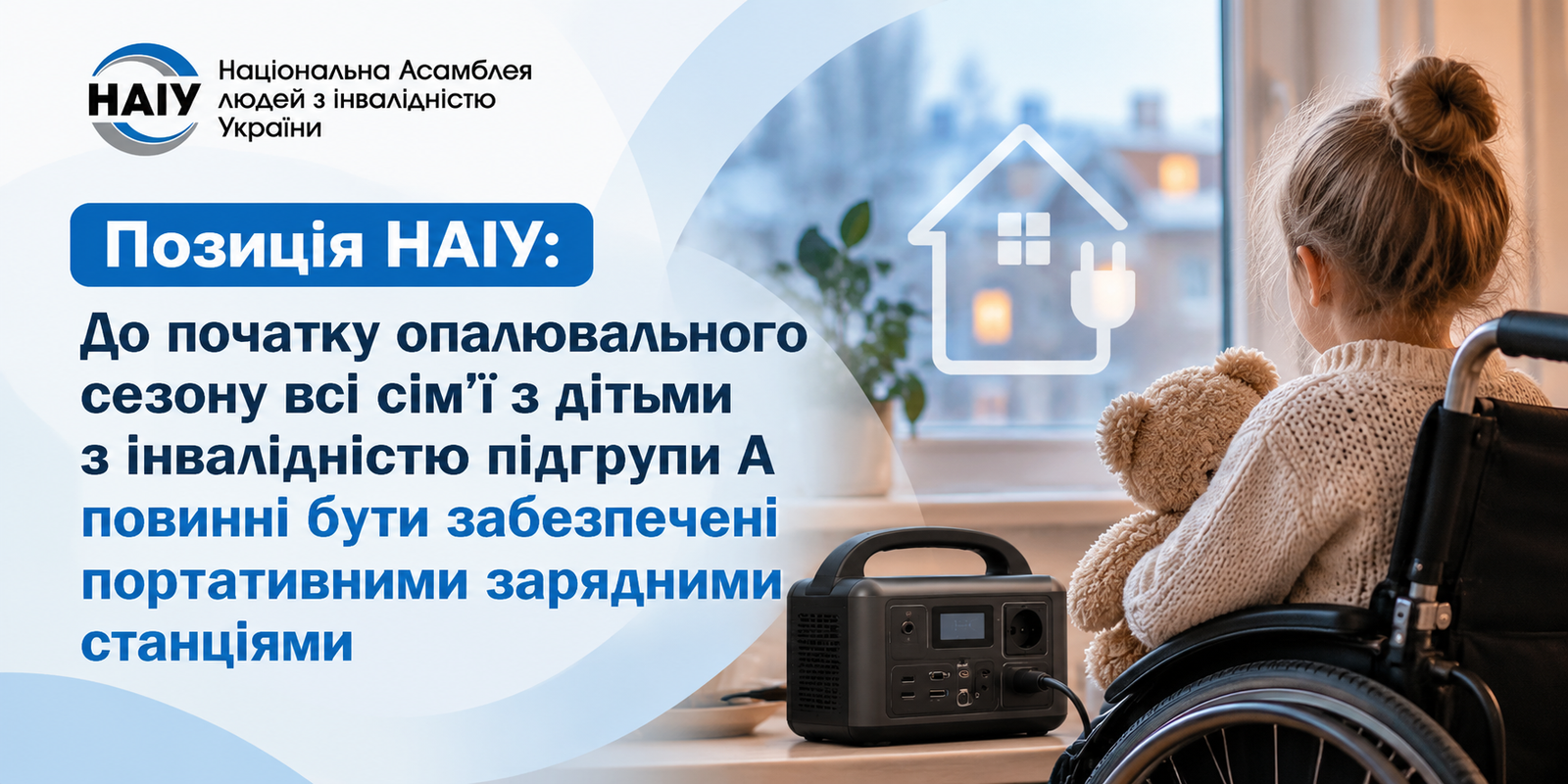
Упродовж 2026 року НАІУ неодноразово порушувала питання про необхідність прискорення виконання державної програми із забезпечення дітей з інвалідністю підгрупи А портативними зарядними станціями. Ще у березні Асамблея звернулася до Прем’єр-міністерки України та передала інформацію про 41 конкретну ситуацію, з якими зіткнулися родини: відмови у прийнятті заяв, помилки в базах даних, незрозуміла черговість, тривале очікування та […]
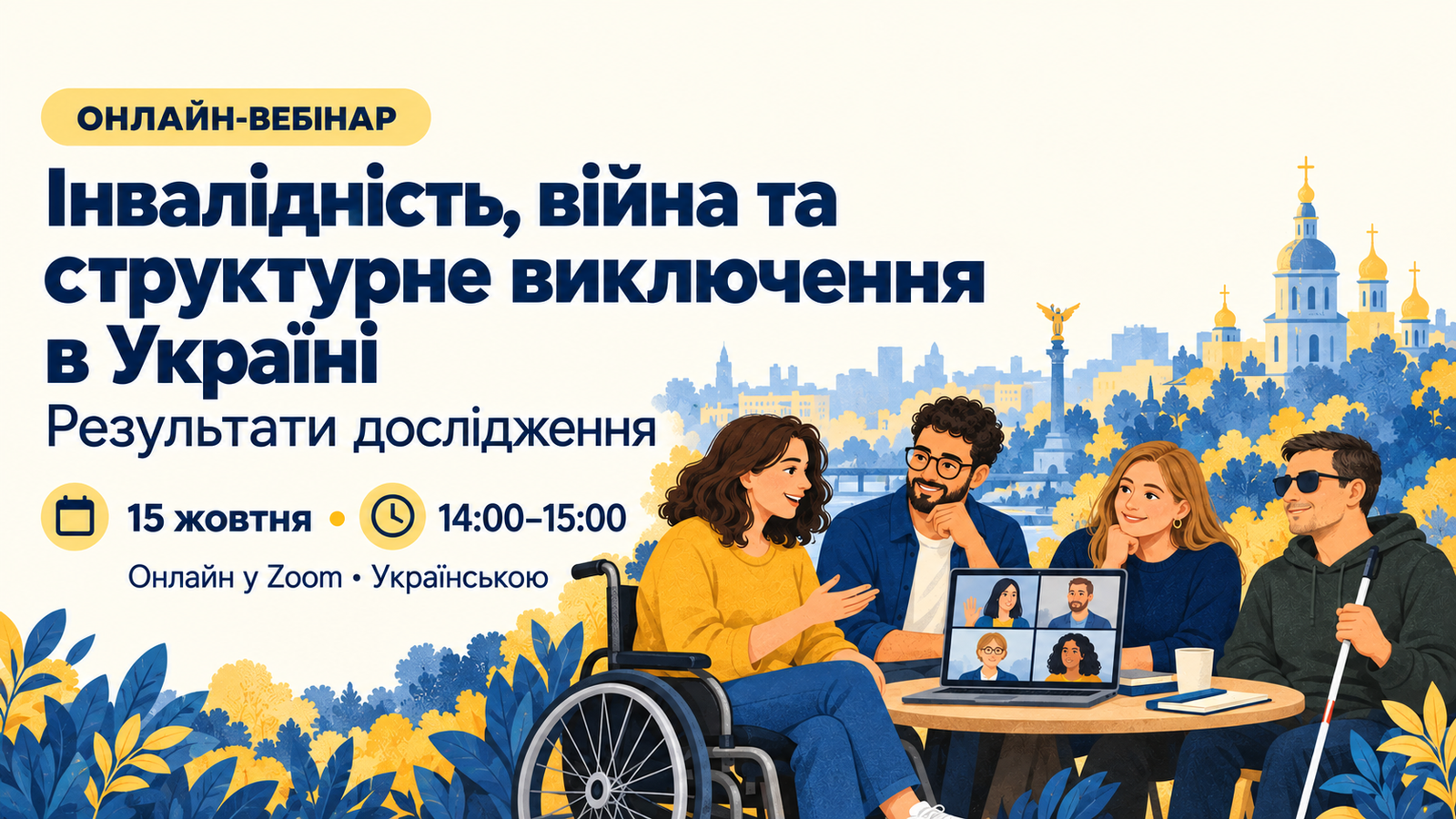
Як люди з інвалідністю переживають повномасштабну війну? Як війна посилила проблеми, що існували ще до 2022 року? Яку роль у підтримці відіграють організації людей з інвалідністю та неформальні мережі взаємодопомоги? Запрошуємо на вебінар, присвячений результатам дослідження, заснованого на 15 інтерв’ю з людьми з інвалідністю, проведених у 2024 році. Дослідження розглядає питання доступності, державної підтримки та […]