The National Assembly of People with Disabilities of Ukraine organised and held a webinar entitled "How to obtain rehabilitation aids free of charge." The event took place as part of the project "Together in Action: Enhancing the Capacity of Civil Society to Advocate for the Rights of Persons with Disabilities."
Most of the webinar participants were people with disabilities, their family members, and caregivers. For them, the topic of free rehabilitation aids is extremely relevant, as access to such aids determines their quality of life, level of independence, and ability to study, work, and participate in community life. Not everyone knows who is eligible for state assistance, what types of rehabilitation aids are included in the list of free provisions, how to properly complete the paperwork, or where to go for advice.
This information gap often leads to people having to purchase the necessary items themselves or wait a long time for a decision without understanding the procedure.
The webinar speaker, NAU expert on rehabilitation and assistive technologies Svitlana Petrusha, began her presentation with a thorough review of the regulatory framework governing the provision of assistive rehabilitation devices to persons with disabilities. She focused in detail on the provisions of the Ukrainian laws "On Rehabilitation in Healthcare" and "On Rehabilitation of Persons with Disabilities in Ukraine", as well as on the relevant resolutions of the Cabinet of Ministers of Ukraine, which define the mechanisms for the provision, accounting and compensation of the cost of rehabilitation aids.
According to current legislation, three categories of citizens are entitled to receive such aids in medical institutions: people with limitations in their daily functioning; people whose health condition may lead to limitations in their daily functioning or permanent limitations in their life activities; people or children with disabilities.
In medical institutions, assistive devices can be obtained:
in hospital — free of charge, from among those available in the hospital in accordance with the list of material and technical equipment;
in outpatient settings — temporarily for use (free of charge or for a fee) through assistive technology offices.
In accordance with current legislation, the following persons are entitled to receive such benefits through the social protection system:
adults and children with disabilities;
children with musculoskeletal disorders;
military personnel;
employees of enterprises, institutions, and organisations who were involved and took direct part in activities necessary to ensure the defence of Ukraine, as well as civilians who lived in areas of combat operations and citizens who suffered injuries, concussions, disabilities, or illnesses as a result of the full-scale Russian invasion;
elderly people;
women, girls after mastectomy, sectoral resection of the mammary gland, quadrantectomy and with disorders of mammary gland development;
victims of industrial accidents or occupational diseases;
foreign nationals with disabilities, stateless persons permanently residing in Ukraine, and persons recognised as refugees or persons in need of additional protection;
persons covered by the Law of Ukraine "On the Status of Veterans of Military Service, Veterans of Internal Affairs Agencies, Veterans of the National Police and Certain Other Persons and Their Social Protection".
How to apply for rehabilitation aids through the social protection system?
To obtain rehabilitation assistance through the social protection system, you must:
Obtain a medical opinion on the need for an assistive rehabilitation device. Such an opinion is issued by a multidisciplinary rehabilitation team, an expert team assessing the person's daily functioning, a medical advisory commission or a military medical commission.
Submit an application (sample – via link) in person to the territorial branch of the Social Protection Fund for Persons with Disabilities, the structural unit for social protection of the population of the territorial community, the centre for administrative services (CAS) or the executive body of the village, settlement or city council, or online – through the Social Portal of the Ministry of Social Policy at link or via the Electronic Office for Persons with Disabilities at link. The list of documents that must be submitted to obtain rehabilitation equipment includes: copies of the original passport or birth certificate or other document confirming identity; identification code; conclusion or other document confirming the need for rehabilitation equipment.
3. Undergo selection, adaptation and training in the use of the device.
4. Receive the product and sign the acceptance certificate.
If desired, individuals may purchase rehabilitation equipment independently and receive compensation for it within the price limit approved by the Ministry of Social Policy, Family and Unity of Ukraine. For military personnel, this amount is three times higher.
For advice or assistance in completing documents, please contact the NAIA Resource Centre:
Address: Office 109, 8/5A Reitarska St., Kyiv
Appointments can be made by phone at: +38 (044) 279 6182, +38 (095) 909 1413
or by email: hubnapd@gmail.com
The seminar participants asked many questions, which helped them better understand the rules and procedures for obtaining rehabilitation equipment, learn who to appeal to in case of violation of their rights, and what additional opportunities they have.
Svitlana Petrusha emphasised: "Obtaining assistive devices for rehabilitation is not just a technical necessity. It is a matter of dignity, independence and the right to a full life. Our task is to ensure that every person knows how to exercise this right."
Це третій матеріал із циклу «Позитивні практики інклюзивності профосвіти» — історій про те, як практичні рішення в закладах професійної освіти знімають бар’єри в навчанні та допомагають людям рухатися до самостійності. Інклюзивна професійна освіта часто тримається на простій речі — наставництві. Коли поруч є викладач, який не відмахнеться від труднощів, а допоможе знайти рішення, навчання стає […]
Страховий стаж – це період, протягом якого особа підлягає загальнообов’язковому державному пенсійному страхуванню та за який щомісяця сплачені страхові внески (стаття 24 Закону України від 09.07.2003 № 1058 “Про загальнообов’язкове державне пенсійне страхування”), пояснює на своєму сайті Пенсійний фонд України. Від моменту набрання чинності зазначеного Закону (з 01.01.2004) страховий стаж зараховується за умови сплати фізичною особою-підприємцем страхових внесків – за даними реєстру застрахованих осіб Державного реєстру […]
Доступність у професійній освіті — це не тільки про великі ремонти чи нове обладнання. Часто зміни починаються з рішень, які заклад може впроваджувати поступово: у навчальних матеріалах, майстернях, комунікації, роботі з батьками та співпраці з партнерами. Саме такі практичні рішення обговорювали під час супервізій, організованих Національною Асамблеєю людей з інвалідністю України у співпраці з Christoffel-Blindenmission […]
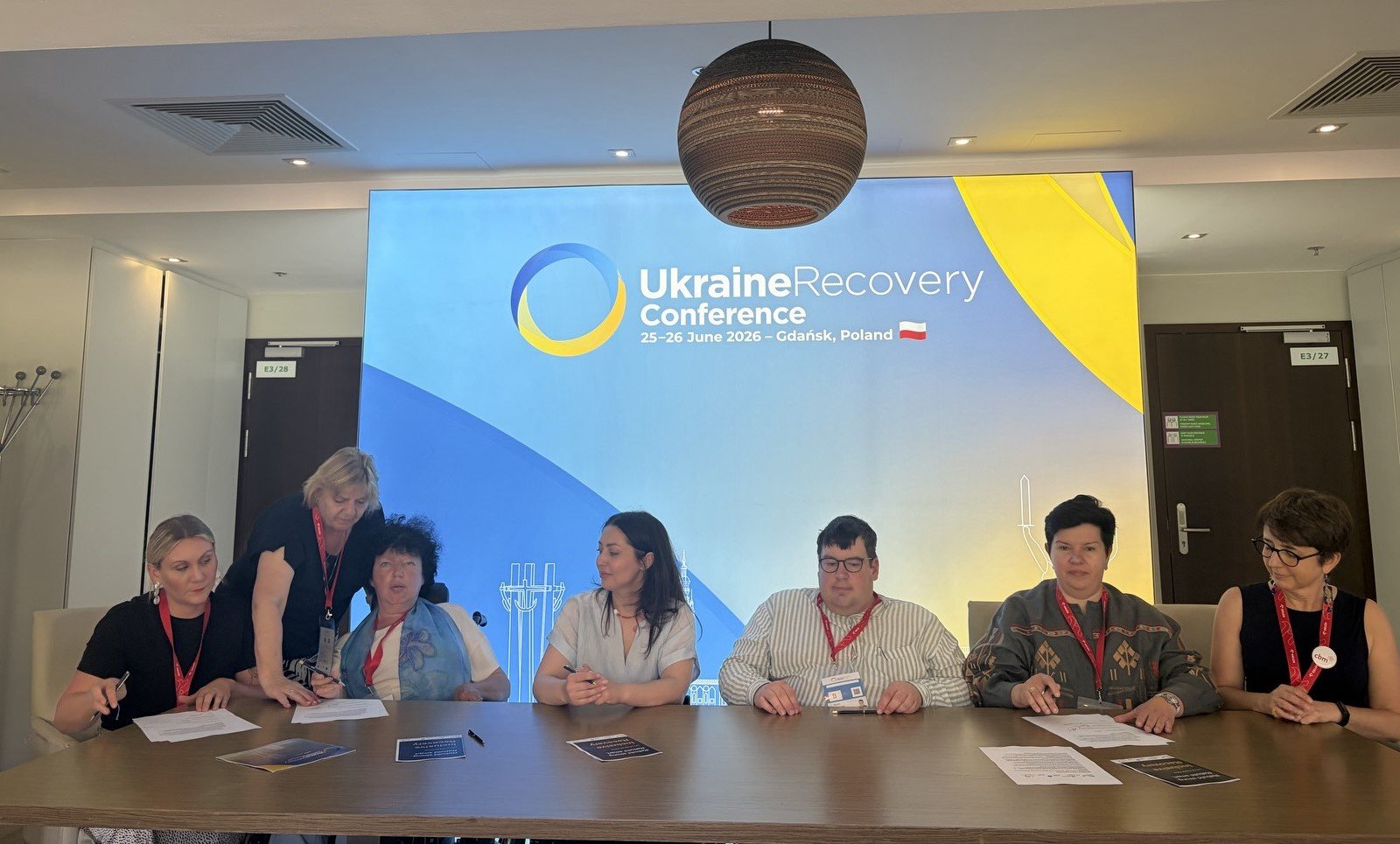
26 червня, у завершальний день Ukraine Recovery Conference 2026, представники міжнародних та українських організацій офіційно підписали Гданську декларацію «Розбудова сильнішого, розумнішого та більш інклюзивного відновлення України». Від імені Національної Асамблеї людей з інвалідністю України документ підписала Генеральна секретарка НАІУ Вікторія Назаренко. Разом із НАІУ декларацію підписали Європейський форум осіб з інвалідністю (EDF), CBM, CBM Italia, […]
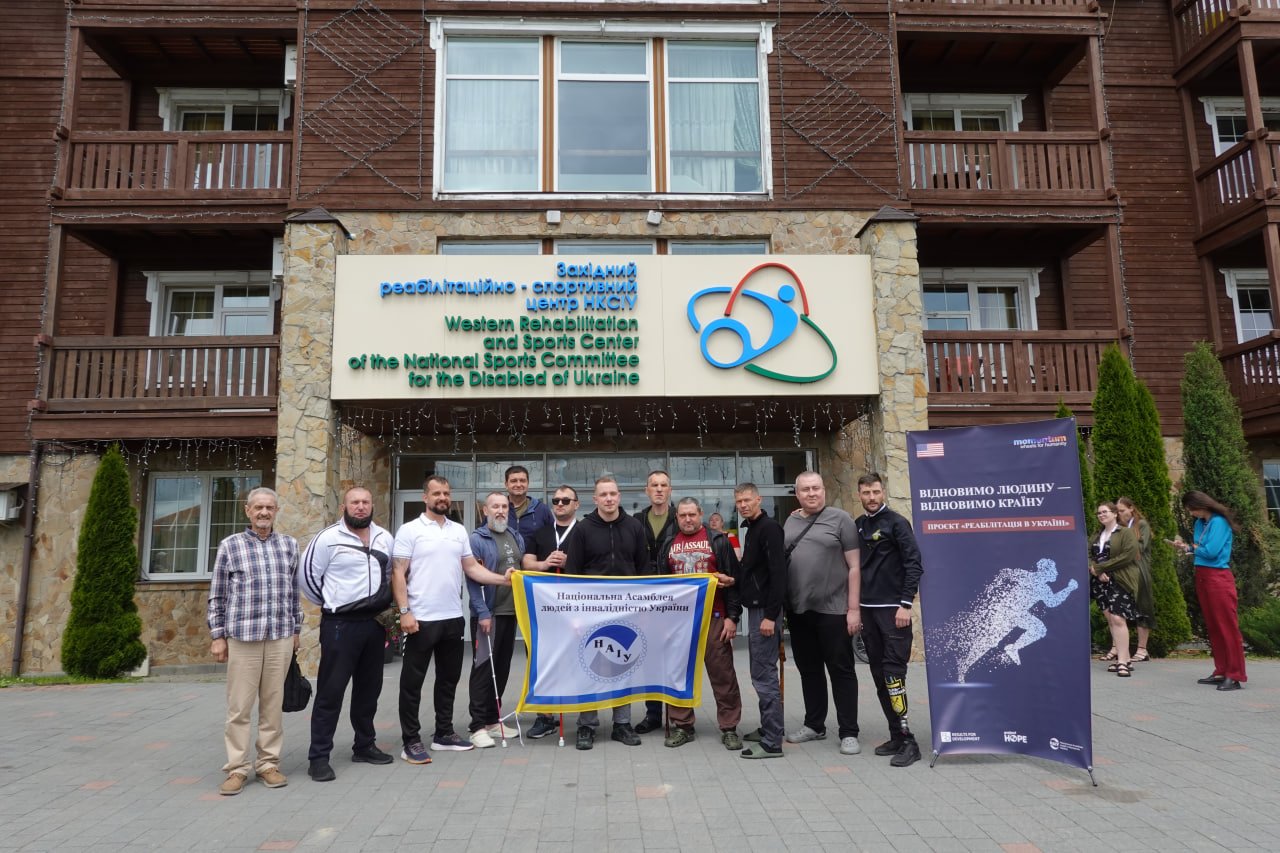
У Львівській області завершився п’ятиденний офлайн-тренінг «Посилення спроможностей лідерок та лідерів у питаннях залучення ресурсів для реалізації політики інклюзії, гуманітарного реагування та відновлення». Захід об’єднав представниць і представників організацій людей з інвалідністю та ветеранських спільнот із різних регіонів України, які прагнуть зміцнити організаційну стійкість, ефективніше залучати ресурси та впливати на процеси відновлення своїх громад. Тренінг […]
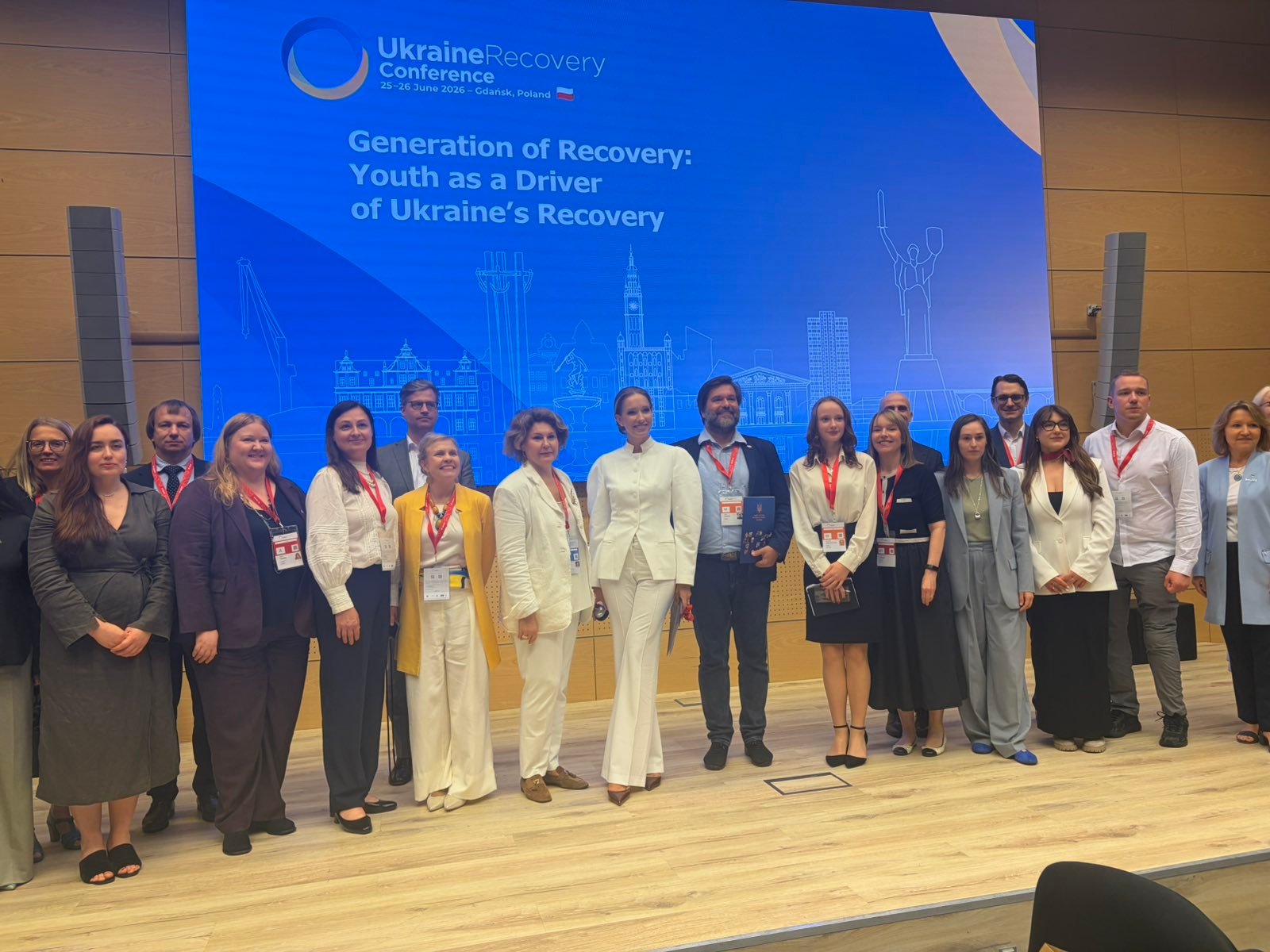
Молоді люди, які захищали Україну, мають стати не лише отримувачами підтримки, а й активними учасниками відновлення держави. Саме ця думка стала однією з ключових під час воркшопу «Generation of Recovery: Youth as a Driver of Ukraine’s Recovery», що відбувся в межах Конференції з відновлення України (URC 2026) у Гданську. Від Національної Асамблеї людей з інвалідністю […]