From Training to Change: Results of the Inclusive Vocational Education and Training Project
31 August 2026
Share:
What does it take for a veteran or a person with a disability not simply to enrol at a vocational education and training (VET) provider, but to master an occupation, complete practical training, and find employment?
Physical accessibility is only part of the answer. Equally important are well-prepared teachers and vocational training instructors, accessible learning materials, the ability to adapt the educational process, support during learning, and a VET provider’s readiness to work with the individual to find solutions.
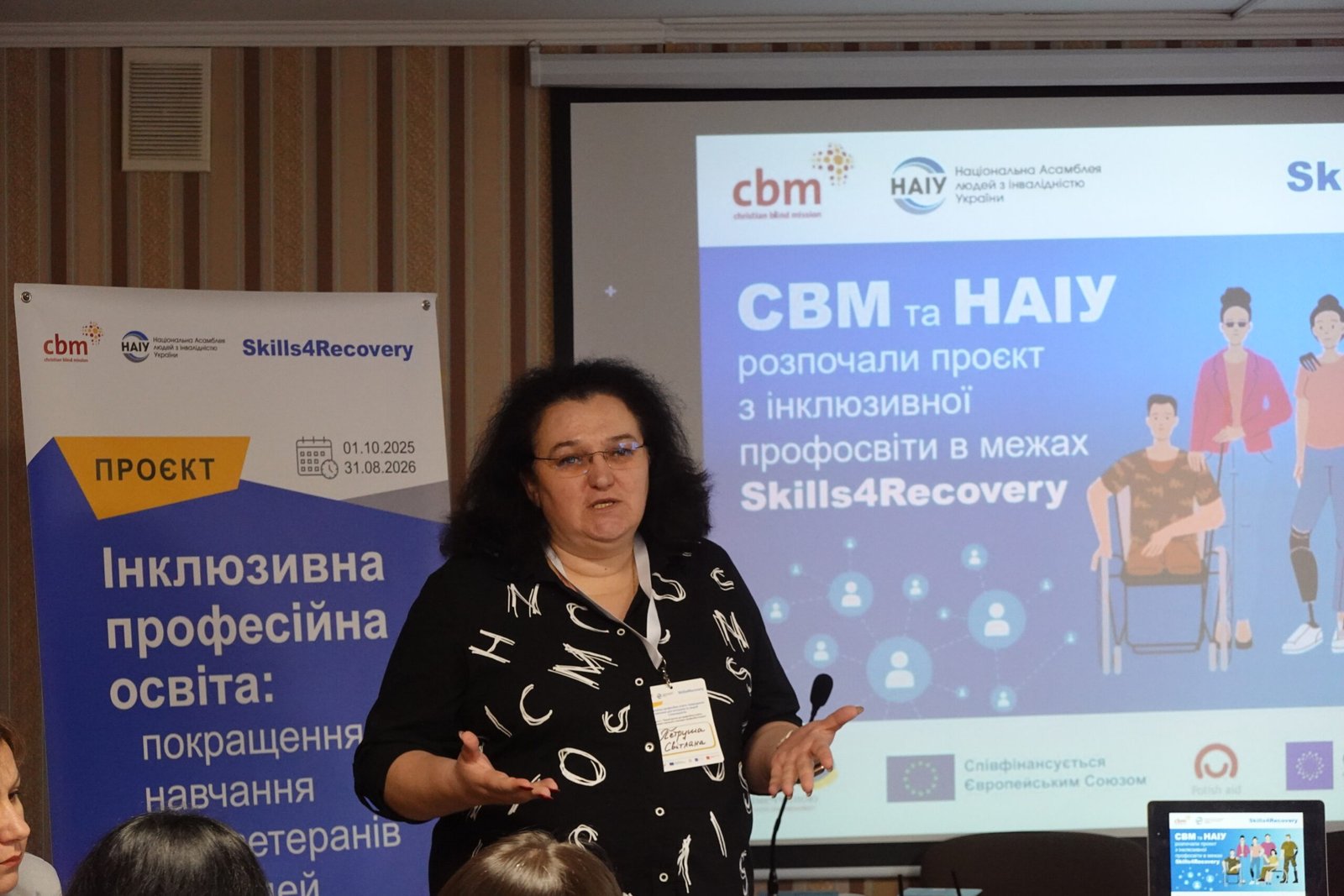
This was the focus of the project “Inclusive Vocational Education and Training: Improving Training for Veterans and People with Disabilities,” in which the National Assembly of People with Disabilities of Ukraine (NAPD) and the international organisation Christoffel-Blindenmission Christian Blind Mission e.V. (CBM) worked alongside VET providers and experts. The project was implemented as part of the Skills4Recovery Multi-Donor Initiative.
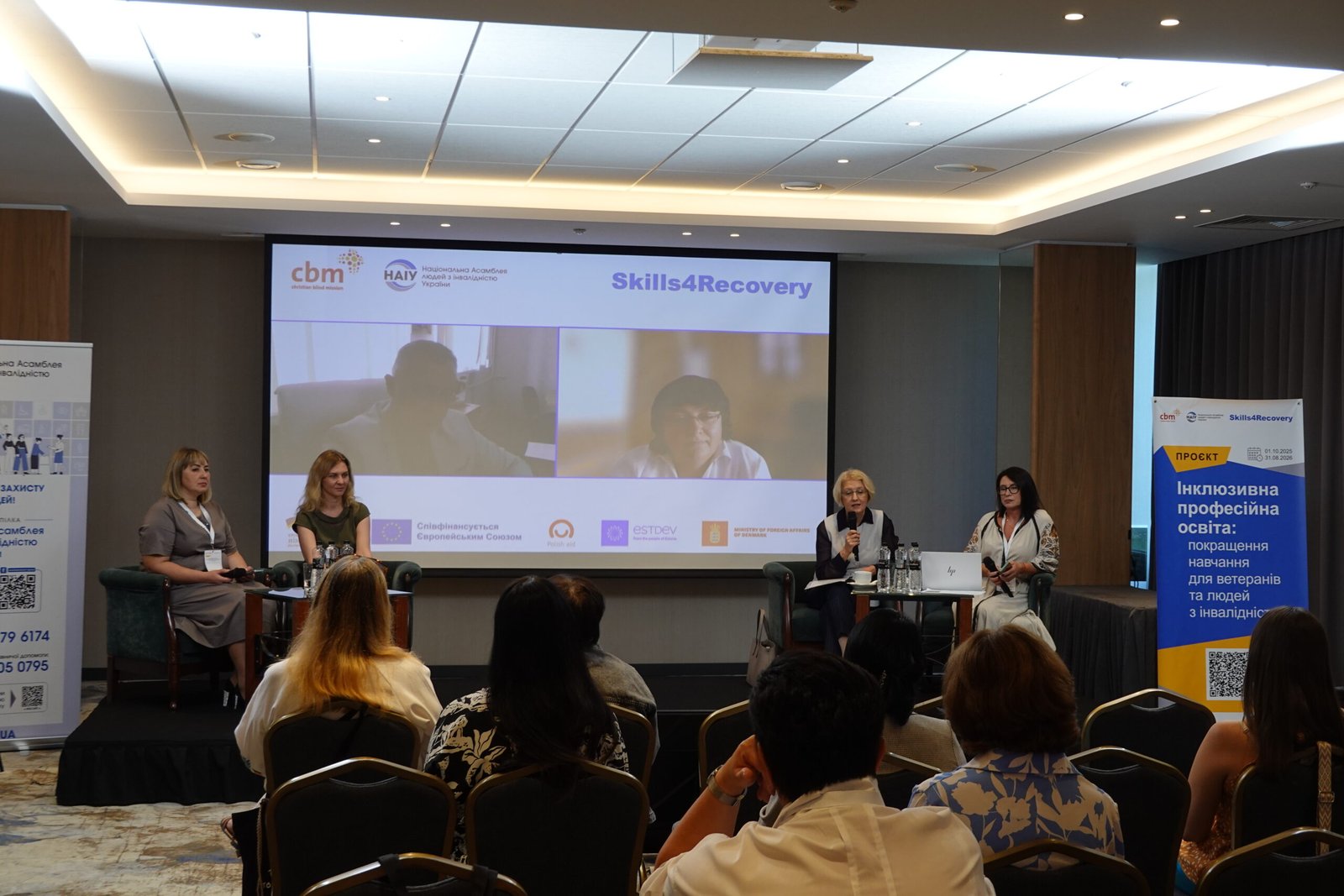
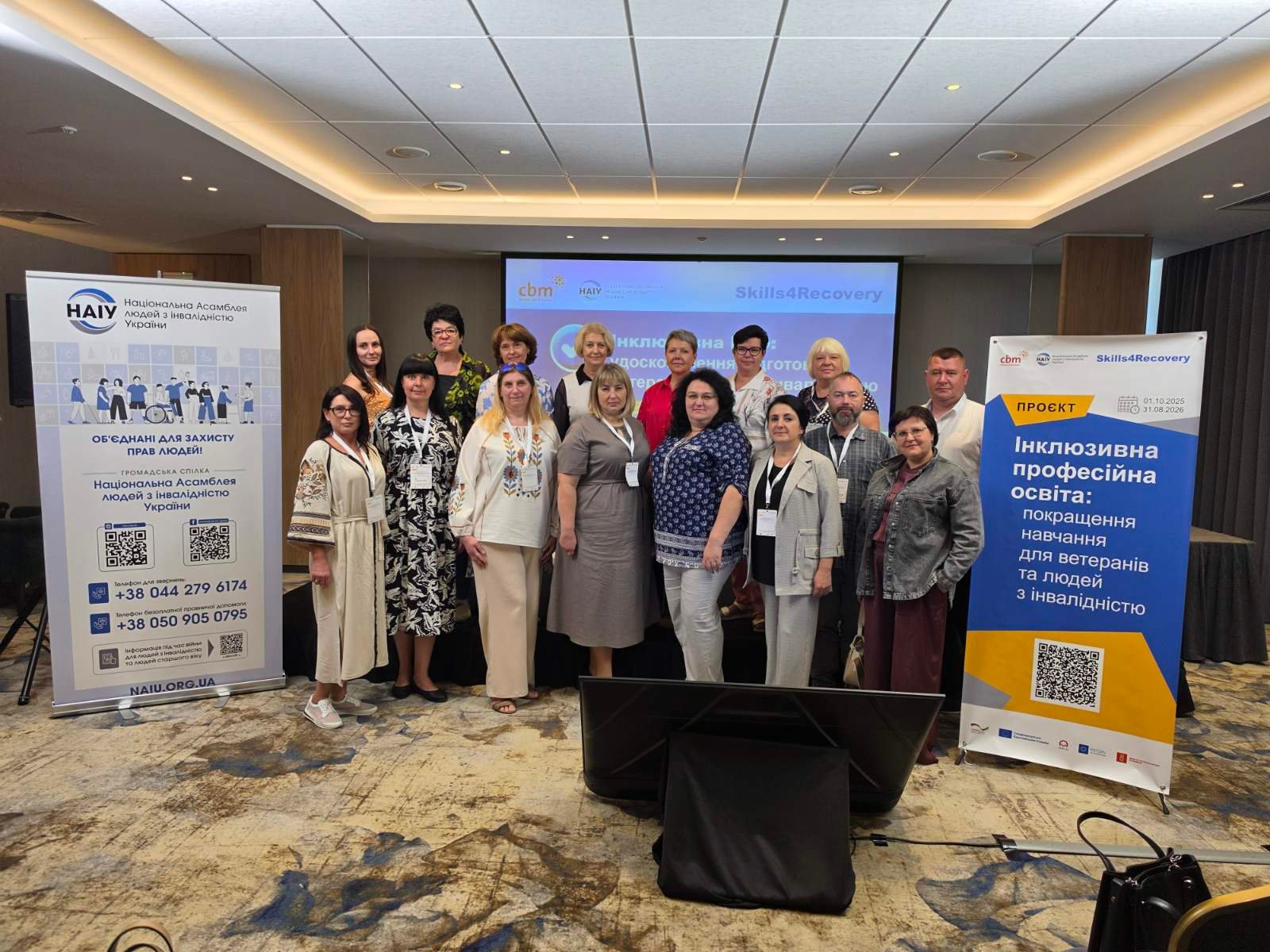
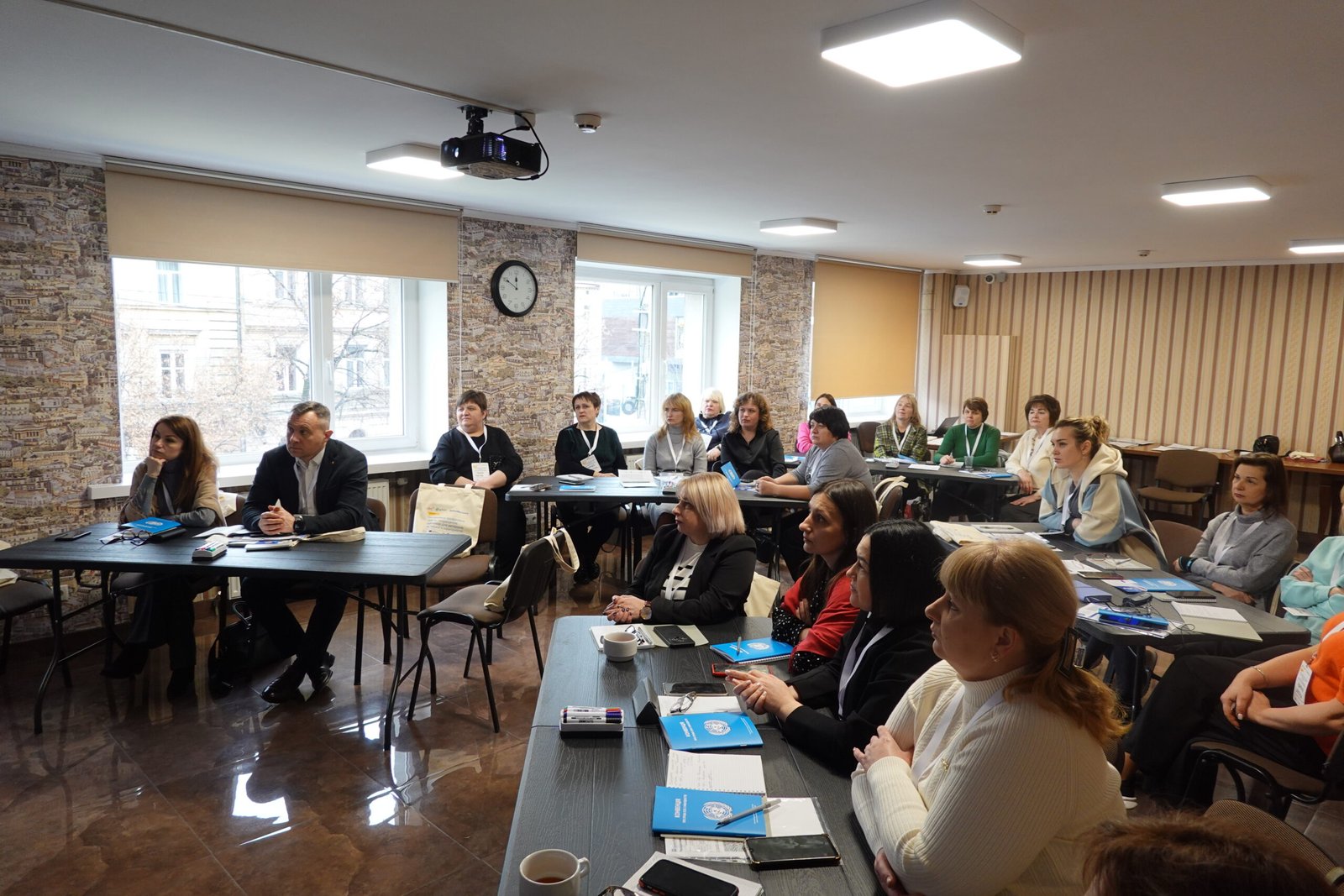
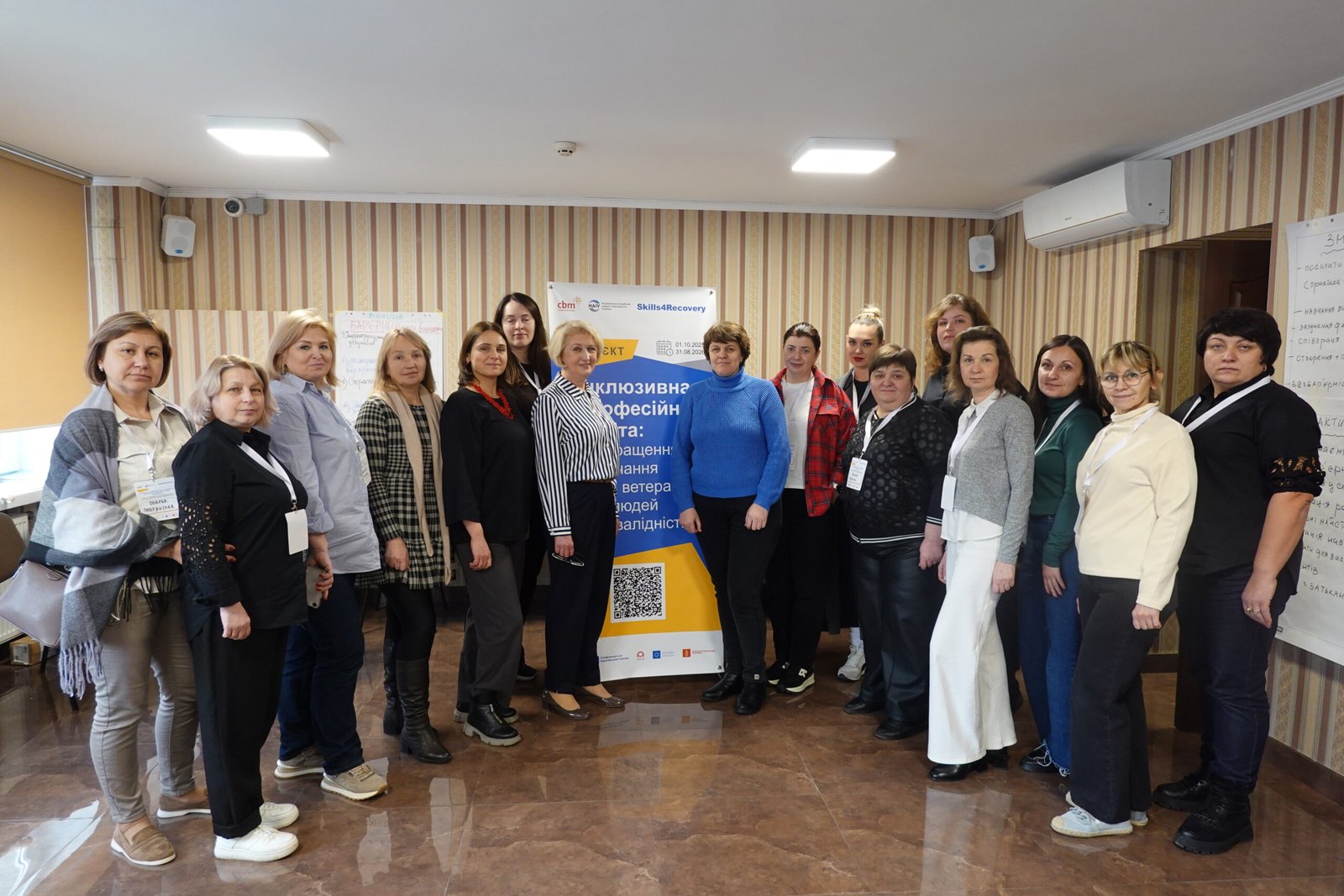
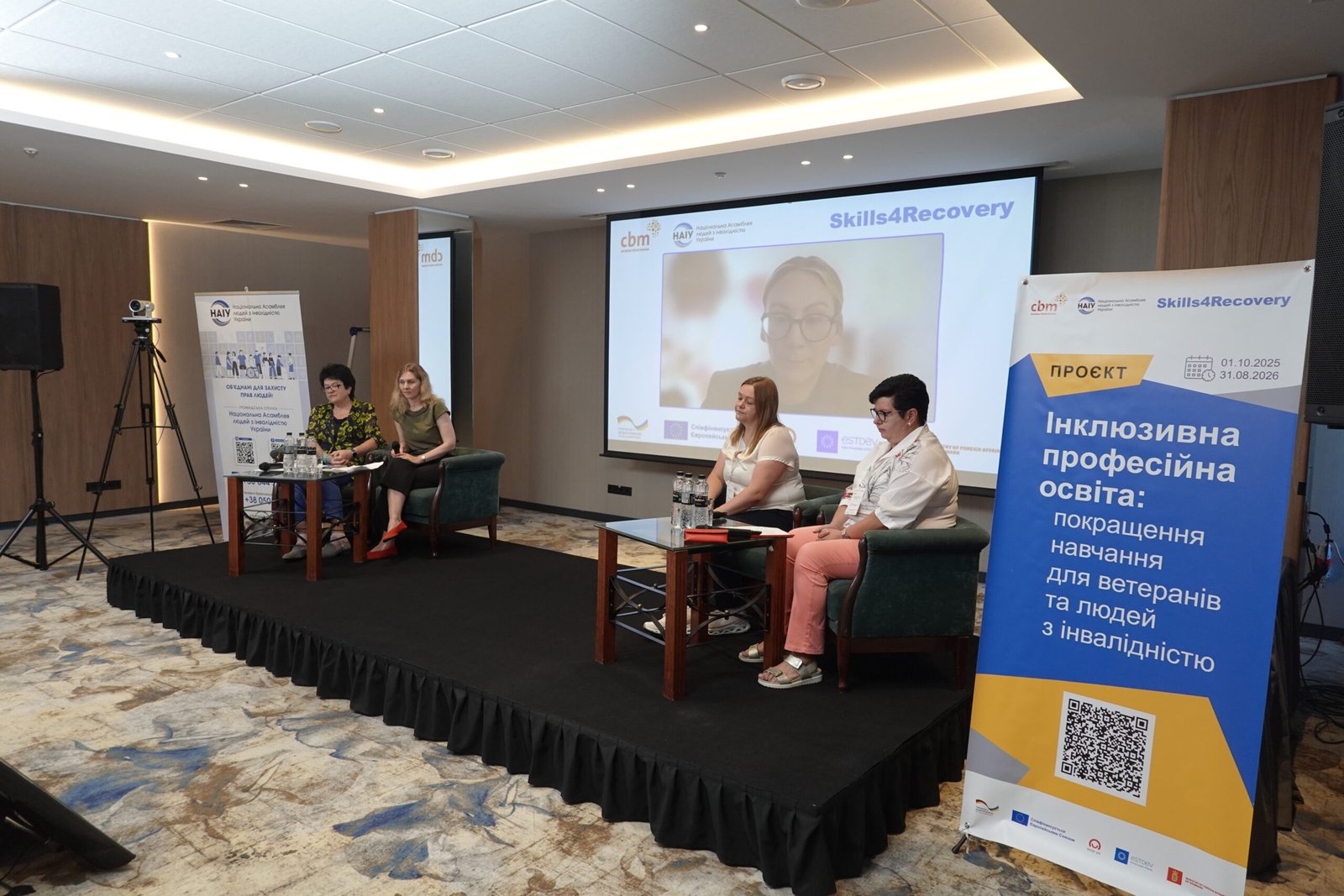
On 27 August 2026, partners, experts, and representatives of VET providers gathered for the final event to take stock of the project’s results, reflect on the experience gained, and consider how the solutions developed can continue to be applied in the future.
Behind the numbers lies a major joint effort by VET providers, educators, experts, and partners:
● 40 VET providers were reached through project activities;
19 VET providers took part in more intensive project activities;
● more than 100 professionals received training on inclusive vocational education and training;
● 18 VET providers participated in supervision support;
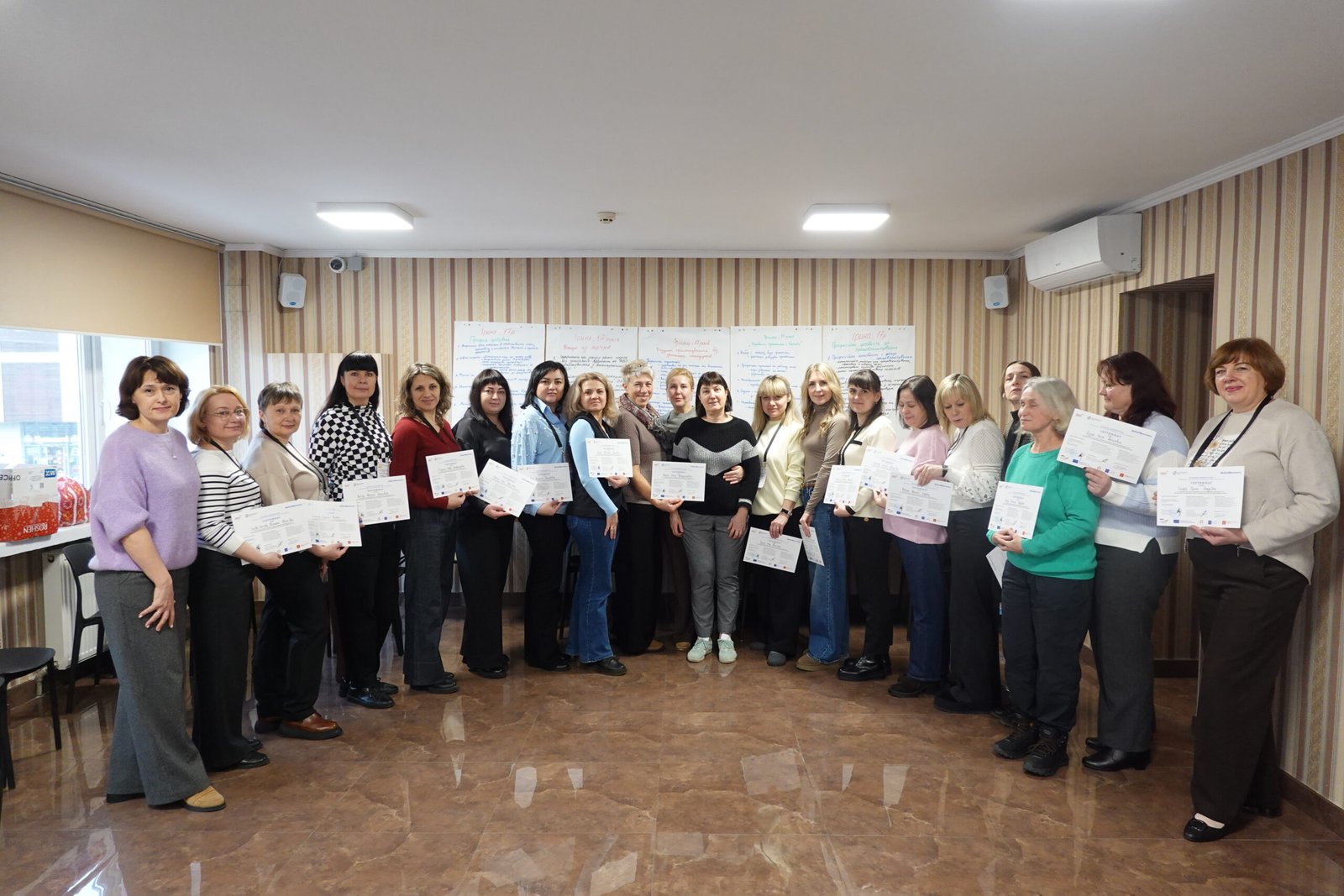
● 31 professionals received trainer certificates and can now pass on this the knowledge;
● a comprehensive set of practical, training, and methodological materials for VET providers was developed.
First – Understand the Needs
The work began not with ready-made solutions, but with an examination of the real needs of VET providers and their teams. The assessment helped identify not only the level of inclusion awareness, but also the practical challenges professionals face in their day-to-day work.
Topics requiring particular attention included understanding disability and inclusion, universal design, adaptation of the educational process, accessible communication, pedagogical support, and engagement with veterans, persons with disabilities, and other learners who may require additional support.
The assessment findings formed the basis for the training programme, subsequent work with VET provider teams, and the development of the project’s practical materials.
The training component of the project became much more than a series of training sessions. It was a step-by-step journey from understanding the principles of inclusion to finding concrete solutions for the participating VET providers.
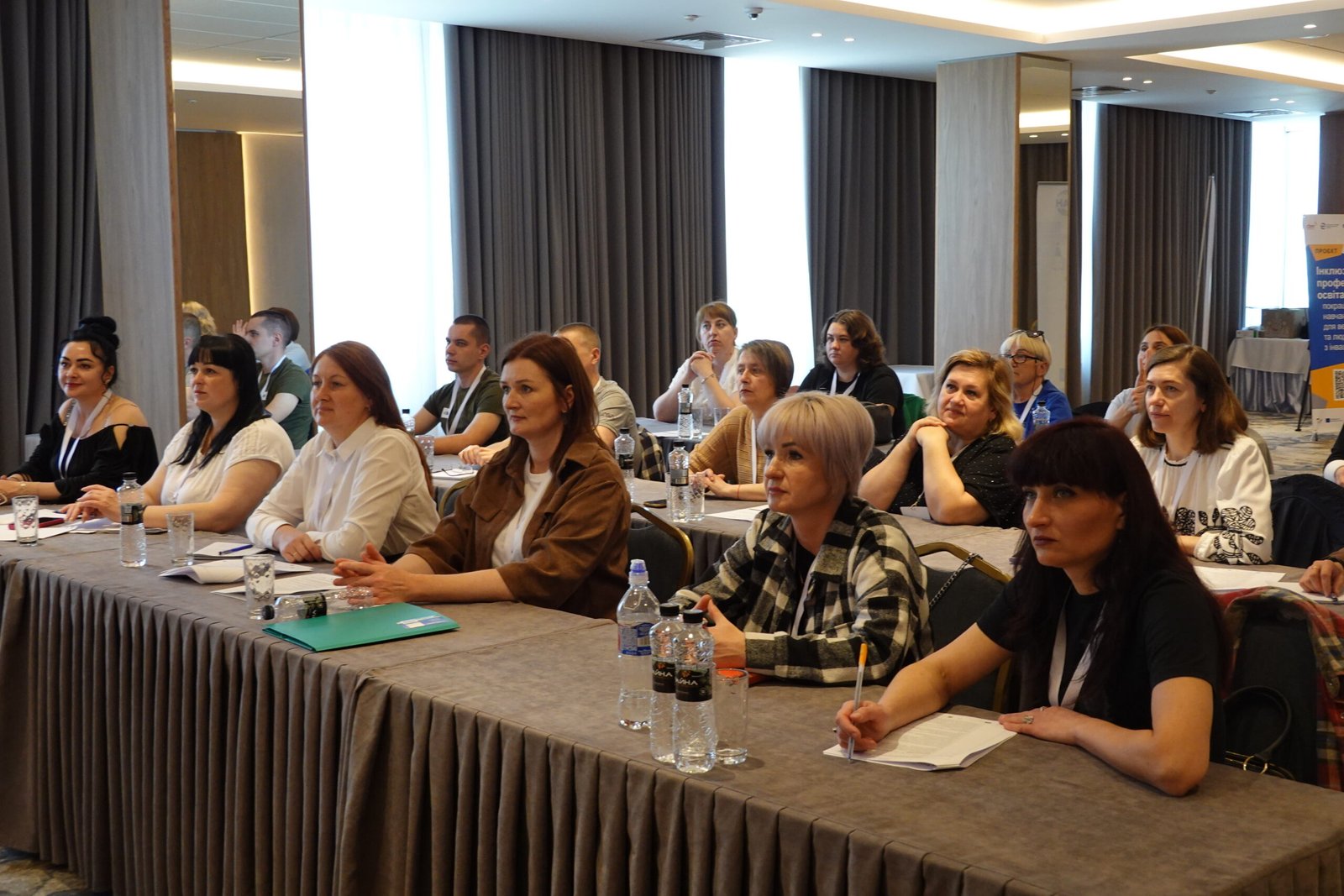
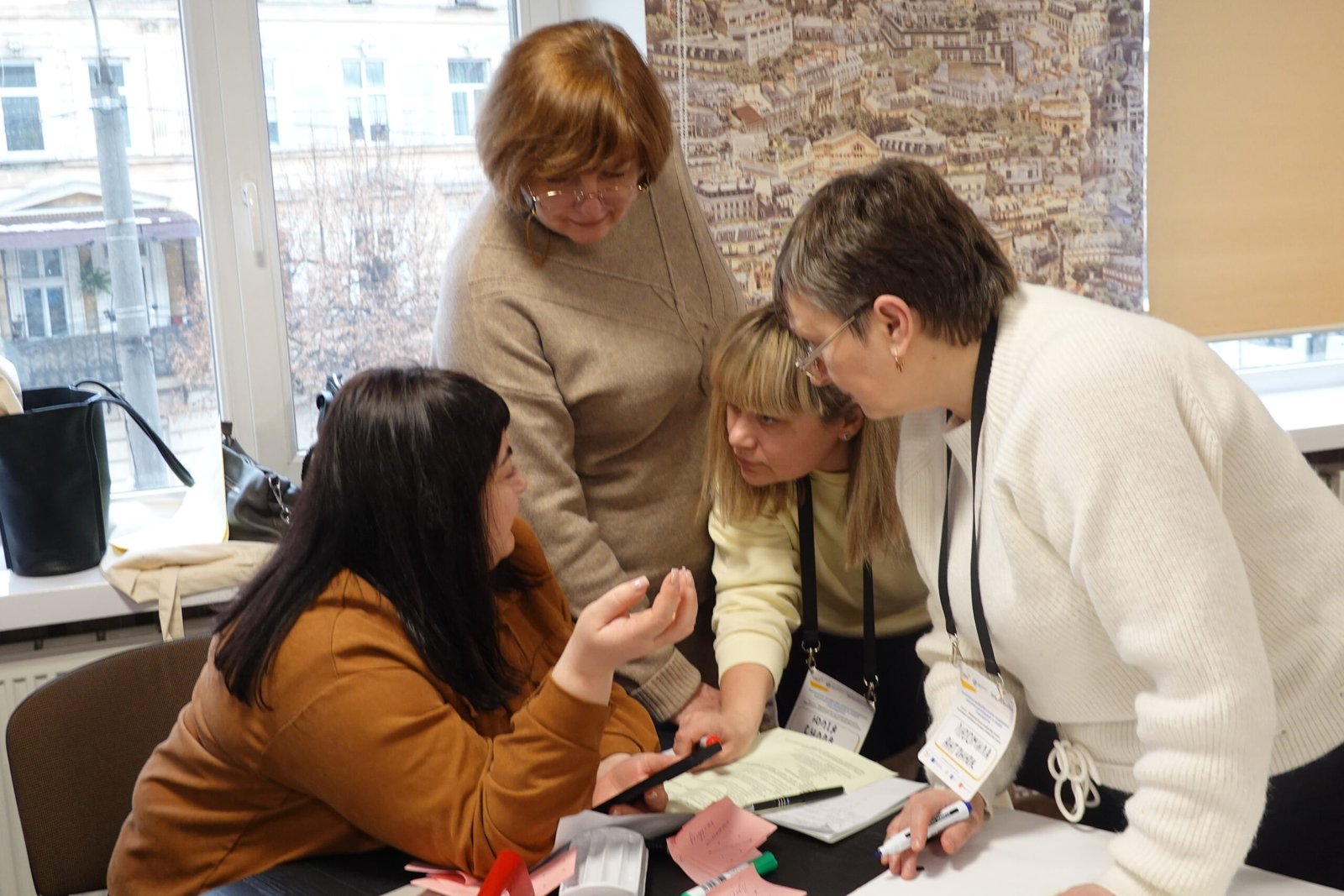
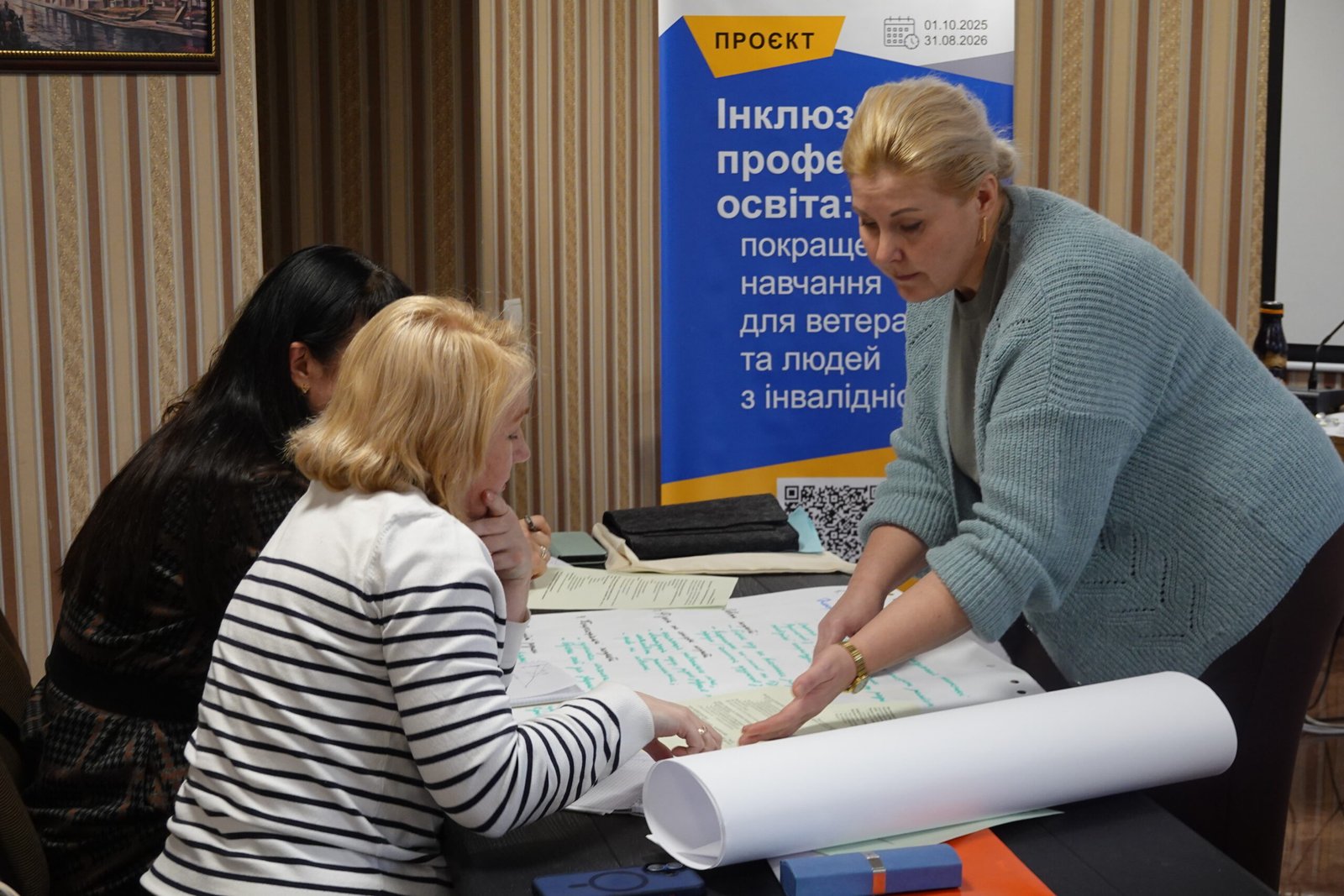
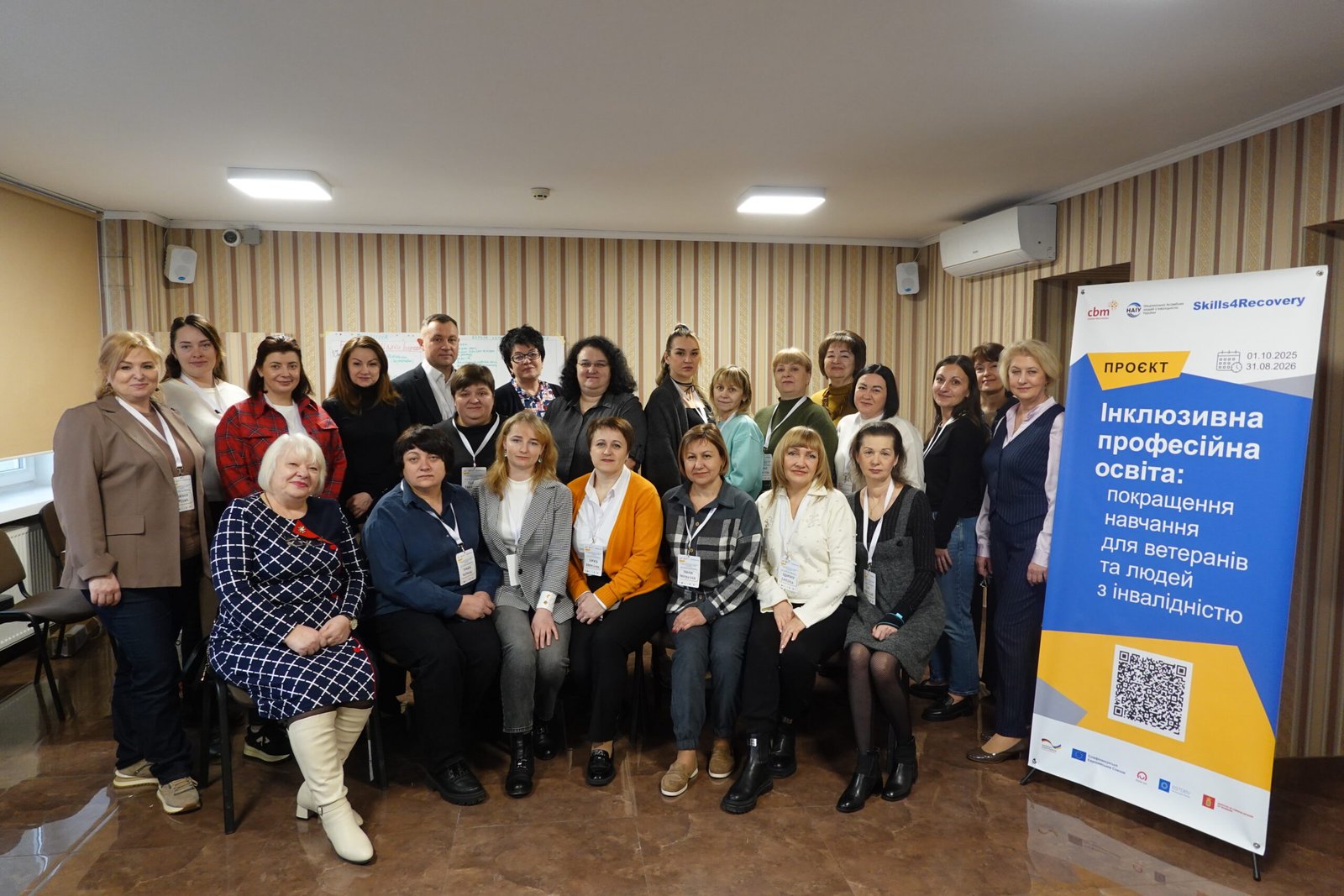
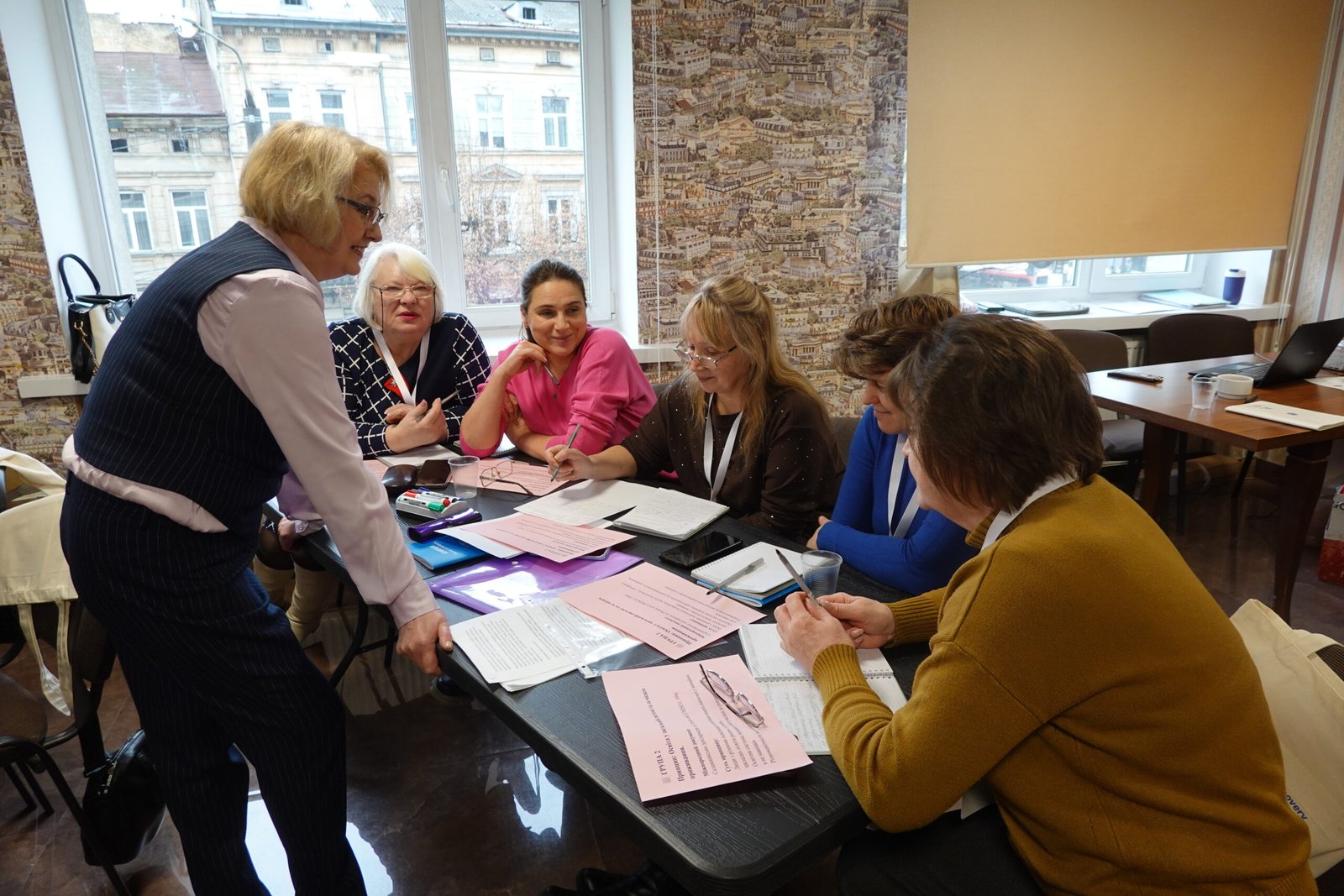
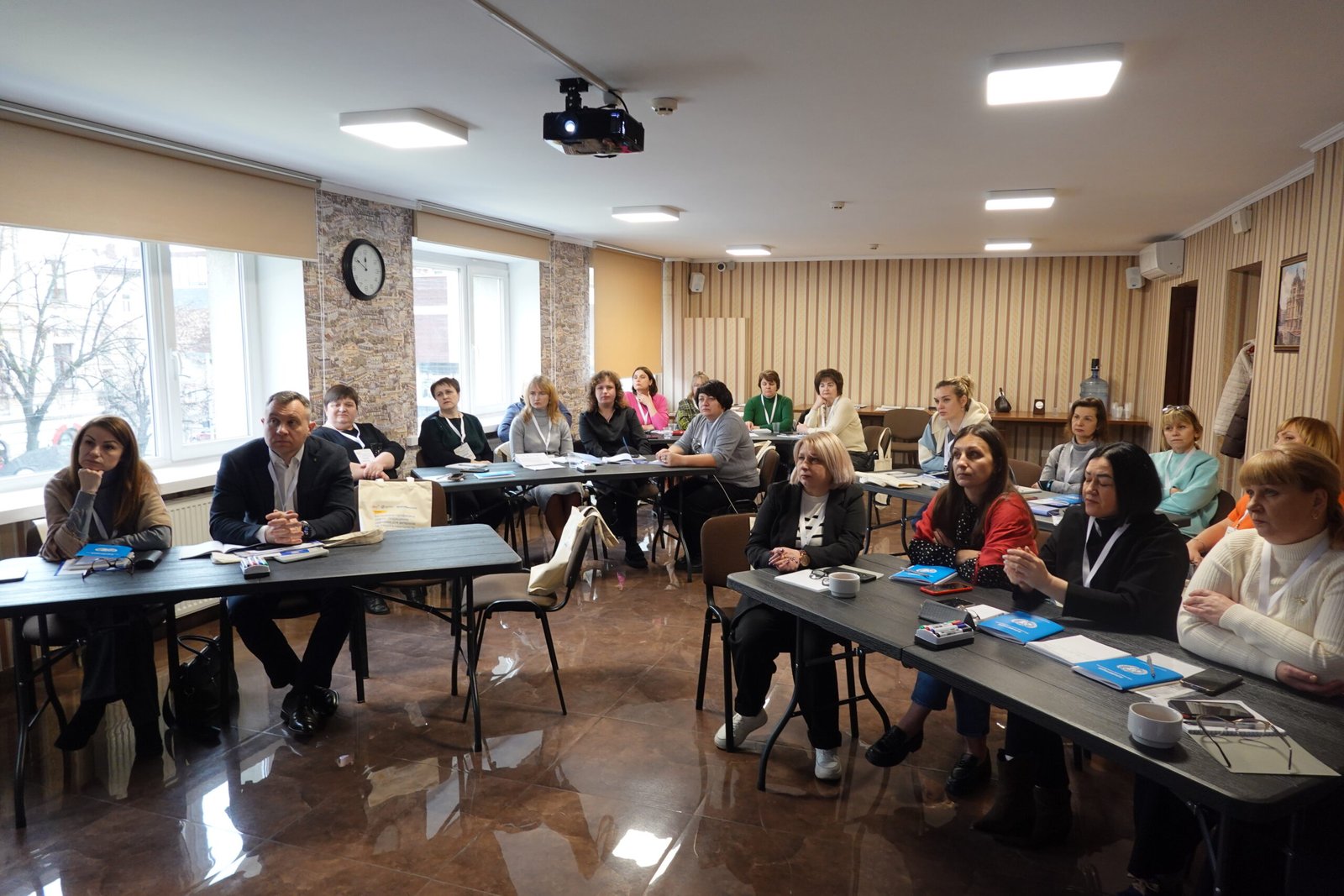
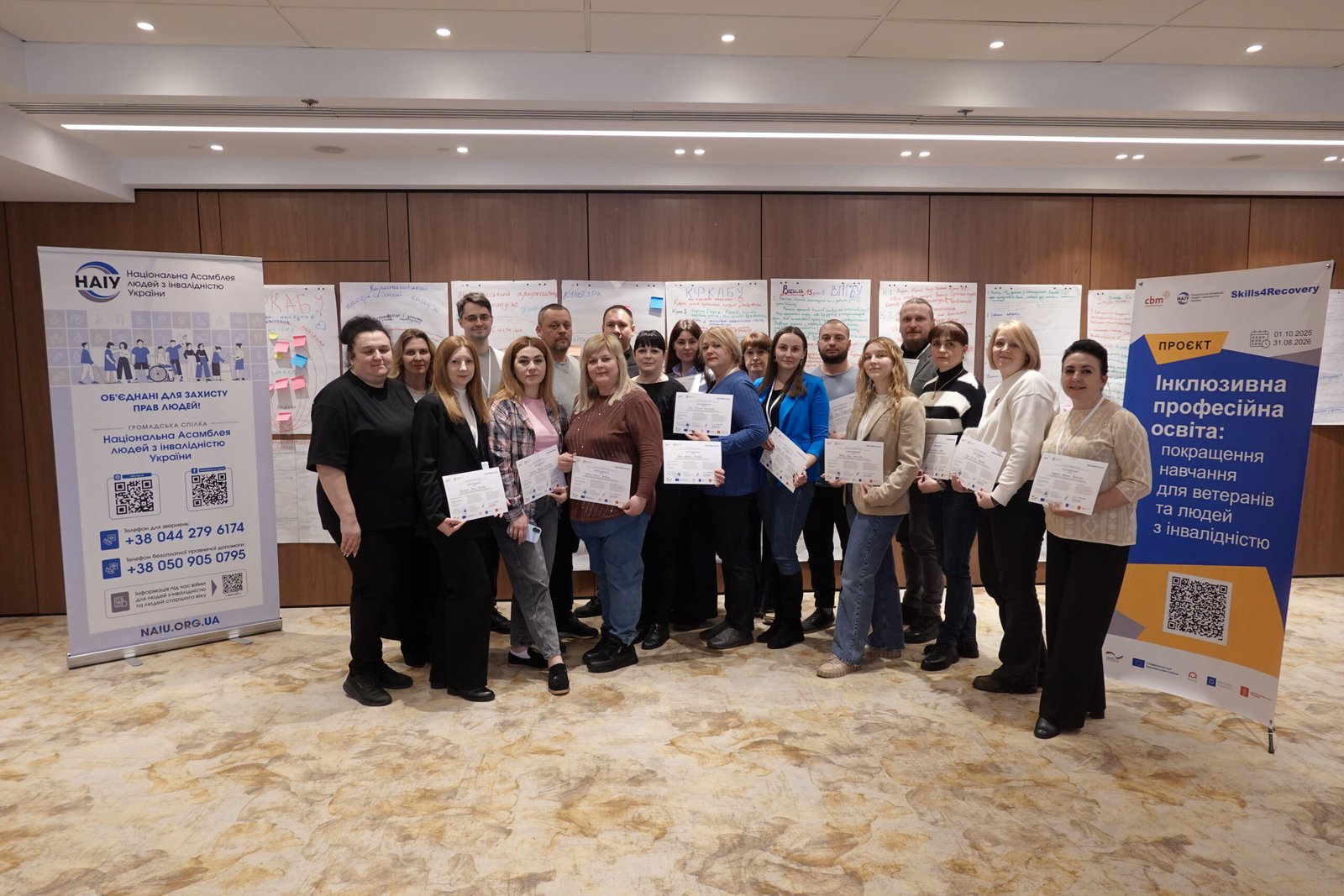
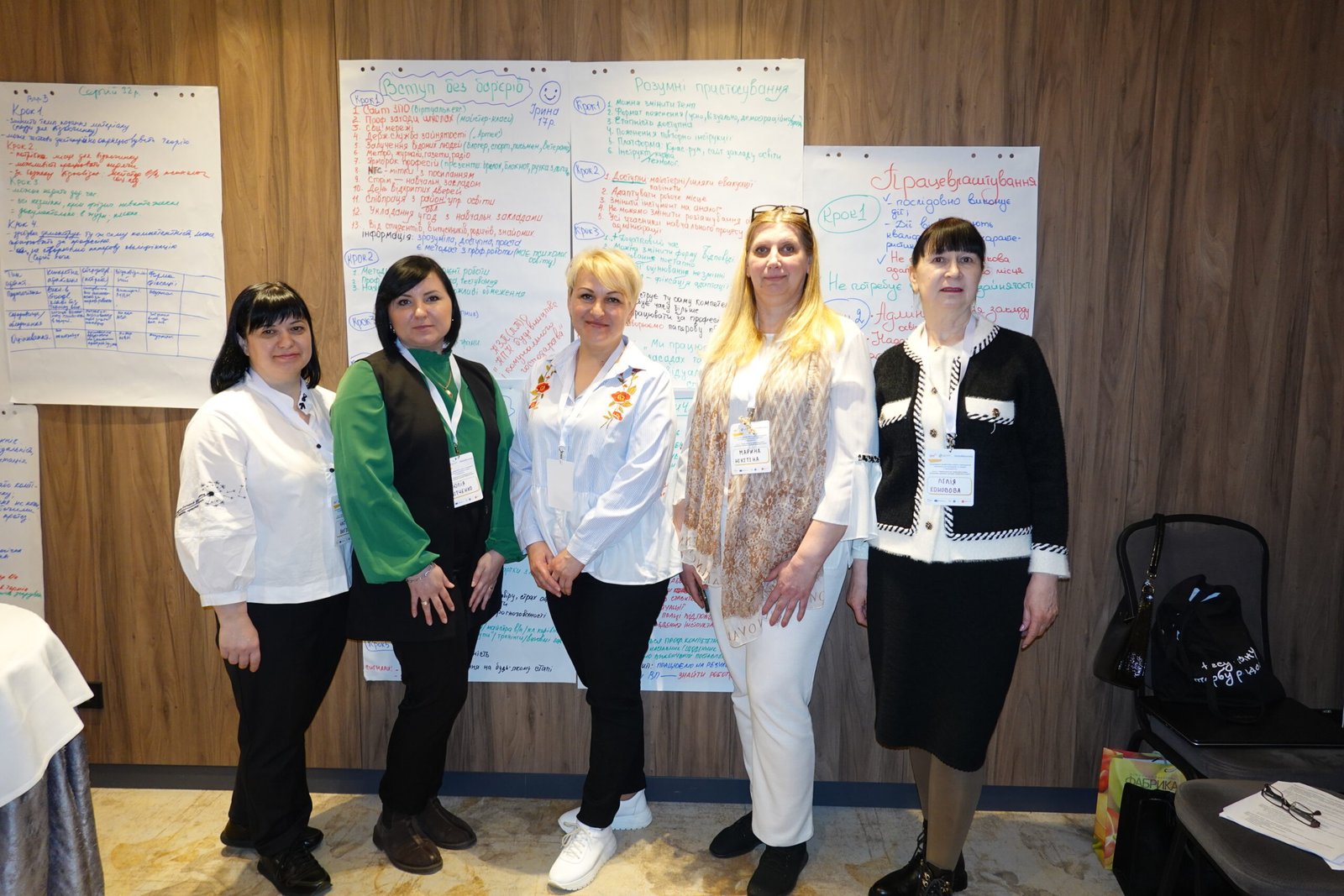
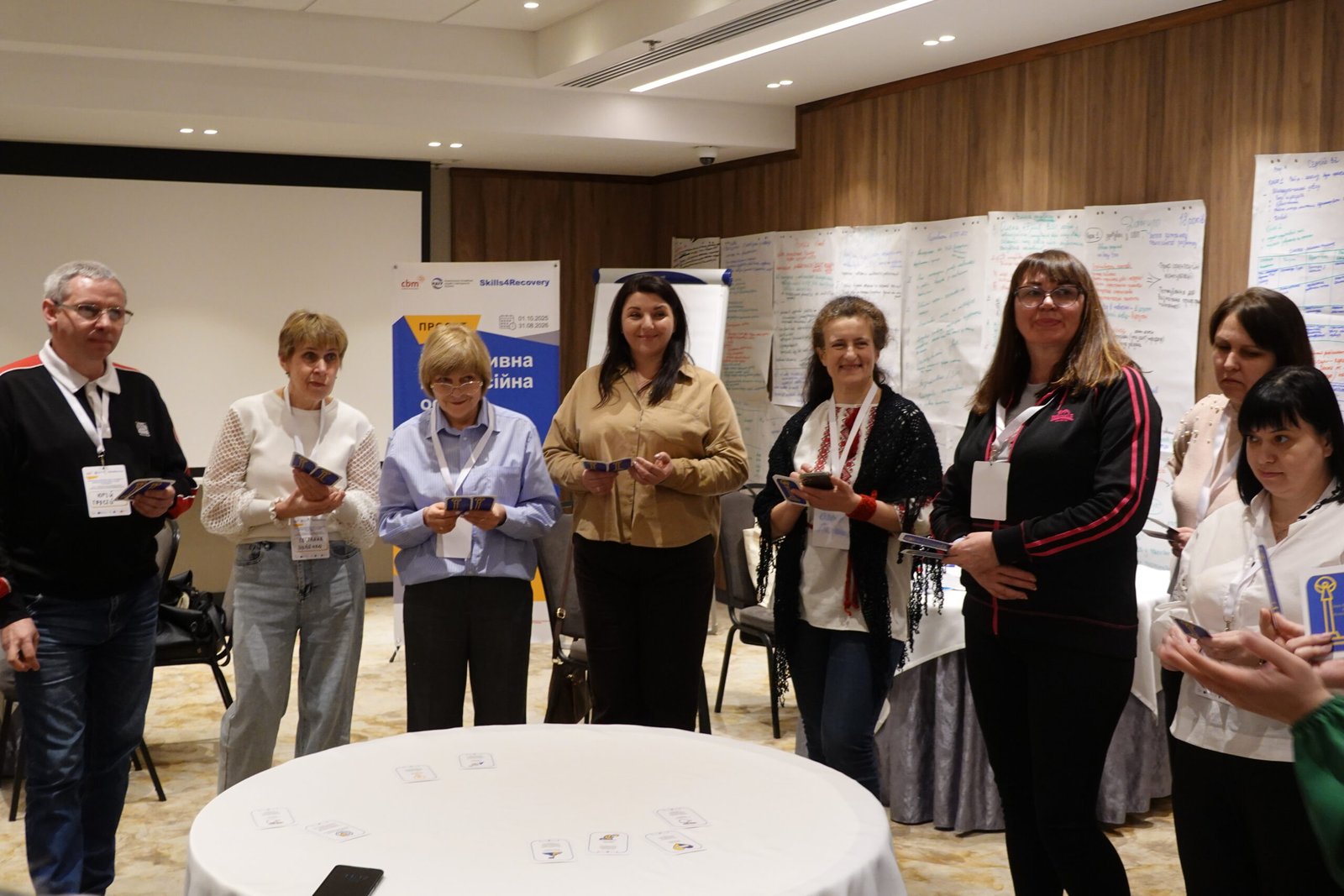
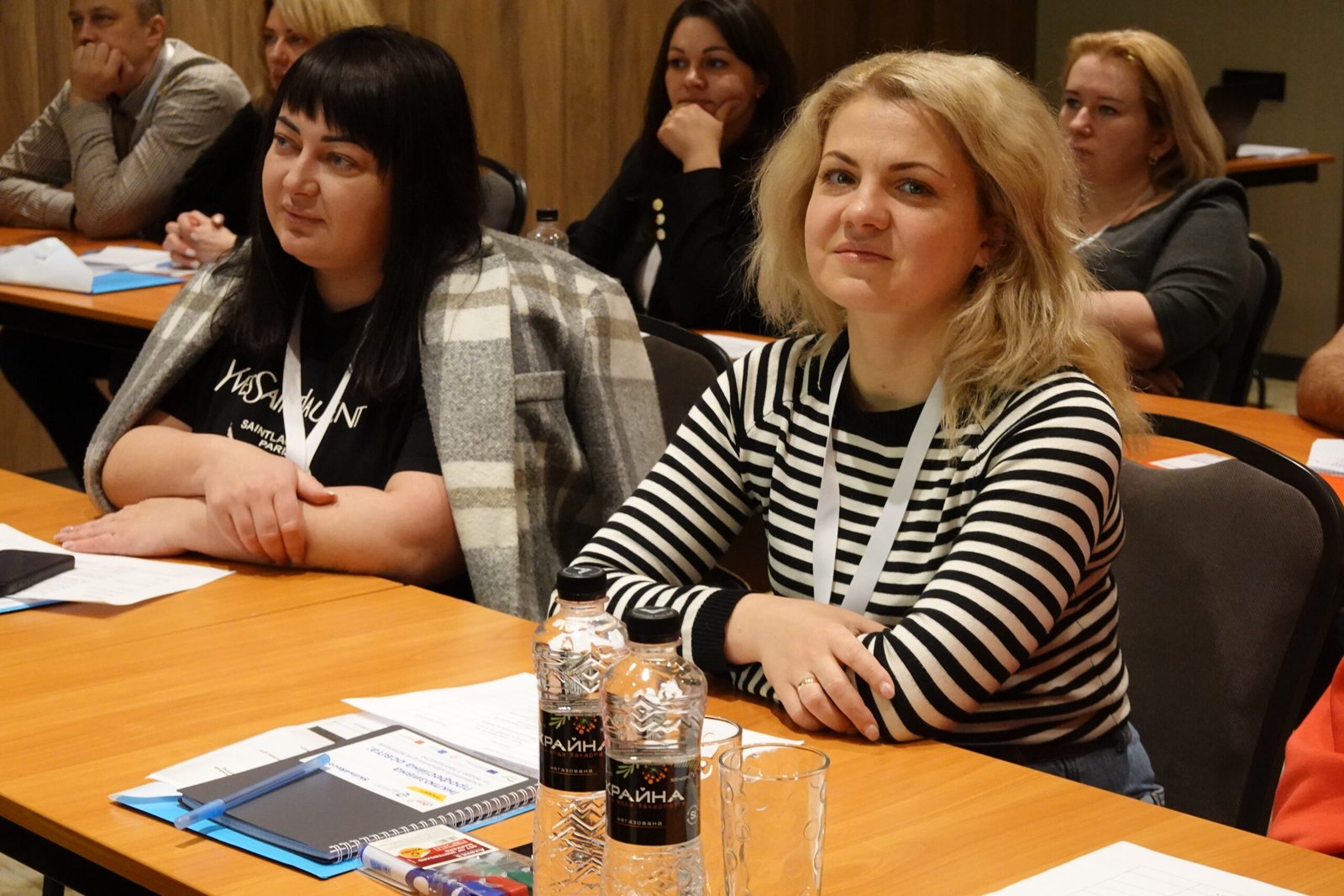
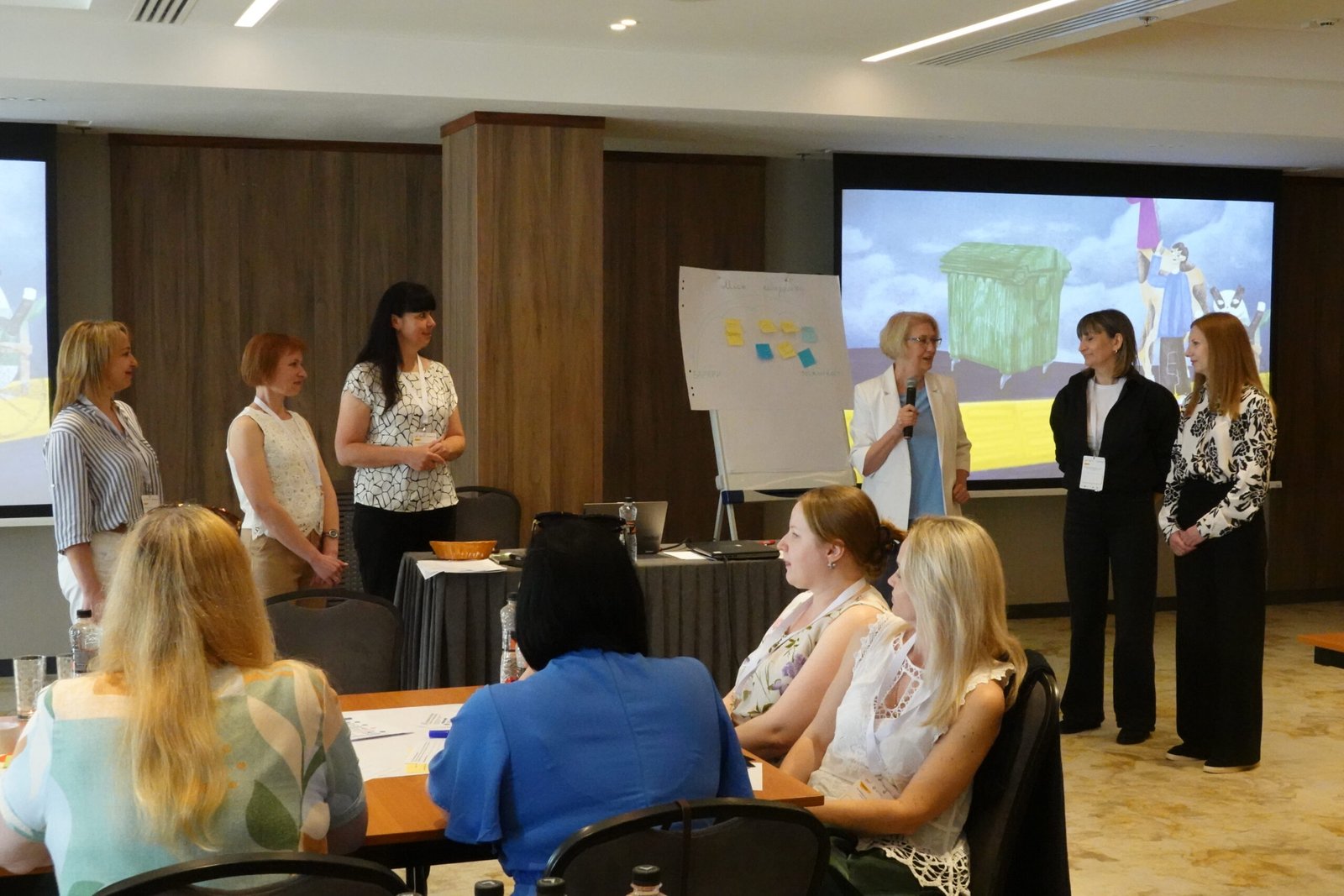
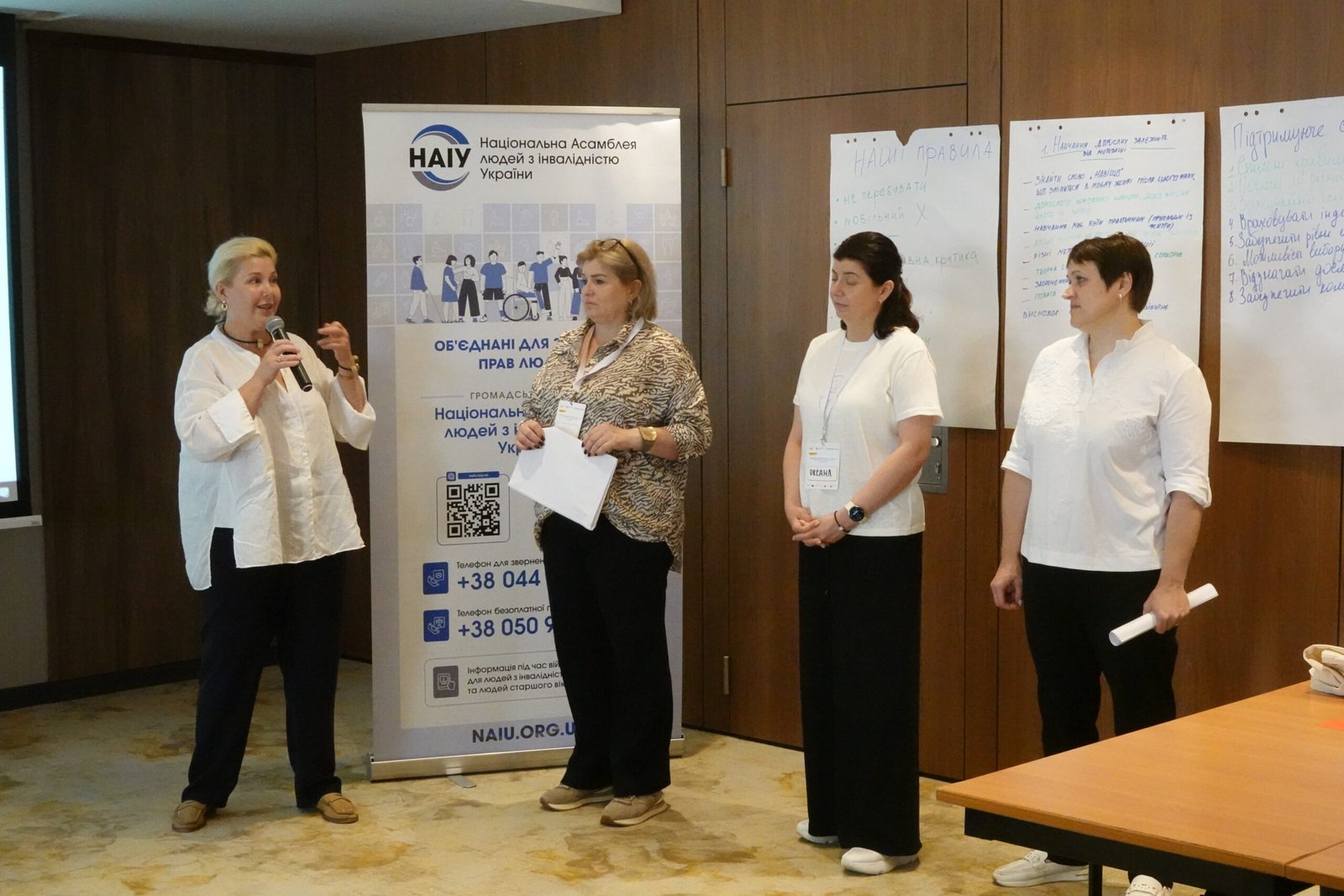
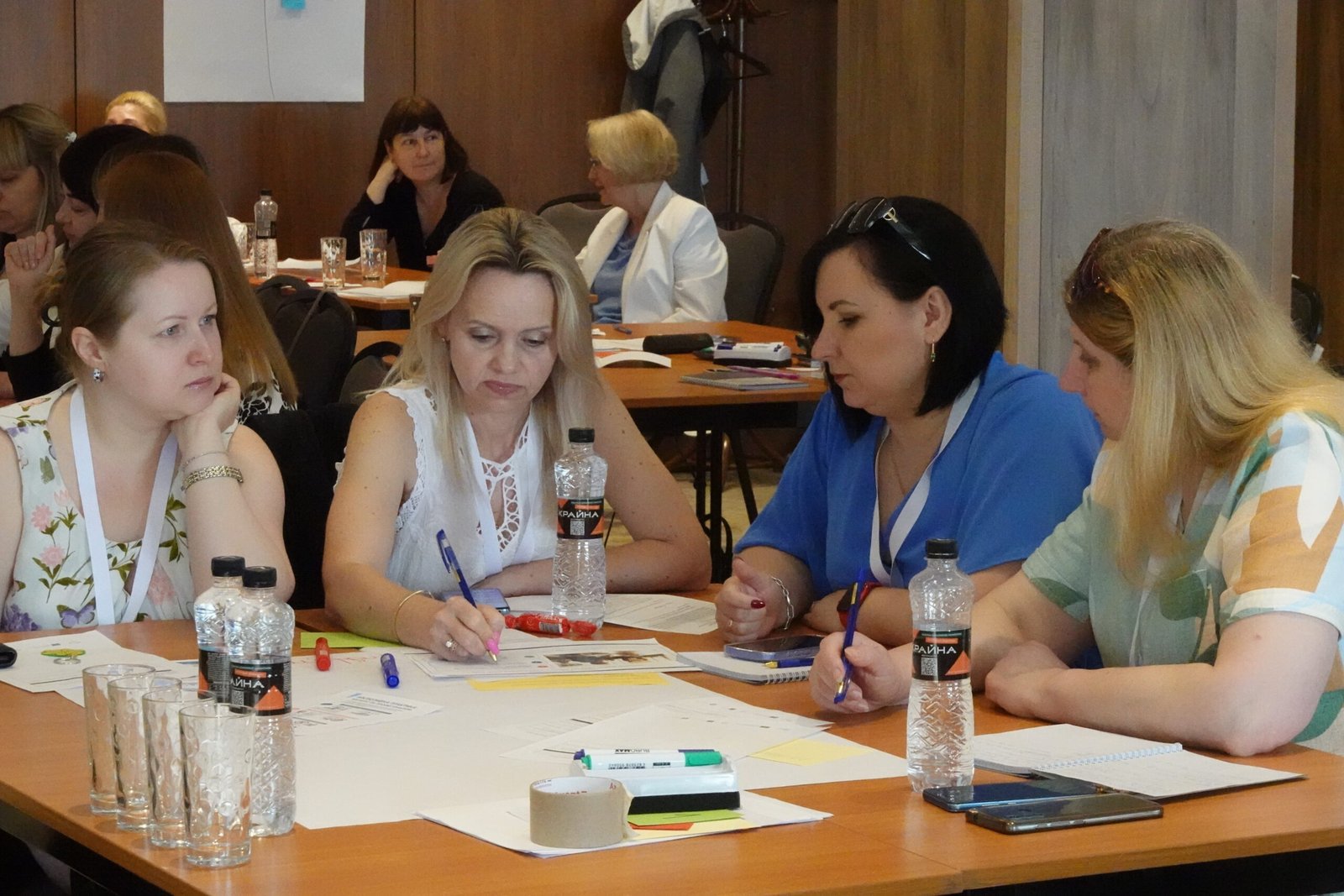
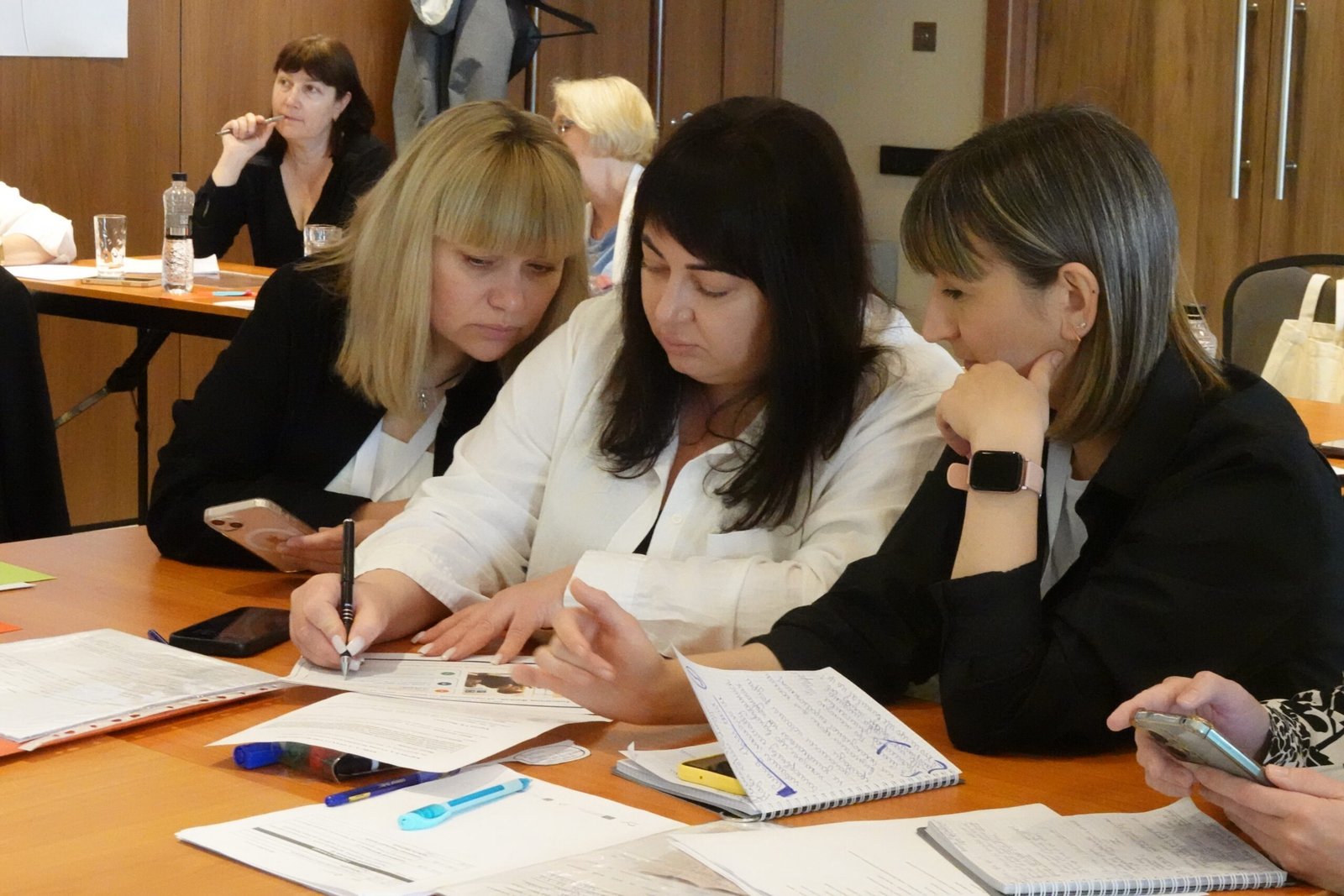
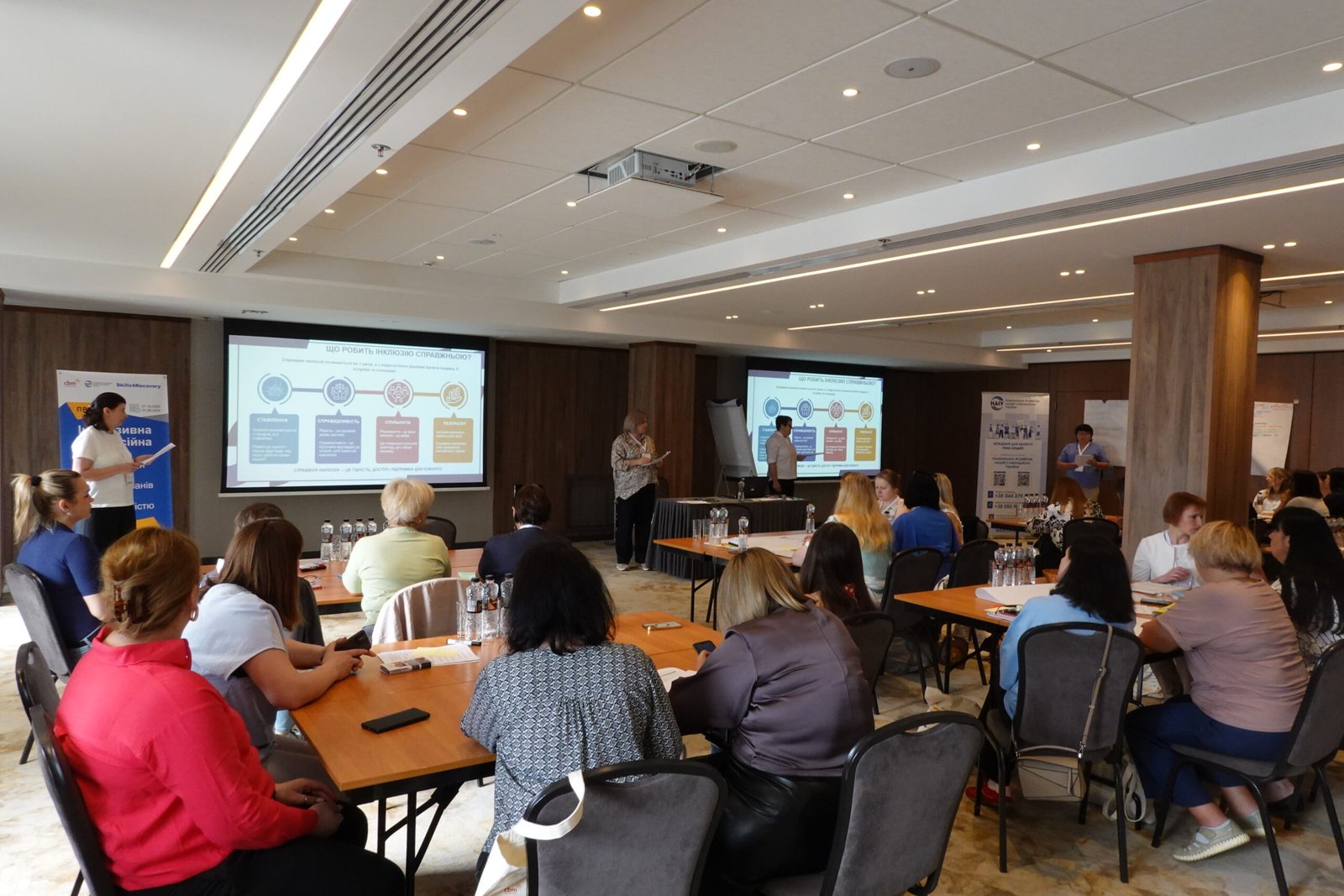
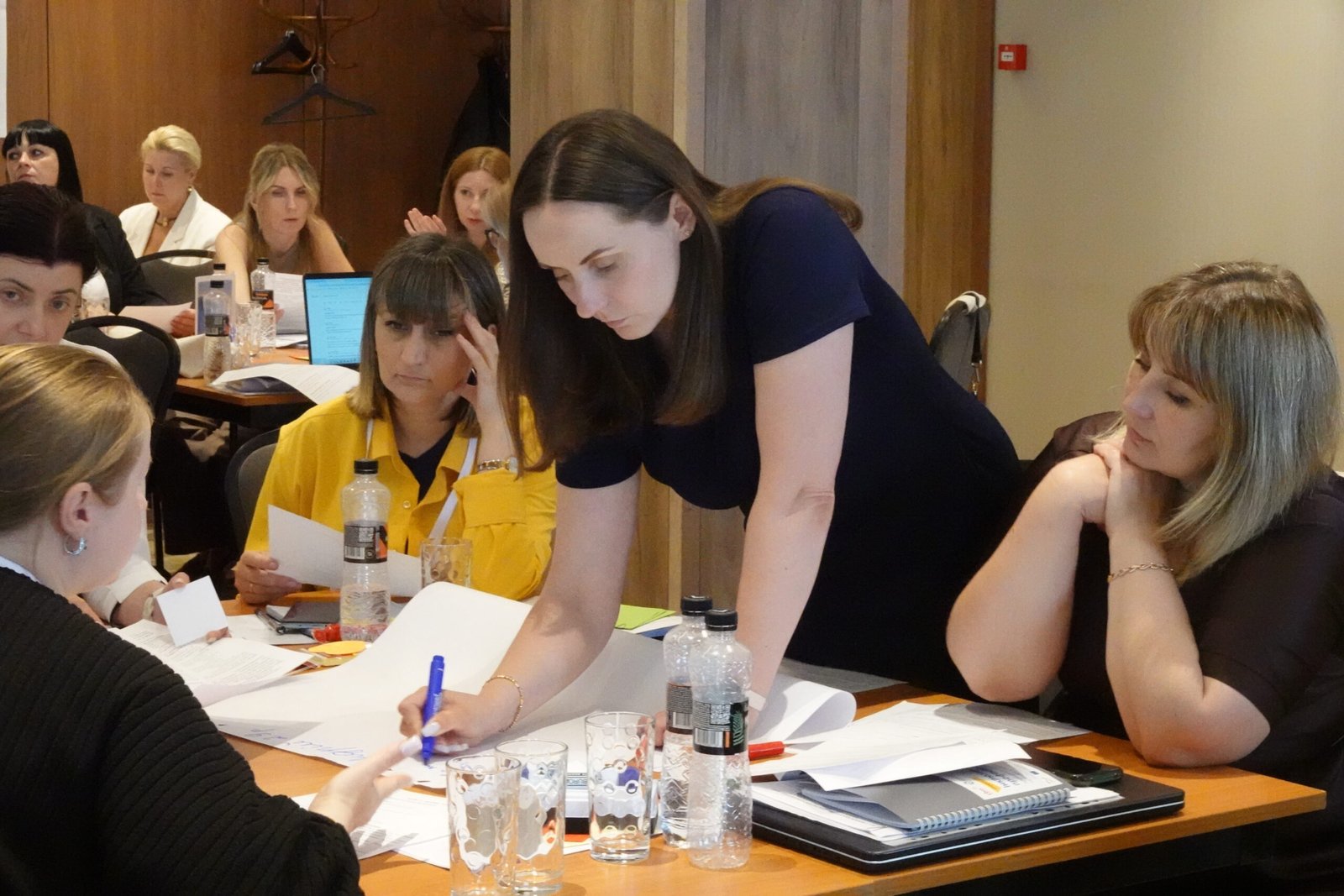
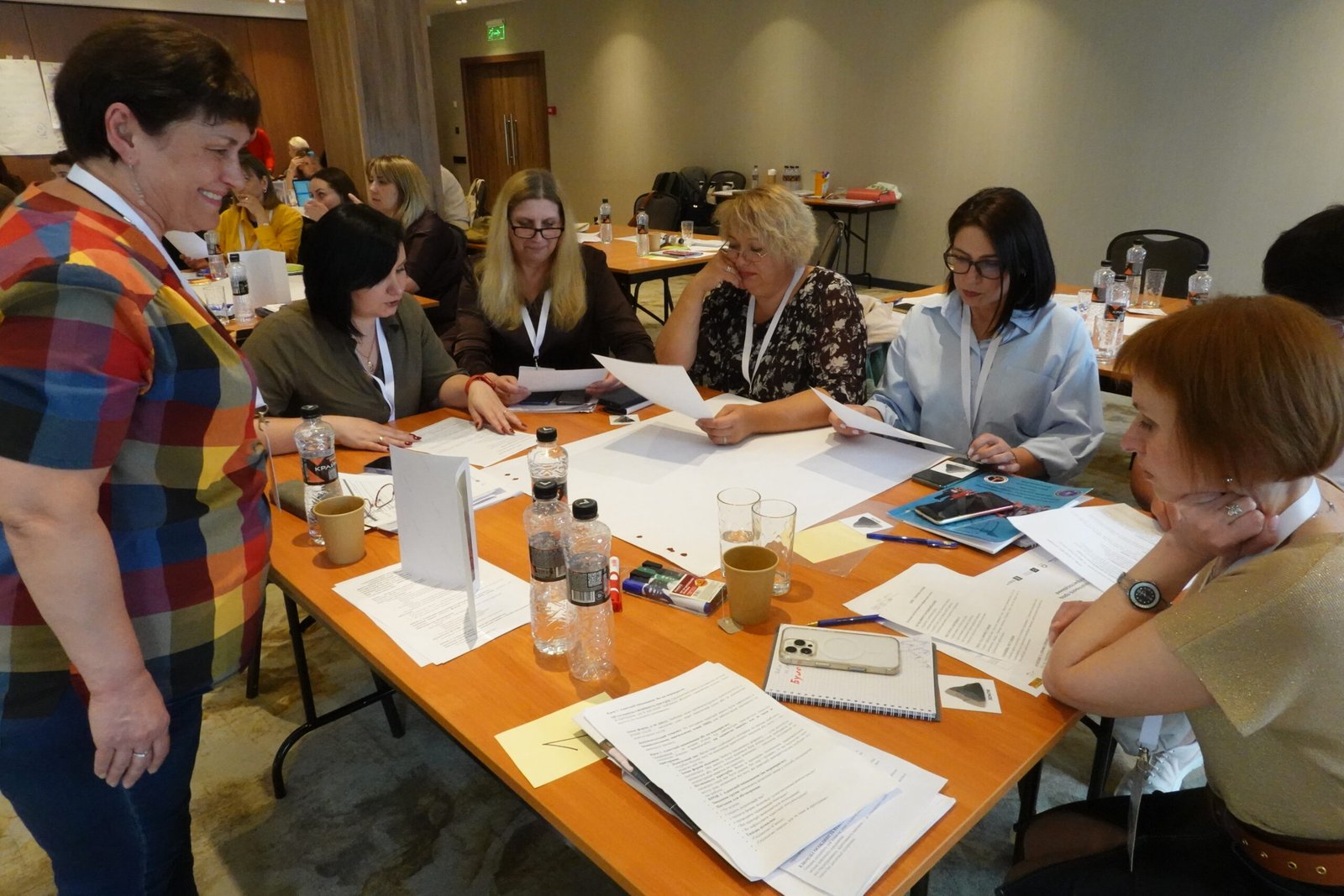
The training sessions took place in Lviv and Kyiv. Teams from VET providers across different regions of Ukraine took part, including directors and other senior administrative staff, teachers, and vocational instructors. In total, the training reached 100 representatives from 19 VET providers.
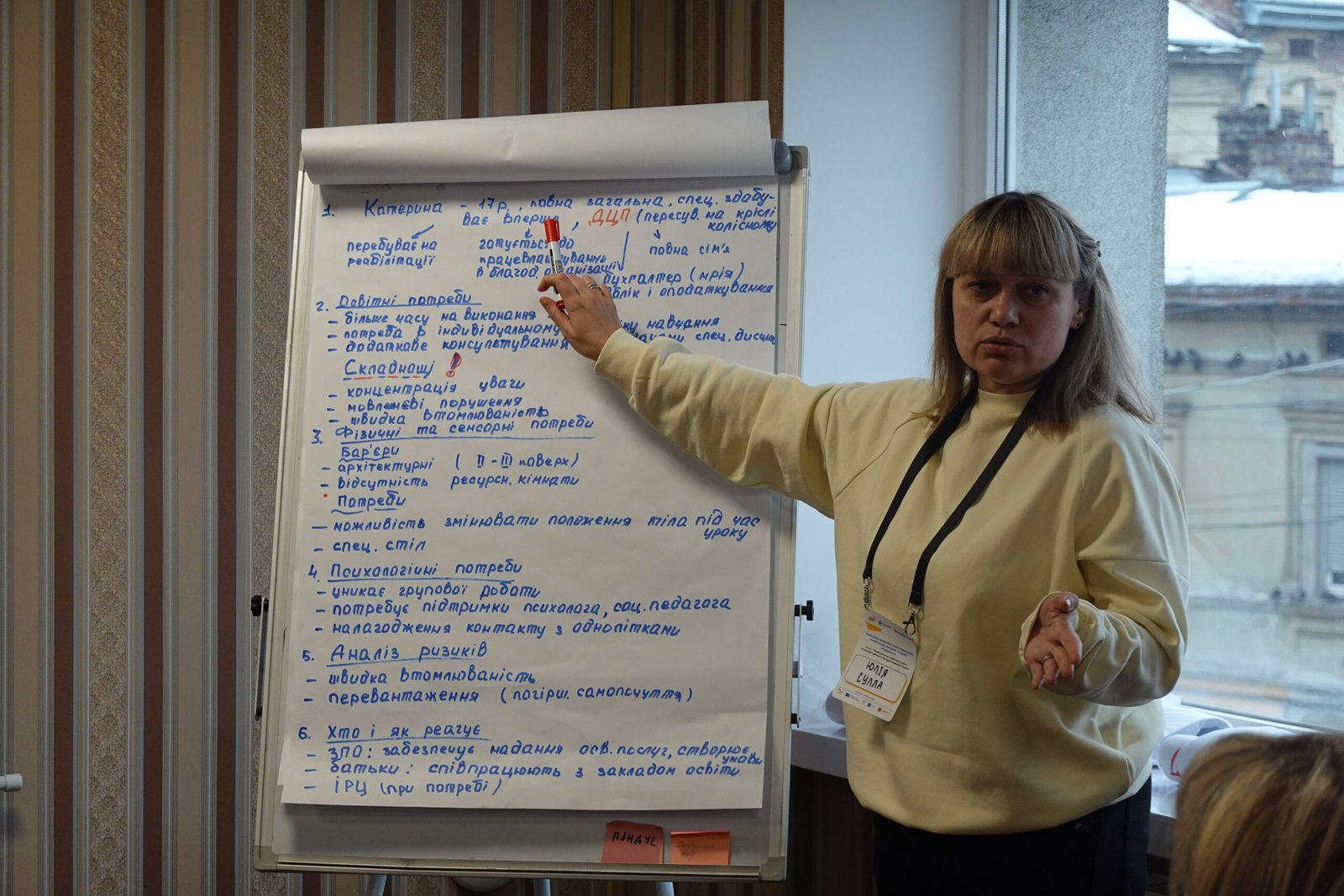
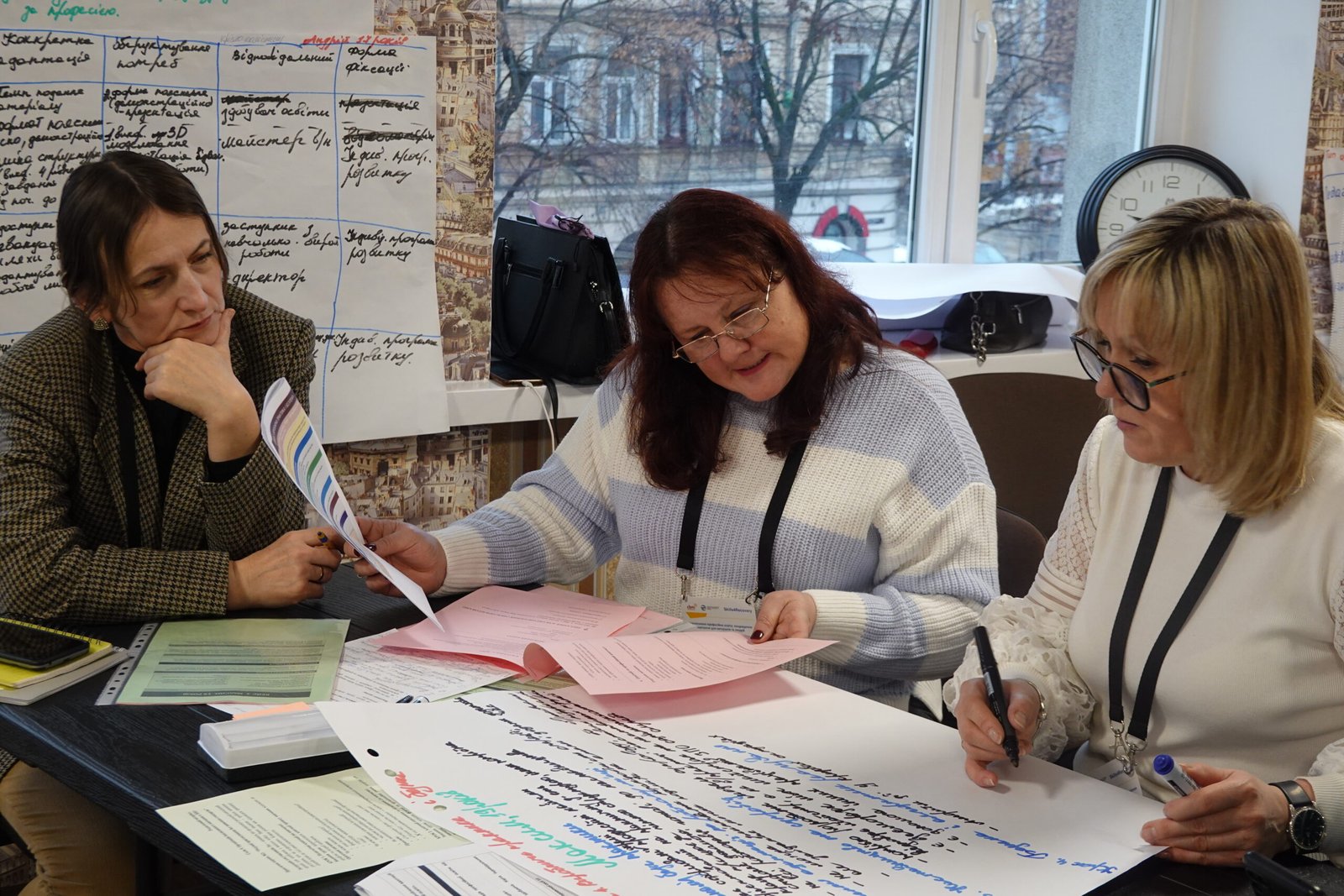
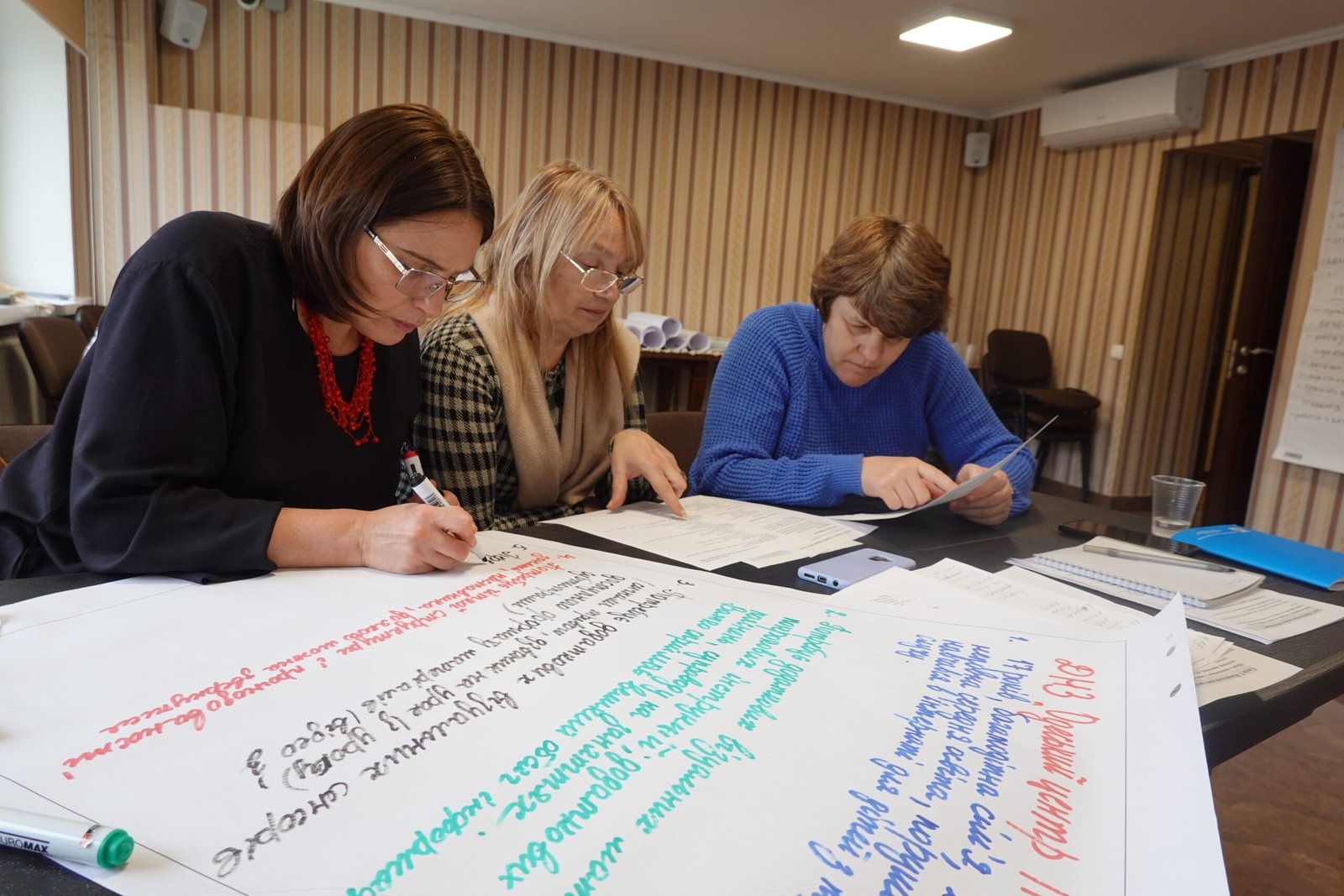
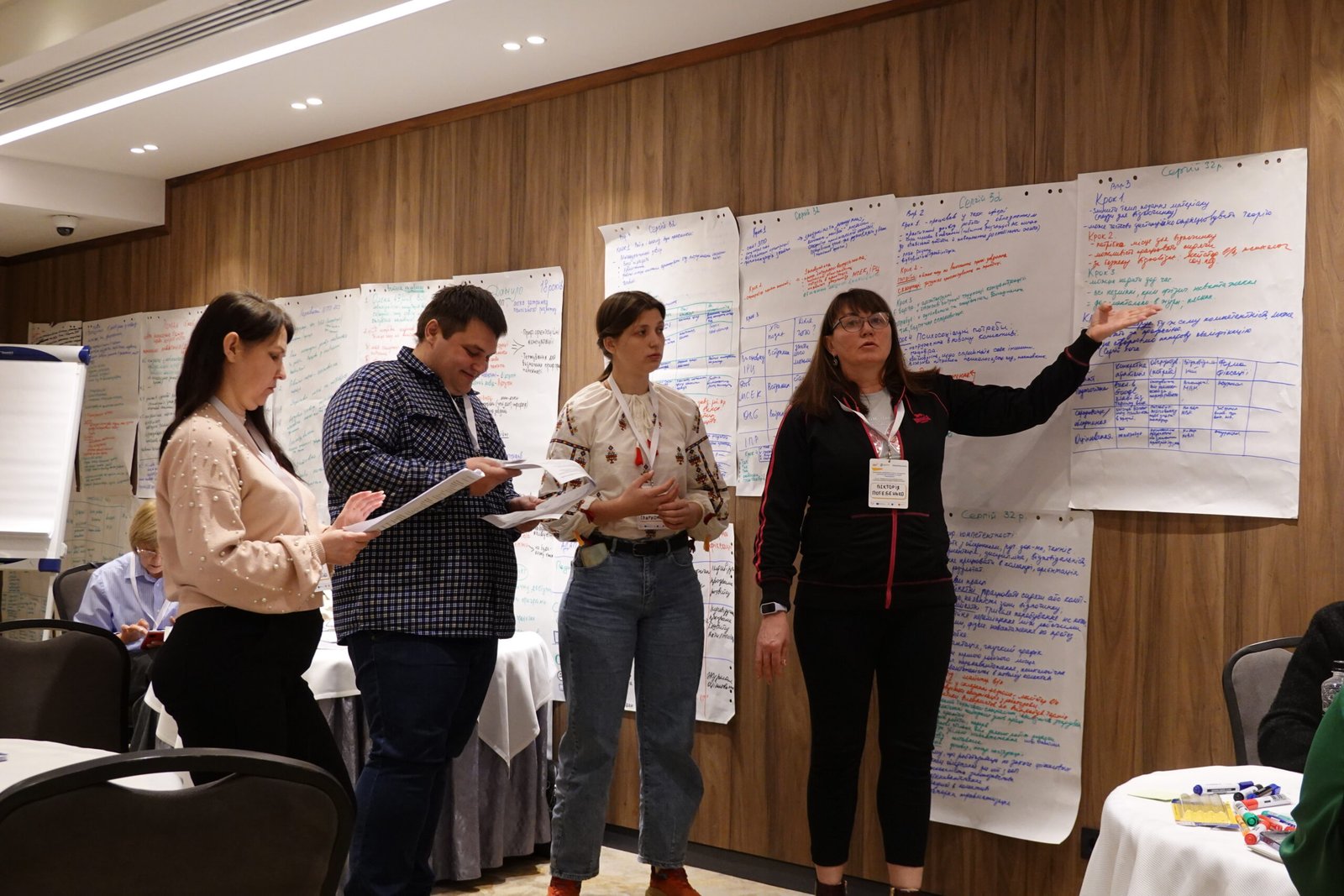
Participants analysed the learner’s entire journey – from initial enquiry and admission, through learning, work placements, and employment. Together, they explored practical questions: how to adapt learning materials, organise the necessary support, make spaces and information more accessible, prepare teaching teams to work with diverse needs, and build cooperation with employers.
Dedicated training sessions focused on inclusive communication and the admissions process, digital accessibility, responding in crisis situations, and working with veterans. In this way, inclusion was approached not as a stand-alone topic, but as an integral part of the VET provider’s work as a whole.
Another important result was a shift in the participants’ own professional perspective. During supervision sessions, educators noted that they had begun to notice barriers they had previously overlooked – in learning materials, presentations, websites, communication, and the overall organisation of the educational process.
One participant described how, after the training, an applicant with a disability came to her VET provider. This time, she no longer felt awkward or tried to be overprotective – she communicated with him as an equal. Her brief reflection summary – “Now I have wings” – captures something that is difficult to measure merely by counting training sessions: a professional’s confidence in their own actions.
The changes were also reflected in concrete actions. Participants began reviewing their own presentations and learning materials, paying closer attention to how information was presented, and checking website accessibility. Some VET providers began establishing internal inclusion teams and holding discussions with colleagues.
The next stage involved supervision, during which professionals brought real-life situations from the VET providers back to the experts, discussed challenging cases, and worked together to find solutions.
It was precisely this sequence: learn → try it in your own VET provider → discuss the experience → adjust the approach → pass the knowledge on to others – that became one of the project’s strengths.
The next step was to prepare professionals who would be able to pass the knowledge they had gained on to colleagues and support the further development of inclusive approaches within VET providers.
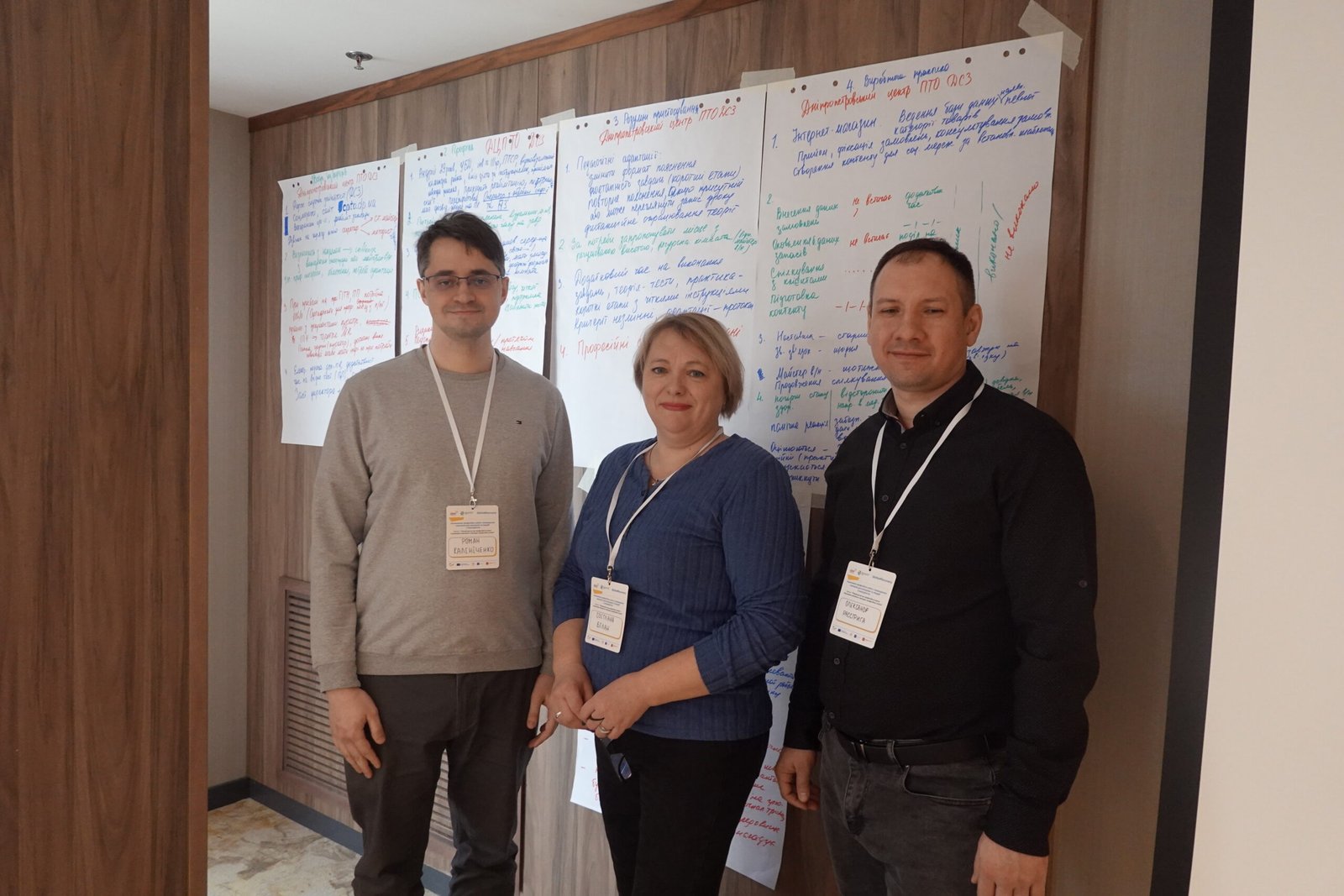
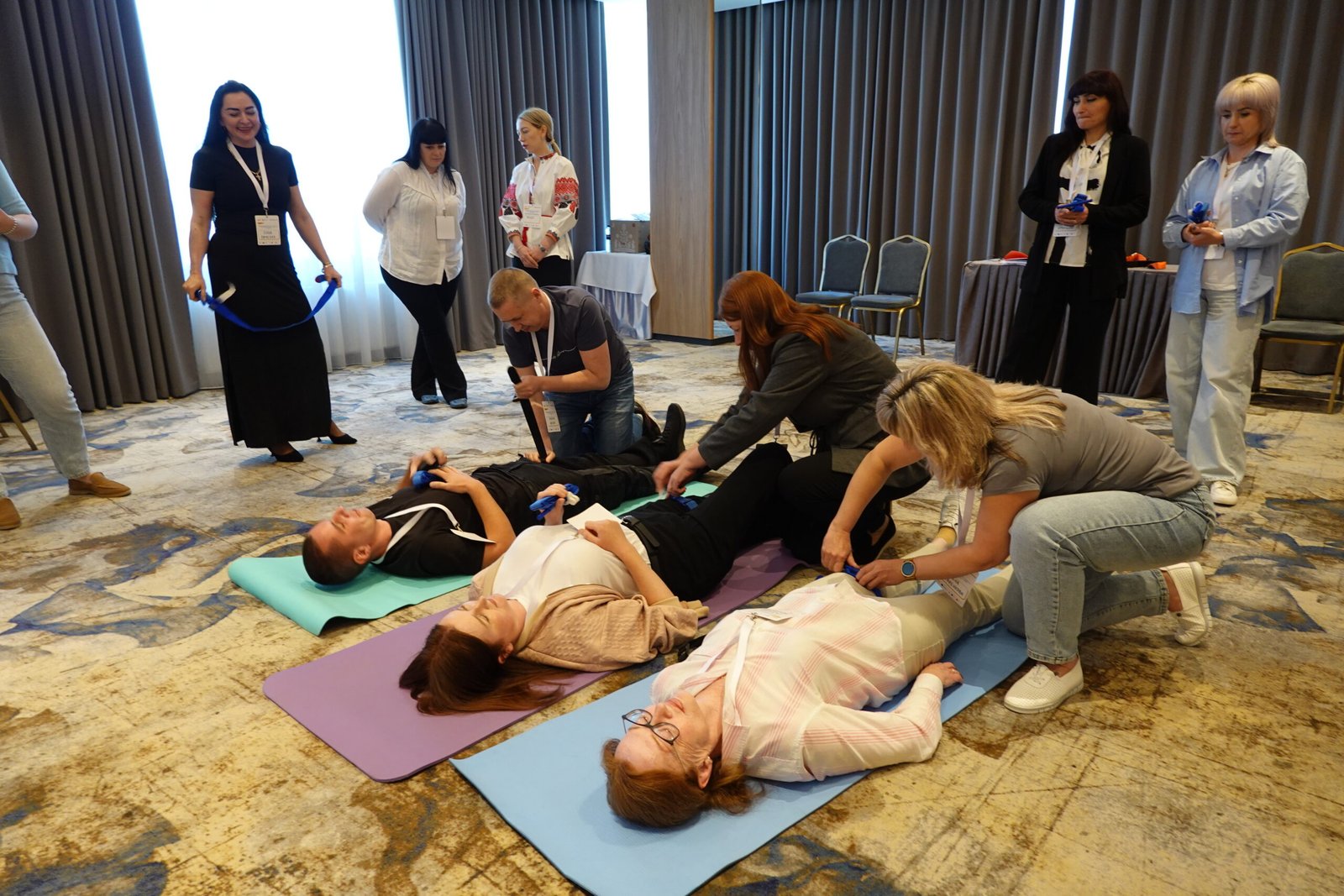
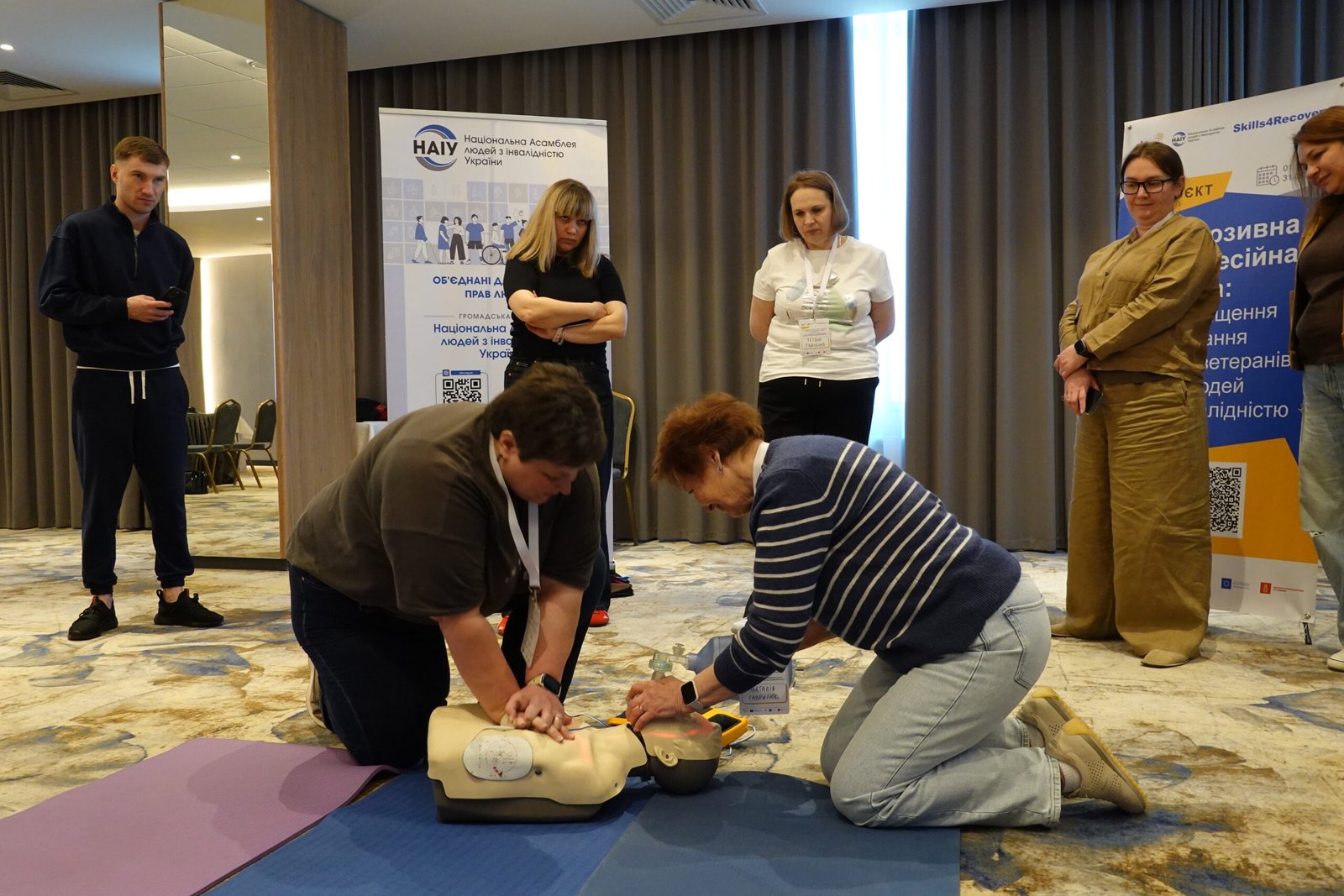
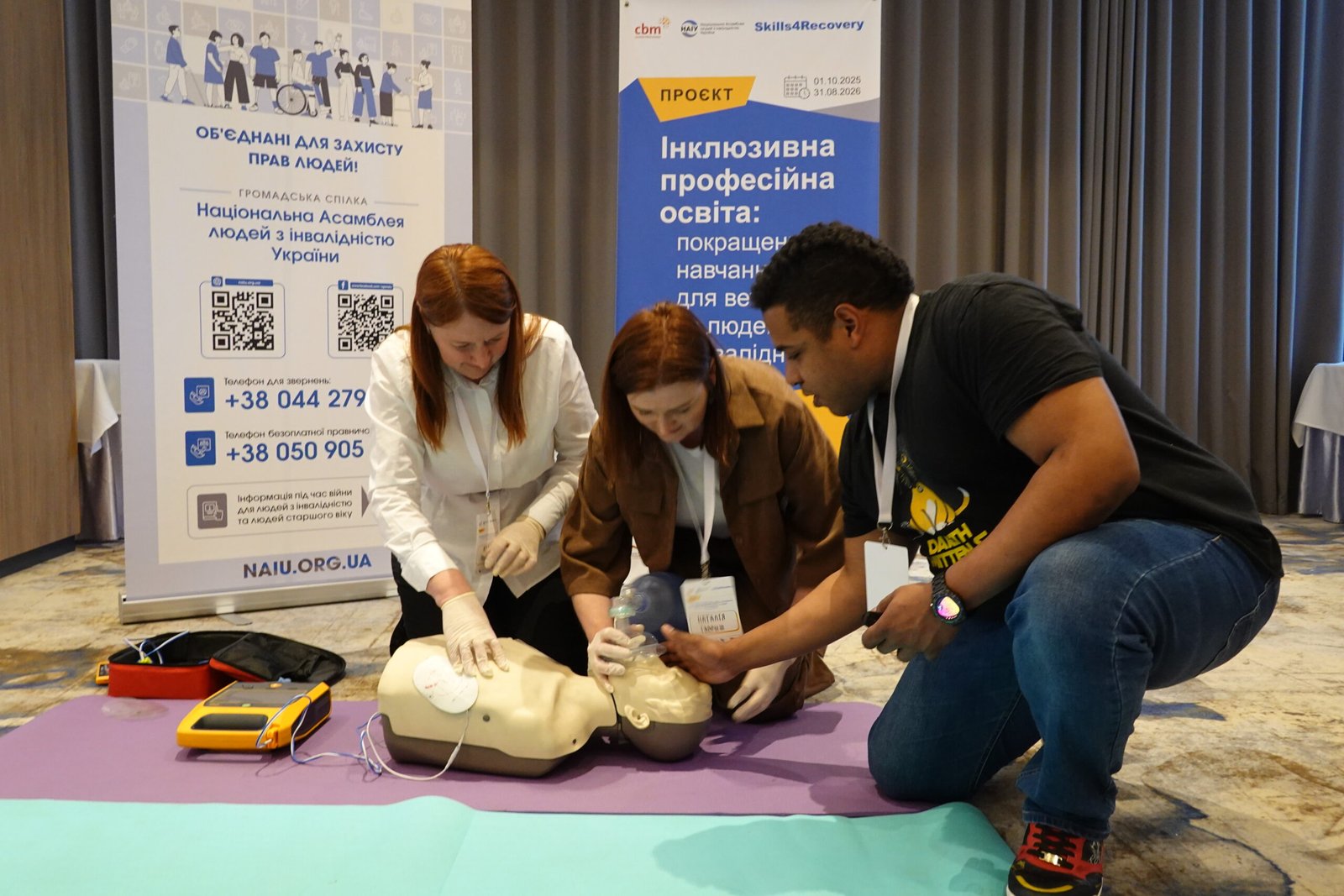
From 3 to 5 June, a training-of-trainers (ToT) workshop on inclusive vocational education and training was held in Kyiv, bringing together representatives from 14 VET providers. Participants were no longer just learning themselves; they were also practising how to train others: delivering segments of training sessions, facilitating group work, structuring material, and explaining complex topics in an accessible way.
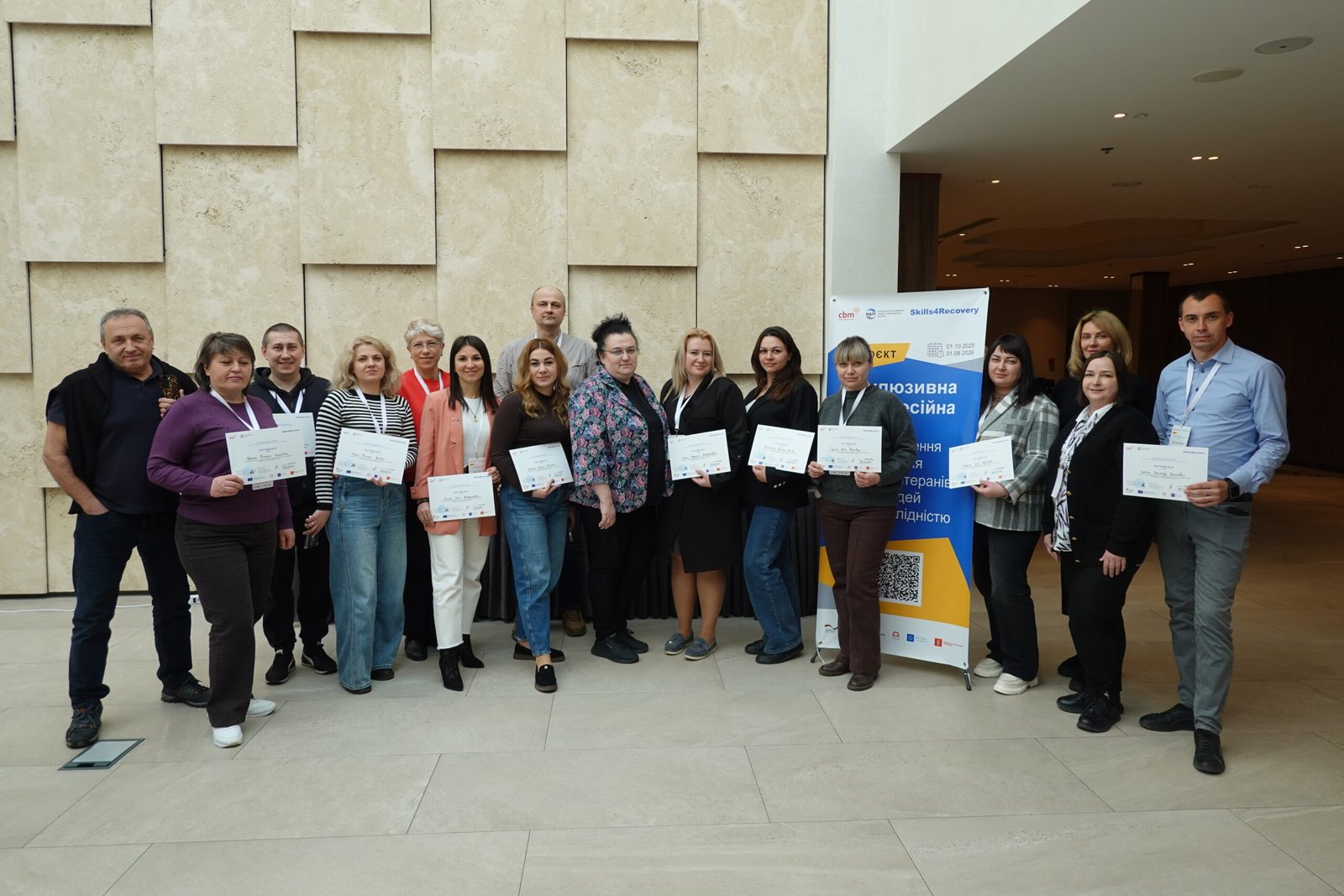
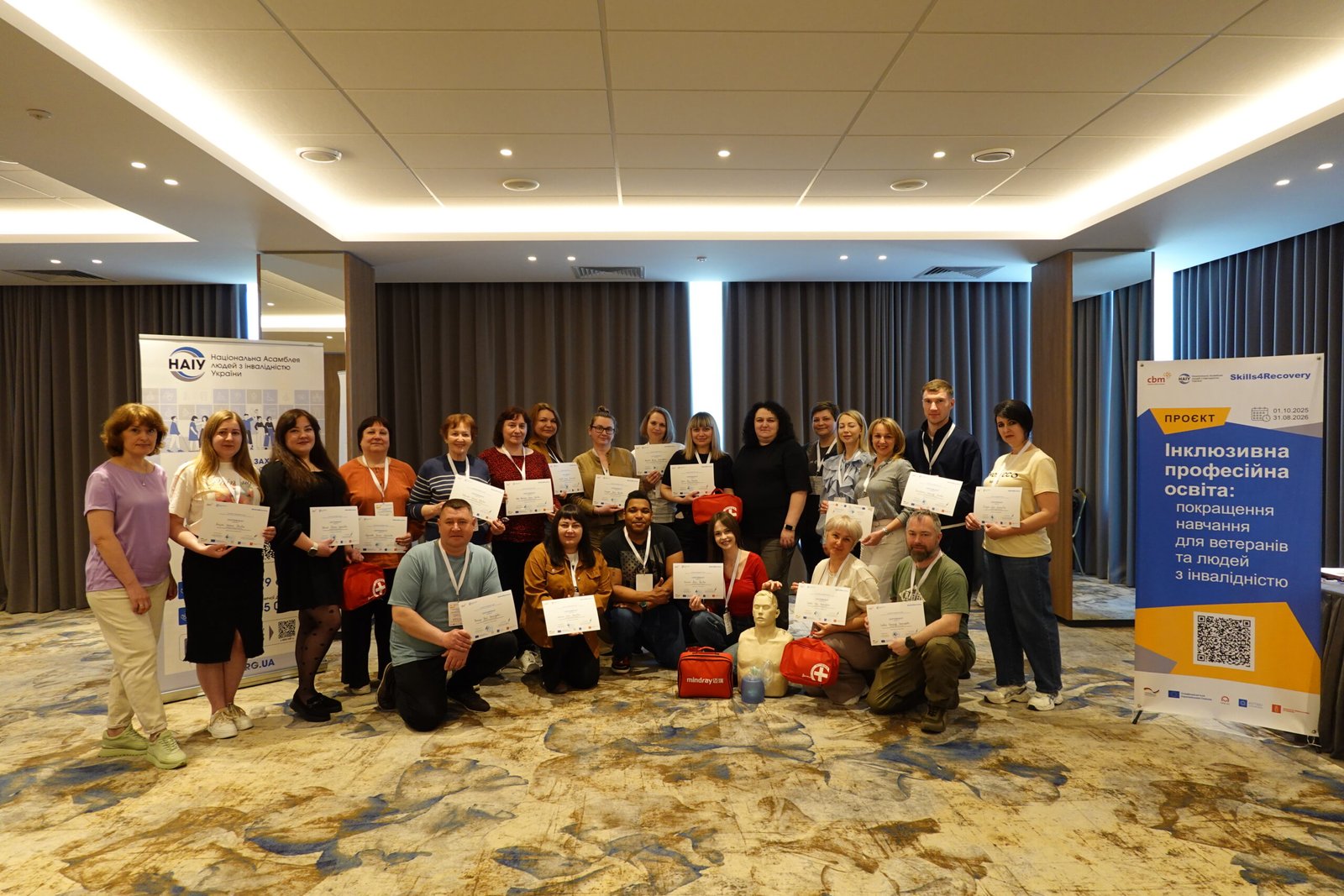
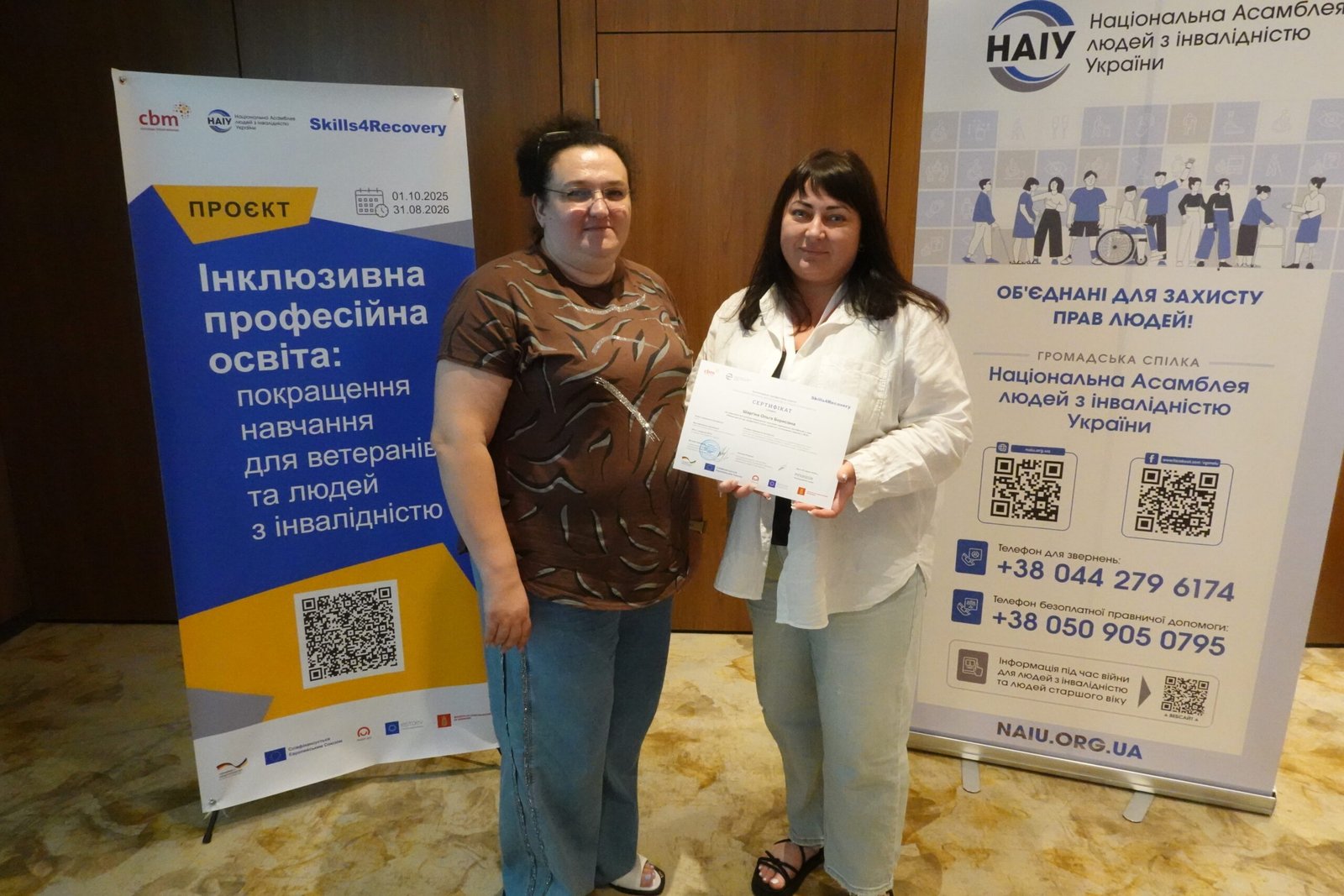
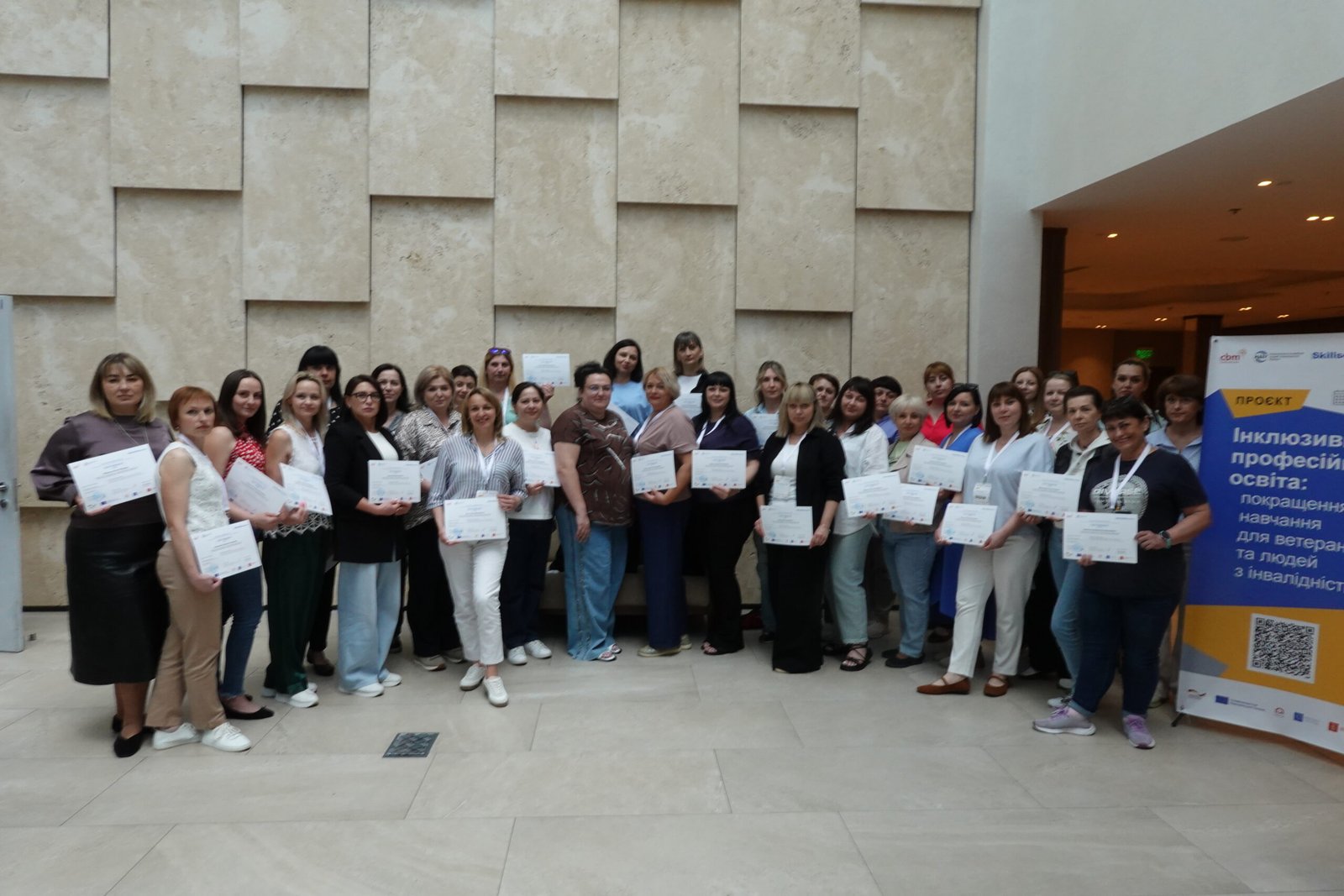
Following the training, 31 professionals received certificates as trainers in inclusive vocational education and training.
These qualified trainers can now train their colleagues and help institutional teams identify solutions to ensure equal access to vocational education and training for people with disabilities and veterans. In this way, the project’s impact will continue to cascade through the VET professional community itself.
One of the project’s key outputs was the creation of a resource base for VET providers – materials that will continue to be used after the project ends.
The six modules address key challenges faced by VET provider teams: ranging from understanding disability, universal design, and inclusive policy to organising learning, providing support during work placements, and preparing learners for employment.
The Guide was not designed to “sit on a shelf.” It enables trainers and VET provider teams to conduct their own training sessions, work through real-world scenarios, and integrate inclusive approaches into daily practice.
As a result, an open-access knowledge base and practical toolkit has been created, allowing professionals to return to these resources whenever they need to analyse a specific situation, identify a barrier, and find a solution.
Ultimately, however, the value of all the tools developed and training delivered is not determined by their volume. What matters is whether they help create real opportunities for people.
One such example is the experience of Kharkiv Vocational Education and Training Centre at the State Employment Service. A group of 10 people with hearing impairments studied there under a hotel service training programme. The necessary support was organised for the learners, and practical classes designed to reflect real working conditions formed an essential part of their training.
The necessary support was organised for the learners, and practical classes designed to reflect real working conditions formed an essential part of their training.
The result: by the time of graduation, seven out of ten graduates were employed.
This experience shows what inclusive vocational education and training is ultimately for: enabling a person not only to learn, but also to acquire vocational skills and make the transition from learning to employment.
The experience of VET providers participating in the project also showed that inclusion does not always begin with major changes or substantial resources. Sometimes the first step is adapting learning materials, using a more accessible form of communication, involving the necessary specialist, changing the way a practical class is organised, or cooperating with an employer.
And sometimes it begins with a simple but fundamentally important question to the person themselves: “What support do you need?”
The project’s experience showed that inclusion cannot be a stand-alone activity or the responsibility of a single trained professional. It must be part of the VET provider’s work as a whole – from the first contact with an applicant through learning, work placements, and employment.
That is why team training, supervision, training of trainers, and the development of practical materials were all part of a single process – helping VET providers identify barriers and find solutions that respond to learners’ needs.
Фінальний захід 27 серпня став можливістю підбити підсумки та обговорити наступний крок — як поширювати напрацьований досвід серед закладів професійної освіти в Україні.
For Skills4Recovery, these results are also important in the broader context of Ukraine’s recovery. Vocational education and training should help people acquire skills that are in demand and enter or return to the labour market; it must therefore be accessible to different population groups, including veterans and people with disabilities.
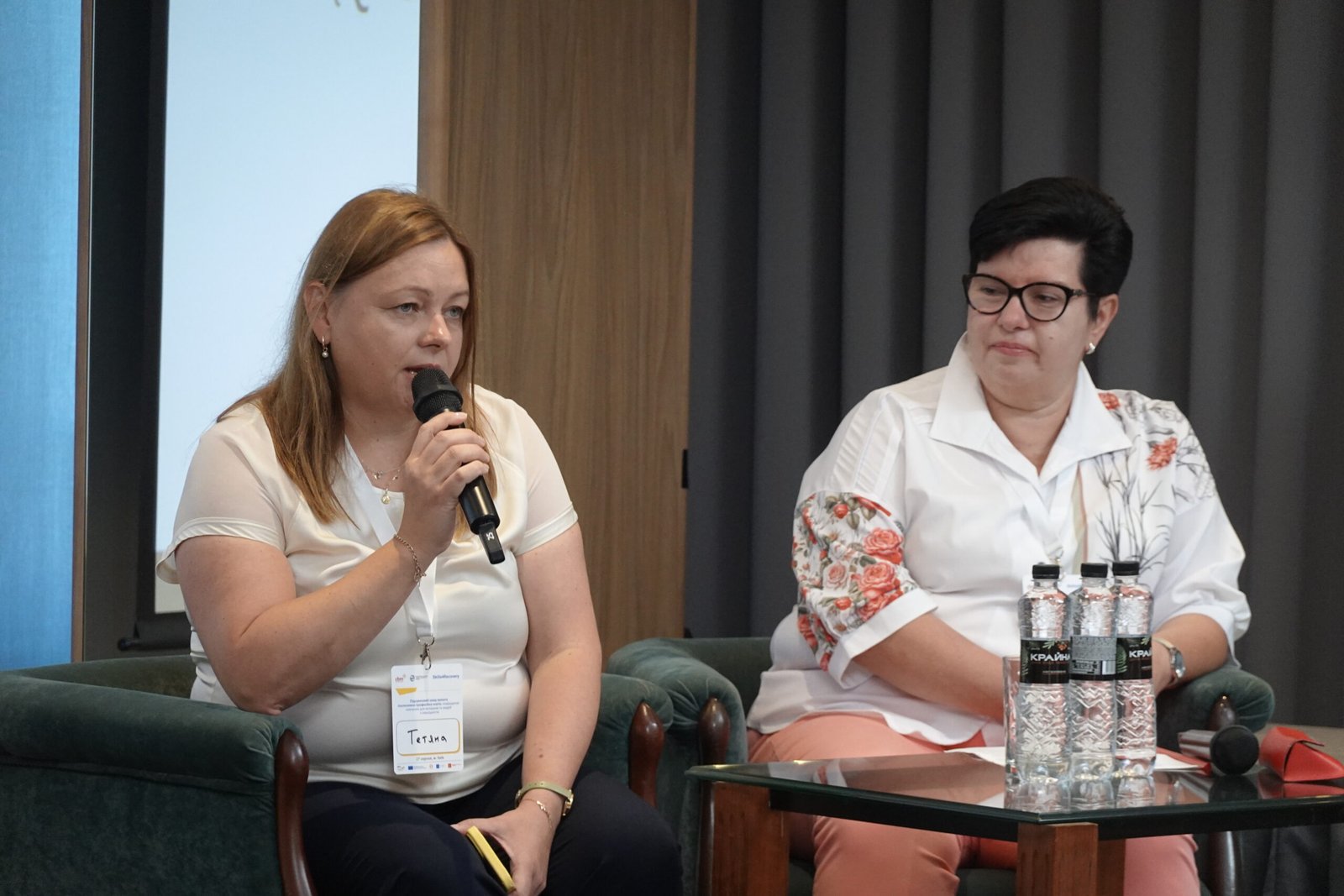
“Inclusive vocational education and training is an important part of Ukraine’s recovery. The knowledge and practical tools developed within the project will help VET providers respond better to the needs of people and the labour market. We hope this project will be the first step towards further cooperation and an even more accessible and inclusive Ukraine,” said Tetiana Dovbush, Skills4Recovery Programme Implementation Adviser, GIZ Ukraine.
У Christoffel-Blindenmission Christian Blind Mission e.V. (CBMemphasises that access to education must be ensured at all levels, as it provides a foundation for the independence and socio-economic participation of people with disabilities.
“Inclusive education is one of CBM’s priorities. It is important for us to support people with disabilities at every stage – from education to professional fulfilment. The opening of a CBM representative office in Ukraine this year also confirms our commitment to long-term cooperation and support for Ukraine,” emphasised Maha Khochen-Bagshaw, CBM Global Inclusive Education Advisor.
NAPD emphasises that it is important for the knowledge and experience gained to be shared further and become part of VET providers’ day-to-day work.
“It is important to us that inclusion should not depend on a single project or one trained person in a VET provider. It must become part of the institution’s culture – from the first contact with a learner through learning, practical training, and employment. The materials developed and trainers prepared through the project make it possible to share this experience further,” said Svitlana Petrusha, NAPD Project Coordinator.
What Remains after the Project
The project has a defined timeframe. The experience gained does not.
After the project ends, trained trainers and professionals will remain, along with practical materials available in open access, the experience of VET providers, and tools that help identify barriers and find solutions.
Most importantly, there is now a shared understanding that inclusive vocational education and training does not mean creating a separate system for separate groups of people. It means education that can take diverse needs into account and give each person an opportunity to learn an occupation and realise their potential.
The project is coming to an end. The work to make inclusive approaches a standard part of vocational education and training in Ukraine continues.
The project “Inclusive Vocational Education and Training: Improving Training for Veterans and People with Disabilities” is implemented by the National Assembly of People with Disabilities of Ukraine (NAPD) in cooperation with Christoffel-Blindenmission Christian Blind Mission e.V. (CBM) with financial support from the European Union, Germany, Poland, Estonia, and Denmark, as part of the Skills4Recovery Multi-Donor Initiative, implemented by Deutsche Gesellschaft für Internationale Zusammenarbeit (GIZ) GmbH and Solidarity Fund PL (SFPL).
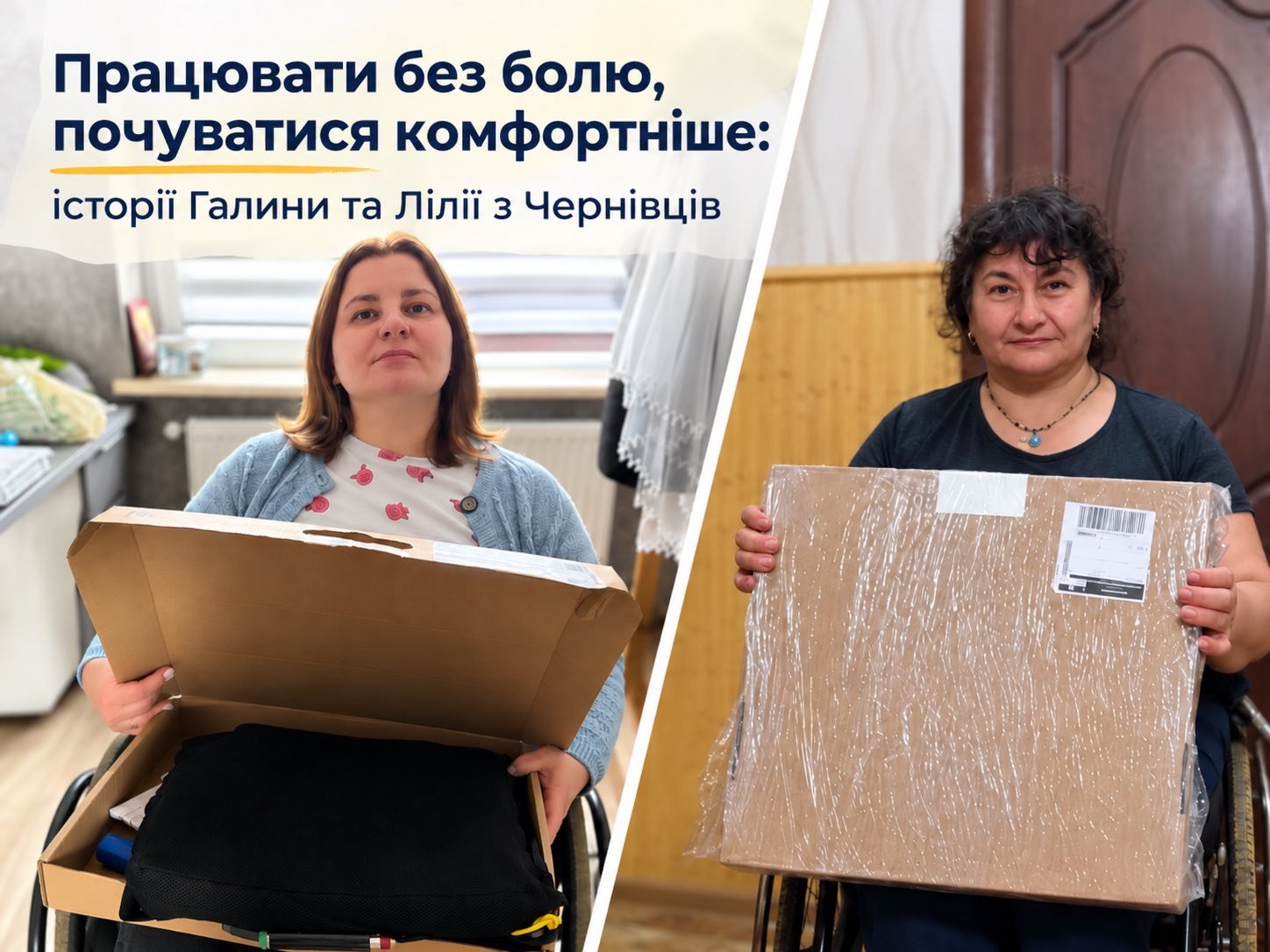
Галина з Чернівців створює весільні аксесуари для наречених. Її робота потребує творчості, терпіння та уваги до найменших деталей. За виготовленням прикрас жінка проводить багато годин, адже кожен виріб вимагає кропіткої ручної праці. Для Галини важливо мати можливість займатися улюбленою справою, однак тривала робота нерідко супроводжується фізичним дискомфортом. Жінка користується кріслом колісним, і через велике навантаження […]
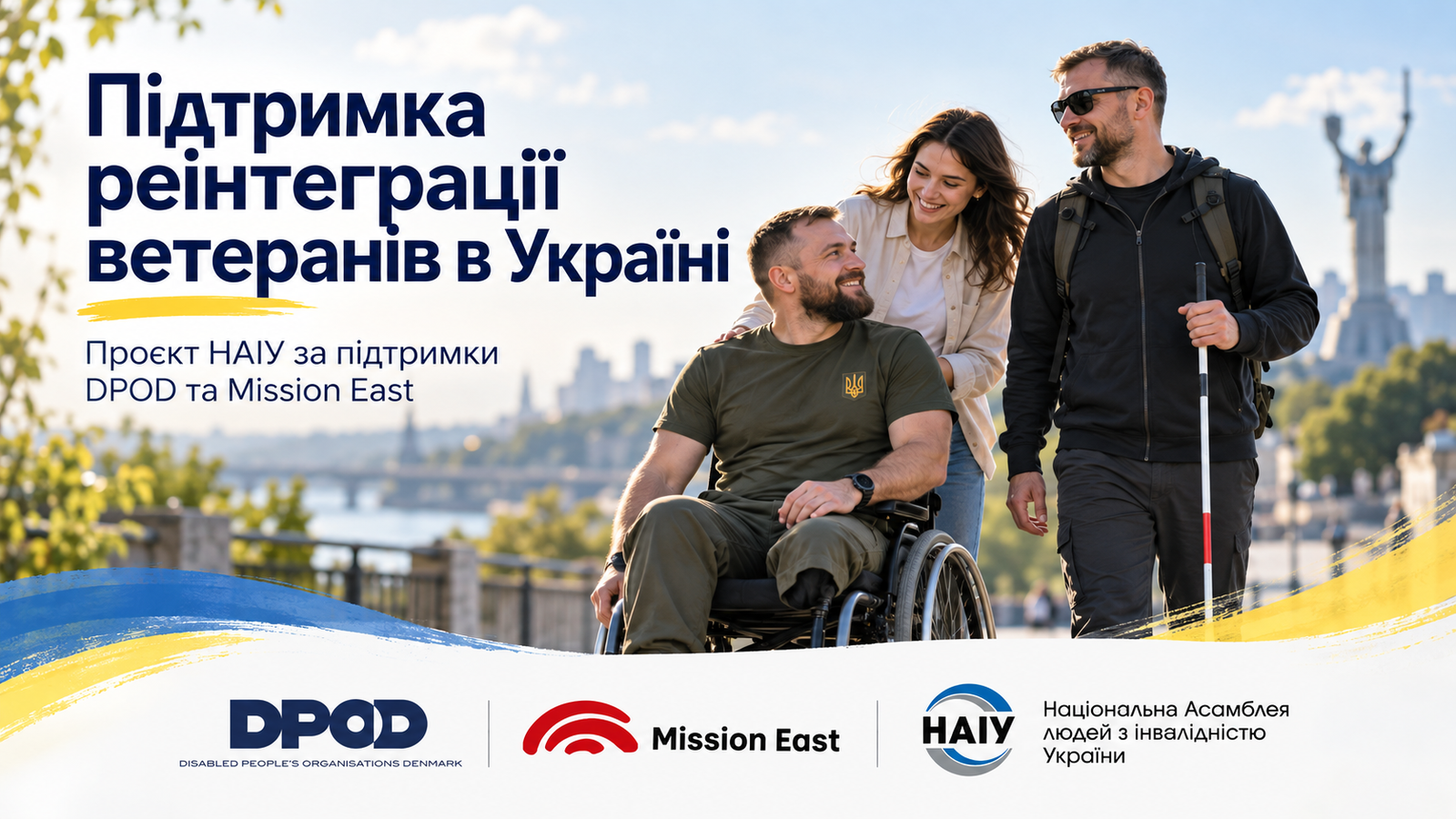
Повернення з військової служби до цивільного життя — це новий етап, який нерідко супроводжується непростими викликами. Особливо для ветеранів і ветеранок, які зазнали поранень або набули інвалідності. Реабілітація, пошук роботи, доступ до послуг, відновлення соціальних зв’язків — усе це потребує не лише особистих зусиль, а й підтримки суспільства. Національна Асамблея людей з інвалідністю України (НАІУ) […]
Упродовж програмного року — з 1 жовтня 2025-го до 30 вересня 2026-го — на гарячій лінії Національної Асамблеї людей з інвалідністю України (НАІУ) було надано 821 консультацію для 680 осіб. Найчастіше люди зверталися за роз’ясненням щодо своїх прав і пільг, зокрема отримання та поновлення виплат, оформлення догляду, встановлення й переоформлення інвалідності. Близько 70% звернень стосувалися […]
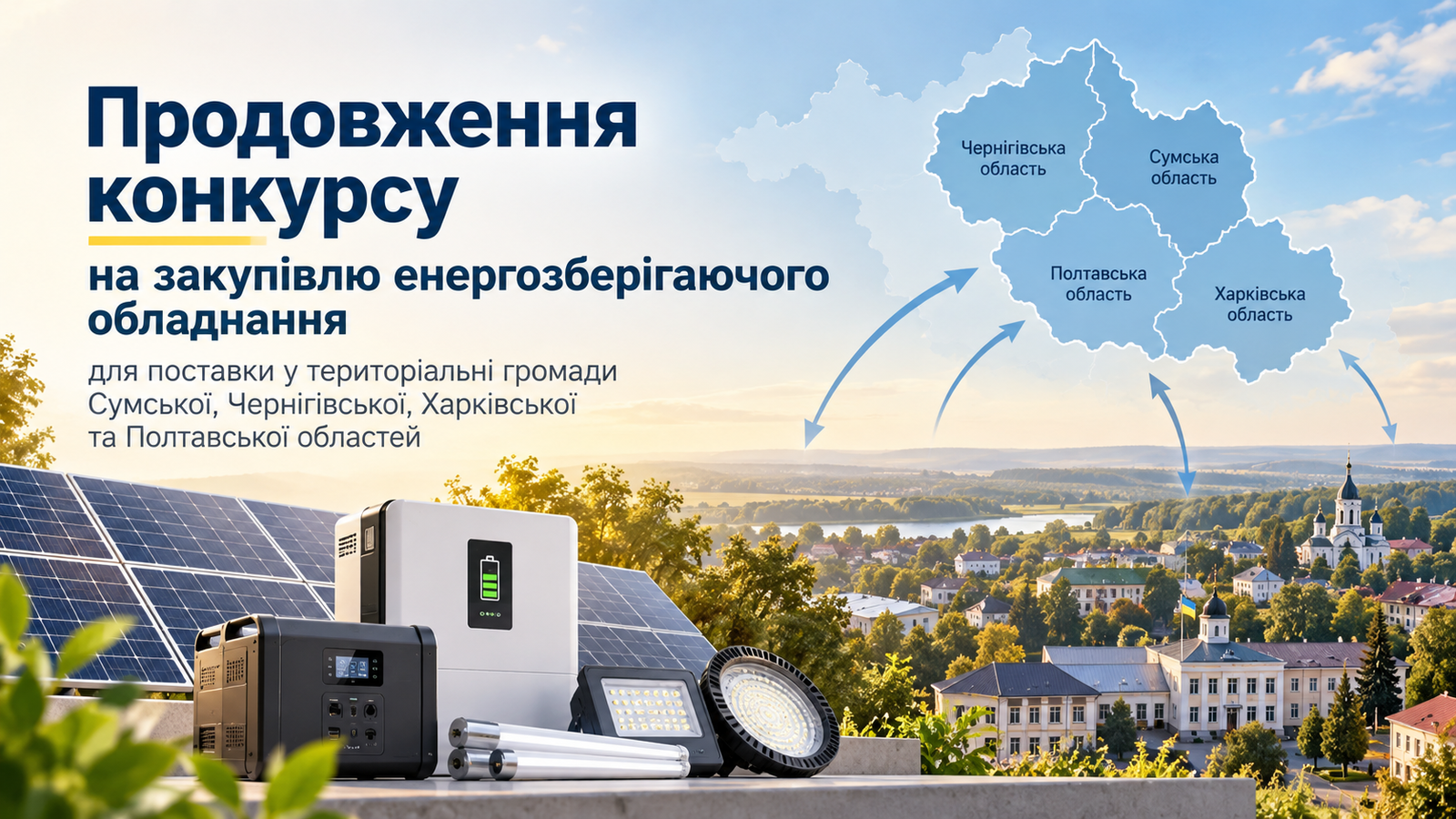
Громадська спілка “Всеукраїнське громадське об’єднання “Національна Асамблея людей з інвалідністю України” (далі – «Організатор») оголошує продовження конкурсу на закупівлю енергозберігаючого обладнання для поставки у територіальні громади Сумської, Чернігівської, Харківської та Полтавської областей. Джерело фінансування закупівлі: Дана закупівля здійснюється в рамках проєкту «Зміцнення інклюзивних послуг з охорони здоров’я, реабілітації та захисту населення, постраждалого від повномасштабного вторгнення в […]
2 вересня 2026 року Генеральна Асамблея ООН ухвалила резолюцію 80/305 «Доступ до асистивних технологій». Це важливий крок до того, щоб технології, які допомагають людям навчатися, працювати, спілкуватися та жити самостійно, стали доступнішими в усьому світі. Сьогодні понад 2,5 мільярда людей потребують асистивних технологій. Це, зокрема, крісла колісні, слухові апарати, засоби комунікації та інші пристрої, які […]
НАІУ продовжує цикл матеріалів про локальні адвокаційні ініціативи членських і партнерських організацій за підтримки та фінансування Disabled People’s Organisations Denmark (DPOD). П’ята історія — про досвід запорізької ГО «СИЛА РОЗВИТКУ», яка порушила питання доступності паркувального простору та відповідального паркування. Паркомісце для людини з інвалідністю — це не просто питання зручності. Якщо воно зайняте, неправильно облаштоване […]