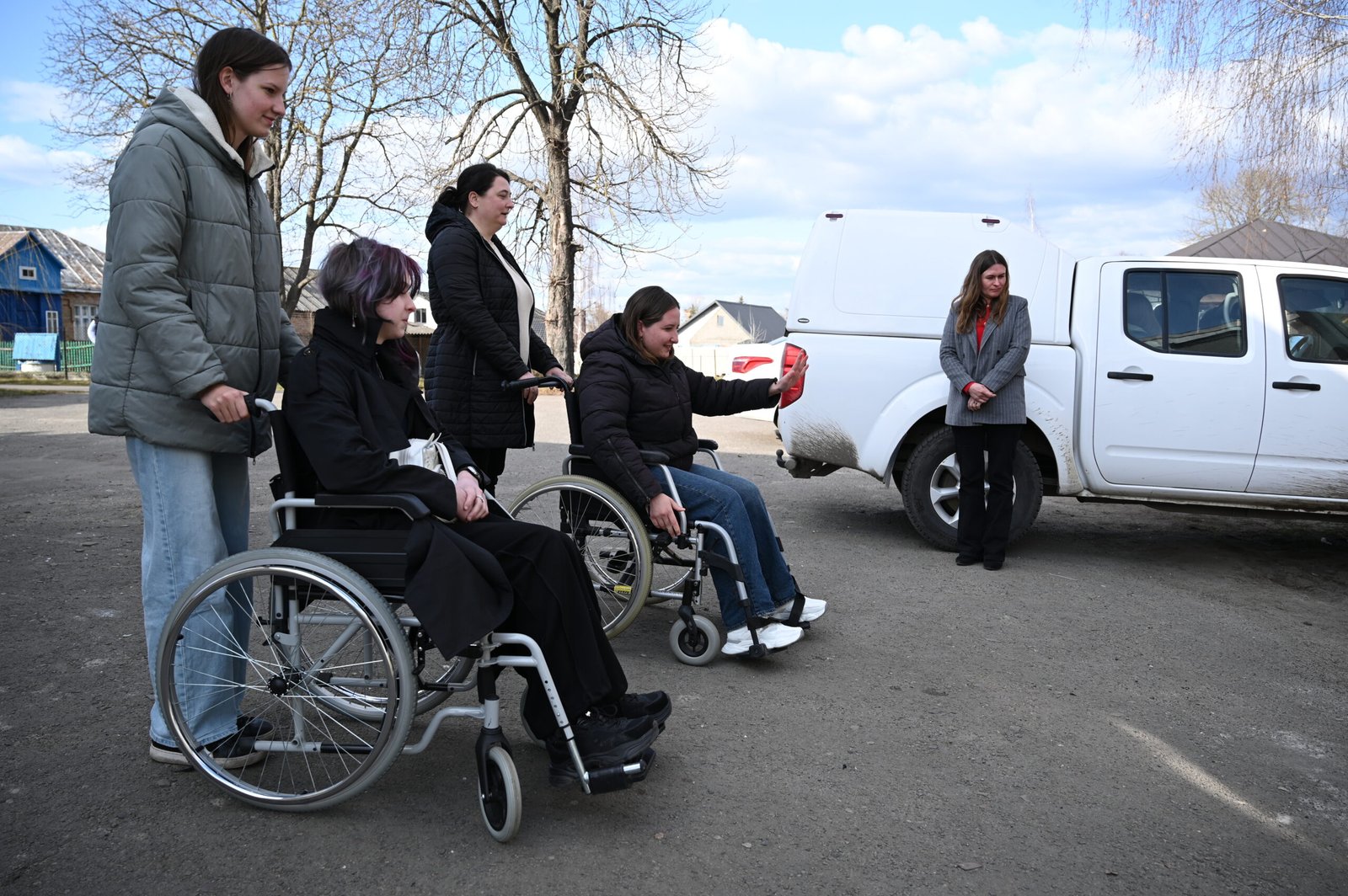
Roman is a 28-year-old resident of Rozhyshche, a town in the Volyn region. Due to a progressive chronic illness, he uses a wheelchair and has a second-degree disability status. “I used to barely leave the house. But now, thanks to the people who support me, I have the opportunity to be among others,” he says.
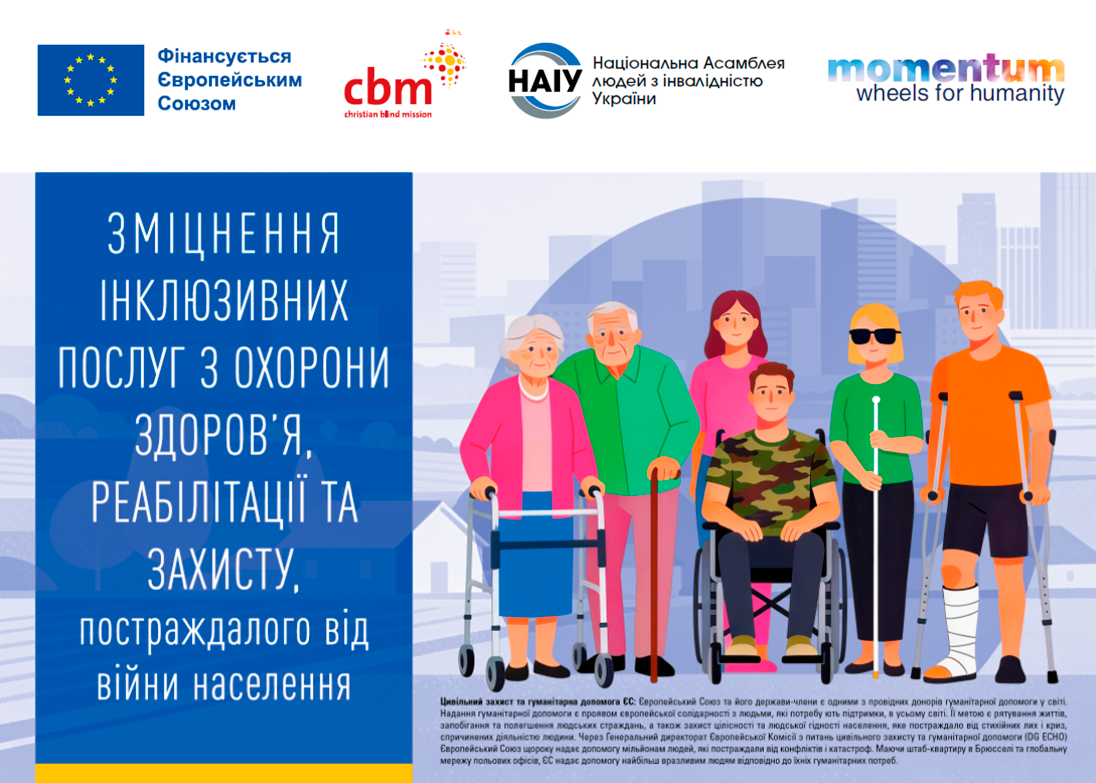
Roman is one of the beneficiaries of the project “Multisectoral Humanitarian Assistance for IDPs, Returnees, Veterans, and Their Host Communities in Ukraine.” This initiative not only provides financial and technical support to people with disabilities but also creates conditions for their full inclusion in community life. Socialization is a strategic goal of the project, allowing people to return to active life, feel their significance, and see their impact.
Socialization happens through the creation of an inclusive environment where each person not only receives assistance but also interacts with the community members, doctors, specialists, and local authorities. This model breaks down barriers of isolation and fosters a sense of belonging. Participation in community life—such as attending events, checking accessibility of public spaces, or joining advocacy campaign planning—enables a person with a disability to feel like an active agent of change rather than a passive recipient of services.
An essential component is also the building of social connections. New acquaintances, informal communication with coordinators, medical staff, and other participants all help to form a supportive environment where a person can share experiences and receive understanding and encouragement.
Another crucial element is the strengthening of agency—the process by which a person begins to recognize their own ability to influence events. When people with disabilities take part in accessibility monitoring or in the development of community initiatives, they shift from the role of “aid recipient” to that of “change-maker.” This not only supports inclusion but also transforms communities—making them more open, humane, and united.
Together with a team of doctors, Roman began rehabilitation using modern equipment provided to Rozhyshche Multidisciplinary Hospital by the National Assembly of People with Disabilities of Ukraine (NAPD) as part of another humanitarian initiative. A professional team of specialists supports him not only physically but emotionally as well. “When I lost the ability to walk, the future seemed uncertain. But now I believe: I’ll be able to stand on my feet again,” Roman shares.
Today, Roman is not only returning to an active life but is also participating in shaping change. One of the events he took part in was the opening of the Youth Center in Rozhyshche. “I used to barely leave the house. But now, thanks to the people who support me, I can be among others. I've discovered many new things, new opportunities, and meaningful connections.”
Roman is now also involved in planning an advocacy campaign aimed at strengthening the rights of people with disabilities in his community. His personal experience, insights into the problems, and proposed solutions will become an important part of this work.
Oleksandra Perkova
Communications Manager of the Project
Національна Асамблея людей з інвалідністю України долучається до нового гуманітарного проєкту, спрямованого на те, щоб люди з інвалідністю та інші вразливі групи мали кращий доступ до медичних, реабілітаційних і захисних послуг у своїх громадах. Проєкт реалізується за фінансування Європейського Союзу через Генеральний директорат Європейської Комісії з питань цивільного захисту та гуманітарної допомоги. Загальний обсяг гуманітарного […]
The project “Disability-Inclusive Multisectoral Humanitarian Assistance for IDPs, Returnees, Veterans and Host Communities in Ukraine” was ambitious and complex from the very beginning, both in its structure and scale. The project was implemented by the National Assembly of People with Disabilities of Ukraine in partnership with the European Disability Forum, with the support of the German Federal Foreign Office and CBM (Christian Blind Mission).
У Рожищенській громаді Волинської області триває адвокаційна кампанія «Громади для всіх: разом із людьми з інвалідністю створюємо зміни». Її мета — формування інклюзивного середовища, у якому люди з інвалідністю мають рівний доступ до послуг, простору та участі в житті громади. Кампанія «Простір рівних: Від культури спілкування до стандартів доступності» спрямована на підвищення обізнаності мешканців, зокрема […]
В Опішнянській громаді відбулася друга зустріч у межах адвокаційної кампанії «Громади для всіх: разом із людьми з інвалідністю створюємо зміни», присвячена доступності укриттів. У фокусі обговорення були не лише фізична доступність, а й зрозуміла навігація, яка допомагає швидко орієнтуватися у просторі під час надзвичайних ситуацій. Захід організувала громадська організація «Полтавське міське громадське об’єднання осіб з […]
Пані Тетяна, яка проживає у Карлівській громаді на Полтавщині, має інвалідність І групи внаслідок онкологічного захворювання. Жінка щодня стикається з викликами, пов’язаними зі станом здоров’я, і водночас знаходить ресурси підтримувати звичний ритм життя. Кожен день пані Тетяна наповнює важливими для себе справами: прогулянками на природі, можливістю побути на свіжому повітрі, спілкуванням із друзями та близькими. […]
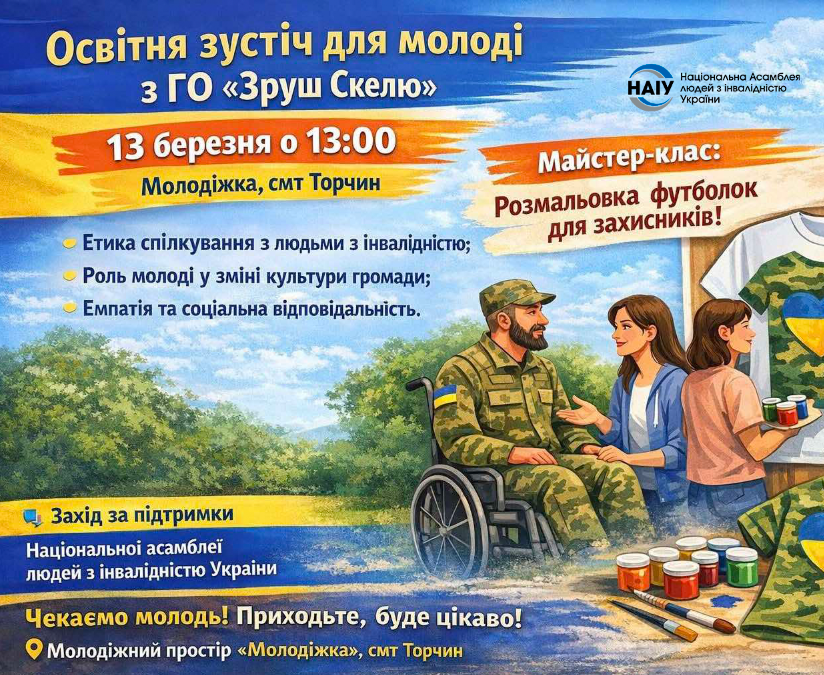
У Торчинській селищній територіальній громаді Волинської області розпочинається адвокаційна кампанія «Гідність поруч: громада без бар’єрів для ветеранів та людей з інвалідністю», спрямована на формування культури поважного та коректного ставлення до людей з інвалідністю, зокрема ветеранів війни. Ініціатива має на меті не лише підвищити обізнаність мешканців громади щодо потреб ветеранів та людей з інвалідністю, а й […]