The project “Disability-Inclusive Multisectoral Humanitarian Assistance for IDPs, Returnees, Veterans and Host Communities in Ukraine” was ambitious and complex from the very beginning, both in its structure and scale. The project was implemented by the National Assembly of People with Disabilities of Ukraine in partnership with the European Disability Forum, with the support of the German Federal Foreign Office and CBM (Christian Blind Mission).
The project’s goals and objectives required simultaneous work in multiple directions — from rapid humanitarian response to building long-term solutions in communities where stable cooperation mechanisms between social services, healthcare institutions, and local authorities were sometimes absent.
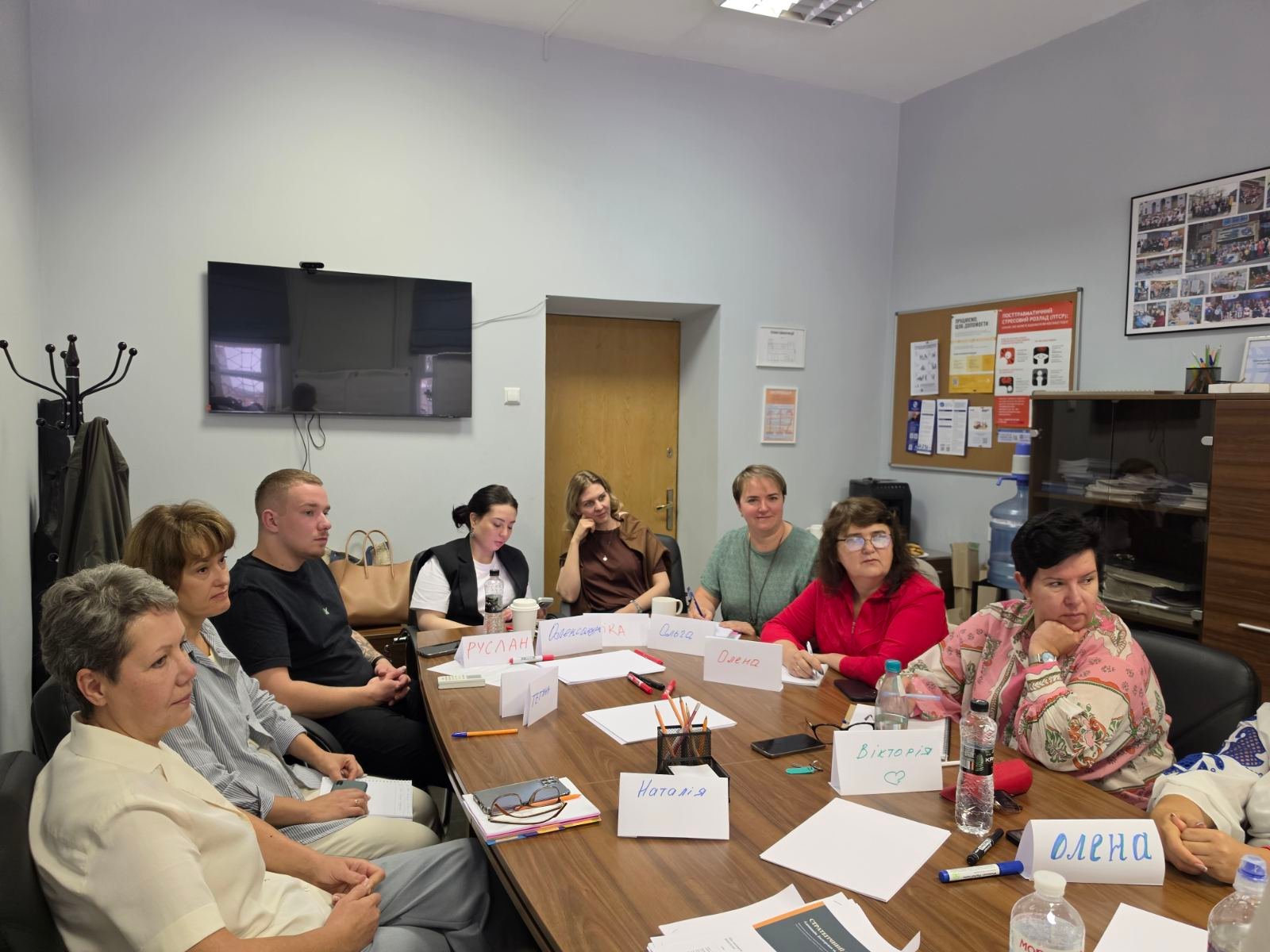
Throughout the implementation process, a system was gradually built that made it possible not only to provide assistance, but also to truly listen to people in different life situations — taking into account their individual needs, experiences, and the barriers they face. This applied equally to people with disabilities, veterans, internally displaced persons, and members of host communities.
In practice, the project became an attempt to combine humanitarian response with a constant local presence in communities, where it was important not only to deliver aid, but also to understand the context in which people live. This approach gradually helped build trust and ensured that the voice of every person with a disability could be heard in the planning and implementation of support activities.
Volyn Region: From Distrust to Systemic Cooperation
Coordinator Nina Pakhomiuk describes the changes as a deep transformation of trust and cooperation:
“If we remember the beginning of the project, we faced a lack of information both among community members and local authorities. There were many doubts about whether the assistance was real and whether it was truly accessible for people with disabilities. But by 2026, we see a completely different picture — the project has become recognizable and well understood within communities.”
Ms. Pakhomiuk emphasizes that the project became a unifying platform for different institutions:
“Today we see real cooperation: local self-government bodies, social services, educational institutions, and healthcare facilities have all started working in a more coordinated way. People with disabilities are no longer left alone with their challenges — they are referred to us so they can receive comprehensive support.”
She also highlights the social impact of the project:
“It is very important that people, especially those living alone, have become less isolated. They started feeling that they are not forgotten and that they are part of the community.”
Poltava Region: Trust as the Foundation for Change
Coordinator Iryna Tverdokhlib focuses on how attitudes within communities evolved over time:
“At the beginning, people asked many questions and even doubted whether the assistance was real. That reaction was understandable because there was a lot of distrust. But gradually, once communities saw that all commitments were fulfilled, attitudes changed dramatically. Today there is a clear understanding: if the project promises something, it delivers.”
She particularly stresses the importance of the advocacy component:
“We did not only provide assistance — we taught people advocacy. This enabled them to start influencing decisions within their communities themselves. People with disabilities began speaking about their needs more openly and confidently.”
The coordinator also points to practical outcomes:
“Communities introduced transportation support solutions for people who regularly travel for chemotherapy, radiation therapy, or rehabilitation. These issues are now being discussed by local authorities as systemic needs rather than one-time interventions.”
Chernivtsi Region: Advocacy that Changes Spaces
Coordinator Valentyna Dobrydina emphasizes that the key result was improved accessibility:
“There were communities where accessibility issues had remained unresolved for many years. But when we brought together people with disabilities, veterans, activists, and started systematically working with local authorities, the situation finally moved forward. Ramps started appearing, infrastructure improved — these became real changes, not just plans.”
She also highlights the importance of visibility:
“We identified many people with disabilities living in remote villages who had previously been unknown to social services. This is extremely important because these people had effectively remained outside the support system.”
Speaking about the scale of assistance, she adds:
“Overall, around 4,000 people received support within the project, and a significant number of them had never previously been reached by any assistance programs. This demonstrates how significant the hidden needs within communities really are.”
One of the final and most important stages of the project in 2026 was the implementation of advocacy campaigns. These campaigns focused on improving access to healthcare services, promoting respectful communication with people with disabilities and veterans, developing barrier-free environments, strengthening inclusive culture within communities, and increasing the accessibility of social infrastructure.
Over time, the project evolved from emergency humanitarian response into a broader process of inclusive transformation. Its key achievement was not only the provision of assistance, but also the creation of conditions in which communities themselves began implementing inclusive practices, changing approaches to service planning, and involving people with disabilities in decision-making processes.
Although the project has now been completed, the work continues. Over the years, communities have built strong teams of professionals and like-minded people who remain committed to creating further positive change.
Oleksandra Perkova, Communications Manager of the Project