Vocational Education as a New Start: Third Training for Education Providers’ Teams Takes Place in Kyiv
17 March 2026
Share:
The third of four training sessions within the project on inclusive vocational education is currently taking place in Kyiv. This session focuses on how vocational education and training (VET) providers can respond to the challenges of war, internal displacement, and veterans’ reintegration, ensuring that learning is genuinely accessible for persons with disabilities and all learners requiring additional support.
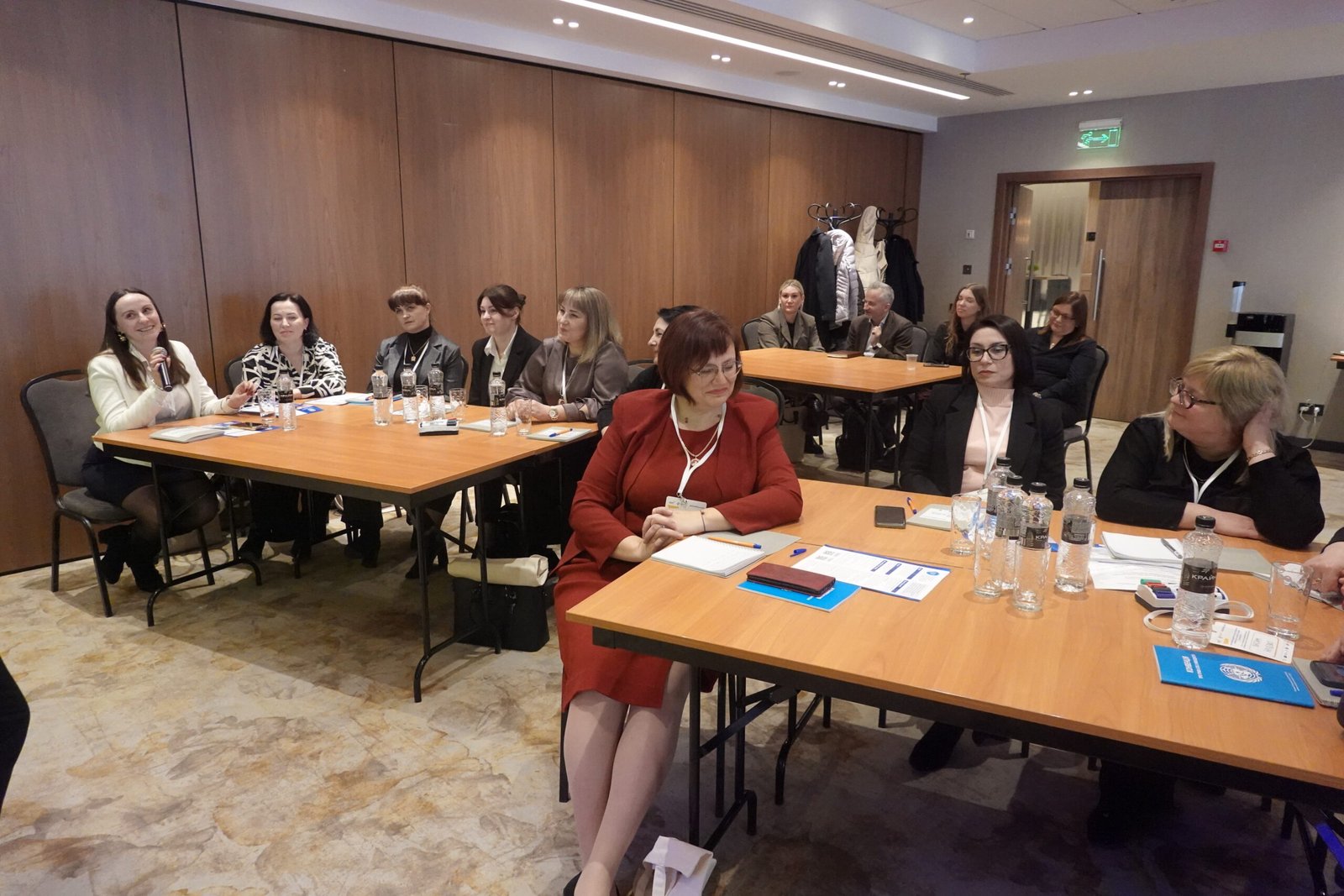
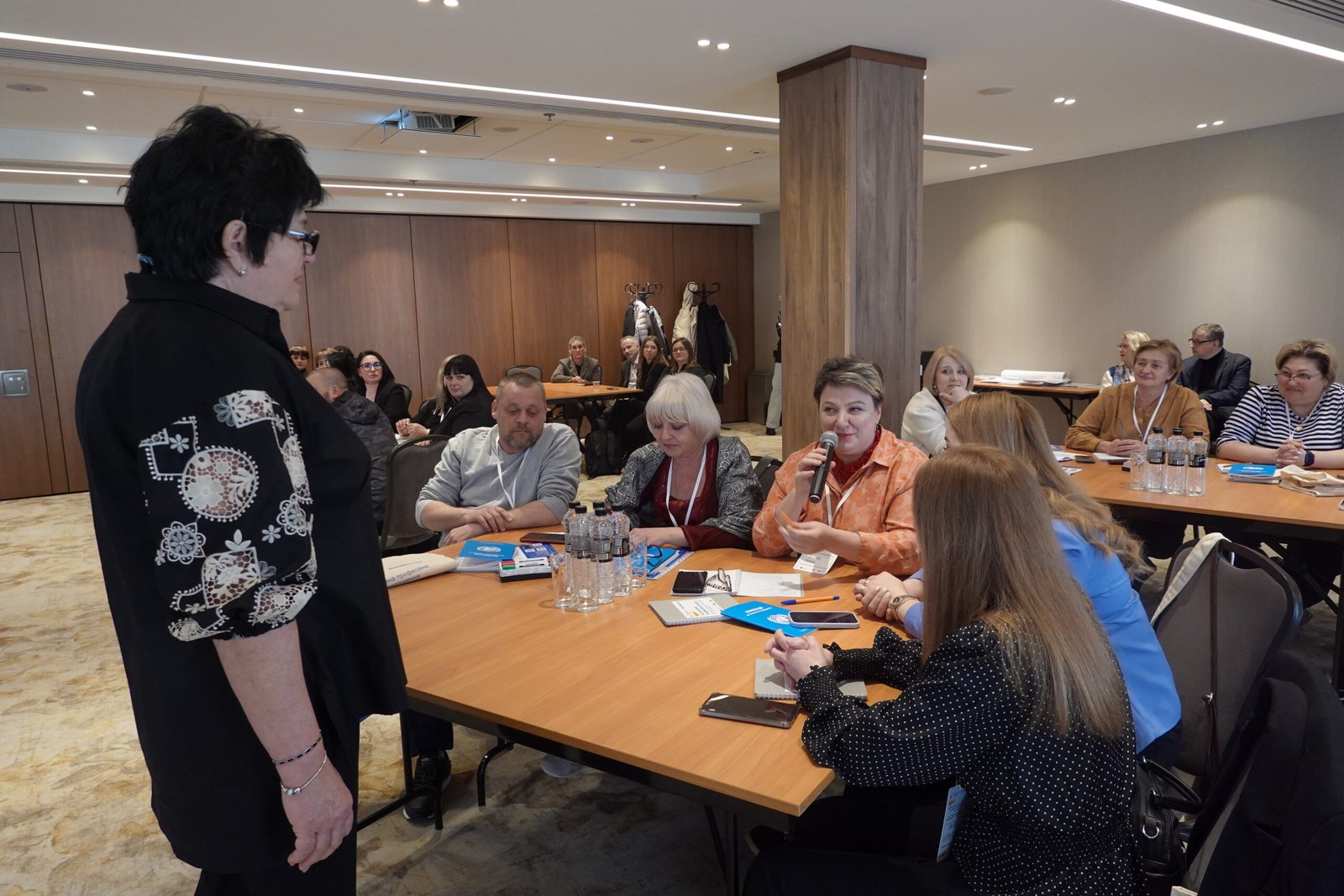
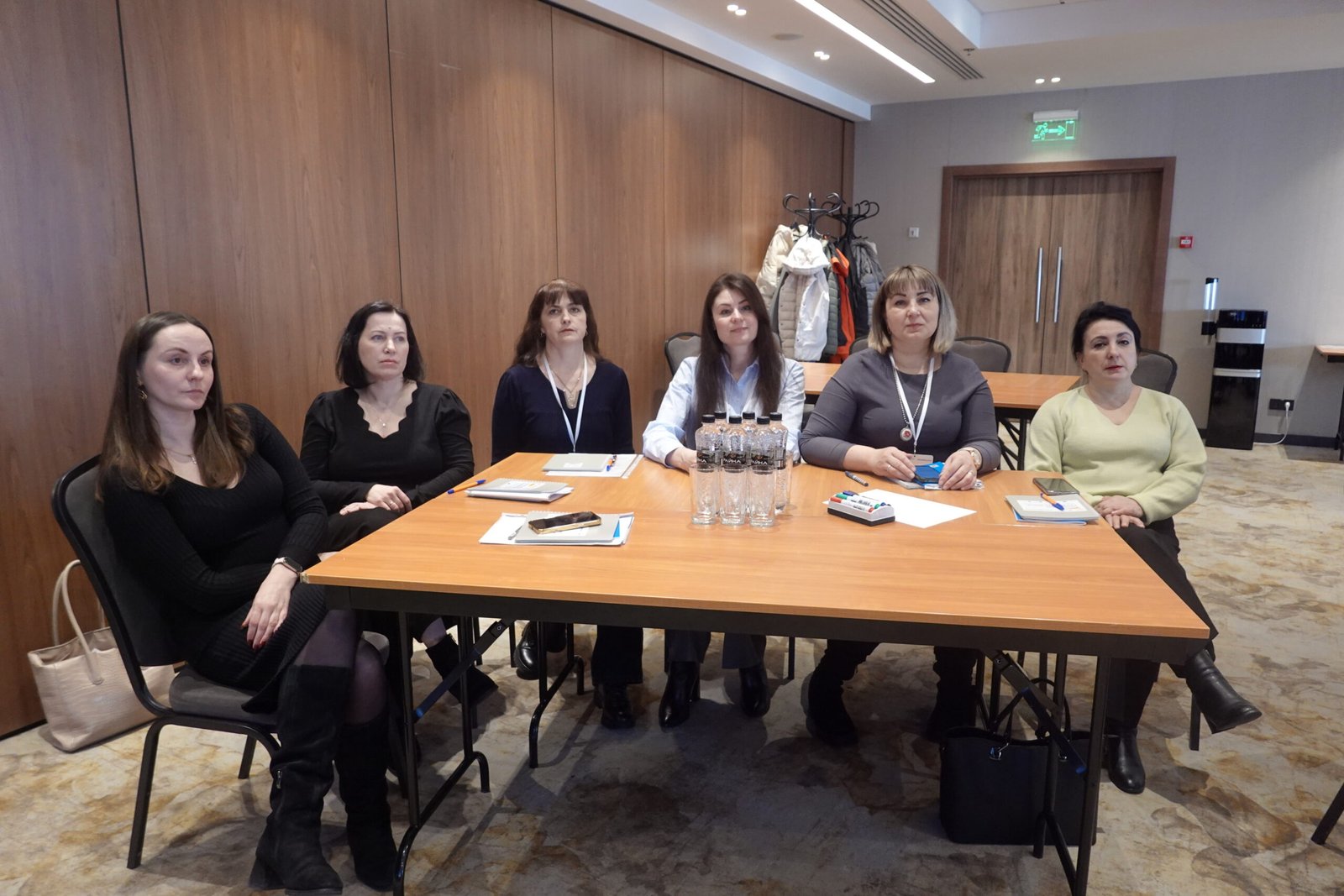
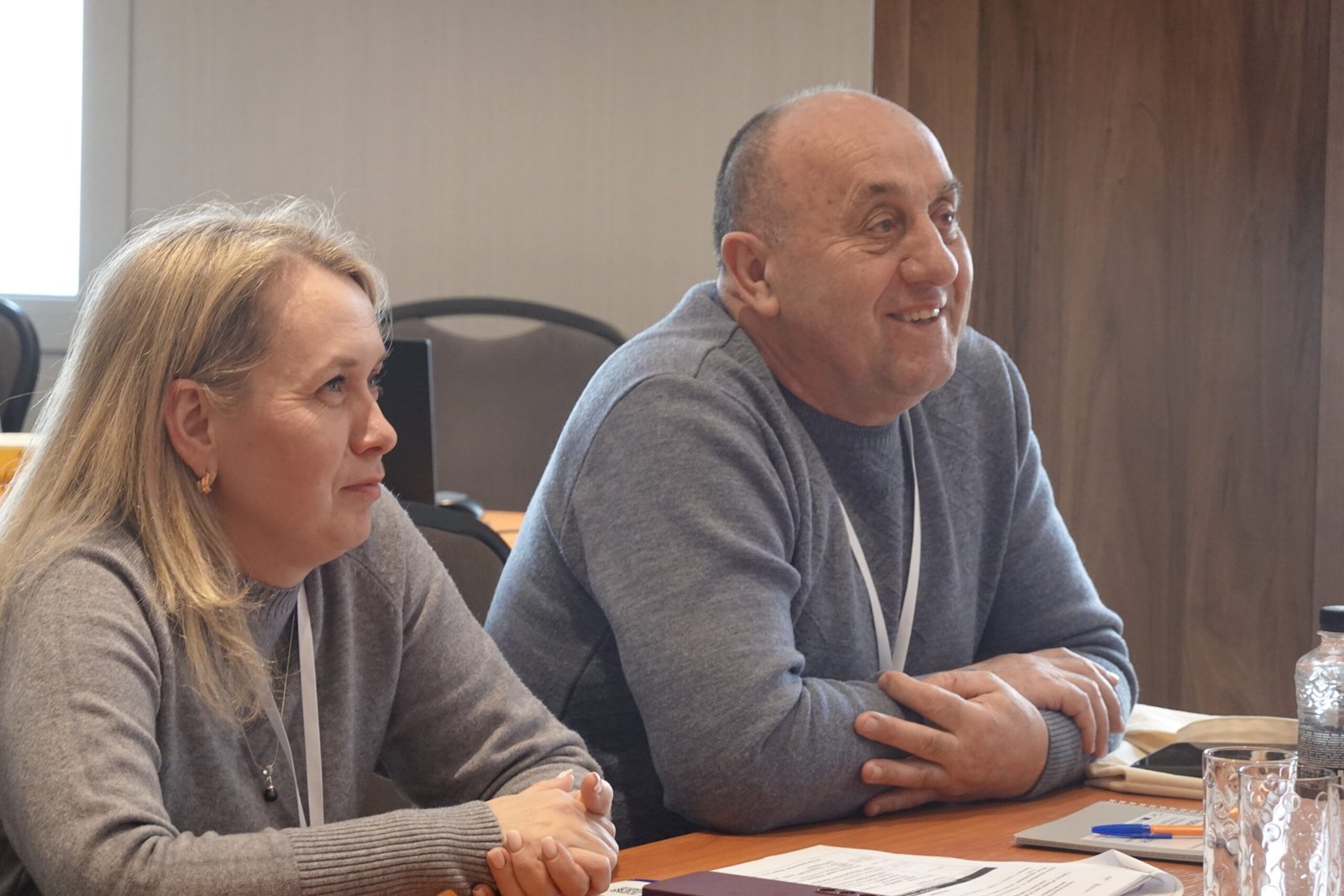
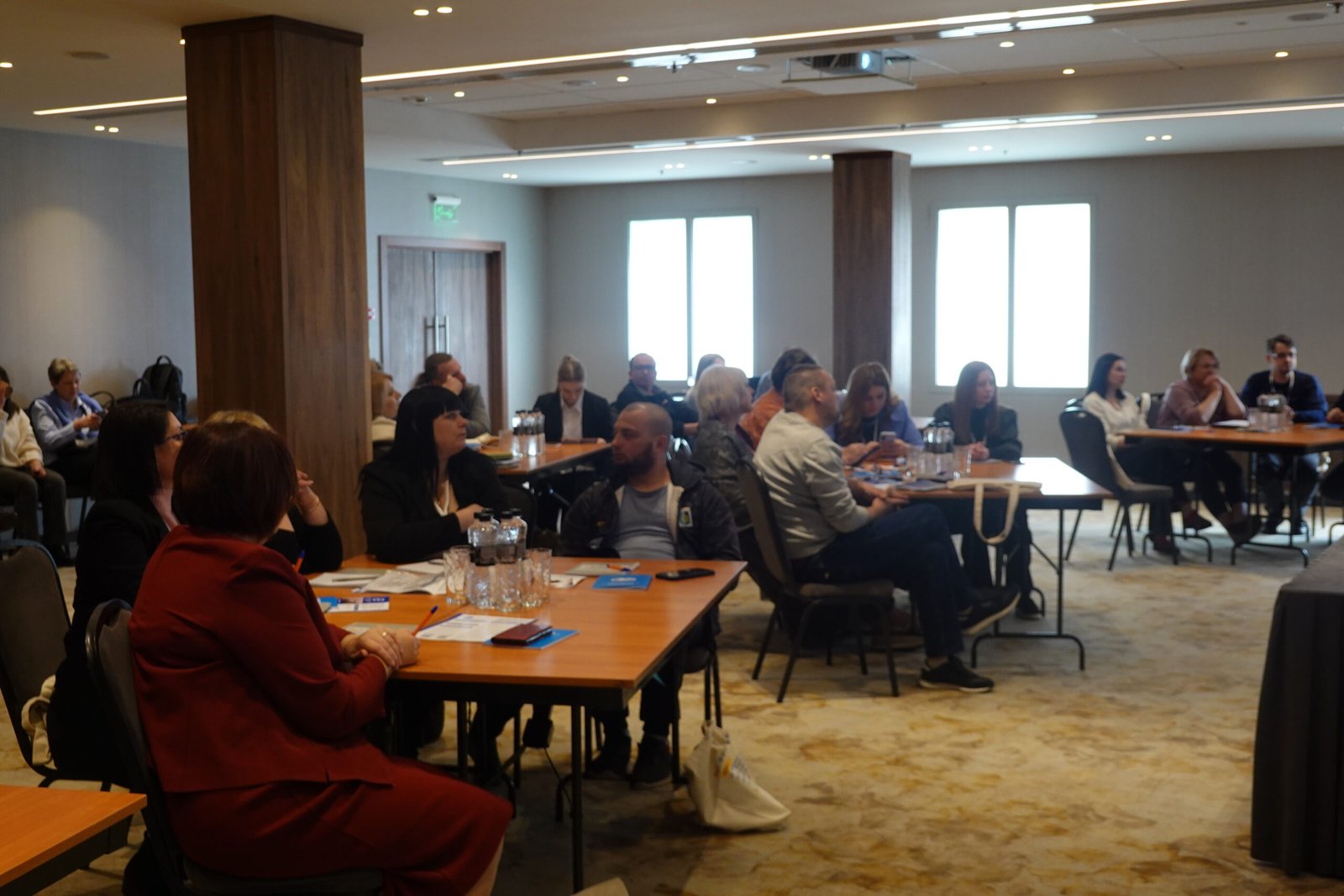
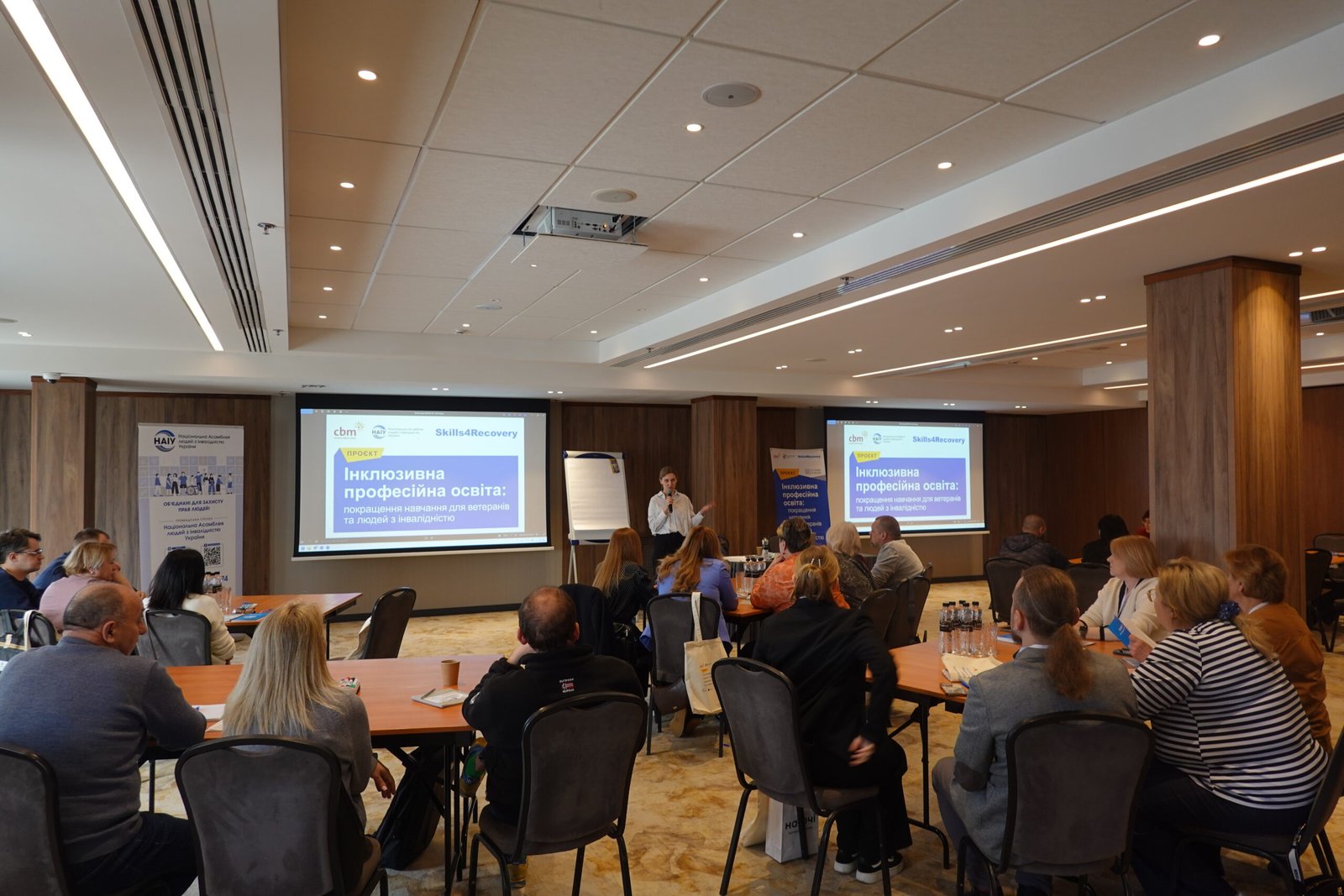
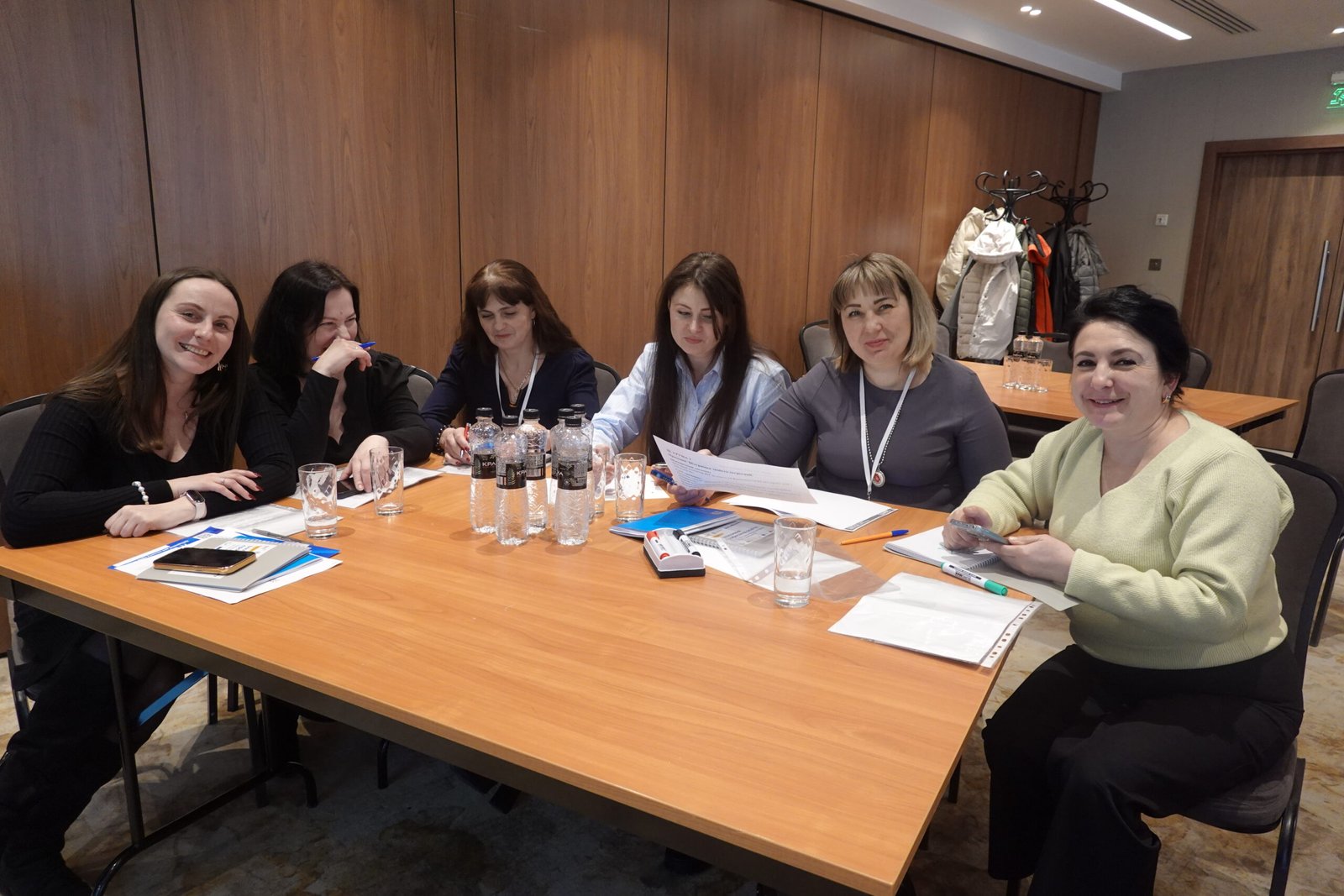
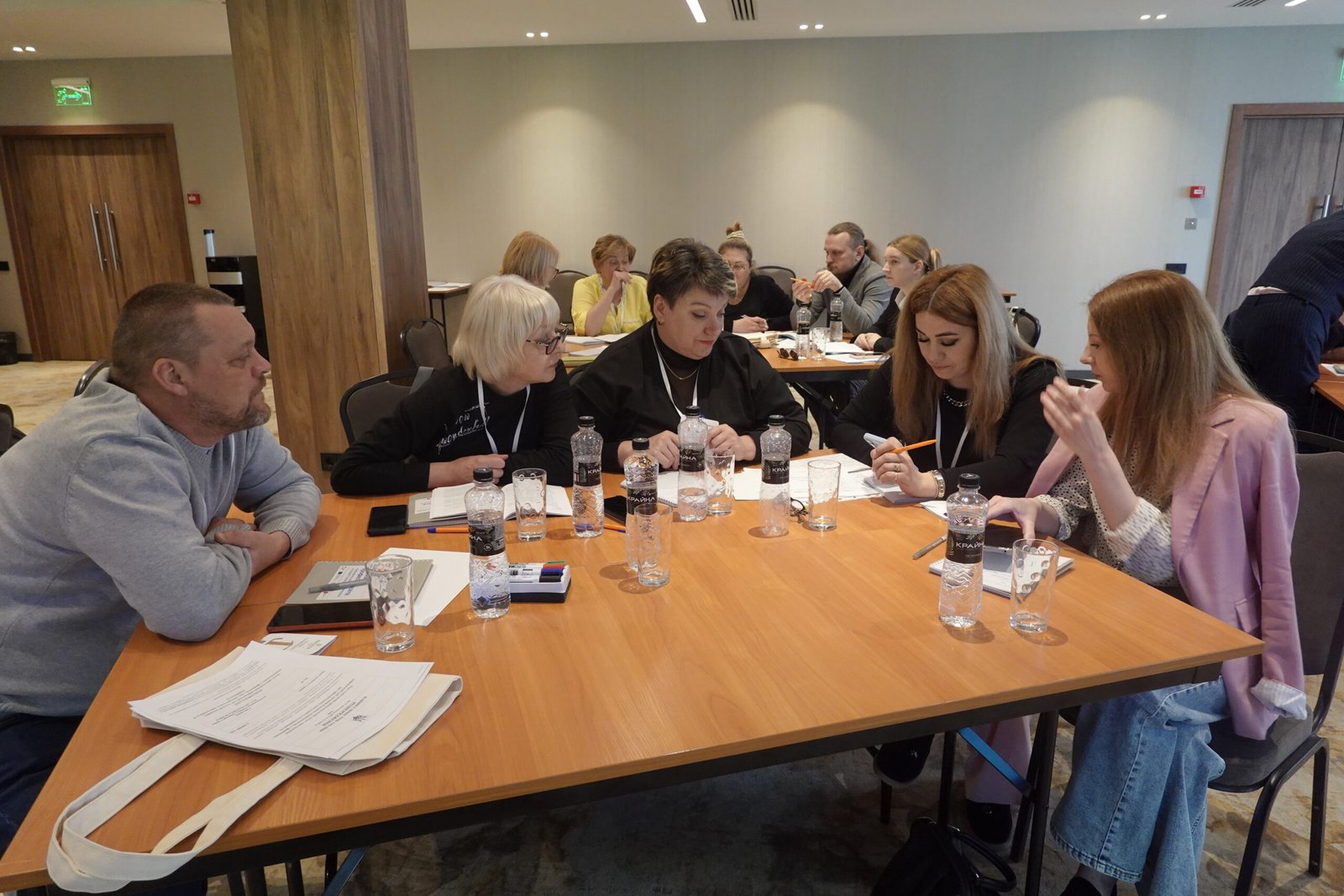
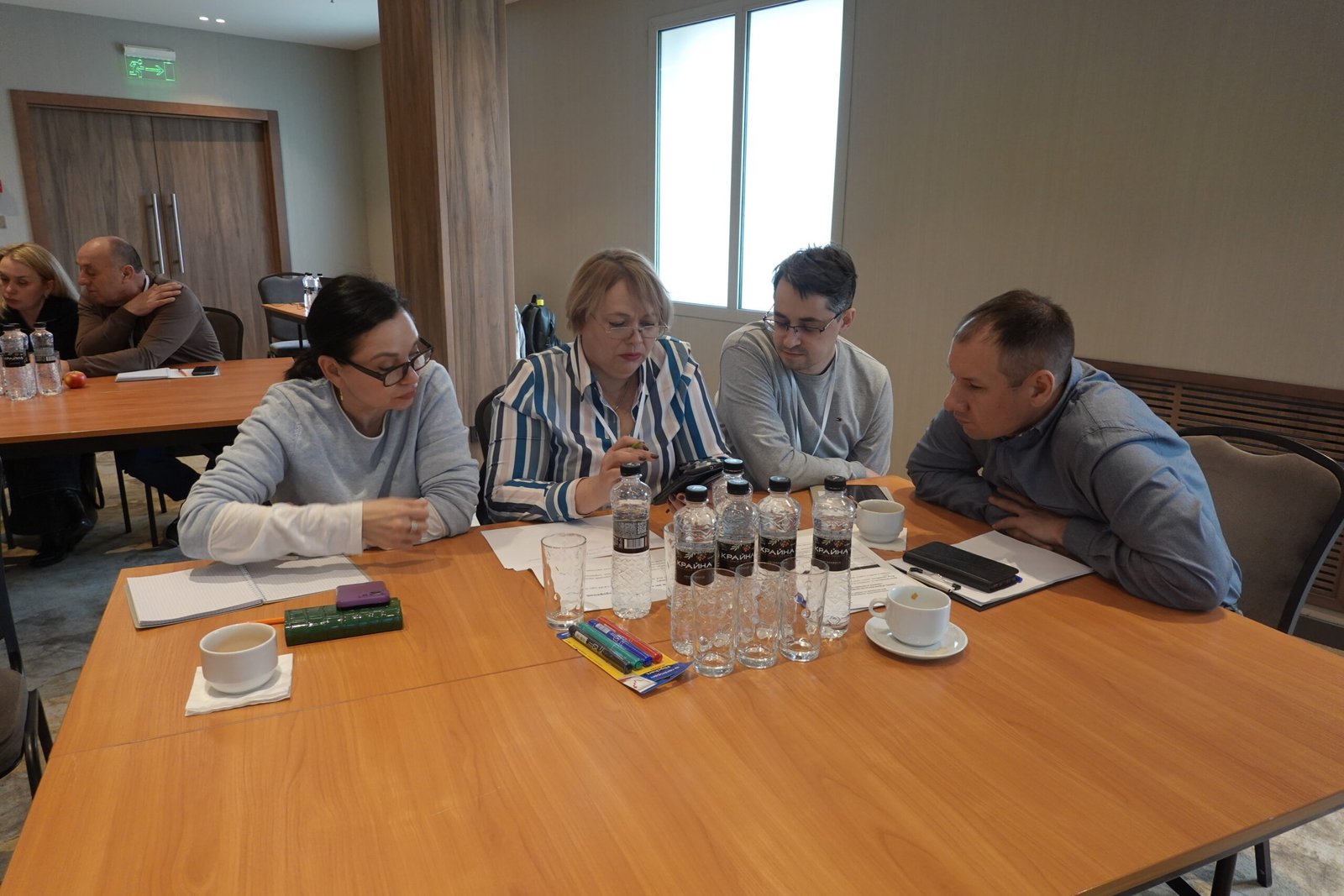
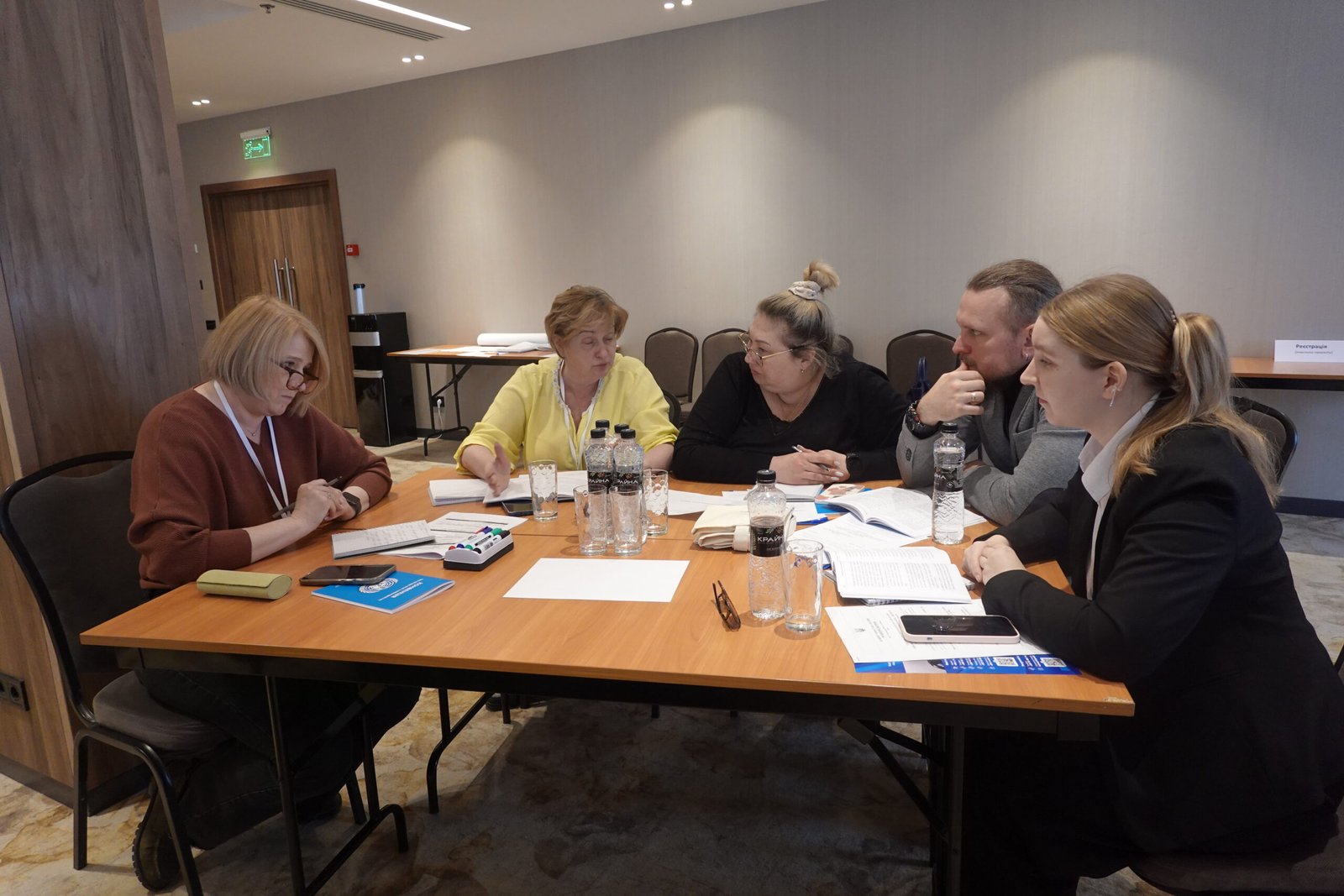
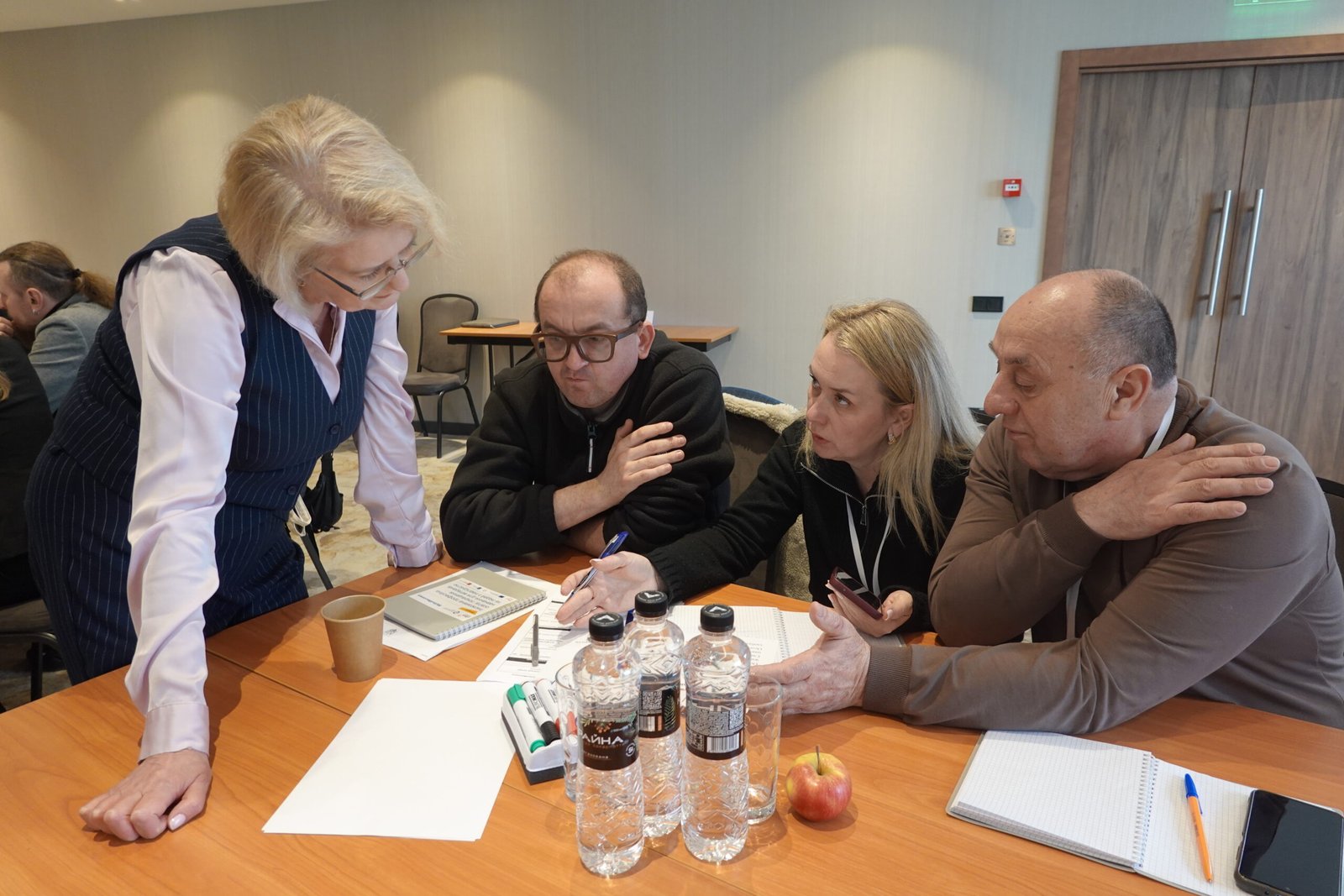
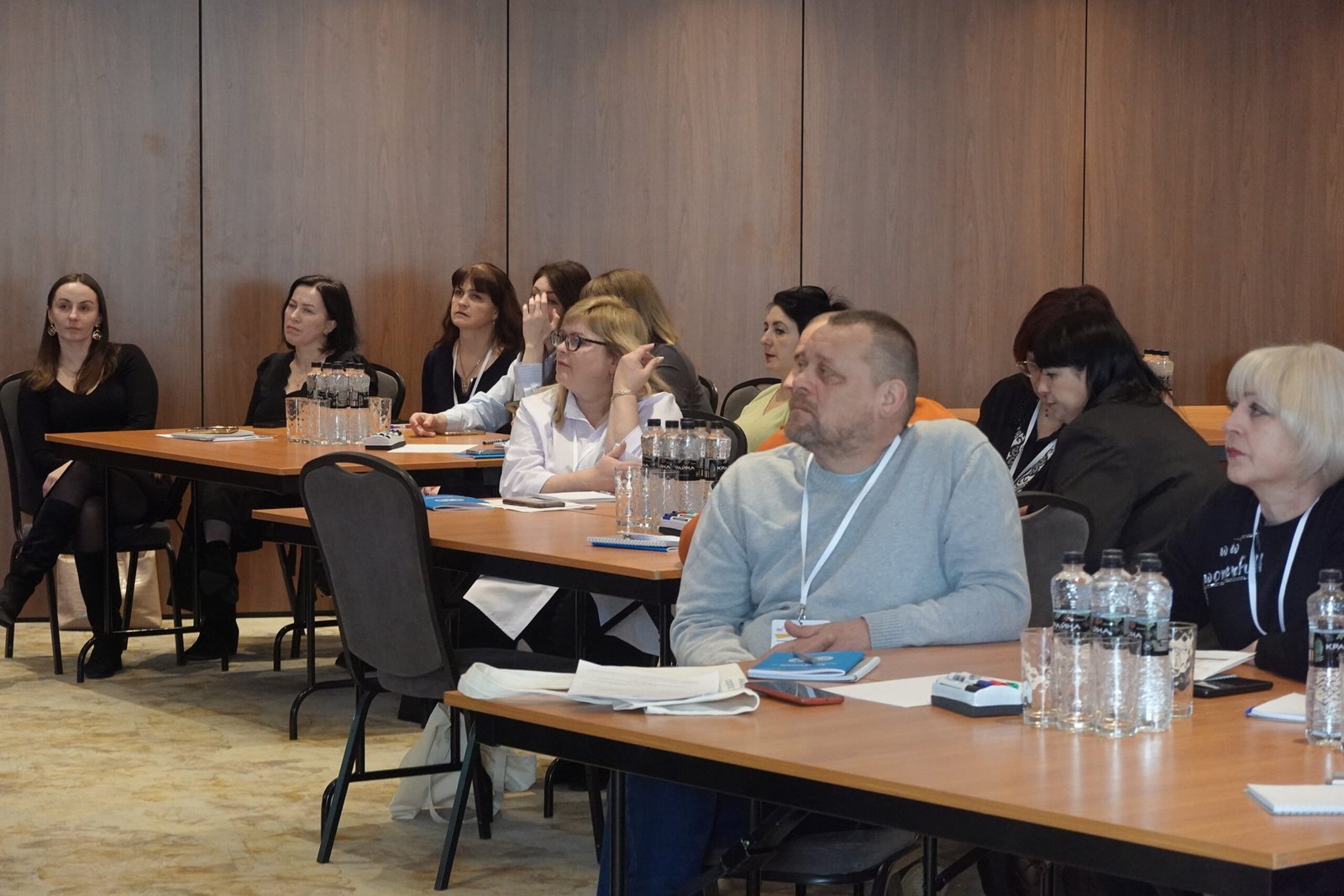
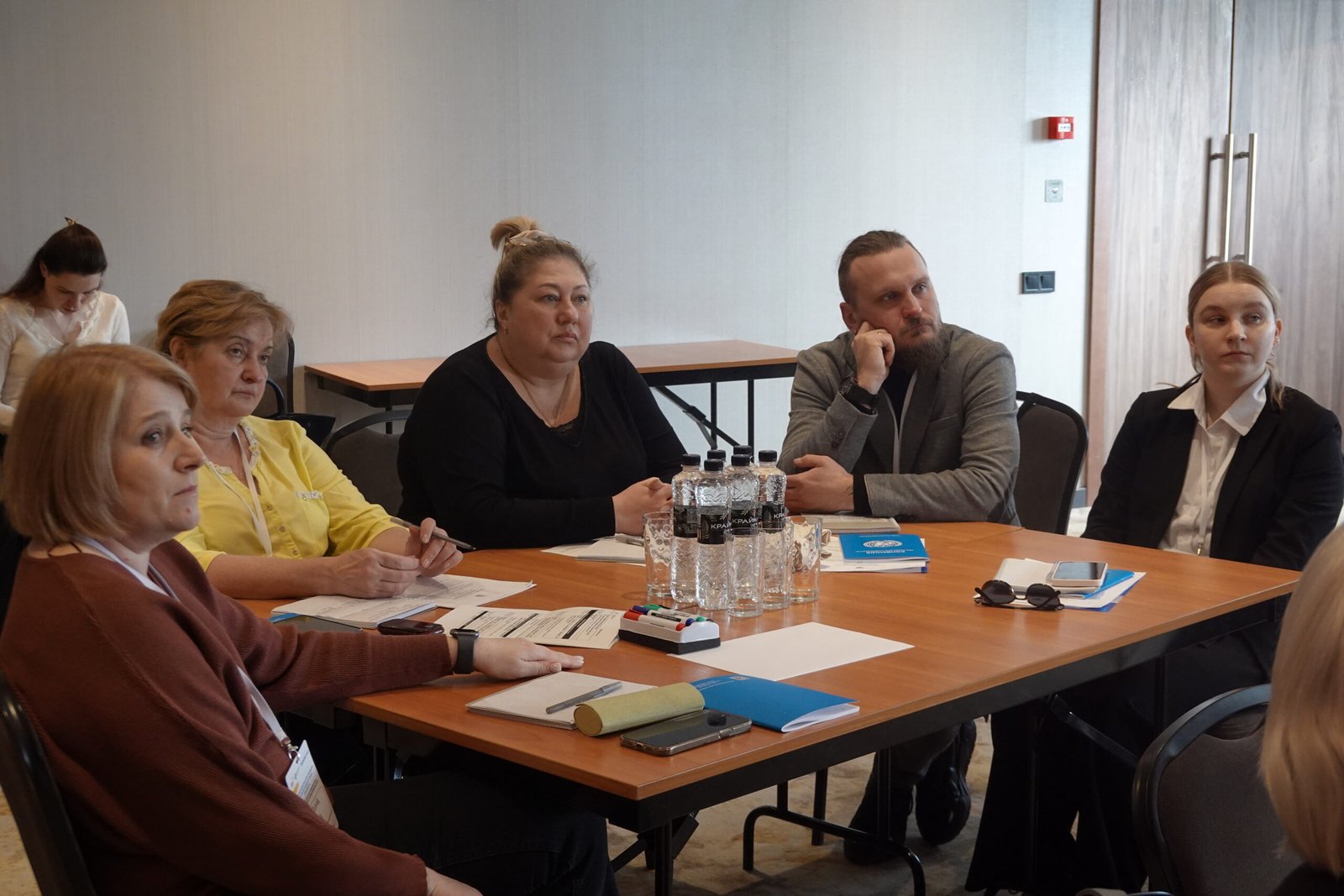
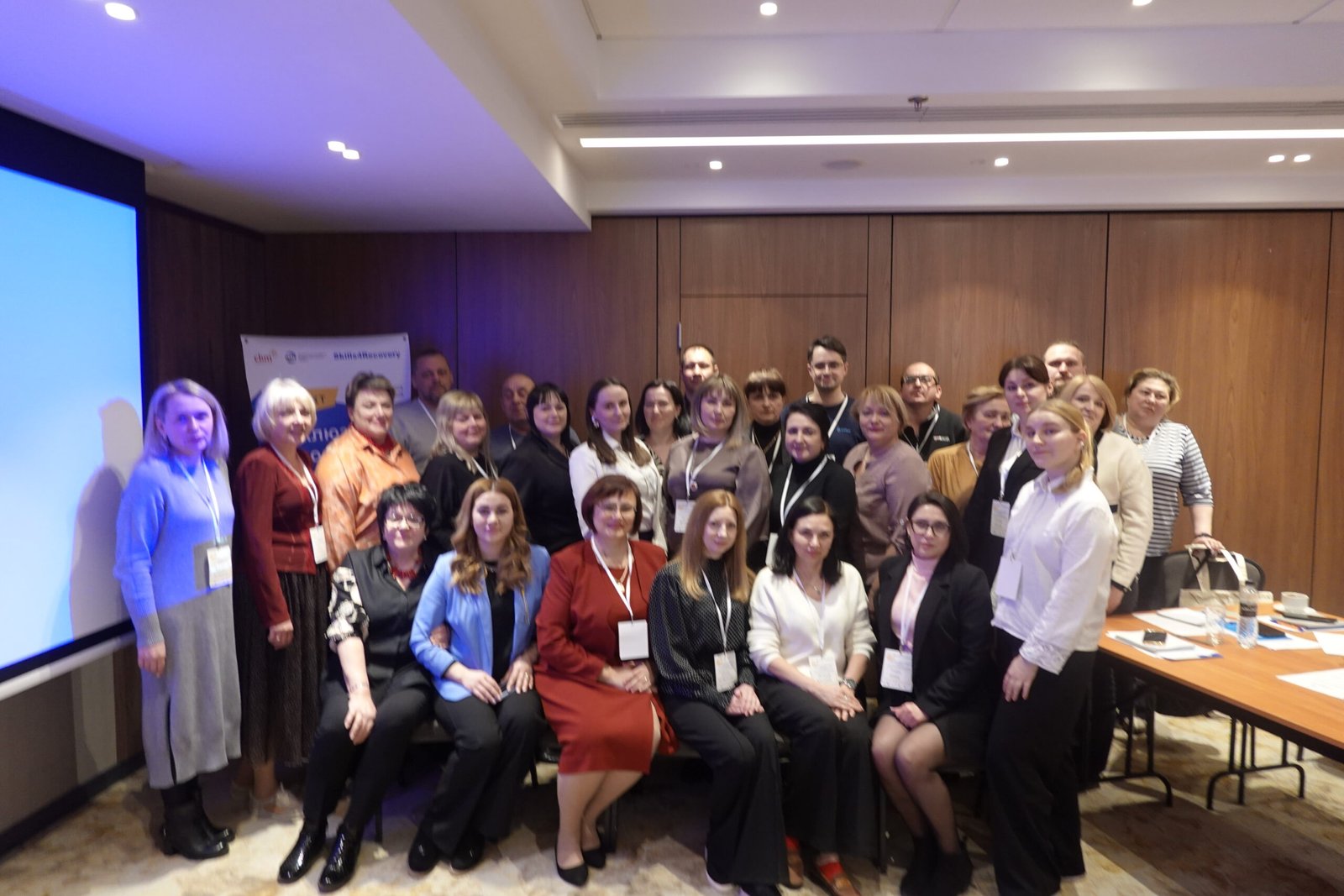
The third training under the project “Inclusive Vocational Education and Training: Improving Training for Veterans and People with Disabilities” has officially started in Kyiv. From 16 to 20 March, teams from six VET providers are working on practical approaches to making education both accessible and relevant for persons with disabilities, veterans, internally displaced persons, and other learners in need of additional support.
Representatives of Kyiv Applied College of Architecture, Construction, and Management, Rivne Technical Vocational College of the National University of Water and Environmental Engineering, Higher Professional Mining and Building Vocational School, Korostyshiv Vocational College, Nova Odesa Vocational College, and Dnipropetrovsk Centre for Vocational and Technical Training of the State Employment Service are taking part in the training.
This training focuses on how vocational education and training (VET) can respond to the emerging challenges of our time. In the context of war, internal displacement, and the reintegration of veterans into civilian life, access to education must be not merely formal, but real and effective. This is why the emphasis is placed not only on the values of inclusion, but also on practical, concrete solutions that enable educational institutions to operate in a barrier-free environment.
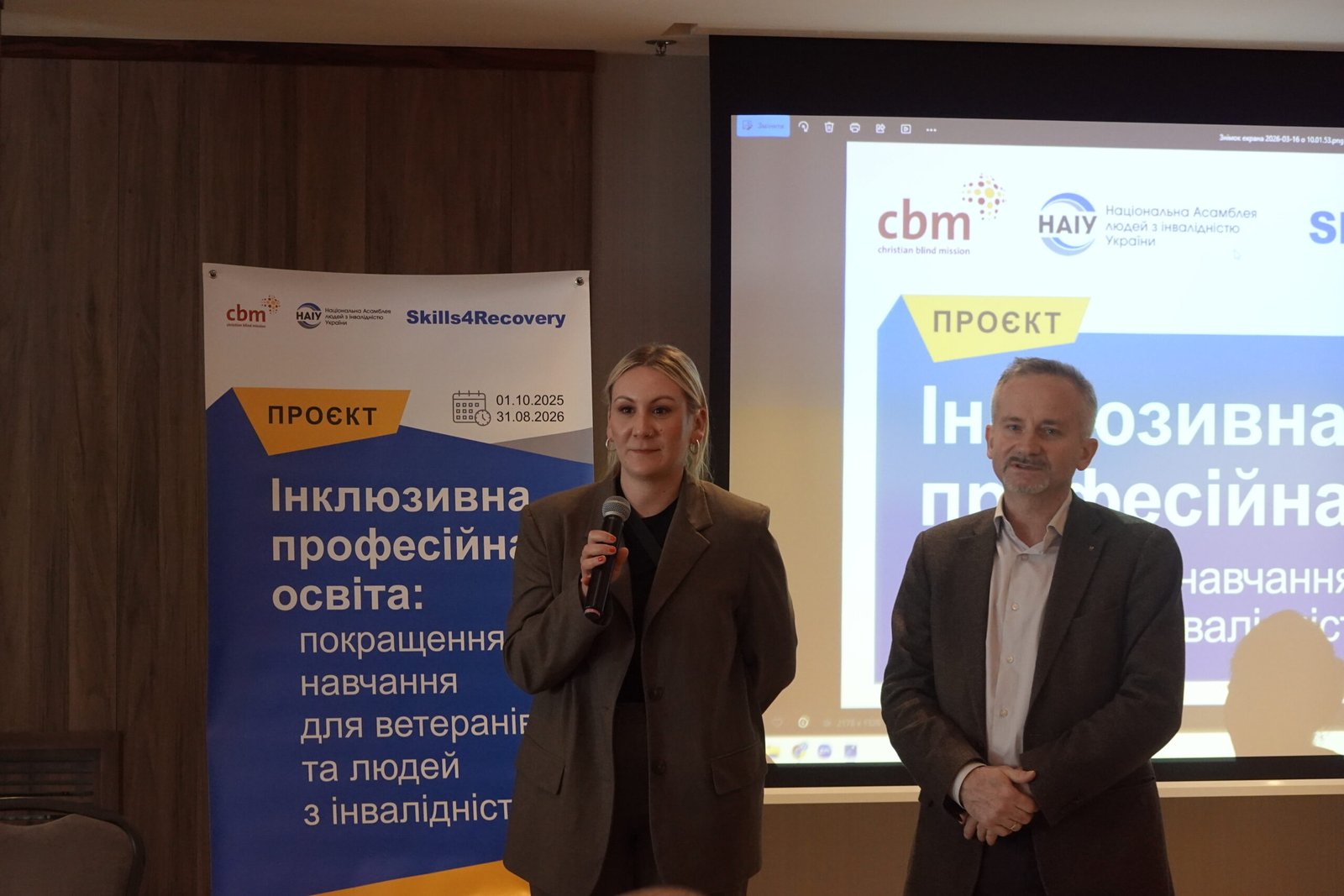
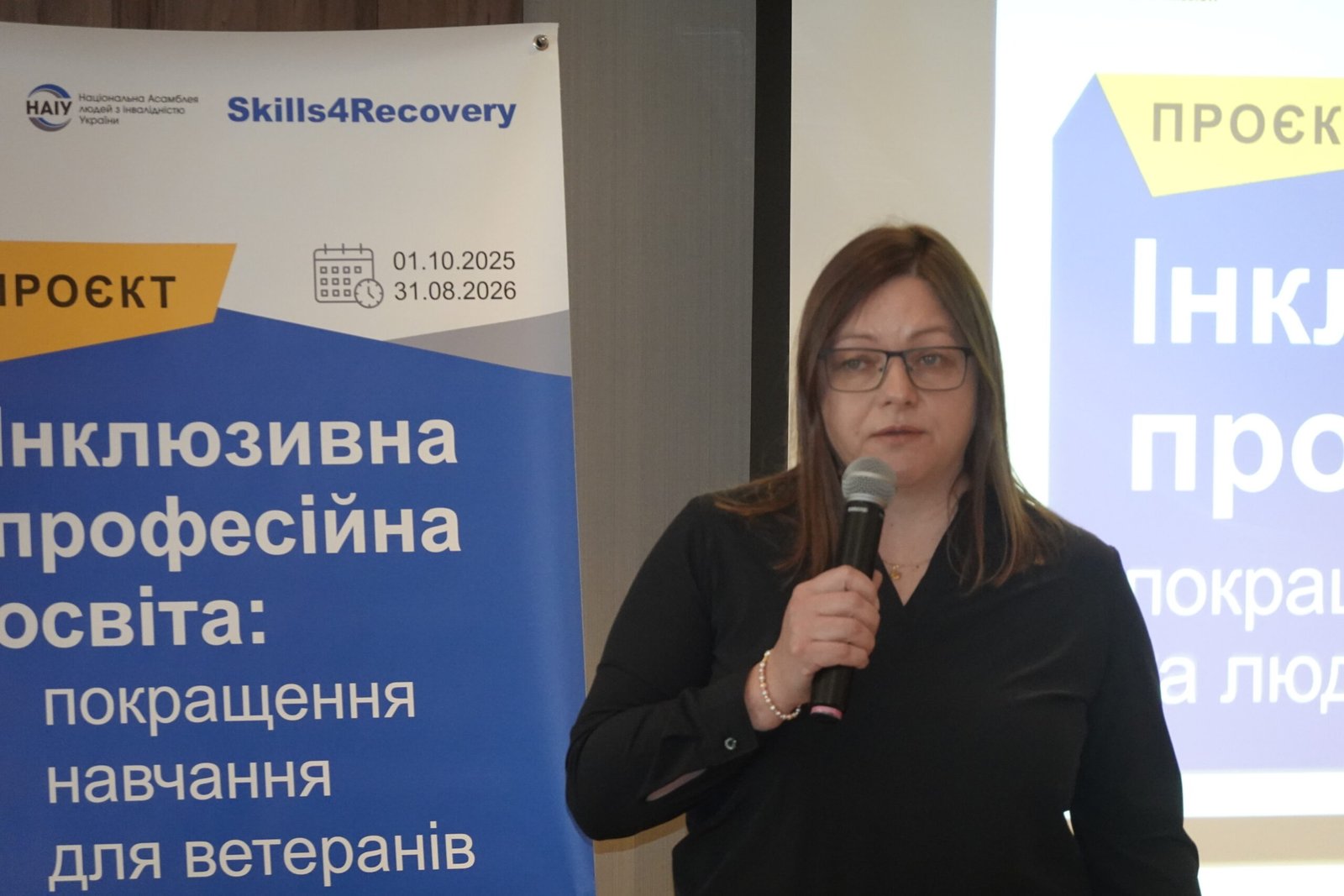
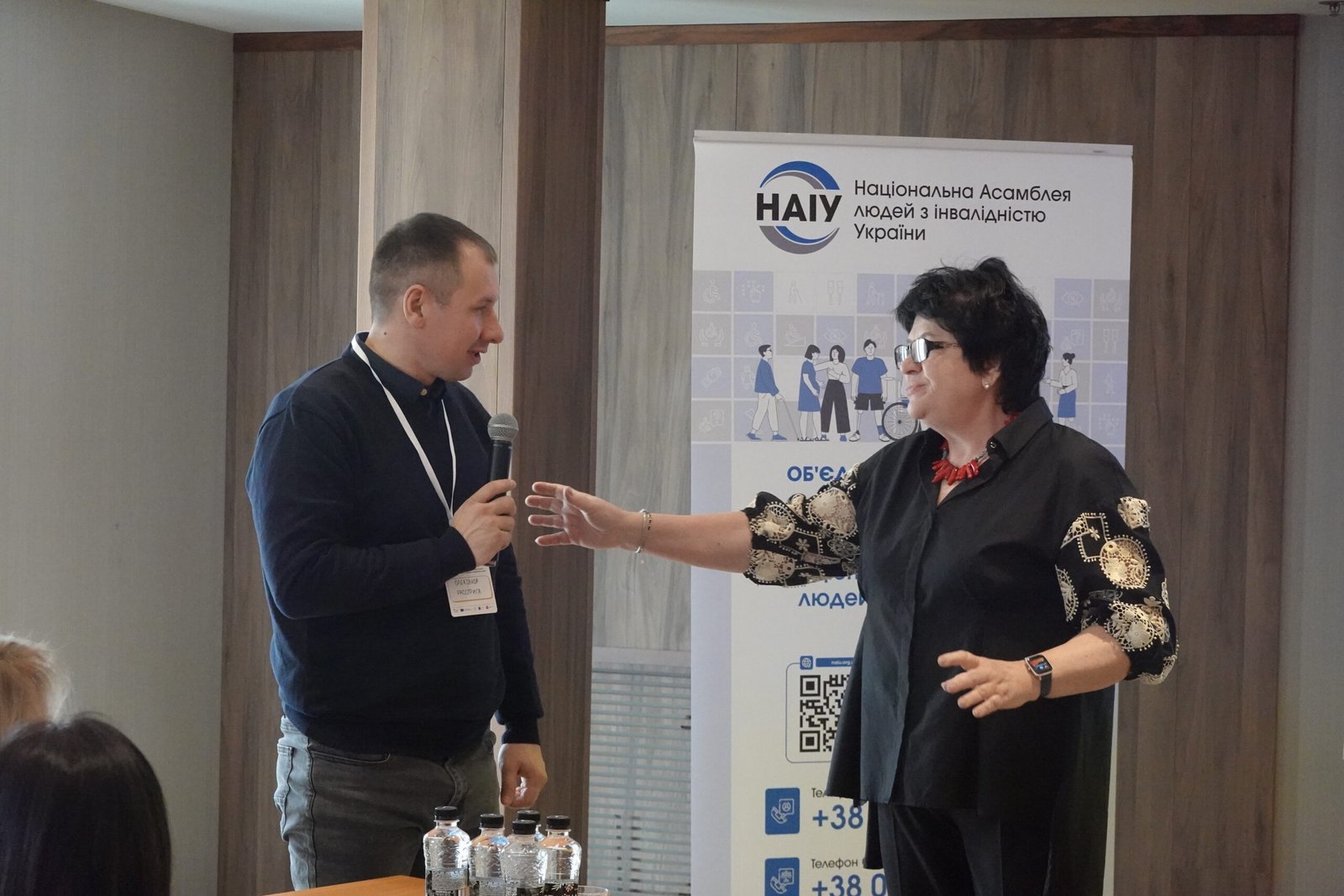
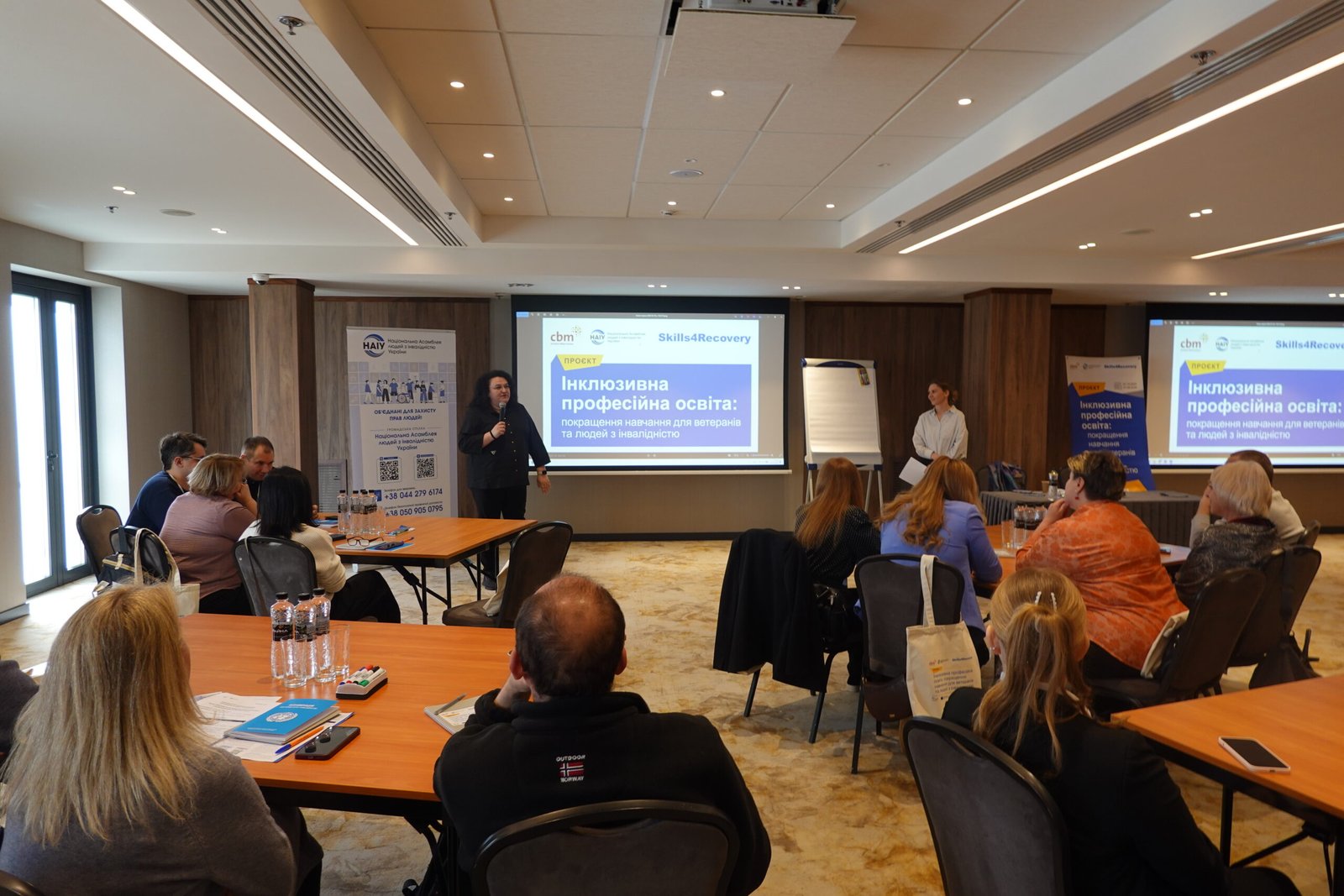
Opening remarks were delivered by Julia Schönborn, Programme Coordinator Ukraine at Christoffel-Blindenmission Christian Blind Mission e.V. (CBM); Tetiana Dovbush, Programme Implementation Advisor for Skills4Recovery (GIZ Ukraine); and Svitlana Petrusha, Project Coordinator from the National Assembly of People with Disabilities of Ukraine (NAPD). They emphasised the shared objective — to strengthen the capacity of vocational education and training (VET) providers to implement inclusive approaches and to create an environment in which persons with disabilities and veterans have genuine access to education, reskilling, and professional development.
The training programme covers contemporary approaches to understanding disability, barriers, accessibility, universal design, reasonable accommodation, interagency cooperation, and practical tools for supporting learners. Particular emphasis is placed on peer exchange among institutions, enabling teams not only to learn but also to observe how inclusive solutions function in real-life settings.
For Ukraine today, this is more than an educational topic. It is about enabling people to acquire a new profession, regain independence, and return to active life. For education providers, it is about their readiness to become part of these changes.
The training series is ongoing: the first two training sessions have already brought together 10 vocational education and training (VET) providers, and the final stage for the pilot institutions is scheduled next to ensure that the approaches developed can be scaled across different regions of Ukraine. In the upcoming material, we will take a closer look at six institutions — what challenges they brought with them to Kyiv and the solutions they are ready to implement first.
The project “Inclusive Vocational Education and Training (VET): Improving Training for Veterans and People with Disabilities” is being implemented by the National Assembly of People with Disabilities of Ukraine (NAPD), jointly with Christoffel-Blindenmission Christian Blind Mission e.V. (CBM), with financial support from the European Union, Germany, Poland, Estonia, and Denmark as part of the Skills4Recovery Multi-Donor Initiative, which is implemented by Deutsche Gesellschaft für Internationale Zusammenarbeit (GIZ) GmbH and Solidarity Fund PL (SFPL).
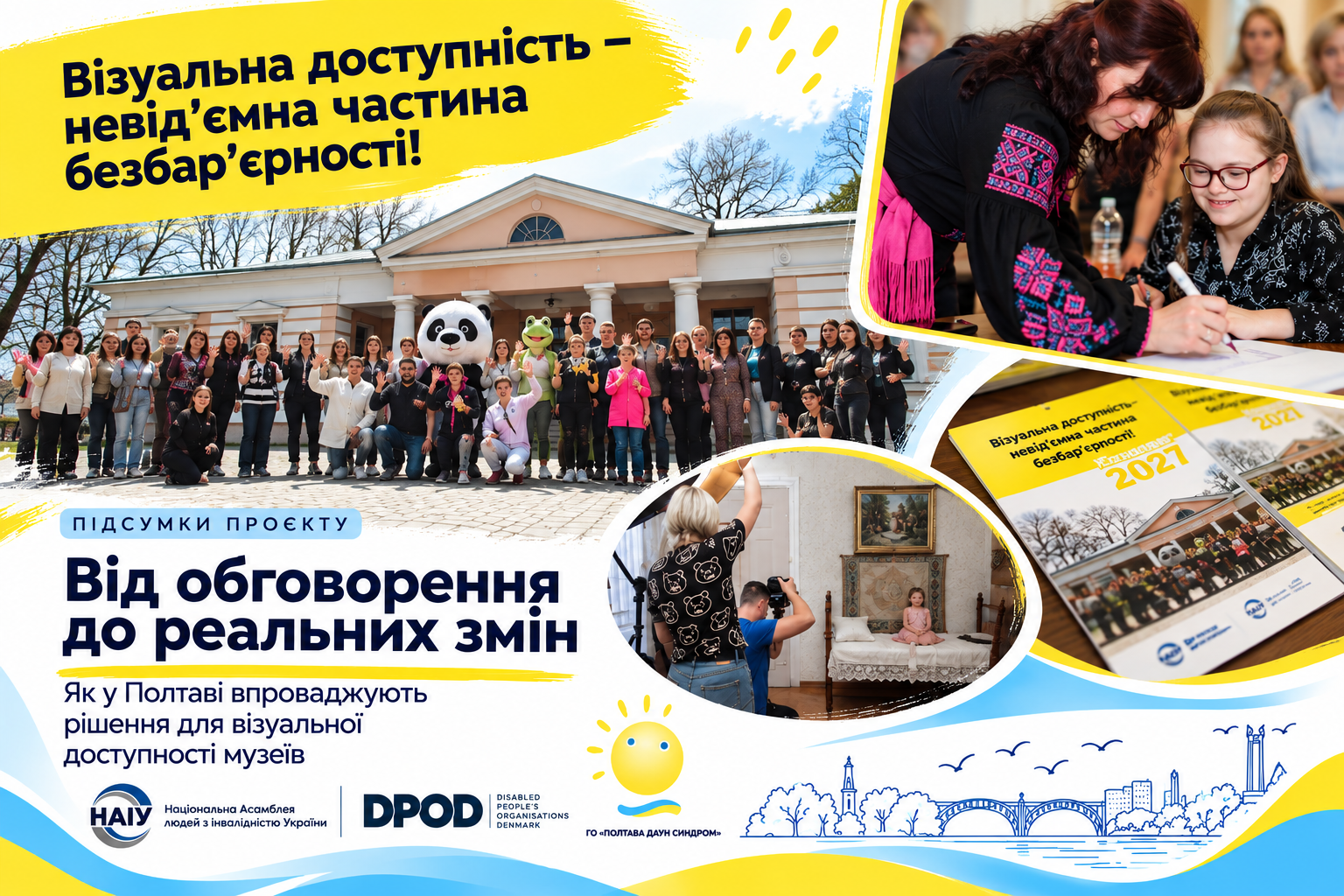
Візуальна доступність — це не лише про дизайн. Це про можливість людини самостійно зрозуміти, де вона перебуває, куди потрібно рухатися, де знайти необхідну інформацію і як скористатися простором без сторонньої допомоги. Саме цю тему ГО «Полтава ДАУН СИНДРОМ» зробила основою адвокаційного проєкту «Візуальна доступність — невід’ємна частина безбар’єрності», реалізованого в межах мінігрантової підтримки членських і […]
Кабінет Міністрів України затвердив порядок надання одноразової грошової допомоги «Зимова підтримка» на опалювальний сезон 2026/27 року. Допомога передбачена для вразливих категорій населення, які проживають у визначених територіальних громадах, де ведуться або велися бойові дії. Розмір допомоги становить 19 400 грн на одне домогосподарство. Виплата є одноразовою на весь опалювальний сезон 2026/27 року та не залежить […]
В межах проєкту «Здоров’я жінки» відбувся онлайн-семінар «Репродуктивне здоров’я жінок з інвалідністю: забезпечення рівного доступу до медичних послуг». До навчання долучилися гінекологи, акушери-гінекологи та сімейні лікарі й лікарки. Протягом трьох днів лікарі із семи пілотних громад проєкту мали можливість поглибити свої знання щодо комунікації з жінками з різними порушеннями, доступності гінекологічних кабінетів, пологових і гінекологічних […]
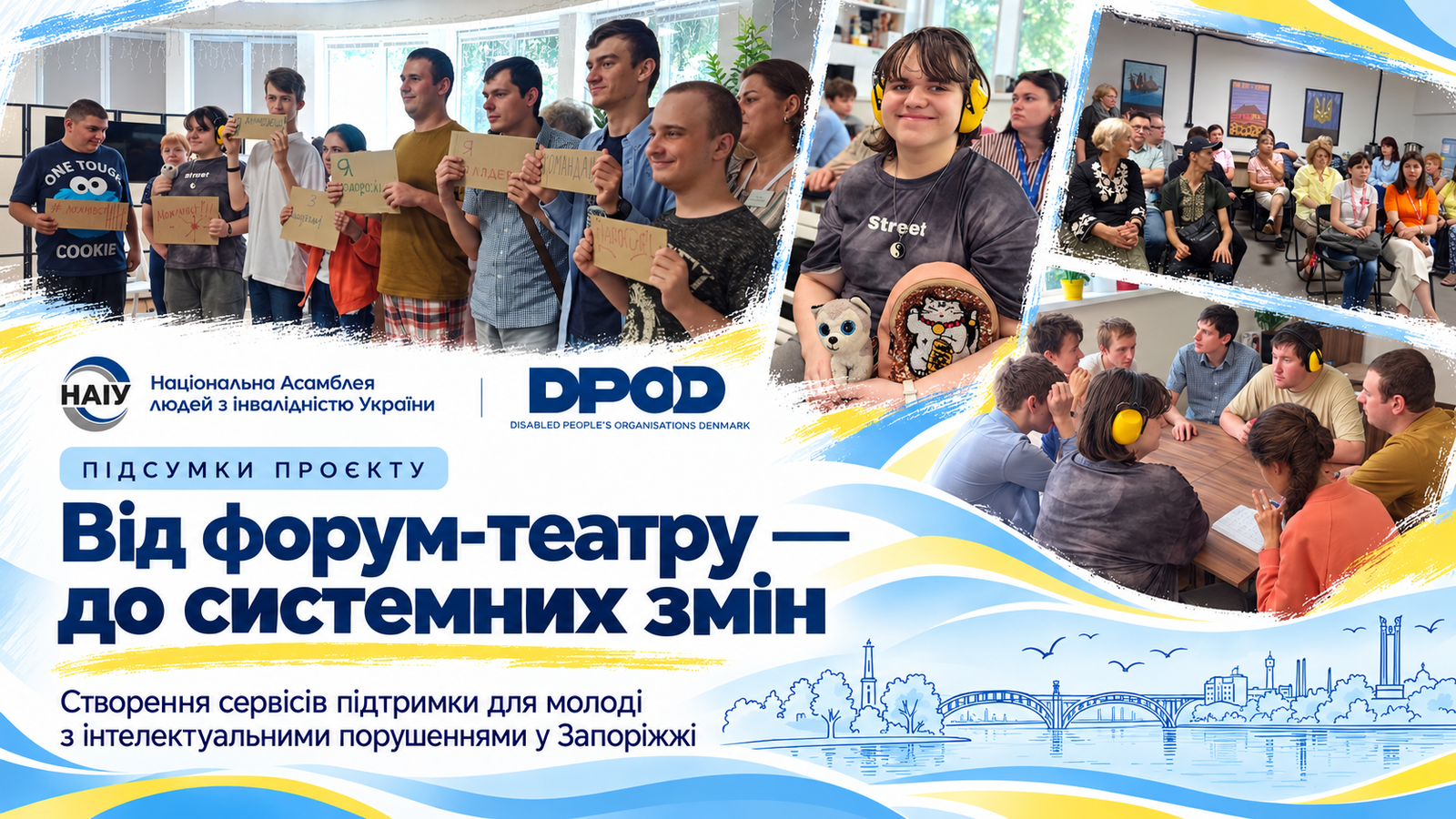
Що відбувається з підтримкою молодої людини з інтелектуальними порушеннями після 18 років? Де вона може спілкуватися, розвивати самостійність, навчатися, працювати та отримувати необхідні послуги? Для багатьох родин у Запоріжжі ці питання залишаються відкритими. Саме на пошук практичних рішень був спрямований проєкт «Форум-театр як інструмент адвокації: “Ми залишаємось у Запоріжжі!” — створення сервісів підтримки для молоді […]
Упродовж 2026 року НАІУ неодноразово порушувала питання про необхідність прискорення виконання державної програми із забезпечення дітей з інвалідністю підгрупи А портативними зарядними станціями. Ще у березні Асамблея звернулася до Прем’єр-міністерки України та передала інформацію про 41 конкретну ситуацію, з якими зіткнулися родини: відмови у прийнятті заяв, помилки в базах даних, незрозуміла черговість, тривале очікування та […]
Як люди з інвалідністю переживають повномасштабну війну? Як війна посилила проблеми, що існували ще до 2022 року? Яку роль у підтримці відіграють організації людей з інвалідністю та неформальні мережі взаємодопомоги? Запрошуємо на вебінар, присвячений результатам дослідження, заснованого на 15 інтерв’ю з людьми з інвалідністю, проведених у 2024 році. Дослідження розглядає питання доступності, державної підтримки та […]