Reproductive health for women with disabilities remains one of the least researched and least visible issues within healthcare systems. It encompasses a wide range of interconnected topics, including access to healthcare services, family planning, pregnancy care, the right to motherhood, quality of medical services, professional training of healthcare providers, and the elimination of societal stereotypes.
Although access to quality healthcare is a fundamental human right, women with disabilities continue to face numerous barriers. Some are related to physical inaccessibility, while others stem from a lack of information, insufficient coordination between services, limited resources, or inadequate systemic attention to the needs of marginalized groups.
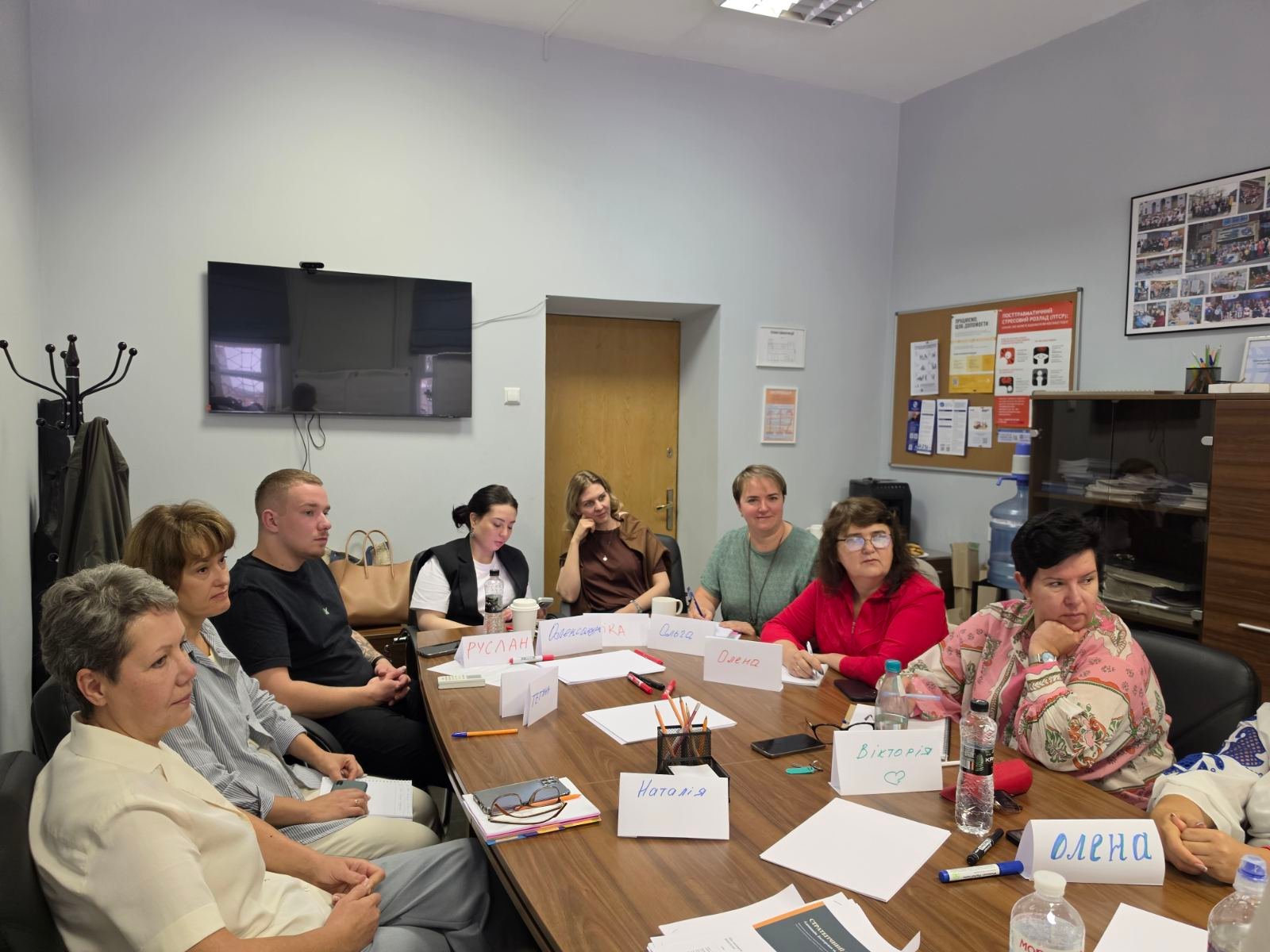
To better understand these challenges, a series of anonymous interviews with healthcare professionals working in the field of reproductive health was conducted as part of the Women's Health Project. These conversations provided an opportunity to view the issue from another perspective, through the eyes of those who provide care daily and witness the consequences of existing gaps in the system.
Despite differences in professional experience, working conditions, and the technical capacity of healthcare facilities, one common message emerged repeatedly: healthcare systems primarily see the women who are already able to reach a doctor's office. Those who do not seek care for various reasons often remain outside the system's field of vision.
Invisible in Statistics, Invisible in the System
One of the first issues raised by healthcare professionals was the lack of data.
During the interviews, most specialists were unable to state the exact number of women with disabilities living in their communities. Official statistics on patients with disabilities are generally not collected by the healthcare system and are often gathered informally by healthcare providers themselves.
As one doctor noted:
"Statistics are necessary. Officially, there may not appear to be many women with disabilities in our community, but if we worked together with social protection services, we might discover that the actual number is much higher."
At first glance, this may seem like a matter of numbers alone. In reality, the absence of reliable data directly affects service planning. If a system does not know how many women require support, it becomes difficult to estimate the need for funding, staff training, transportation services, or preventive programs. A lack of service utilization does not mean a lack of need.
Barriers Begin Before Reaching the Doctor's Office
Healthcare professionals repeatedly emphasized that, for many women, the greatest obstacle is not the medical examination itself but getting to it.
Some doctors recalled situations where family members first visited a healthcare facility to determine whether a woman would be able to receive care and whether the facility was accessible.
"Relatives often come first because they are convinced that no assistance can be provided. We reassure them: come in, we will examine her and provide the necessary treatment."
The very fact that such preliminary visits occur reflects low levels of trust in the healthcare system and limited awareness of available services.
For many women, the deciding factors are issues that rarely appear in official reports: whether the elevator works, whether there is an accessible restroom, whether staff can safely assist with transfers to a gynecological examination chair, and whether the facility can be reached without external assistance.
For this reason, some healthcare providers believe the system must become more proactive.
"Perhaps we should not wait for women to come to us. Perhaps we should go to them. Meet them, ask questions, and encourage them to attend appointments."
This reflects a shift from a passive model, where healthcare facilities wait for patients to seek assistance, to a more active approach that reaches people who remain outside the system for various reasons.
Accessibility Does Not End with a Ramp
In recent years, many healthcare facilities have taken important steps toward accessibility. Ramps, elevators, call buttons, accessible examination rooms, and universal medical equipment have become more common.
However, the interviews revealed that the presence of individual accessibility features does not automatically guarantee a seamless and comfortable healthcare journey.
One of the most frequently mentioned issues was the lack of accessible restrooms for women with different types of disabilities.
"There is a restroom, but it is not adapted. If a woman has traveled from a remote village and needs to prepare for an examination, this becomes a significant problem."
Transportation was identified as another major barrier.
"Accessible transportation would be extremely valuable. The patients who come to me usually rely on private transportation. If that option is unavailable, they often cancel the visit altogether."
These experiences highlight an important point: accessibility cannot be measured solely by the presence of a ramp or elevator. It encompasses the entire journey from a person's home to the healthcare facility and back. If even one part of that journey is inaccessible, a woman may go without essential healthcare services for years.
When Equipment Exists but Does Not Work for Everyone
Accessibility of medical equipment emerged as another important topic.
Even in facilities equipped with modern gynecological examination rooms, equipment does not always meet the needs of women with different disabilities.
"If the examination chair were truly universal, we could provide better care. Women with mobility impairments themselves tell us that the current equipment is uncomfortable."
Healthcare professionals also highlighted the lack of wheelchair-accessible scales, universal examination tables, lifting devices, and other equipment that would allow examinations to be conducted safely and comfortably.
In practice, this means that even when a service formally exists, accessing it may still be difficult or impossible. Therefore, proper equipment is not merely a matter of convenience; it directly affects access to healthcare and the quality of care provided.
Healthcare Professionals Are Ready to Learn but Need Support
Another key finding was the willingness of healthcare professionals to openly discuss their need for additional knowledge and skills.
Topics most frequently mentioned included pregnancy care for women with disabilities, childbirth among women with mobility impairments, communication with patients with intellectual disabilities, and care for women recovering from injuries or trauma.
"There is never such a thing as too much knowledge. We are accustomed to working mainly with patients without disabilities, so additional training is extremely important. Disability requires a deeper understanding of a person's needs. I often try to put myself in my patients' place to see the situation through their eyes."
This statement reflects an important shift in perspective. Healthcare professionals increasingly recognize that quality care involves not only clinical expertise but also empathy, understanding lived experiences, and building trust.
Several interviewees also stressed the importance of practical training.
"Specialized training on pregnancy and childbirth among women with mobility impairments would be very useful. What we need most are practical skills that can be applied in everyday work."
This issue is becoming particularly relevant in the context of the ongoing war. The healthcare system is already seeing a growing number of people who have acquired disabilities as a result of injuries and trauma. As a result, inclusive healthcare is no longer a niche issue but an essential component of healthcare system development.
Funding as a Hidden Barrier
Healthcare professionals also discussed a topic that often receives little public attention: financing.
"The funding allocated per patient is often insufficient to cover the actual cost of services. When a woman has a disability, additional needs and expenses may arise."
Funding directly affects a facility's ability to purchase equipment, adapt premises, train staff, and implement new approaches to care.
While some communities attempt to address resource gaps through local support programs, comprehensive systemic solutions remain limited.
Reproductive Health Requires Systemic Solutions
Another important area of discussion concerned public policy related to reproductive health.
One doctor identified three priorities requiring greater attention: access to contraception, quality pregnancy support, and stronger government programs on reproductive health.
"If I were to identify three priorities, the first would be access to contraception. In the past, free contraceptives were available for women from vulnerable groups, but those opportunities are now significantly reduced.
The second priority is preparation for pregnancy and support during the early stages of pregnancy. This is when the foundation for a healthy pregnancy is established through nutrition, vitamins, examinations, and screenings. Much of this responsibility has now been shifted to family doctors, but primary healthcare services are already overloaded. Coordination between family physicians and gynecologists is not always effective. As a result, some women, particularly those living in remote communities or internally displaced women, may go without specialized support for extended periods.
The third priority is government policy on reproductive health. In the past, targeted programs existed and had tangible practical value. Today, reproductive health remains part of public discussions, but many important measures require more systematic implementation and adequate resources."
The interviews also highlighted challenges in coordination between family physicians and specialist healthcare providers. According to participants, a lack of clear cooperation between different levels of care can result in delays and, in some cases, serious health risks.
Women with disabilities, internally displaced women, and women living in remote areas are particularly vulnerable in such situations.
"There are cases where women, including internally displaced women, do not register for prenatal care or seek medical attention too late because of complicated administrative procedures. This creates serious risks for the health and lives of both mother and child. We know of a case where a pregnant woman died because she did not receive care in time."
Healthcare professionals emphasized that timely pregnancy care, especially during the early stages, should be a key priority for healthcare systems, as it allows risks to be identified, necessary examinations to be conducted, and complications to be prevented.
The Right to Motherhood Without Stereotypes
Despite gradual changes in society, women with disabilities continue to encounter prejudice regarding their right to have families and children.
Healthcare professionals, however, shared a different perspective.
"These women and their families are usually very aware of their decisions. They often go through a long journey toward parenthood and clearly understand what they want. We have seen cases where women with serious health conditions successfully gave birth to healthy children with proper medical support."
This perspective serves as an important reminder: disability does not diminish a person's right to motherhood. Rather, access to quality healthcare, reliable information, and respect for personal choice are essential foundations for the realization of reproductive rights.
Seeing Those Who Remain Unseen
The conversations with healthcare professionals demonstrated that access to reproductive healthcare is about far more than ramps, elevators, or specialized equipment.
It is about a system's ability to recognize and support women who currently remain outside its reach. Women who do not seek care because of fear, mistrust, lack of transportation, inaccessible information, stereotypes about disability, financial hardship, or inaccessible environments.
For meaningful change to occur, efforts must include stronger community-based services, improved data collection, healthcare workforce training, upgraded equipment, enhanced intersectoral cooperation, and the meaningful involvement of women with disabilities in evaluating healthcare services.
Because accessibility does not begin with a ramp or an examination chair. It begins when the system sees a person before she ever reaches the door of a healthcare facility.
Oleksandra Perkova, Communications Manager of the Project