After an accident at 16: when the city has barriers, but you have character
March 5, 2026
Share:
- Going outside, going on business, taking a walk with friends - all these simple things that until recently were so easy suddenly became enormous, almost insurmountable difficulties," recalls Olga Vinogradova, a civil activist from Mykolaiv, recalling the events of long ago. It happened when she had just turned sixteen. An injury sustained in a car accident changed her life significantly, [...]
Olha spent the next ten years of her life in rehabilitation. «I had hopes that I would be able to walk, or at least partially restore the functions of the musculoskeletal system,» she continues. "Then, when I realized that this situation was not going to go away, I realized that I just needed to adapt my life to the new, let's say, functionality of my own body.
It was not an easy task. But Olha received a lot of help from one of the NGOs that helps people with disabilities. «I went there for counseling to help me navigate my new life,» she says. The primary need is to learn how to use a wheelchair properly, to know how to choose the right one, understanding the properties of her body.
But what I missed most was communication. «I lacked ordinary friendly conversations in a circle of people like me to see and realize that I am not alone in this world. And to realize a few more obvious things. That, for example, the case of me is not unique, this happens to other people. And that it's completely normal, you just have to keep living,» says Olga Vinogradova.
Membership in a public organization solved this problem. Simple and relaxed conversations led to the most important thing - the young woman believed in herself. And she began to build her life. A new life. First, she decided to get a higher education and entered the Mykolaiv National University named after V.O. Sukhomlynsky. After four years of study, she received a diploma in preschool education. Then she got married. «My husband is also a person with a disability in a wheelchair, he suffered a spinal cord injury,» says Olha. Then she started working at the NGO «Mykolaiv City Physical Culture and Health Club for Persons with Disabilities «Victoria». «It was my maximalist desire as a person with a disability to change this world for the better,» she smiles.
At the same time, Olga Vinogradova noticed things that had previously been out of her sight. The main one is that her hometown has not yet gotten rid of the barriers that make it difficult for people with disabilities to get around. Simple things like leaving the house, going to the pharmacy, getting on a public transport turn into a quest.
- "However, a lot has been done in the city over the past ten years," Olha says, "The city is actively building ramps at the entrances of residential buildings, and is in the process of arranging housing for people with disabilities: bathrooms in their apartments, replacing doors with wider ones that will allow people in wheelchairs to use them. We also cooperated with medical institutions to achieve accessibility for people with disabilities. Together with other public organizations, we initiated requirements that required gentle slopes to be made at pedestrian crossings and throughout the sidewalk network when repairing sidewalks. This is now done automatically. We also initiated the installation of traffic lights with sound signals for the convenience of people with visual impairments. However, not on the scale we would like.
However, according to Olha, there is no systematic involvement of people with disabilities in the community in addressing key issues of life during budgeting. «When discussing any problem, we have to prepare an appeal to the authorities, hold meetings, make arguments, and so on, in a circle. We receive funding on a residual basis: «Do you have some free money? Well, then we can solve a few problems!" She states, "We want this process to be automatic.
- «Yes, I understand that there is a war in the country, and the community budget has to finance a huge number of priority needs, and there is not enough money for everything,» she agrees, "but for four years now, no ramps have been installed in the entrances because no funding has been allocated for this. Housing is not being remodeled, except in a few cases. We want to make sure that local authorities understand that the needs of people with disabilities are a priority. And this need is only going to grow in the near future: the number of people with disabilities is growing significantly during the war. Therefore, it is inefficient and short-sighted to postpone the problem further, hoping that someday, when we have "extra" money, we will get around to addressing the problems of people with disabilities. Today, we need to prioritize, involve people with disabilities, and make our multidirectional efforts systematic.
Olga Vinogradova and other community activists in Mykolaiv decided to identify the main problems in the community's life. Afterwards, they included a list of them in the current city programs that require the creation of new community action plans.
- "There are many point problems that can be solved by adapting programs to the individual needs of these people," says Olga Vinogradova. "For example, people with visual impairments cannot read ads on the Internet - official resources in the community are not adapted for this. So they don't know that humanitarian aid is being distributed on such and such a day. And people with hearing impairments cannot clarify the issues they are interested in - they will not be able to communicate without sign language interpretation. A unified solution to fill these gaps will significantly improve accessibility, which is a rather broad concept.
Olha and her associates conducted the research as part of the advocacy campaign «Humanitarian Response: Everyone Has the Right to Protection», which is part of the project «Strengthening the Protection of the Rights of Persons with Disabilities in Humanitarian Response and Recovery in line with the UN Convention on the Rights of Persons with Disabilities».
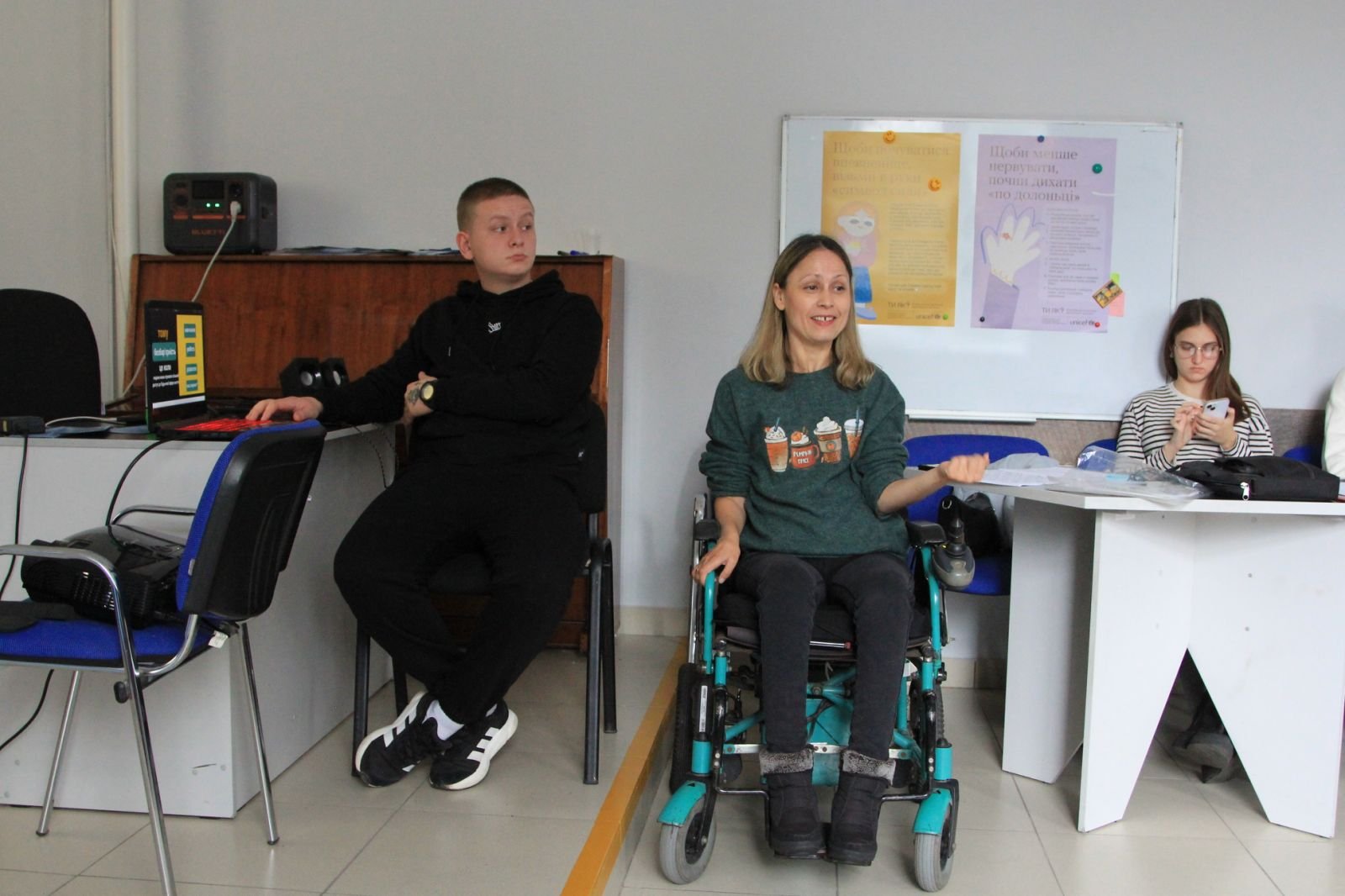
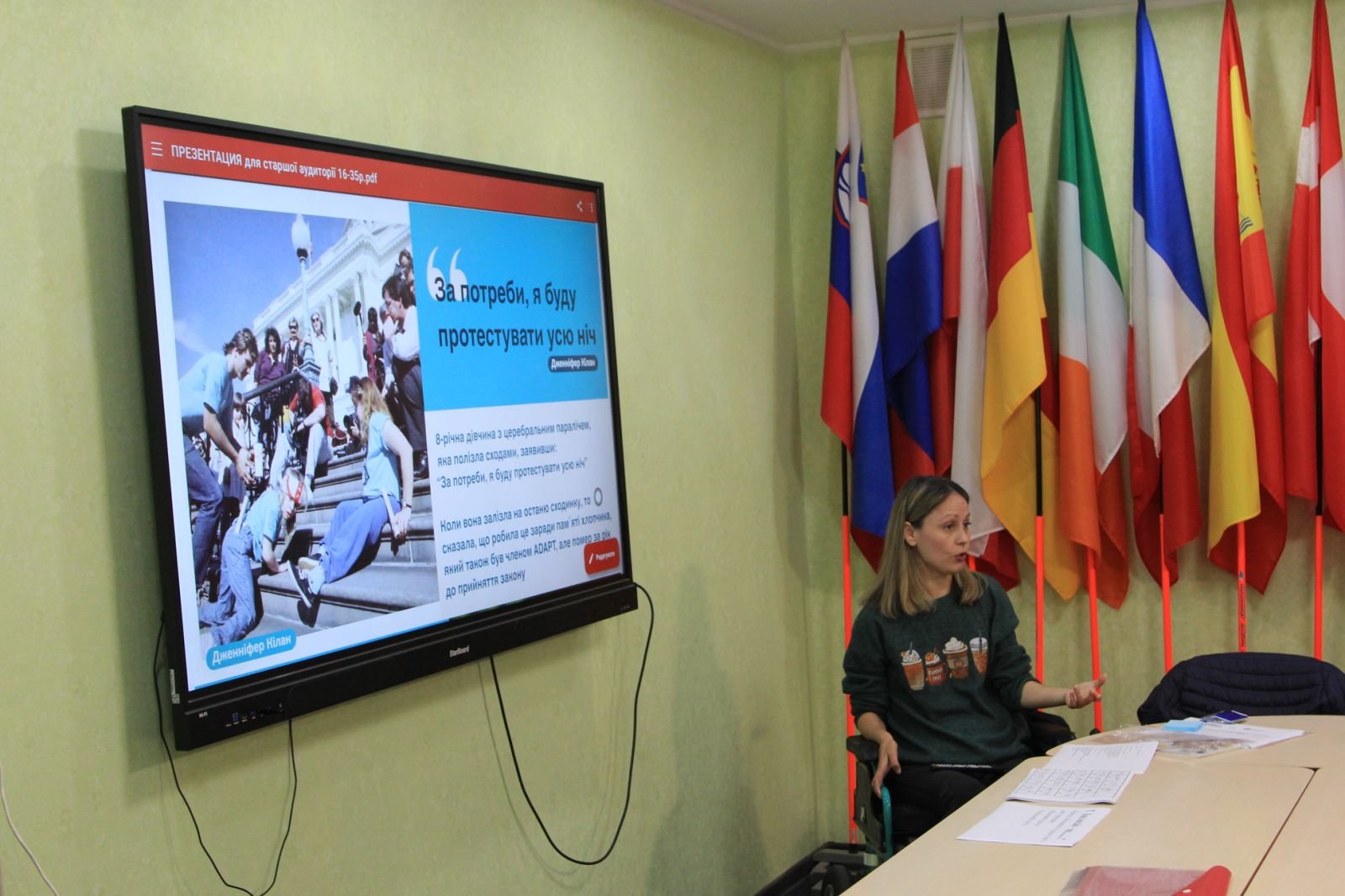
They presented their findings at the roundtable «Integration of Barrier-Free Principles into Humanitarian and Urban Targeted Programs» held in the second decade of February this year. At the same event, the goal of the campaign in the region was formulated: to make changes to the procedure for developing and implementing humanitarian and urban targeted programs by integrating barrier-free principles into them.
Participants included people with disabilities and activists of public organizations of people with disabilities, representatives of Mykolaiv City Council, city council members, representatives of humanitarian organizations working in the community, and journalists.
The participants stated that due to the lack of information in adapted formats, people with disabilities remain insufficiently informed about available services and mechanisms of humanitarian support. A big problem is that the authorities determine response priorities without taking into account the views of people with disabilities, and therefore, the humanitarian assistance offered does not always meet their real needs.
In addition, according to activists, funding for accessibility and barrier-free access is still a low priority for community leaders. And this fact literally «squeezes» people with disabilities out of the processes taking place in the community. The most acute problems of people with disabilities in the community appear in crisis situations, when they cannot meet their basic life needs in a timely manner due to the uneven distribution of humanitarian aid.
The discussion resulted in a number of proposals addressed to the authorities. The first of them is to amend the procedure for developing and implementing city target programs to integrate the principles of barrier-free accessibility and involve people with disabilities in decision-making. This is required by the UN Convention on the Rights of Persons with Disabilities.
The second proposal is to develop a directory with contact information on humanitarian aid and services provided in Mykolaiv, translate it into adapted formats for all categories of people with disabilities (plain language, sign language and using alternative communication methods and formats) for further distribution.
Proposal number three is to create a joint platform with the participation of the Department of Labor and Social Protection of the Mykolaiv City Council, public organizations of people with disabilities and humanitarian organizations to prioritize needs in a timely manner, improve the quality of humanitarian response, and establish feedback and communication.
Olga Vynohradova argues that the problem must be solved comprehensively, starting from the foundations. This is not a quick but effective way.
Yuriy Patykivsky, project communication manager
The project “Strengthening the protection of the rights of persons with disabilities during humanitarian response and recovery in accordance with the UN Convention on the Rights of Persons with Disabilities” is being implemented by the NAPD within the framework of a grant from the International Disability Alliance (IDA). International Disability Alliance (IDA)
У Черкасах для водіїв і контролерів комунального підприємства «Черкасиелектротранс» провели практичне навчання з доступного перевезення людей з інвалідністю та інших маломобільних пасажирів. Працівники освоїли правила безпечної посадки й висадки, використання апарелі, надання допомоги та належної взаємодії з пасажирами. Про це повідомляє громадська організація «Спілка людей з інвалідністю «Перспектива» на своїй сторінці у Facebook. Навчання стало […]
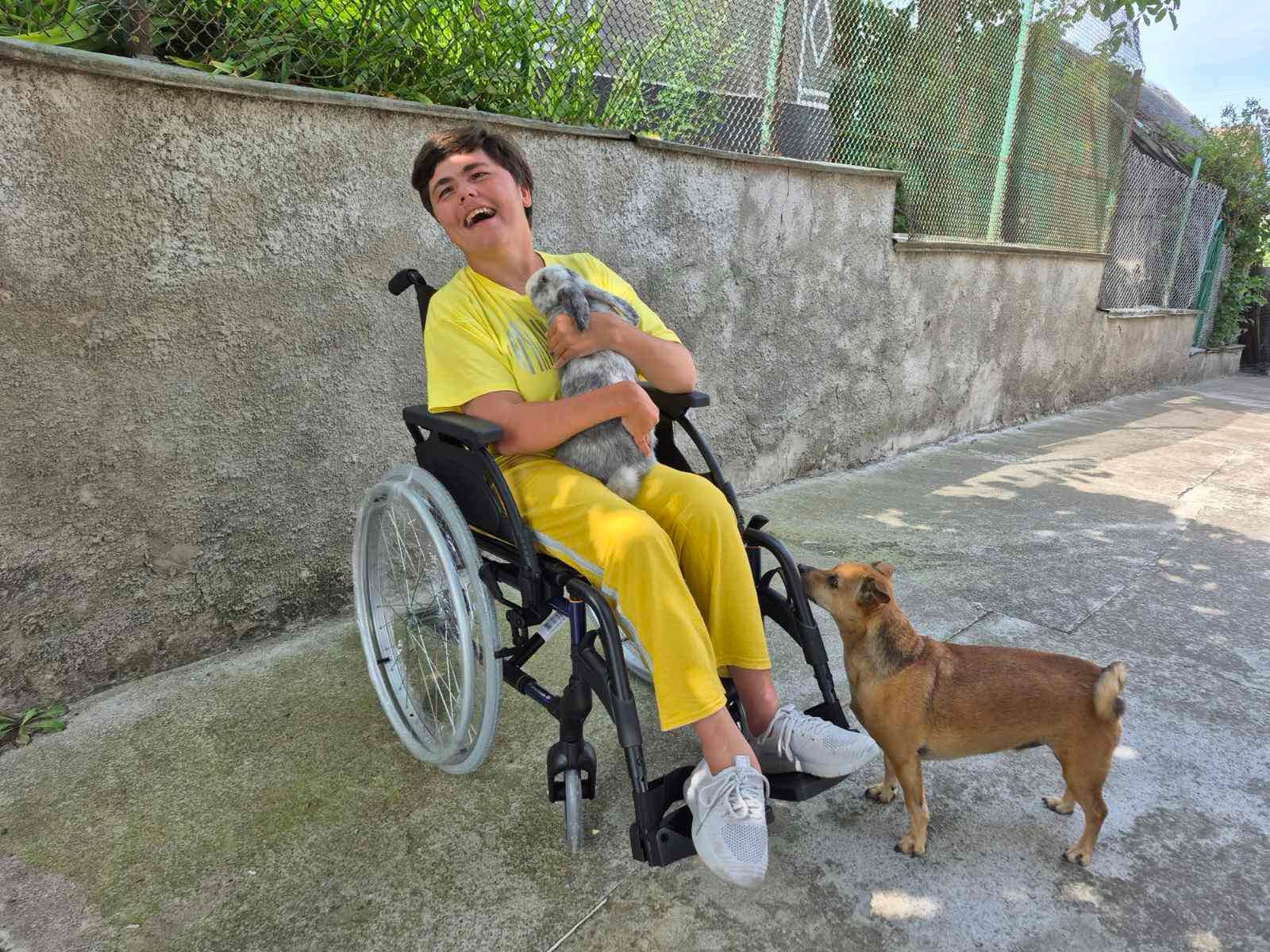
Провести час у дворі, поїхати у місто, дістатися лікарні чи аптеки, зустріти знайомих або просто прогулятися. Усі ці звичні справи є частиною повсякденного життя Ірини з Горохівскої громади, тому для неї важливо мати зручний і справний засіб мобільності. Ірина живе разом із мамою та дідусем. Основним прибутком родини є три пенсії. Тримати велике домашнє господарство […]
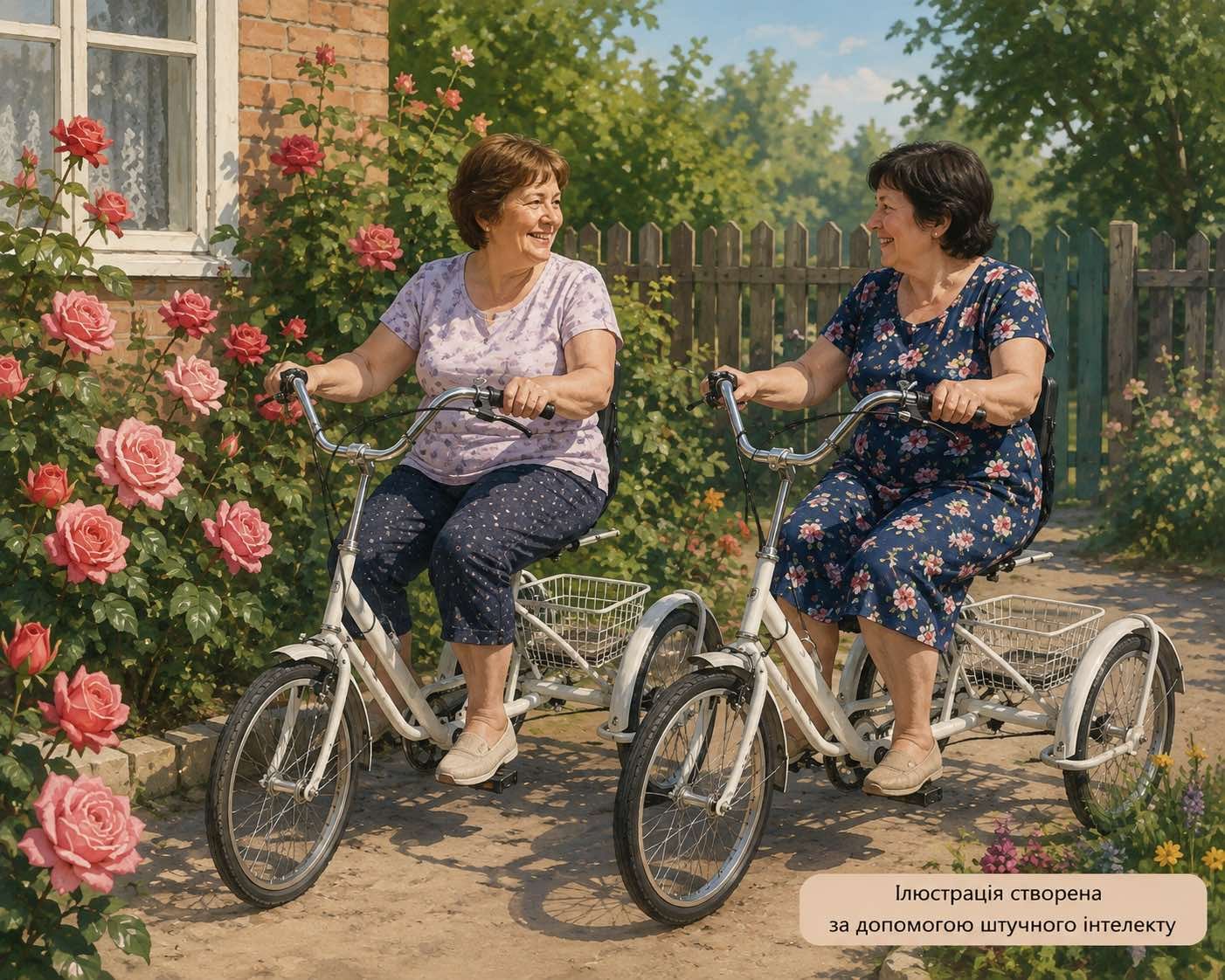
Коли щоденні справи пов’язані з постійними поїздками та пересуванням на значні відстані, можливість залишатися мобільною напряму впливає на те, наскільки людина може самостійно планувати своє життя. Для двох мешканок Чутівської громади це питання особливо практичне. Обидві жінки живуть у приватному секторі, займаються домашнім господарством, працюють на городі та мають спільне захоплення — вирощують квіти. У […]
Ресурсний центр Національної Асамблеї людей з інвалідністю України підготував черговий огляд законодавчих новацій, важливих для людей з інвалідністю, їхніх сімей, а також ветеранок і ветеранів. Серед основних тем липня і серпня — медична допомога й протезування, посилення соціальних гарантій, безпечна евакуація, підтримка у професійній освіті та доступність банківських послуг. 19 серпня Верховна Рада України ухвалила […]
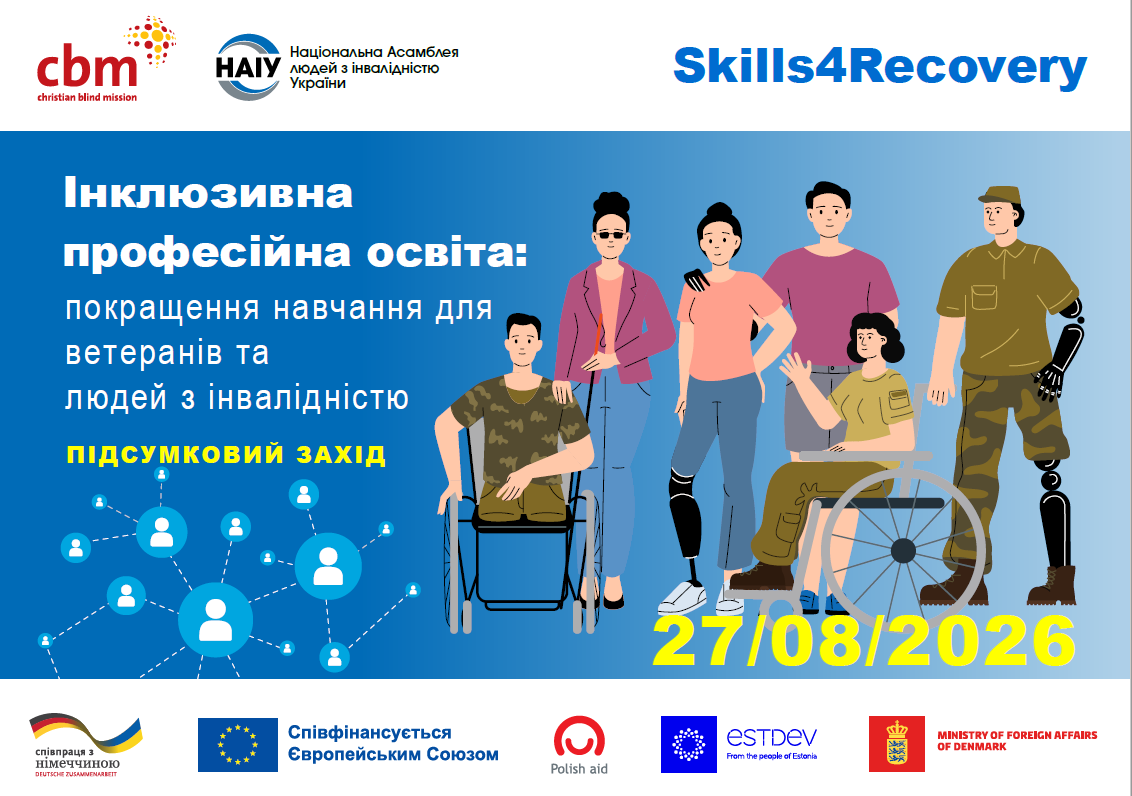
Запрошуємо долучатися до прямої трансляції та разом підбити підсумки роботи, яка об’єднала заклади професійної освіти, експертів і партнерів навколо спільної мети — зробити професійну освіту в Україні доступнішою та інклюзивнішою. Сьогодні говоримо про результати проєкту, практичний досвід закладів професійної освіти, підготовлені ресурси та рішення, які можуть працювати й після завершення проєкту. Запрошуємо долучитися до розмови […]
У 2026 році ветерани війни та інші визначені законодавством категорії громадян мають отримати разову грошову виплату до Дня Незалежності України. Більшості одержувачів гроші нарахують автоматично. Якщо людина набула відповідного статусу до 24 серпня, але станом на 1 жовтня виплату не отримала, вона може звернутися із заявою до Пенсійного фонду України. Повний перелік категорій, які мають […]