Mentoring and Adaptations: Helping Learners Achieve Results
2 July 2026
Share:
This is the third article in the series “Positive Practices of Inclusion in Vocational Education” — a collection of stories showing how practical solutions in vocational schools remove barriers to learning and help individuals move towards independence.
Inclusive vocational education often relies on one simple foundation: mentoring. When an educator is there to lean on – someone who doesn’t dismiss difficulties but actively helps find solution – learning becomes truly meaningful and leads to real results.
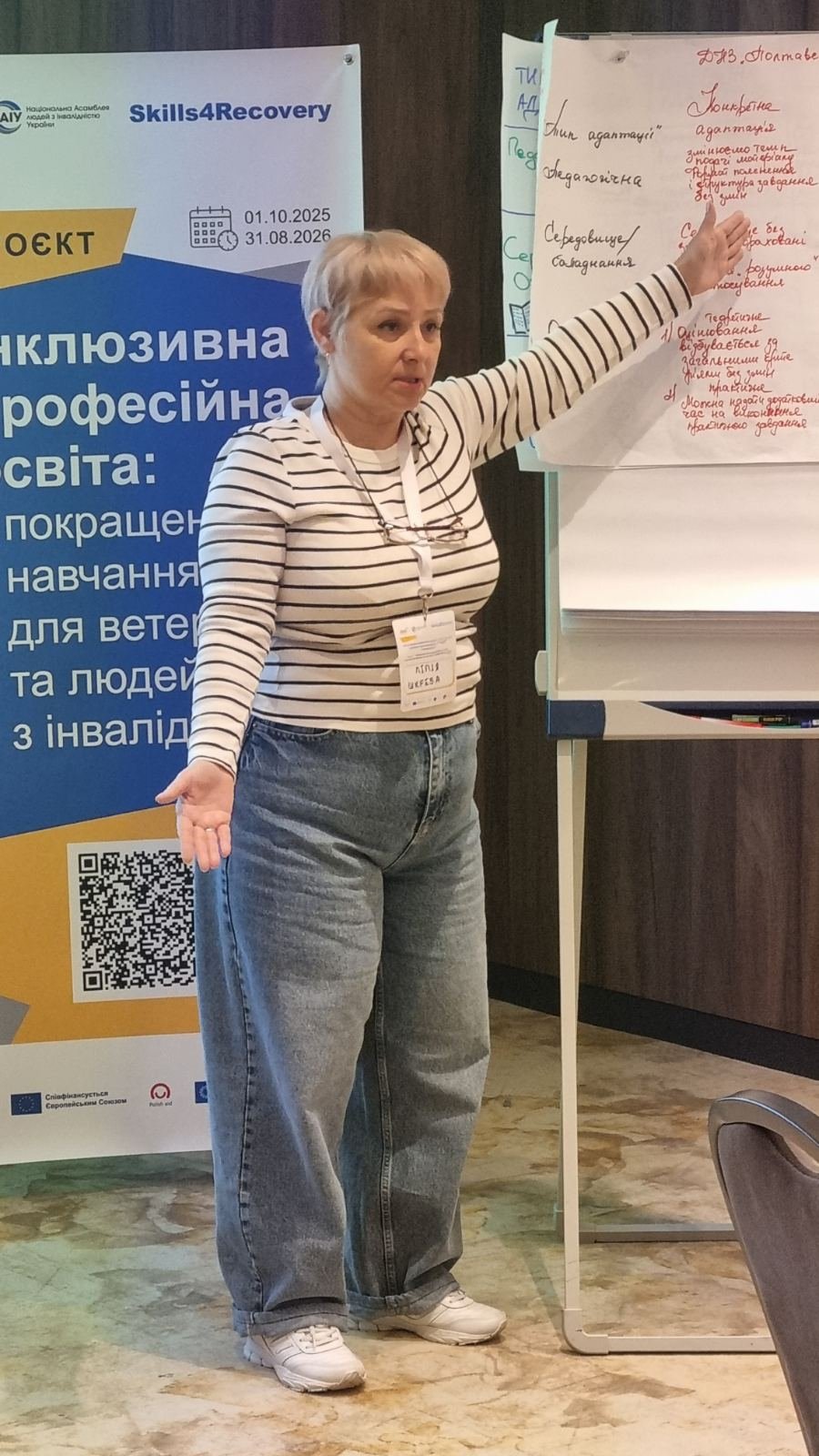
These are exactly the kinds of examples we collect and share through the project “Inclusive Vocational Education and Training: Improving Training for Veterans and People with Disabilities”, which is part of the Skills4Recovery Multi-Donor Initiative, so that working solutions become systemic rather than isolated cases.
Poltava: How a Teacher Helps Learners Take a Step Forward
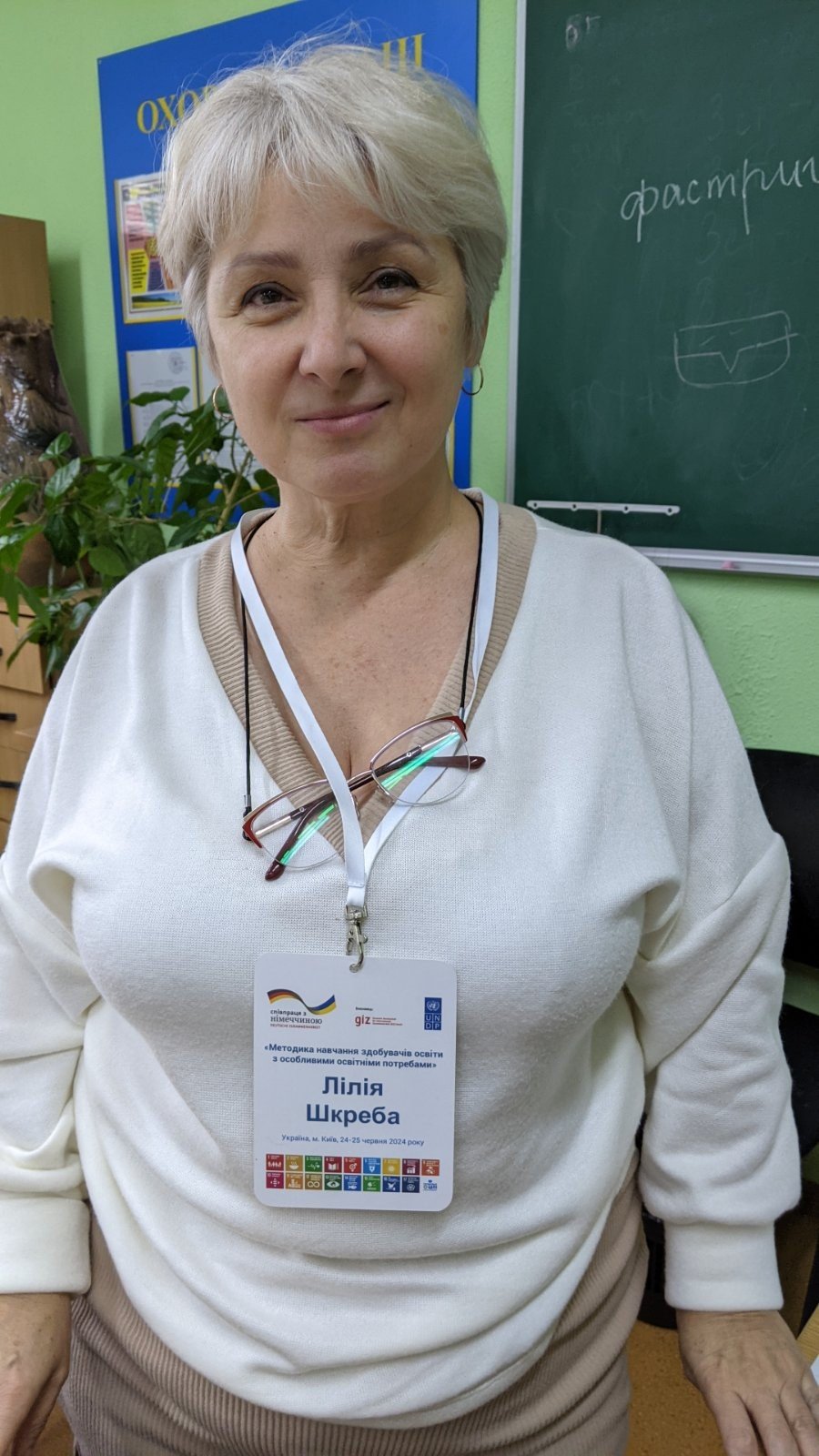
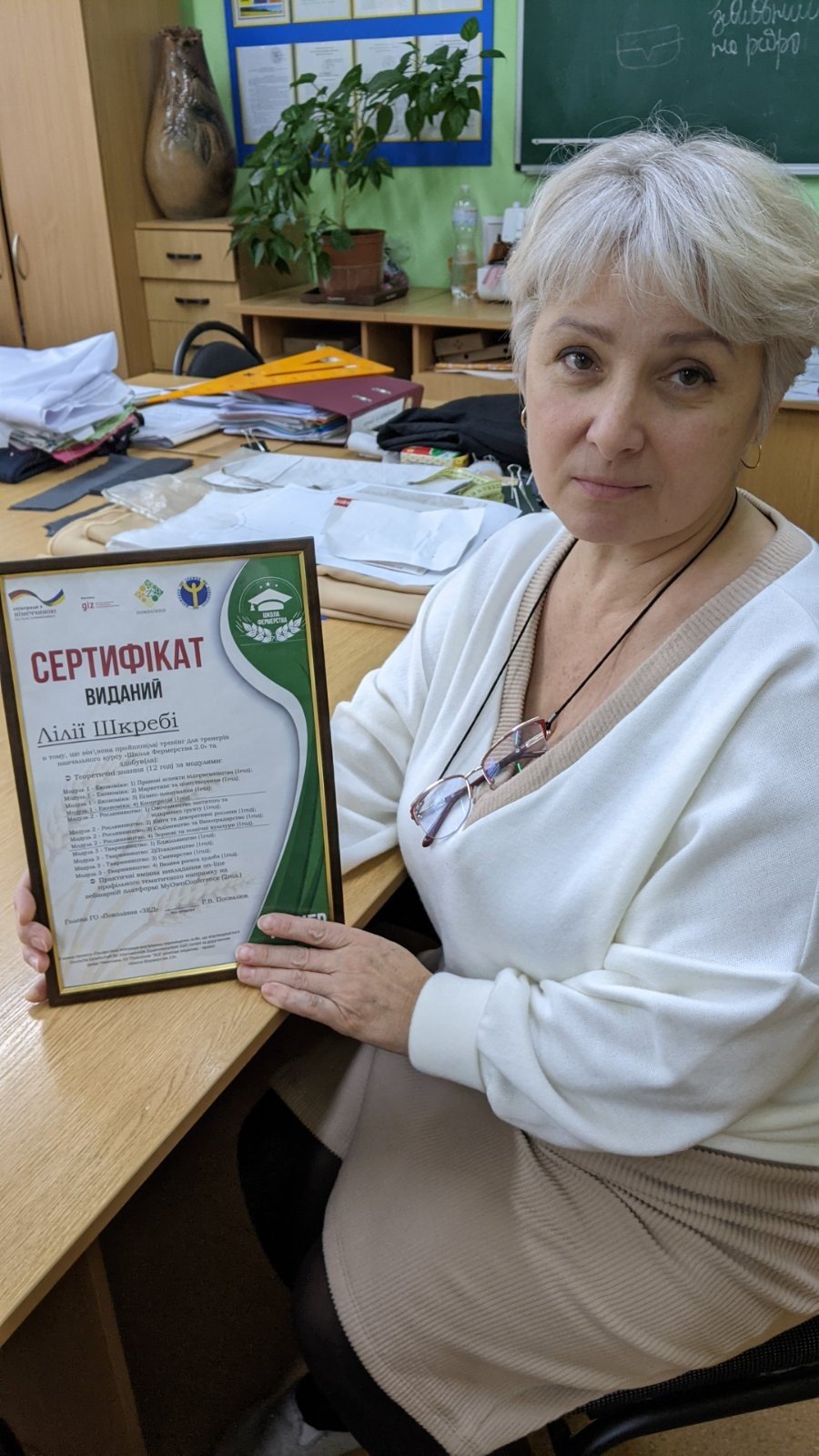
Liliia Shkreba has worked as a teacher and practical training instructor at the Poltava Vocational Education Center of the State Employment Service since 2017. Experienced in working with learners of diverse needs, she recently completed specialized training in inclusion and psychosocial support through the project “Inclusive Vocational Education and Training: Improving Training for Veterans and People with Disabilities.”
Liliia explains her approach simply: it is vital not to “demand the same from everyone,” but rather to find a path that works for each specific individual – both in theory and in practice. Her personal experiences have deeply shaped this mindset. “My neighbours are deaf,” she shares. “Living near them made me realize how important it is to use alternative ways of communicating... I truly regret that I don’t know sign language.”
Two core principles guide Liliia's work: empathy (“putting yourself in the other person’s shoes”) and hands-on practice (“showing exactly how to perform a task, step by step”). “For me, learning is all about opportunity. I immediately think about how I can apply new knowledge in practice,” she adds.
These very principles proved crucial when Olena arrived at the Center with a dream of learning how to sew.
Olena’s Story: Sewing Step by Step with Mentor Support
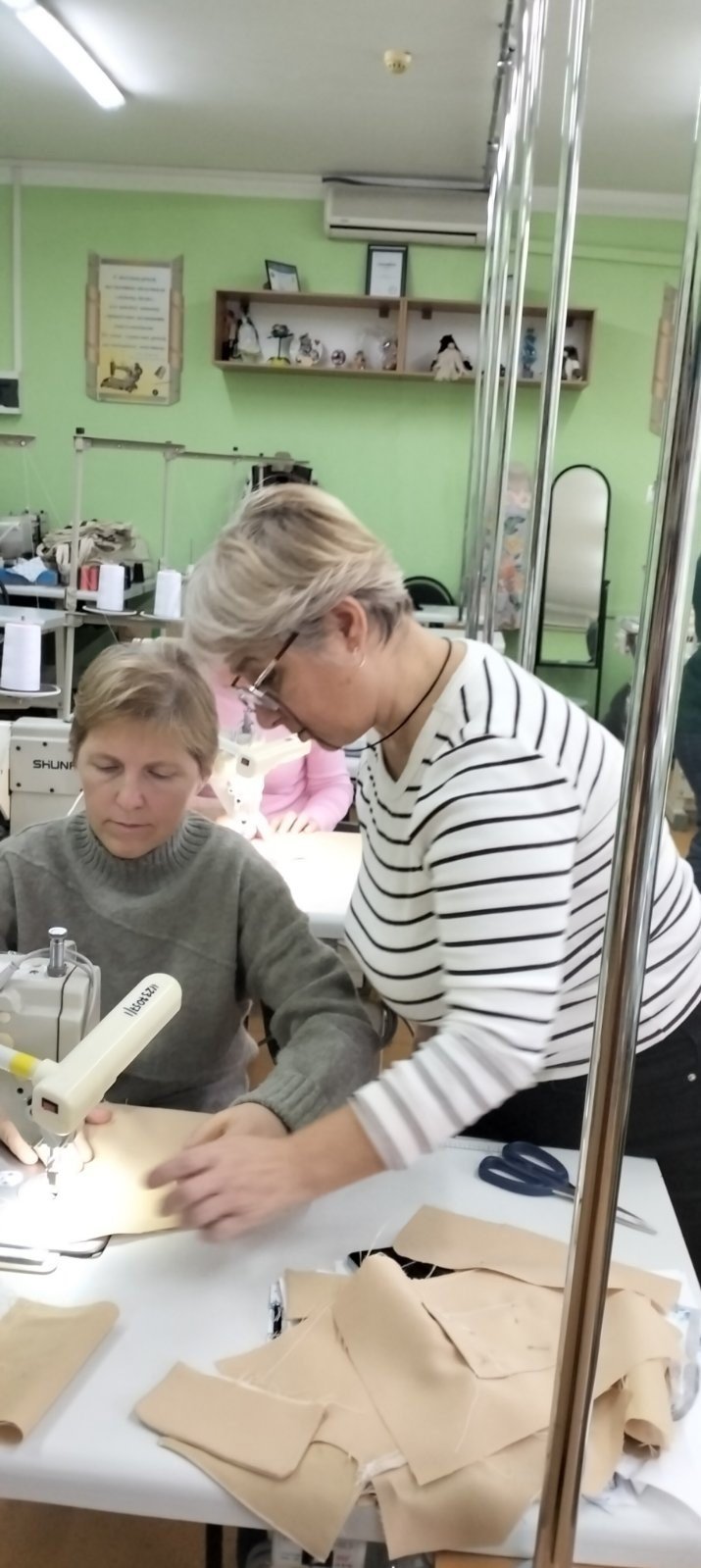
Recently, Olena came to the Center with the dream of learning to sew. She has a prosthetic arm that does not move. At first, it seemed very difficult, but the teacher, together with Olena, began to select solutions for specific operations.
“Your eyes are afraid, and your mind creates a barrier: no, this is impossible. But it is important to try,” Liliia explains.
To enable Olena to complete tasks independently, practical adaptations were introduced in the training:
• for the gathering operation (ruffle), which usually requires two hands, a special gathering presser foot was used — and Olena was able to perform the operation independently;
• instead of an iron that was difficult to use, a handheld steam iron with a clothes rack was purchased — now Olena can iron with one hand.
During the training, there were moments of fatigue and discouragement. “Sometimes Olena says: ‘No, I can’t.’ But I support her: ‘Look, it is working.’ This kind of support is very important,” the teacher says.
“When she has difficulties, I try to put myself in Olena’s place and find practical ways to perform a specific technological operation,” Liliia adds.
“For us, the key thing is that a learner should not be left alone with difficulties. Mentoring and the right tools help bring learning to a successful result,” the VET institution’s administration comments.
The result: thanks to mentoring and precise adaptations, Olena is already performing some key operations independently — and this restores her confidence to move further in her training and profession.
What Exactly Made This Case Work
• Mentoring: support at “points of discouragement” and progress in small steps.
• Precise tools for specific operations: “here and now” solutions remove a learning barrier.
• Focus on independence: the adaptations were selected so that Olena could perform the operations independently.
This case has been prepared as an evidence-based example of effective solutions by the team of the project “Inclusive Vocational Education and Training: Improving Training for Veterans and People with Disabilities,” implemented by the National Assembly of People with Disabilities of Ukraine (NAPD) in cooperation with Christoffel-Blindenmission Christian Blind Mission e.V. (CBM), with financial support from the European Union, Germany, Poland, Estonia, and Denmark, as part of the Skills4Recovery Multi-Donor Initiative, implemented by the Deutsche Gesellschaft für Internationale Zusammenarbeit (GIZ) GmbH and the Solidarity Fund PL (SFPL).
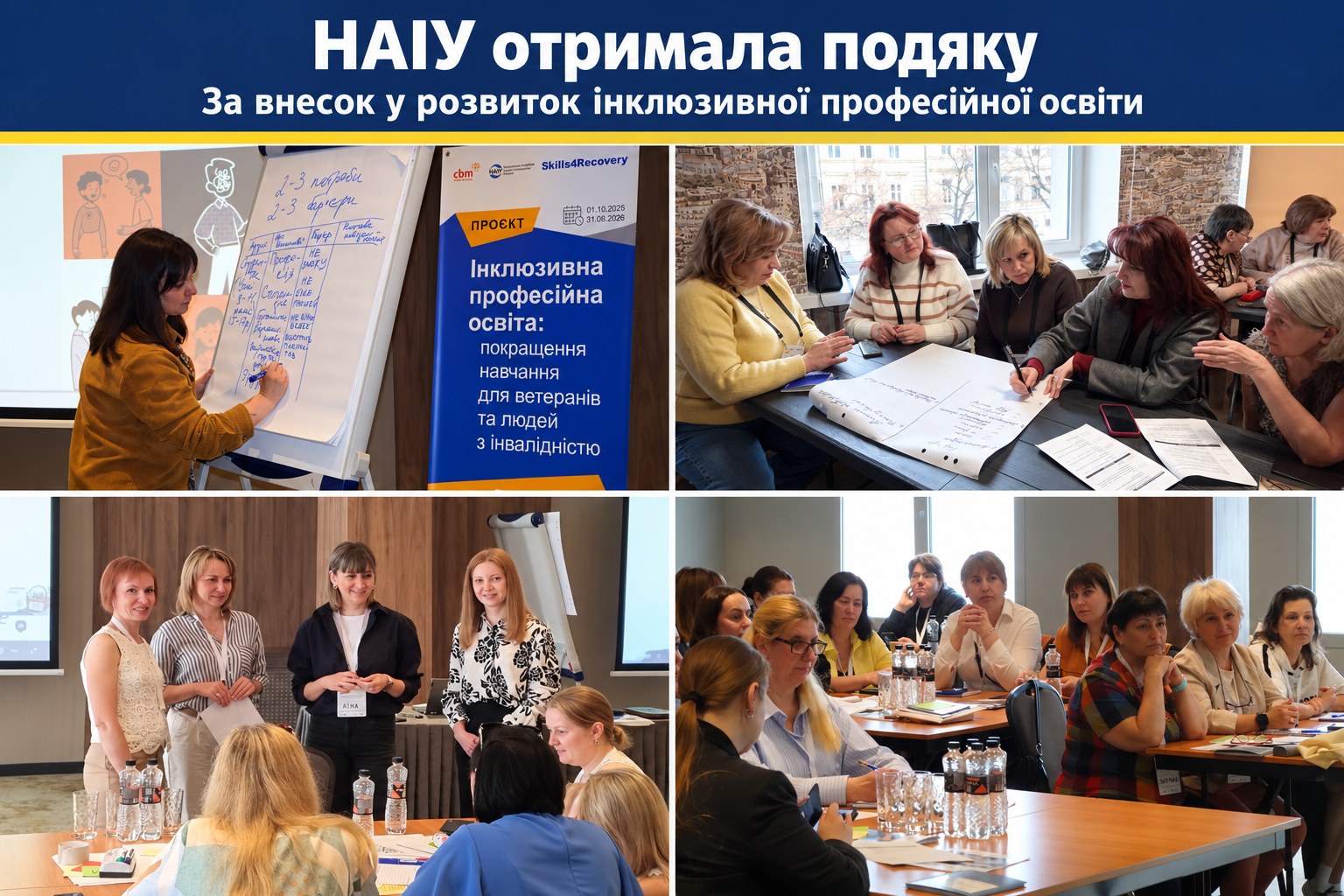
Під час підсумкової партнерської зустрічі Національна Асамблея людей з інвалідністю України отримала слова подяки за реалізацію проєкту «Інклюзивна професійна освіта: покращення навчання для ветеранів та людей з інвалідністю». Партнери відзначили професіоналізм команди НАІУ, якісну координацію роботи та практичну цінність проведених навчань і розроблених матеріалів для закладів професійної освіти. Особливу увагу приділили тому, як педагоги застосовують […]
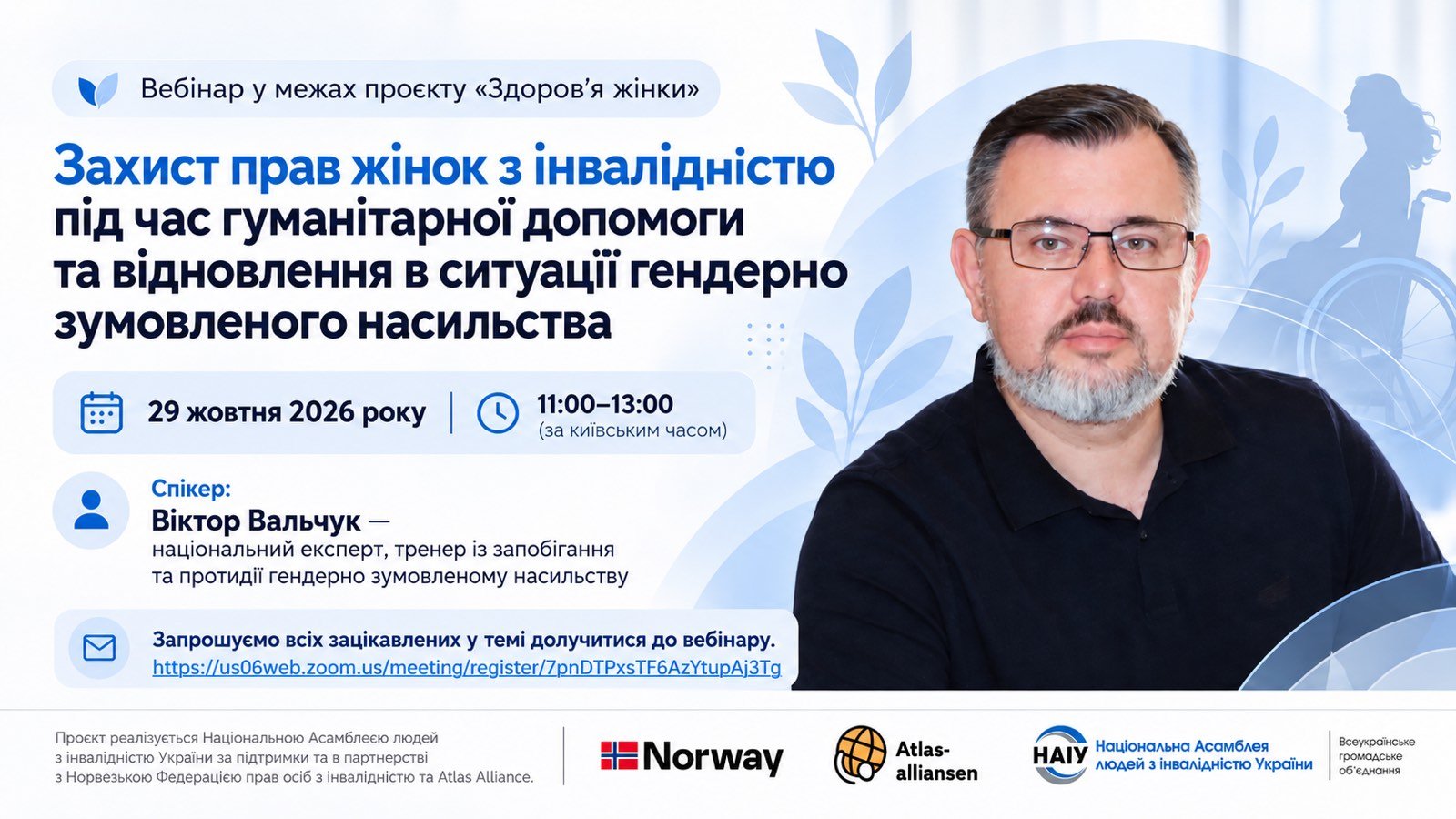
29 жовтня 2026 року Національна Асамблея людей з інвалідністю України (НАІУ) запрошує долучитися до вебінару «Захист прав жінок з інвалідністю під час гуманітарної допомоги та відновлення в умовах гендерно зумовленого насильства». В умовах повномасштабної війни жінки з інвалідністю можуть стикатися з додатковими ризиками гендерно зумовленого насильства, а також із бар’єрами під час звернення по допомогу […]
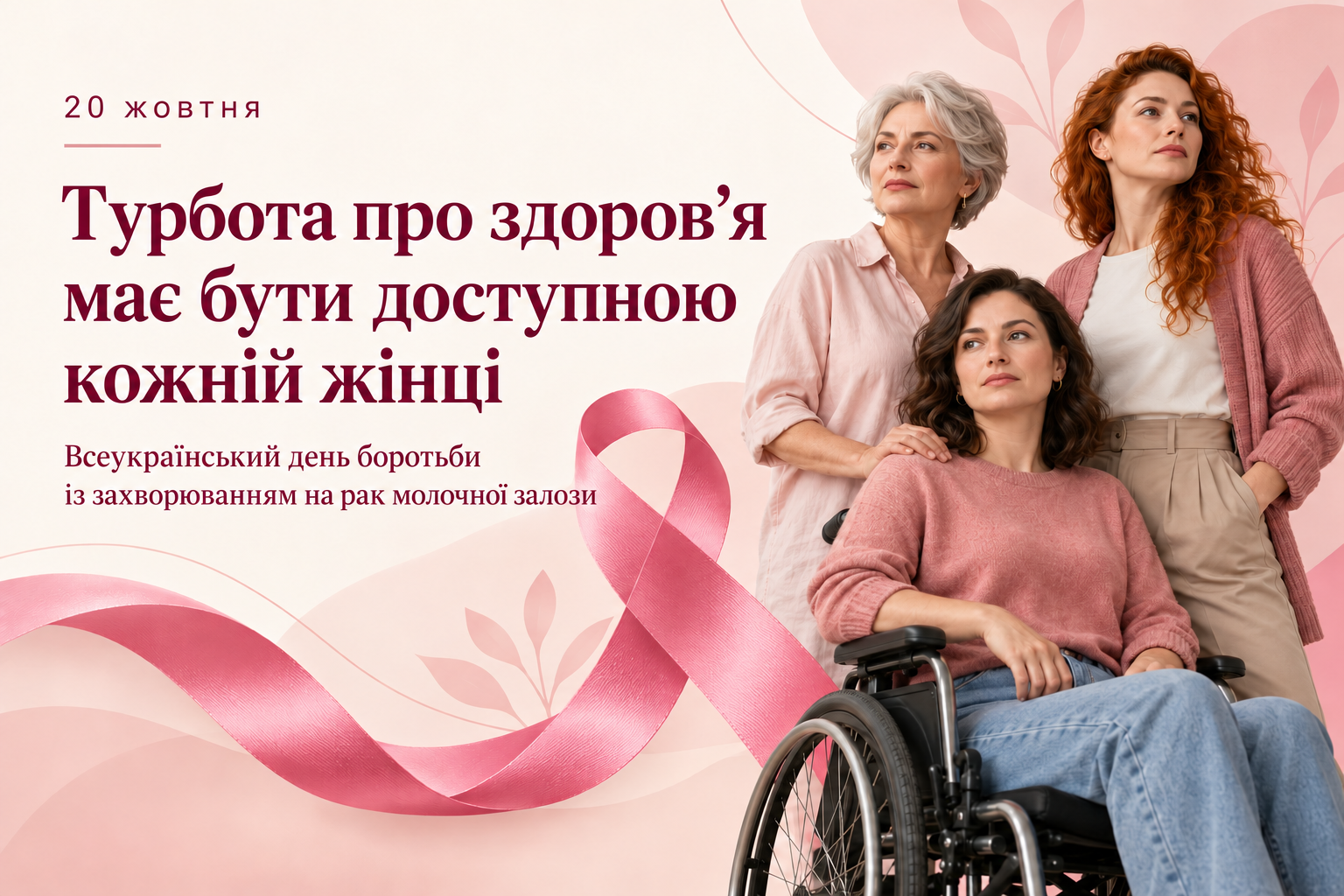
20 жовтня — Всеукраїнський день боротьби із захворюванням на рак молочної залози. Заклик «пройдіть обстеження» важливий. Але за ним має стояти реальна можливість потрапити до лікаря. Для жінок з інвалідністю це означає доступний транспорт і медичний заклад, обладнання, яким можна скористатися, зрозумілу інформацію та поважне спілкування. Без упереджень, зі збереженням приватності та увагою до потреб […]
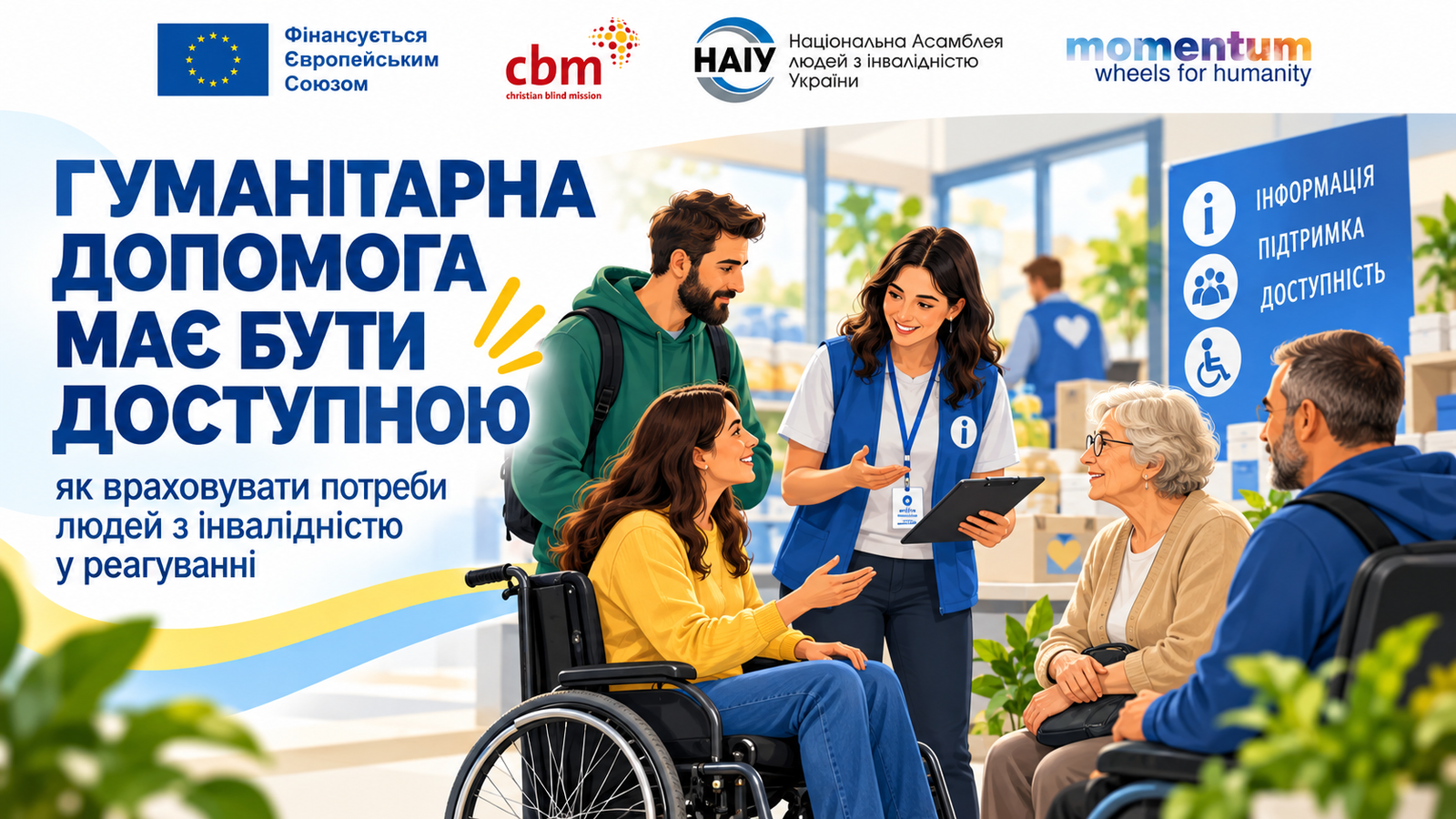
Гуманітарна допомога може бути передбачена програмою, профінансована і навіть доступна у громаді. Але головне питання інше: чи може людина, яка її потребує, реально нею скористатися? Саме про це говорили учасники дворівневого навчання «Гуманітарна діяльність: врахування потреб осіб з інвалідністю», яке у жовтні провела Національна Асамблея людей з інвалідністю України. До навчання долучилися представники гуманітарних і […]
Шукаємо координатора(-ку) з комунікацій у команду НАІУ (на проєкт) Національна Асамблея людей з інвалідністю України (НАІУ) реалізує проєкт «Інклюзія передусім — захист і підтримка дітей з аутизмом та іншими видами інвалідності, ветеранів і ветеранок в Україні», спільно з СВМ та СВМ Італія, спрямований на підтримку ветеранів та ветеранок, розвиток доступних можливостей для їхньої реабілітації, протезування, […]
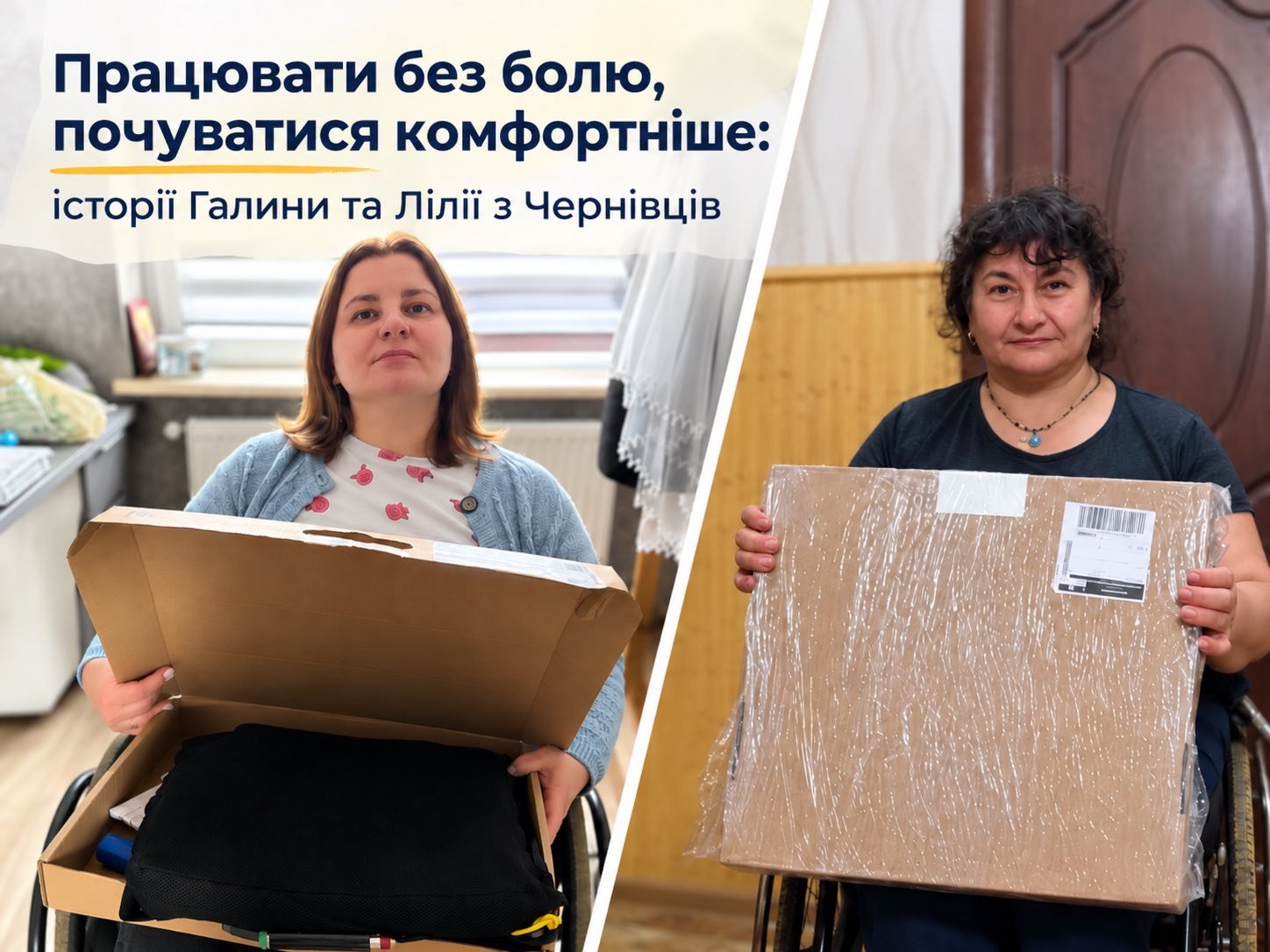
Галина з Чернівців створює весільні аксесуари для наречених. Її робота потребує творчості, терпіння та уваги до найменших деталей. За виготовленням прикрас жінка проводить багато годин, адже кожен виріб вимагає кропіткої ручної праці. Для Галини важливо мати можливість займатися улюбленою справою, однак тривала робота нерідко супроводжується фізичним дискомфортом. Жінка користується кріслом колісним, і через велике навантаження […]