NAPD in Brussels: international platforms where Ukraine's inclusion agenda is heard
December 16, 2025
Share:
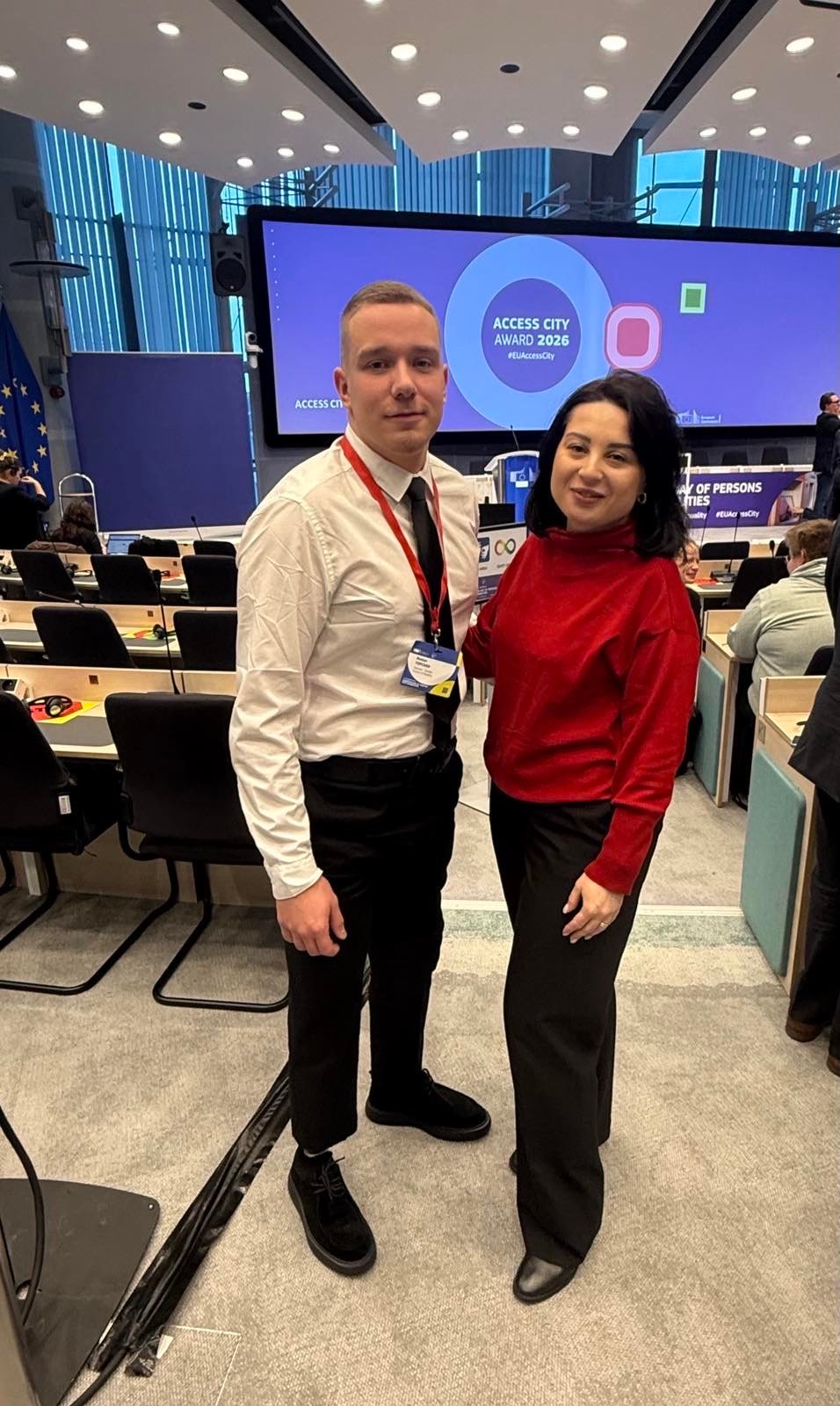
In December, representatives of the National Assembly of People with Disabilities of Ukraine (NAPD) — Ruslan Topchan and Oleksandra Nazarenko — paid a working visit to Brussels (Kingdom of Belgium) at the invitation of the European Disability Forum (EDF). The focus of the trip was to participate in the European Day of Persons with Disabilities (EDPD 2025) and the EU NGO Human Rights Forum 2025, as well as working meetings to strengthen international cooperation and advocacy for the interests of persons with disabilities and veterans from Ukraine.
European Day of Persons with Disabilities (EDPD 2025): inclusion as a standard of crisis management
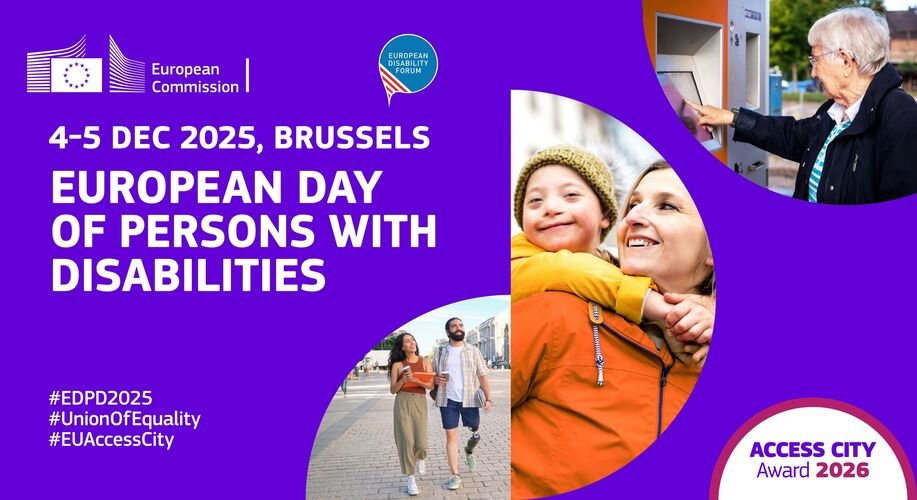
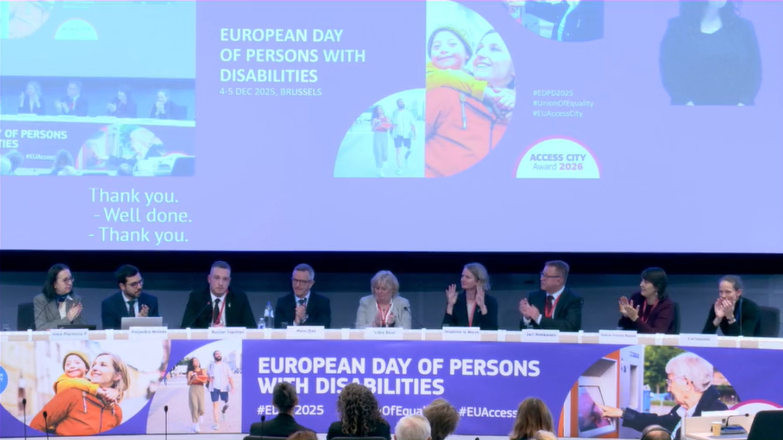
On 4–5 December 2025, EDPD 2025 brought together representatives of the European Commission, EDF, governments and relevant experts in Brussels. This event served as a platform for politicians, organisations and representatives of persons with disabilities to come together to discuss important issues and achievements. Its aim was to promote the inclusion and protection of the rights of persons with disabilities in Europe.
The event was opened by, among others, Hadja Lahbib, Commissioner for Equality, Preparedness and Crisis Management, and also the president of EDF Ioannis Vardakastanis.
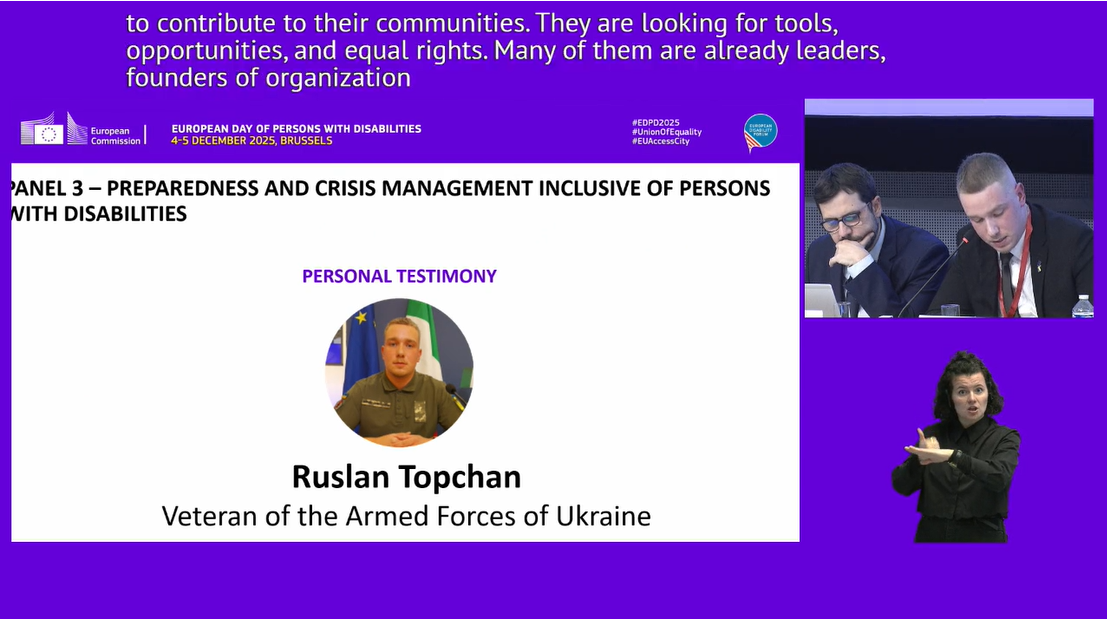
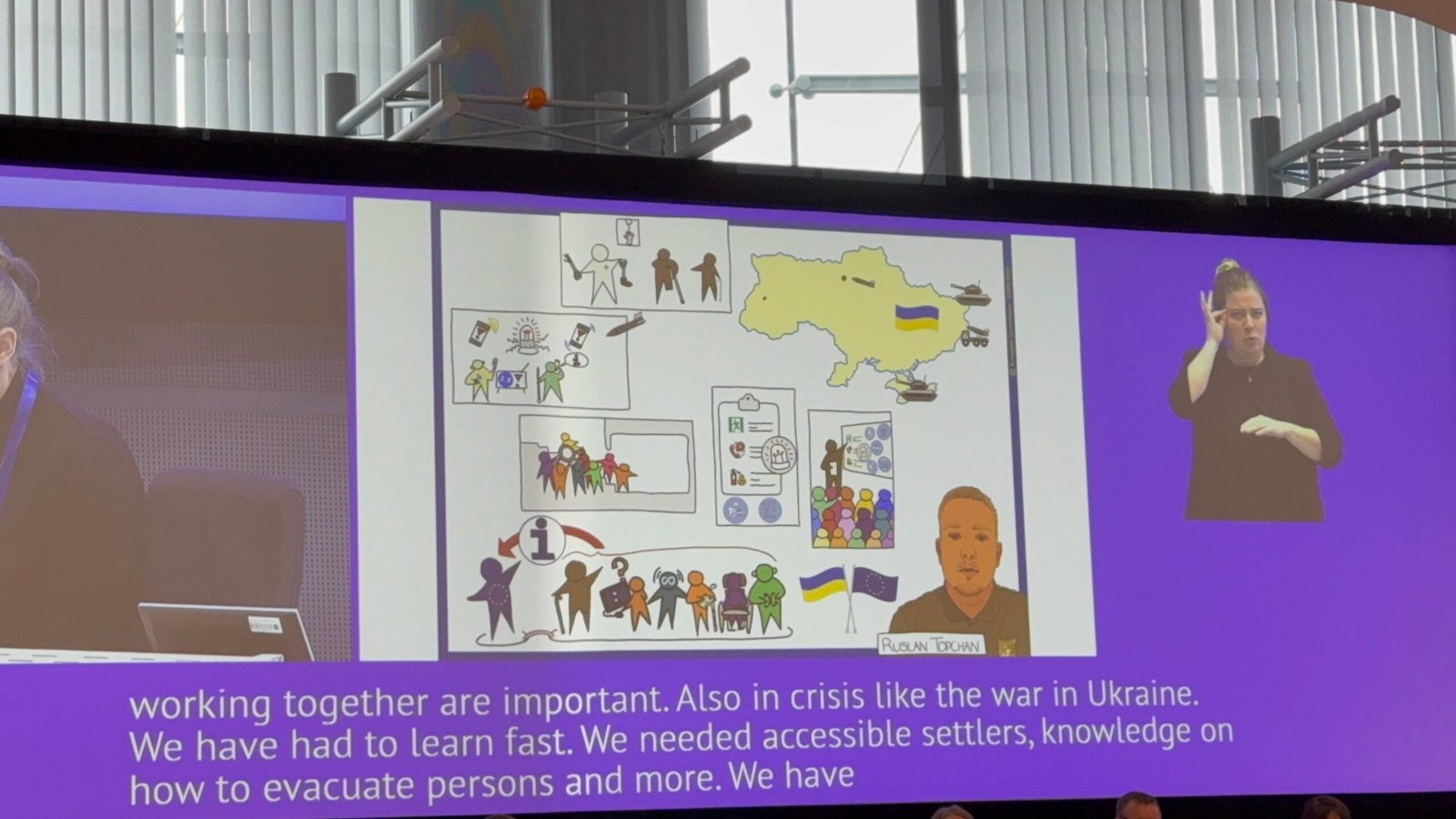
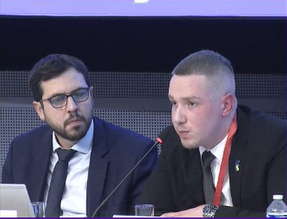
A separate focus of the second day was the panel discussion “Preparedness and crisis management inclusive of persons with disabilities”. The discussion featured a speech by Ruslan Topchan, a veteran of the Armed Forces of Ukraine, alongside representatives of the European Commission's DG ECHO, Finnish government rescue services, and European organisations working in emergency communications.
Ruslan emphasised that inclusivity must be "built into" all stages — from planning and notification to evacuation and recovery — in accordance with the principles of accessibility, universal design and "nothing about us without us".
"People with disabilities are not passive 'recipients of assistance'. They must be involved in decision-making and be part of the national crisis management system. The principle of 'nothing about us without us' is critically important."
"Veterans with disabilities are not looking for pity — they need tools, equal rights and opportunities."
"We must honestly admit that Ukraine does not yet have a stable and continuously operating universal mechanism for evacuating people with disabilities."
EU NGO Human Rights Forum 2025: “Partnering for Equality and Non-discrimination”
The next key event was the EU NGO Human Rights Forum 2025 on the theme of “Partnering for Equality and Non-discrimination”, which took place on 9 December 2025 at the Albert Borschette Convention Centre (Brussels).
The forum set a high "political tone" right from the start, with speeches by the High Representative of the European Union for Foreign Affairs and Security Policy/Vice-President of the European Commission Kaja Kallas, Martin Seychell (DG INTPA, European Commission) and Olivia Rope (Penal Reform International) on behalf of the Human Rights and Democracy Network. A key report on global trends in combating discrimination was presented by Volker Türk, UN High Commissioner for Human Rights.
The Forum then moved on to practical tracks directly relevant to the Ukrainian context:
equality and non-discrimination in the context of increasing pressure on human rights and shrinking civic space;
intersectionality — how to combine policies so that the most vulnerable groups are not left behind;
digital rights and risks of discrimination in the online environment (in particular, the impact of AI solutions and technologies on marginalised groups);
anti-racism and partnerships between the state and civil society.
On 10 December, participants worked in Strategy Labs to develop priorities and recommendations for EU policies. One of the working tracks was devoted to the rights of persons with disabilities.
The forum was implemented with the support of a grant from the European Commission and in partnership with Minority Rights Group and EuroMed Rights on behalf of the Human Rights and Democracy Network.
Working meetings in Brussels: young people with disabilities and partnerships
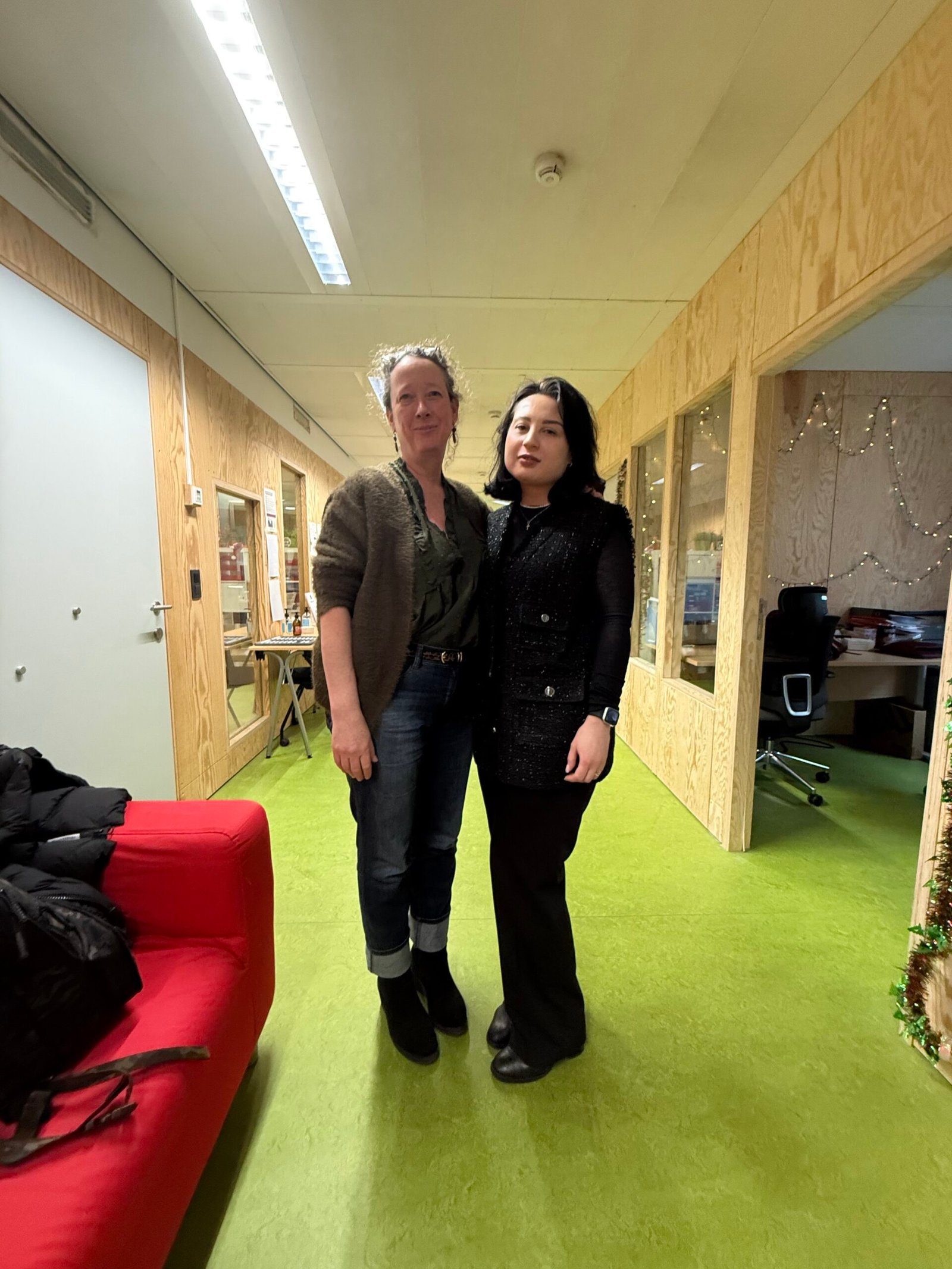
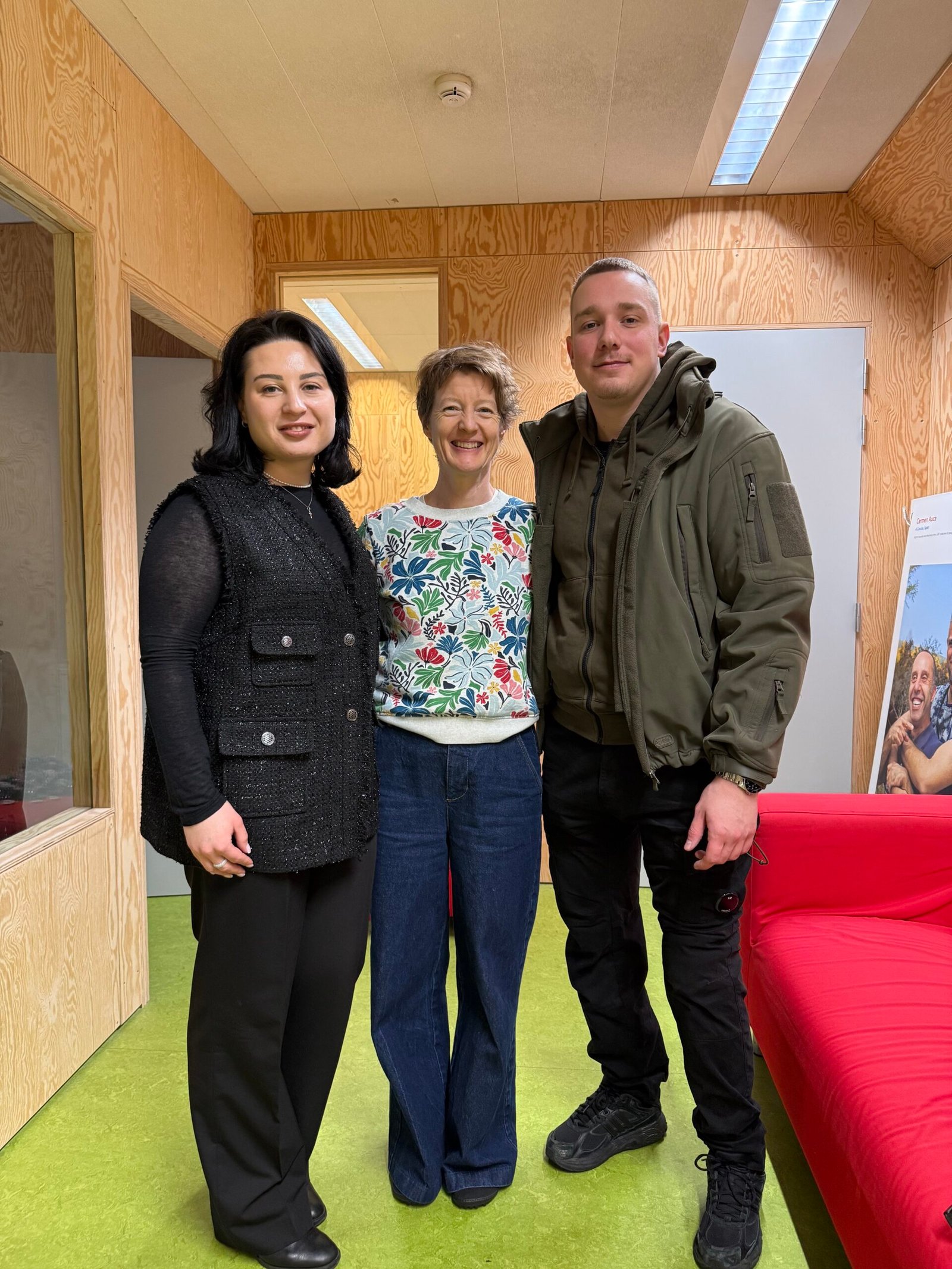
During the trip, the NAPD team also held a series of working meetings in Brussels. In particular, a meeting was held with a representative of the EDF Youth Committee, dedicated to issues of young people with disabilities. The parties discussed access to inclusive education and vocational training, barriers to employment and economic independence, the psychosocial consequences of war and forced displacement, as well as the insufficient involvement of young people with disabilities in decision-making processes. Particular attention was paid to the needs of young veterans with disabilities, the development of youth leadership and self-representation, and opportunities for Ukrainian youth with disabilities to participate in European youth initiatives. An informal meeting was also held with CBM partners, during which the implementation of the current joint project, its interim results and challenges were discussed, areas for further cooperation (support for veterans with disabilities, crisis response, rehabilitation and inclusive recovery) were outlined, and the parties' interest in long-term partnership was confirmed.
The result for NAPD: international synergy and clear next steps
For NAPD, this was a working visit with a clear goal: to strengthen international support for inclusive solutions for Ukraine, to communicate Ukraine's experience to European stakeholders, to strengthen partnerships, and to include disability and veteran issues in the agenda of equality, human rights, crisis response, and recovery.
NAPD continues to work with partners to ensure that inclusiveness in Europe and Ukraine is not just a declaration, but a proven standard for decisions — in every community, in every crisis, at every stage of recovery.
Пані Тетяна, яка проживає у Карлівській громаді на Полтавщині, має інвалідність І групи внаслідок онкологічного захворювання. Жінка щодня стикається з викликами, пов’язаними зі станом здоров’я, і водночас знаходить ресурси підтримувати звичний ритм життя. Кожен день пані Тетяна наповнює важливими для себе справами: прогулянками на природі, можливістю побути на свіжому повітрі, спілкуванням із друзями та близькими. […]
Формування доступного середовища є однією з ключових умов забезпечення прав і рівних можливостей людей з інвалідністю. Попри наявність законодавчих норм, що врегульовують цей процес, а також зусилля громадськості, не всі державні й комунальні заклади та об’єкти інфраструктури є зручними для маломобільних громадян. Саме тому людям з інвалідністю важливо не лише знати свої права, а й […]
Як побудувати систему, де люди з інвалідністю живуть і працюють у громаді, а не залишаються поза нею? Саме про це говорили під час вебінару, який провів Ресурсний центр Національної Асамблеї людей з інвалідністю України (Сторінка РЦ за покликанням). Захід був присвячений досвіду Японії — країни, де інклюзія стала частиною щоденних рішень, а не окремою політикою. […]
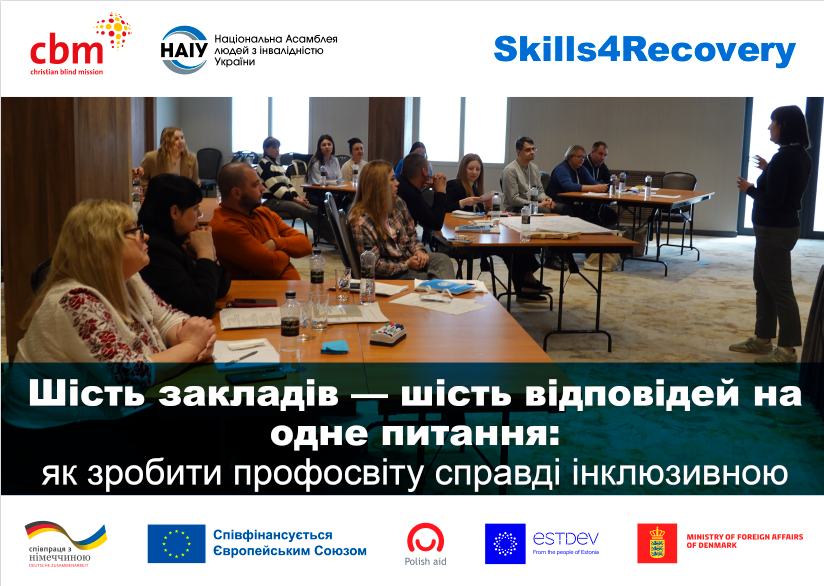
У Києві завершився третій тренінг для команд закладів професійної та фахової передвищої освіти, які беруть участь у проєкті з розвитку інклюзивної професійної освіти в межах Мультидонорської ініціативи Skills4Recovery. Це був етап не лише про навчання, а й про чесну розмову: що вже вдається, де досі залишаються бар’єри і що треба змінювати, щоб навчання було доступним […]
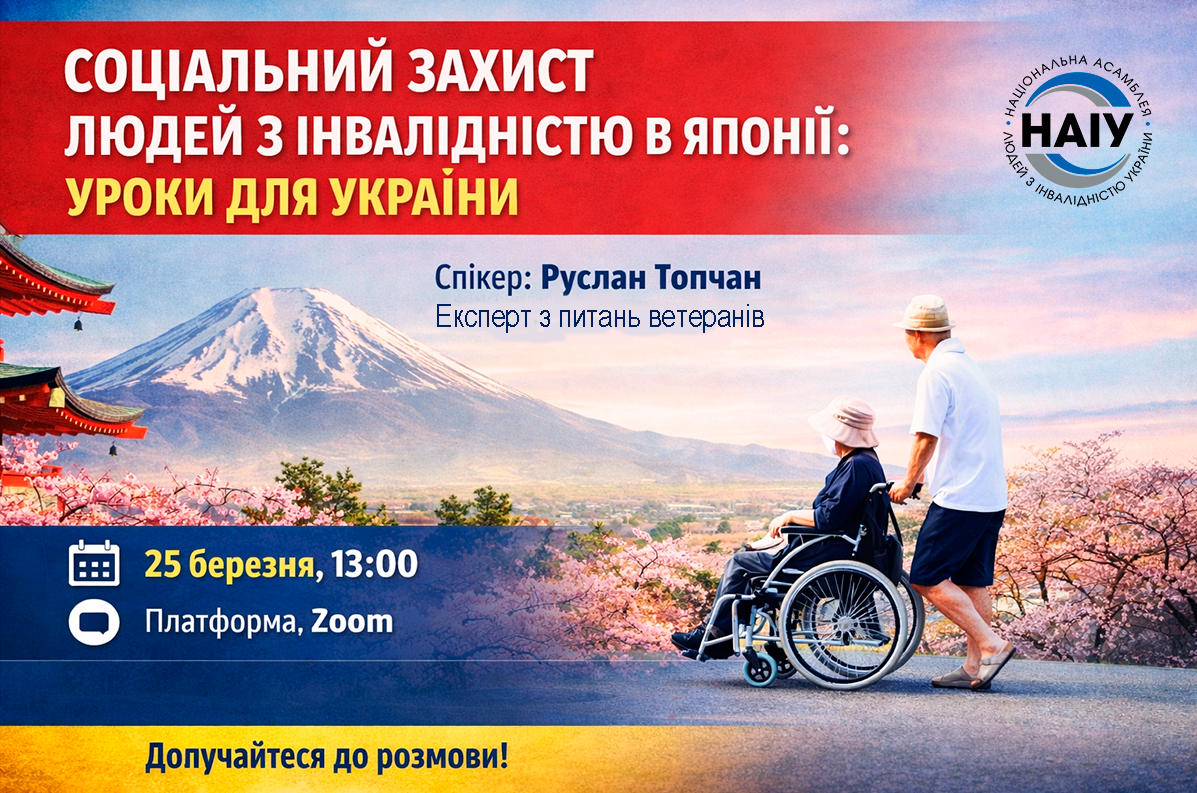
Як працює система соціального захисту людей з інвалідністю в Японії і що з цього досвіду може бути корисним для України? Запрошуємо на вебінар, під час якого говоритимемо про підхід Японії до соціального захисту, побудований на принципі CBID — стратегії, що спрямована на повну участь людей з інвалідністю в житті громади. Спікер вебінару — Руслан Топчан, […]
Пропонуємо огляд законодавчих новацій в Україні, які стосуються людей з інвалідністю. Серед них — програма спеціальної доплати для пенсіонерів і груп, які отримують соціальну допомогу. Як стверджують в уряді, ці кошти мають отримати щонайменше 13 мільйонів українців. Розповідаємо про Закон № 4779-IX, який визначає повноваження держави, військових адміністрацій та обов’язки батьків щодо проведення обов’язкової евакуації. […]