NAPD Methodological Cards as a Tool for Overcoming Stereotypes about People with Disabilities
December 16, 2025
Share:
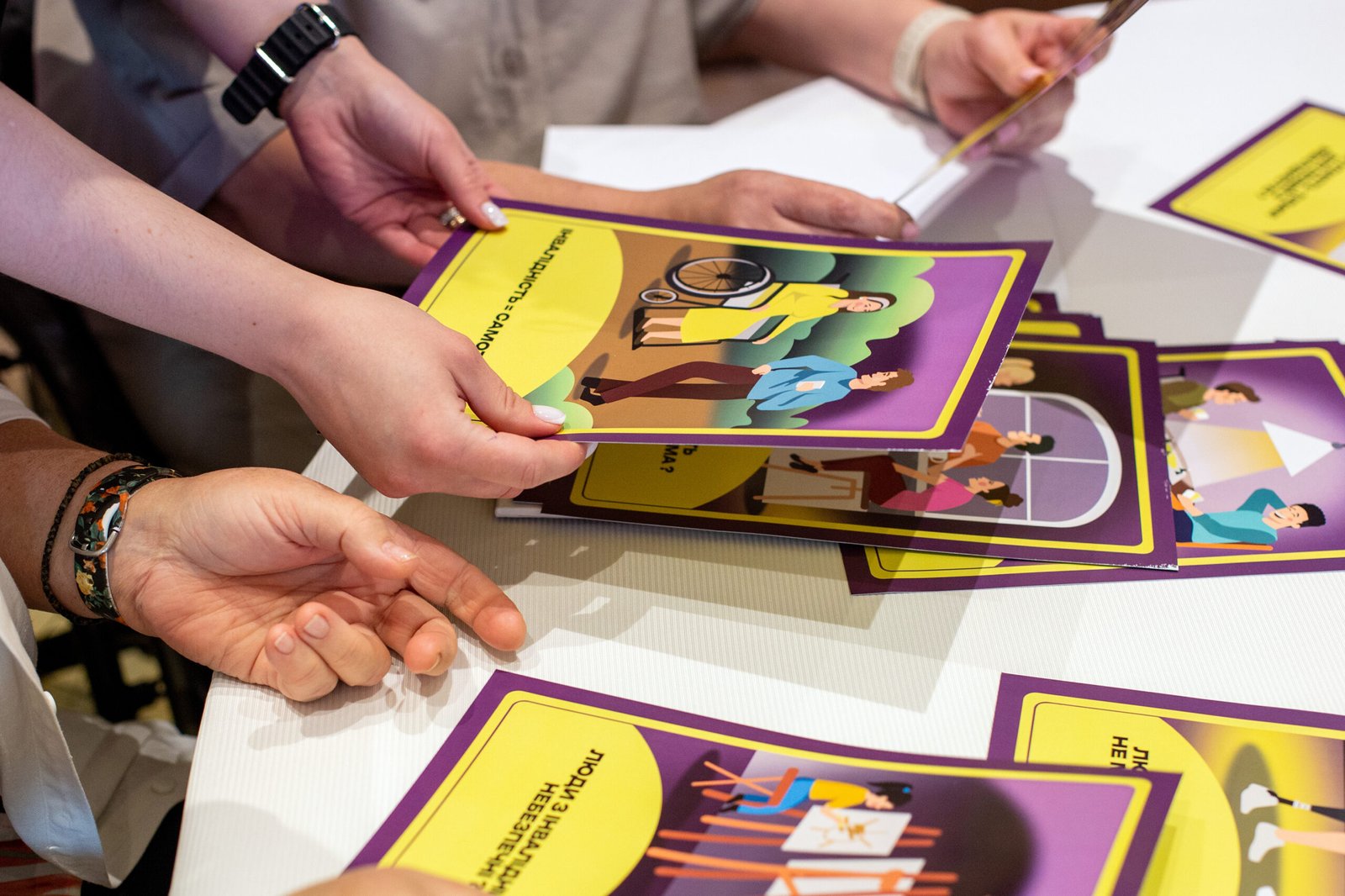
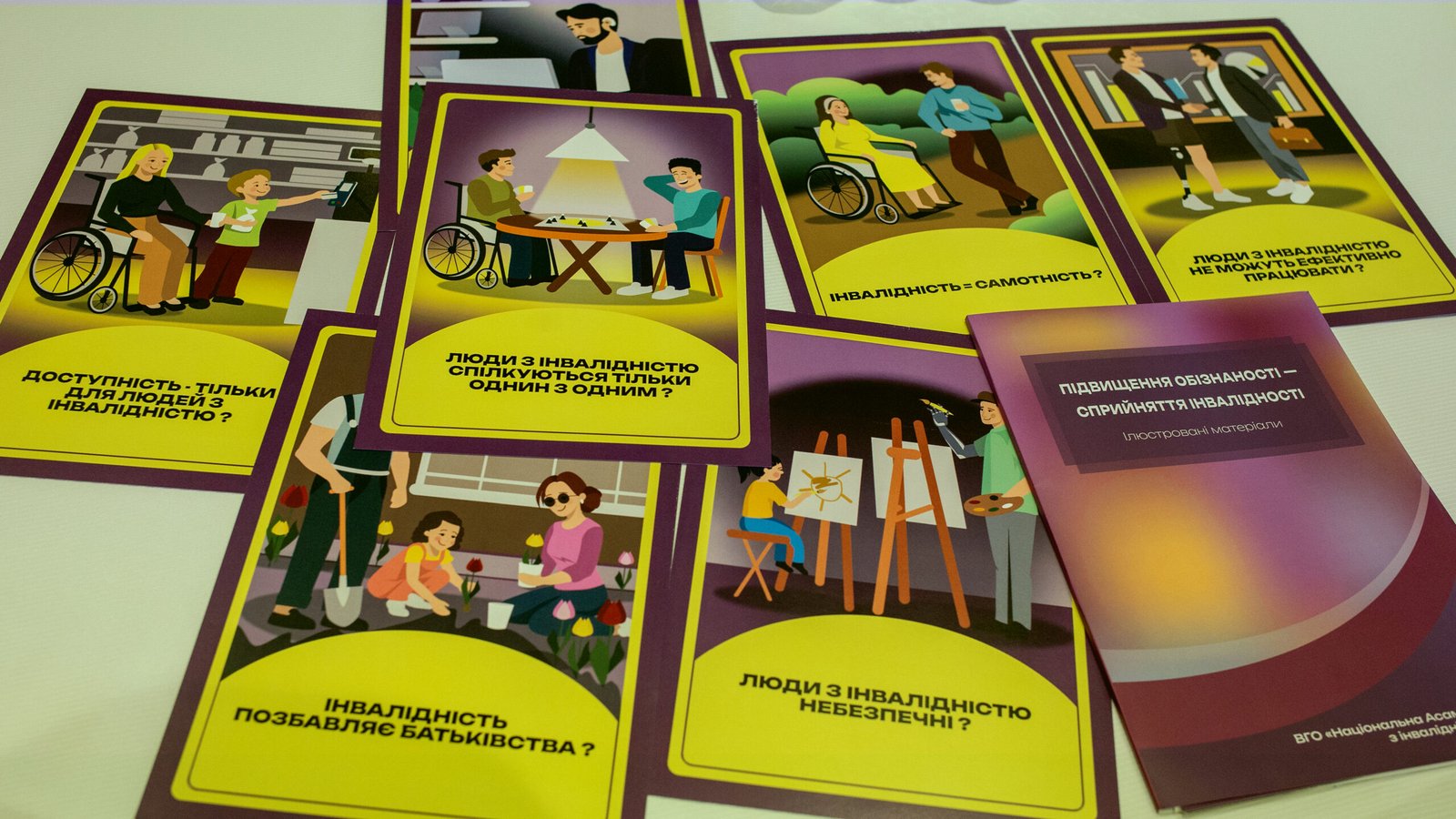
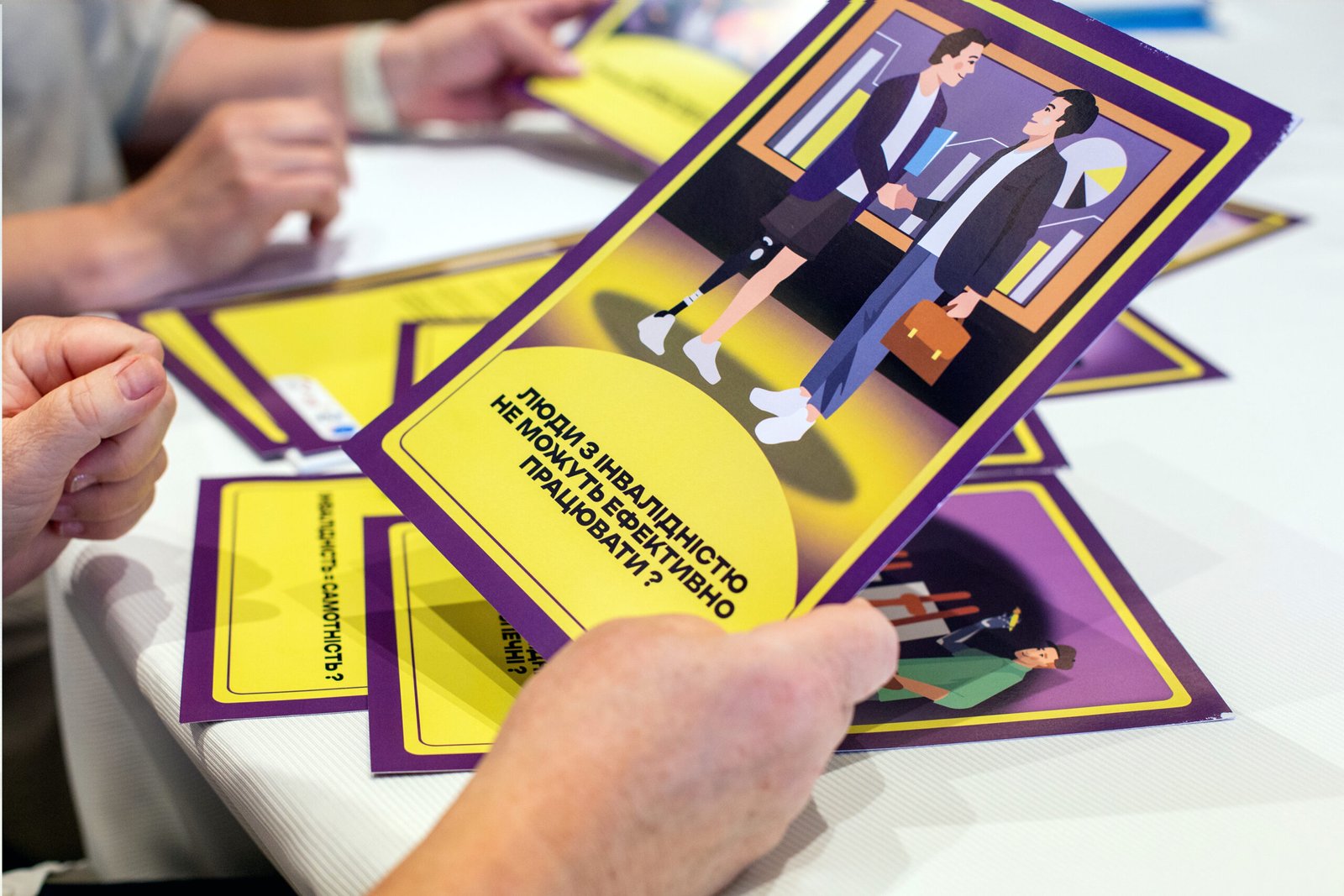
The National Assembly of People with Disabilities of Ukraine (NAPD), within the framework of the project “Disability-Inclusive Multisectoral Humanitarian Assistance for IDPs, Returnees, Veterans, and Host Communities in Ukraine”, implemented in partnership with the European Disability Forum (EDF) with the support of the German Federal Foreign Office (GFFO) and CBM (Christian Blind Mission), has developed unique methodological cards for use in seminars, webinars, and awareness-raising activities. These cards are aimed at dismantling deeply rooted stereotypes that still influence society’s perception of people with disabilities. They not only debunk false claims but also explain how such notions are formed and why they do not correspond to reality.
In public consciousness, there often remains the belief that disability supposedly condemns a person to isolation, dependence, or loneliness. In fact, social connections are determined by the accessibility of the environment and the attitudes of others, not by disability itself. People with disabilities create families, build careers, and lead rich cultural and civic lives—provided that barriers do not stand in their way.
Another widespread stereotype is the assumption that disability is inherently linked to illness. This approach stems from a lack of awareness and reduces a complex social phenomenon to a medical diagnosis. The methodological cards clearly explain the difference between a medical condition and the rights-based model of disability, where equality of opportunity and the removal of barriers are key. Disability is not an “illness” that needs to be cured, but rather the result of how the environment responds (or fails to respond) to a person’s needs.
There are also stereotypes based on fear or lack of knowledge—for example, the belief that people with disabilities may be dangerous or that their behavior is “unpredictable.” Such judgments are unfounded and arise where there is no real experience of interaction within an inclusive environment, because disability does not determine a person’s character traits.
The cards also draw attention to invisible impairments—those that have no outward signs. Societal recognition of their existence is an important step toward respecting privacy and eliminating the stigma that “real” disability must always be visible.
Myths also concern assistive devices and technologies. For instance, there is a common belief that a wheelchair “limits” a person. In reality, it provides freedom of movement, autonomy, and comfort. Equally false is the assumption that people with disabilities mainly socialize only with each other: social circles are formed based on interests and mutual affinity, not physical or sensory impairments. People with disabilities actively participate in cultural life and value art. Audio description, subtitles, tactile exhibits, adapted theatrical performances, and technological solutions make art accessible to everyone.
Using these cards in the work of clusters and at seminars allows for a deeper understanding of the needs of people with disabilities, rejection of false perceptions, and the development of truly inclusive approaches. They become a practical tool for discussions, case analysis, and interactive exercises, helping participants see the real-life consequences of stereotypes in practice.
The NAPD project is aimed at the systematic elimination of prejudice and the formation of a culture of equality, where the interests and needs of people with disabilities are integrated into all areas of community life. The methodological cards are part of this process, as they provide concrete examples, tools, and arguments for building humanitarian assistance and social practices based on respect, accessibility, and equal opportunities.
Oleksandra Perkova, Communications Manager of the Project
Ресурсний центр Національної Асамблеї людей з інвалідністю України підготував черговий огляд законодавчих змін, важливих для людей з інвалідністю та членів їхніх родин. Серед основних тем — соціальні гарантії, допомога на опалювальний сезон, підтримка внутрішньо переміщених осіб, освітні гранти, а також проєкти рішень щодо працевлаштування й доступності медіа. Президент України підписав закон, ухвалений за законопроєктом № […]
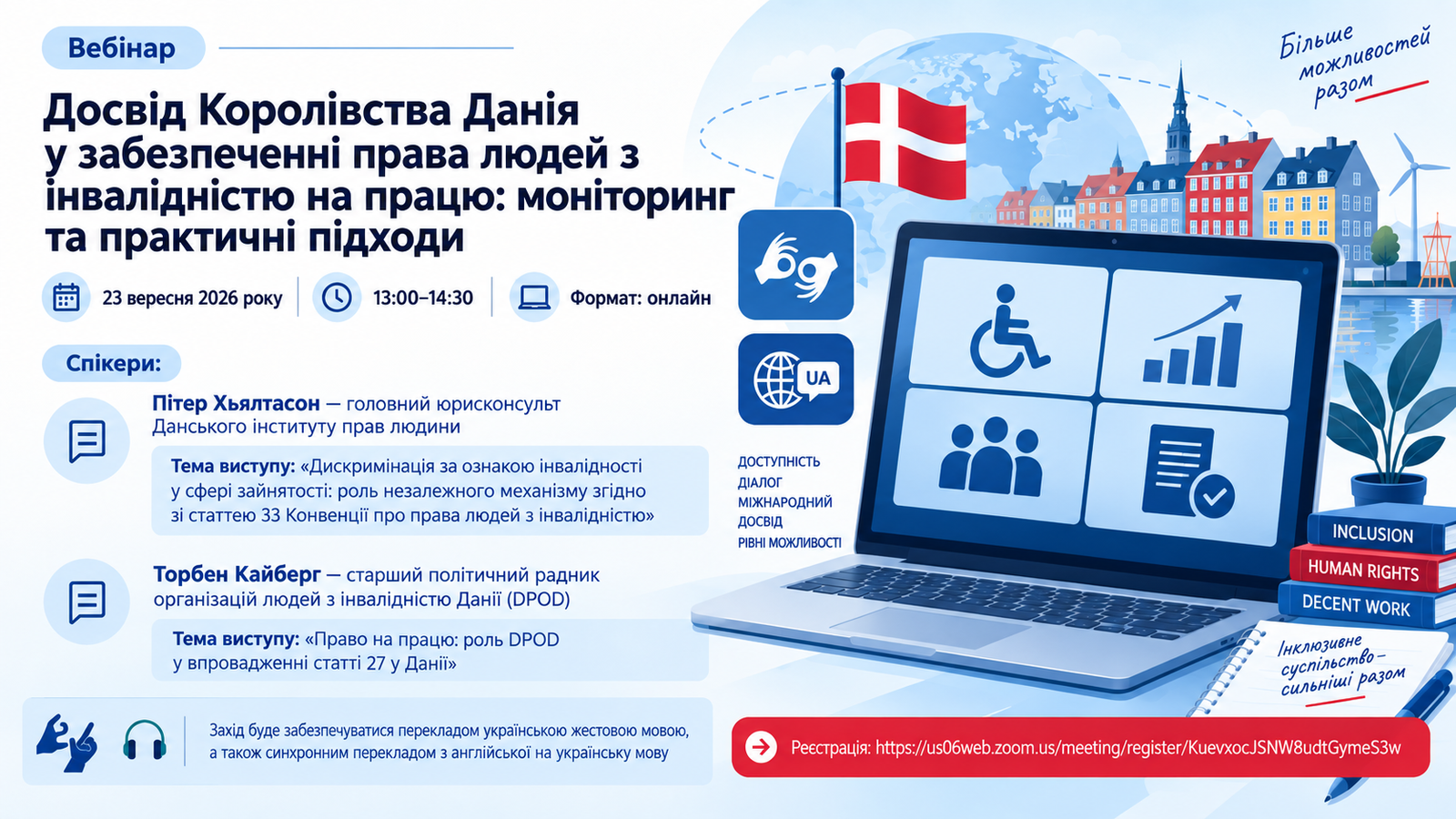
23 вересня 2026 року о 13:00–14:30 запрошуємо представників громадських організацій, експертного середовища та всіх зацікавлених долучитися до онлайн-вебінару «Досвід Королівства Данія у забезпеченні права людей з інвалідністю на працю: моніторинг та практичні підходи». Під час зустрічі учасники ознайомляться з досвідом Данії у сфері захисту права людей з інвалідністю на працю, механізмами протидії дискримінації у сфері […]
В межах проєкту «Здоров’я жінки» команда спілкується з жінками з інвалідністю у громадах, проводить опитування та досліджує їхній досвід отримання медичної допомоги. Жінки говорять не лише про архітектурну недоступність медичних закладів, відсутність адаптованого обладнання чи складнощі з транспортом. Серед бар’єрів також — попередній негативний досвід, нетактовне ставлення, брак зрозумілої інформації та суспільні стереотипи щодо сексуального […]
Анастасія живе у Казанківській громаді Миколаївської області разом із чоловіком Сергієм та шістьма дітьми. Подружжя разом вже 15 років. У житті родини багато звичних щоденних справ: навчання дітей, домашні клопоти, покупки, плани на новий навчальний рік, і серед них також щоденне лікування Анастасії. Анастасія має інвалідність і проходить лікування онкологічного захворювання. Через прогресування хвороби їй […]
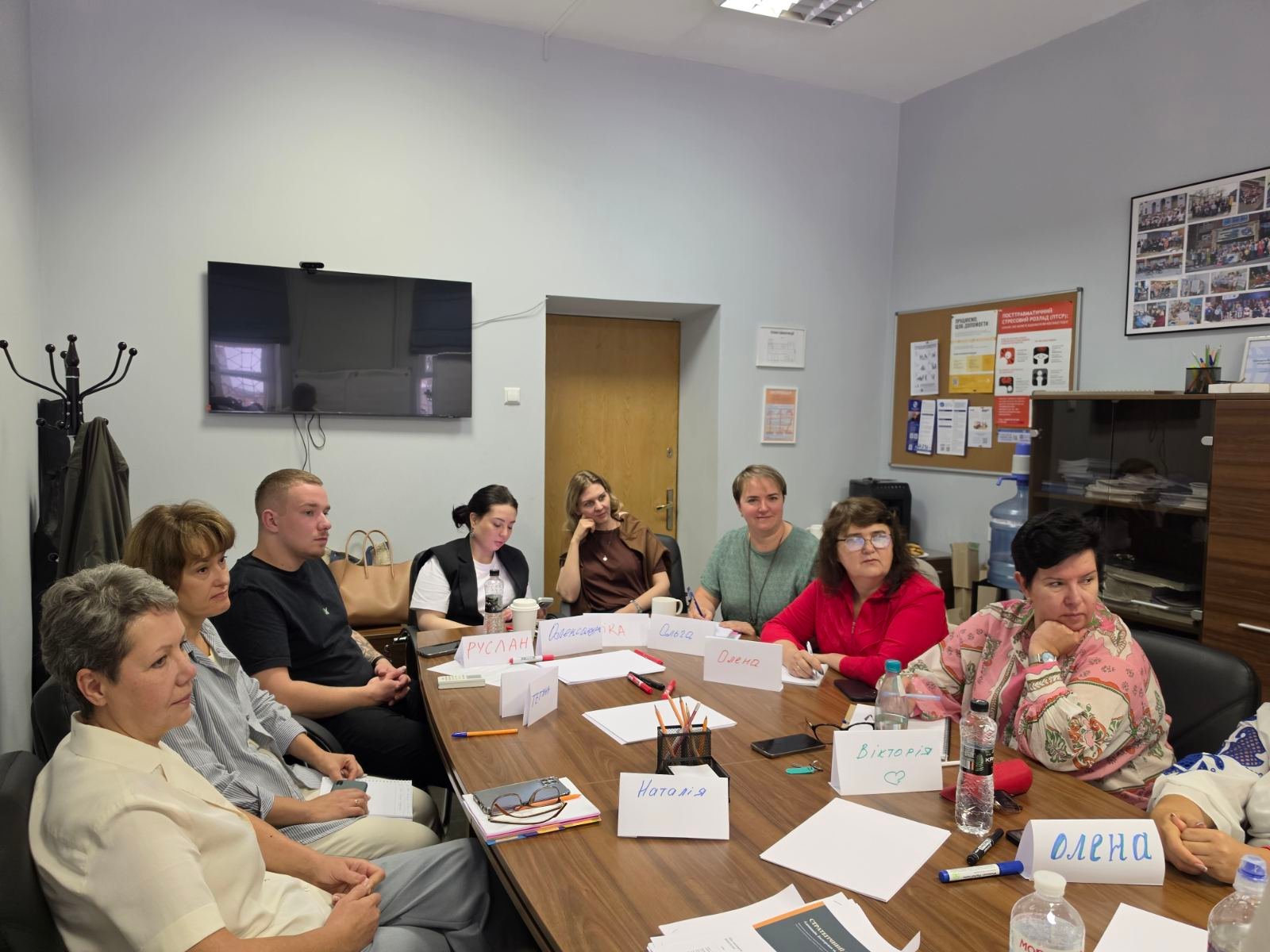
10 вересня відбулася стратегічна сесія за участі команди Секретаріату Національної Асамблеї людей з інвалідністю України. Захід був присвячений визначенню пріоритетів і цілей розвитку організації на 2027–2031 роки. Метою сесії було узгодити стратегічні напрями, цілі, завдання та ключові індикатори майбутньої Стратегії НАІУ. Основою для спільної роботи стали результати опитування членських організацій, фокус-групових дискусій та експертних інтерв’ю. […]
У Львівській області завершився офлайн-тренінг «Організаційна спроможність ОГС: від оцінки потенціалу до дієвої стратегії». До навчання долучилися представниці і представники громадських організацій людей з інвалідністю з Вінницької, Дніпропетровської, Закарпатської, Запорізької, Полтавської, Сумської, Тернопільської, Харківської та Черкаської областей, а також міста Києва. Захід організувала Національна Асамблея людей з інвалідністю України в межах проєкту «Реабілітація в Україні» […]