“When I See Results, I Find the Strength to Keep Going”: Valentyna Dobrydina on the Right of Women with Disabilities to Safe Gynecological Care
22 May 2026
Share:
For most women, a visit to a gynecologist is about trust, privacy, and professional medical care. For a woman with a disability, however, the list of concerns before a medical appointment is often much longer. Will she be able to physically enter the office, transfer safely onto the examination table or chair, undergo an examination without risk of injury or humiliation from medical staff?
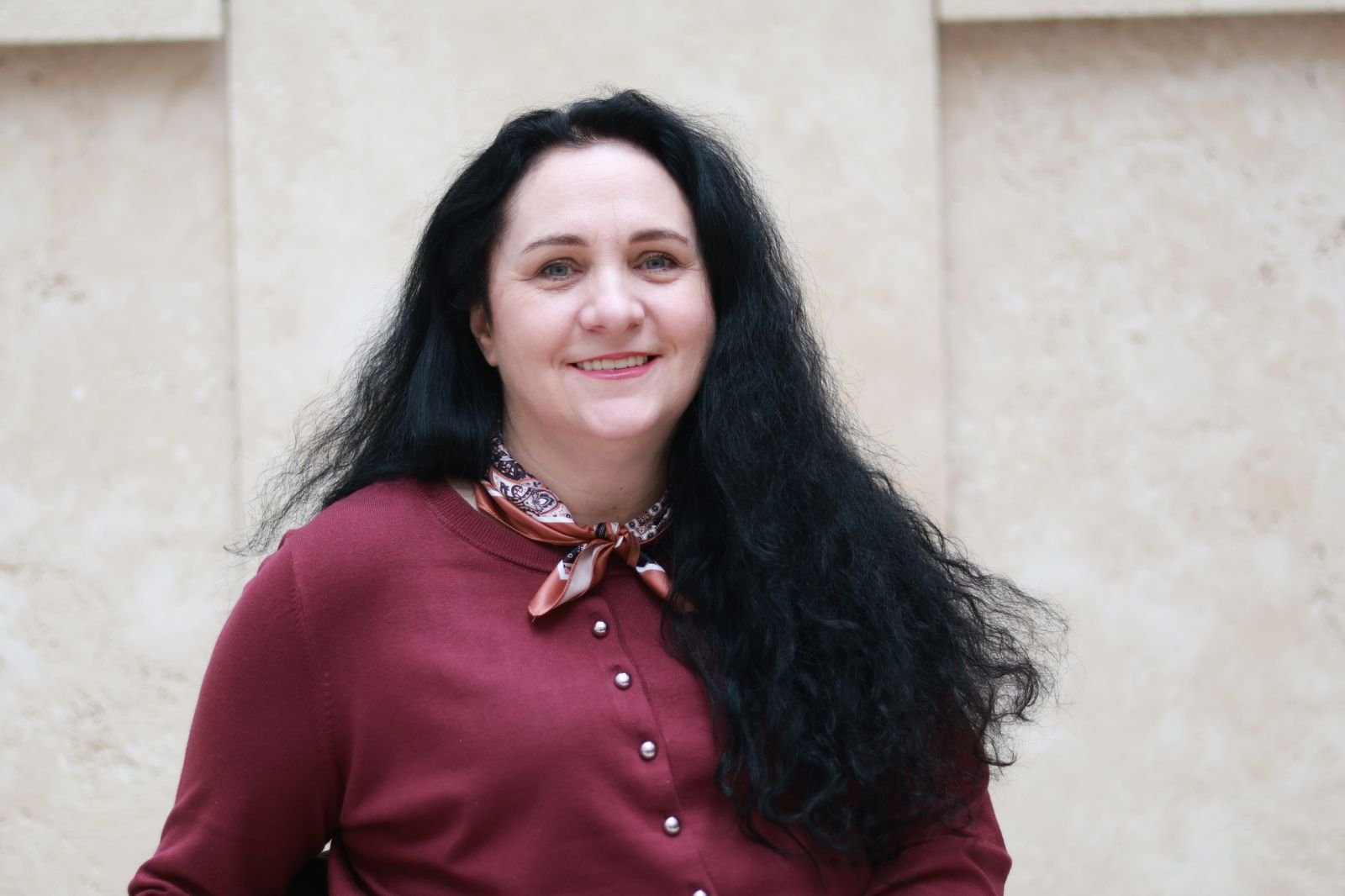
Valentyna Dobrydina, consultant for the Women’s Health Project in Chernivtsi, speaks about this issue not only as a specialist working toward systemic change. She also speaks as a woman who has used a wheelchair for many years, undergone examinations, treatment, and surgery, and personally experienced inaccessible healthcare services. She knows very well that behind the word “barrier” lies not an abstract problem, but a real risk to health and life.
“A Comfortable Appointment Means I Can Enter the Office Independently”
— What is your personal motivation for working on the Women’s Health Project? Пані Валентино, що для вас означає комфортний і безпечний прийом у гінеколога?
For me, a comfortable and safe gynecological appointment means being able to independently enter the room where the examination will take place. It means there is an accessible restroom near the gynecologist’s office, with an examination couch where I can transfer, change clothes, and do everything I need.
It is important for me that there is enough space in the office to maneuver my wheelchair. There should be a multifunctional gynecological chair that I can transfer onto independently. It should have a soft surface. And there should also be an adjustable examination couch with a soft surface either inside or near the office.
This is extremely important because I can get injured when transferring onto a hard surface.
And, of course, it matters that staff do not ask inappropriate questions. Before offering assistance, they should ask whether help is needed and how it would be best to provide it.
Very often, when I come for a gynecological examination, junior medical staff take on an overly paternalistic role. Because of this, I cannot remain alone with the doctor to discuss intimate issues. Other people stay nearby and hear everything. Later, when the doctor leaves, they may ask about my private life or whether I have a husband. These are inappropriate questions.
“The Examination Chair Should Be Comfortable for Every Woman”
— You have been working on women’s health issues for years as a civic activist. Could you tell us about this experience?
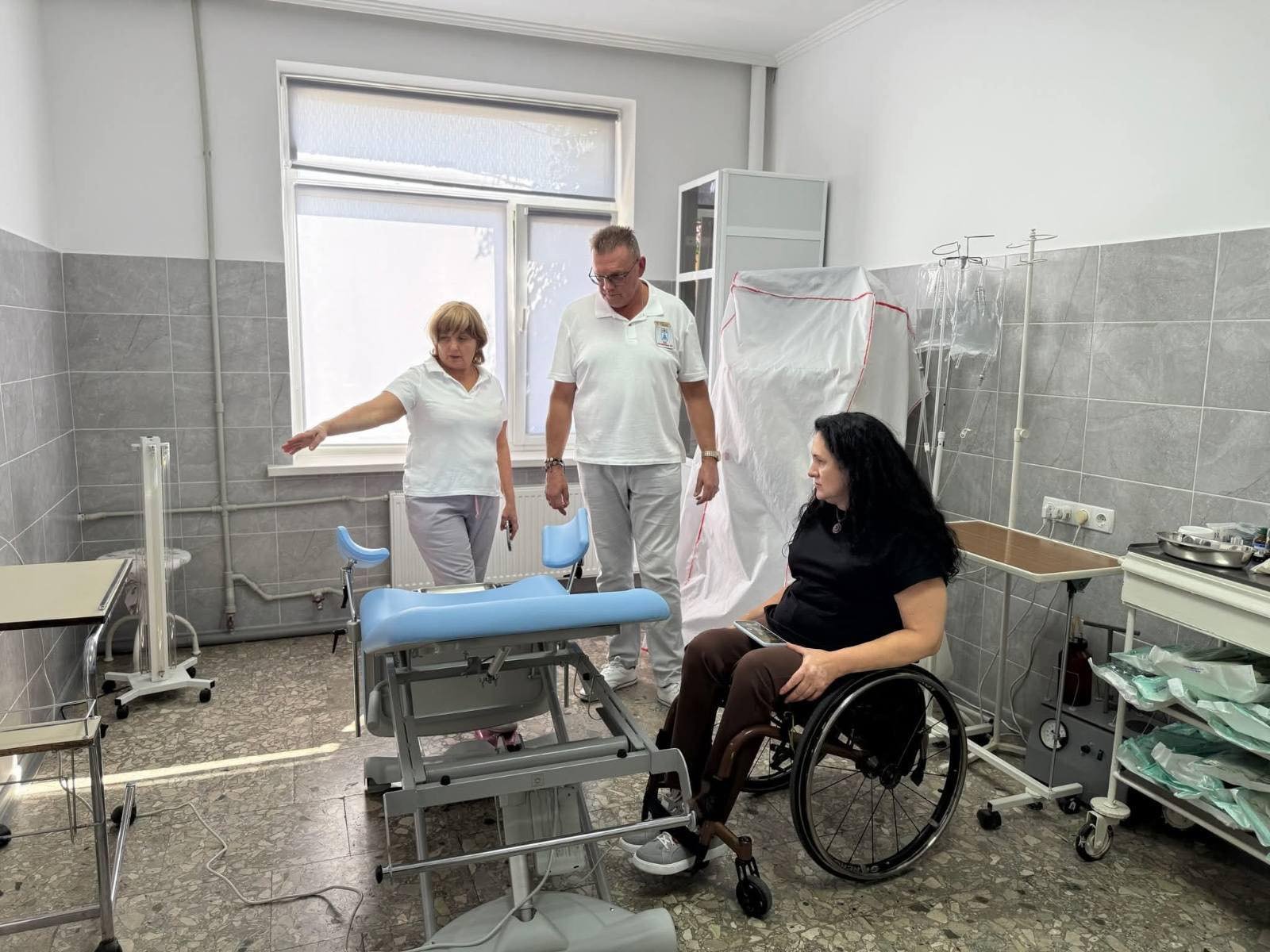
- We once had a very good project through which we were able to purchase gynecological chairs for medical offices. We wanted these chairs to be comfortable for every woman. It should not matter whether a woman uses a wheelchair, temporarily has reduced mobility, is older, or is pregnant.
I communicate with many women across the Chernivtsi region, so I approximately knew where the greatest needs existed. First, we approached the director of the Storozhynets Hospital, and later the oncology center.
The chairs were installed specifically in offices that receive the largest number of women for examinations. We also made sure there was an accessible restroom nearby.
There was a situation in Storozhynets Hospital where we purchased a gynecological chair, but there was no accessible restroom or ramp. The chief physician then ensured physical accessibility by installing a ramp and adapting the staircase area so people using wheelchairs or other mobility aids could move safely. An accessible restroom was also created near the office where the gynecological chair was installed.
“Old Gynecological Chairs Are Not Just Inconvenient. They Are Dangerous”
— What is your personal motivation for working on the Women’s Health Project? Наскільки сьогодні доступними є гінекологічні кабінети для жінок з інвалідністю?
- Today, there are more accessible offices than before. We raised this issue both at the regional and national levels. Accessible examination chairs for women have indeed started to be purchased, and that is very encouraging.
However, there are still departments, offices, and women’s consultation clinics where old chairs remain in use. They are inaccessible and very dangerous for women with mobility impairments.
Old gynecological chairs are very high and require climbing stairs to reach them. A woman who uses a wheelchair or has a musculoskeletal impairment cannot safely climb those steps. Honestly, these chairs can even be unsafe for women without disabilities.
They cannot be adjusted up or down. They are hard. For people who lack sensation in certain parts of their bodies, even a few seconds on a hard surface can cause injuries, pressure sores, or wounds. Such wounds may heal very poorly and can even reach the bone. This is dangerous not only for health, but for life itself.
In addition, old chairs often have parts that cannot be removed or adjusted. Even if someone lifts a woman onto such a chair, there is a risk of catching onto something and getting injured.
“For Many Years I Was Examined on an Examination Couch. I Believe It Was Poor-Quality Care”
— What is your personal motivation for working on the Women’s Health Project? Тобто йдеться не лише про фізичну зручність, як більшості людей здається на перший погляд, а й про безпеку?
— Yes. And I know cases where women with higher body weight simply could not be lifted onto such chairs. As a result, examinations were conducted on an examination couch.
Many years ago, the only place where I could see a gynecologist was at a sanatorium in Saky, Crimea. At that time, there was no such opportunity in my region. But even there, in a specialized sanatorium, we were examined on an examination couch. Everything happened very quickly and, in my opinion, the examination was poor-quality.
Later, I was diagnosed with stage one cervical cancer. I had to undergo surgery, radiation therapy, and severe emotional stress. I believe this happened because the problem was not detected in time.
“I Am Afraid to Go to Doctors Who Have No Experience Working with Women with Disabilities”
— What is your personal motivation for working on the Women’s Health Project? Чи доводилося вам відкладати обстеження через недоступність послуг, обладнання, транспорт або ставлення лікарів?
— I do not remember such situations after my oncology diagnosis because since 2009 I have been continuously seeing the same doctor.
That is why I am afraid to visit other gynecologists. When doctors see a person using a wheelchair, they may treat her differently, “in a special way.” Often they do not fully understand the physiological characteristics of women with disabilities, because what may seem unusual for women without disabilities can sometimes be completely normal for us.
A doctor who has experience communicating with and treating women with disabilities understands this. A doctor without such experience may prescribe unnecessary procedures or treatment. That is why my friends and I are often afraid to go to doctors who do not have this experience.
“What I Need from a Doctor Is Honesty and a Clear Plan”
— What is your personal motivation for working on the Women’s Health Project? Ви знайшли лікаря, якому довіряєте. Що саме сприяло цій довірі?
— I appreciate that he is honest. He tells the truth and prescribes only what is necessary. For me, balance is important: not brutal honesty delivered without empathy, but also not minimizing or hiding a real problem.
I would rather hear the truth so I can prepare myself emotionally and fight through it. I need clear facts and a clear action plan.
“Medical Professionals Themselves Said: ‘We Truly Need This Kind of Training’”
— What is your personal motivation for working on the Women’s Health Project? — What, in your opinion, still remains overlooked by medical professionals and society regarding women’s health and disability?
— It is very important that healthcare facility managers find opportunities to train medical staff on how to properly assist people, including women with disabilities.
We once had a project where we conducted training sessions and practically demonstrated how to safely help a person transfer onto an examination couch and how to provide proper support. Medical workers themselves said: “We had never seen this before. We truly need this kind of training.”
It is also important that all medical equipment, mammography machines, examination couches, multifunctional gynecological chairs, be accessible to everyone. It should not matter whether a woman has a disability or not, whether she is shorter or taller, or has a larger body size. Equipment and furniture should be designed so that any person can use them.
Respect for personal boundaries is equally important.
There are women who have survived sexual violence or other forms of abuse. They may not tolerate being touched. And when healthcare workers say, “We will help you, we will lift you,” this is not always appropriate.
Once I came to a private clinic for a jaw CT scan. The machine had a very uncomfortable high chair. Without asking or explaining anything, a staff member suddenly grabbed me under my arms, leaned into me, practically hugged me, and began trying to pull me onto the chair.
He did not understand that he could not actually transfer me that way because my legs are paralyzed. It was a shock for me. I started shouting: “Stop, what are you doing?” And he replied: “Don’t worry, you’re not the first one, I help everyone like this.”
Later he apologized, and I explained the situation to him. But it was deeply unpleasant. And I thought about women who had survived violence: how would they react if a man suddenly started touching their body and forcibly pulling them somewhere?
“In the Past, Women Were Told It Was Better Not to Give Birth”
— What is your personal motivation for working on the Women’s Health Project? Наскільки медична система сьогодні враховує потреби жінок з інвалідністю у сфері репродуктивного і сексуального здоров’я?
— Today, thanks to charitable foundations, civil society organizations, the National Assembly of People with Disabilities of Ukraine, and local organizations working on women’s disability issues, reproductive and sexual health is no longer completely ignored.
The issue is receiving attention, although I would like to see much more attention paid to it.
Today, it is less common to hear doctors telling women that they should not give birth, should terminate a pregnancy, or cannot get married or have a family. Doctors have become more informed and modern in their approach, and that is encouraging.
But such cases did exist. Some of my friends now have adult children, but years ago doctors advised them to terminate their pregnancies and not give birth. Thankfully, they did not follow that advice.
“I Know Very Well What a Barrier Is”
— What is your personal motivation for working on the Women’s Health Project? Яка ваша особиста мотивація роботи в проєкті “Здоров’я жінки”?
— First of all, because I understand these women very well. I use a wheelchair myself. I receive and continue receiving these services. I know very well what a barrier is and how difficult it can be to overcome.
Women living in rural areas are especially vulnerable. Villages often do not have gynecologists. To receive an examination, women must travel either to a regional center or to the community center where a gynecologist is available. Unfortunately, public transportation is inaccessible.
Very often hiring a car, asking neighbors for help, or calling a taxi is expensive. And with the very small pensions many women receive, they simply cannot afford it.
There are other barriers as well. For example, to receive services at a diagnostic center, women usually need to schedule appointments in advance. Even though doctors try to examine women on the same day they arrive, there are still long queues because of the large number of patients.
Sometimes a woman arrives but cannot complete all examinations that day. She may see one specialist and then be scheduled to see another specialist on a different day. That means additional transportation costs and additional stress because she has to find a way to travel again.
Not everyone has a private car. And today public transport is almost impossible for us to use because it remains inaccessible.
Achieving change in this area is the result I strive for. Sustainable and systemic change does not happen quickly. But when I see results, even a small positive change, it gives me the strength to keep moving forward.
Oleksandra Perkova, Communications Manager of the Project
Для більшості жінок візит до гінеколога — це питання довіри, приватності й професійності лікаря. Для жінки з інвалідністю коло питань перед візитом до лікаря часто набагато ширше. Чи зможе вона фізично потрапити до кабінету, пересісти на кушетку, крісло, пройти огляд без ризику травми й без приниження зі сторони медичних працівників? Валентина Добридіна, консультантка проєкту «Здоров’я […]
Сьогодні Україна відзначає День вишиванки — день, коли ми згадуємо про силу традиції, красу української культури та нашу спільну ідентичність. Вишиванка — це більше, ніж одяг. Це пам’ять поколінь, символ гідності, свободи, єдності та любові до України. У кожному орнаменті — історія родини, громади, народу. Для Національної Асамблеї людей з інвалідністю України цей день також […]
Національна Асамблея людей з інвалідністю України провела вебінар, присвячений практичному застосуванню Закону України «Про основи соціальної захищеності осіб з інвалідністю в Україні». Цей базовий документ визначає права людей з інвалідністю та гарантії їх реалізації в різних сферах життя. Друга зустріч із запланованого циклу про зміни й нововведення в законодавстві, які стосуються людей з інвалідністю та […]
Професійна освіта сьогодні — це не лише про нову спеціальність. Для ветеранів, людей з інвалідністю, внутрішньо переміщених осіб і тих, хто пережив війну, навчання може стати важливим кроком до нового старту — повернення стабільності, впевненості та планування майбутнього. 18 травня 2026 року відбувся вебінар «Ветерани в профосвіті: як побудувати взаємодію». Захід провела Національна Асамблея людей […]
Пропонуємо черговий огляд законодавчих новацій в Україні, які безпосередньо впливають на життя людей з інвалідністю. Серед них — Державна програма розвитку волонтерської діяльності до 2030 року, яка передбачає, зокрема, об’єднання окремих ініціатив у єдину систему та налагодження постійного конструктивного діалогу між державою і волонтерською спільнотою. Важливою є також програма «Досвід має значення», спрямована на організацію […]
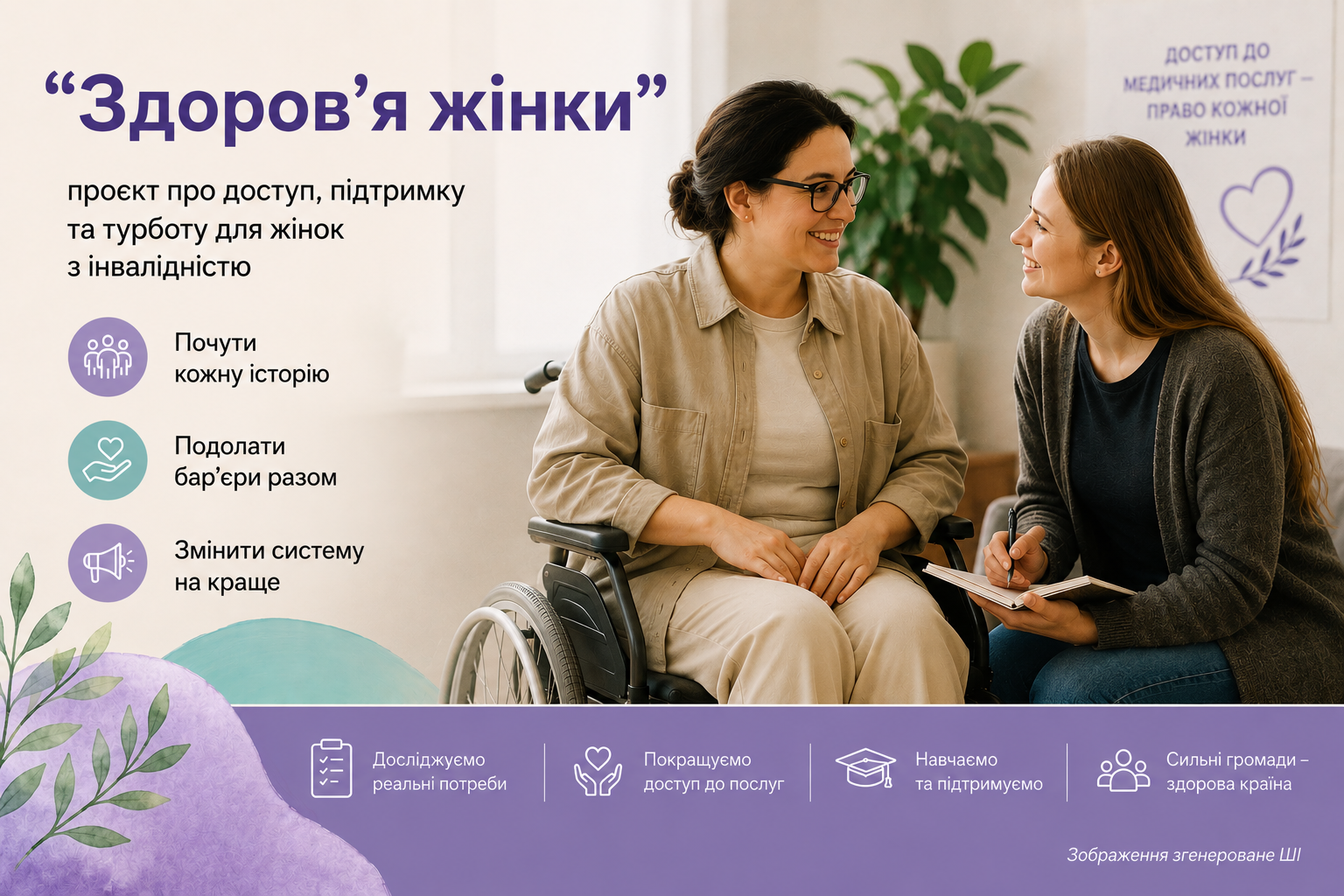
В Національній Асамблеї людей з інвалідністю України триває реалізація проєкту «Здоров’я жінки». Проєкт спрямований на одну з найменш видимих, але критично важливих проблем — доступ жінок з інвалідністю до медичних послуг, зокрема у сфері репродуктивного здоров’я. «Жінки з інвалідністю залишаються поза належною увагою щодо доступності до якісних послуг у системі охорони здоров’я. І зараз ми […]