Stories of people who live next to you. Continuation (Video) (Eng)
December 11, 2023
Share:
Every person with a disability has stories like this - an entire book. And sometimes more than one.
People with mobility difficulties face physical discrimination on a regular basis. It is when you cannot get to places where other people can, when the following are closed to you which interesting or important events, objects, because they are located in inaccessible places.
However, there is another kind of discrimination. Moral discrimination. Society often unwittingly causes moral harm to people with disabilities. First of all, this is manifested in the attitude towards such people as sick, helpless, and in need of constant physical and material care. It is also manifested in the use of inappropriate and unethical language towards them.
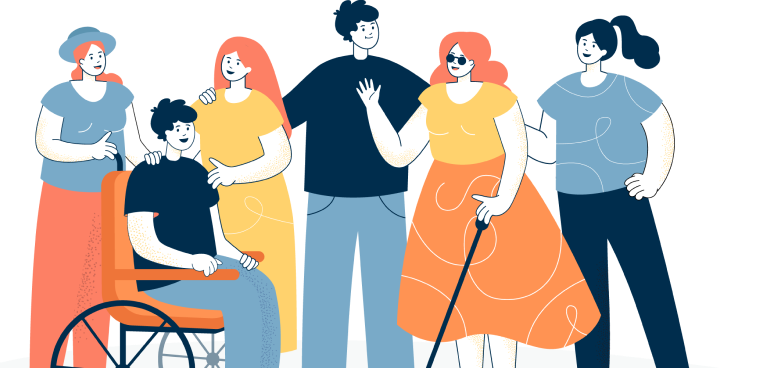
In this video, people with disabilities tell real stories from their own lives. Sometimes quite comical, sometimes extremely outrageous. The stories are different, but they are united by one important actor: discriminatory situations could have been avoided if people around them had been more сknown and informed.
Perhaps watching this video will help someone. It will show you how to behave and how not to behave when you meet a person with a disability.
The video was created as part of an advocacy campaign implemented within the framework of the project «Multi-sectoral Humanitarian Assistance with Disability for Internally Displaced Persons (IDPs), Returnees, Veterans and Host Communities in Ukraine», implemented by the National Assembly of People with Disabilities of Ukraine with the financial support of the Federal Foreign Office of Germany (GFFO), CBM and EDF.
The views expressed in this article are those of the Chernivtsi Regional Organization of People with Disabilities «Leader« andso no one cannot be considered the official opinion of financial partners - CBM and EDF.
*******
Every person with a disability has a whole book of such stories. And sometimes more than one.
Those with mobility difficulties constantly face physical discrimination. This is when you cannot go where other people can, when interesting or important events and objects are closed to you because they are located in inaccessible places.
However, there is another form of discrimination. Moral. Society often unwittingly causes moral harm to people with disabilities. First of all, this is manifested in the attitude towards such people as the sick, the helpless, those who need constant physical and material care. And also in the use of inappropriate and unethical vocabulary.
In this video, people with disabilities tell real stories from their own lives. Sometimes quite comical, sometimes extremely outrageous. The stories are different, but they are united by one important factor: discriminatory situations could not exist if people around them were more conscious and informed.
Maybe watching this video will help someone. It will tell you how you should and shouldn't behave when you meet a person with a disability on your way.
The video was created within the framework of the advocacy company, which is implemented as part of the project “Multisectoral inclusive humanitarian assistance for IDPs, returnees, veterans and host communities in Ukraine”, which is implemented by the National Assembly of People with Disabilities of Ukraine with the financial support of the Federal Ministry of Foreign Affairs of Germany (GFFO), CBM and EDF.
The views expressed in the material belong to the NGO Chernivtsi Regional Organization of People with Disabilities “Leader” and therefore cannot be considered the official opinion of the financial partners - CBM and EDF.
Ресурсний центр Національної Асамблеї людей з інвалідністю України підготував черговий огляд законодавчих змін, важливих для людей з інвалідністю та членів їхніх родин. Серед основних тем — соціальні гарантії, допомога на опалювальний сезон, підтримка внутрішньо переміщених осіб, освітні гранти, а також проєкти рішень щодо працевлаштування й доступності медіа. Президент України підписав закон, ухвалений за законопроєктом № […]
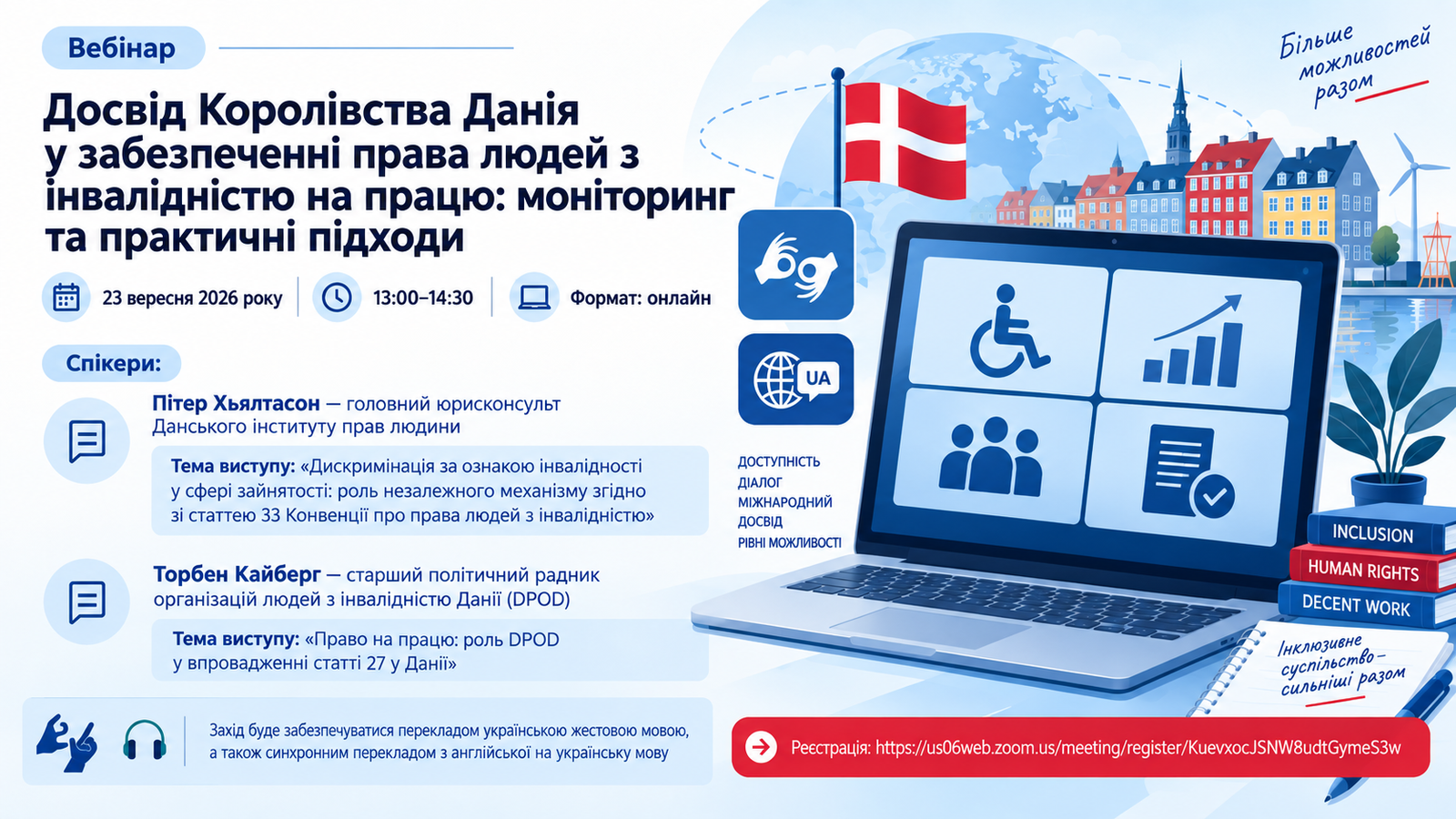
23 вересня 2026 року о 13:00–14:30 запрошуємо представників громадських організацій, експертного середовища та всіх зацікавлених долучитися до онлайн-вебінару «Досвід Королівства Данія у забезпеченні права людей з інвалідністю на працю: моніторинг та практичні підходи». Під час зустрічі учасники ознайомляться з досвідом Данії у сфері захисту права людей з інвалідністю на працю, механізмами протидії дискримінації у сфері […]
В межах проєкту «Здоров’я жінки» команда спілкується з жінками з інвалідністю у громадах, проводить опитування та досліджує їхній досвід отримання медичної допомоги. Жінки говорять не лише про архітектурну недоступність медичних закладів, відсутність адаптованого обладнання чи складнощі з транспортом. Серед бар’єрів також — попередній негативний досвід, нетактовне ставлення, брак зрозумілої інформації та суспільні стереотипи щодо сексуального […]
Анастасія живе у Казанківській громаді Миколаївської області разом із чоловіком Сергієм та шістьма дітьми. Подружжя разом вже 15 років. У житті родини багато звичних щоденних справ: навчання дітей, домашні клопоти, покупки, плани на новий навчальний рік, і серед них також щоденне лікування Анастасії. Анастасія має інвалідність і проходить лікування онкологічного захворювання. Через прогресування хвороби їй […]
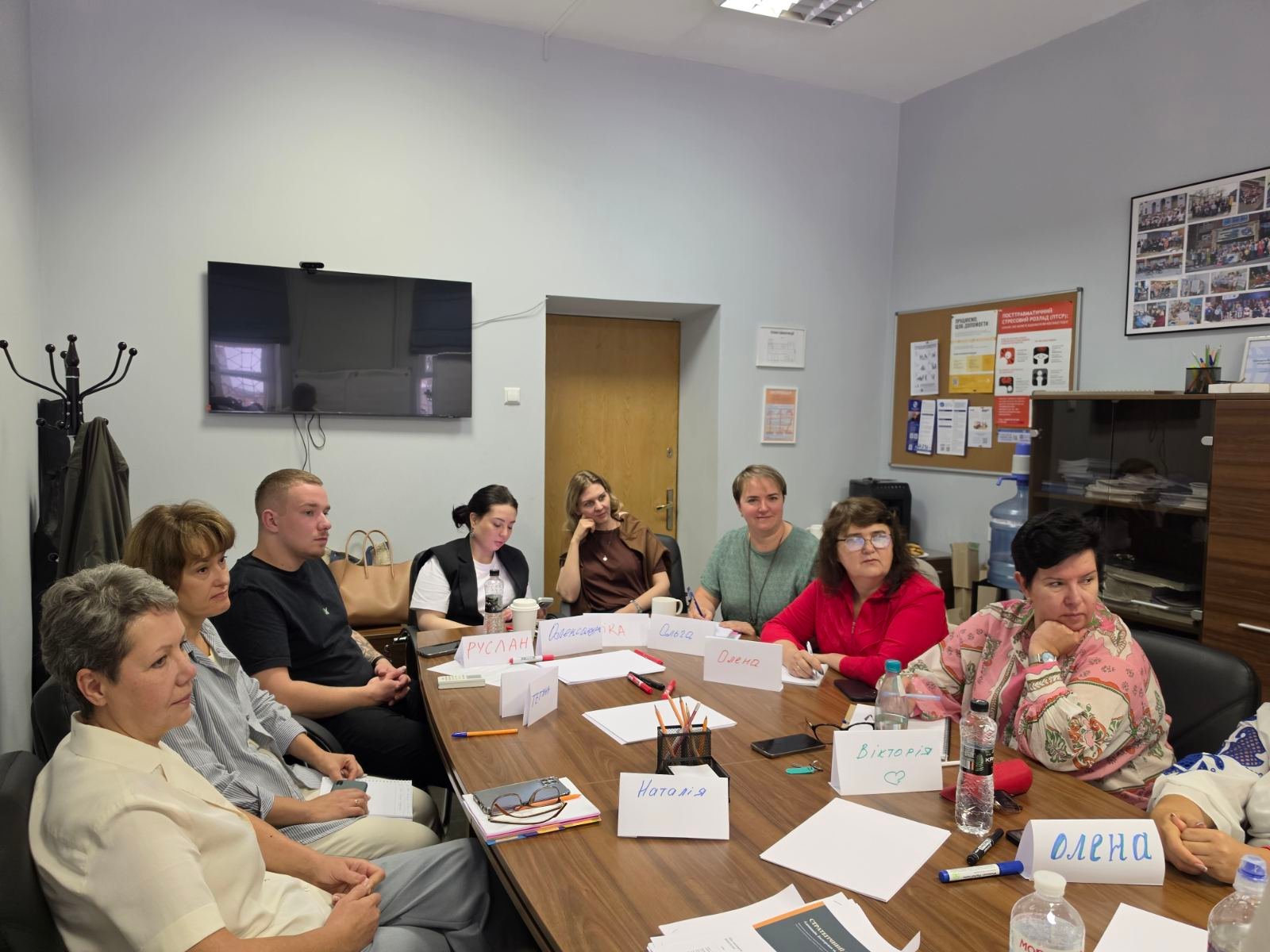
10 вересня відбулася стратегічна сесія за участі команди Секретаріату Національної Асамблеї людей з інвалідністю України. Захід був присвячений визначенню пріоритетів і цілей розвитку організації на 2027–2031 роки. Метою сесії було узгодити стратегічні напрями, цілі, завдання та ключові індикатори майбутньої Стратегії НАІУ. Основою для спільної роботи стали результати опитування членських організацій, фокус-групових дискусій та експертних інтерв’ю. […]
У Львівській області завершився офлайн-тренінг «Організаційна спроможність ОГС: від оцінки потенціалу до дієвої стратегії». До навчання долучилися представниці і представники громадських організацій людей з інвалідністю з Вінницької, Дніпропетровської, Закарпатської, Запорізької, Полтавської, Сумської, Тернопільської, Харківської та Черкаської областей, а також міста Києва. Захід організувала Національна Асамблея людей з інвалідністю України в межах проєкту «Реабілітація в Україні» […]