Accessibility of Shelters: Navigation as a Key Safety Factor Discussed in Opishnia
3 April 2026
Share:
The Opishnia community hosted the second meeting as part of the advocacy campaign “Communities for All: Creating Change Together with People with Disabilities,” dedicated to the accessibility of shelters. The discussion focused not only on physical accessibility but also on clear signage that helps people quickly find their way during emergencies.
The Opishnia community hosted the second meeting as part of the advocacy campaign “Communities for All: Creating Change Together with People with Disabilities,” dedicated to the accessibility of shelters. The discussion focused not only on physical accessibility but also on clear signage that helps people quickly find their way during emergencies.
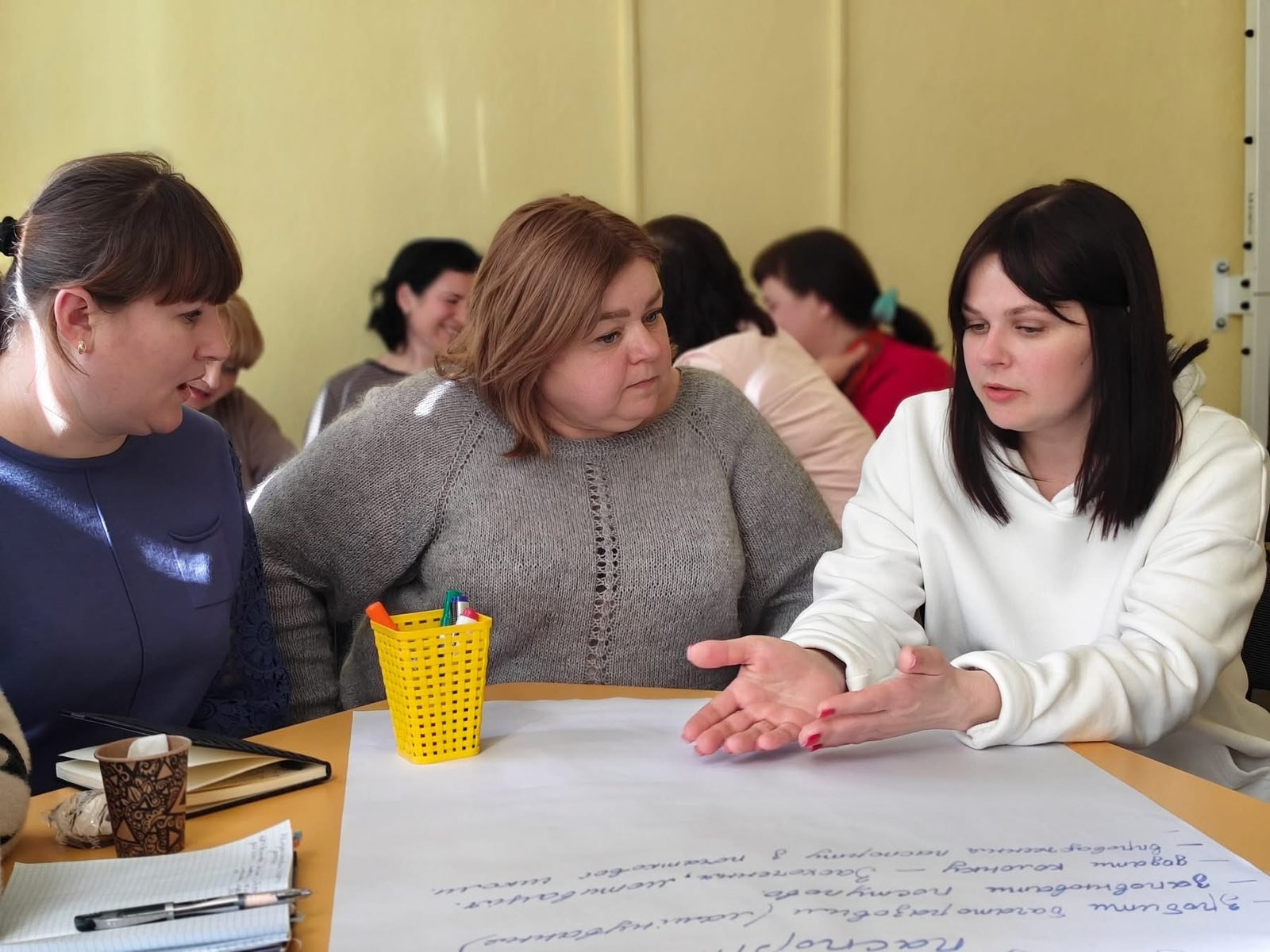
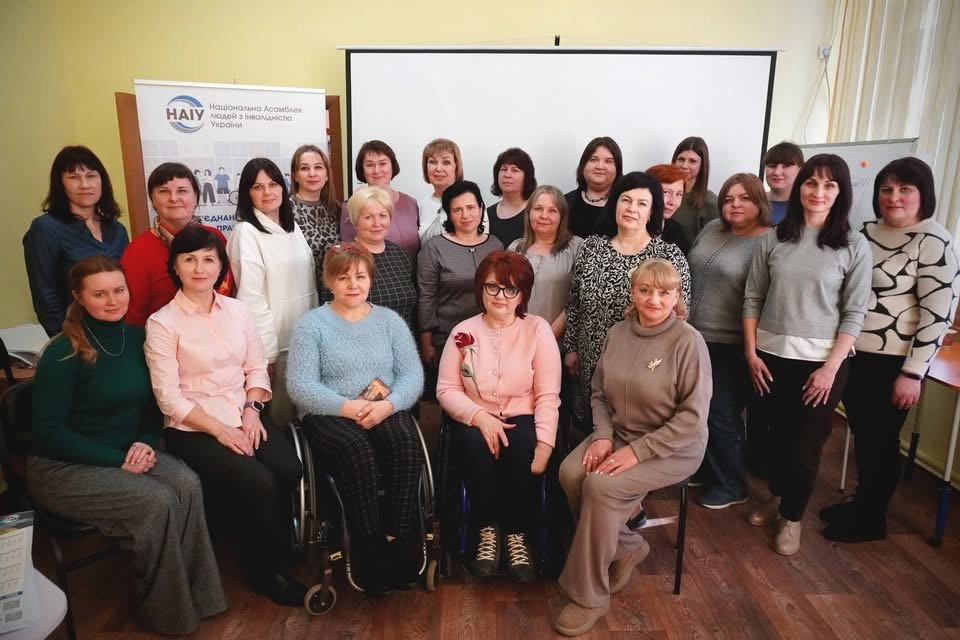
The meeting was attended by people with disabilities, veterans, community representatives, experts, and other interested participants. This diverse group allowed for a discussion of accessibility that took into account different experiences of using the space.
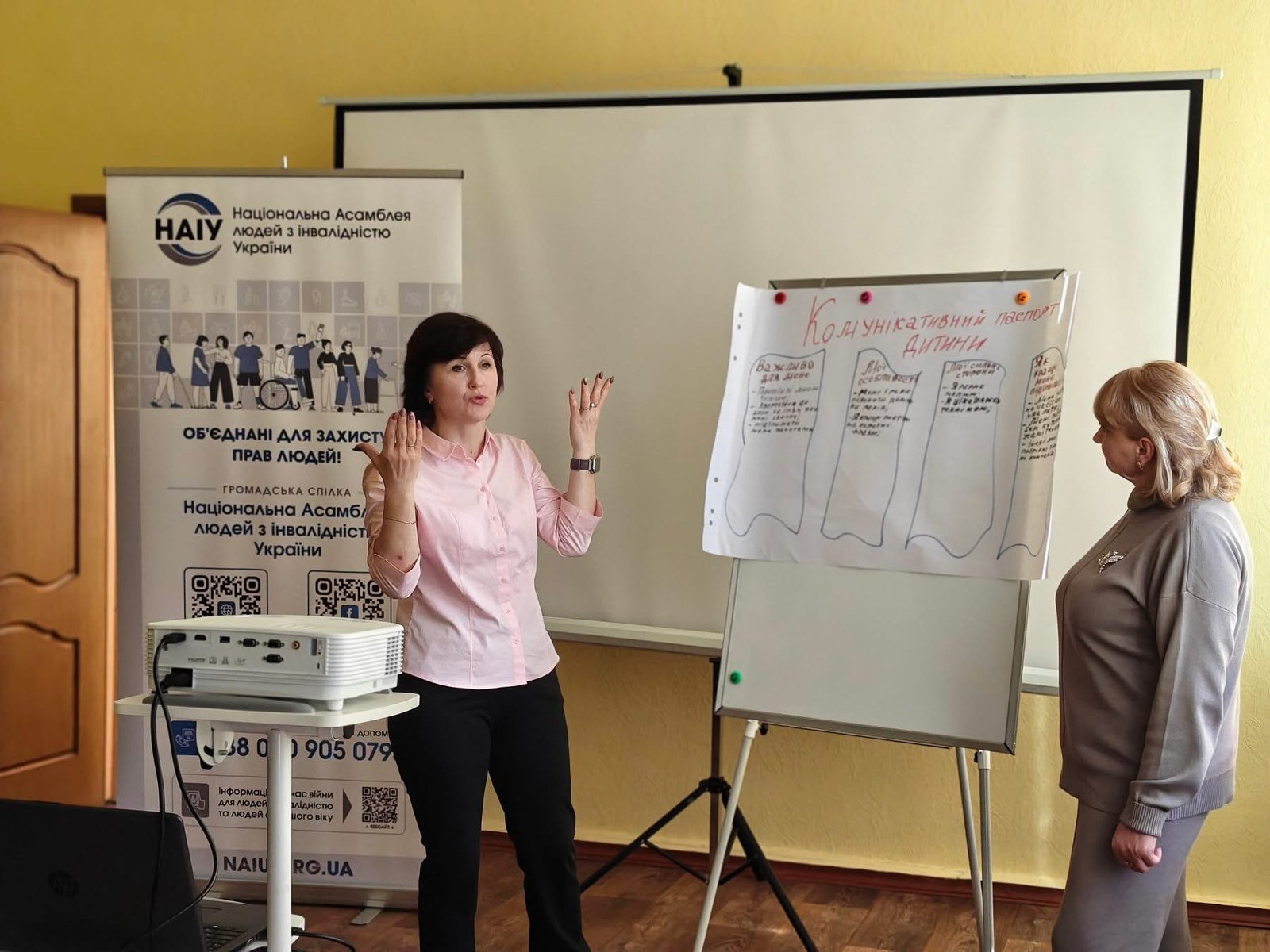
Yevhen Svit, an accessibility consultant for the National Assembly of People with Disabilities of Ukraine, presented approaches to organizing navigation within buildings and surrounding areas. The discussion covered navigation diagrams, informational signs, mnemonic diagrams, high-contrast markings, as well as the combination of visual and tactile elements. Special attention was given to alert systems, which must be accessible to various user groups.
During the meeting, participants reviewed examples of solutions used in other countries and communities and discussed which of them could be adapted to the local context. At the same time, they highlighted common mistakes in implementing accessibility. In particular, they discussed the excessive or incorrect use of tactile paving, which can complicate navigation, as well as the mere installation of Braille signs without considering their actual purpose.
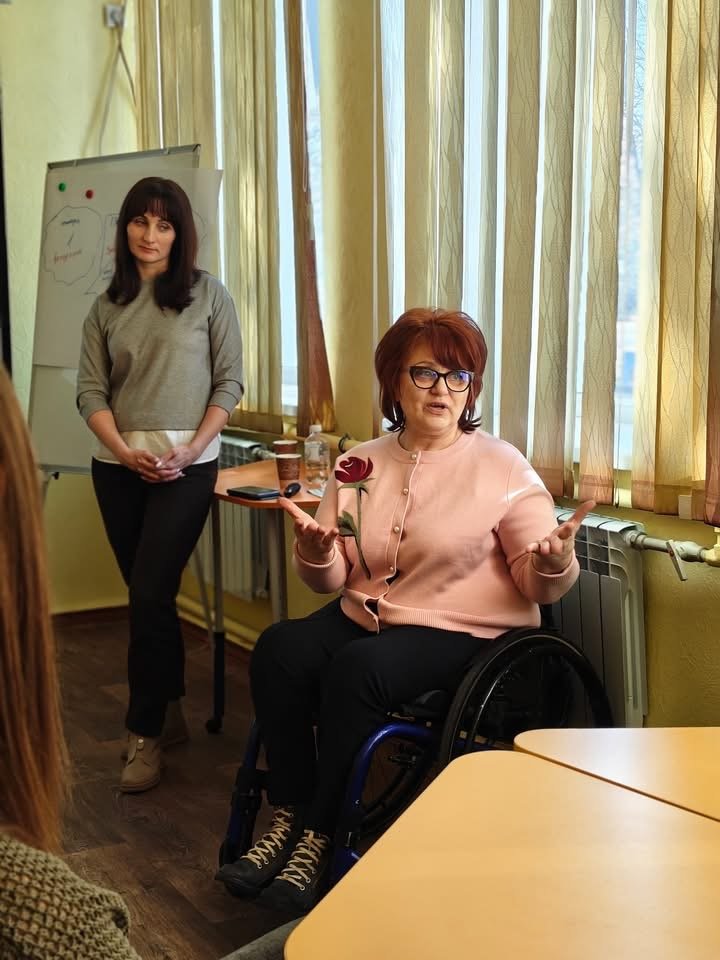
As Yevhenii Svit noted, decisions made without an understanding of universal design principles may not only fail to improve accessibility but also create additional barriers for users.
The practical part of the event involved an audit of the navigational accessibility of the grounds, building, and shelter of the Primary Health Care Center. Participants, together with the expert, analyzed existing solutions, identified barriers, and discussed possible changes. The recommendations developed will serve as the basis for further engagement with local authorities and the facility’s administration.
The meeting underscored that shelter accessibility is a complex issue involving both infrastructure and informational solutions. This involves creating conditions in which every person can receive information in a timely manner, orient themselves in the space, and reach a safe place.
The advocacy campaign is being implemented as part of the project “Disability-Inclusive Multisectoral Humanitarian Assistance for Internally Displaced Persons, Returnees, Veterans, and Host Communities in Ukraine.” The project is implemented by the National Assembly of People with Disabilities of Ukraine in partnership with the European Disability Forum, with support from the German Federal Foreign Office and CBM (Christian Blind Mission).
Such initiatives contribute to the creation of a safe environment in which accessibility is viewed as a necessary condition for preserving life and ensuring equal opportunities for all.
Oleksandra Perkova, Communications Manager of the Project
У межах проєкту з Disabled People’s Organisations Denmark організації — члени НАІУ — пройшли самооцінку організаційного розвитку. Її результати допомогли визначити напрями, які потребують посилення: стратегічне планування, комунікації, організаційні політики, сталість та розвиток ресурсів. Щоб підтримати організації у цій роботі, Секретаріат НАІУ організовує серію практичних вебінарів для представників членських організацій. 14 липня, 11:00–12:30«Комунікація, що посилює […]
У Судововишнянській громаді Львівської області люди з інвалідністю та ветерани долучилися до ухвалення рішень, пов’язаних із доступністю місцевої інфраструктури та громадських послуг. Про це повідомляє офіційний сайт Судовишнянської міської ради. Як стверджує вебресурс, за підсумками обстеження соціальних об’єктів і громадського простору громада вже працює над необхідними змінами, а будівництво нового Центру надання адміністративних послуг проходить […]
Секретаріат Уповноваженого Верховної Ради України з прав людини проводить опитування щодо реалізації права осіб з інвалідністю на працю. Опитування має на меті виявити основні проблеми, з якими стикаються люди з інвалідністю під час працевлаштування та роботи, а також визначити прогалини у законодавстві й питання, які потребують подальшого врегулювання. У межах дослідження підготовлено два окремі опитувальники: […]
У Полтавському обласному клінічному онкологічному диспансері нещодавно провели навчання медичного персоналу з використання нового навігаційного простору та коректного супроводу пацієнтів і відвідувачів. Захід організувало «Полтавське міське громадське об’єднання осіб з інвалідністю ВІРА» у ході реалізації регіональних адвокаційних заходів Національної Асамблеї людей з інвалідністю України в межах проєкту «Реабілітація в Україні» (Rehab4U). Про це повідомляє керівниця […]
Уряд удосконалив порядок виплати допомоги людям, які постраждали на об’єктах критичної інфраструктури внаслідок війни. Про це повідомило Міністерство соціальної політики, сім’ї та єдності України на своєму сайті. Розмір одноразової допомоги становить: 800 тис. грн для осіб з інвалідністю I групи, 500 тис. грн — для осіб з інвалідністю II групи, 200 тис. грн — для […]
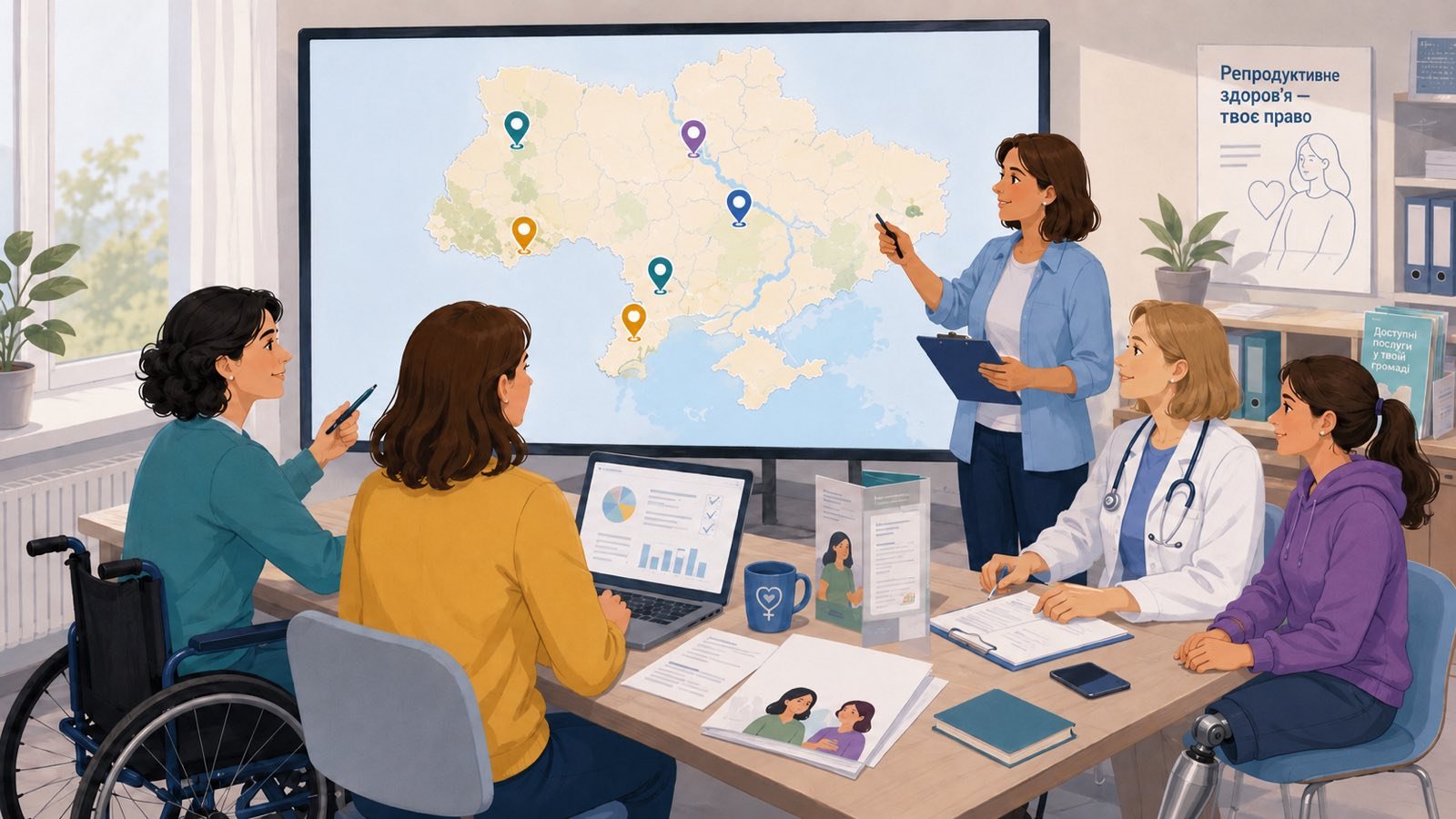
У межах проєкту «Здоров’я жінки» проведено картографування послуг з репродуктивного здоров’я у пілотних громадах. Йдеться про Казанківську громаду Миколаївської області, Чернівецьку громаду Чернівецької області, Броварську громаду Київської області, Горохівську громаду Волинської області, Чутівську громаду Полтавської області та Кодимську громаду Одеської області. Картографування — це інструмент роботи, який допомагає візуалізувати та описати наявні послуги у громаді: […]