Accessibility of shelters for people with disabilities: the situation in Odesa
March 2, 2026
Share:
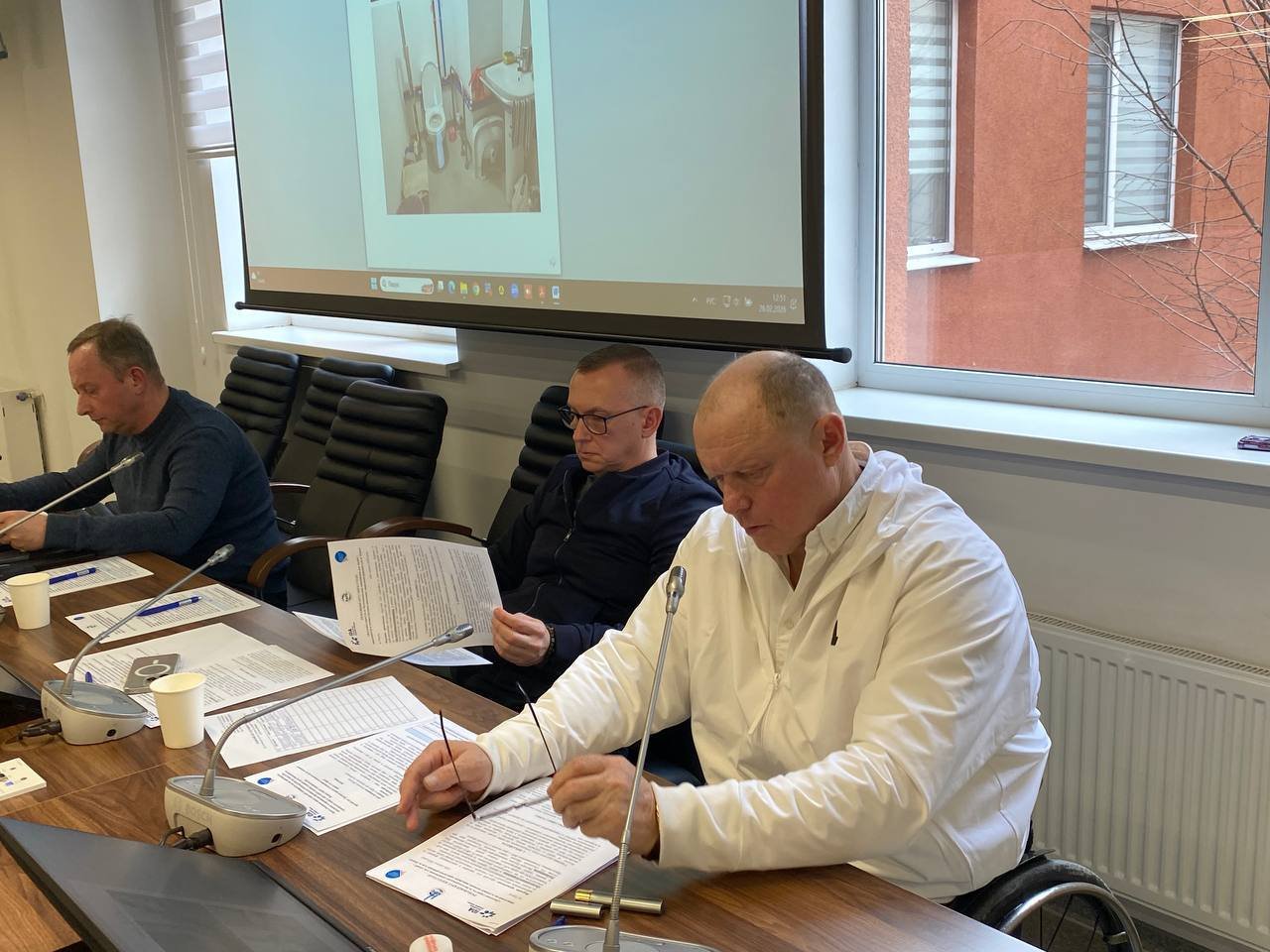
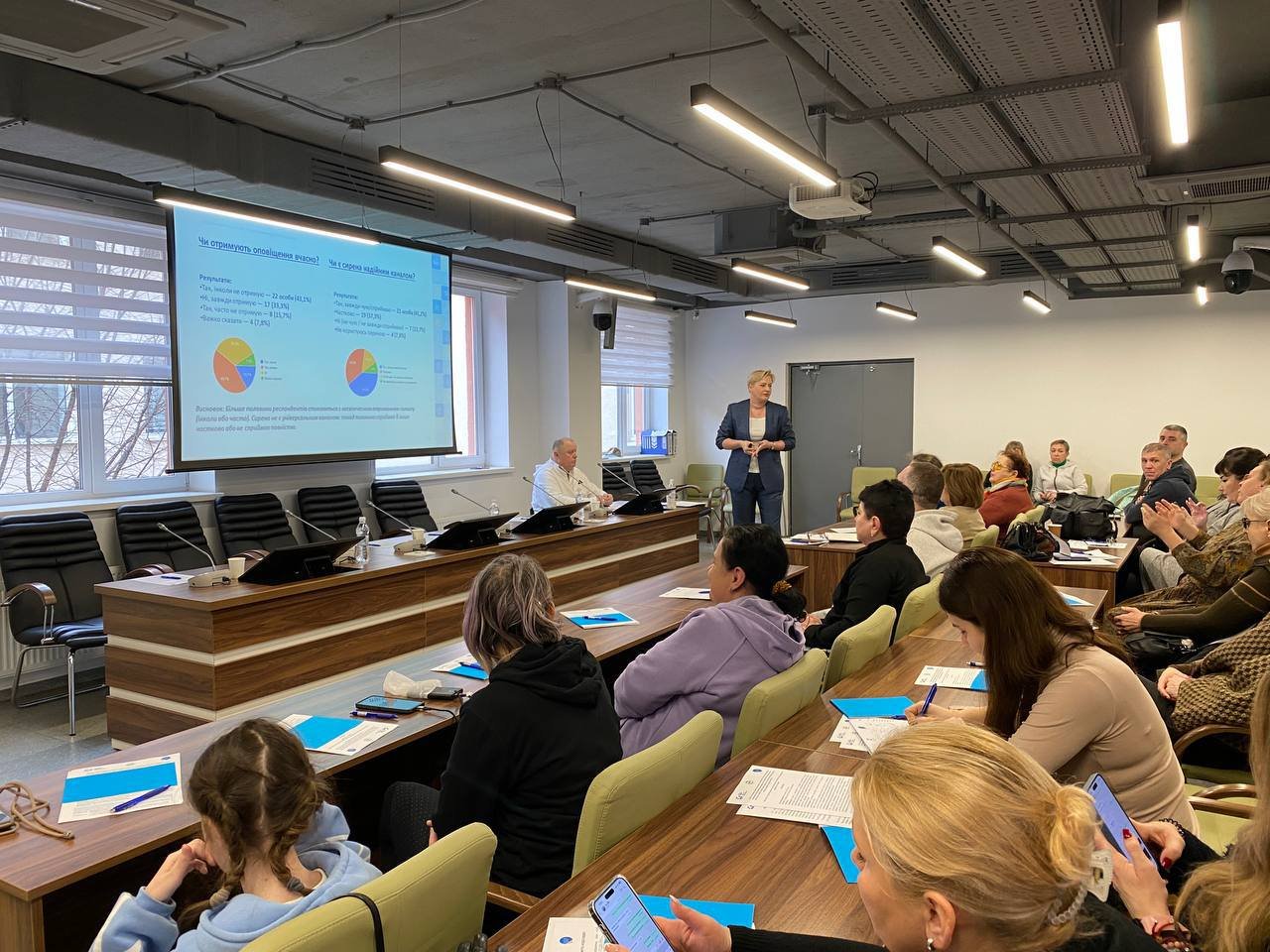
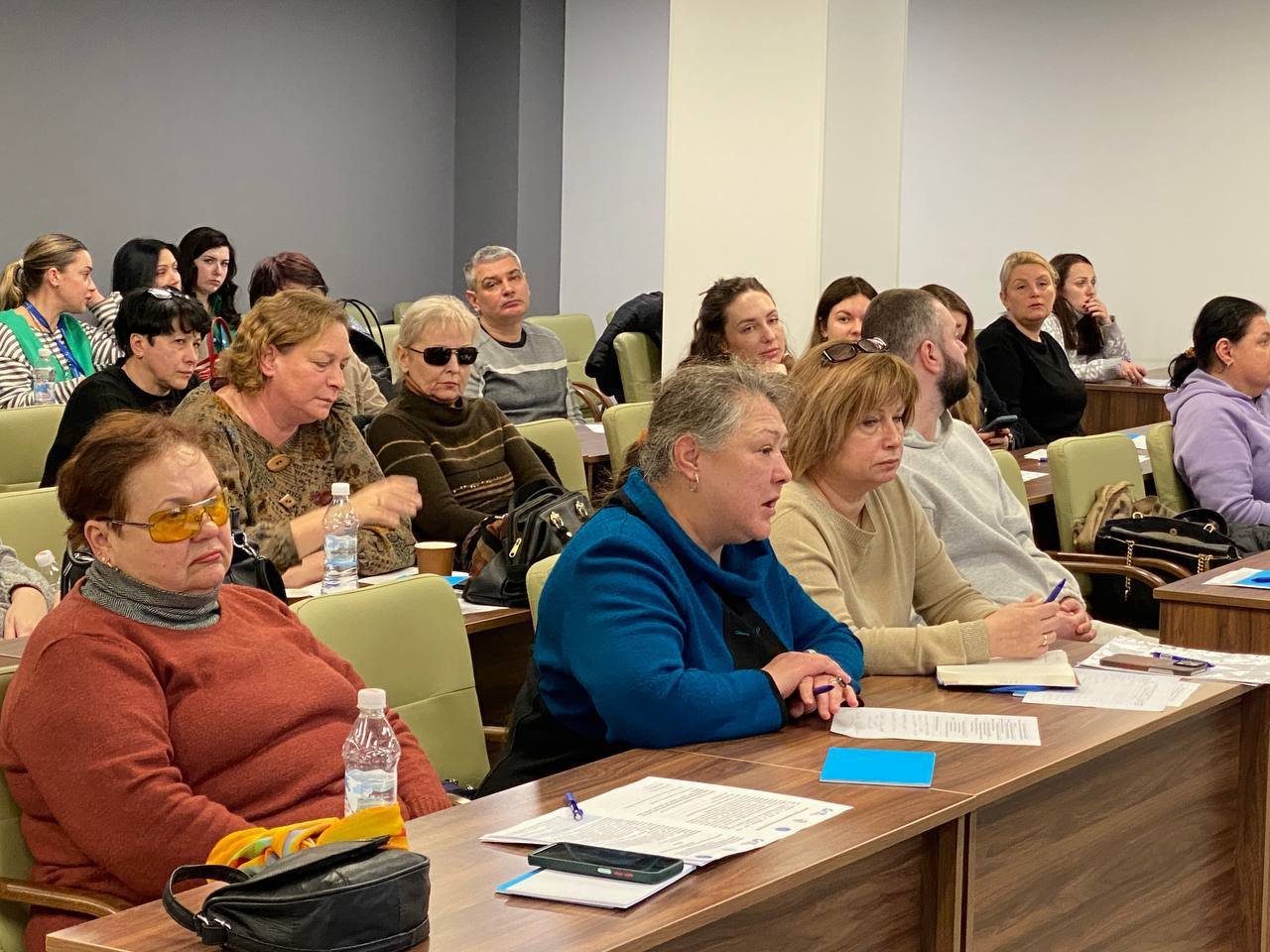
A round table was recently held in Odesa as part of the advocacy campaign “Humanitarian response: everyone has the right to protection,” which is being implemented as part of the project “Strengthening the protection of the rights of persons with disabilities during humanitarian response and recovery in accordance with the UN Convention on the Rights of Persons with Disabilities.”
This was reported on Facebook page Facebook by Oleg Sokolov, Commissioner for the Rights of Persons with Disabilities at the Odesa Regional State Administration.
The event presented the results of a survey on the accessibility of shelters for people with disabilities and other low-mobility groups, as well as the results of an on-site inspection of the accessibility of individual shelters.
According to the Commissioner for the Rights of Persons with Disabilities, an open and substantive dialogue was held on the barriers that actually prevent people from safely reaching shelters during an emergency, as well as on the need for multi-channel warning systems accessible to people with various disabilities (vision, hearing, etc.).
Representatives of local government and responsible structures were involved in the discussion, including the Odesa City Council Department of Labor and Social Policy, the Odesa City Council Department of Municipal Security, a deputy of the Odesa City Council, representatives of municipal institutions, public and charitable organizations, as well as international organizations.
The joint effort resulted in the following resolution:
“Accessibility of shelters and multi-channel warning systems for people with disabilities in times of war: practical solutions for the city of Odessa.” The participants of the round table supported the resolution, and in the near future it will be sent for consideration to the relevant authorities and agencies responsible for safety, accessibility, and response in the community.
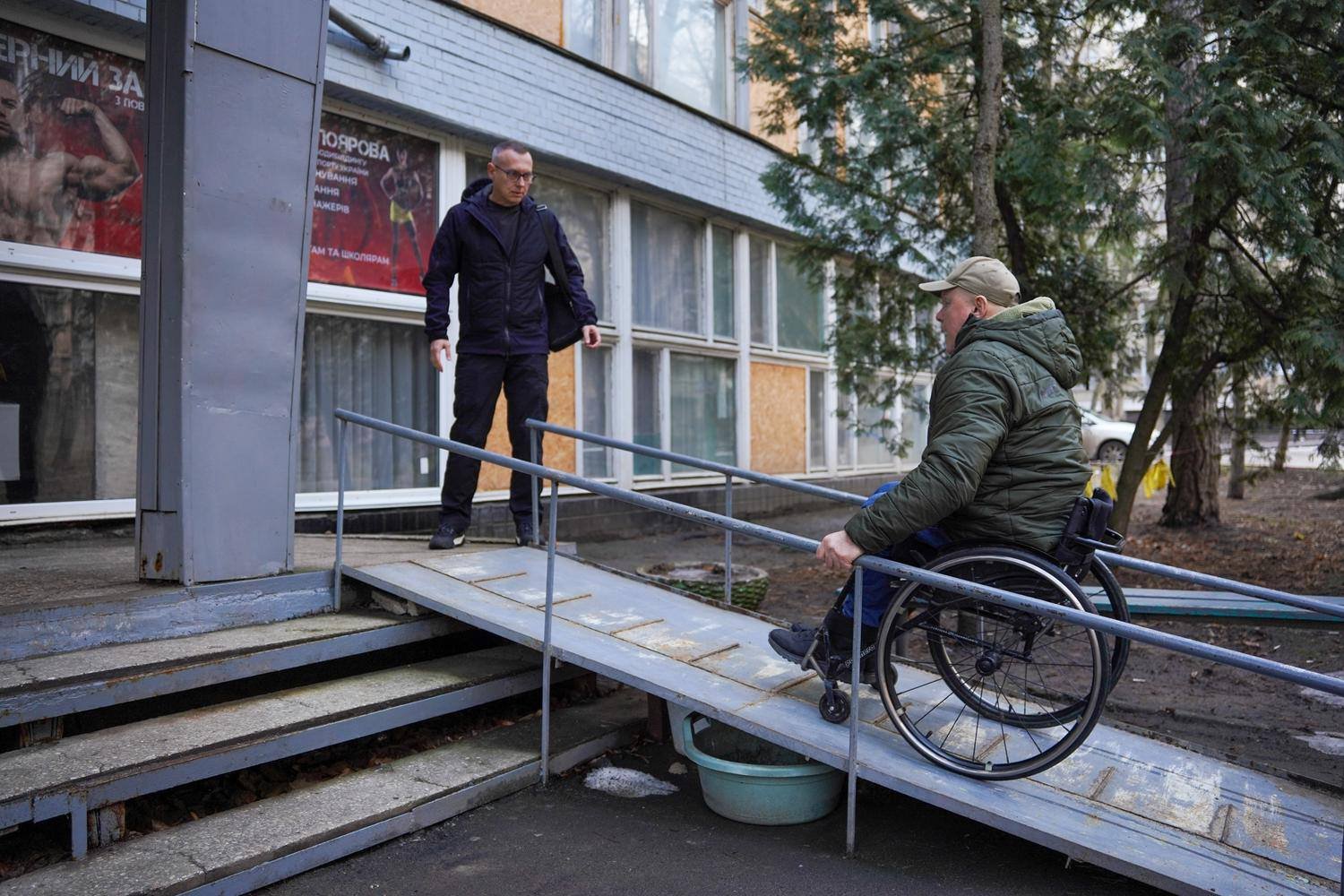
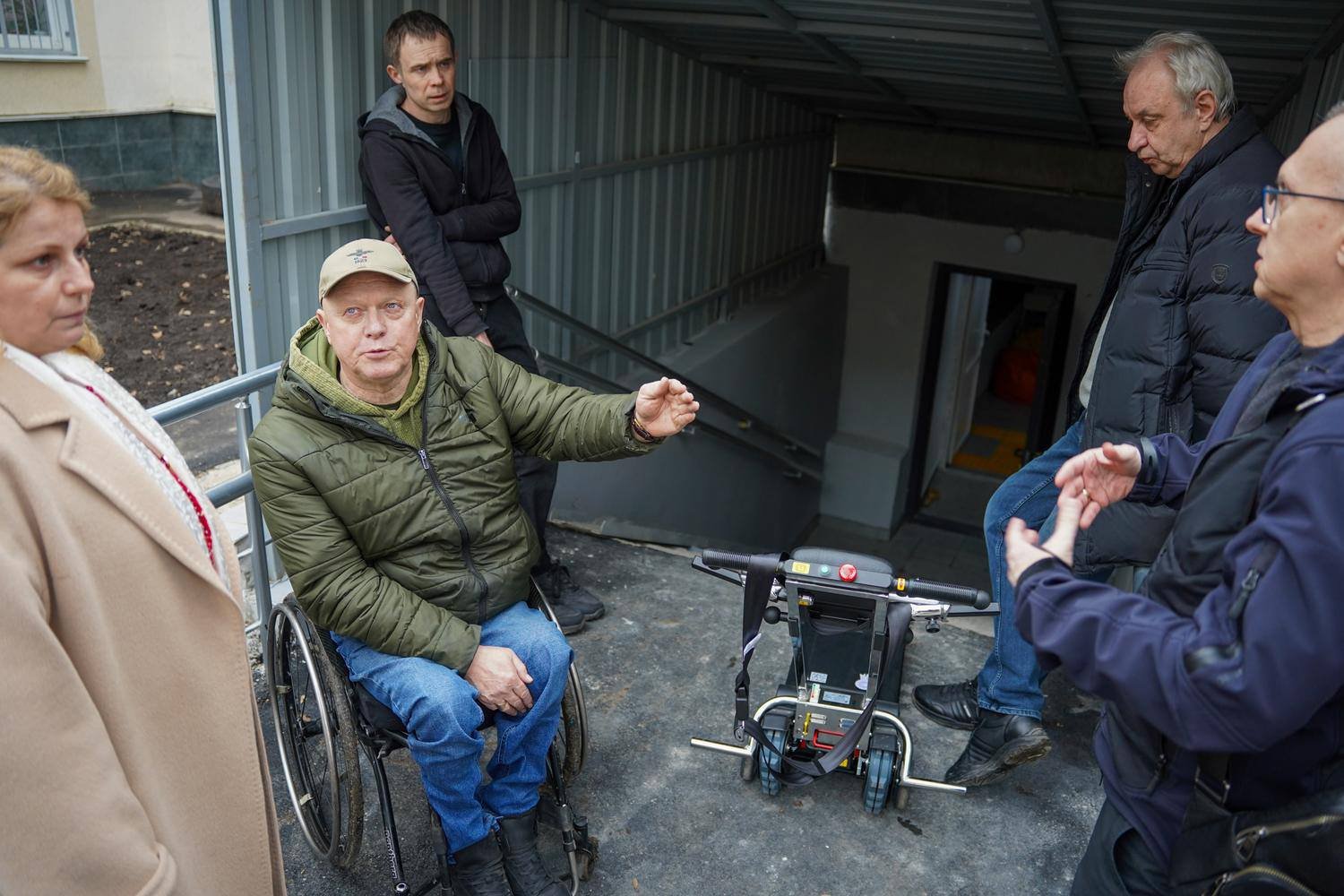
As previously reported by Oleg Sokolov, he and Odessa City Council deputy Oleksiy Asaulenko conducted a visual inspection of several shelters that were identified by respondents during our survey. Among them is a communal shelter (Odessa Lyceum “Leader”) at 29a Oleksiy Vadatursky Street (Marshal Malynovsky Street) in Odessa.
«Unfortunately, during the inspection, we did not find a single person who could use a device for lifting and lowering a person in a wheelchair up and down the stairs, so the question arises of the feasibility of purchasing such a device,» the Commissioner said.
“Unfortunately, during the inspection, we did not find a single person who knew how to use the device for lifting and lowering a person in a wheelchair down the stairs, so the question arises as to the advisability of purchasing such a device,” the Commissioner notes.
According to him, the inspection confirmed that the issue of barrier-free access to shelters in the Odesa community remains relevant. Some facilities have restrictions that make it difficult or impossible for people in wheelchairs and other low-mobility groups to access shelters independently. It is also important that information and communication on the ground are as accurate and humane as possible.
The project “Strengthening the protection of the rights of persons with disabilities during humanitarian response and recovery in accordance with the UN Convention on the Rights of Persons with Disabilities” is being implemented by the NAPD within the framework of a grant from the International Disability Alliance (IDA). International Disability Alliance (IDA)
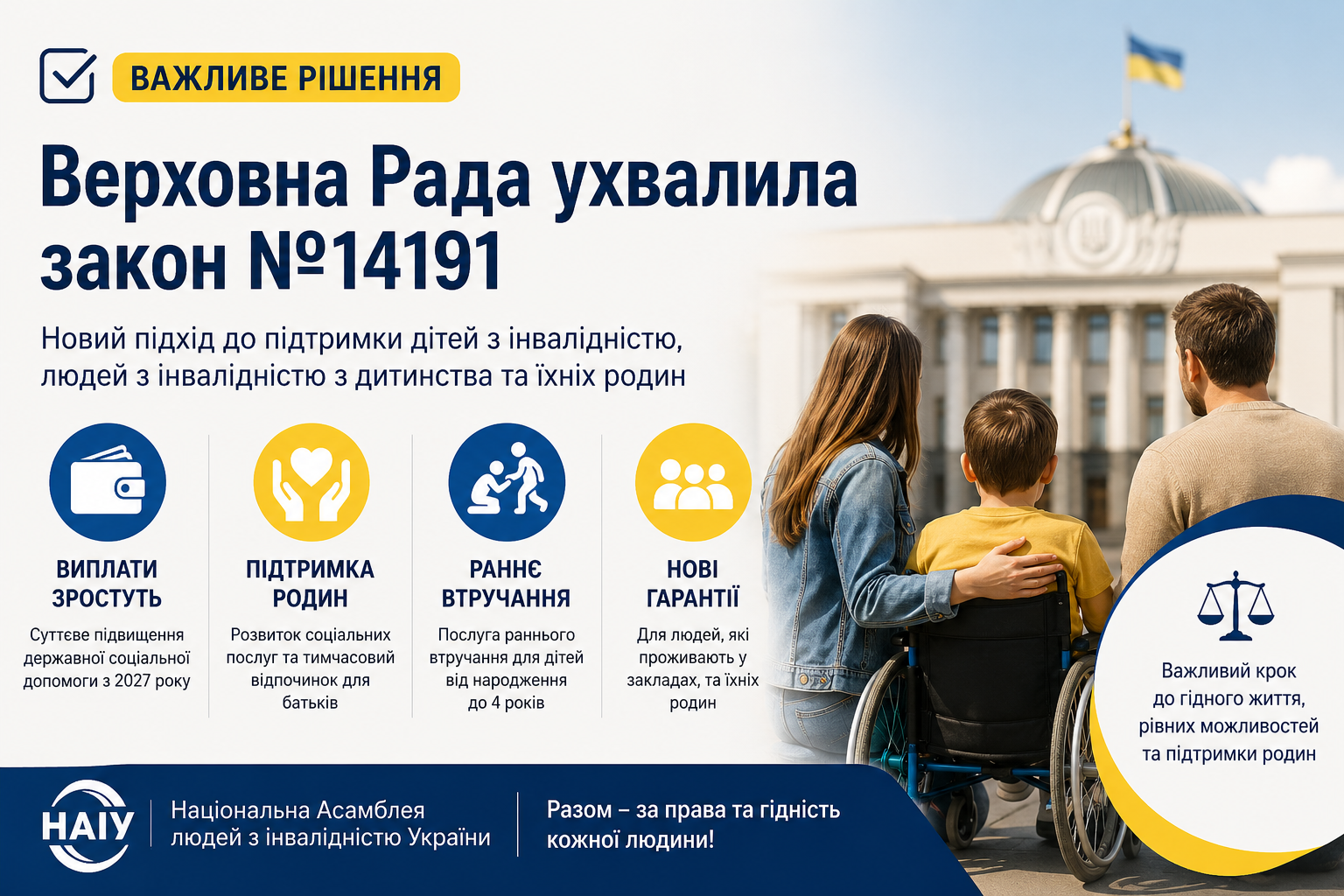
19 серпня Верховна Рада України ухвалила в цілому закон № 14191, який змінює систему державної підтримки дітей з інвалідністю, людей з інвалідністю з дитинства та їхніх родин. Для Національної Асамблеї людей з інвалідністю України це рішення має особливе значення. Робота над законопроєктом тривала більше піврокуі на різних її етапах документ містив норми, які могли призвести […]
Як зробити професійне навчання доступним для людей з різними освітніми потребами? Над цим працювали учасники проєкту «Інклюзивна професійна освіта: покращення навчання для ветеранів та людей з інвалідністю», який реалізують Національна Асамблея людей з інвалідністю України (НАІУ) та CBM у межах Мультидонорської ініціативи Skills4Recovery. Педагоги та представники адміністрацій закладів професійної освіти пройшли навчання з інклюзивних підходів, […]
Світлана із села Олександрівка Кодимської громади створює картини, бере участь у виставках і представляє свої роботи на фестивалях. Її кімната стала творчою майстернею, де з’являються казкові сюжети, пейзажі та образи, натхненні природою. Над кожною картиною жінка може працювати кілька тижнів, уважно продумуючи сюжет і деталі. Натхнення Світлана знаходить у сільських краєвидах, спілкуванні з людьми, а […]
Київ завчасно готується до можливих перебоїв із тепло-, електро- та водопостачанням узимку. Міські соціальні служби актуалізують інформацію про одиноких людей похилого віку, людей з інвалідністю та родини, які виховують дітей з інвалідністю, яким у разі надзвичайної ситуації може знадобитися допомога з тимчасовим переміщенням. Про це на своїй сторінці у Facebook повідомляє заступниця голови КМДА з […]
Повідомляємо, що з 1 до 4 вересня включно Гаряча лінія з надання безоплатної правничої допомоги Національної Асамблеї людей з інвалідністю України тимчасово не працюватиме. Це лише коротка перерва. Вже 5 вересня ми знову будемо на зв’язку та чекатимемо на звернення наших бенефіціарів із питаннями юридичного характеру. Дякуємо за розуміння та до зустрічі 5 вересня!
Включення організації до Реєстру надавачів та отримувачів соціальних послуг відкриває доступ до фінансових, технічних та інших ресурсів. Зокрема, статус офіційного надавача дає можливість брати участь в експериментальних і пілотних проєктах від держави та міжнародних фондів, у міжнародних проєктах технічної допомоги з реагування на виклики війни та роботи з постраждалим населенням і вразливими категоріями громадян, а […]