Tackling barriers with care: The lives of people with visual impairments in communities
September 25, 2025
Share:
There are over 39 million people with visual impairments in the world today. This figure is growing every year. There are no exact statistics in Ukraine: according to various estimates, from 70 to 300 thousand people. Each of them encounters barriers every day that most of us do not even notice.
Cars parked on sidewalks and leaving narrow passages, flower beds or concrete hemispheres that are easy to catch with a cane, open hatches or potholes on the roads - all this can become a serious threat to life. However, available solutions, such as audible traffic lights, correctly placed tactile tiles or clearly painted contrasting elements of the infrastructure, help people with visual impairments to move independently and safely.
But often for many people with visual impairments, barriers begin on the doorstep of their own home.
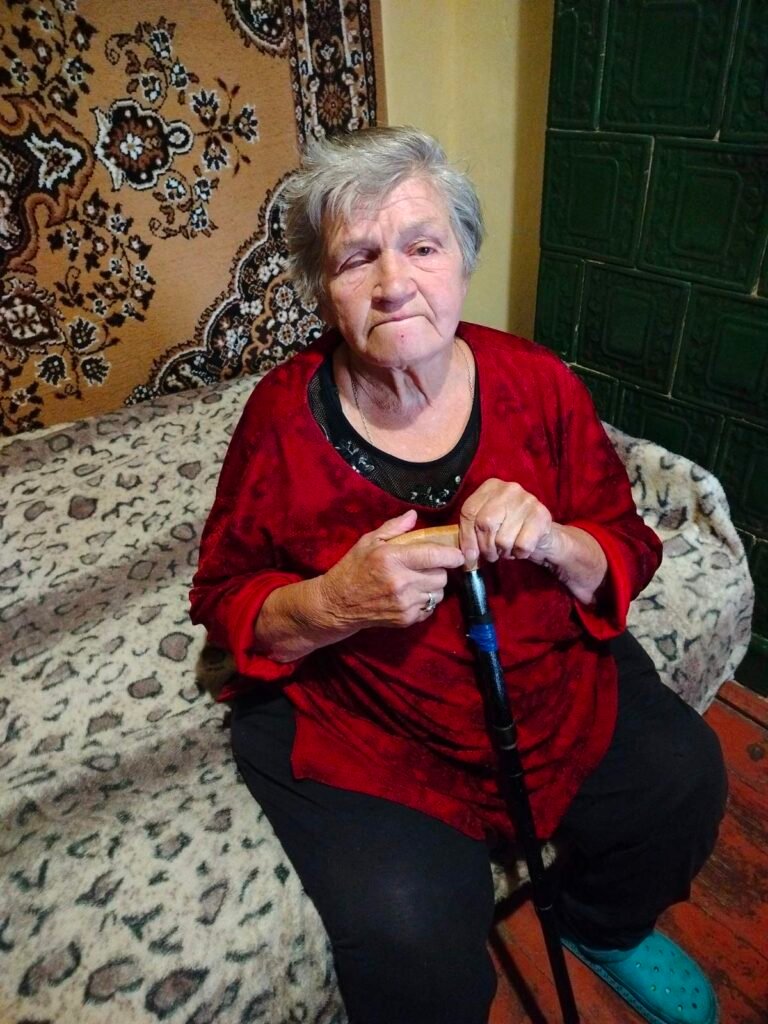
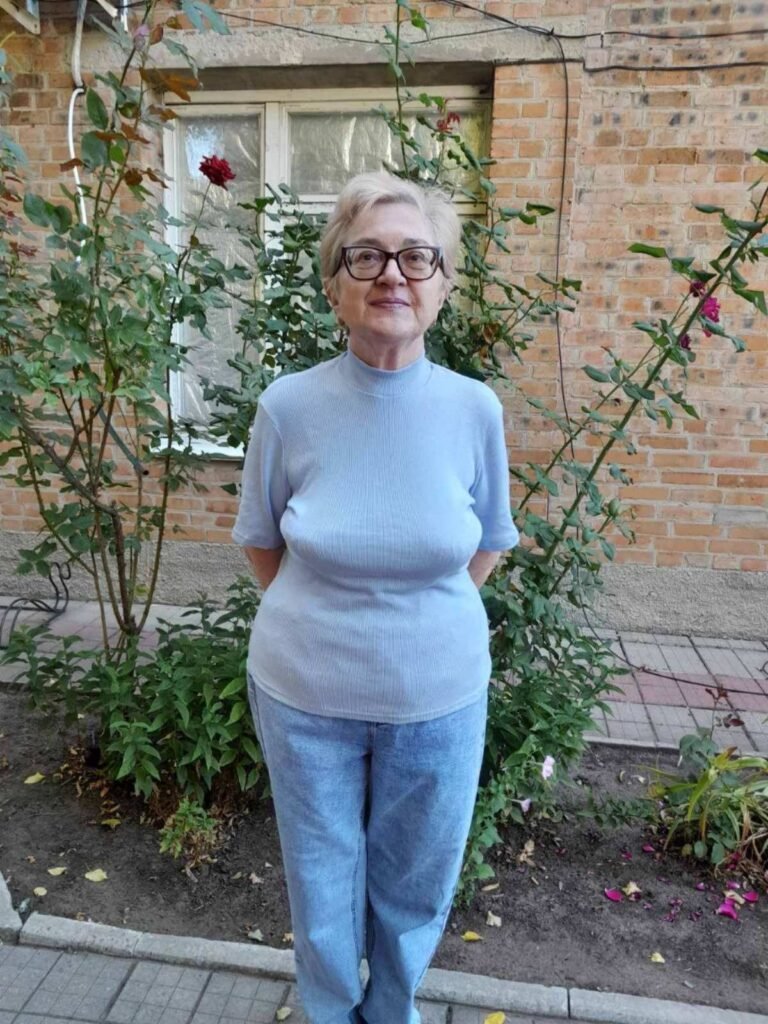
79-year-old Maria lives in the Storozhynetsk community, in a small apartment on the second floor, accessed by a steep staircase. All her life, the woman has worked in construction: she mixed concrete, painted, and performed heavy work. As a child, she suffered from meningitis twice, which resulted in a rapid deterioration of her vision. Today, the woman can see almost nothing, moves with the help of two canes, and can only make short trips out of the house.
A social worker visits her several times a week and helps with the housework. But even with this support, Maria’s life is not easy: her small pension does not allow her to buy even basic products and necessary medicines. This summer, financial assistance from the National Assembly of People with Disabilities became a support for her. Now the woman is preparing for the winter period and wants to stock up on potatoes. No less important for Maria was the attention from the project coordinator, Valentina Dobrydina. Contact and communication give the feeling that she is not left alone with difficulties. “Communicating, talking is also medicine,” says Maria.
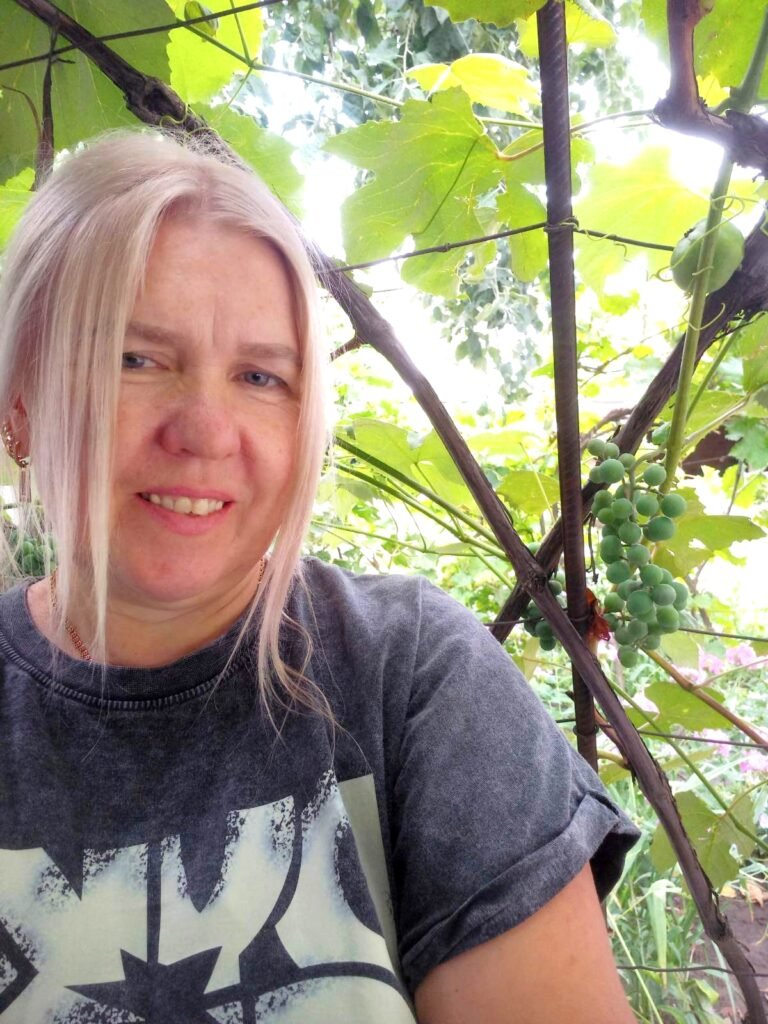
70-year-old Lyudmila lives in the Karlivska community in the Poltava region. The woman lost her sight due to a hereditary disease: her retina detached, and the world turned into shadows and silhouettes for her. Despite this, she not only runs the household, but also takes care of her 94-year-old mother.
Lyudmila confidently navigates her daily life: she prepares food, relying only on smells, walks, remembering every detail. Thanks to the white cane that she recently received, the woman can walk to the store on her own. But even there, there are dangers: she recently almost fell through metal posts. “They should be painted yellow, then it would be safer for other people with poor eyesight,” says Lyudmila.
For a long time, the woman refused to register her disability, trying to be “like everyone else.” She graduated from an agricultural college and worked. Today, she is grateful to her neighbors and family: they share fruits and vegetables from their gardens with her and support her with words. “It is human attention that gives her strength,” Lyudmila admits. The woman also dreams of getting a smartphone adapted for the blind: “It would be my window to the world.”
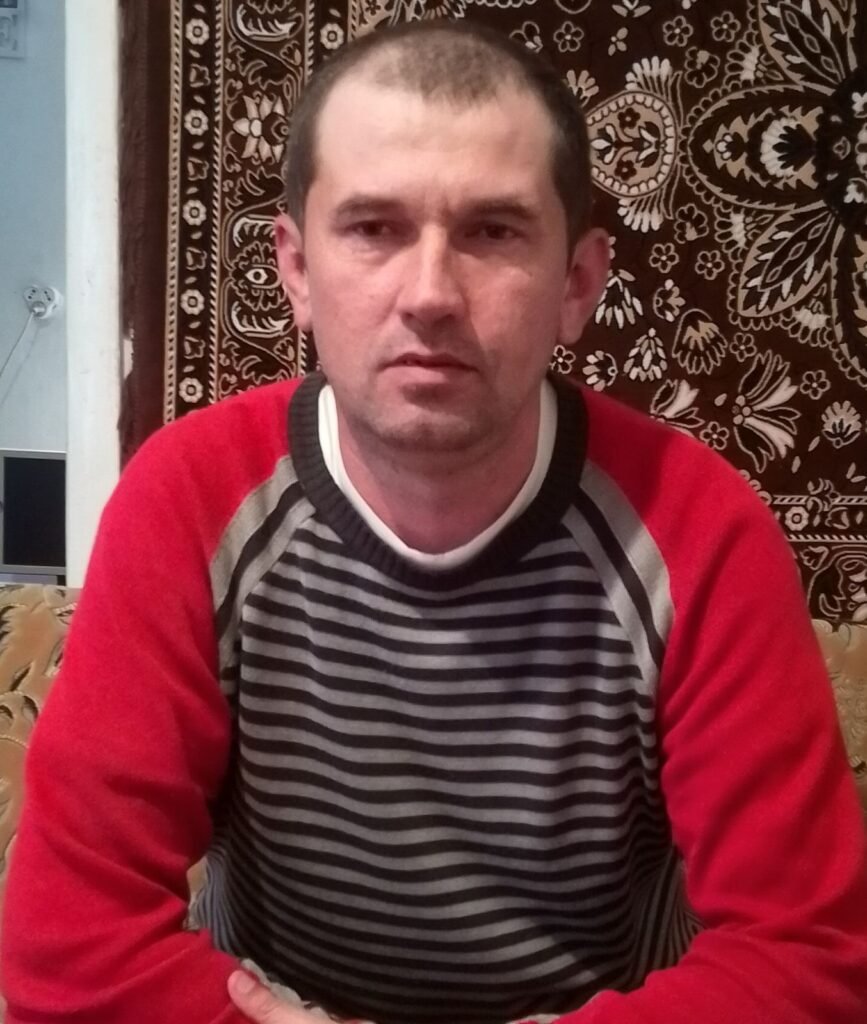
Oleksandr lives in a small village in the Opishnya community. The sudden loss of vision changed his future plans for life. Long examinations and treatment yielded almost no results. The most important support for Oleksandr at this moment was the support of his family. The family arranged his life so that his husband could move around independently and do some things without outside help. His loved ones helped him not to withdraw into himself: they walk together in the park, visit cafes, and continue to live an active life. Thanks to support and adaptation, the husband feels independent, and the space next to his family is safe.
Iryna also lives in the Opishnya community. She has been fighting the disease for many years and is trying to restore her eyesight. Despite her own difficulties, Iryna helps others. Her husband defends the independence of Ukraine at the front, suffered a serious injury. But despite her own difficulties, Iryna shares attention with those in need every day. She works as a social worker, and every day she provides support to people in the community, because she personally knows how important it is to feel attention and understanding.
Maria, Lyudmila, Oleksandr and Iryna live in different regions, but each of them is in conditions that often ignore the needs of blind people. And for each of them, the combination of humanitarian aid and human attention has become real support.
Their voices are parts of one global problem. People with visual impairments in Ukraine constantly face physical and social barriers: the lack of accessible infrastructure, the difficulty of obtaining specialized means of transportation, the lack of adapted technologies, such as smartphones with programs for the blind, isolation, which is exacerbated when there is no community or even simple human contact nearby.
Thousands of Ukrainians overcome barriers that are invisible to most every day. But accessibility and care are not a “privilege”, but a right. Help is important, but even more important is understanding and attention from society. Every accessible sidewalk, traffic light or store can be a step towards a life without unnecessary obstacles. To an inclusive society, where people with disabilities do not have to “adapt to the world”, but can live in it.Адже доступність — це питання не комфорту, а базової безпеки та базових прав людини.
The project "Multi-sectoral Disability-Informed Humanitarian Assistance for Internally Displaced Persons, Returnees, Veterans and Host Communities in Ukraine" is implemented by the National Assembly of People with Disabilities of Ukraine in partnership with the European Disability Forum (EDF) with the support of the German Federal Foreign Office (GFFO) and CBM (Christian Mission for the Blind).
Oleksandra Perkova, Communications Manager of the Project
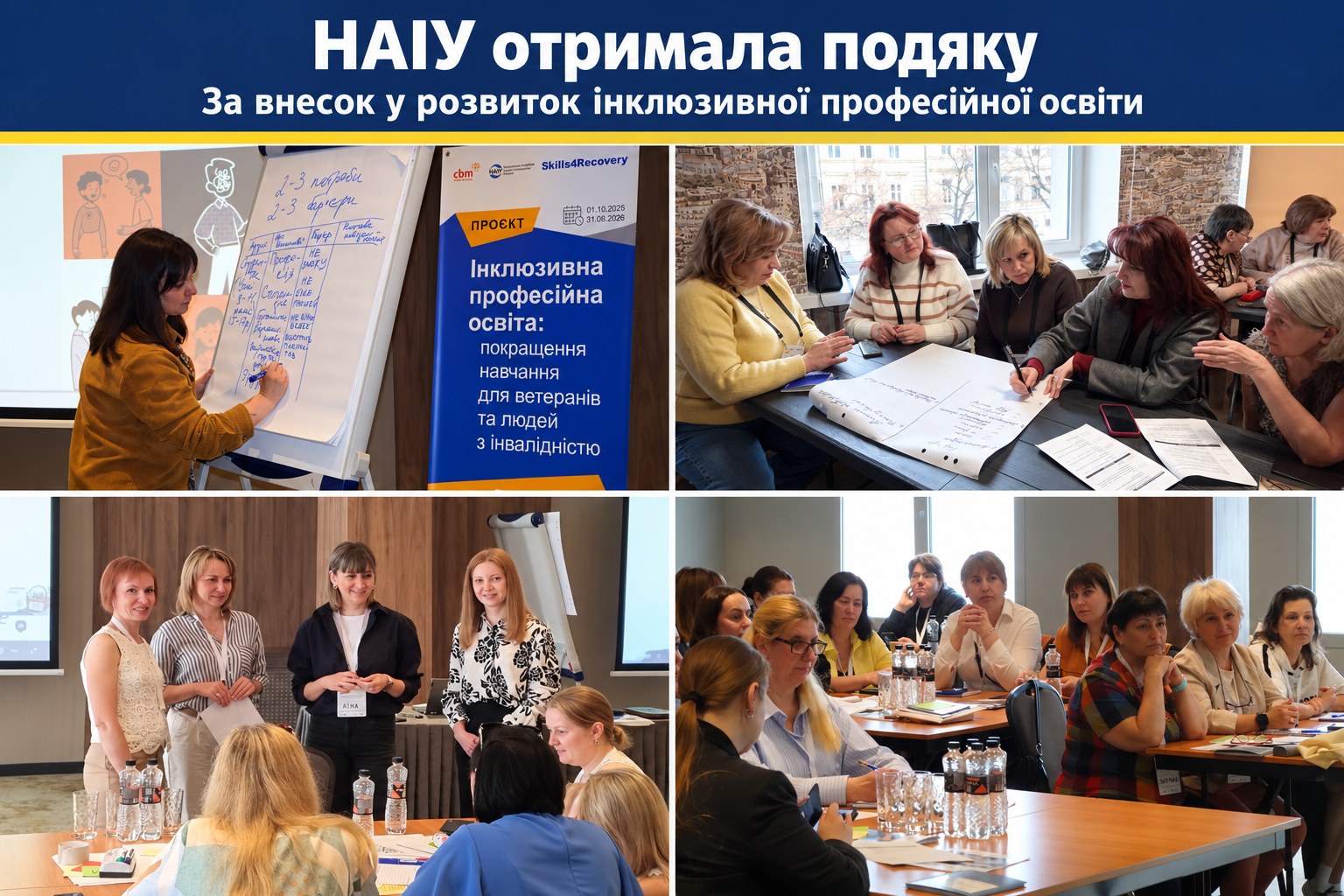
Під час підсумкової партнерської зустрічі Національна Асамблея людей з інвалідністю України отримала слова подяки за реалізацію проєкту «Інклюзивна професійна освіта: покращення навчання для ветеранів та людей з інвалідністю». Партнери відзначили професіоналізм команди НАІУ, якісну координацію роботи та практичну цінність проведених навчань і розроблених матеріалів для закладів професійної освіти. Особливу увагу приділили тому, як педагоги застосовують […]
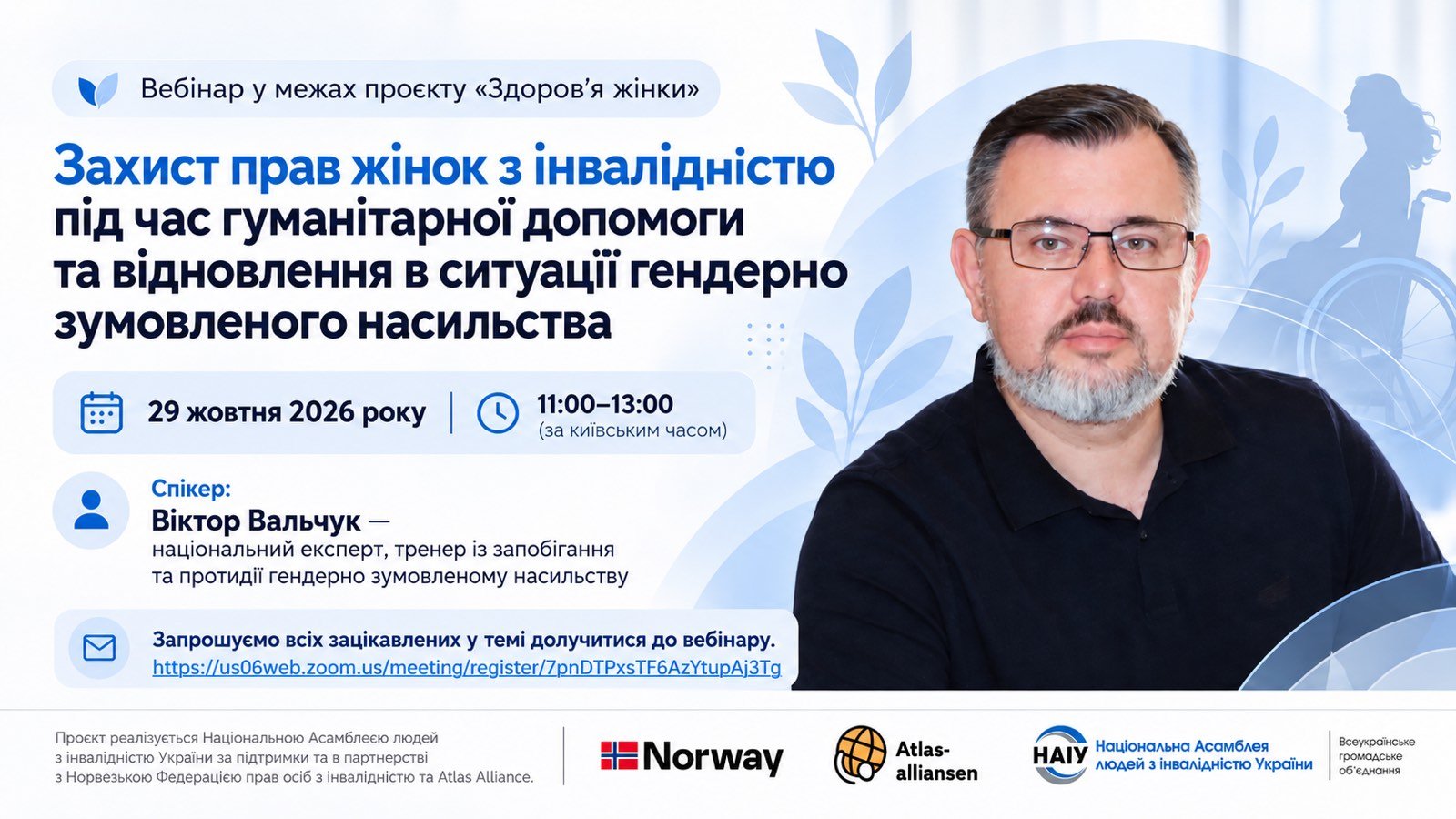
29 жовтня 2026 року Національна Асамблея людей з інвалідністю України (НАІУ) запрошує долучитися до вебінару «Захист прав жінок з інвалідністю під час гуманітарної допомоги та відновлення в умовах гендерно зумовленого насильства». В умовах повномасштабної війни жінки з інвалідністю можуть стикатися з додатковими ризиками гендерно зумовленого насильства, а також із бар’єрами під час звернення по допомогу […]
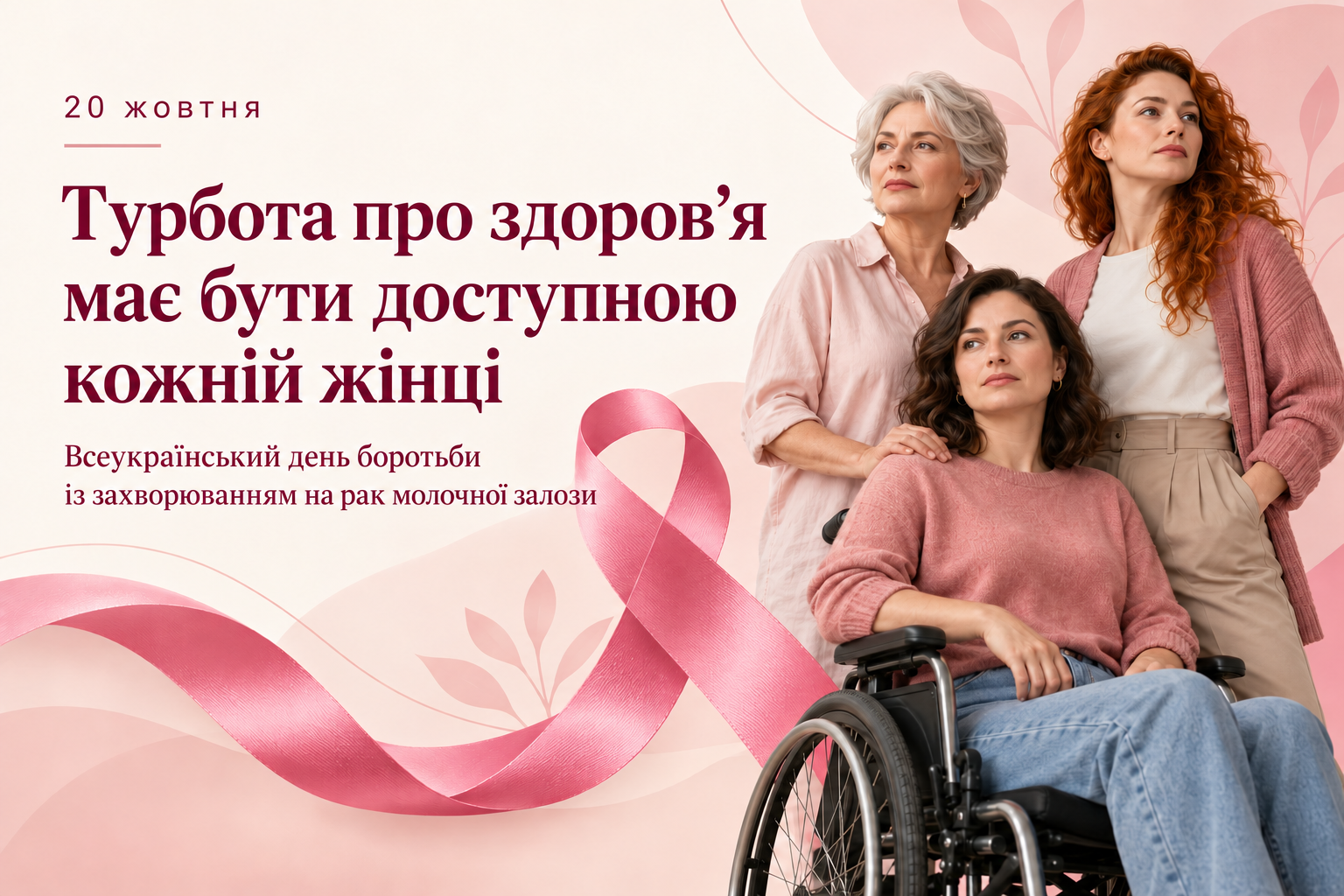
20 жовтня — Всеукраїнський день боротьби із захворюванням на рак молочної залози. Заклик «пройдіть обстеження» важливий. Але за ним має стояти реальна можливість потрапити до лікаря. Для жінок з інвалідністю це означає доступний транспорт і медичний заклад, обладнання, яким можна скористатися, зрозумілу інформацію та поважне спілкування. Без упереджень, зі збереженням приватності та увагою до потреб […]
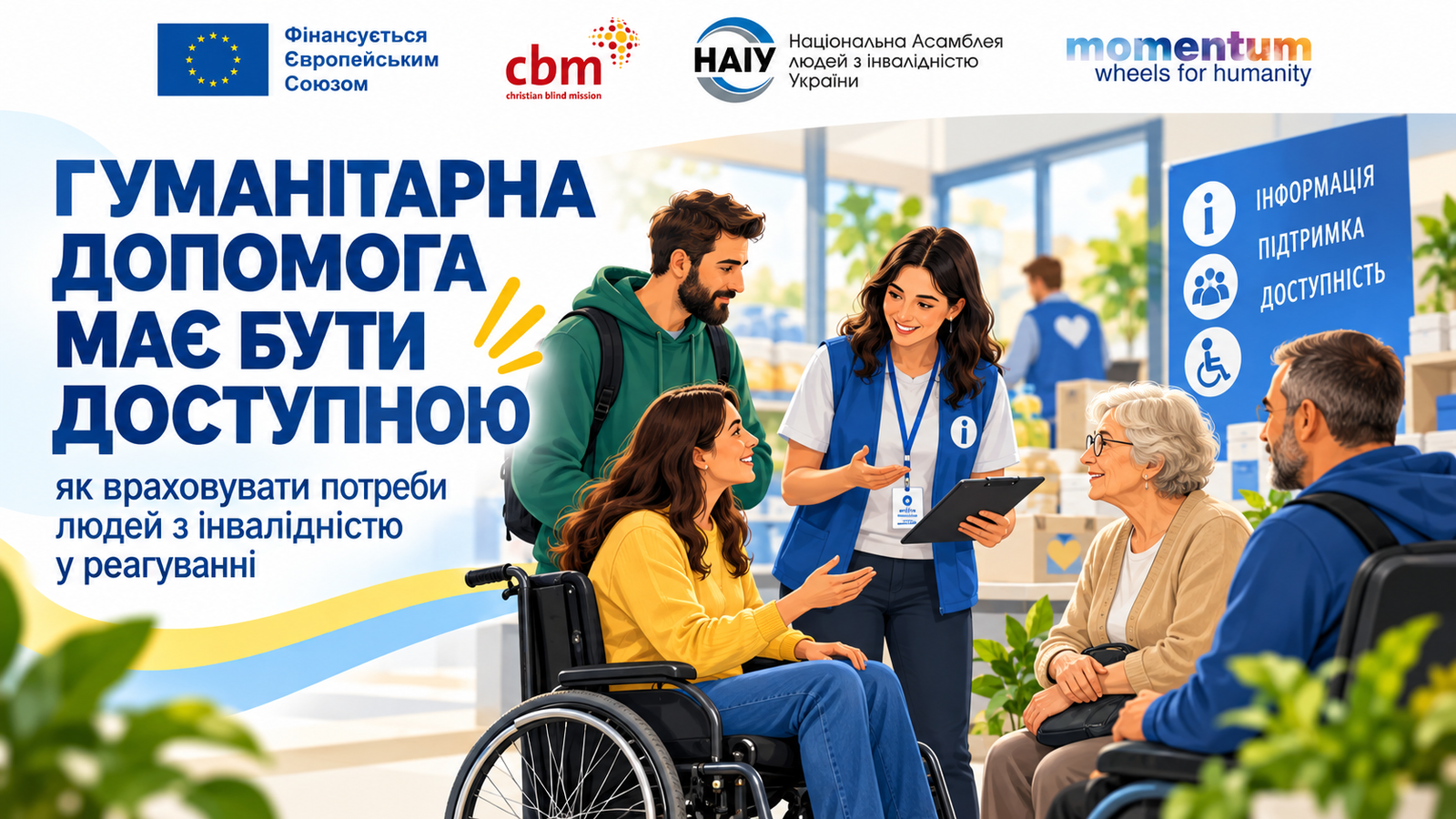
Гуманітарна допомога може бути передбачена програмою, профінансована і навіть доступна у громаді. Але головне питання інше: чи може людина, яка її потребує, реально нею скористатися? Саме про це говорили учасники дворівневого навчання «Гуманітарна діяльність: врахування потреб осіб з інвалідністю», яке у жовтні провела Національна Асамблея людей з інвалідністю України. До навчання долучилися представники гуманітарних і […]
Шукаємо координатора(-ку) з комунікацій у команду НАІУ (на проєкт) Національна Асамблея людей з інвалідністю України (НАІУ) реалізує проєкт «Інклюзія передусім — захист і підтримка дітей з аутизмом та іншими видами інвалідності, ветеранів і ветеранок в Україні», спільно з СВМ та СВМ Італія, спрямований на підтримку ветеранів та ветеранок, розвиток доступних можливостей для їхньої реабілітації, протезування, […]
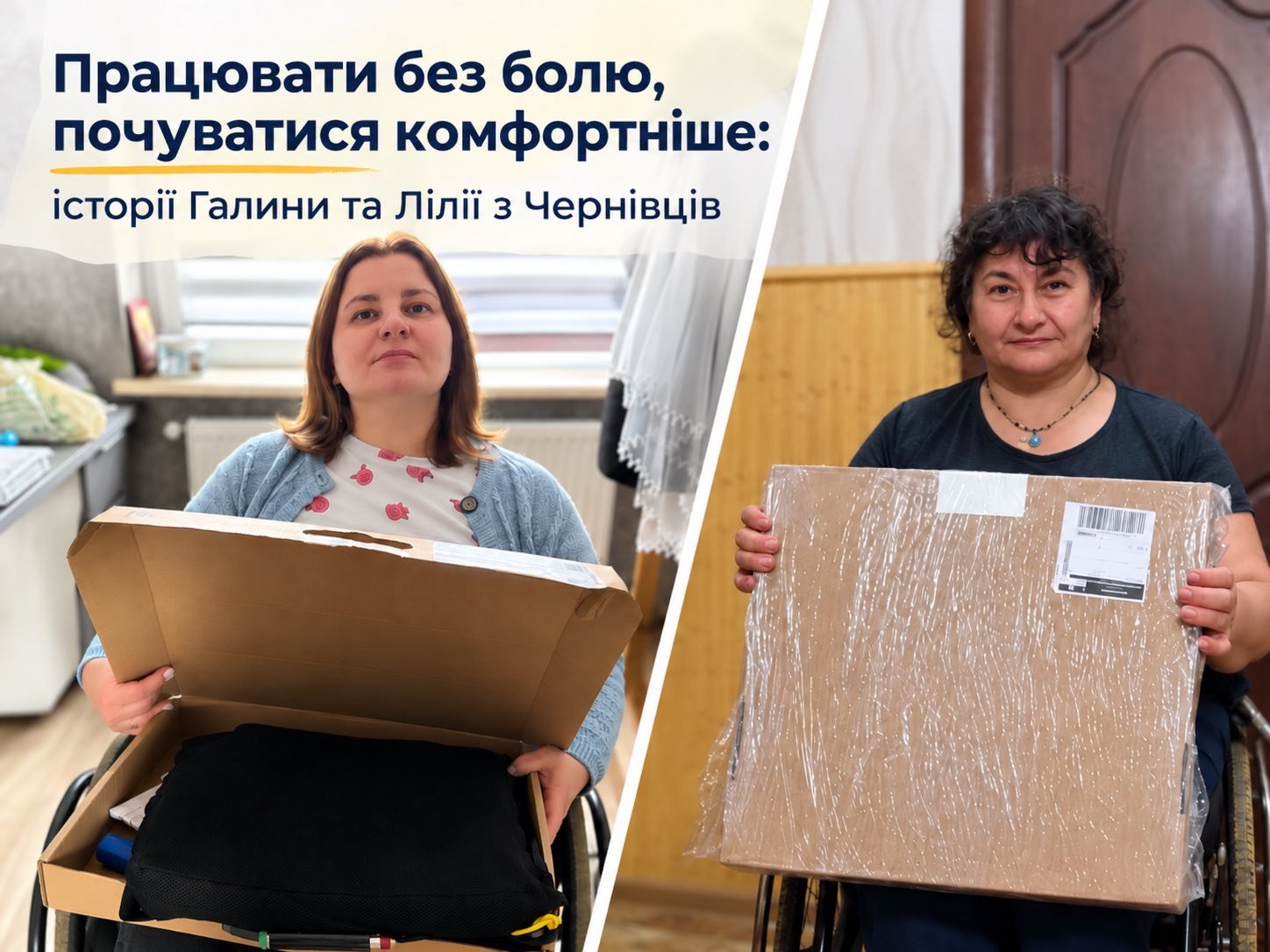
Галина з Чернівців створює весільні аксесуари для наречених. Її робота потребує творчості, терпіння та уваги до найменших деталей. За виготовленням прикрас жінка проводить багато годин, адже кожен виріб вимагає кропіткої ручної праці. Для Галини важливо мати можливість займатися улюбленою справою, однак тривала робота нерідко супроводжується фізичним дискомфортом. Жінка користується кріслом колісним, і через велике навантаження […]