Protection, accessibility, responsibility: participants in the NAPD training course mastered modern approaches to disability
February 9, 2026
Share:
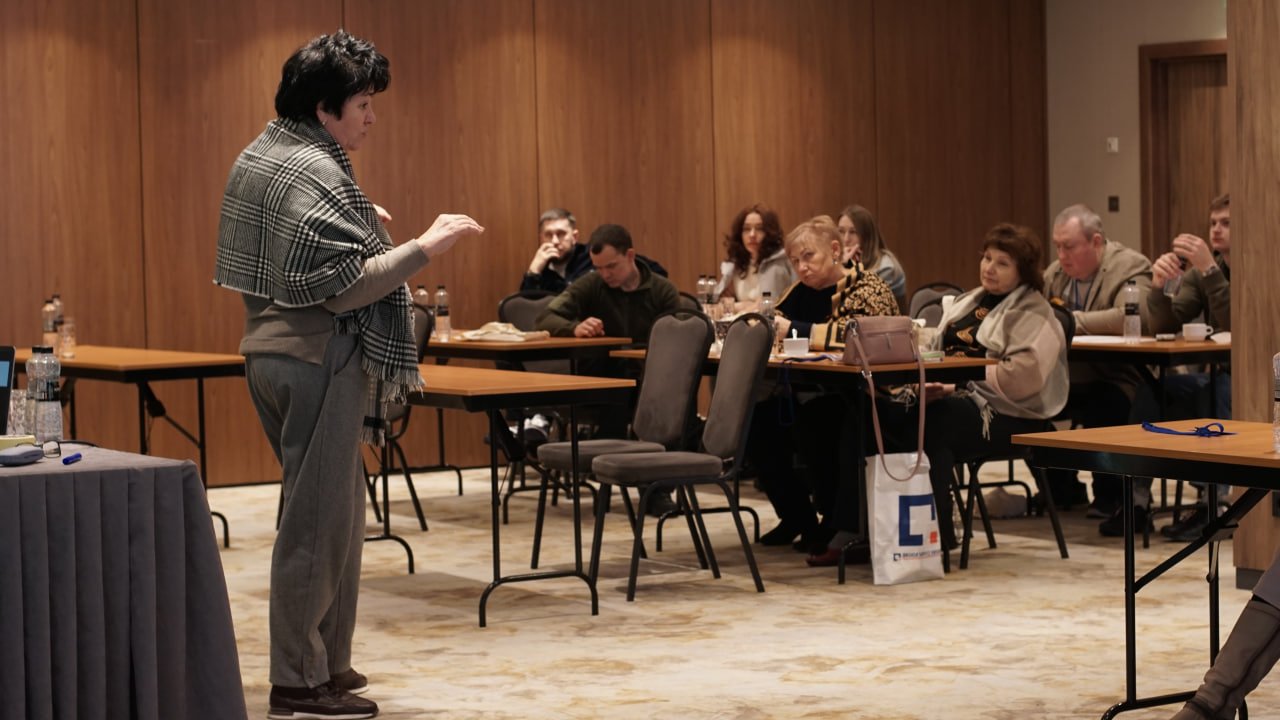
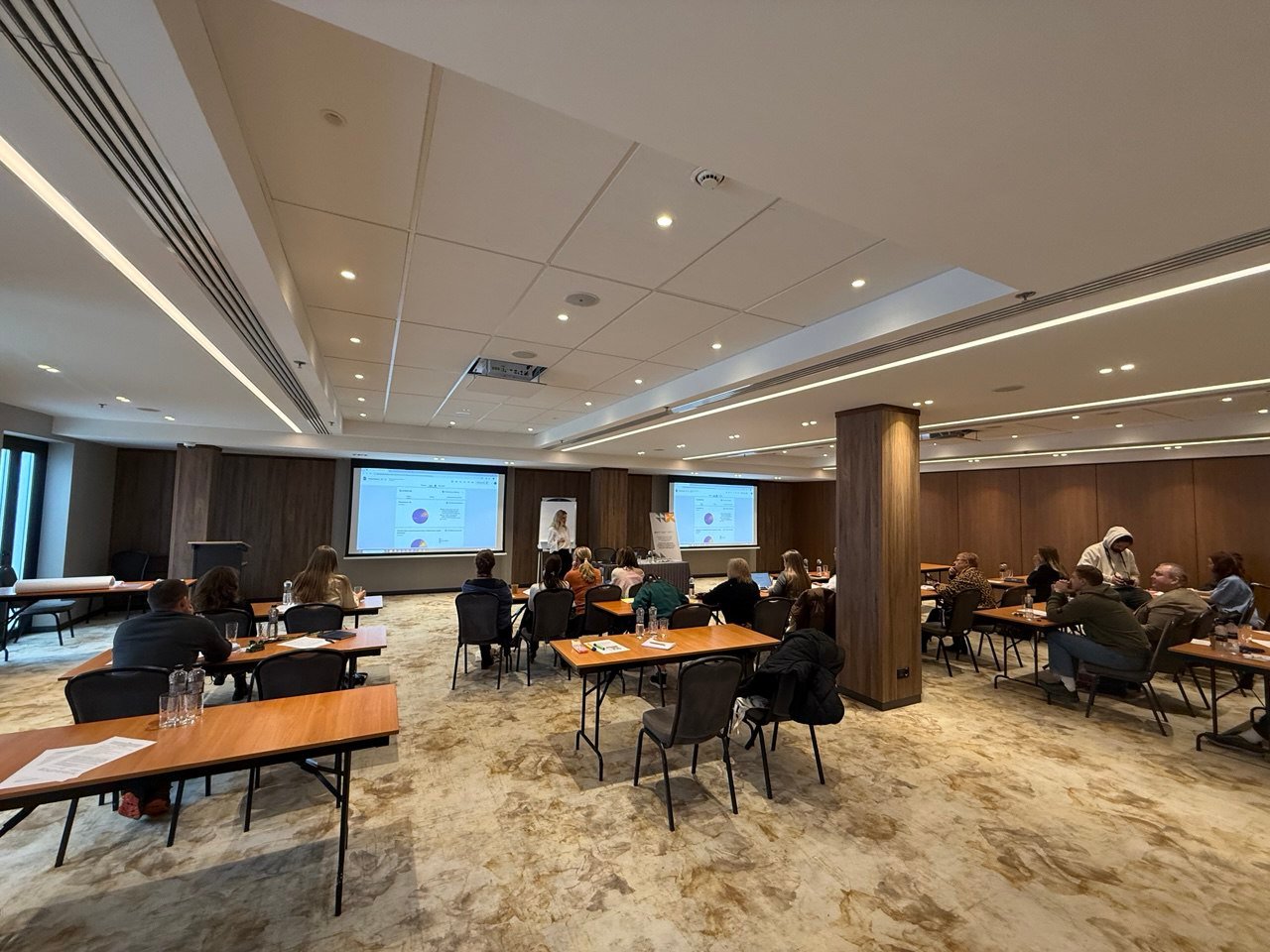
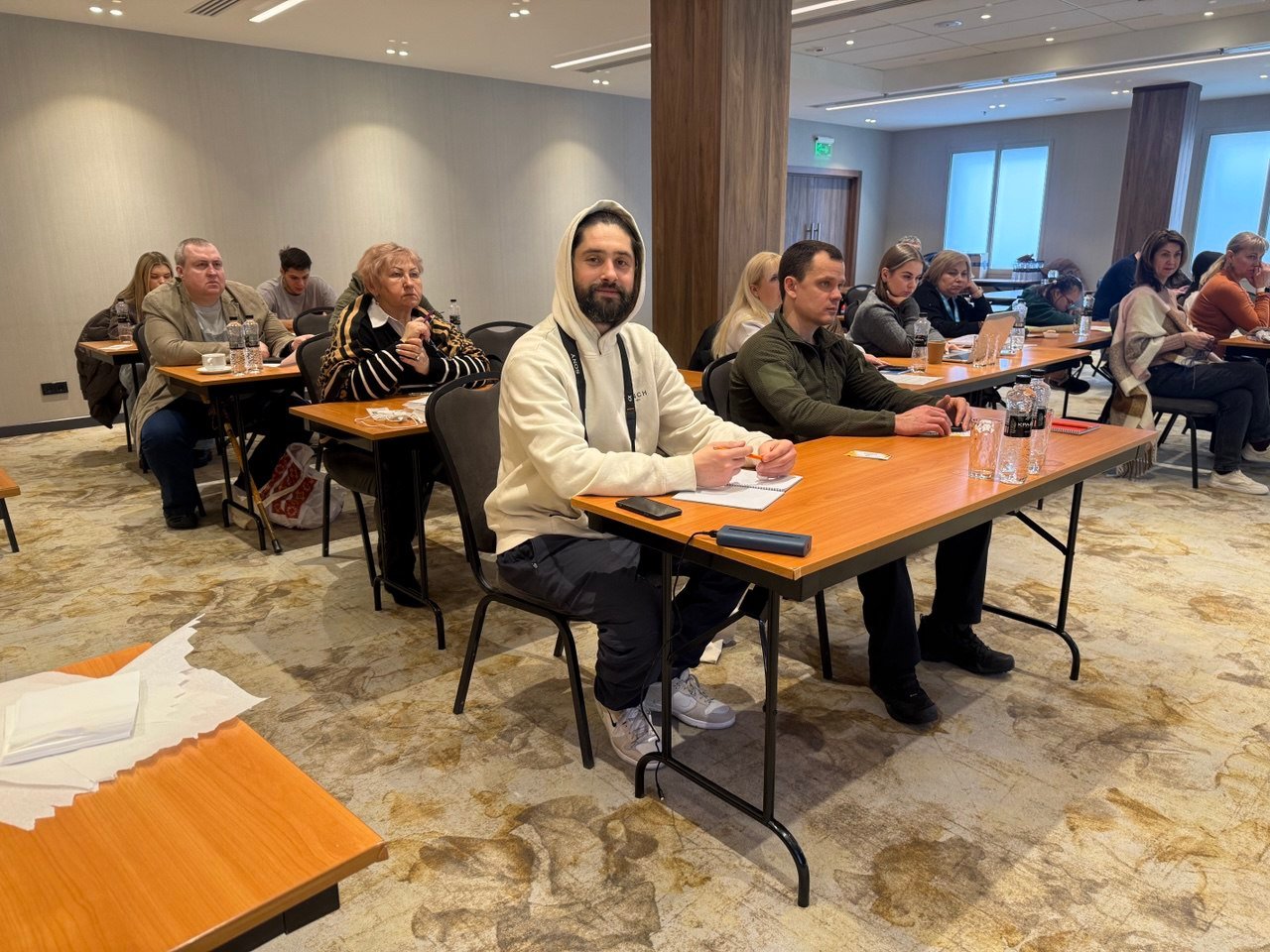
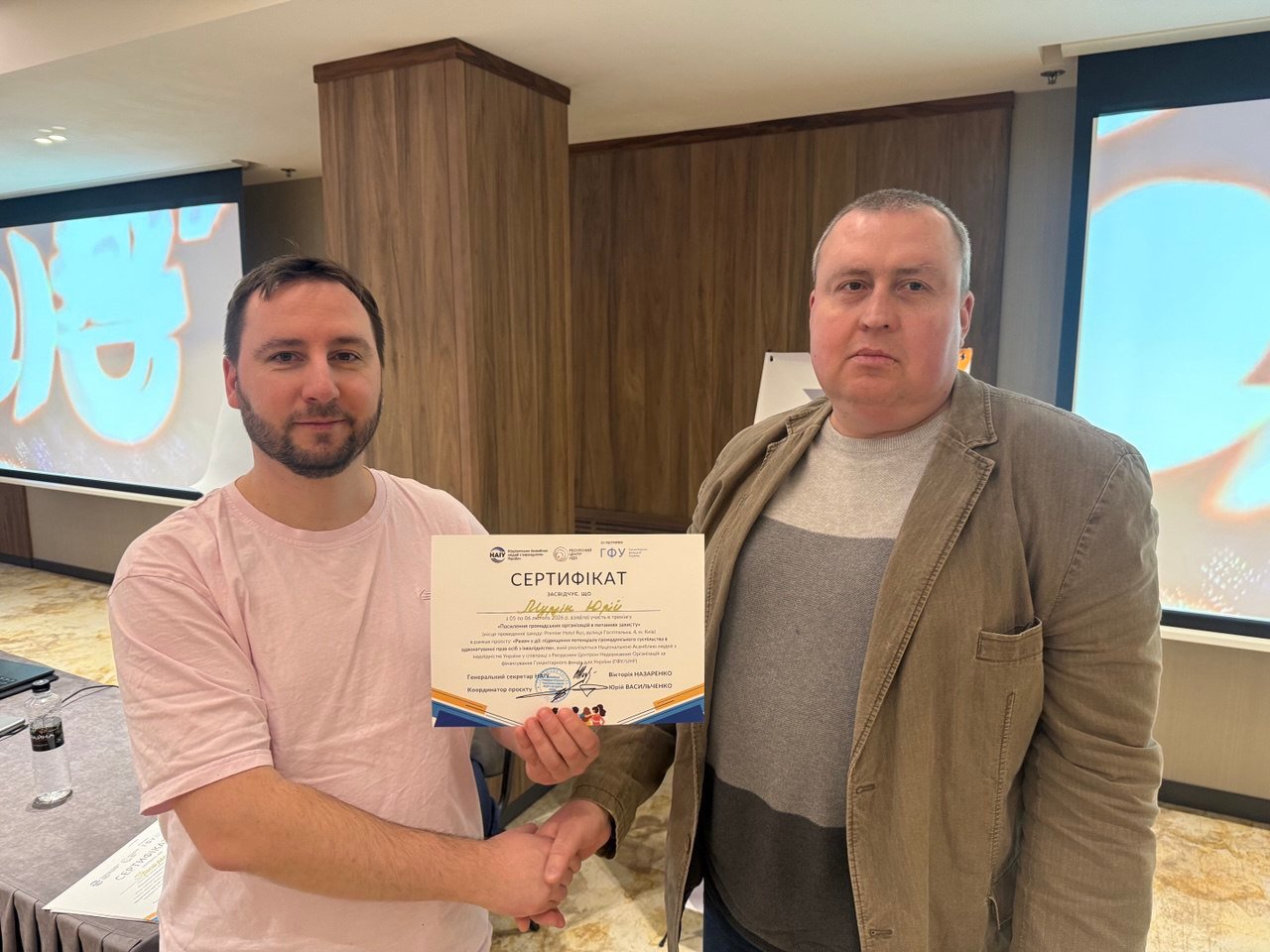
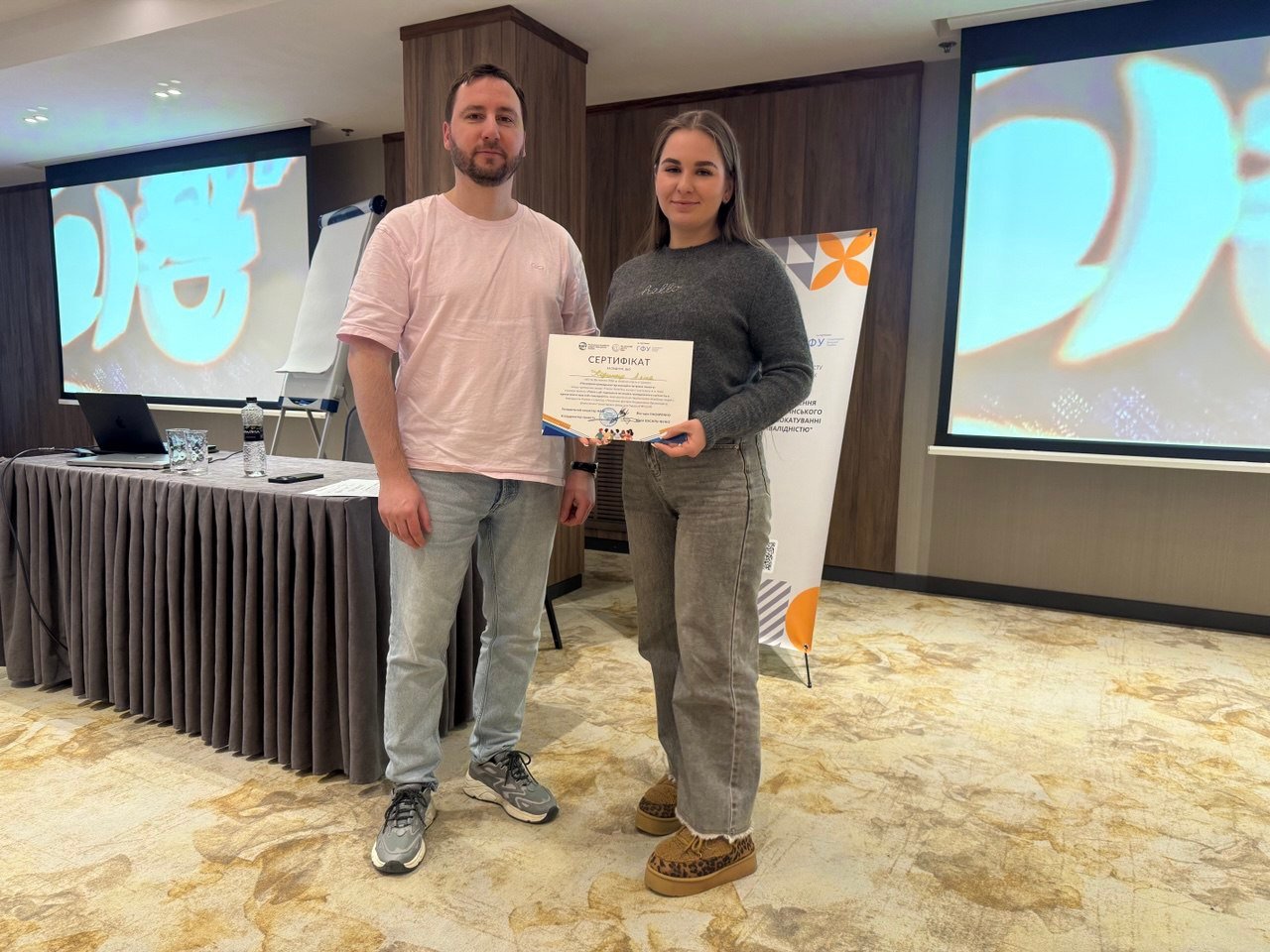
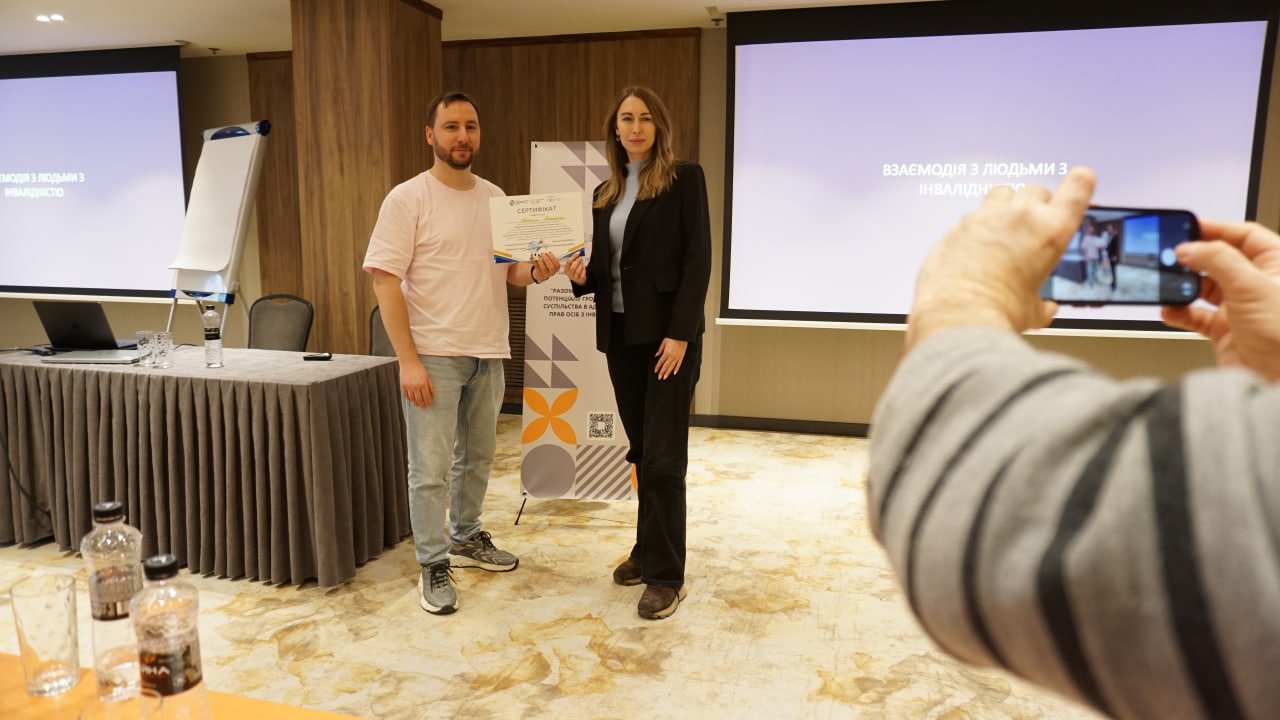
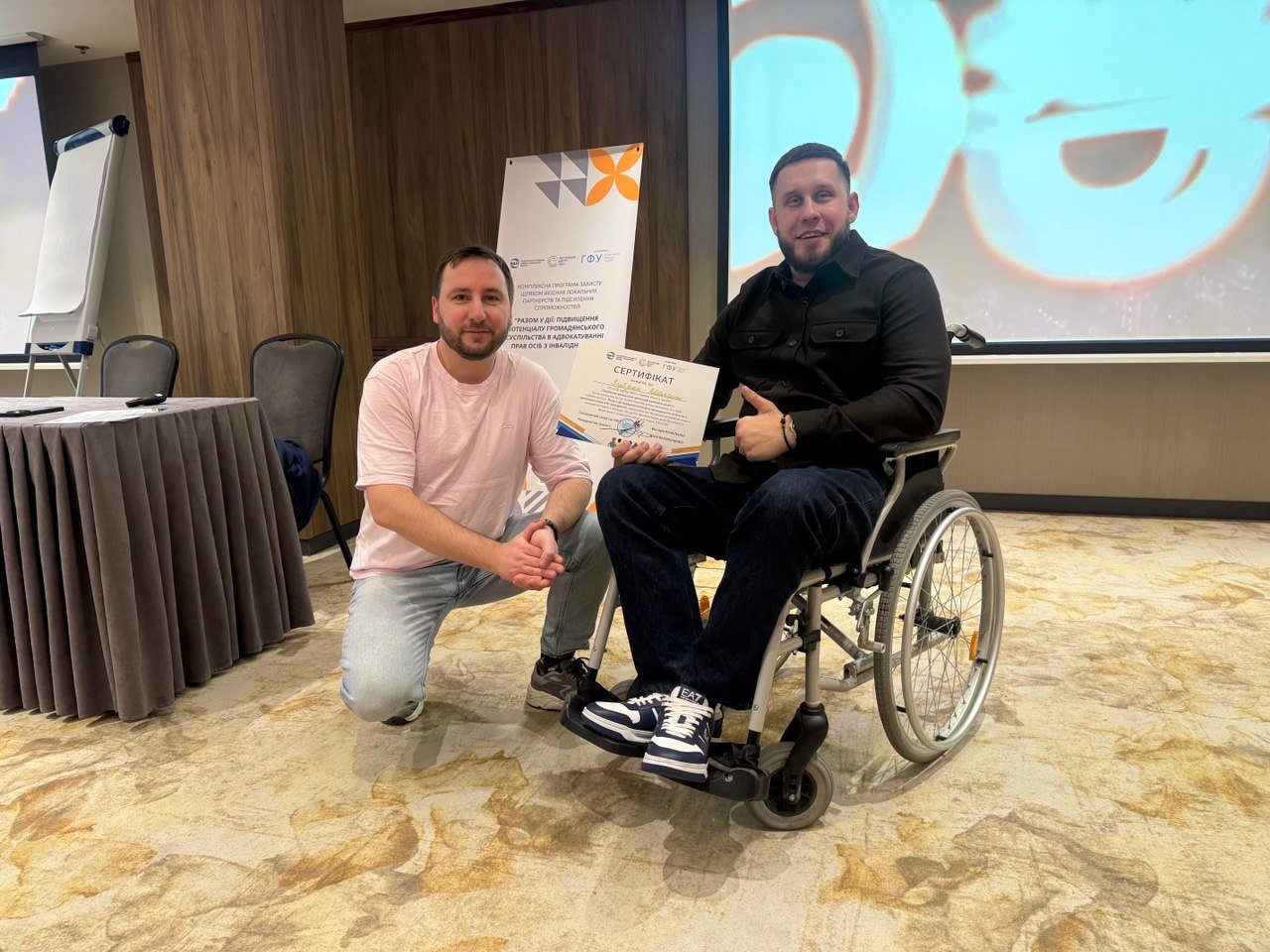
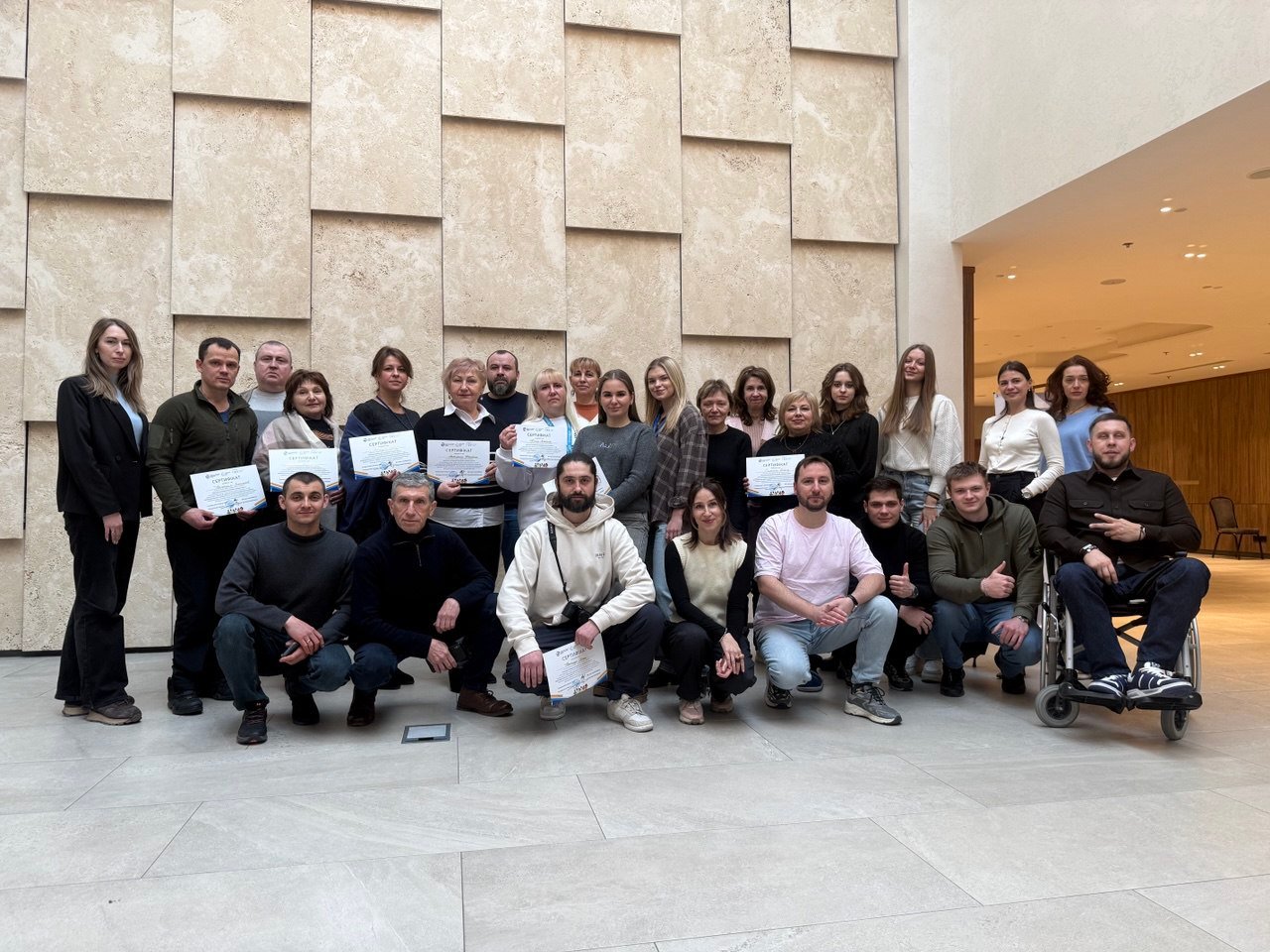
A two-day offline training course entitled “Strengthening the competencies of NGO members in protection issues” organised by the National Assembly of People with Disabilities of Ukraine as part of the project "Together in Action: Enhancing Civil Society Capacity in Advocating for the Rights of Persons with Disabilities" in cooperation with the Resource Center for Non-Governmental Organizations and funded by the Humanitarian Fund for Ukraine (HFU/UHF).
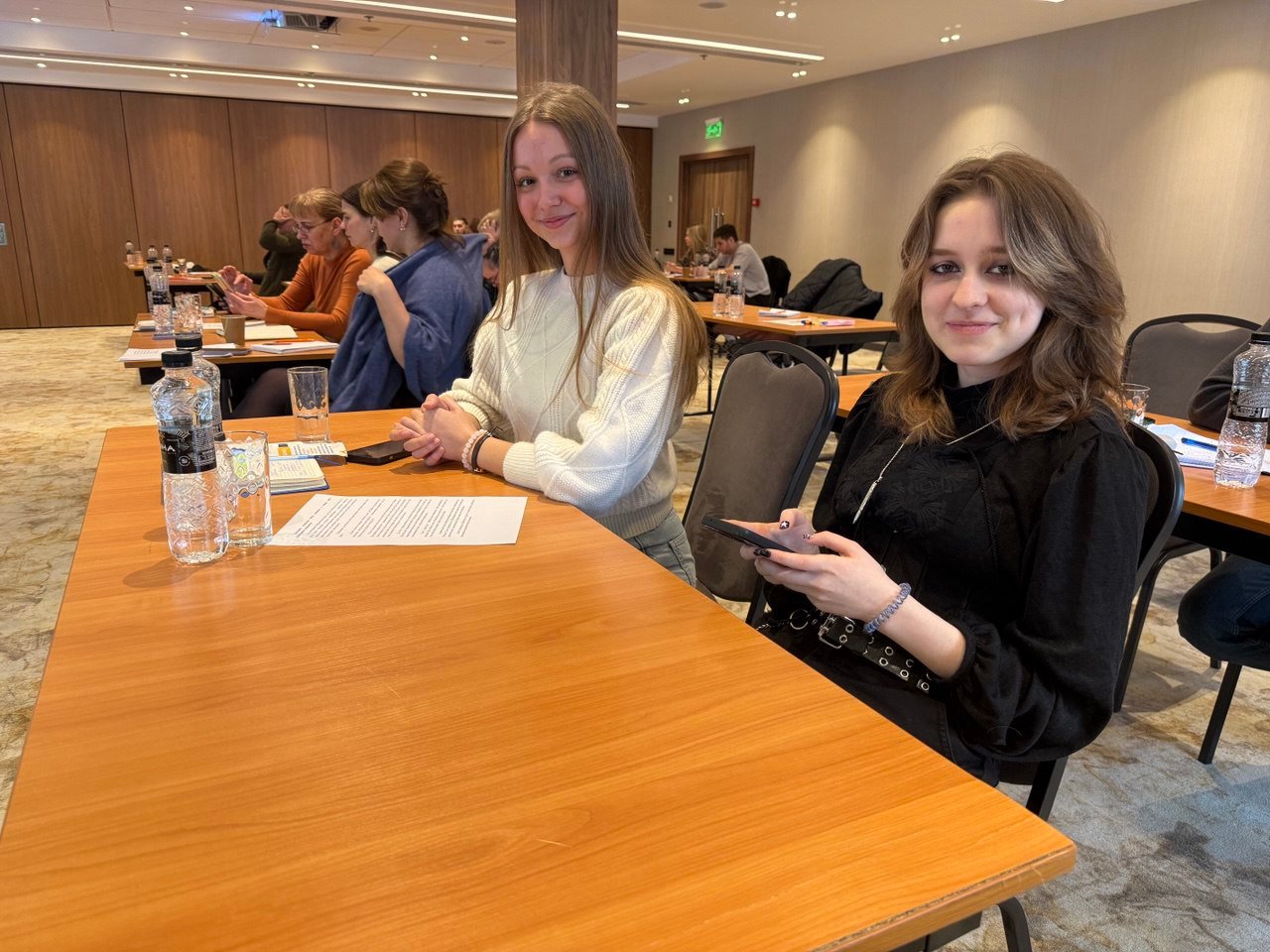
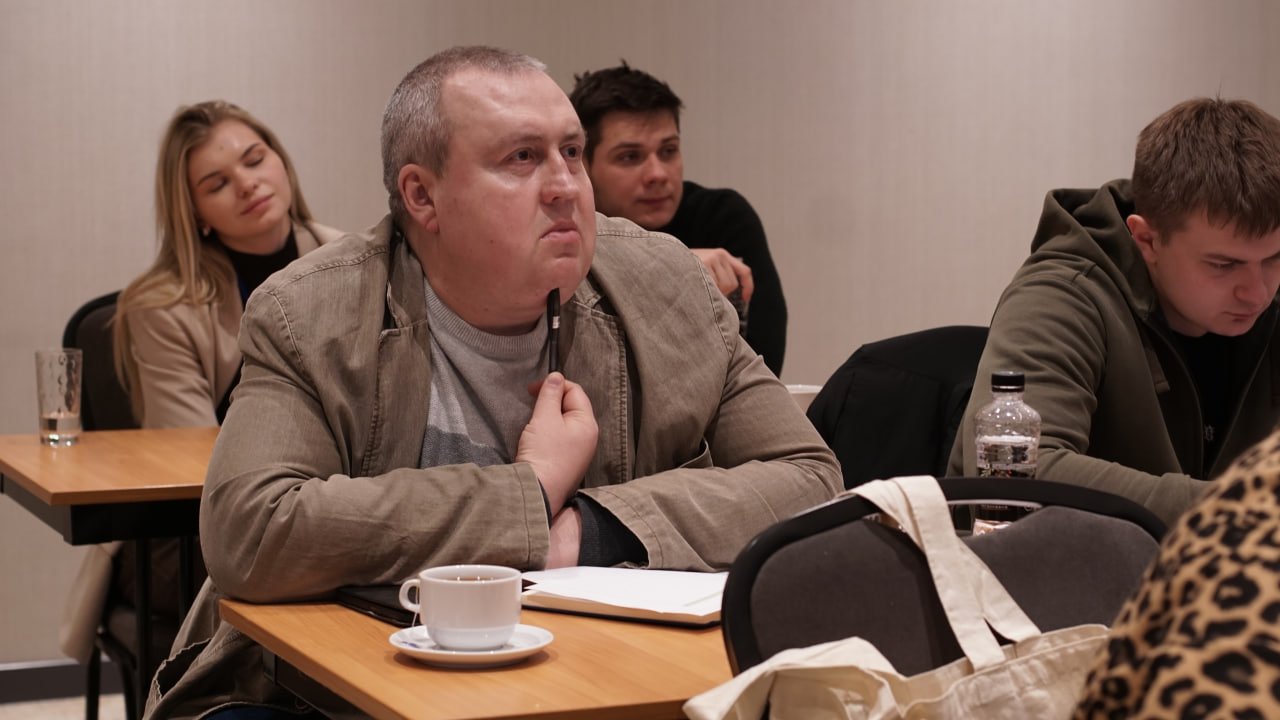
The event was held for representatives of civil society organizations from a number of eastern and southern regions of Ukraine close to the combat zones. It combined theoretical study with discussion of practical cases, which, according to the training participants, allowed them to improve their qualifications in advocacy and more actively apply the knowledge gained in their daily activities.
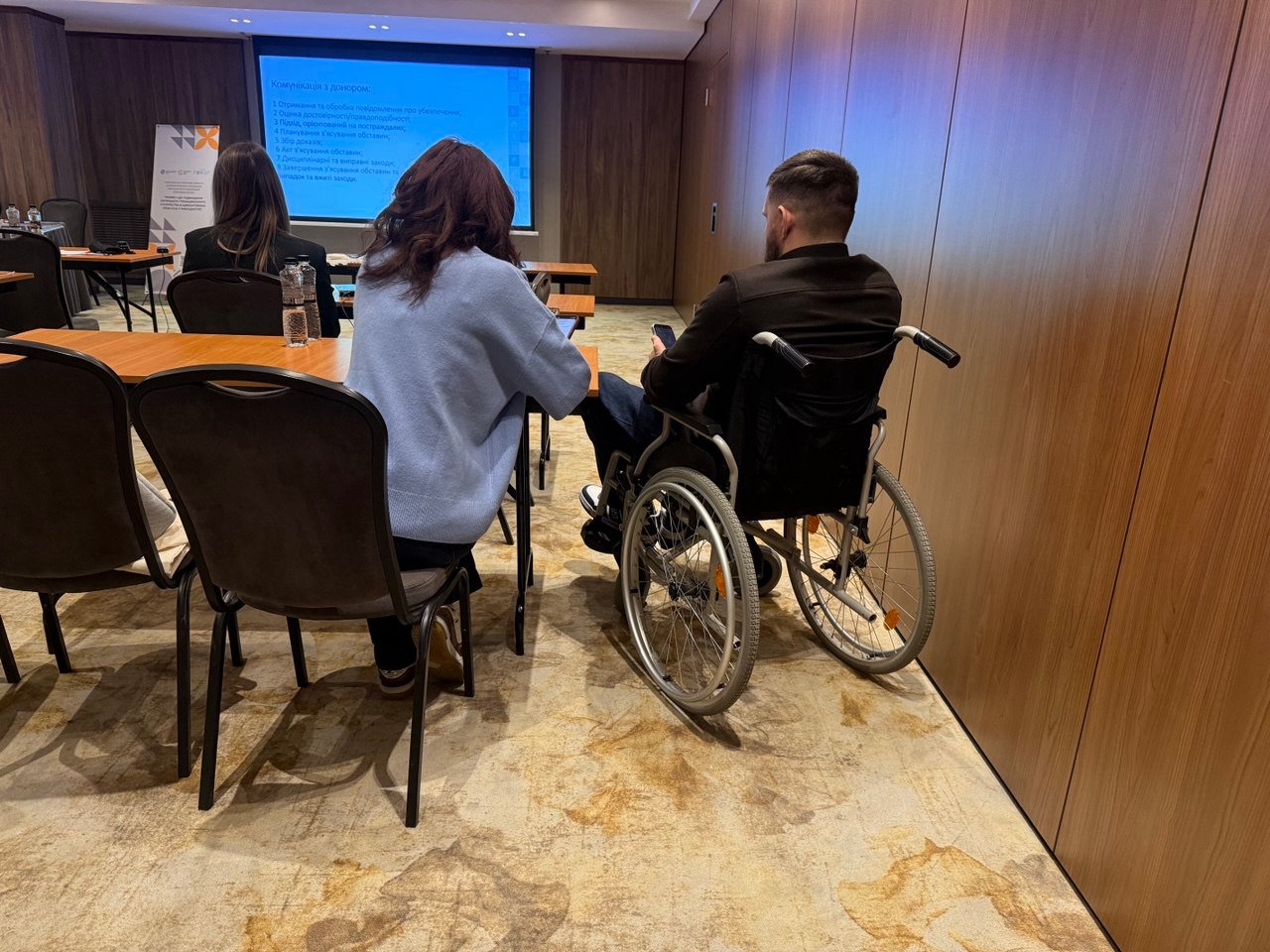
The main goal of the training was to raise awareness among representatives of civil society organizations about the human rights-based approach to working with people with disabilities, to develop a common understanding of the principles of inclusion and accessibility, and to develop skills for preventing human rights violations in humanitarian and social activities. Issues of inclusive humanitarian response, accessibility, new approaches to disability, implementation of safety policies, and accountability and feedback mechanisms were also discussed.
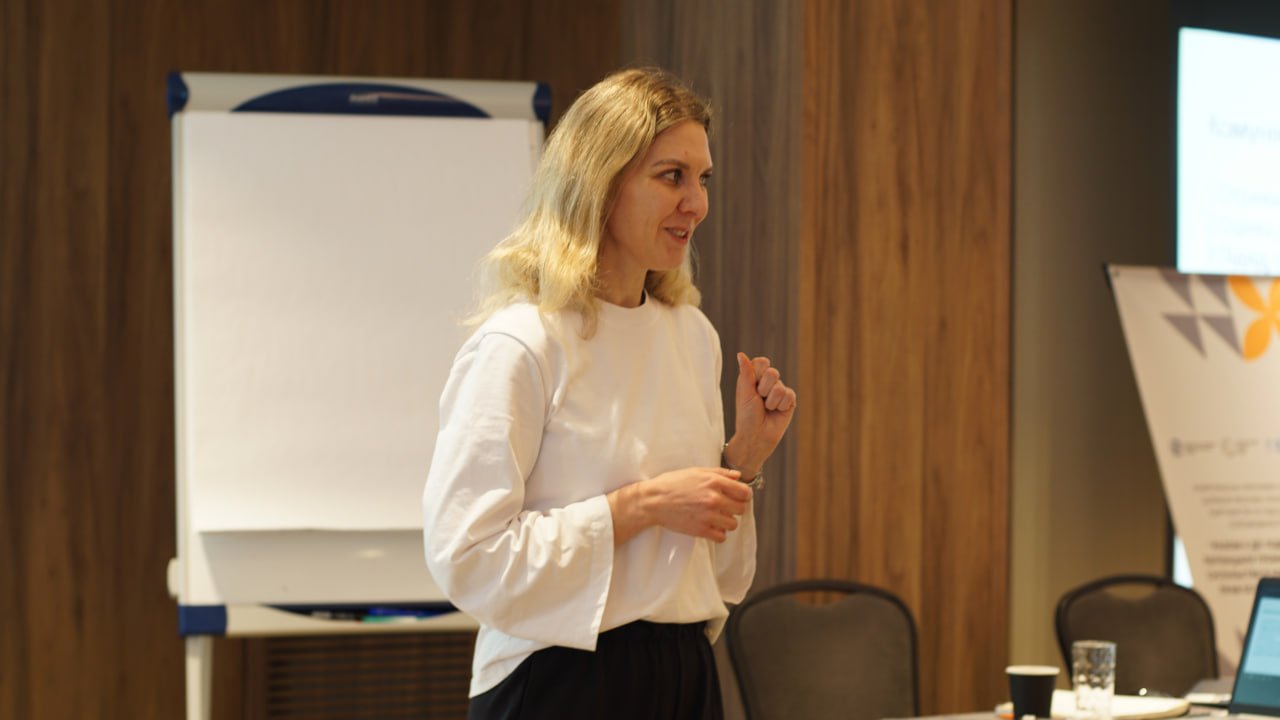
During the first session, trainer Larysa Baida focused on the current definition of disability in accordance with the UN Convention on the Rights of Persons with Disabilities. She also explained the evolution of the concept of disability—from medical and charitable models to social and legal ones. Participants were reminded that disability is not only a health condition, but also the result of a person's interaction with barriers in the environment, behavior, and institutional practices.
Special attention was paid to the concepts of diversity and inclusion, the correct use of terminology, and overcoming stereotypes. In a discussion format, participants analyzed which barriers — physical, communication, attitudinal, or institutional — prevent people with disabilities from being fully involved in humanitarian response, and sought practical solutions to eliminate them.
Another session was devoted to ensuring the accessibility of humanitarian services, infrastructure, and communication. An important point was made by the speaker: no one can exercise their rights without access to them. Participants were presented with tools for assessing accessibility, including audits, surveys, monitoring, and plans for overcoming barriers.
An important topic was universal design—an approach that involves creating environments, services, and programs that are accessible to the widest possible range of people without the need for additional adaptations. The seven principles of universal design were examined in detail, and practical examples of their application in the humanitarian and social spheres were provided.
A separate training module was devoted to safeguarding policy. Participants learned about this concept as a system of measures aimed at protecting children and adults from risk groups from all forms of harm, including sexual exploitation, violence, harassment, and neglect.
The audience was given examples of prohibited behavior, including examples of real situations, which helped participants better understand the boundaries of professional ethics and responsibility. The principle of zero tolerance for violations, the duty to report suspicions or incidents, and the importance of confidentiality and a victim-centered approach were emphasized.
Feedback collection and complaint handling mechanisms were also discussed. Participants were presented with various channels for submitting complaints: anonymous hotlines, online forms, physical mailboxes, etc. Particular emphasis was placed on the accessibility of these mechanisms for people with disabilities and the need to respond to complaints in a transparent and responsible manner.
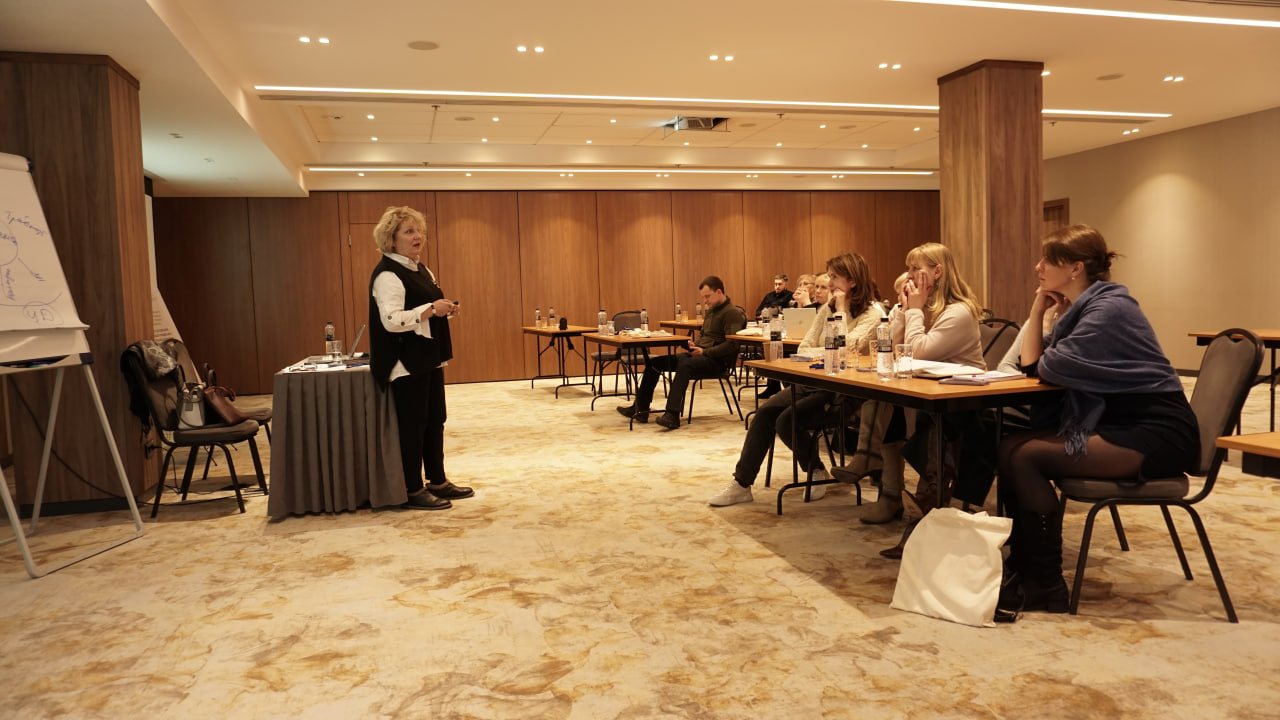
“It is our duty to report. Who? Staff, volunteers, partners. What? Any concerns about harm. When? Immediately and without delay. How? Through established channels,” emphasized trainer Viktoria Reva.
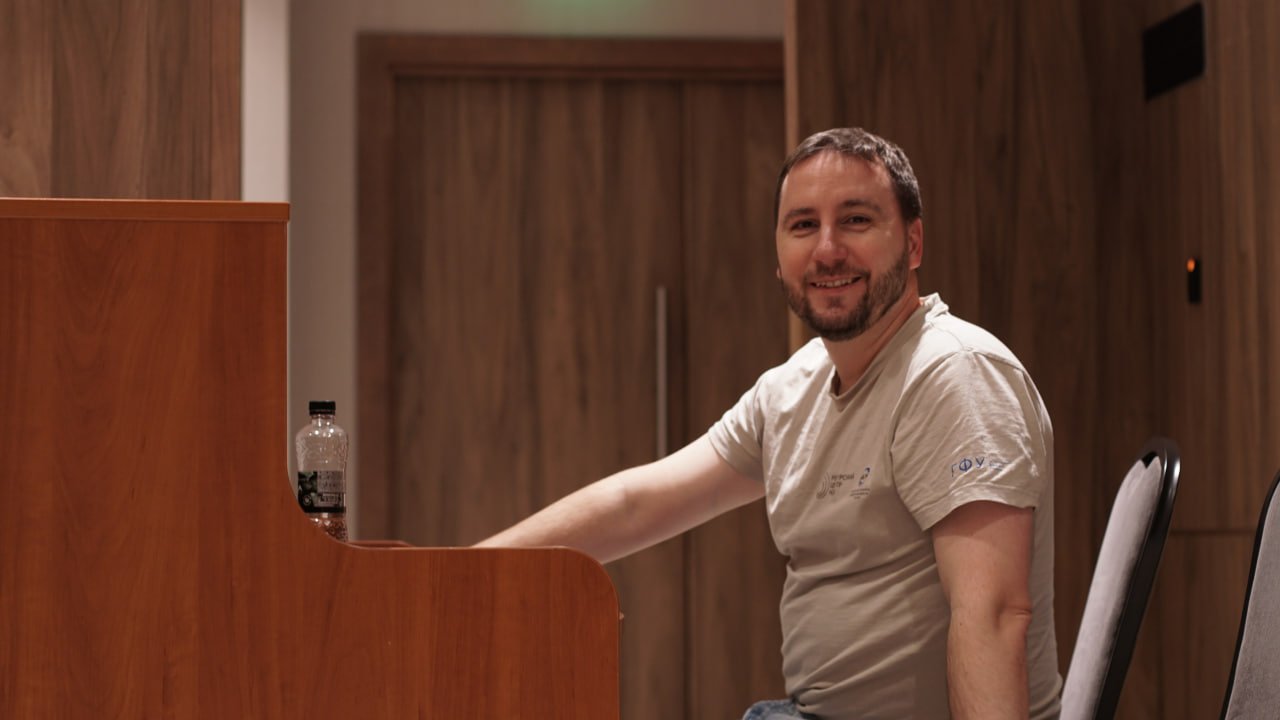
Yuriy Vasylchenko, trainer and coordinator of the Together in Action project, emphasized four mandatory requirements of the Inter-Agency Standing Committee (IASC): involving persons with disabilities, removing barriers, expanding their rights and opportunities, and collecting disaggregated data. The basic principles of communication were also explained in detail: address the person with a disability directly, not their companion; always ask for permission before taking action; provide the assistance that is requested, and do not impose other assistance.
According to him, the organizers tried to structure their work so that the training would become a platform for the exchange of experience, professional discussion, and practical training. And this task was accomplished! “We managed to convey to the participants the idea that inclusion, accessibility, and safety are not additional options, but basic principles of organizations that strive to act responsibly, ethically, and in accordance with human rights standards,” said Yuriy Vasylchenko.
The participants highly appreciated the organization of the event, the professionalism in the selection of material and its presentation. “Thank you for the wonderful event, professionalism, organization, and warm welcome,” shared Anastasia Ivleva. "The training was not just a useful event for me, it was a truly fulfilling, lively, and very practical experience. I met some extremely interesting and inspiring people, and that in itself is a huge resource. Everything was high-quality, warm, and comfortably human. Even in the simple moments—the attention, care, and atmosphere made me want to stay," said Olena Gryukova.
The project "Together in Action: Enhancing Civil Society Capacity in Advocating for the Rights of Persons with Disabilities" is implemented by the National Assembly of People with Disabilities of Ukraine in partnership with the Resource Centre for Non-Governmental Organisations with funding from the Humanitarian Fund for Ukraine (UHF)
У Черкасах для водіїв і контролерів комунального підприємства «Черкасиелектротранс» провели практичне навчання з доступного перевезення людей з інвалідністю та інших маломобільних пасажирів. Працівники освоїли правила безпечної посадки й висадки, використання апарелі, надання допомоги та належної взаємодії з пасажирами. Про це повідомляє громадська організація «Спілка людей з інвалідністю «Перспектива» на своїй сторінці у Facebook. Навчання стало […]
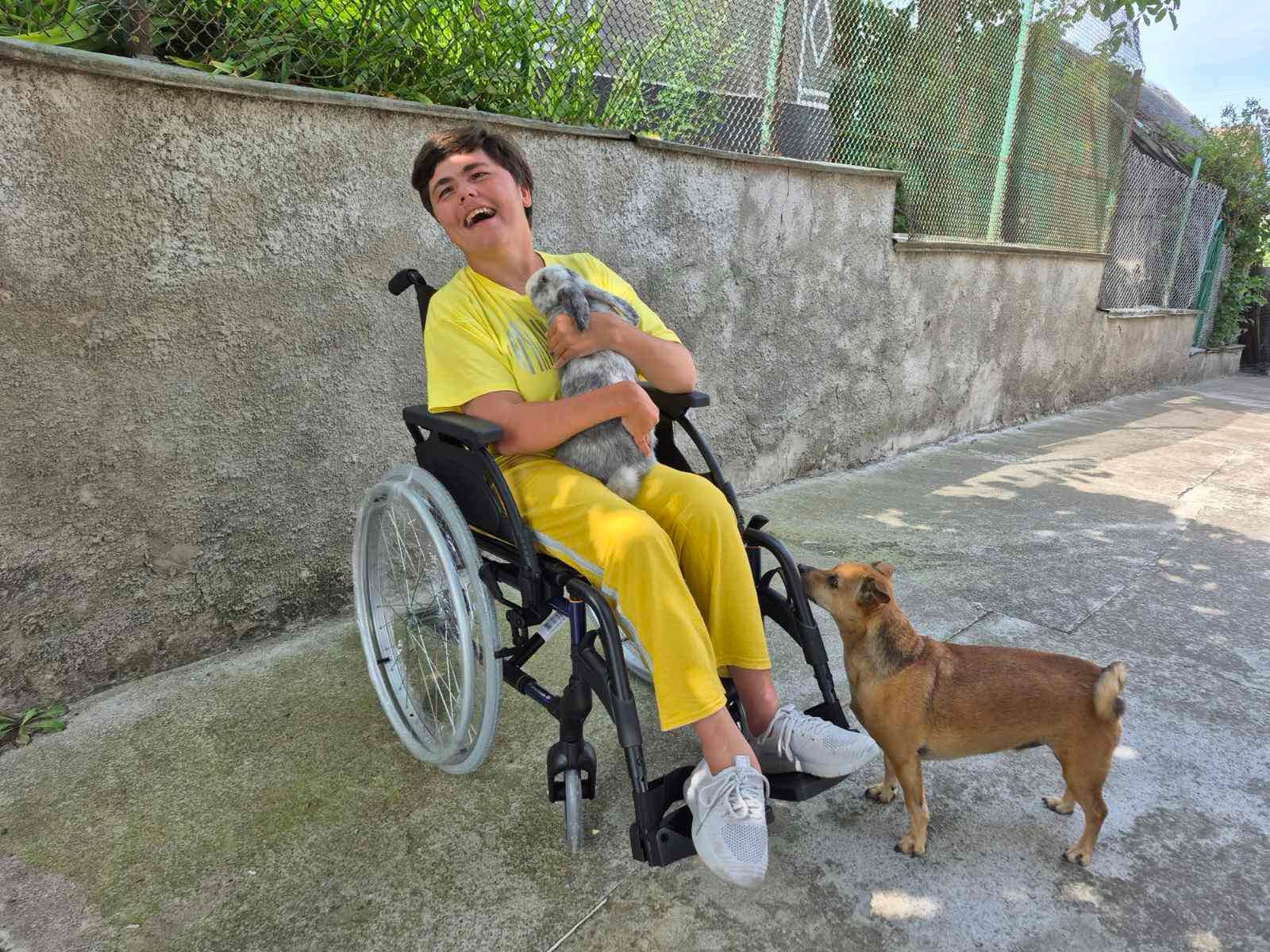
Провести час у дворі, поїхати у місто, дістатися лікарні чи аптеки, зустріти знайомих або просто прогулятися. Усі ці звичні справи є частиною повсякденного життя Ірини з Горохівскої громади, тому для неї важливо мати зручний і справний засіб мобільності. Ірина живе разом із мамою та дідусем. Основним прибутком родини є три пенсії. Тримати велике домашнє господарство […]
Коли щоденні справи пов’язані з постійними поїздками та пересуванням на значні відстані, можливість залишатися мобільною напряму впливає на те, наскільки людина може самостійно планувати своє життя. Для двох мешканок Чутівської громади це питання особливо практичне. Обидві жінки живуть у приватному секторі, займаються домашнім господарством, працюють на городі та мають спільне захоплення — вирощують квіти. У […]
Ресурсний центр Національної Асамблеї людей з інвалідністю України підготував черговий огляд законодавчих новацій, важливих для людей з інвалідністю, їхніх сімей, а також ветеранок і ветеранів. Серед основних тем липня і серпня — медична допомога й протезування, посилення соціальних гарантій, безпечна евакуація, підтримка у професійній освіті та доступність банківських послуг. 19 серпня Верховна Рада України ухвалила […]
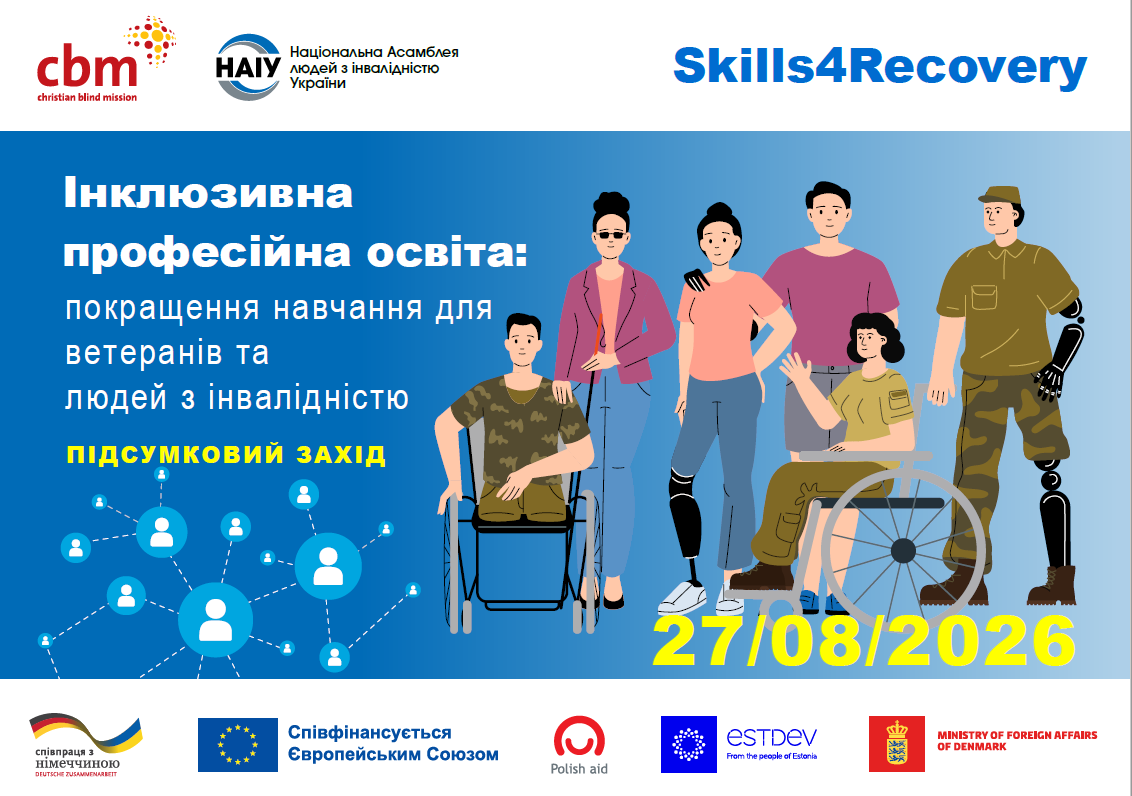
Запрошуємо долучатися до прямої трансляції та разом підбити підсумки роботи, яка об’єднала заклади професійної освіти, експертів і партнерів навколо спільної мети — зробити професійну освіту в Україні доступнішою та інклюзивнішою. Сьогодні говоримо про результати проєкту, практичний досвід закладів професійної освіти, підготовлені ресурси та рішення, які можуть працювати й після завершення проєкту. Запрошуємо долучитися до розмови […]
У 2026 році ветерани війни та інші визначені законодавством категорії громадян мають отримати разову грошову виплату до Дня Незалежності України. Більшості одержувачів гроші нарахують автоматично. Якщо людина набула відповідного статусу до 24 серпня, але станом на 1 жовтня виплату не отримала, вона може звернутися із заявою до Пенсійного фонду України. Повний перелік категорій, які мають […]