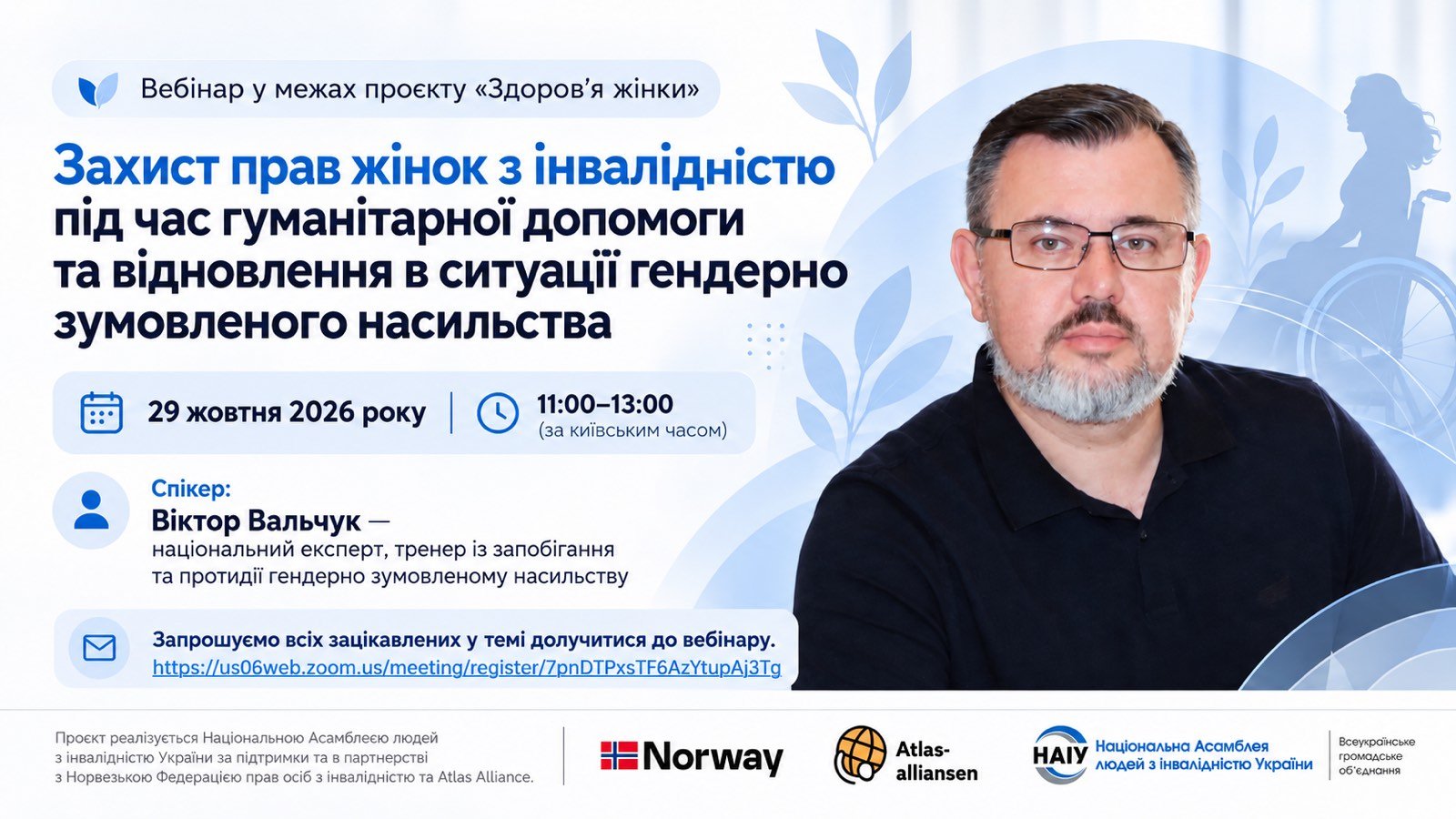
As part of the Women’s Health project, an online seminar titled “Reproductive Health of Women with Disabilities: Ensuring Equal Access to Healthcare Services” was held for gynecologists, obstetrician-gynecologists, and family physicians.
Over three days, healthcare professionals from the project’s seven pilot communities had an opportunity to deepen their knowledge of communication with women with different types of impairments, the accessibility of gynecological examination rooms, maternity and gynecology departments, and sanitary and hygiene facilities, as well as the psychological and physiological aspects that should be taken into account when providing healthcare services to women with disabilities.
The training brought together healthcare professionals from the Kodyma, Chernivtsi, Kazanka, Chutove, Kaniv, Brovary, and Horokhiv territorial communities. Specialists from other healthcare facilities in Chernivtsi Oblast also joined the seminar, including the Chernivtsi Regional Medical Diagnostic and Rehabilitation Centre and the Chernivtsi Central City Clinical Hospital.
The training began with a presentation of the findings of the study “Realisation of the Reproductive Rights of Women with Disabilities in Ukraine: Pathways, Barriers and Opportunities for Improvement.” The study helped identify the barriers women with disabilities face when accessing reproductive healthcare services and provided a basis for further discussion of practical solutions.
Yuliia Davydova, an obstetrician-gynecologist of the highest qualification category, Doctor of Medical Sciences and Professor, devoted her training sessions to communication with women with different types of impairments, common communication mistakes, and the psychological and physiological aspects that obstetrician-gynecologists need to consider in their daily practice.
Physical accessibility of healthcare services was addressed as a separate topic. Tetiana Zhydkova, PhD in Technical Sciences and Associate Professor at the National University “Kyiv Aviation Institute,” explained the accessibility requirements for gynecological examination rooms, maternity and gynecology departments, sanitary and hygiene facilities, and other spaces within healthcare institutions.
An important part of the seminar was the exchange of practical experience. Oleksandr Voitsekhovskyi, Head of Storozhynets Multidisciplinary Hospital, shared how his healthcare facility is creating conditions that enable persons with disabilities to access healthcare services.
Inclusive hospital wards, accessible sanitary and hygiene facilities, gynecological examination rooms and diagnostic services, elevators, and an accessible surrounding area are some of the practical solutions already in place at the hospital in Chernivtsi Oblast. These measures enable women with disabilities to receive healthcare services with dignity and without barriers.
The practical component was one of the aspects participants valued most. In their feedback, healthcare professionals highlighted the opportunity to hear from practising specialists, discuss real-life stories and cases from medical practice, learn from the experience of another healthcare facility, and gain a more detailed understanding of what a modern accessible gynecological examination room should look like.
This format made it possible to discuss not only general issues related to the accessibility of healthcare services, but also specific situations that healthcare professionals may encounter in their work, including when providing care to patients with severe impairments, as well as practical solutions that can be applied directly in the provision of healthcare services.
“The seminar was one of the project activities that demonstrated both the relevance of this topic and the need to continue organising similar training sessions. We saw strong interest among healthcare professionals in practical knowledge and opportunities to exchange experience. Therefore, next year, the project plans to continue introducing healthcare professionals to practical experience and providing training on specific topics related to the reproductive health of women with disabilities,” said Larysa Bayda, Head of the Women’s Health project.
Training healthcare professionals is one of the areas of work within the Women’s Health project aimed at making reproductive healthcare services more accessible and ensuring that the needs of women with disabilities are taken into account at every stage of receiving healthcare services.
Oleksandra Perkova, Communications Manager of the Project