Five Institutions — Five Solutions: Second Training in Lviv on Inclusive Vocational Education and Training
9 March 2026
Share:
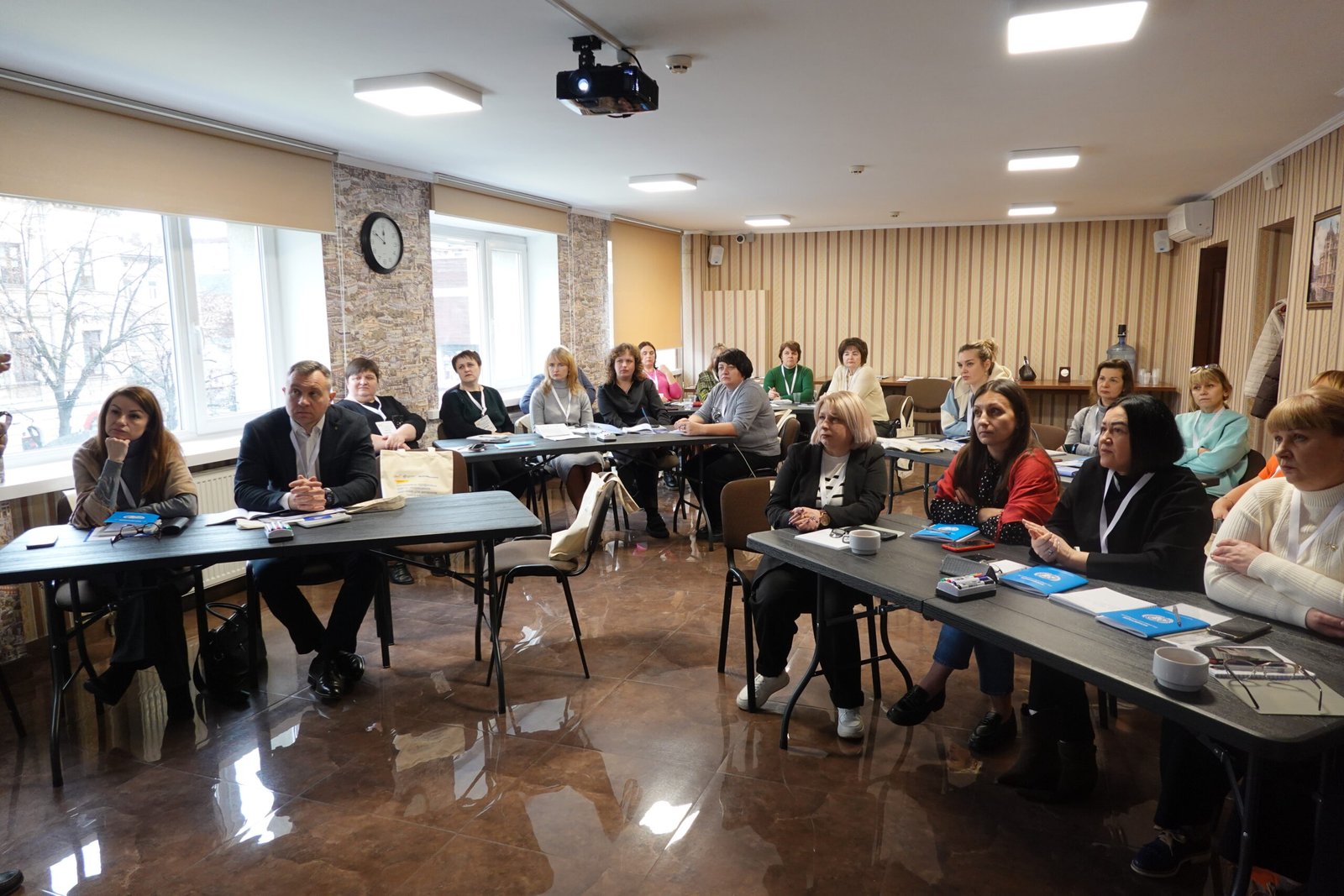
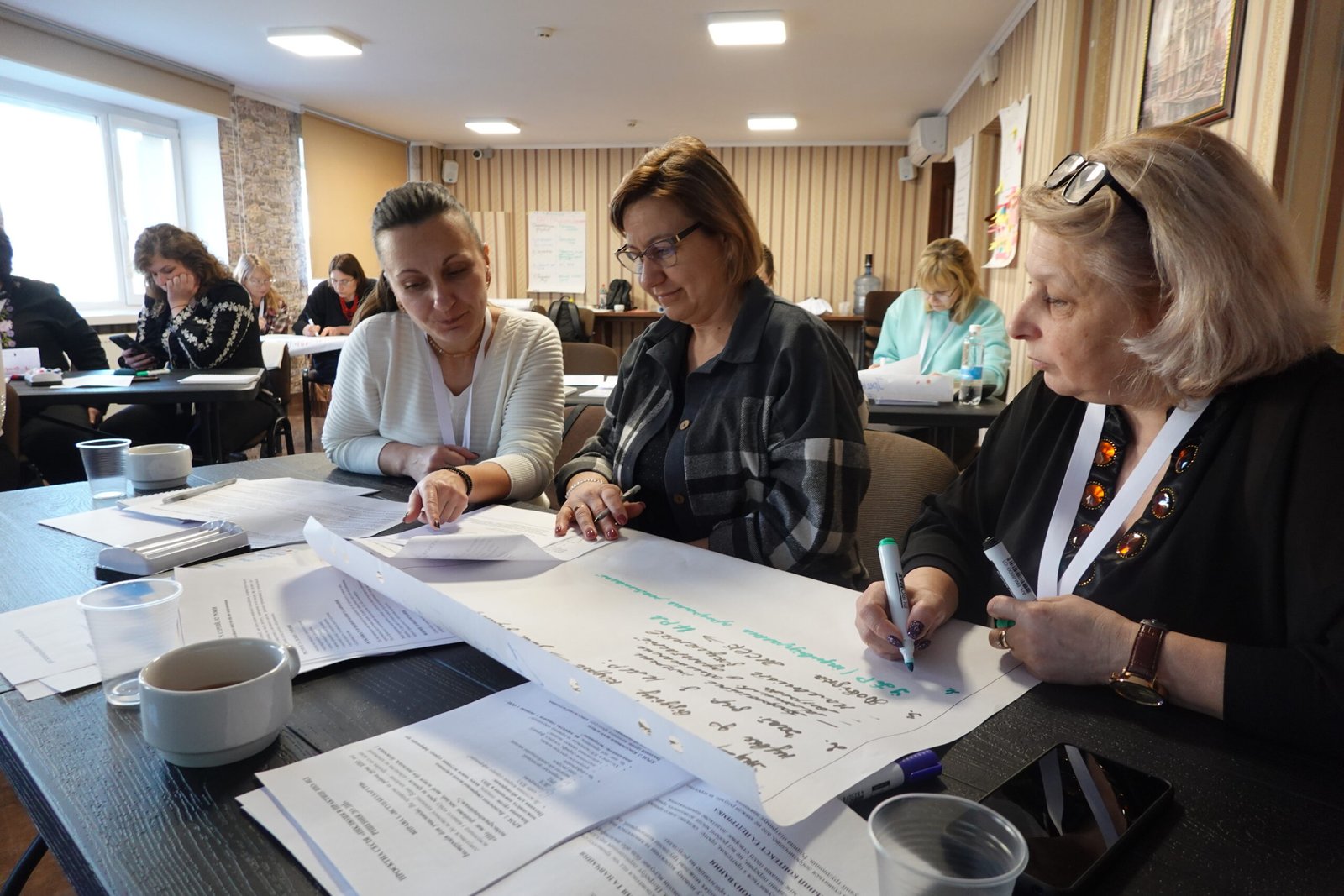
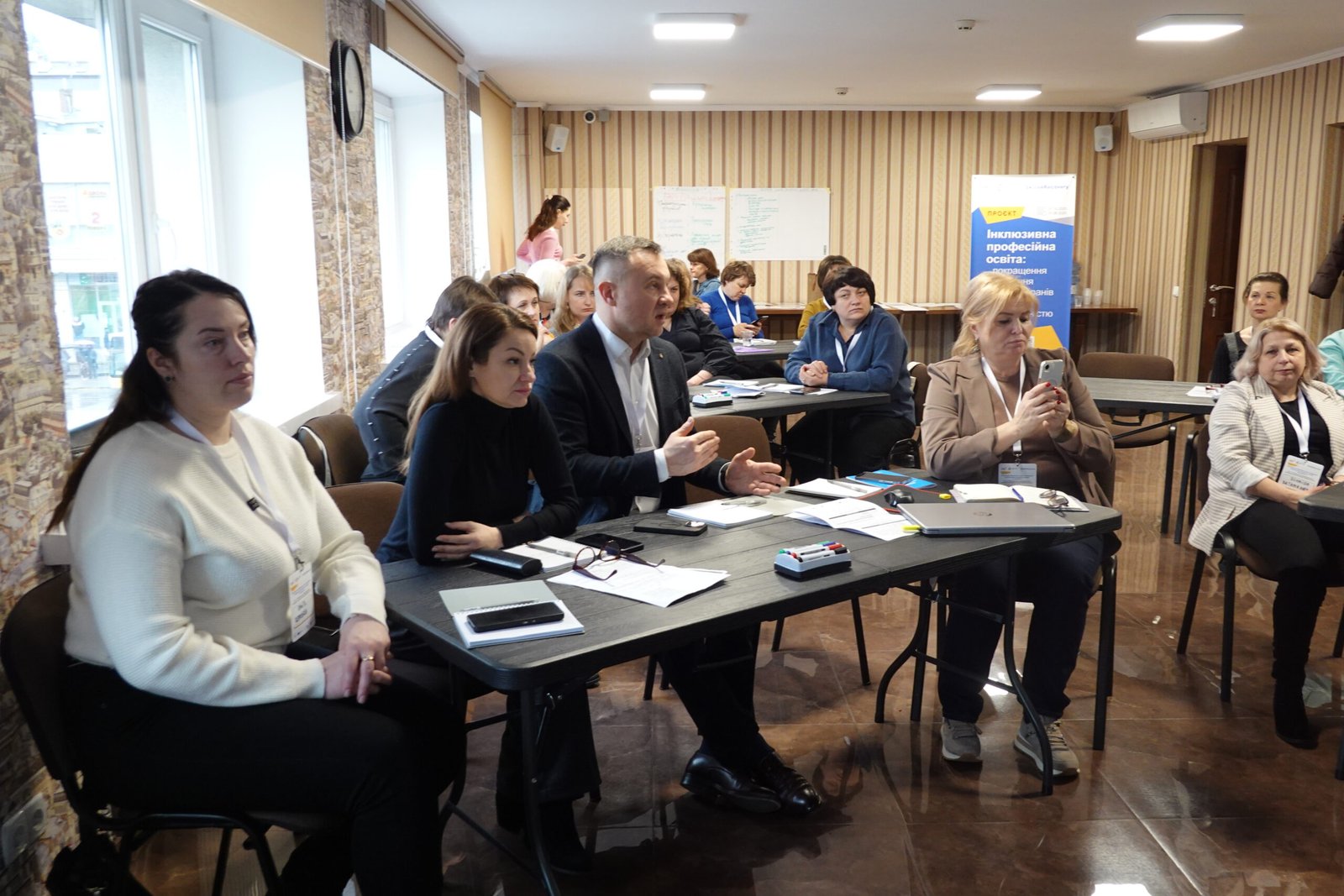
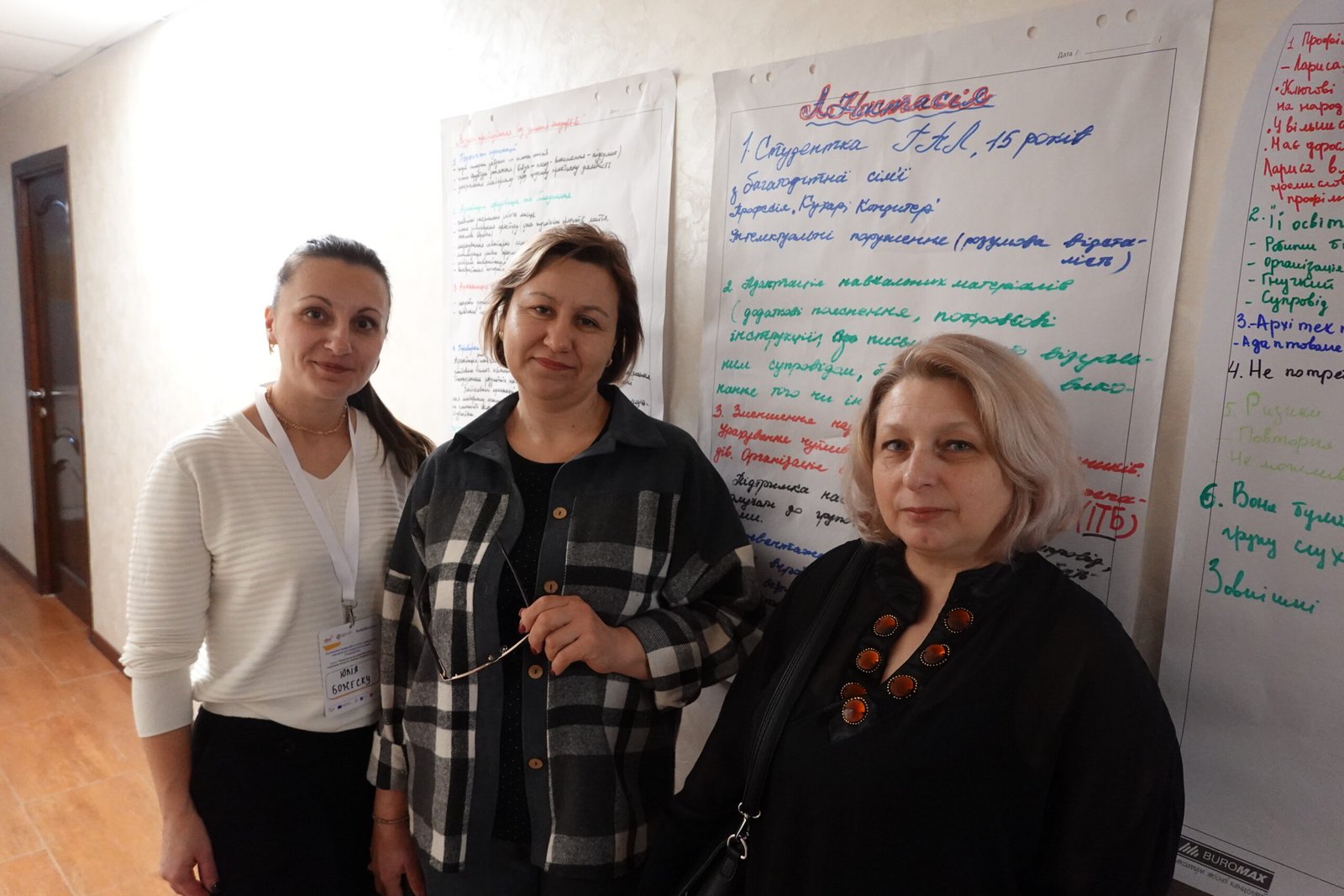
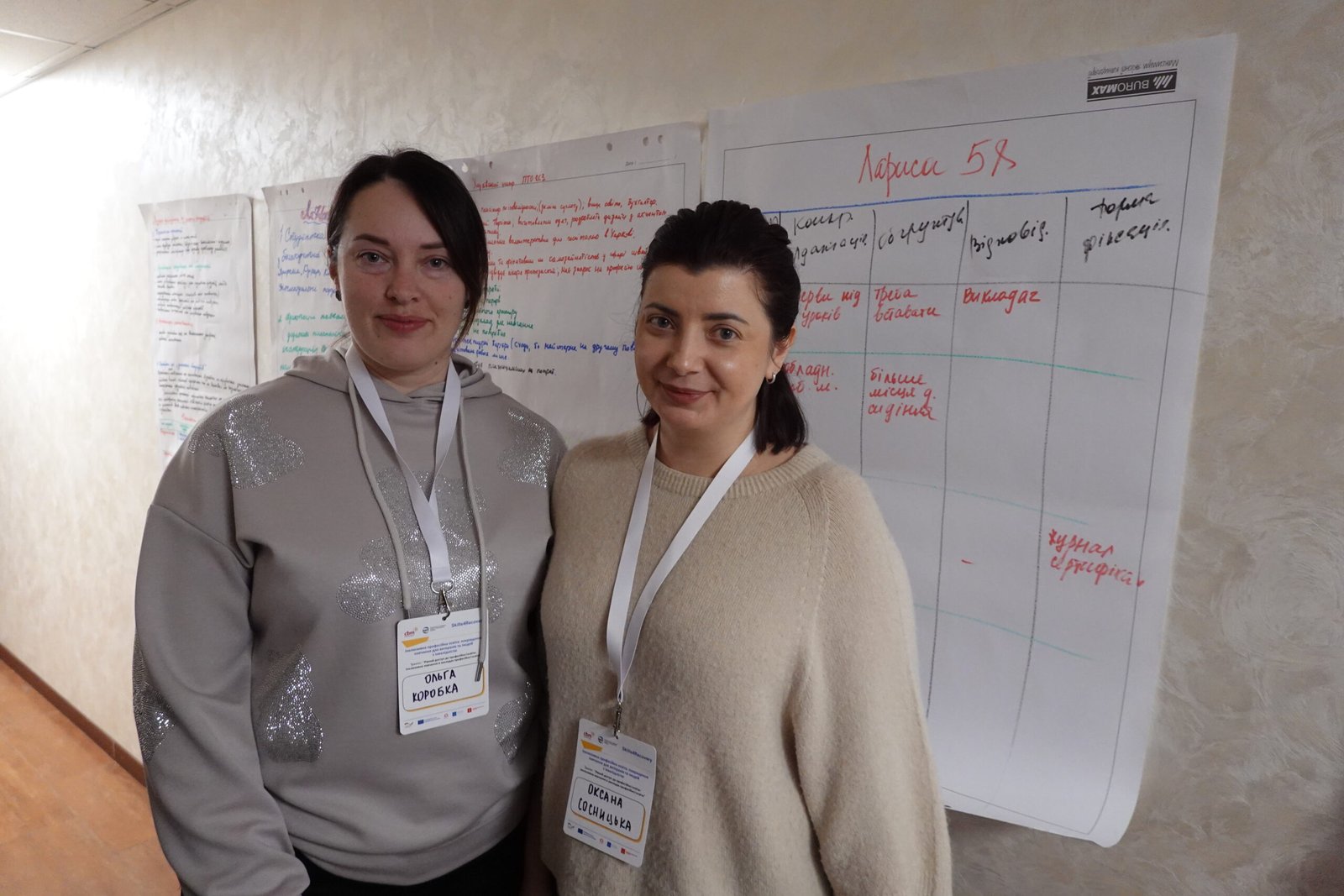
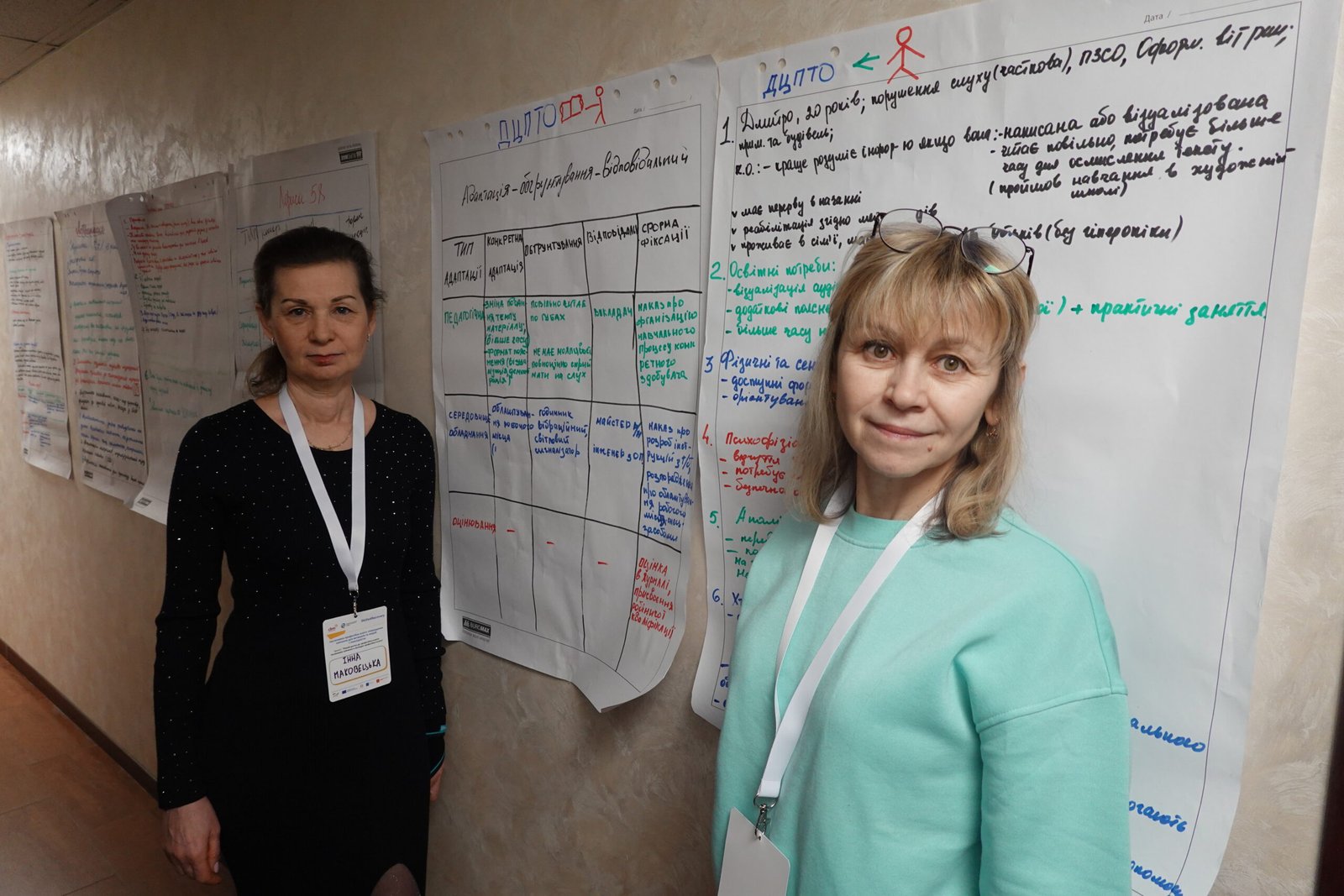
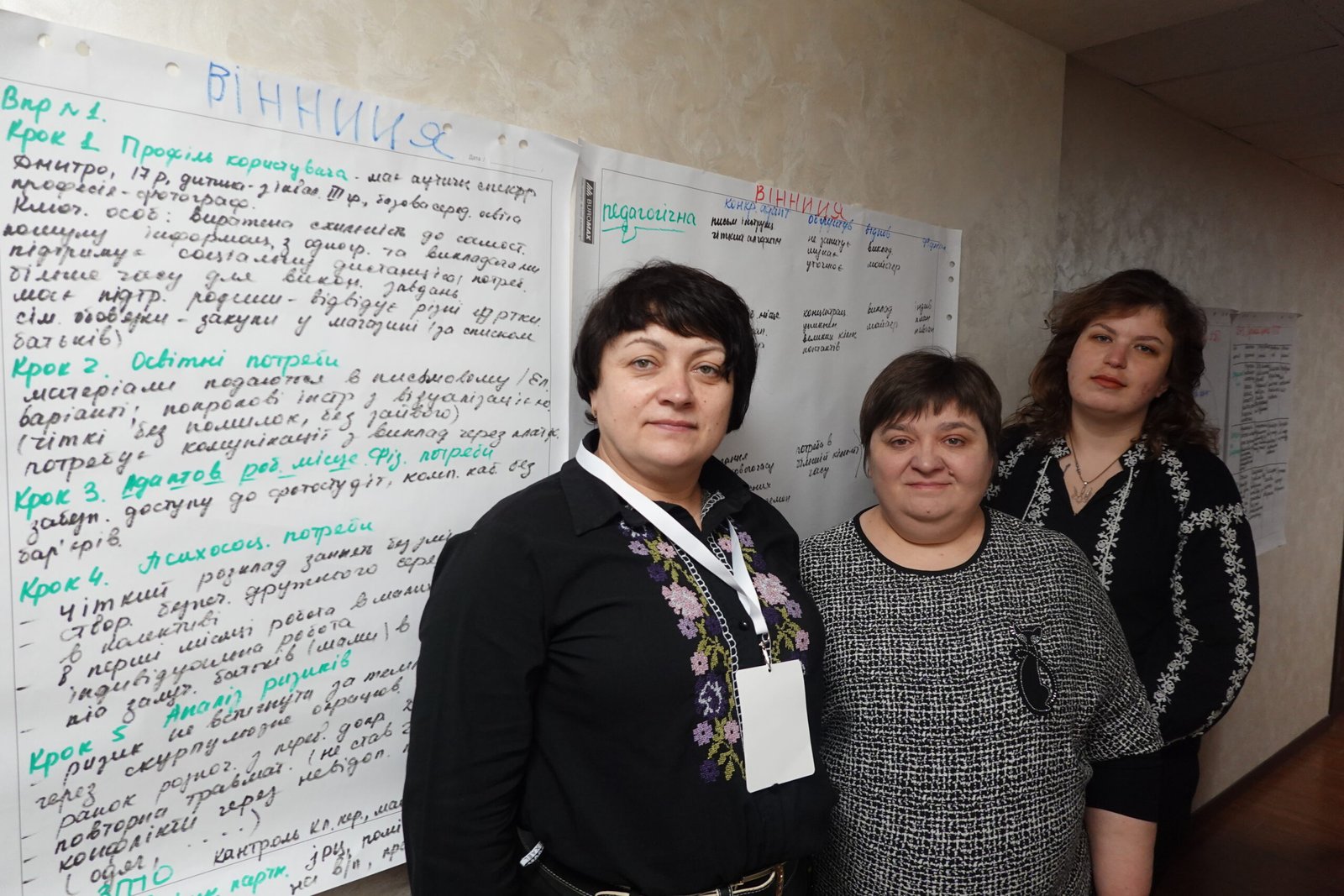
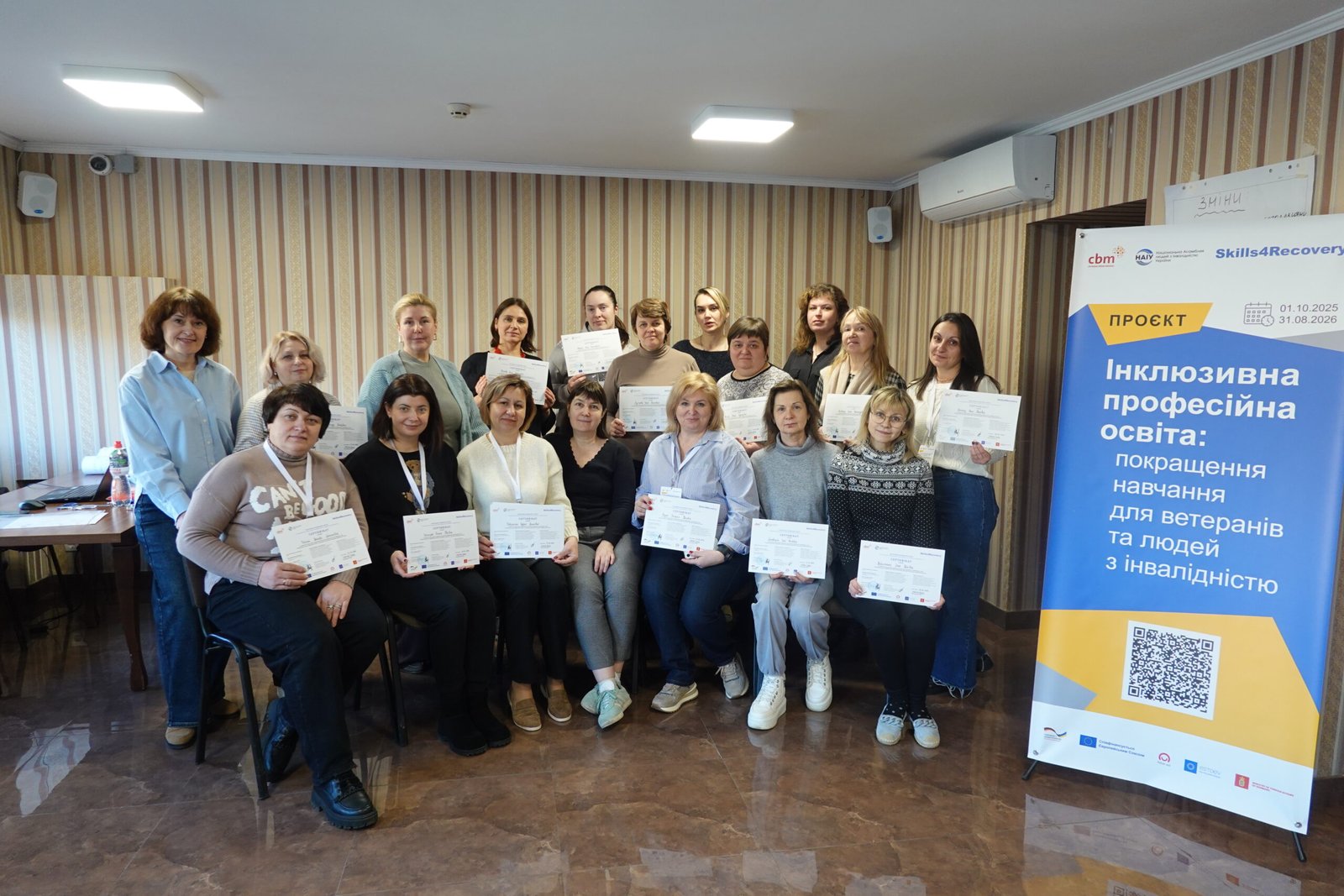
The second training session for teams from five vocational education and training (VET) institutions across different regions of Ukraine took place in Lviv. The purpose of the meeting was to collect practical solutions that help make learning accessible for persons with disabilities and special educational needs (including those with hearing and visual impairments), as well as for veterans, internally displaced persons (IDPs), and adult learners.
The focus was on simple yet critical questions: how to adapt learning materials, where to secure support services, how to organise practical training, and how to ensure learners transition successfully into employment.
The event was held within the framework of the project “Inclusive Vocational Education and Training (VET): Improving Training for Veterans and People with Disabilities” as part of the Skills4Recovery initiative. The project supports VET institutions in making inclusion function as a system: learning adaptations + support services + accessible infrastructure + partnerships with employers.
The examples and figures presented below are drawn from institutional presentations delivered during the training.
Five Institutions — Five Approaches:
Kharkiv Vocational Education and Training Centre of the State Employment Service — Inclusion in Adult Learning with a Focus on Employment
The institution works primarily with adults and offers a wide range of programmes (44 occupations, 62 training programmes). Its approach is to embed inclusion into the overall learning process.
Results-driven examples include: two female graduates with hearing impairments who completed sewing training with sign language interpretation and successfully found employment. In 2025, ten learners completed training as lathe operators (including veterans and persons with disabilities), and the majority have already found jobs.
Bottlenecks include: adapting learning materials (contrast adjustment, audio support, and clear instructions), distance learning and the risk of social isolation, as well as the shortage of support staff positions. Another significant issue is employer stereotypes, which affect access to internships and first employment opportunities.
Vinnytsia Vocational College of Digital Technologies and Entrepreneurship — Systemic Inclusion Since 2007 and Simple Rules for Learning Adaptations
The college has been engaged in inclusive education since 2007. In the previous years, the college prepared many learners from specialised groups (particularly, 247 graduates in 2006-2022).
What works well: a team-based approach and cooperation with an Inclusive Resource Centre (IRC), continuous professional development for teachers, and clear rules for adapting learning materials. Delivery is paced and clear; content is concise and focused; and formats use accessible fonts and digital tools.
Bottlenecks include the shortage of sign language interpreters and funding constraints, as well as difficulties in organising practical training and ensuring transition to employment — without additional support, this stage often fails.
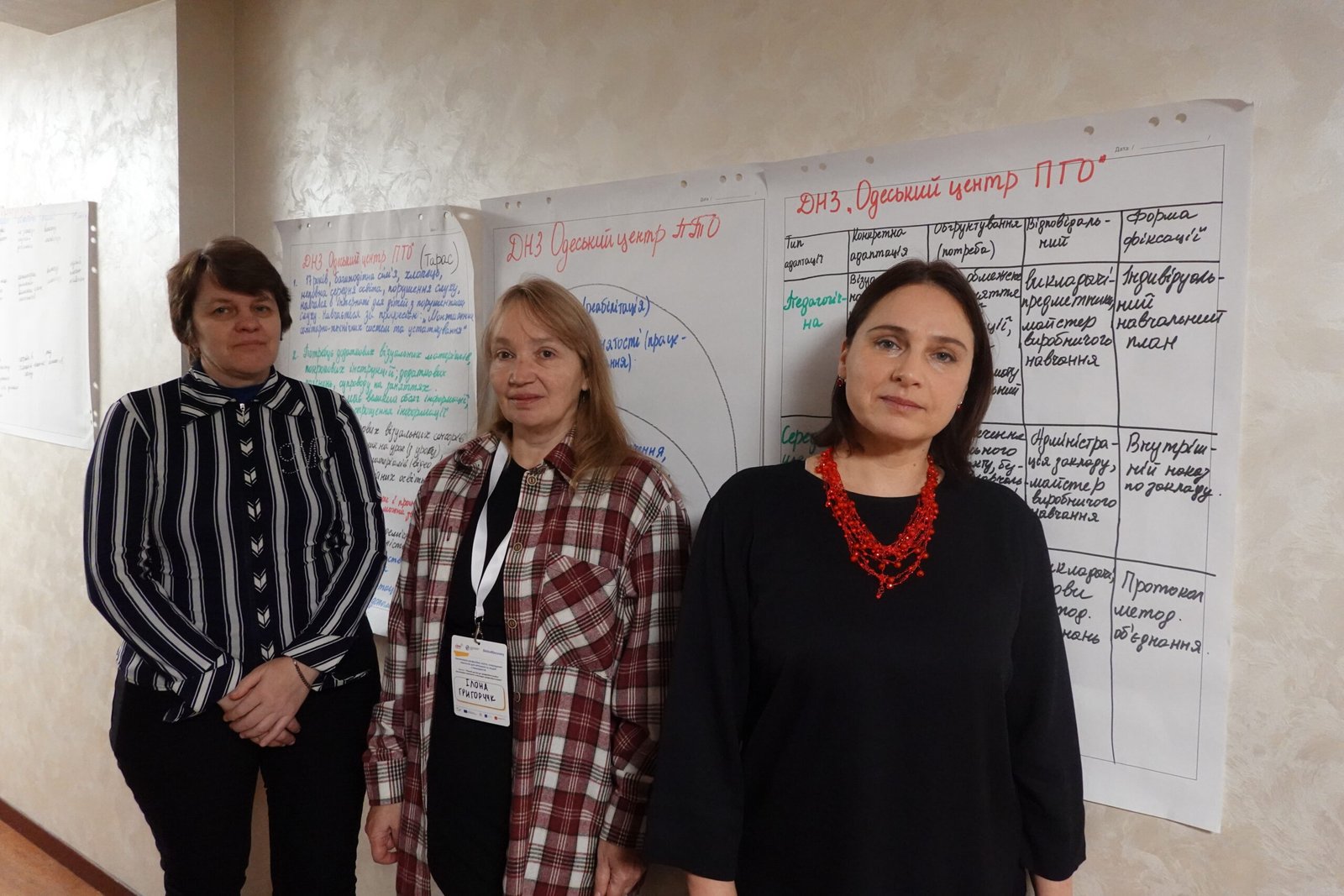
Odesa Centre for Vocational Education and Training — Technologies that “Explain the Profession” and Strong Psychological Support
The State Educational Institution “Odesa Centre for Vocational Education and Training” has experience of working with learners who have hearing impairments. The institution combines technological solutions with psychological support to ensure that learning is both understandable and stable.
What strengthens the outcomes: multimedia tools and 3D/VR formats that help visualise processes, alongside the work of the psychological service — consultations, group sessions, and trainings that support a healthy microclimate within learning groups.
Bottlenecks include ensuring sufficient resources for assistants and sign language interpreters.
Dnipro Centre for Vocational Education and Training — Scale, Adult Education, and the Veterans’ Space “Titans”
The institution operates across several locations, offers a broad portfolio of occupations (84 professions), and has a strong adult learning component. The team presented the veterans’ space “Titans,” where psychological support is integrated into educational programmes.
Adult education continues to expand: in 2025 alone, the centre has already reached more than 2,000 adult learners (including veterans, persons with disabilities, and IDPs).
Bottlenecks include: outdated infrastructure at some locations and challenges in organising workplace-based training for specialised groups, as enterprises are not always ready to host them. An important detail: not all veterans submit disability documentation, meaning that their needs may not be immediately visible and may emerge during the training process.
Hlyboka Vocational Lyceum (Chernivtsi Region) — Step by Step Towards Community-Based Inclusion and Workshop Development
The institution is gradually developing its inclusive direction. Currently, five learners with disabilities and/or special educational needs study within regular groups.
What is already in place: teamwork among teachers and social-psychological services, adaptations based on learners’ needs, development of training workshops, and improved accessibility.
Bottlenecks include in rural areas, there are fewer employers, and institutions often lack sufficient resources for assistant support. Therefore, the next step is to strengthen learner support and further develop an inclusive learning environment.
Joint Conclusion and Next Steps
The training outcomes demonstrated that inclusion cannot rely on a single tool. It functions systemically when three elements are combined: an accessible educational environment, a prepared team with adequate support mechanisms, and a real transition to practical training and employment.
Following the training, the teams agreed on scalable steps: introducing minimum standards for adapting learning materials, strengthening in-house support systems, creating accessible pathways within institutional premises, and developing partnerships with employers so that workplace-based training and first employment become tangible outcomes of education.
Direct quotes:
“The best indicator of inclusion is when the pathway ‘learning → practice → job’ becomes a reality for everyone.”
The project “Inclusive Vocational Education and Training (VET): Improving Training for Veterans and People with Disabilities” is being implemented by the National Assembly of People with Disabilities of Ukraine (NAPD), jointly with Christoffel-Blindenmission Christian Blind Mission e.V. (CBM), with financial support from the European Union, Germany, Poland, Estonia, and Denmark as part of the Skills4Recovery Multi-Donor Initiative, which is implemented by Deutsche Gesellschaft für Internationale Zusammenarbeit (GIZ) GmbH and Solidarity Fund PL (SFPL).
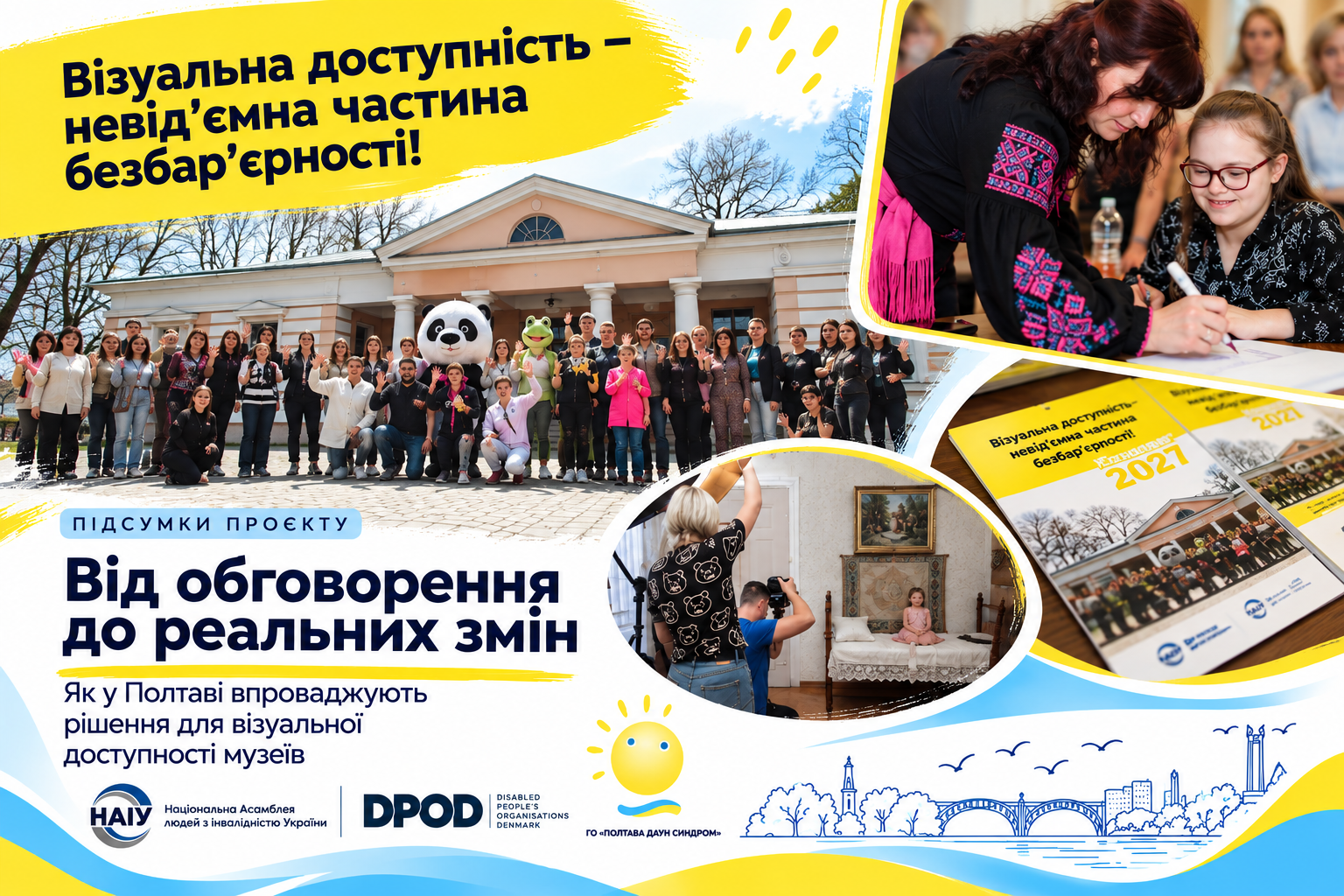
Візуальна доступність — це не лише про дизайн. Це про можливість людини самостійно зрозуміти, де вона перебуває, куди потрібно рухатися, де знайти необхідну інформацію і як скористатися простором без сторонньої допомоги. Саме цю тему ГО «Полтава ДАУН СИНДРОМ» зробила основою адвокаційного проєкту «Візуальна доступність — невід’ємна частина безбар’єрності», реалізованого в межах мінігрантової підтримки членських і […]
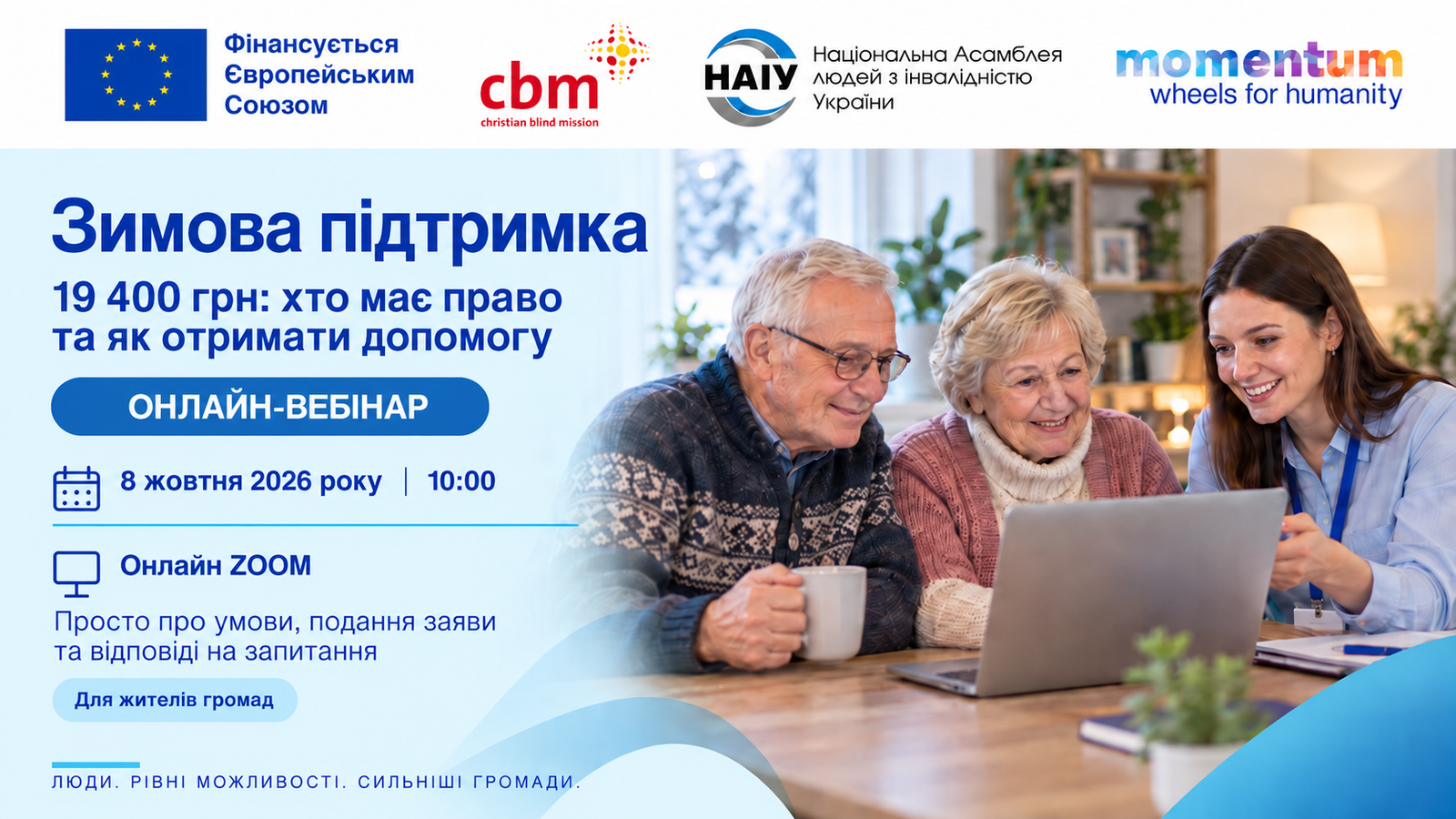
Кабінет Міністрів України затвердив порядок надання одноразової грошової допомоги «Зимова підтримка» на опалювальний сезон 2026/27 року. Допомога передбачена для вразливих категорій населення, які проживають у визначених територіальних громадах, де ведуться або велися бойові дії. Розмір допомоги становить 19 400 грн на одне домогосподарство. Виплата є одноразовою на весь опалювальний сезон 2026/27 року та не залежить […]
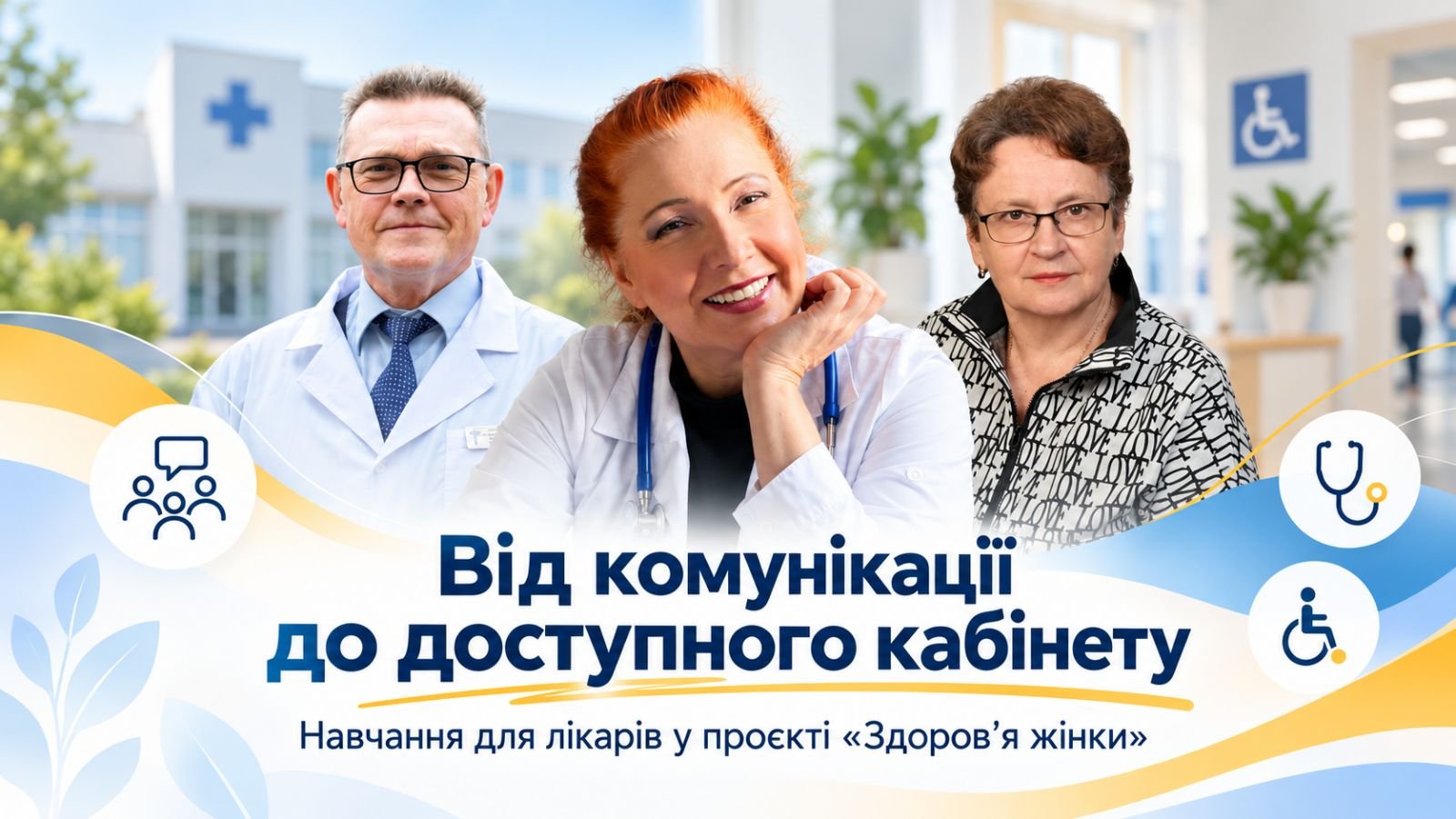
В межах проєкту «Здоров’я жінки» відбувся онлайн-семінар «Репродуктивне здоров’я жінок з інвалідністю: забезпечення рівного доступу до медичних послуг». До навчання долучилися гінекологи, акушери-гінекологи та сімейні лікарі й лікарки. Протягом трьох днів лікарі із семи пілотних громад проєкту мали можливість поглибити свої знання щодо комунікації з жінками з різними порушеннями, доступності гінекологічних кабінетів, пологових і гінекологічних […]
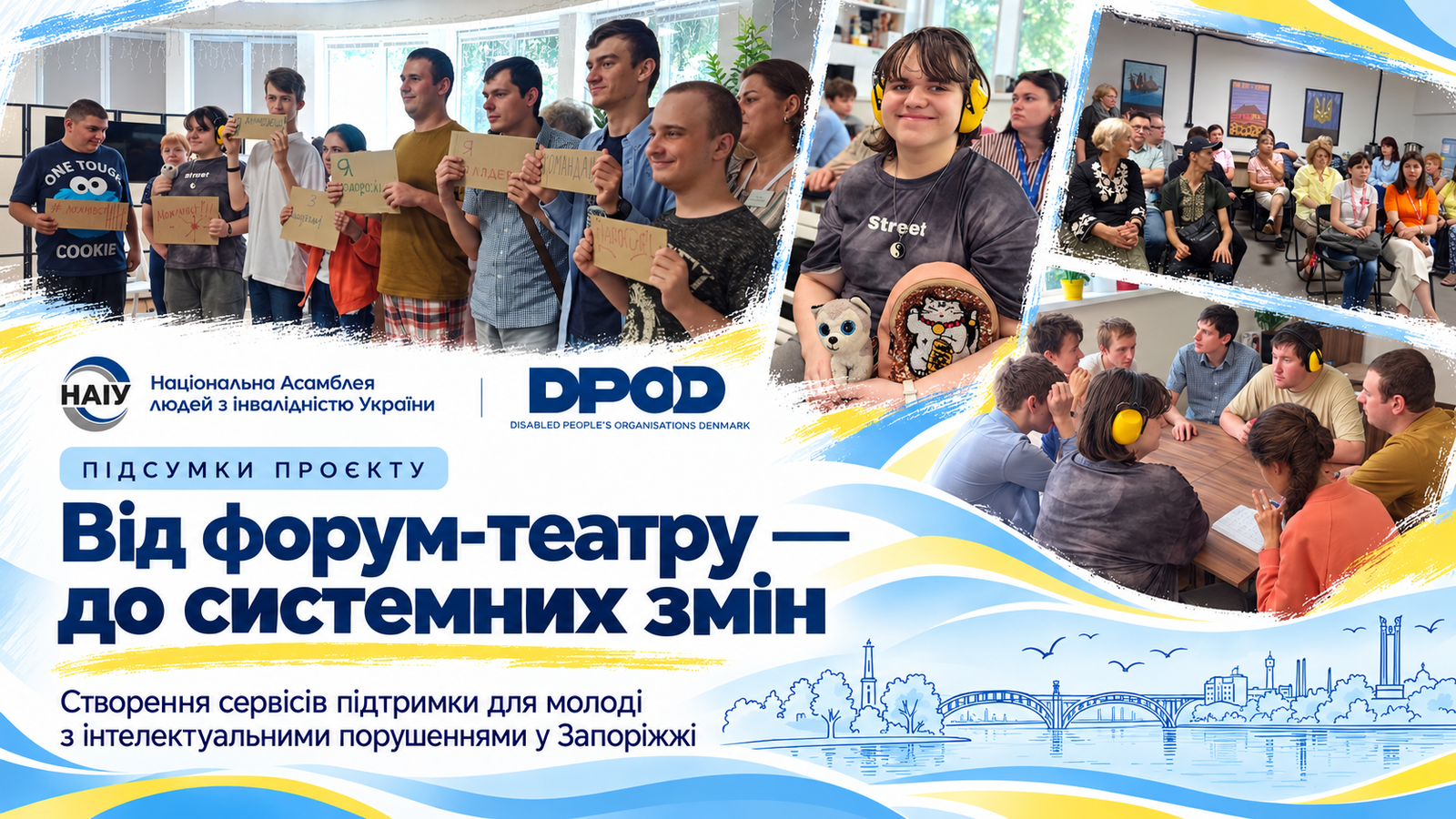
Що відбувається з підтримкою молодої людини з інтелектуальними порушеннями після 18 років? Де вона може спілкуватися, розвивати самостійність, навчатися, працювати та отримувати необхідні послуги? Для багатьох родин у Запоріжжі ці питання залишаються відкритими. Саме на пошук практичних рішень був спрямований проєкт «Форум-театр як інструмент адвокації: “Ми залишаємось у Запоріжжі!” — створення сервісів підтримки для молоді […]
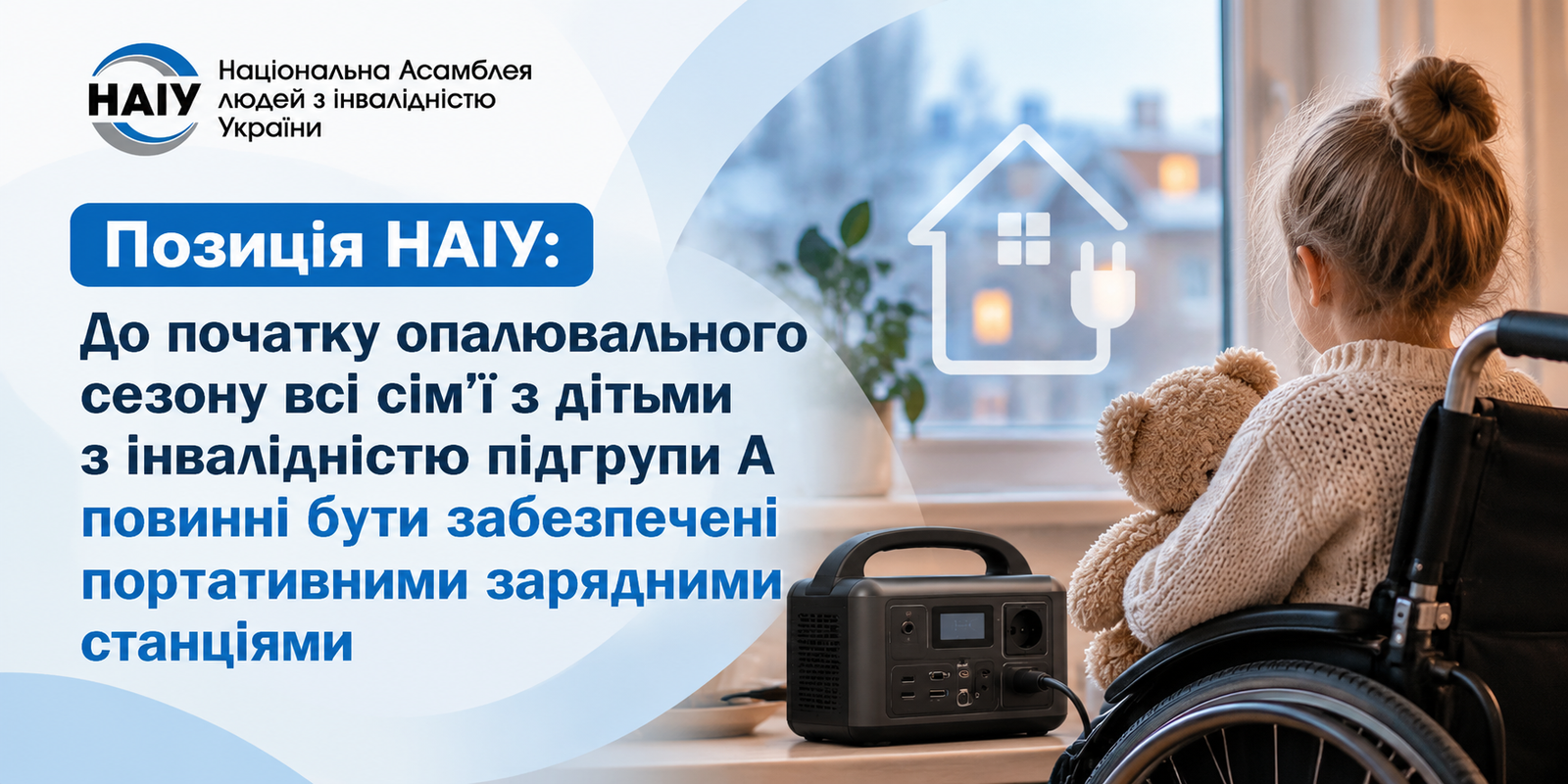
Упродовж 2026 року НАІУ неодноразово порушувала питання про необхідність прискорення виконання державної програми із забезпечення дітей з інвалідністю підгрупи А портативними зарядними станціями. Ще у березні Асамблея звернулася до Прем’єр-міністерки України та передала інформацію про 41 конкретну ситуацію, з якими зіткнулися родини: відмови у прийнятті заяв, помилки в базах даних, незрозуміла черговість, тривале очікування та […]
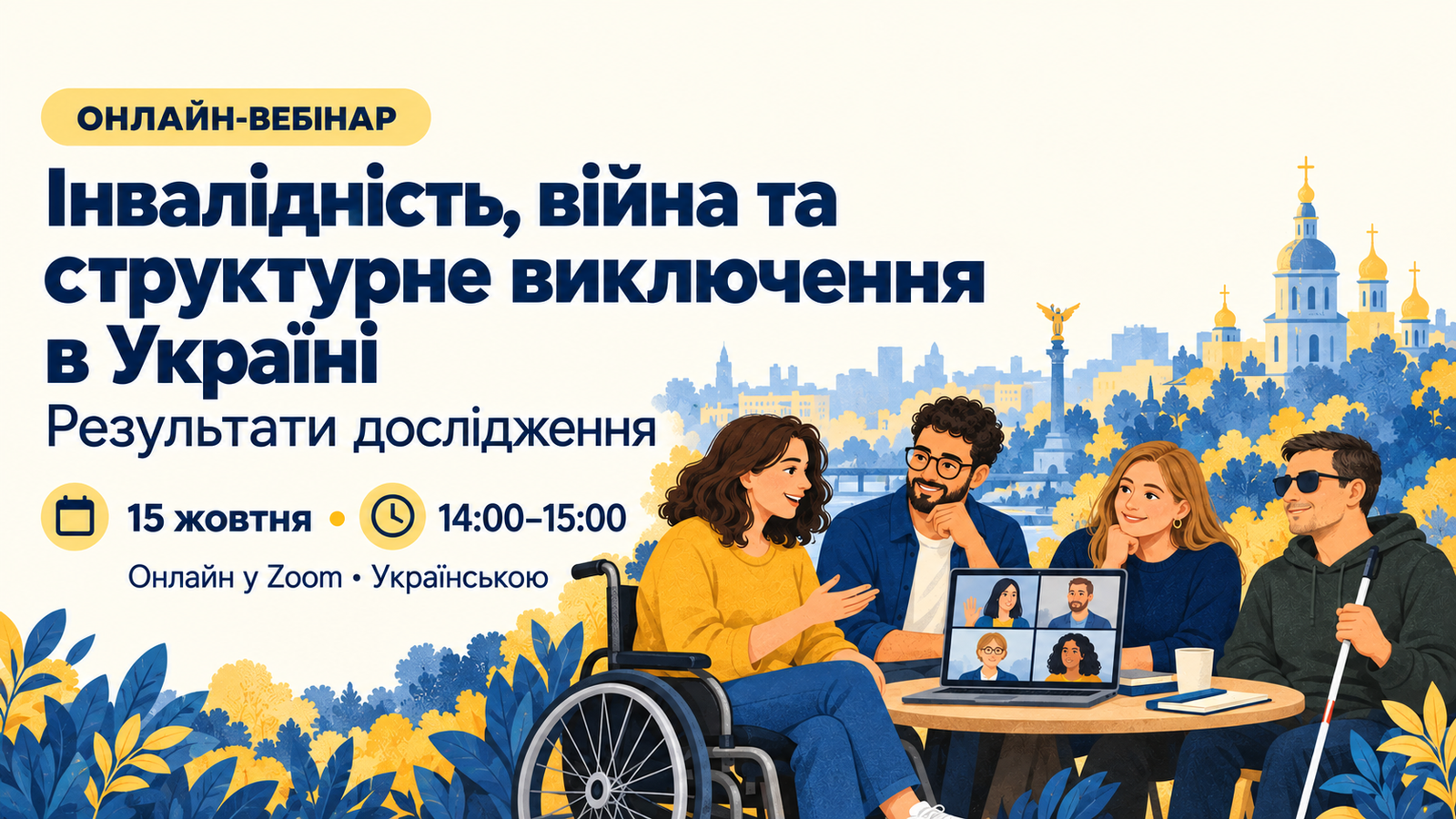
Як люди з інвалідністю переживають повномасштабну війну? Як війна посилила проблеми, що існували ще до 2022 року? Яку роль у підтримці відіграють організації людей з інвалідністю та неформальні мережі взаємодопомоги? Запрошуємо на вебінар, присвячений результатам дослідження, заснованого на 15 інтерв’ю з людьми з інвалідністю, проведених у 2024 році. Дослідження розглядає питання доступності, державної підтримки та […]