Disabled activists in Ukraine have been kidnapped and killed, residential institutions have been shelled, and Deaf people have been unable to escape to shelters because they cannot hear the air raid warnings, a conference has heard.
Representatives of leading disabled people's organizations (DPOs) from Ukraine described the barriers that disabled people have faced during the war with Russia, but also how they have played their own part in defending their country.
Larysa Bayda, from the secretariat of Ukraine's National Assembly of People with Disabilities (NAPD)*, an umbrella organization of DPOs, said disabled people were facing many challenges in Ukraine.
NAPD does not know how many people with learning disabilities or mental distress are trapped in institutions in occupied areas, she said, or how to make sure that aid reaches other disabled people who have had to stay in occupied cities or those affected by hostilities.
And there are no figures to show how many disabled people have been killed during the war.
Bayda told the conference: "We have numerous challenges every day in Ukraine. Speaking to you I can hear the air raid alarm, but we are so used to that now.
"I live in Kyiv and sometimes we don't even go down to the shelter. We are getting used to this."
She said they had heard accounts of blind people who had been left "completely disoriented" during air raids because they didn't know which direction the rockets were coming from and didn't know where to run or what to do.
She described how "institutions for people with disabilities were shelled from tanks, how families were killed in their cars, how activists with disabilities were kidnapped and killed."
But she said that disabled people were not just "observers" of the war.
She said: "Each of us in our own place are now doing everything we can to win this war.
"Many people with physical disabilities, amputees, took up arms; people with disabilities work in kitchens to cook meals for soldiers; they make camouflage nets; everyone is trying to do something in Ukraine to bring the victory closer, this long-awaited victory."
She said that one of her Deaf colleagues rode around the suburbs of Kyiv on his bicycle to bring food to disabled people who were living alone, even though he could not hear the air raid warnings.
Bayda also described how the NAPD had accumulated "invaluable experience" during the conflict on the need for accessible air raid shelters and for accessible information at the local, regional and national level.
Disabled people in smaller towns and villages without the necessary technology "don't have fully accessible information and they won't have access to humanitarian aid," she said.
Many disabled people have been housed together in groups because of the shortage of social workers and other professionals, she added.
Viktoria Nazarenko, NAPD's general secretary, said its current priority was to respond to the needs of disabled people who are fleeing the war or who have been forced to stay in their own homes "because they are not able to flee," and to support the reconstruction of Ukraine.
She said: "The war requires great focus and commitment from our part and all DPOs in Ukraine to refocus their activities."
This includes providing humanitarian aid, medicines, hygiene products, financial assistance, and assistance with evacuation, including for those who need to leave the country.
The NAPD has also set up shelters in buildings run by its DPO members, and some of them have provided temporary accommodation for up to 500 disabled people and their families for various periods of time.
Svitlana Demko, who leads the DPO "Open Hearts" Association for Rights Advocacy and Assistance to People with Disabilities, based in the central-west of the country, spoke about her organization's work evacuating disabled people from Ukraine to the Netherlands, Denmark, Poland and Germany.
They have so far taken 135 people, aged between three months and 81 years, in six groups.
She described the barriers they faced, with inaccessible border crossings, having to use blow-up mattresses on the floors of their buses for some of the disabled people they were evacuating, and the impact caused by the stress of the journey on the health of some of those who were being evacuated.
On one of the trips, they had one nurse for four buses.
Open Hearts also runs six accessible shelters, three of which are permanent and three that operate as transit shelters for those moving on to other locations.
They have also started a new program, Coming Back Home to Ukraine, which accommodates families who have children with high support needs.
The program allows families to leave their children at the shelter for a fortnight so they can return to where they lived before the war "to see in what condition their homes are".
Valentyna Dobrydina, leader of the Chernivtsi Regional Organization of People with Disabilities, said her organization had campaigned before the war to protect disabled people's rights.
It is based in a region that is now hosting many people who have been internally displaced by the war.
Many of its members are wheelchair users, as she is, and often are unable to move to air raid shelters when the alarm sounds.
As part of a national NAPD campaign, its DPO has been lobbying the government to improve access to air raid shelters since the start of hostilities with Russia eight years ago.
Many disabled people who were displaced are now being housed in holiday resorts or mental health institutions, but many of those institutions are now "over-populated" and under-staffed.
Many of the disabled people were brought in by train and taken to holiday resorts by ambulances queuing up at the railway station.
Her organization is now seeking funding from international organizations to pay for these services, but she said that aid is running low and many medicines are in short supply.
The NAPD was established in 2001, 10 years after Ukraine won independence, and it represents about 120 DPOs across Ukraine, and is a member of the European Disability Forum.
Thanks to NAPD's campaigning efforts, all draft laws and statutory documents that affect disabled people's rights must be reviewed by disability organizations before they can be approved by the Ukrainian parliament, although most of these documents currently relate to border crossings and other war-related issues.
Nazarenko said Ukrainian laws were mostly in line with the UN Convention on the Rights of Persons with Disabilities, but the problem was that they were "not followed" in practice.
More than half of disabled people in Ukraine live below the poverty line, she said, surviving on £60 a month in disability benefits.
Their priority is to strengthen the influence of DPOs on decision-making processes.
But they have also seen a trend in the last few years of organizations registering as DPOs when they are run by non-disabled people.
She said these organizations were "pseudo-protectors" of disabled people, with staff who speak good English, communicate well with organizations in Ukraine and abroad, and are skilled in securing funding from public bodies and international donors.
These organizations "create confusion," she said, so it was "important" to ensure "formal status" for genuine DPOs.
Bayda emphasized how DPOs in Ukraine have learned from colleagues in the UK in areas such as inclusive education, and "are following your websites to learn about your work."
She added: "When we went on a study trip to England, we saw how much you have achieved, for example your museums are accessible for people with disabilities, in Ukraine they are not, how you achieved accessibility, we learned how you organized rallies and demonstrations.
"You also have accommodations for people who use guide dogs, so we continue to learn from you and this meeting today is learning for ourselves and for you as well."
Dr. Theo Blackmore, who organized the conference for disAbility Cornwall, said the presentation from the Ukrainian DPOs had been "very moving" and "very harrowing."
He said: "It's not an experience that we would wish on anyone, but I think the message that comes to me through all of your work is your resilience and your ability to change and your ability to adapt to meet the needs of disabled people locally.
"That's incredibly strong and powerful and I think the work that you're doing is amazing.
"The work you're doing to get disabled people to places of safety, to help support disabled people, to provide social contact for disabled people, is absolutely incredible."
The research had sketched out a 10-year plan to tackle the inequality, marginalization and discrimination that blighted the lives of millions of disabled people, and made the case for an "independent, sustainable, powerful" network of regional DPOs in England.
Harrison told the conference that he was "very proud" of what the DPOs were achieving in Ukraine but was also upset by the war, having worked in Ukraine post-independence, working on deinstitutionalization and supporting the development of local organizations.
He said: "The discrimination we face, the barriers we face, the oppressive regimes, that change starts with us as disabled people, we are the agents of change, no-one else is going to do it for us. It's really important that we fight for that change."
He was asked by NAPD during the event to deliver a presentation at an event being run for Ukrainian DPOs.
*To donate towards NAPD's work, visit its website. It uses the funds to provide targeted financial assistance to individual disabled people; repair damaged homes; support care facilities with funding for food, medicine and hygiene products; and for its program in western Ukraine to provide accessible gynecological examination rooms and facilities
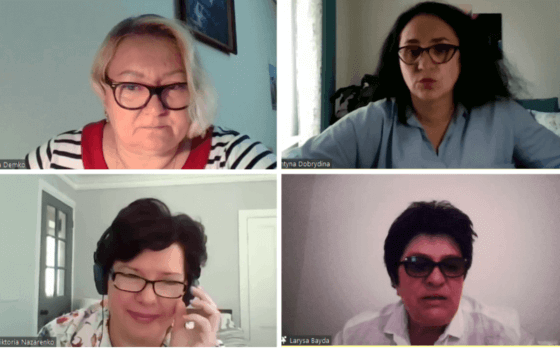
Picture: (Clockwise from top left) Svitlana Demko, Valentyna Dobrydina, Larysa Bayda and Viktoria Nazarenko
Анастасія живе у Казанківській громаді Миколаївської області разом із чоловіком Сергієм та шістьма дітьми. Подружжя разом вже 15 років. У житті родини багато звичних щоденних справ: навчання дітей, домашні клопоти, покупки, плани на новий навчальний рік, і серед них також щоденне лікування Анастасії. Анастасія має інвалідність і проходить лікування онкологічного захворювання. Через прогресування хвороби їй […]
У Львівській області завершився офлайн-тренінг «Організаційна спроможність ОГС: від оцінки потенціалу до дієвої стратегії». До навчання долучилися представниці і представники громадських організацій людей з інвалідністю з Вінницької, Дніпропетровської, Закарпатської, Запорізької, Полтавської, Сумської, Тернопільської, Харківської та Черкаської областей, а також міста Києва. Захід організувала Національна Асамблея людей з інвалідністю України в межах проєкту «Реабілітація в Україні» […]
Ксеня і Леся живуть у Чернівцях. Жінки сестри-близнючки, їм 26 років. Сестри мешкають разом, але кожна має свої інтереси й плани. Леся любить готувати та випікати для своєї родини і замислюється над тим, щоб зробити кулінарію своєю професією. Мама Людмила не раз пропонувала доньці спробувати навчання на пекаря чи кухаря. Але Леся поки остаточно не […]
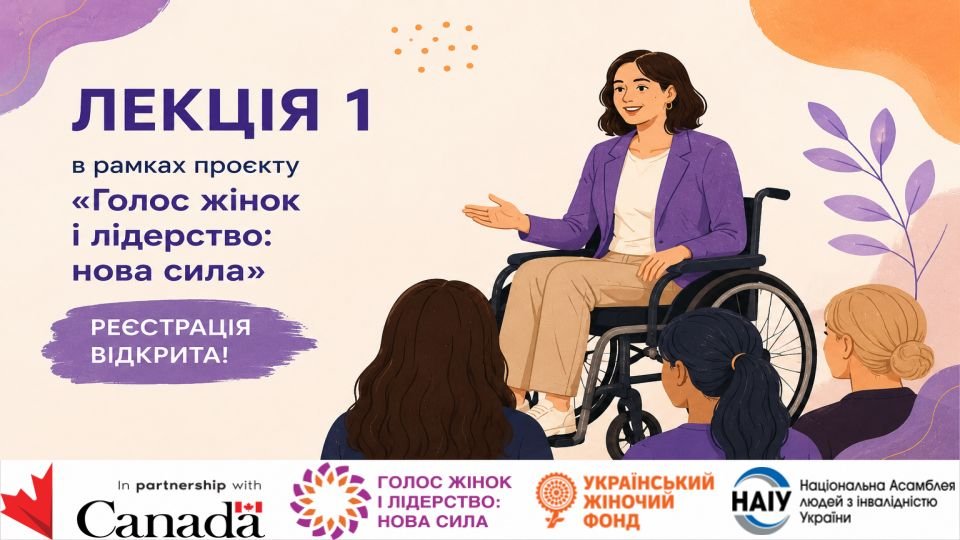
15 вересня 2026 року Національна Асамблея людей з інвалідністю України запрошує на першу лекцію в межах проєкту «Голос жінок і лідерство: нова сила». Перша освітня зустріч буде присвячена темі «Феміністична оптика прав і можливостей людей з інвалідністю». Під час лекції говоритимемо про те, як феміністична оптика допомагає ширше подивитися на права, можливості та життєвий досвід […]
У Черкасах для водіїв і контролерів комунального підприємства «Черкасиелектротранс» провели практичне навчання з доступного перевезення людей з інвалідністю та інших маломобільних пасажирів. Працівники освоїли правила безпечної посадки й висадки, використання апарелі, надання допомоги та належної взаємодії з пасажирами. Про це повідомляє громадська організація «Спілка людей з інвалідністю «Перспектива» на своїй сторінці у Facebook. Навчання стало […]
Провести час у дворі, поїхати у місто, дістатися лікарні чи аптеки, зустріти знайомих або просто прогулятися. Усі ці звичні справи є частиною повсякденного життя Ірини з Горохівскої громади, тому для неї важливо мати зручний і справний засіб мобільності. Ірина живе разом із мамою та дідусем. Основним прибутком родини є три пенсії. Тримати велике домашнє господарство […]