
The National Assembly of People with Disabilities of Ukraine emphasizes the need to formulate a policy of «transport for all» today»
NAIU presented the results of the study «Accessibility of Transport and Transport Infrastructure Facilities for Persons with Disabilities»

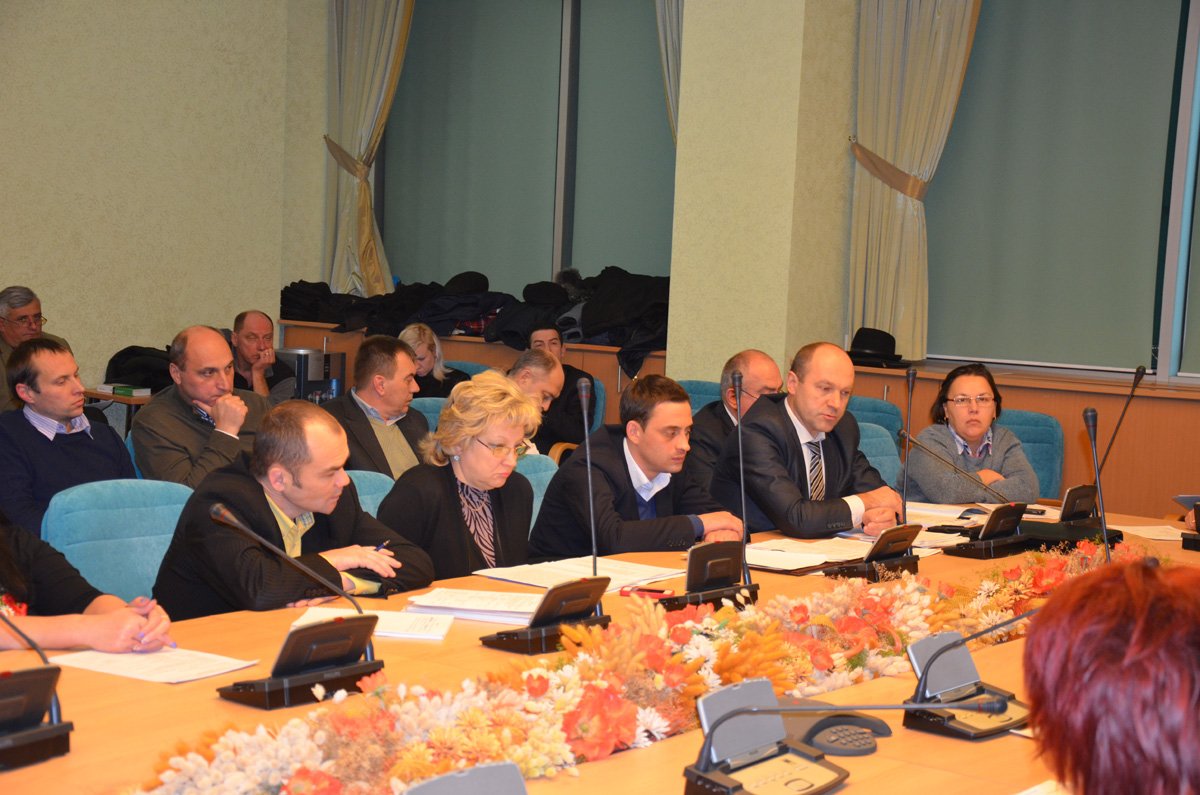
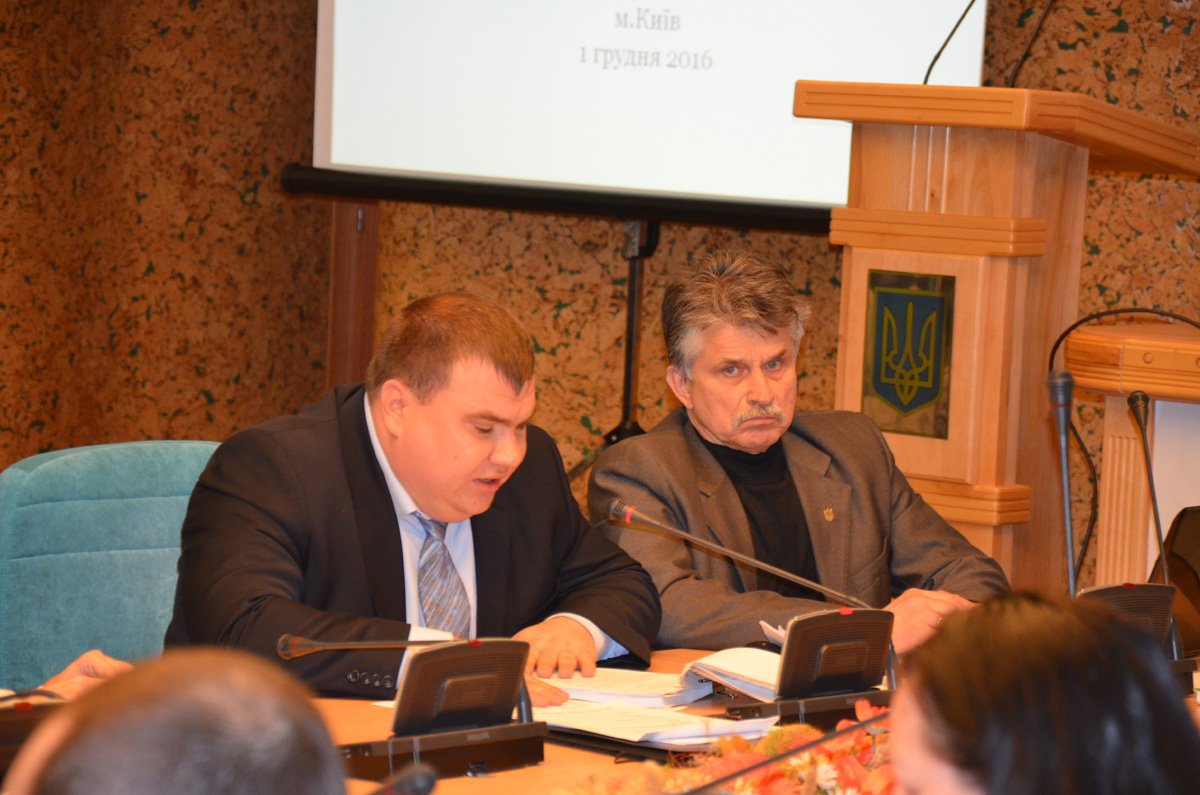
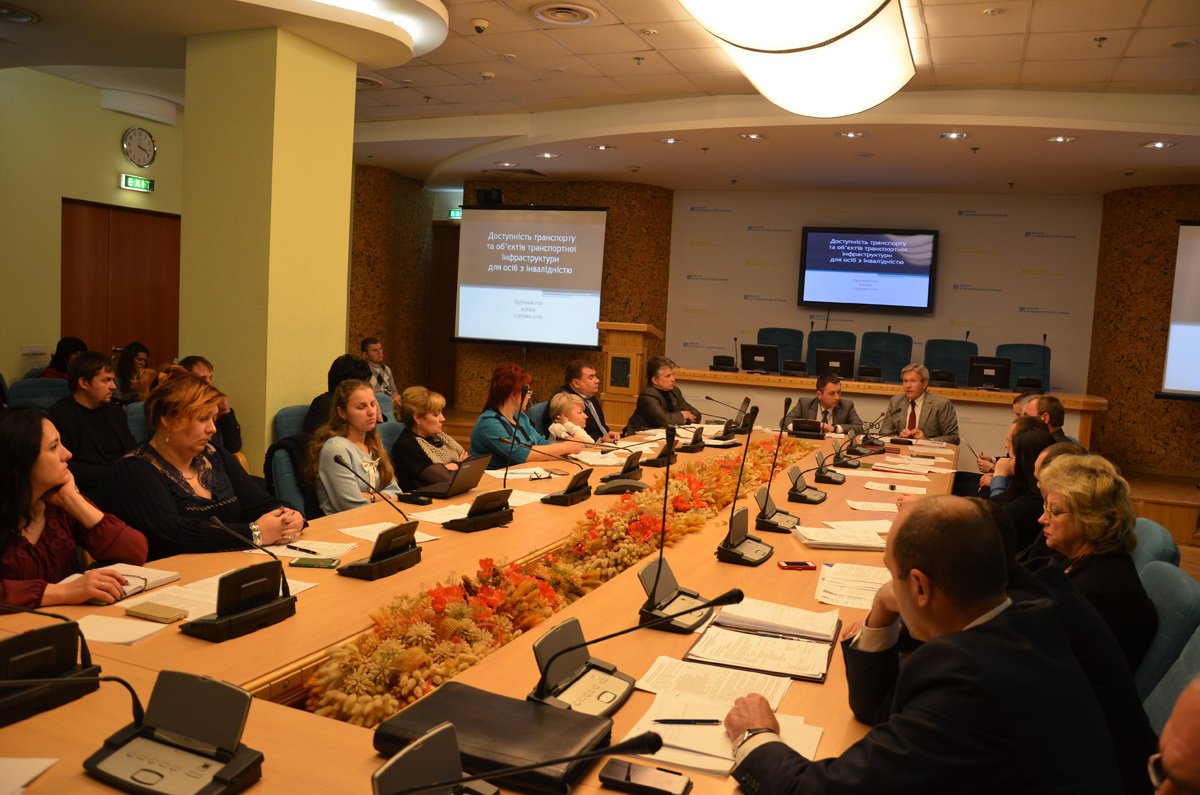
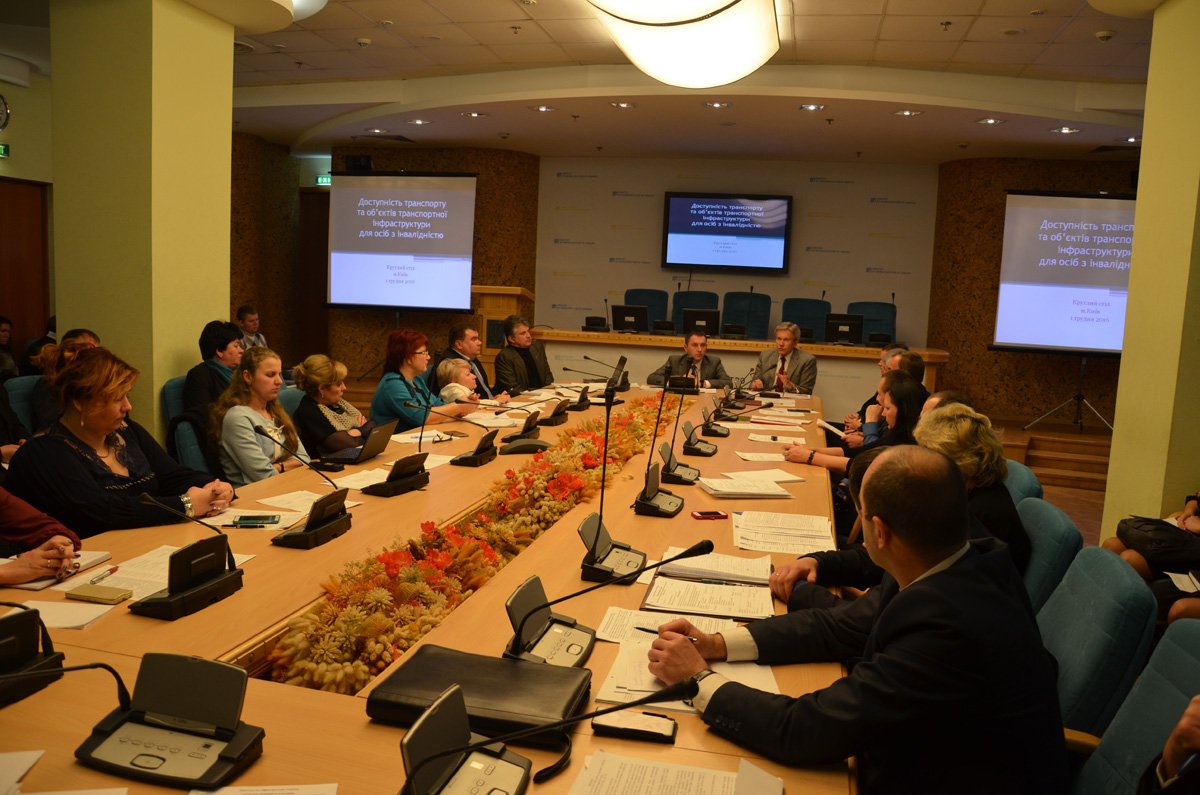
On December 1, at the initiative of the National Assembly of People with Disabilities of Ukraine (NAPWD), a roundtable discussion «Accessibility of Transport and Transport Infrastructure Facilities for Persons with Disabilities» was held at the Ministry of Infrastructure of Ukraine with the participation of Deputy Minister of Infrastructure of Ukraine Yuriy Lavreniuk, Commissioner of the President of Ukraine for the Rights of Persons with Disabilities Valeriy Sushkevych, representatives of the NGO “National Assembly of People with Disabilities of Ukraine”, public organizations of persons with disabilities from different regions of Ukraine, specialists.
The purpose of the meeting was to present the results of a study on the accessibility of transport services and transport infrastructure facilities for people with disabilities, which was conducted since May 2016, as well as to discuss the results of the preparation of the draft National Report «Accessibility of Transport and Transport Infrastructure Facilities for People with Disabilities,» problematic issues regarding the state of transport accessibility, and alternative ways to solve them.

In 2016, the Ministry of Infrastructure of Ukraine is preparing a state report on the accessibility of transport and transport infrastructure facilities for people with disabilities and low-mobility groups. In its turn, the NAIU has prepared information on the provision of quality transport services to persons with disabilities in order to objectively highlight these issues.
Standards for analysis The provisions of the UN Convention on of the rights of persons with disabilities, state regulatory acts on accessibility of transport and transportation infrastructure. Question. accessibility were considered comprehensively and take into account the interests of people who have physical, sensory, intellectual and mental violations.
A tremendous amount of work was done in collecting and preparing the information: questionnaires were developed, cities and regions were selected for analysis, and representatives of public organizations of people with disabilities were trained. We also held working meetings with local authorities and presented the results of the analysis to the public. Focus groups for users were held in 7 cities of Ukraine, including Vinnytsia, Zhytomyr, Kyiv, Lviv, Poltava, Rivne, Chernihiv, and surveys of users and service providers were conducted (all regions of Ukraine).
As a result, an analysis of the accessibility of transport services was conducted in 10 cities of Ukraine, including public transport (tram, trolleybus, bus), rail transport, road transport, subway, taxi, air transport; an analysis of the work of support services at the railway station, bus station, subway and public transport; an analysis of transport infrastructure (stops, crossings, station squares, parking spaces, etc.); an analysis of information accessibility in transport for different groups of users with disabilities. In addition, the experts information collected in relation to existing positive practices in Ukraine to ensure accessibility and use of universal design principles, smart devices in transportation. It was analysis of publications and articles in the media on violations of the rights of persons with disability to the provision of quality transportation services.
G presultswe analysis of transport accessibility and transport infrastructures for persons with disabilitiesYou can find it at the following link via link.

The reforms that are taking place in our country today, including in the transport sector, require knowledge of objective information on providing quality services to all users, including those with disabilities.
The lack of «accessible» transportation and services significantly reduces the quality of life of people with disabilities. This affects their ability to study, work, travel, engage in disputes, participate in social activities, etc. These issues are particularly acute in rural areas, where the only means of transportation are inaccessible vehicles (so-called minibuses) and private taxis.
The National Assembly of Persons with Disabilities of Ukraine has repeatedly drawn the attention of the government, relevant ministries and agencies to the existing problems of inaccessibility of transport, services and transport infrastructure for people with disabilities and low-mobility groups.
Therefore, in preparing the study, the NAIU aimed to provide reliable information on the quality of transport services for people with disabilities to bring clarity and objectivity to these issues, as well as to develop and implement appropriate measures to improve the situation.
The study does not claim to be exhaustive and complete. Legislative and regulatory acts on accessibility of transport and transport infrastructure were not the subject of this analysis. The information only emphasizes positive or negative trends and the need for changes and responsibility on the part of the state.
Today, it can be stated that there have been significant changes in the issues of «accessibility» of transport since Ukraine ratified the UN Convention on the Rights of Persons with Disabilities - the regulatory framework is being improved; standardized ramps, adapted toilets, «accessible» exits to platforms, waiting rooms are equipped, pictograms and voice announcements are used at railway and bus stations; low-floor buses, trolleybuses and trams are running in cities, crossings and stops are being reconstructed, schedules for low-floor transport are provided using modern technologies; training is provided for services to accompany people with disabilities, etc.
Civil society organizations noted positive changes in the quality of services provided by air transport and InterCity+ trains.
However, these positive changes are not systemic, do not cover all regions of Ukraine, and do not apply to all types of transportation, despite the fact that many issues are regulated by law and are mandatory for state institutions.
For example, Resolution of the Cabinet of Ministers of Ukraine No. 108149 is not being implemented, which requires that not every suburban and intercity passenger transport route be provided with at least one vehicle accessible to people with reduced mobility. There are no concepts, specific normative and technical requirements for accessible suburban and intercity buses in Ukraine.
We can note the significant contribution of public organizations of people with disabilities to the formation of «accessible» transport policy and transport infrastructure at the local and national levels. But, unfortunately, the slogan «do not do for us without us» does not always work in today's policy in this area, and the experience of experts with disabilities is not always used.
The issues of «accessible» transportation for people with disabilities go beyond the needs of this target group alone. They include the needs of a much wider range of consumers who, at some point in their lives, have certain functional impairments, additional service needs, which makes their travel difficult if the transport and environment are not adapted.
The National Assembly of People with Disabilities of Ukraine, based on the knowledge and experience of people with disabilities, emphasizes the need to develop a «transport for all» policy. A policy that is universal, cost-effective for the state, because it takes into account the needs of all users and does not create «special transport» for a particular group of people.
When formulating a «transport for all» policy, the state, at the request of the UN Convention on the Rights of Persons with Disabilities, should take into account the principles of universal design in the field of transport, accessibility planning, development/reconstruction of transport infrastructure, development of guidelines and practices for customer service, coordination of service provision on all modes of transport, flexible response to service routing, use of modern technologies, integration of transport policy with other areas, etc.
Drawing on positive experience in the «accessibility» of the transport sector, namely ensuring mobility for people with disabilities with the maximum possible degree of independence, civil society organizations emphasize that this is a step towards creating an equal society that respects the freedom and independence of movement of each person.
The study showed that people with disabilities most often use urban public transport. It is an important component of the accessibility of the transportation system and includes: accessibility of stops, information, rolling stock, physical environment, service personnel and service procedures, etc.
The lack of accessible public transportation means that transportation services become more expensive for people with disabilities, who are forced to use taxis to get out of their homes or spend significant amounts of money on private transportation. As noted in the study, the «inaccessibility» of transportation serves as an isolating factor, as it deprives a person of mobility and life activity.
All passengers, including those with disabilities, need reliable and timely information when using different types of transport. Participants emphasized that they cannot get acquainted with the transport route in an accessible format, the interval of low-floor transport, the timetable; there is no ticker tape and no sounding of stops.
Many complaints are caused by the unwillingness of conductors and drivers to assist with boarding and alighting, improper parking of other road users, and rudeness in communication.
Unfortunately, subway services are problematic for people with disabilities. Despite the positive work of support services, the infrastructure remains inaccessible, which effectively limits the ability of people with disabilities and people with limited mobility to use this type of transportation at all.
Passengers with disabilities should be able to buy a ticket on general terms, for example, online. This includes tickets for rail transportation. This service cannot be used by blind people and people of group 1 who use wheelchairs and have to buy tickets at ticket offices directly at railway stations.
According to the Procedure for organizing the transportation of persons with disabilities (in wheelchairs), there are 19 passenger cars in Ukraine in specially equipped cars, according to official information, adapted for the transportation of passengers with physical disabilities. Of these, three are located in Luhansk and one in the Autonomous Republic of Crimea, meaning that 15 cars are actually in operation, and according to users, they do not meet all the requirements for providing quality services (lifts, toilets do not work, etc.). In addition, the cost of a ticket for a general seat (not in a special compartment for people with disabilities) is much higher than the price of tickets for the same train, not in a special carriage. For this reason, if more than one passenger in a wheelchair is traveling in a carriage, the others pay for such «services» at a cost that is not proportional to their pension.
Also, blind passengers emphasized the Ukrainian-made Tarpan trains. For this group of passengers, the lack of appropriate signs in the toilets makes it impossible to use them.
Civil society organizations are concerned about the lack of boarding platforms at railway stations that are as high as the level of train vestibules. At some stations, passengers with limited mobility cannot even get into a carriage with the help of train staff and escorts. Suburban trains are inaccessible to people in wheelchairs.
The results of the study show that people with disabilities are unable to use the services of fixed-route taxis, primarily people who use wheelchairs and have physical disabilities. The taxis are not adapted, drivers «park at will», and stops are not adapted.
NGOs also emphasize the situation with intercity buses, which cannot provide services to passengers using wheelchairs.
«Accessibility» in transport for people with disabilities depends on disability awareness and a positive attitude of all employees in this area to the policy of equality of service provision. This is confirmed by the results of the study. There are barriers that can be overcome without the involvement of the financial component, such as improving the culture of communication, respect for each passenger, and fulfillment of job descriptions.
So, typical problems of «inaccessibility» of transportation are:
- Lack of systemic integrated approaches in the state policy in the transport sector related to low-mobility passenger groups;
- Lack of political will at the level of local executive authorities to address issues of ensuring the provision of quality transport services to persons with disabilities; lack of interest in «clients with disabilities»;
- Lack of proper monitoring of the current situation; insufficient involvement of experts with disabilities in analyzing the situation
- misunderstanding of disability issues and «transport accessibility»;
- imperfection of the legal and regulatory framework;
- failure to comply with applicable regulations, DBN;
- lack of low-floor transport and continued procurement of unadapted transport;
- Lack of accessible physical environment/infrastructure (adapted bus stops, parking spaces for people with disabilities, standardized ramps, staircase markings, adapted platforms, lowering of the cash register, etc;);
- Lack of systematic training of specialists and staff on disability issues, accessibility, and support for people with disabilities;
- вhe lack of information accessibility, especially for people with sensory impairments (websites, information messages, icons, Braille, etc.);
- Failure to ensure the safety of passengers with disabilities (lack of appropriate icons, emergency exits, worn-out vehicles, etc.)
- low culture of passenger service;
- Lack of departmental control.
NAIU expresses gratitude to organizations and experts who participated in the preparation of the study..
Press service of NAIA